Scuba Diving in Southern California

May 1, 2026|Author: Nirupam Nigam|Reading time: 10 mins

4|5

Read 4 verified reviews

Expert advice on diving, seasons, and logistics

Free planning help when you’re ready to book

Exclusive dive packages tailored for you
View images
Scuba Diving in Southern California - image

Destination Highlights

Scuba Dive Level

Advanced Diver

Visibility

10 to 50 feet (3 to 15 meters)

Average Water Temperature

62

Shark Encounters

Coldwater Diving

Southern California Highlights

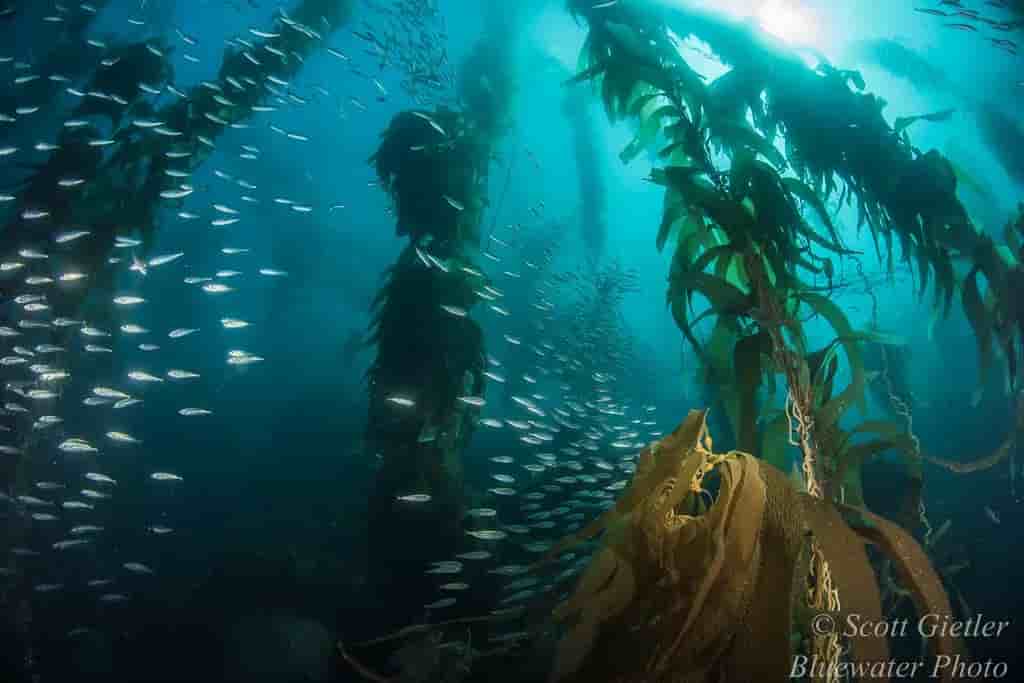
Most of our Bluewater team learned to dive, and still dives regularly, in Southern California. It’s not tropical—expect cold water, kelp, surge and some low‑viz days—but when it’s on, the combination of towering kelp forests, giant black sea bass, playful sea lions and dense reef life is hard to beat. It’s also one of the easiest “serious” cold‑water destinations to reach if you’re already in North America.

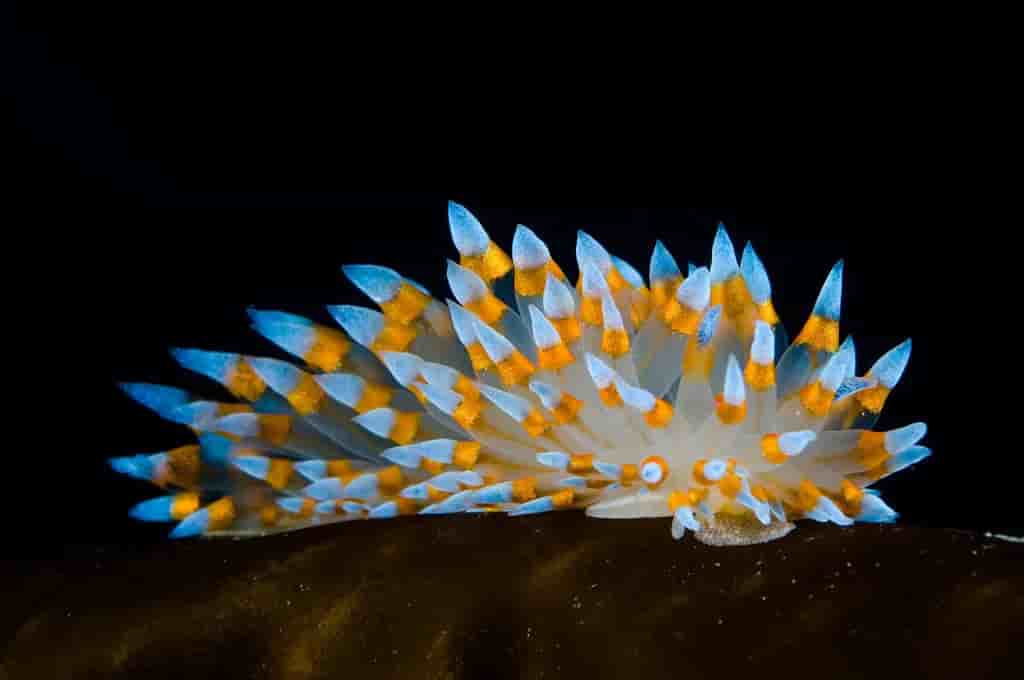
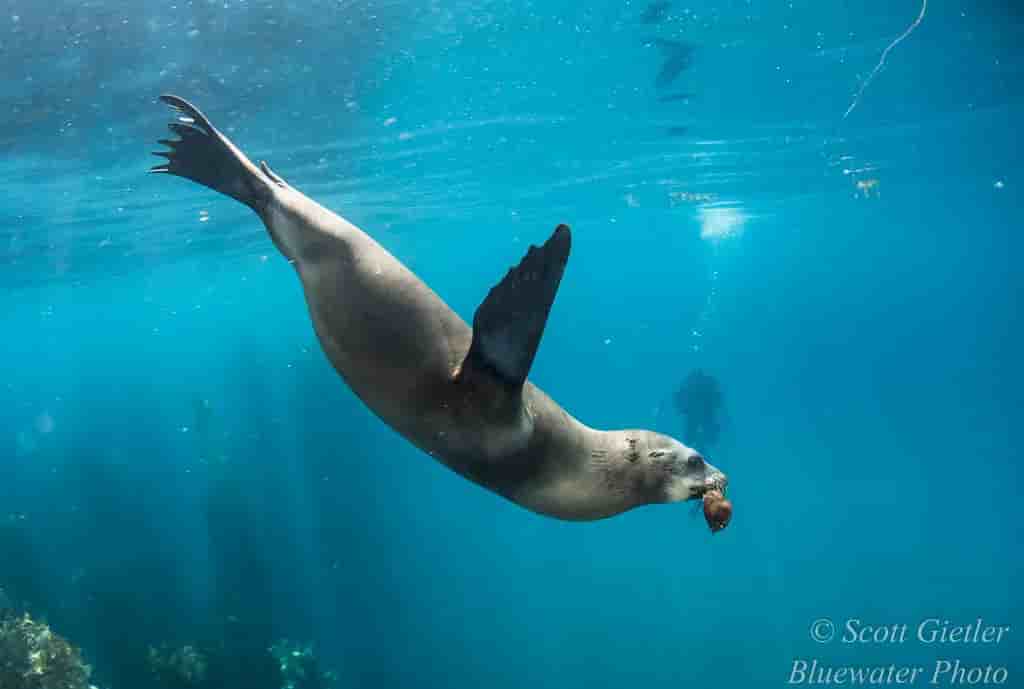
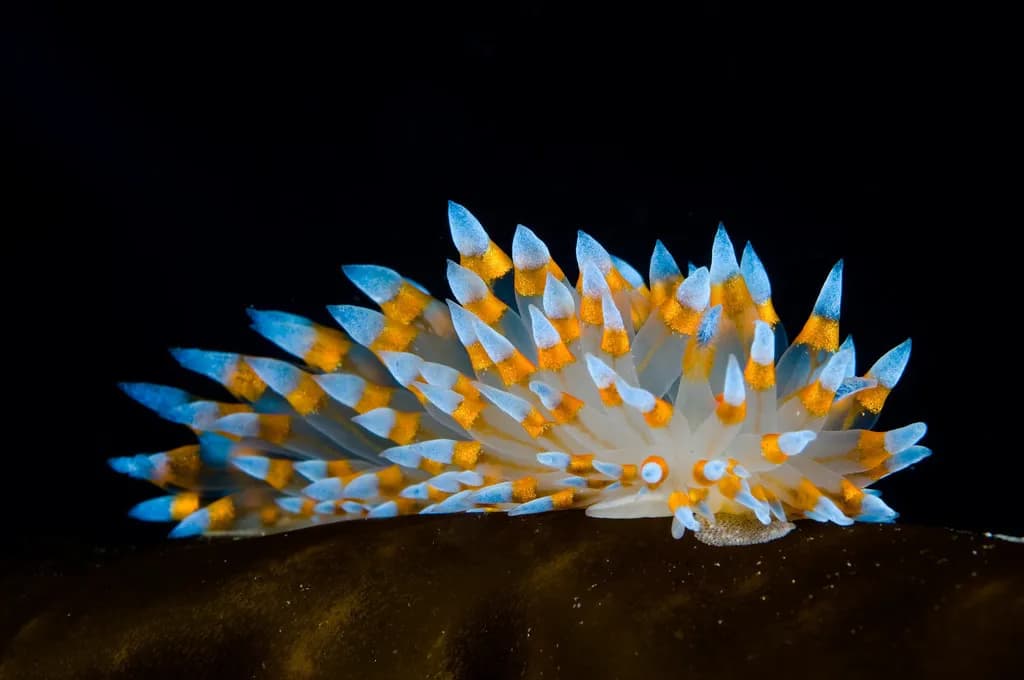
Besides being a beautiful place to enjoy some gorgeous sunsets, the coastline and offshore islands feature many exciting destinations for scuba divers. Marine life enthusiasts and underwater photographers can see sea lions, large schools of fish, nudibranchs, giant black sea bass and more. On the surface you may encounter pods of dolphins, and in season even humpback or gray whales.

Who Southern California diving is best for
  • Divers who are comfortable in 7 mm wetsuits or drysuits and don’t mind surge and colder water.
  • Photographers who love kelp forest scenes, macro (nudibranchs, critters) and “big but approachable” animals like giant sea bass and sea lions.
  • Travelers who want to combine diving with classic SoCal topside—LA, San Diego, beaches and mountains.

Introduction To Diving In Southern California

Nutrient‑rich Pacific waters support a huge variety of marine life and classic kelp forest scenery, especially around the Channel Islands 15–50 miles off the mainland. The most popular islands for diving are Catalina, San Clemente, Santa Barbara, Anacapa, Santa Cruz and San Miguel.

Except for Catalina Island, most of the best island diving is only accessible by boat. Typical trips are 1–2‑day charters doing 3–4 dives per day. Boats out of Ventura and Santa Barbara travel to Anacapa, Santa Cruz, Santa Rosa and San Miguel Islands, while boats out of San Pedro and Long Beach visit Catalina, San Clemente and Santa Barbara Islands. Boats out of Santa Barbara or Ventura will sometimes also visit these destinations on 2–3‑day trips.

Southern California also boasts over 50 State and Federal Marine Protected Areas, from Point Conception to the Mexican border. Many of these underwater parks were designated or strengthened in the 2010s, and we’ve already seen noticeable increases in fish biomass and size inside reserves compared to unprotected sites.

Start Planning Your Dream Trip – It’s Free!

We usually respond within a few hours, often faster.

Quick verification

Helps us block automated spam

7 + 3 =

When To Go

There is something to see all year round in Southern California, but when you are especially interested in big fish like whales, then you must pay closer attention to their migrating pattern. The best season to see bigger animals starts from spring through late fall. Except gray whales tend to pass through from mid-December to mid- April.

How To Dive Southern California

Scuba Diving in Southern California can be done via shore or by boat. Boats leave out of Mission Bay in San Diego, Long Beach, San Pedro, Oxnard or Santa Barbara - and boat diving generally offers much better conditions underwater than shore diving. There are a variety of dive operators, such as Waterhorse Charters, that will take you to nearby sites.

One-day trips visit Anacapa Island, Catalina Island, the Oil Rigs, or the San Diego kelp forests. Multi-day liveaboard trips will visit the outer island like Santa Barbara or San Clemente Islands.

California Marine Life

The underwater life in California is one of the richest in the world having thousands of species of fish to see. You have dive sites for macro lovers where many invertebrates live and you can see a variety of reef fish. During the night time, different crustaceans like crabs and shrimps like to come out, and squid spawning events offer an incredible night diving experience. Sea mammals, like seals and sea otters, sometimes like to pose in front of your camera. Not just underwater, but even from the boat, you can find yourself surrounded by playful dolphins. And the biggest sea mammals like the killer, humpback and gray whales are not missing from the list either. Diving in California might not be the first scuba destination that comes to mind when thinking about colorful marine life, but it definitely will not disappoint.

From our local diving in SoCal:

On a good fall day at Casino Point or La Jolla Cove you can drop into 40–60 ft of viz, weave between giant kelp stalks with sunlight streaming down, and have curious sea lions buzzing past while giant black sea bass hang motionless in the background. Winter and spring can bring squid spawning events at sites like Veterans Park—thousands of squid laying eggs in the sand while bat rays, crabs and sea lions move through the chaos.

Not every day is like that—some days are green and surgy with 10–15 ft viz—but over a season regular local divers log some of the most unique, rewarding temperate‑water dives anywhere in the world.

List of some of the marine life you can see when diving in California:

  • Harbor Seal
  • California Sea Lions
  • Dolphins
  • Humpback Whales
  • Wolf Eel
  • Giant Black Sea Bass
  • Large Schools of Fish
  • Pacific Seahorse
  • Torpedo Rays
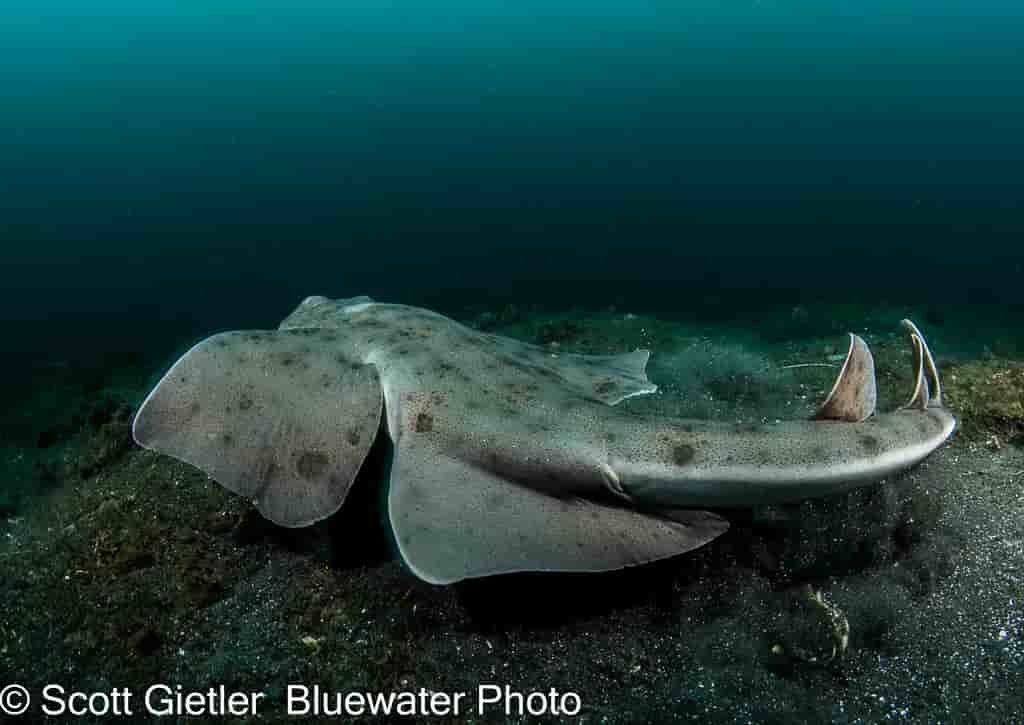
  • Angel Shark
  • Leopard Shark
  • Nudibranchs
  • Different Molluscs
  • Different Crustaceans
  • Sponges and anemones

Diving Conditions and Difficulty

Conditions for scuba diving in Southern California are good all year round. The best time to dive is during fall when visibility is the best as it is not as windy as during spring. The average water temperatures go up to 68 F (20 C ) during the summer and during the winter staying between 57 to 59 F ( 14 to 15 C ).

The destination offers dive sites for all levels. There are some sites more suitable for experienced divers with stronger current and deeper depths but you can also find other shallower sites for beginner divers.

Best Dive Sites In Southern California

Based on our travel experts' knowledge of the area, we have picked out some of the best dive sites to visit in Southern California.

La Jolla Cove- Most of Southern California's best dive sites are from the boat but if you prefer shore dives, then this is the spot to go for. This shore dive gives you all the best parts of diving in California- the kelp forests and almost all the marine life in California.

Oil Rigs of Orange County -Attractive to all types of divers and one of the easiest wall dive you can do. A unique dive where man-made rigs have turned into huge colorful reefs rich with marine life. You can see sea lions, rockfish, garibaldi, sheepshead, opaleye and a lot of other fish.

Casino Point, Catalina Island -Dive site that shows you a little bit of everything, including even two deep wrecks! The place to dive through the magical kelp forest, sand planks, pinnacles and rich in marine life. Here you can meet octopus, moray eels, giant kelpfish, and bat rays. All the reasons why we cannot leave it out of our top picks.

Farnsworth Banks, Catalina Island -Best dive site for experienced divers. Covered with California purple hydrocoral, filled with fish and the divers can go between huge underwater mountains. Sounds great, doesn't it? You can see torpedo rays, scorpionfish, moray eels, shrimp, crabs, and many reef fish.

Sea Lion Rookery, Santa Barbara Island -As you can guess from the name, it is a great place for close encounters with sea lions. Sometimes you can even swim with a big group of them! The dives are in shallow clear water.

Coral Reef, Anacapa Island -Great place for macro and wide-angle photography fans and one of the favorite places for brittle stars, which you can spot plenty. Be aware that the current can sometimes be strong at Coral Reef.

Wyckoff Ledge, San Miguel -Love nudibranchs? Then this is the spot, plus you can see some wolf eels and rare Mosshead Warbonnets. It is also a great wall dive offering options for both, deep and shallow dives.

How to Get to Southern California

The main airport in Southern California is Los Angeles International Airport (LAX), which also serves many domestic routes. Another nearby city with great diving, San Diego, has San Diego International Airport (SAN), which handles both international and domestic flights. A car is recommended to reach the various boat docks.

Topside Activites

Besides visiting us in our Culver City location, there are various things to do in Southern California! If you are out on the islands, take a day and explore Catalina Island, take a nice scenic walk, or just grab some lunch at one of the fine restaurants on the island. If you are land-based, take a bike ride along "the strand" through Santa Monica and Venice beaches. Take a hike to the Hollywood sign and view the surrounding mountains along the Runyon Canyon trail. Or go explore Hollywood Boulevard and Universal Studios Hollywood Theme Park.

Practical Information

  • Currency: US Dollar
  • Language: English
  • Main Airport Code: LAX
  • Time Zone: UTC-8
  • Electricity: 120 V 60 Hz

Start Planning Your Dream Trip – It’s Free!

We usually respond within a few hours, often faster.

Quick verification

Helps us block automated spam

7 + 4 =

Author

Nirupam Nigam

Nirupam Nigam is the Editor-in-Chief of the Underwater Photography Guide and the President of Bluewater Photo & Video - the world's top underwater photo & video retailer. While growing up in Los Angeles he fell in love with the ocean and pursued underwater photography in the local Channel Islands. After receiving degrees in Aquatic and Fisheries Science and General Biology, as well as a minor in Arctic Studies, Nirupam worked as a fisheries observer on vessels in the Bering Sea and North Pacific. Since then, Nirupam has been a full time underwater photographer and photo gear head. 

You can get in touch with him at nirupam@uwphotographyguide.com or through his website www.photosfromthesea.com.

Read more about Nirupam Nigam

Scuba Diving in Southern California Reviews

Nitroxjunkie

Visited Apr 2020|Reviewed Mar 2025
Overall rating
Marine life
Dive conditions
Top side

I live in SoCal and could write a book about diving here. I'll try to just hit the high points.The diversity includes shore diving, wreck diving, oil rig diving, offshore islands, kelp forests, and aquarium diving. Between San Diego and Santa Barbara there are at least 100 shore diving sites offering different topography, marine plants, and marine animals. Most are easily accessible and the local dive shops can give directions, conditions, and tips on diving individual sites. In the San Diego area, about 2 miles offshore from Mission Beach, is Wreck Alley. Several ships have been intentionally sunk in depths well within sport diving limits. The best of these is the Yukon, a 350+ foot Canadian naval destroyer.Farther north, offshore from Long Beach, there are 3 oil rigs that allow diving with prior consent. It's easiest to dive these on an arranged trip aboard a charter boat. It's a live drop off and pick up, since boats are not allowed to tie up on the rigs. You can expect to see large schools of bait fish, invertebrates like sea stars and strawberry anemones, sea lions, and a lot of other marine life. Whales are sometimes seen in this area. At any given time there are around 20 charter boats operating in southern California. They mostly take divers to the offshore Channel Islands.In the south these are comprised of Catalina, San Clemente, Santa Barbara, and San Nicolas. The northern islands are Anacapa, Santa Cruz, Santa Rosa, and San Miguel. All of these usually offer great viability, and excellent opportunities for photographers and hunter/gatherers. One example of marine life found around the islands is the Giant Black Sea Bass which can weigh hundreds of pounds. They are making a wonderful comeback after having been hunted to near extinction. They have been protected for many years now and scuba divers are spotting them more frequently.One of the highlights of diving SoCal is the kelp forests along the coast and around the islands. It's somewhat surreal diving amongst the fronds reaching from the bottom to the surface. Giant kelp is one of the fastest growing organisms on earth, up to 2 feet a day. The forests provide an excellent refuge for fish and invertebrates.Another novel dive is at the Aquarium of the Pacific in Long Beach. For a fee, you can scuba dive in their largest tank surrounded by a myriad of sea creatures. It's a fun and thrilling experience. I have been a hunter/gatherer for many years and opportunities for game are plentiful: lobsters, crabs, scallops, mussels, clams, urchins, and many different types of edible fish. Abalone in Southern California have been under a moratorium for many years to allow rejuvenation of the species following a number of factors which severely depleted the population. The marine animals run the gamut from Blue and Grey whales to macro subjects like nudibranchs and seahorses.The topside attractions are nearly endless: gorgeous beaches, world-famous zoos, theme parks, concert venues, museums, movie studios, some of the country's best restaurants, over a dozen professional sports teams, theater, symphony, etc.Bottom line: Southern California is a diving vacation destination that rivals all others. This should really be considered a bucket list place that everyone should visit more than once.

Read More

Nirupam Nigam

Visited Jan 2020|Reviewed Mar 2025
Overall rating
Marine life
Dive conditions
Top side

Having grown up in Southern California and dived in over a dozen countries around the world, I can say with confidence that Southern California is still my favorite place to dive. The dive community is tight knit, encouraging, and kind. The diving is second to none. No where else in the world can you find beautiful blue water, good visibility, sun, and towering kelp forests quite like you can in SoCal. Diving at Anacapa on a good day can be like diving through natural cathedrals where golden light pierces through the kelp canopy. The diversity of marine life in Southern California is special due to the cold California current coming from the north and a warm California countercurrent coming from the south. Bright orange garibaldi, huge sunflower sea stars, seals, sea lions, and countless species of fish all live under the same kelpy roof. There are a lot of great dive boat operations that do day trips out to the Channel Islands. For the price, it's a great deal. There are also some beach diving spots, but you have to be careful about surf and the occasional current. Conditions can be excellent in California or rough. You have to be aware of storms, wind, swell, current, and visibility. But some dives, particularly the oil rig dives and catalina, you can see viz past 100 ft! A lot of local knowledge goes into diving in southern california, so I recommend contacting a shop, boat, or bluewater before you get in the water for your first time here.

Read More

longshao200

Visited Mar 2021|Reviewed Mar 2025
Overall rating
Marine life
Dive conditions
Top side

Im a scuba dive instructor, I live in California, Catalina Island is the dive spot I go the most, it has very beautiful kelp forest, water is cold but you can see lots of seals and Giant Sea bass, the down side of the dive spot is the water temperature and strong current, little bit hard for beginners and people who want start to learn scuba dive, we wearing 7mm wetsuit in summer and dry suit in winter time, unfortunately I have never got a chance to dive overboard, I do want to try somewhere else especially with warm water and take some pictures, tell my experience to my students, hopefully I’m lucky enough to earn this chance.

Read More

dubblebee

Visited Aug 2014|Reviewed Mar 2025
Overall rating
Marine life
Dive conditions
Top side

My dive partner and I decided to head out to Catalina for a day of diving and libations. Getting there was easy, from the San Pedro ports we caught the Catalina Express ($70) at 7 a.m., in Catalina by 8. We went over to the dive shop to pick up some of the rental gear we needed. I needed everything, my buddy just needed a suit.The boat was pretty big and we thought it would be a full group, but surprisingly there was only about 10 of us, which made for a great, spacious couple of dives.Both dives were unguided, we directed our own dives, with a little advice from the crew.We did a couple of boat dives, one called Lava Rock and the other called Blue Car. The water temp was pretty nice, we dove in 5mm wet suits and wore hoods. Opted not to take gloves.The first dive was OK, lots of Garibaldi of course, some lobsters and other smaller fish, but we didn't see any of the big black sea bass we were hoping to find. The kelp forest is amazing. Being a novice diver it was cool to see the forest and it was a simple dive, but an experienced diver might be a little bored here.The second dive was further down and was pretty spectacular. The colors and water visibility were excellent, we saw more Garibaldi, more lobsters and even some small sharks that were up in the sandy area. Harmless, but cool to see.Topside was relaxed, standard things like sodas, sandwiches, cookies and chips were tasty and the crew was great.

Read More