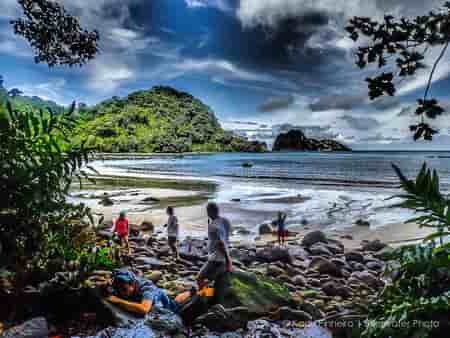

Costa Rica
Diving in Costa Rica unveils vibrant marine life, including manta rays, whale sharks, and colorful coral reefs. Explore both Pacific and Caribbean coasts, where biodiversity thrives in warm, clear waters.
Average flight time from LAX
6 hours
Visibility
50-100 ft (15-30 m)
80°F / 27°C
Average Water Temperature
Manta Ray Encounters
Scuba Diving Costa Rica
Scuba diving Costa Rica offers unique opportunities for divers of all experience levels. Both above and below the water, Costa Rica, translated as rich coast in Spanish, is known for its lush tropical forests and abundant wildlife. Located in Central America, the country occupies a narrow strip of volcanic land squeezed between the Pacific Ocean and the southern Caribbean Sea. The region's tropical climate and variety of habitats encourage some of the richest biodiversity in the world, including several rare and endangered species.
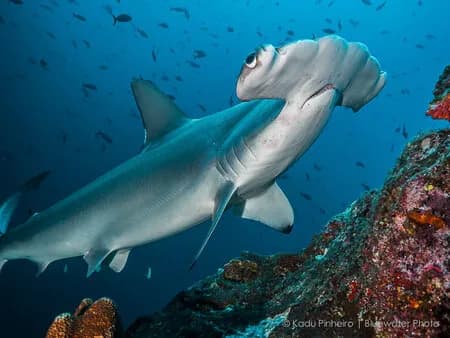
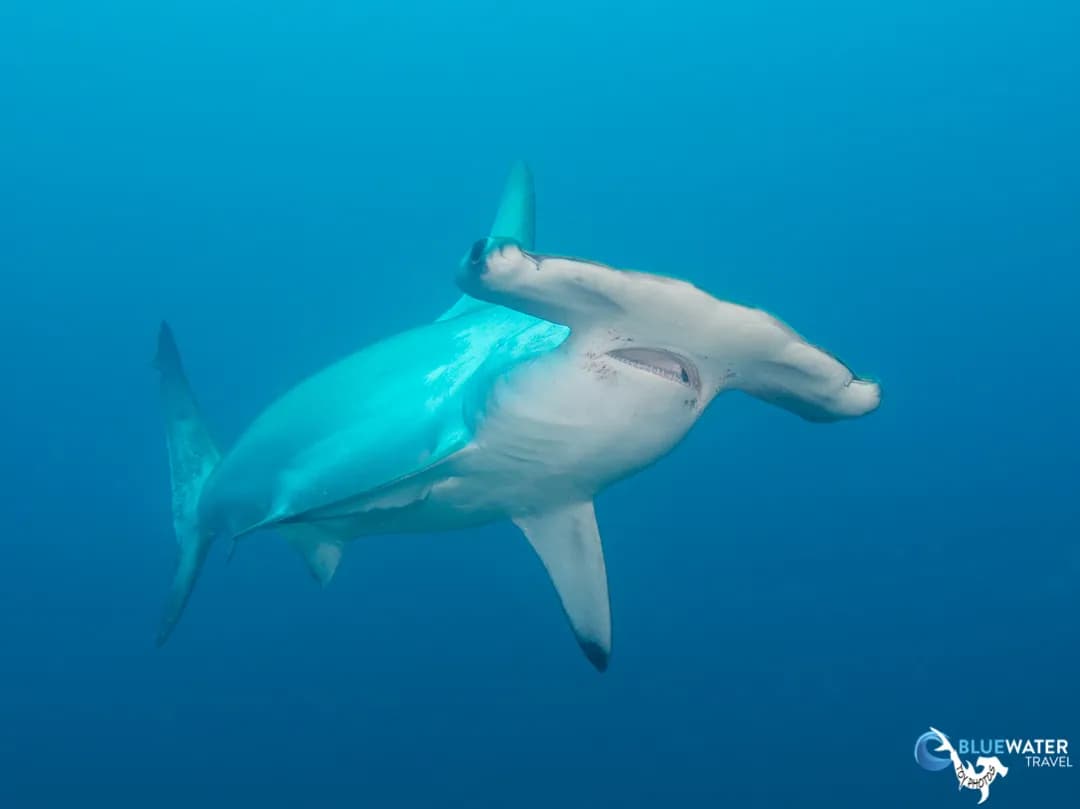
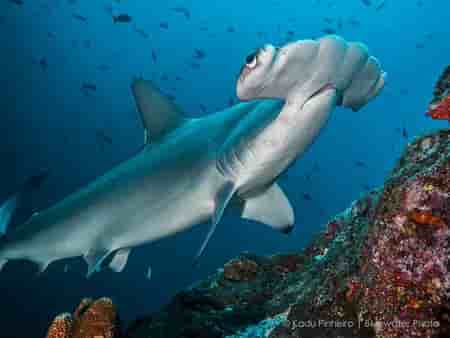
On Costa Rica's west coast, nutrient-rich upwellings and Pacific Ocean currents entice big pelagic fish and mammals close to the shore, with islands such as the Catalinas and the Bat Islands offering some exciting day-trip opportunities for Costa Rica scuba diving. Also, 340 miles further offshore, Costa Rica's flagship dive location, Cocos Island, is known globally as a fantastic hammerhead shark destination.
On the east coast, vibrant Caribbean reefs hide protected sites that are yet to be fully explored. A relaxing alternative to the west coast's big ocean diving, Costa Rica's Caribbean sites offer a plethora of tropical marine life and are perfect for beginners and snorkelers.
The Best Places for Costa Rica Scuba Diving
Here are some of the best places to dive in Costa Rica.
1. Cocos Island
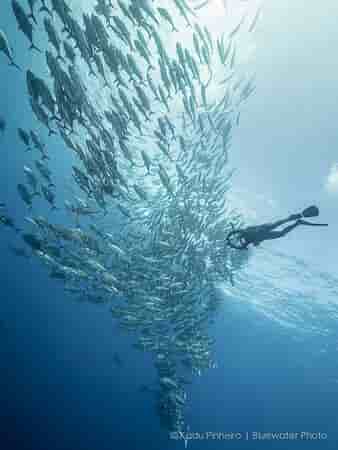
On par with the Galapagos and Socorro Islands, remote Cocos Island National Park is a UNESCO World Heritage Centre and a mecca for all things sharky. Diving here typically wouldn't be described as pretty, as there is virtually no colorful coral and therefore none of the associated vibrant reef species. But don’t be fooled - the waters around Cocos are some of the richest in the world. Pacific Ocean currents converge to bring all manner of shark species and a myriad of other pelagics to the island. Huge walls of schooling hammerheads are the big-ticket attraction here, with divers traveling from all over to photograph them in their hundreds.
Find out more about diving Cocos Island.
2. Catalina Islands
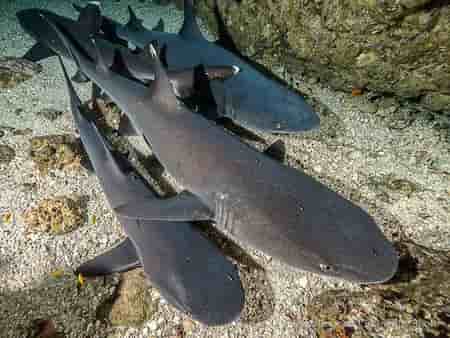
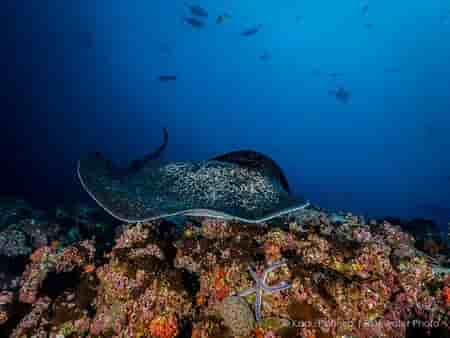
Situated midway along Costa Rica's Pacific Coast, the Catalina Islands lie between two and 15 miles offshore and are one of the most popular locations for scuba diving in Costa Rica. These rocky volcanic outcrops sport crystal clear waters and some fascinating underwater topography. Large caves and natural arches covered in bright corals are home to a variety of marine life including turtles, reef sharks, and dozens of rays, including mobula, devil, and the massive Pacific manta ray. Scuba diving Catalina Islands is an exciting introduction to Costa Rica's Pacific coast.
3. Bat Islands
A marine protected area, the Bat Islands are located off the very northwest coast of Costa Rica and are around a 50-minute boat ride from the mainland. Divers will find vast shoals of many different fish species, as well as schooling devil rays, manta rays, and the huge bull sharks that the islands are famed for. The best-known site for scuba diving Bat Islands is Big Scare, where bull sharks as big as 23ft have been known to cruise the outermost islands' steep walls. Strong currents and depths over 100ft mean this Bat Island dive site is not for the faint-hearted.
4. Tortuga Islands
Located off the southeastern edge of the Nicoya Peninsula, this small group of protected islands boasts a diversity of dive sites including some fascinating underwater formations at Canones (Canyons) and El Laberinto (The Labyrinth), exciting drift diving at Bye Bye Reef, and three wrecks all within recreational limits. The Franklin Chang Diaz and Colonel Alfonso Mong were both Coastguard ships that are easily accessible to divers of all abilities, while the Caroline Star sits in 98ft of water and is home to a good number of reef sharks. The waters around Tortuga are full of life and perfect for snorkelers and novice divers looking to explore scuba diving in Costa Rica.
5. Cano Island
Costa Rica’s southern Osa Peninsula boasts some unique diving spots around the Cano Island Biological Reserve. The area’s protected status means there are only five official Cano Island dive locations, allowing 10 divers in the water at any one time. El Bajo del Diablo (Devil's Rock) is a great spot to catch a glimpse of manta rays, bull sharks, and nurse sharks between the site's huge rocky pinnacles, peaks, and canyons. Paraiso (Paradise) is a volcanic lava formation where blue and gold snappers congregate in their thousands, watched by circling barracuda looking for their next meal. Scuba diving Cano Island is a unique experience not to be missed.
How to Scuba Dive Costa Rica
Costa Rica is a great eco-tourism destination and the country’s west coast is home to several popular resort areas. Many of the inshore Pacific dive sites can be reached by day-trip boats from towns such as Tamarindo, Playa Potrero, Jaco, and Puntarenas. The country's east coast is less developed, and visitors will find relaxed hideaways and unspoiled beaches. However, this goes hand-in-hand with a less established dive infrastructure, and some planning is required for diving these frontier sites.
Costa Rica Travel Information
How to Get to Costa Rica
Costa Rica is easily accessed from the US via two international airports: Juan Santamaria International Airport (SJO) and Daniel Oduber Quiros International Airport (LIR). Most flights arrive at the former, and this is the airport to use for trips to Cocos Island. There are also some direct flights from Europe.
Other Things to Do in Costa Rica
Costa Rica is one of the top nature destinations in the world. There are excellent opportunities to see monkeys, toucans, brilliantly colored tree frogs, parrots, sloths, and many other birds and animals. Adrenaline junkies can take part in white-water rafting or surfing, and the country’s volcanoes feed relaxing hot springs and act as amazing motivation for tourists to take scenic hikes. Costa Rica is small, easy to travel around, and relatively safe.
Fellow traveler's reviews
Nitroxjunkie
We have a friend who owns a vacation home in Costa Rica and he offered to let us use it. The house is located in Tamarindo near the beach. We chose a week in January and went as a group of six. Three of us are scuba divers and the other three are non-divers. It was intended as an adventure trip to do some exploring around the country and squeeze in some diving when possible. We flew to Liberia, rented an SUV, and drove to Tamarindo, which we used as our base.The next day, we made a 1 hour drive to Playas del Coco and found a dive shop right on the main street to take us out on their boat. They suggested the Catalina Islands because there was a good chance to see Giant Pacific mantas. We were the only ones on the boat and after about a 1 hour ride, we hit the water in search of our elusive quarry. About 10 minutes into the dive, we had our first sighting, a 15 footer that snuck up from behind and passed us within near touching distance. What a thrill to have such a close encounter! Throughout the rest of the dive, we saw several more giants coming, going, and circling around us in very near proximity. It was a shame our exhilarating dive had to end. When we got to the surface, we couldn't contain our excitement. Once we were back on the boat, our divemaster told us that after the surface interval, we would move to a site with a cleaning station, in hopes that we would see more mantas up close and personal. We weren't disappointed. We settled in behind a rock outcropping and waited, hoping a manta would show up. It didn't take long. An 18 footer swam up to within a few feet of us and hovered in place while being tended to by several fish picking bits off the manta. After several minutes, it moved on but it wasn't long before another showed up. It was a repeat of the same show. In all, we saw three different mantas come to the cleaning station during the dive. It was truly a day to remember and we had a lot to talk about during the hour boat ride back to Playas del Coco and the hour drive back to Tamarindo. We decided it was worth the drive to return the next day.When we returned to the shop, it was decided that we would dive in the Golfo de Papagayo whose sites are much closer and only about a 20-minute boat ride. We went to a site called Meros, a small pinnacle. The visibility here wasn't as good as the previous day, but we were rewarded with schools of grunts, moray eels, some nudibranchs, and some large groupers. The second dive was a site called Monkey's Head, a large rock that resembles the head of a gorilla. It was mostly typical marine life seen in the area, but we did see a squadron of spotted eagle rays. That definitely made this dive a winner. We only dove 2 days but would like to return to dive the Bat Islands for a chance to see bull sharks.The rest of our trip was devoted to topside activities. We set off for the town of La Fortuna. This isn't a day trip so we stayed at a great hotel just outside of town. From here we were easily able to visit La Fortuna Waterfall for a good part of the day and a wonderful thermal resort on a day pass to enjoy their incredible hot springs. This was all in the shadow of Arenal Volcano. We continued to Monteverde National Park to hike in the cloud forest, cross hanging bridges, listen to howler monkeys in the trees, and zip line over the jungle canopy.We returned to our base in Tamarindo where we relaxed on the beach and one of our friends spent the day surfing. The last thing we did was a night tour to Marino las Baulas National Park, which is a leatherback turtle nesting area. It is required that you be guided by a park ranger for the safety of the turtles and their nests. It is definitely worth the visit to see these majestic turtles on the beach.Bottom line: Costa Rica is a real nature lover's delight. The diving was really great and way better than we thought it would be, the topside activities are fantastic, the food is delicious, and the people are warm and welcoming.

DEALS & SPECIALS
Dive Into Our latest Costa Rica Special Offers
All dealsworldwide
RELATED ARTICLES
Stories Beneath The Waves
All articles