July 9, 2020|Author: Katie Yonker|Reading time: 5 mins
Tiger sharks, and more tiger sharks. These awesome predators are what this eponymous dive area is all about, and shark enthusiasts and underwater photographers flock from around the globe to experience them up close and personal.
Tiger sharks, and more tiger sharks. These awesome predators are what this eponymous dive area is all about, and shark enthusiasts and underwater photographers flock from around the globe to experience them up close and personal.
Intro to Tiger Beach
Located an hours boat ride from the West End of Grand Bahama, this small, shallow sand flat is arguably one of the best places in the world to dive with tiger sharks. Sightings are reliable and conditions consistent, providing excellent photography opportunities year-round. Shark-fishing is prohibited in the Bahamas, meaning that these awesome predators are fully protected and currently thriving in the waters around the island chain.
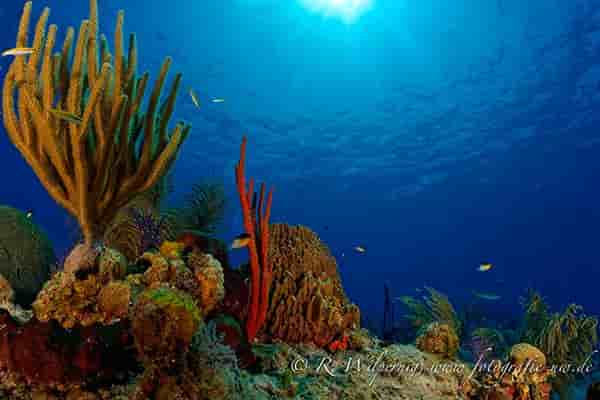
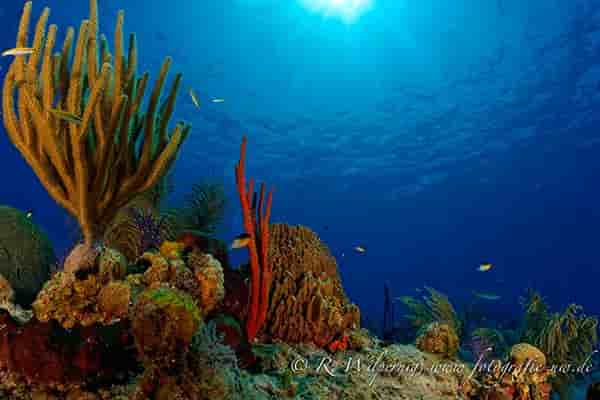
While shark diving Tiger Beach is undoubtedly the highlight of a dive trip to the Bahamas, this shouldn't detract from healthy reef systems packed with life, and the warm, clear waters that make diving Tiger Beach and the rest of the Bahamas a true pleasure.
When To Go
Scuba diving Tiger Beach takes place throughout the year, however, the period from October to January generally brings better encounters with more sharks. Having said that, there is a resident population of tiger sharks at Tiger Beach, and shark encounters do occur year-round. Of the other shark species, lemon sharks are also consistently present while great hammerhead sightings are most likely between December and March.
The months of June to October tend to be warmer but wetter, with air temperatures of 75-91oF (24-33oC). The drier winter months of November to May bring cooler temperatures in the region of 65-77oF (18-25oC).
The main attraction at Tiger Beach is the tiger sharks, both residents and visitors, that patrol the shallow waters of the sandbank waiting for their daily chum meal. At a length of up to 18ft (5.5m) being surrounded by these huge fish can feel overwhelming until divers learn to recognize the regular diners and named individuals. There can sometimes be as many as 15 tiger sharks in the water, however, the normal turn-out is around 4 or 5, making it much easier to keep track of who is where.
Most dives will also be inundated with 20 or 30 lemon sharks, and at around 10ft (3m) long they are less intimidating than their larger cousins. There are also dozens of Caribbean reef sharks, the odd nurse shark, and great hammerheads may make an occasional appearance at certain times of the year.
Photographing these sharks is an art form and the opportunities for unusual and unique shots are endless. The clear shallow water and white sandy bottom make for some great atmospheric close-ups. For advice and tips on getting the best out of a photography trip to Tiger Beach, check out Steve Rosenbergs photo essay Return to Tiger Beach. There is also some great photo advice in this article by Shane Goss, What You Need to Know About Diving Tiger Beach.
Typical Dive in Tiger Beach
Tiger Beach can only be accessed by boat, and while it is traditionally a liveaboard destination, a couple of land-based operators are now offering day-trips from West End on Grand Bahama. Some liveaboards focus solely on diving Tiger Beach, while others will include a few dives as part of a broader itinerary.
The sandflats of Tiger Beach are generally shallow, so dives can be as long as 120 minutes. The tigers are often fed to encourage them into the waiting divers who will position themselves in a V formation facing into the current with the professional shark feeder at the point. The current sweeps the chum down through the center of the V, encouraging the sharks to swim between the divers so that everyone has a great view and a chance to predict their shots.
Diving Conditions
Water temperature: 88oF (31oC) in the wet season and 75-80oF (24-27oC) in the dry season.
Visibility: Excellent, up to 400ft (120m).
Depth Range: 9-98ft (3-30m), although much of the diving is around 20ft (6m).
Diving Difficulty: Suitable for all levels, including snorkelers.
Grand Bahama International Airport (FPO) in Freeport receives international flights from the US and other Caribbean destinations. Lynden Pindling International Airport (NAS) in Nassau receives direct flights from the US and Europe and serves as the main gateway to the rest of the Bahamas via inter-island flights and ferries.
Arriving on Grand Bahama by sea is also a popular option, with a fast ferry service from Port Everglades, Florida, and an inter-island service between Crown Haven on Abaco Island and McLeans Town on Grand Bahama. The twice-weekly mailboat from the capital Nassau on New Providence also takes passengers.
Most liveaboards depart from Freetown on Grand Bahama, however, the MV Shear Water embarks and disembarks from West Palm Beach, Florida.
Katie is the most experienced travel advisor at Bluewater Travel, having been with the company since its inception. Her interest in scuba diving started many years ago while on vacation in the British Virgin Islands. Though not yet certified, she was mesmerized by the marine life below the surface. As soon as she returned to Los Angeles, she swapped her mask and snorkel for a regulator and BCD (and a mountain of other dive equipment) and hasn't looked back since!
Katie is no stranger to the Southern California waters, but prefers to travel around the world and experience new cultures, food, and marine environments. She has visited and led trips to many of the top liveaboard destinations. Her most memorable dive moment was swimming 20 feet from humpback whales off the coast of Moorea. At the top of the list for her next dive vacation: Alor.
When she's not in the office, you're likely to find Katie attending a concert in LA, snowboarding at Mammoth, attending to Sadie, or cheering on her alma mater, The Michigan Wolverines. Go Blue!
Katie's Underwater Camera Setup:
Olympus OM-D EM-1 Mark II with Nauticam housing. Olympus M.Zuiko ED 9-18mm lens with Nauticam 4" wide-angle port. Panasonic Lumix 8mm fisheye lens with Zen 170mm dome port. Olympus M.Zuiko 60mm lens with Nauticam macro port 65, with Bluewater +7 macro lens. Dual Sea&Sea YS-D2 strobes. Light & Motion Sola 800 photo light.
-optimized.webp&w=3840&q=25 "Thumbnail 1")
-optimized.webp&w=3840&q=25 "Thumbnail 3")
-optimized.webp&w=3840&q=25 "Thumbnail 4")
-optimized.webp&w=3840&q=25 "Thumbnail 5")
-optimized.webp&w=3840&q=25 "Thumbnail 7")
-optimized.webp&w=3840&q=25 "Thumbnail 8")
-optimized.webp&w=3840&q=25 "Thumbnail 9")
-optimized.webp&w=3840&q=25 "Thumbnail 10")

-optimized.webp&w=3840&q=75 "Scuba Diving at Tiger Beach - image")