$1,251 OFF
Special
Pacific Master Specials & Packages
4|5
Expert advice on diving,
seasons, and logistics
Free planning help
when you’re ready to book
Exclusive dive packages
tailored for you

Special
Special
Special

Special
Scuba Dive Level
All Levels
Visibility
100 to 200 feet (30 to 60 meters)
Average Water Temperature
81
Stunning Reefs & Corals
Tropical Fish
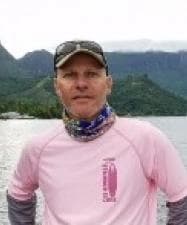
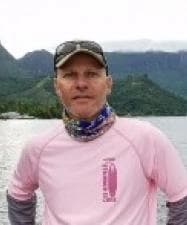
Erik Lukas is an active diver and photographer based in Los Angeles, CA. He is a volunteer scuba diver at the Aquarium of the Pacific in Long Beach, CA. You can expect to find Erik diving many of the amazing Pacific Ocean sites of Southern California, camera in hand, at any chance he can get.
See more of Erik’s photography at www.seeundersea.com or on Instagram @seeundersea.
"I am passionate about underwater photography in general and have a special love for macro subjects. For me the things that are hardest to spot hold the most interest. Documenting the commensal and symbiotic relationships is for me the most interesting…the smaller and more bizarre the better. I also have a passion for sharing my knowledge with others. My goal with all of my workshops is to ensure each guest leaves with a group of images that they are proud to share."
Erik shoots with a Canon 5D Mark III in a Sea & Sea housing using Zen 100mm and 230mm dome ports. The lenses he uses are the Canon 8-15mm f/4L, Canon 16-35mm f/4L, and Canon 100mm f/2.8L.
There is a good reason I am the first reviewer for Kosrae- it is completely off the map and mostly untouched by the western world. If you are looking for modern luxuries, a hopping nightlife and a community of fellow divers, go to Chuuk, Palau or any of the other dozens of overinhabited tropical islands to which divers flock. If your goal is to unplug, dive on gorgeous coral reefs, take in some serenity, encounter genuine local culture and go home with an amazing experience from a place none of your friends have visited, Kosrae is for you.The 2000 inhabitants give the island a small town feel; they all seem to know each other and many will recognize you and quickly start to greet you with a smile every day. Kosrae has no major imports as the locals are supported mainly by subsistence farming, but they are very welcoming and appreciative of tourists. The mood is vey laid back, especially on Sundays when no diving or working is allowed. Small stores are fairly spread out throughout the island. The cars are all purchased used from Japan, so they are right-hand drive even though everybody drives on the right side of the road. It is at once a funny yet beautiful place inhabited by wonderful people.This island is an undiscovered gem both above and beneath the waves. The diving is mostly drift diving over wonderful hard coral gardens with abundant reef fish and punctuated by frequent encounters with larger animals like gray reef sharks, stingrays, turtles, and giant Pacific groupers. The staple organisms of anemones with resident clownfish can be seen on nearly every dive.The island also boasts a number of wrecks. The Sansun Maru is a supply ship that rests in about 60' of water. Don't miss out on the sunken plane wrecked nearby. Finally, there are the remains of the pirate ship owned by the infamous Bully Hayes. Called the Leonora, there isn't much left, but the dive itself is a fun muck dive in Utwe Harbor, perfect for days when the winds kick up and limit your options.
Just got back from 6 nights at the Kosrae Nautilus Resort including 4 days of diving. We were the only divers on the island for the week we were there. Kosrae diving was incredible, particularly if you enjoy pristine conditions (some dives over 200 foot visibility) and very healthy coral. The clownfish were seen in abundance on every dive. Not a lot of large fish but did see black tip reef sharks, mangrove rays, eagle rays, turtles and schools of barracuda. Most of the dives are on the wall, but very easy diving with depths averaging 50 feet or so. We are planning to return.