Almonda Liveaboard
Full service trip planning,
by divers for divers
Our experts will support
you every step of the way - 24/7
Lowest possible price,
our service is 100% free
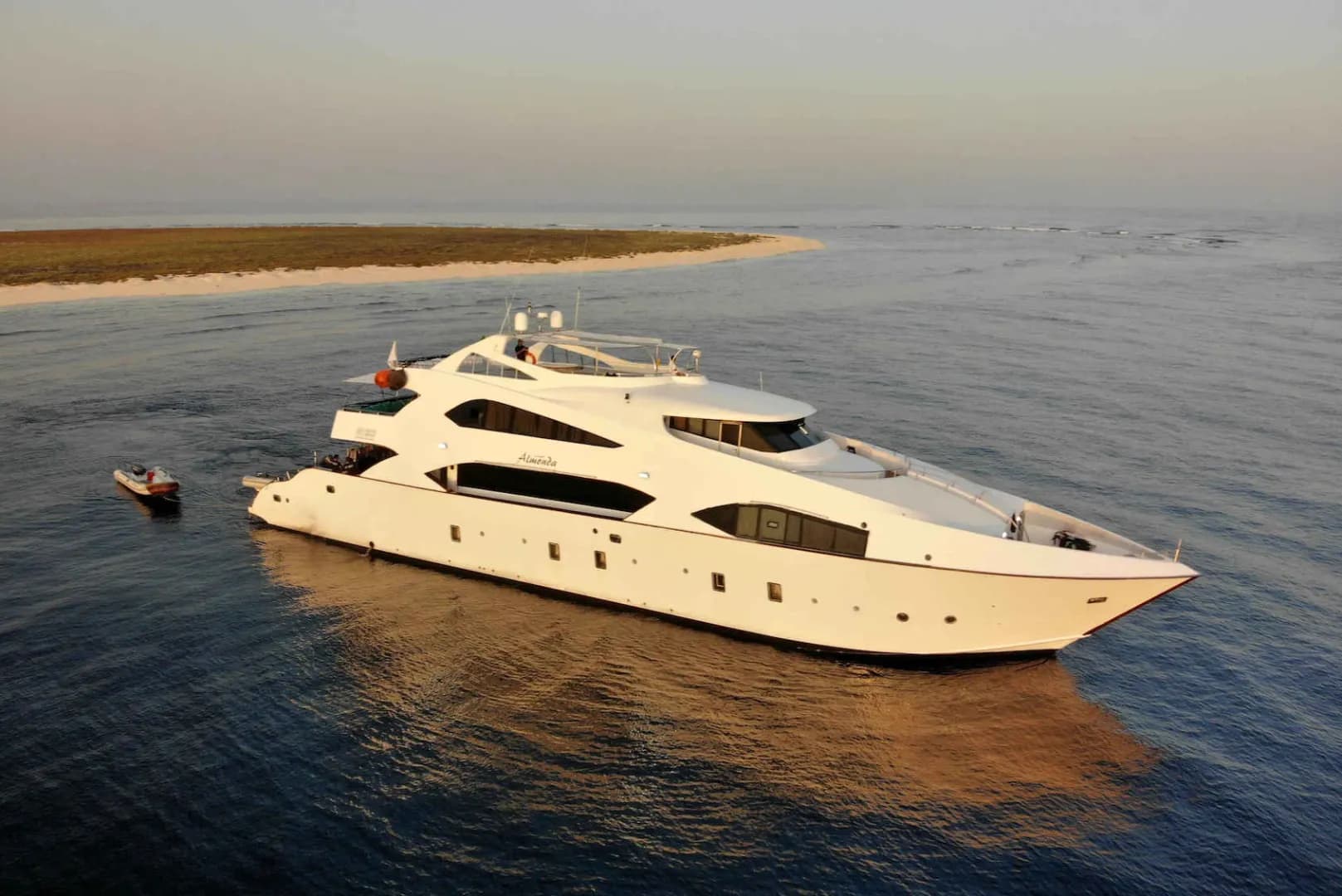


Trip dates, price & live availability
No liveaboard trips match your filters. Try adjusting your search.
Cabins
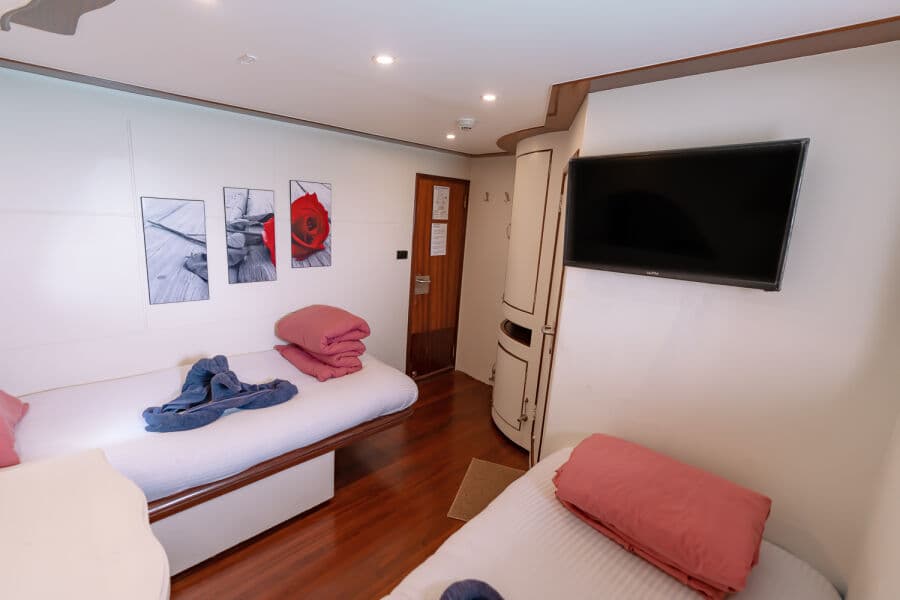
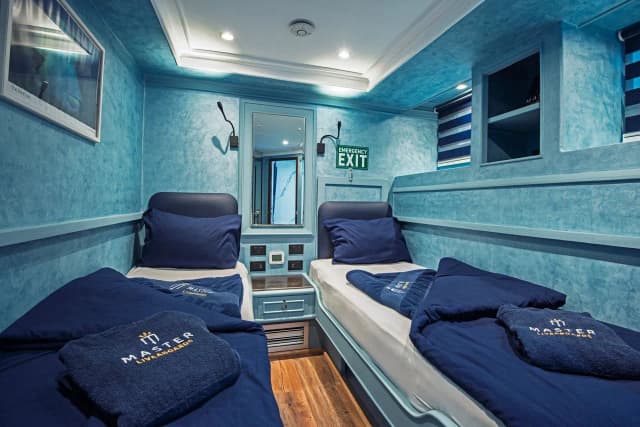
Twin Lower Deck
Air Conditioning (AC)
Fan Ventilator
TV
Wifi
Toilet
Shower
Bathtub
Hair Dryer
Safe
Refrigerator
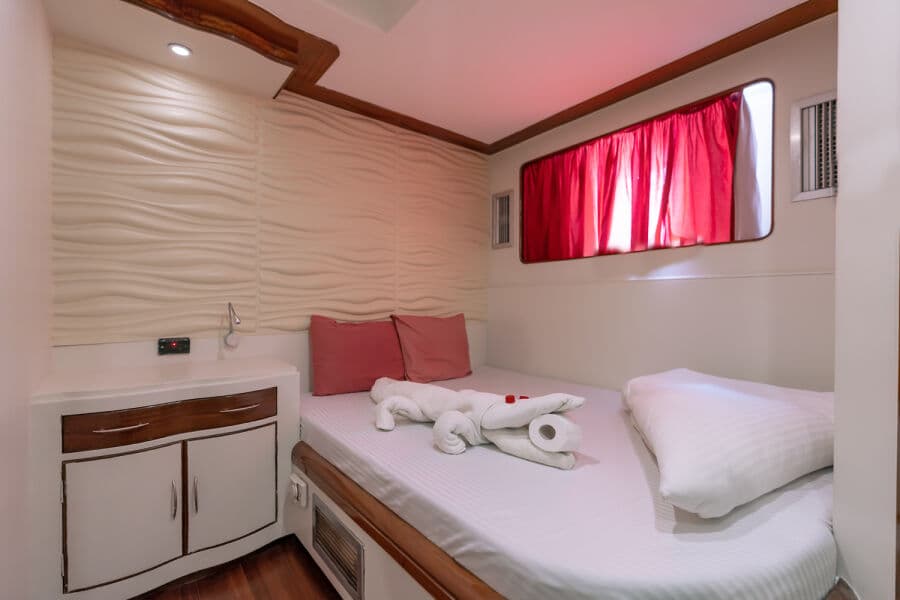
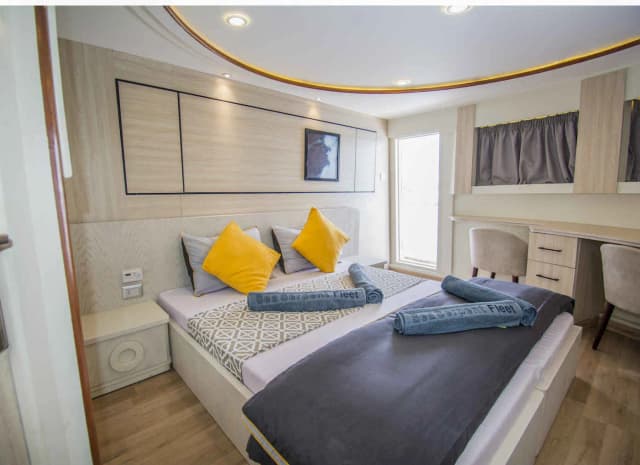
Double Lower Deck
Air Conditioning (AC)
Fan Ventilator
TV
Wifi
Toilet
Shower
Bathtub
Hair Dryer
Safe
Refrigerator

Master Main Deck
Air Conditioning (AC)
Fan Ventilator
TV
Wifi
Toilet
Shower
Bathtub
Hair Dryer
Safe
Refrigerator
Deck plan
Features & facilities
Boat features & facilities
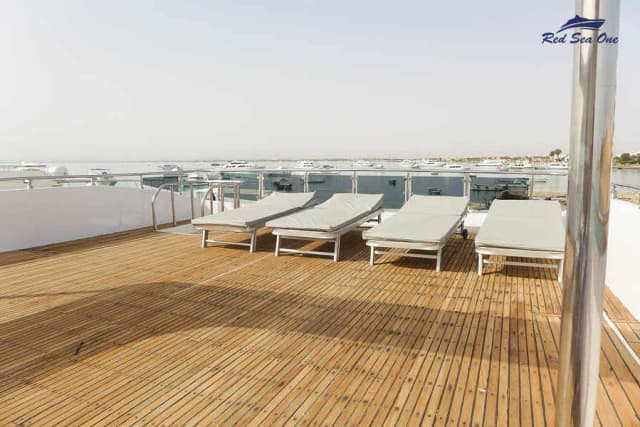
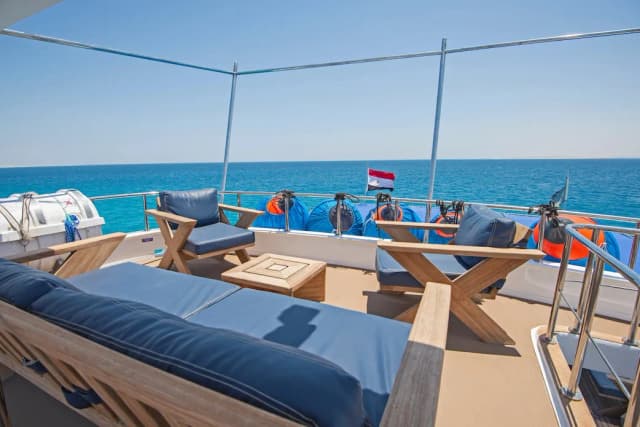
Large sun deck with deck chairs
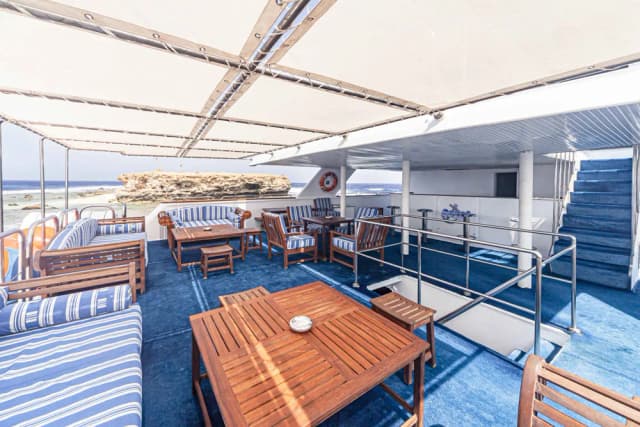
Partially covered outdoor area
Jacuzzi
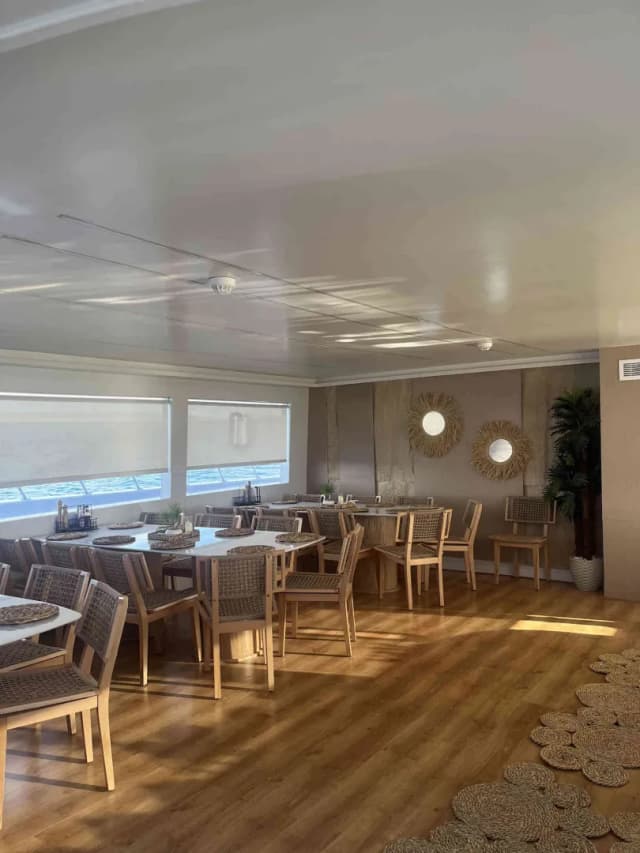
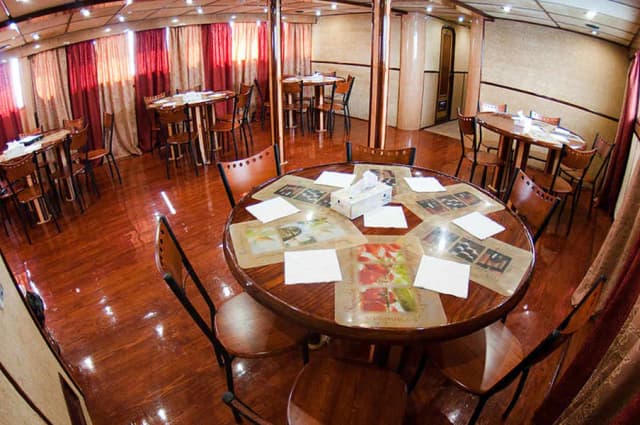
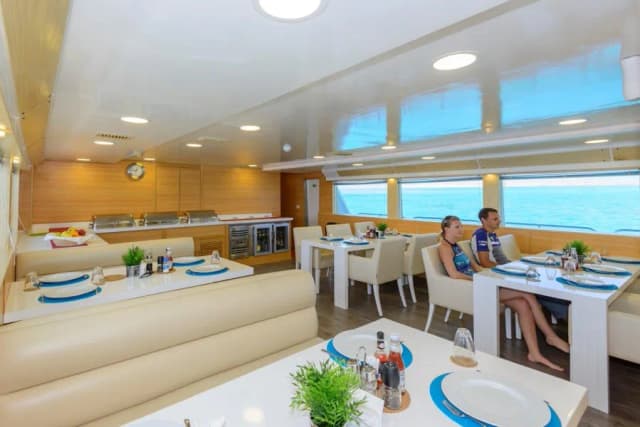
Spacious salon
Dive features & facilities
Diving platform
Individual storage for diving equipment
2 zodiacs
Almonda Liveaboard Dive Overview
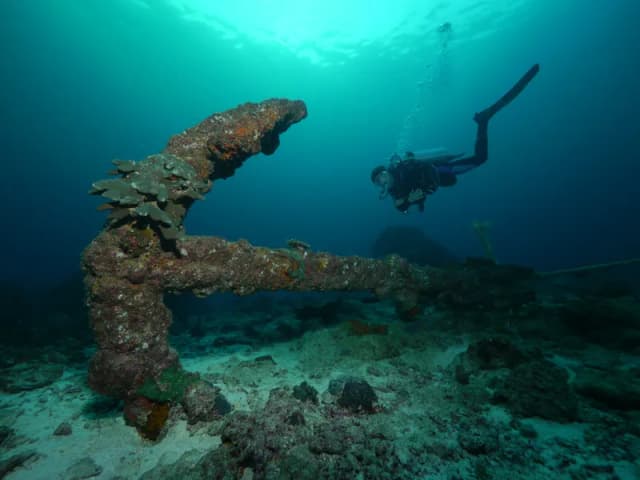
The Saudi Arabian Red Sea offers access to pristine coral reefs and untouched dive sites, thriving with life.
[See: Red Sea Dive Travel Guide]
Check out this amazing video from Ocean Breeze Liveaboards!
Almonda Liveaboard Accommodation Overview
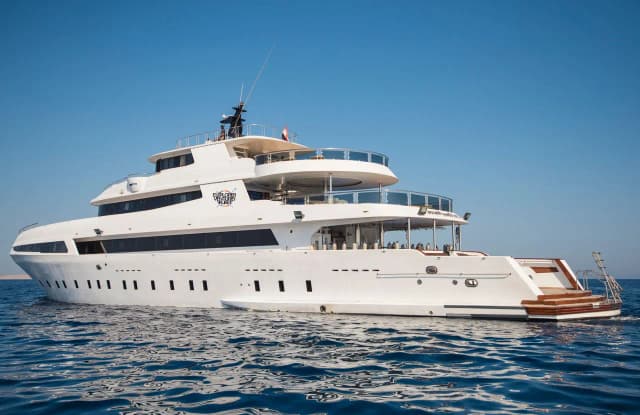
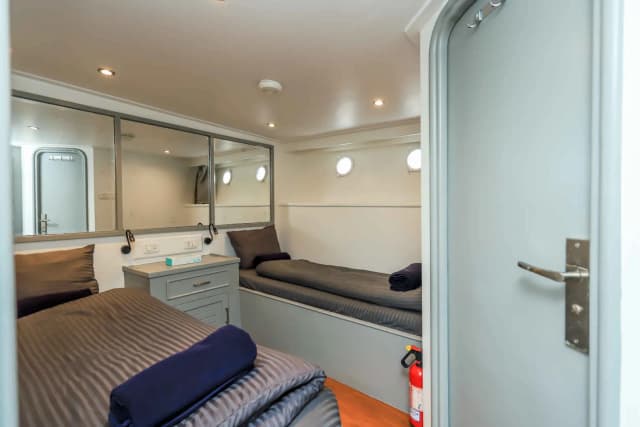
The Almonda can accommodate up to 24 guests in its 12 spacious staterooms. The Deluxe Cabins (8) are outfitted with two twin beds, Double Cabins (2) with a queen bed, and the Master Suites (2) also with a queen bed. All staterooms come complete with a 32-inch flat-screen TV with a selection of 400 movies, shows, and documentaries, ample storage, a porthole view window, mirrored cabinet, fresh towels, and volume controls. All rooms are also fully air conditioned and are equipped with a private bathroom.
Food & Drinks
Aboard the Almonda, guests are served 3 meals per day, buffet-style. Breakfast typically consists of bread, toast, pancakes, jam, honey, a different variation of eggs, and yogurt; while chicken, beef, or fish, together with the garnishing rice, noodles, potatoes, and different kinds of vegetables and salads are usually served as the during lunch or dinner. Pudding, cakes, or fruits are also typically served for dessert. During the day, coffee, tea, water, Cola, Sprite, and juices are also available, free of charge.
Itineraries
More information
Practical information
Time Zone
UTC+2
Local Currency
EGP (Egyptian Pounds)
Language
English & German
Electricity
220V
Payment methods
Cash (USD and Saudi Riyals) or Credit cards (VISA and MasterCard)
Boat specifications
Built: 2017
Length: 39.9 m
Width: 8.57 m
Draft: 2.5 m
Max. speed: 12 knots
Cruise speed: 10 knots
Engines: 2 x Man, 1050 each
Fuel: 16 tons
Generators: 2 x Cummins, 130/160 kW
Water tanks: 14 tons
Sewage: 2 x 6 ton
Tenders: 2 x 6.5 m 45 Hp
Camera tables: 3
Almonda Liveaboard Reviews
GillF
The Almonda is a big boat by Red Sea liveaboard standards and can sleep a maximum of 24 guests. The cabins are some of the most spacious I have seen, with plenty of hanging space, cupboards, and storage under the beds. The dining room is on the lower level, off the dive deck, and the lounge area is one floor above. The indoor lounge has plenty of space for everyone to relax, and there is also a large, shaded outdoor seating area and bar directly above the dive deck. The top deck has sunbeds and a jacuzzi, but it was too hot to spend much time up there. We were 18 guests onboard for this trip, but even with a full compliment of 24 the boat wouldn’t feel crowded.The Almonda is reasonably modern, and the dining area feels quite new. The lounge and cabins were a bit tired and could do with sprucing up. However, everything worked and was well-cleaned. All cabins had AC and a television, and guests were provided with bottled water, a cabin towel, and a dive poncho. The cabins were cleaned twice a day, and the towels changed part way through the week. There were charging points located under the seats in the lounge, and also on the dive deck. Free WiFi was available in the lounge area when the boat was within cell signal range - this was really only the first and last two days of the trip.The dive deck was well fitted out and there was plenty of space for everyone and their kit. Nitrox was included free of charge. There was only one freshwater rinse tank for computers and cameras, however there were three camera tables, and an air gun for drying off cameras and computers. At the back of the dive deck there were 30+ cubby holes, each with a charging socket. More than enough for everyone onboard. Sockets are round 2-pin European style. The lower deck was also spacious, with two fresh water showers and two fresh water guns for rinsing off after the dive.I was very impressed by the food onboard. Breakfast was a range of salads, meats, and cheeses, cereal and yogurt, toast, pancakes, and spreads, and Arabic cuisine such as falafel and beans. The chef also cooked eggs to order. Lunch and dinner were a choice of salads, at least two meat or fish options, fresh vegetables, and salad, rice, or potatoes. There were several ‘speciality’ meals such as steak night and seafood night, where the chef made sushi, prawn platters, and cooked a whole salmon. Desserts were normally a choice of fruit, and a couple of nights we had Arabic cakes or ice-cream. There was always a supply of snacks and fruit, and soft drinks and specialty coffee were freely available. After each dive we were handed a small glass of fruit juice.As per Saudi law, there is no alcohol served onboard, and it is not permitted to bring your own.This is the first season that the Almonda has been officially running as a liveaboard in Saudi, so the crew have been drawn from an existing pool of seasoned Egyptian liveaboard workers. This meant that everything ran very smoothly and I felt the staff were well rehearsed in their roles and duties onboard. The dive guides, especially, were very experienced and heavily involved in discovering new dive sites. They were excited to be part of something new and unique, and were constantly updating their briefings with new photos and presentations as they dived the sites more.I would class this as a good mid-range boat - definitely not luxury, but one of the better boats I’ve been on.The DivingI dived the Farasan Banks itinerary which is run from February through to May. After that it gets too hot in the south so the boat moves north to dive a different itinerary. I thought the diving was fantastic - new dive sites are being discovered all the time, and the guides are actively exploring and discovering new areas to add to the itinerary. There is one other boat that was also running this itinerary, but we only crossed paths with them once during the entire trip.Most sites are fringing reef, with a large plateau at 30-40m leading to a steep drop off. We tended to dive the more exposed end of the reef to give us the best chance of spotting pelagics. Most dives started with a swim out above the plateau to the drop-off, 20 minutes in the blue looking for big stuff, and then a slow swim back up to the reef for the final 20 minutes exploring the shallows. The water was warm - between 27 and 30 Celsius. At some sites we had light to medium current, but we generally drifted with it rather than having to swim against it. Entries and exits were a mix of zodiac diving or straight from the main boat, depending on the conditions and how close we could get to the reef.We were briefed to expect schooling hammerheads, huge shoals of barracuda and tuna, and plenty of silky, whitetip, and grey reef sharks. However, the water temperature had warmed up to the point that the big stuff was much deeper than it had been several weeks before. The other group had one encounter with a group of around 30 scalloped hammerheads that circled them for 5 minutes, but we generally didn’t see as much pelagic life as in previous trips. The guides told me that the best time to dive was February through April when the water is around 25C. We did spot one or two lone hammerheads, a couple of eagle rays, and a mobula ray. But the best experience was a family of dolphins that hung out with us for 10 minutes during our safety stop.I was most impressed by the condition of the coral reefs. I have never experienced such healthy corals and sponges. The entire reef is covered - no patches of rock or areas of dead or damaged coral. It’s pristine! And there are tons of small and medium fish life. The ecosystem seems to be in perfect balance - completely untouched. Swimming over the plateau areas we looked down on nesting trigger fish, reef sharks sleeping on sandy patches, small groups of juvenile barracuda and jack - the amount of life was exceptional.Travel to SaudiSaudi Arabia has a poor reputation in the west, however, I didn’t experience anything negative during my travel into and out of the country. The new international airport (Terminal 1) is very modern and well organised. The arrivals area has food and coffee outlets, a huge aquarium, and is only a short walk to the transport waiting area. Credit card and wireless payments are readily accepted. The Saudis I encountered spoke good English and were friendly and helpful.I didn’t venture further than the airports on this trip, however, I met a lady on the boat who lives in Dubai and regularly travels throughout the Gulf States. She had just completed a road trip around Saudi with another female friend and the photos looked fantastic! She didn’t encounter any problems from a safety point of view, in fact she said she felt it was one of the safest Middle Eastern countries she has visited.There is no requirement for non-Muslim ladies to wear a headscarf, in fact there were many without at the airport. Both men and women should cover their legs and shoulders when out in public - loose trousers and a t-shirt is perfectly acceptable. Once on the boat, it was no issue to wear standard liveaboard clothing - the crew are all Egyptian so quite comfortable with guests wearing shorts and vests, swimsuits, etc.A word of warning - there is also an old terminal (Terminal 2) at Jeddah airport which is not nearly as nice as the new terminal. There are no facilities and it is crowded, disorganised, and I queued for a long time to get through immigration. This seems to be the terminal used for domestic arrivals and flights coming in from other nearby Middle Eastern countries and was predominantly pilgrim travelers. I recommend people avoid arriving here if possible.Also, quite a few flights from Europe route through Cairo. There is a seasonal terminal in Cairo Airport, separate from the main international departures terminal (Terminal 3) that the Jeddah flights depart from. This isn’t noted on any of your paperwork or tickets. There is a shuttle to the seasonal terminal that departs from downstairs outside Terminal 3, or you can take a taxi for around $5. Again, this terminal is very old, disorganised, and with no facilities.
JayLord
I spent 6N aboard the MY Almonda exploring the Farasan Islands. Most of the diving was off the wall or deep on the edge of a sunken plateau. Large marine life was the objective. Our group was lucky enough to see scalloped hammerheads on numerous dives, sometimes up to 20+. The coral reef was in great condition and covered in wildlife. The crew on the boat were all very friendly and helpful. The food was tasty and plentiful as expected on a liveaboard.I appreciated that the MY Almonda price included everything. No extra fees for the port, hotel/airport transfers, nitrox, or fuel surcharges. One fee covered everything. I would definitely join the MY Almonda on one of their other itineraries.
Discover similar liveaboards
Liveaboard
55.0|5
Sea Serpent Grand
Red Sea & Middle East
Travel: Oct 22, 2026 – Oct 29, 2026
$1,571$1,310
Learn more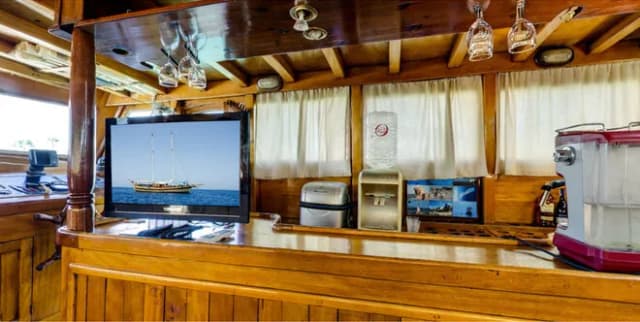
Liveaboard
Royal Evolution
Red Sea & Middle East
Travel: Oct 29, 2026 – Nov 5, 2026
$1,627$1,464
Learn more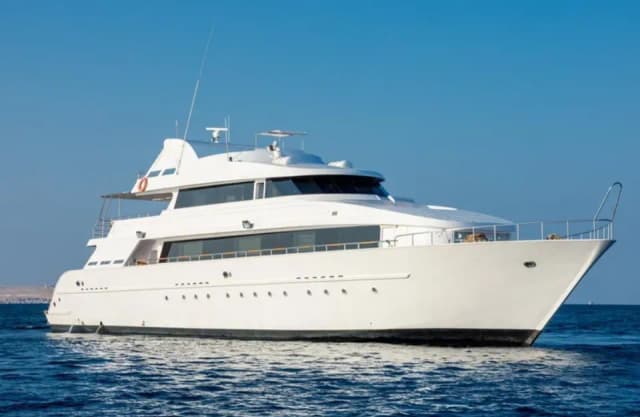
Liveaboard
Grand Sea Explorer
Red Sea & Middle East
Travel: Oct 22, 2026 – Oct 29, 2026
from$2,545
Learn more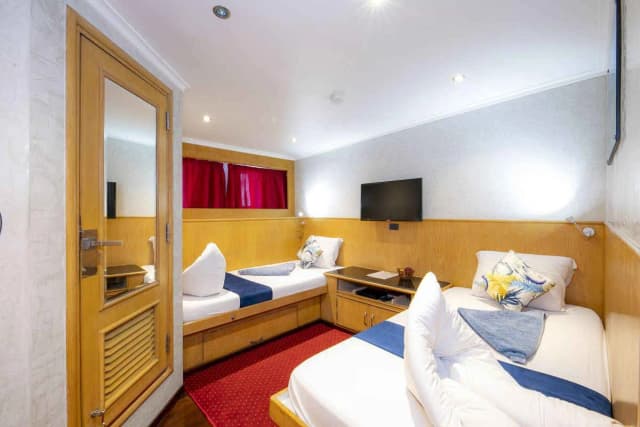

Liveaboard
Red Sea Aggressor II
Red Sea & Middle East
Travel: Oct 24, 2026 – Oct 31, 2026
$2,760$999
Learn more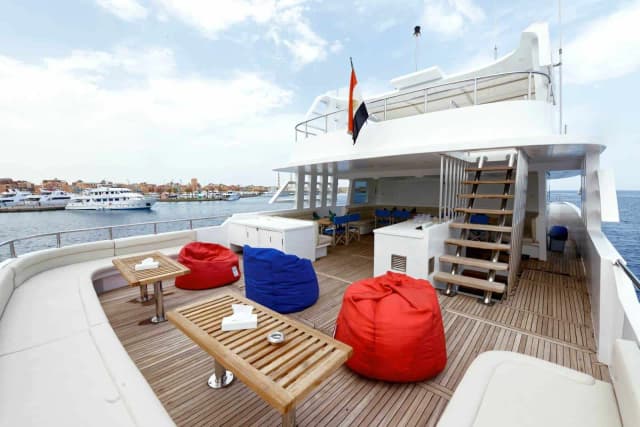
Liveaboard
44.0|5
Discovery II
Red Sea & Middle East
Travel: Oct 24, 2026 – Oct 31, 2026
$1,067$907
Learn more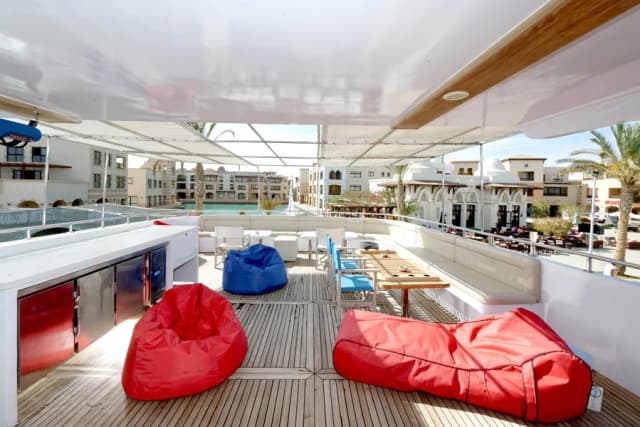
Liveaboard
55.0|5
Blue Storm
Red Sea & Middle East
Travel: Oct 22, 2026 – Oct 29, 2026
$1,258$1,089
Learn more