Tanzania Big Game Safari August 2025 Trip Report
by Mark B. Hatter
“I never knew of a morning in Africa when I woke up that I was not happy.” – Ernest Hemingway
Setting Out
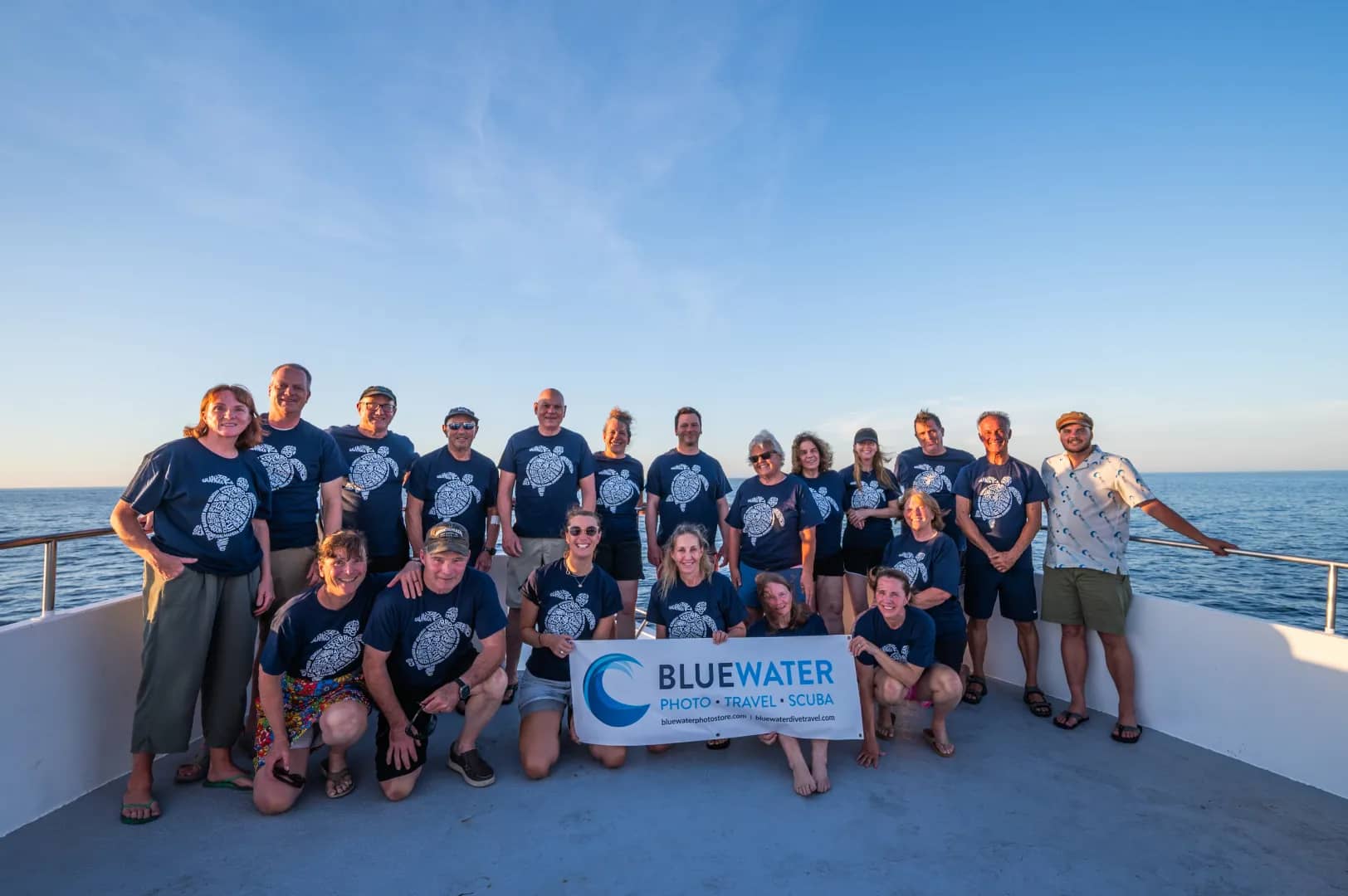
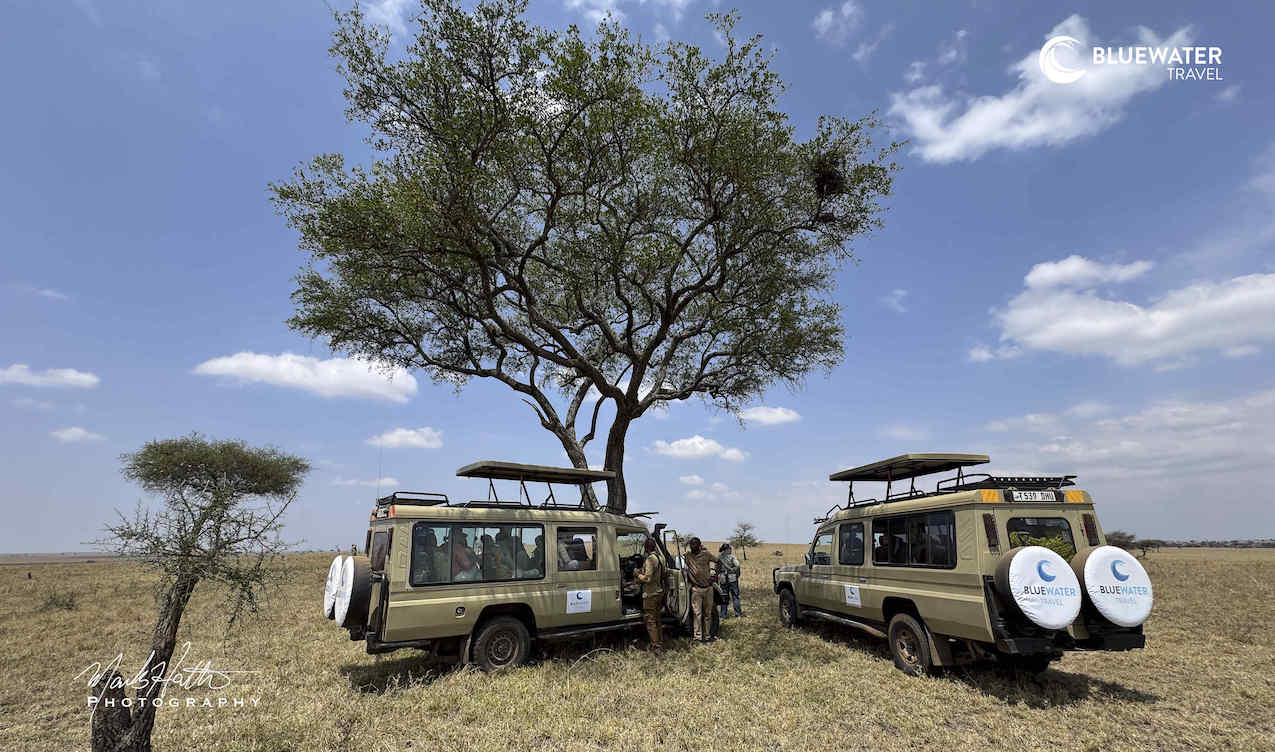
It’s been nearly three years since I last visited Tanzania on a Bluewater Travel Safari and, like Hemingway, this morning I awake, not unhappy. Today begins our Bluewater Travel journey spanning more than a thousand kilometers in 10 days across Tanzania, visiting four national parks and multiple conservation areas in search of wildlife and adventure. We are a team of twelve, divided into two Safari vehicles, and champing-at-the-bit to begin our adventure.
Overnight dining and accommodations at Katambuga House in Arusha, our entry point of immersion into our African experience, have been delicious and opulent. But we are eager to saddle-up and leave for the bush! After all, a plethora of encounters await the future for many on our team who are first time visitors to the African continent.
Check out video highlights from our 2025 Tanzania Safari!
Learn more about our Tanzania Safaris.
Tarangire National Park
There is a phalanx of Safari vehicles at the ranger station check-in, at the entrance to Tarangire National Park. But it’s not unexpected as our Safari has been scheduled during peak season. Elia and Alex, our Matembezi Safari Company guides and hosts are efficient and we soon pass through the gate entrance to an expansive landscape of Acacia and Baobab forests, grassy plains, all intersected by the Tarangire River. The Park is vast and easily swallows every Safari vehicle immediately after leaving civilization behind its entrance crossing, as each navigates towards complete wilderness.
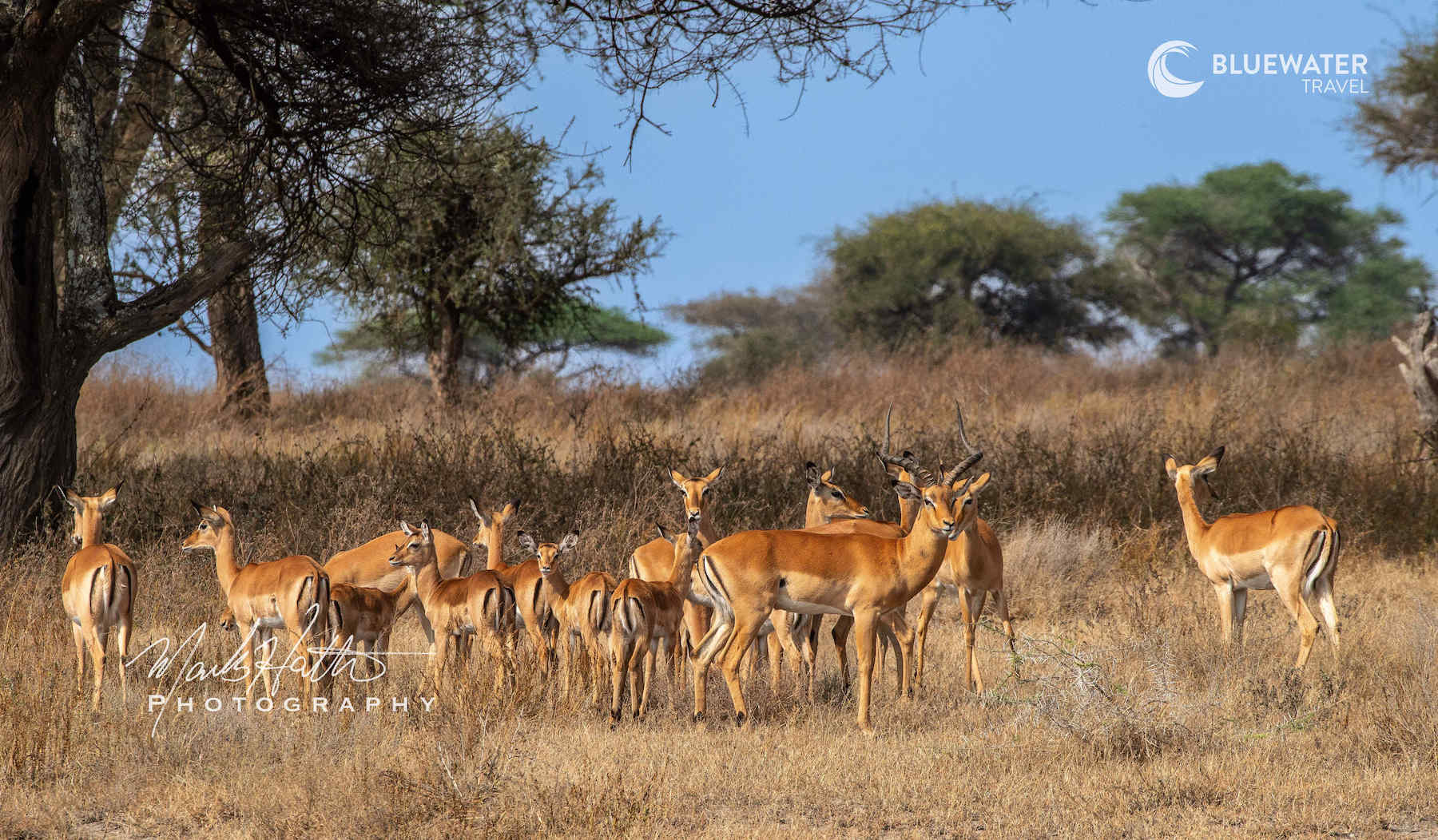
We haven’t trundled down the dusty jeep trail for more than five minutes before encountering a herd of impala. The regal horns on every member belays that this is a “boys club only” of subadult males not yet strong enough to challenge the single alpha male in a hornless breeding herd of females.
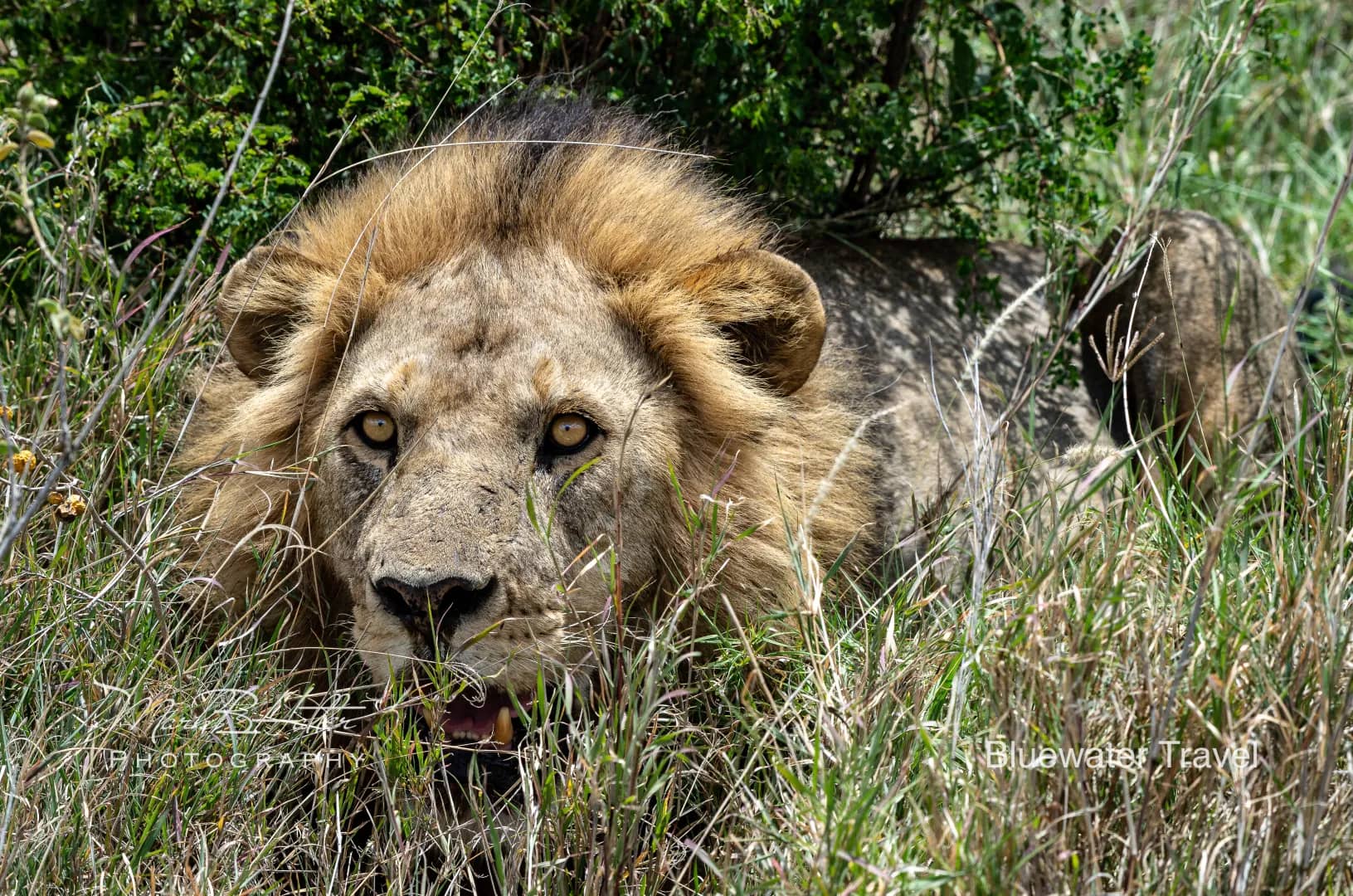
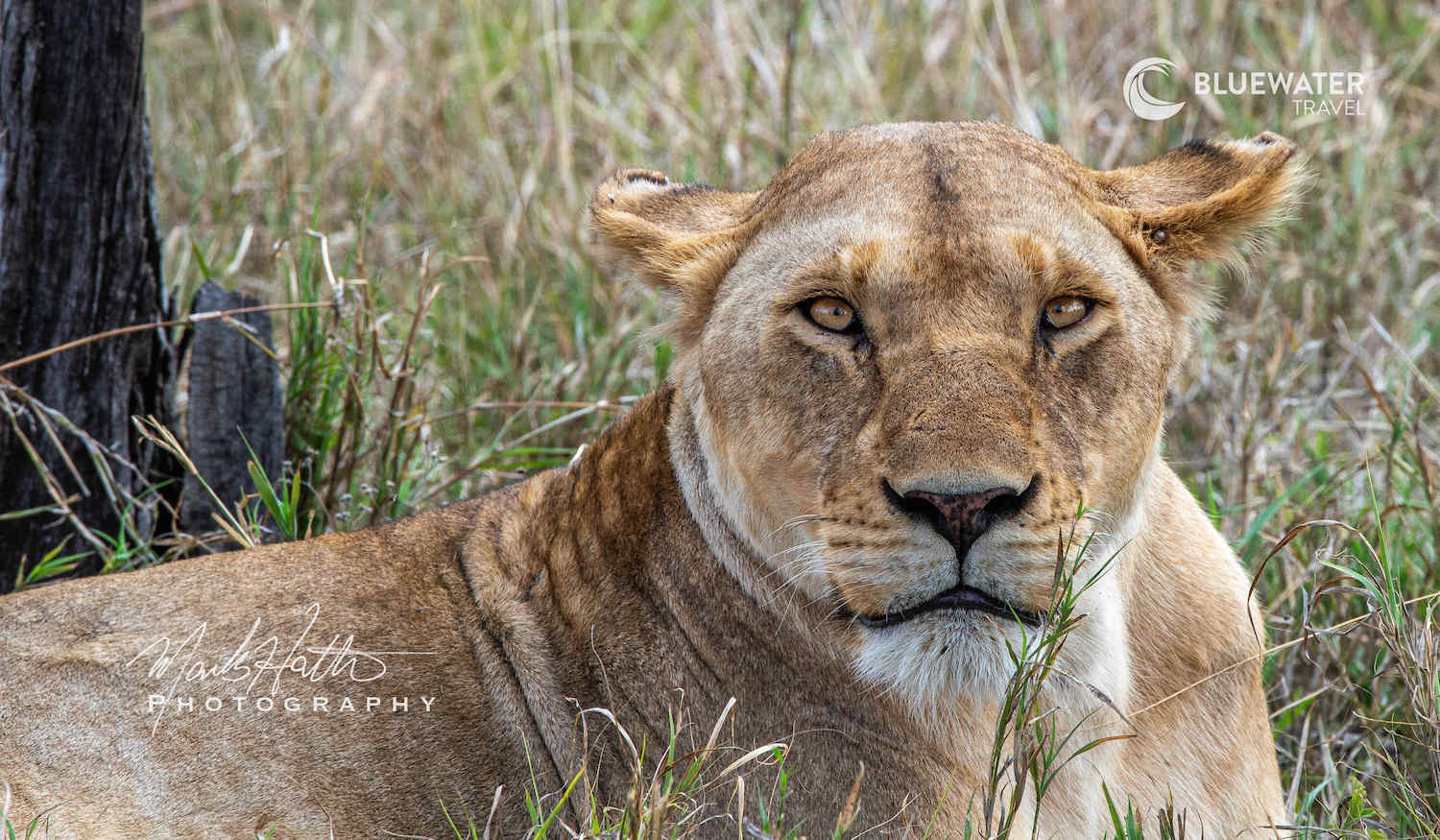
Ahead, a small number of Safari vehicles has gathered by the river near a large acacia tree. Lions! An adult male is snoozing under the tree’s canopy. Across the road an adult female emerges from chest-high grass and saunters toward our vehicles. Smartphones record and camera shutters click between the hushed excitement of our team’s adventurers. We have not been on Safari for more than 30 minutes and we’ve already encountered cats at close range!
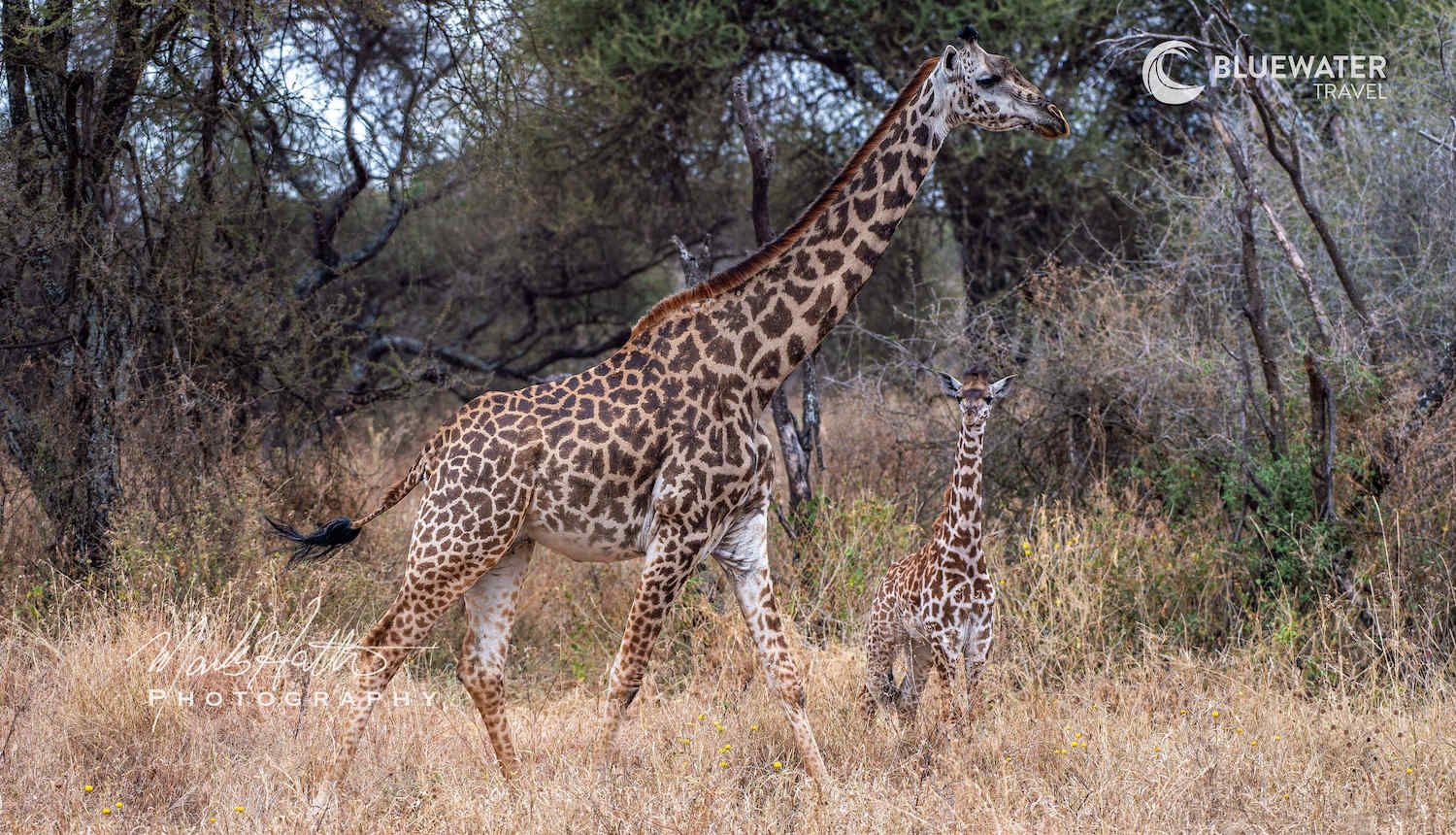
As the afternoon proceeds, multiple giraffe, antelope, warthog and zebra encounters stymie our forward progress deeper into the park. These sightings are firsts for most of our team and we want to stop and record it all.
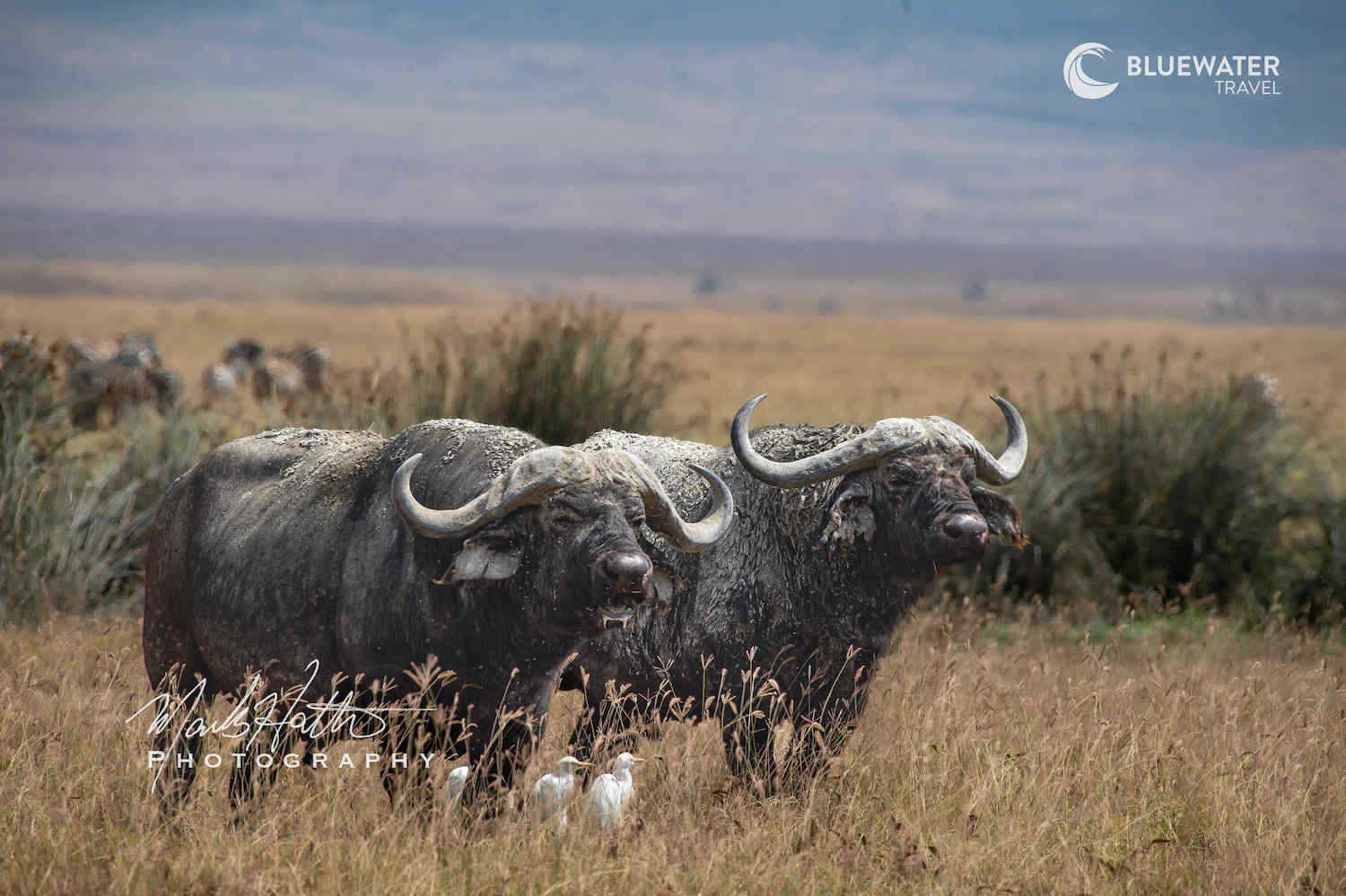
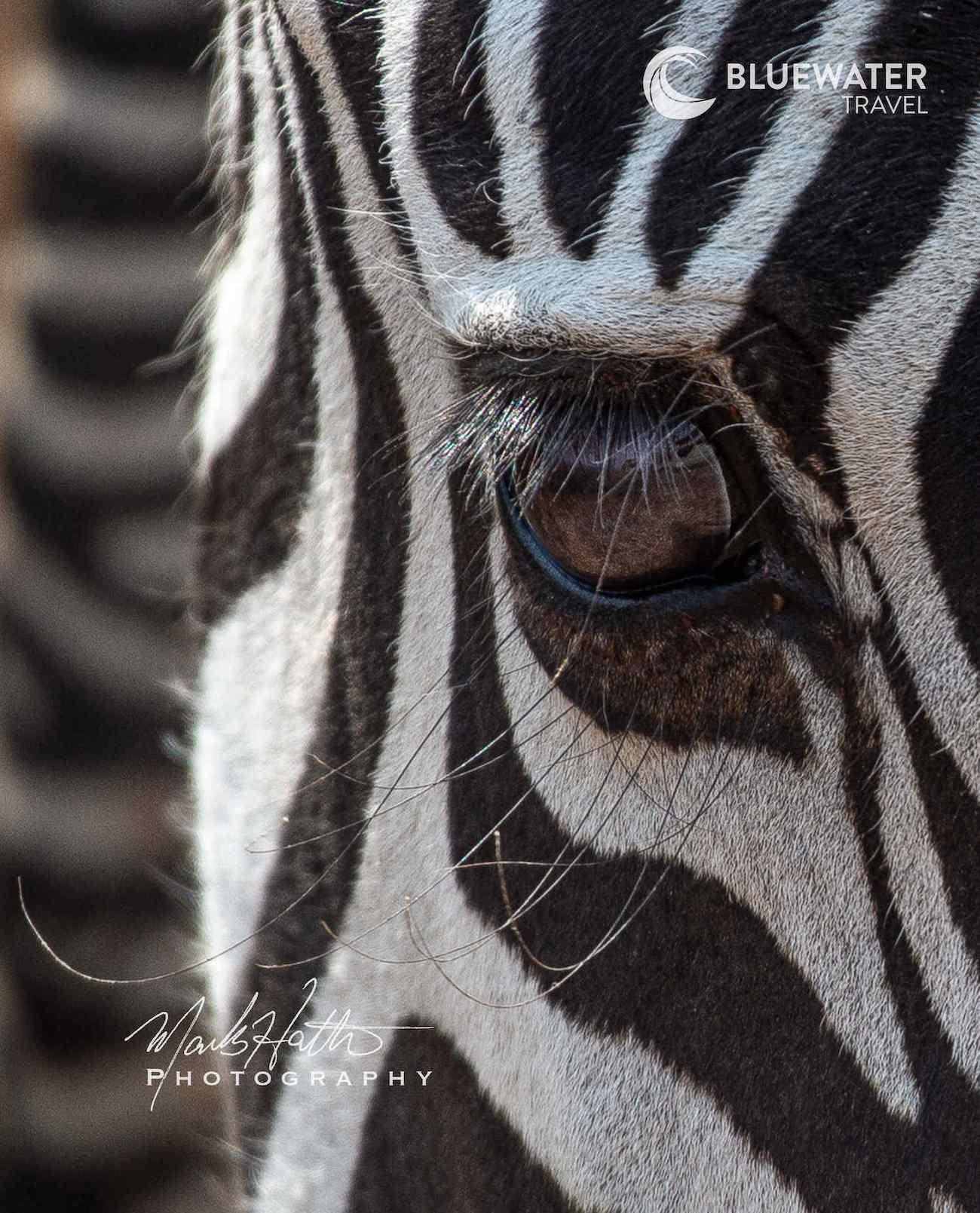
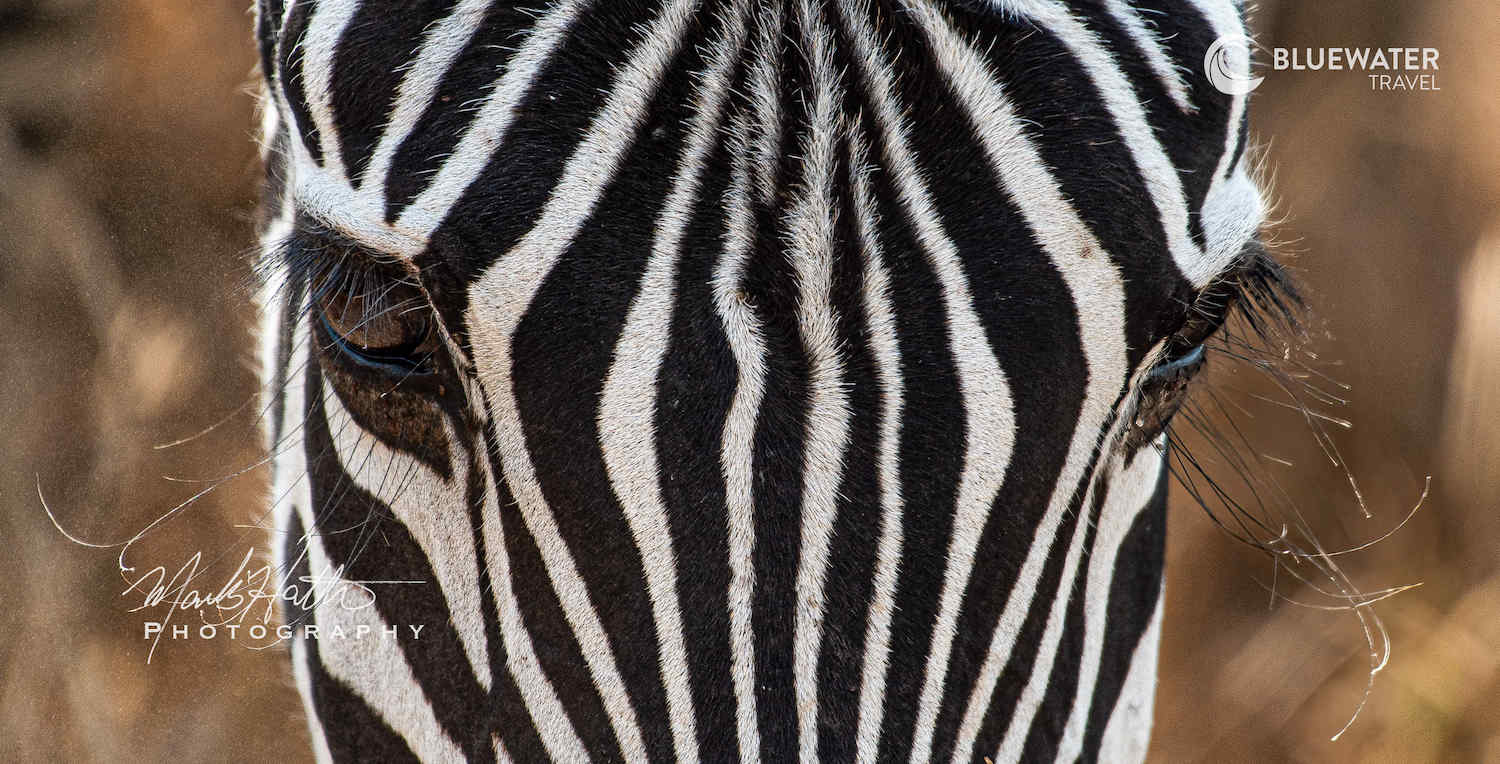
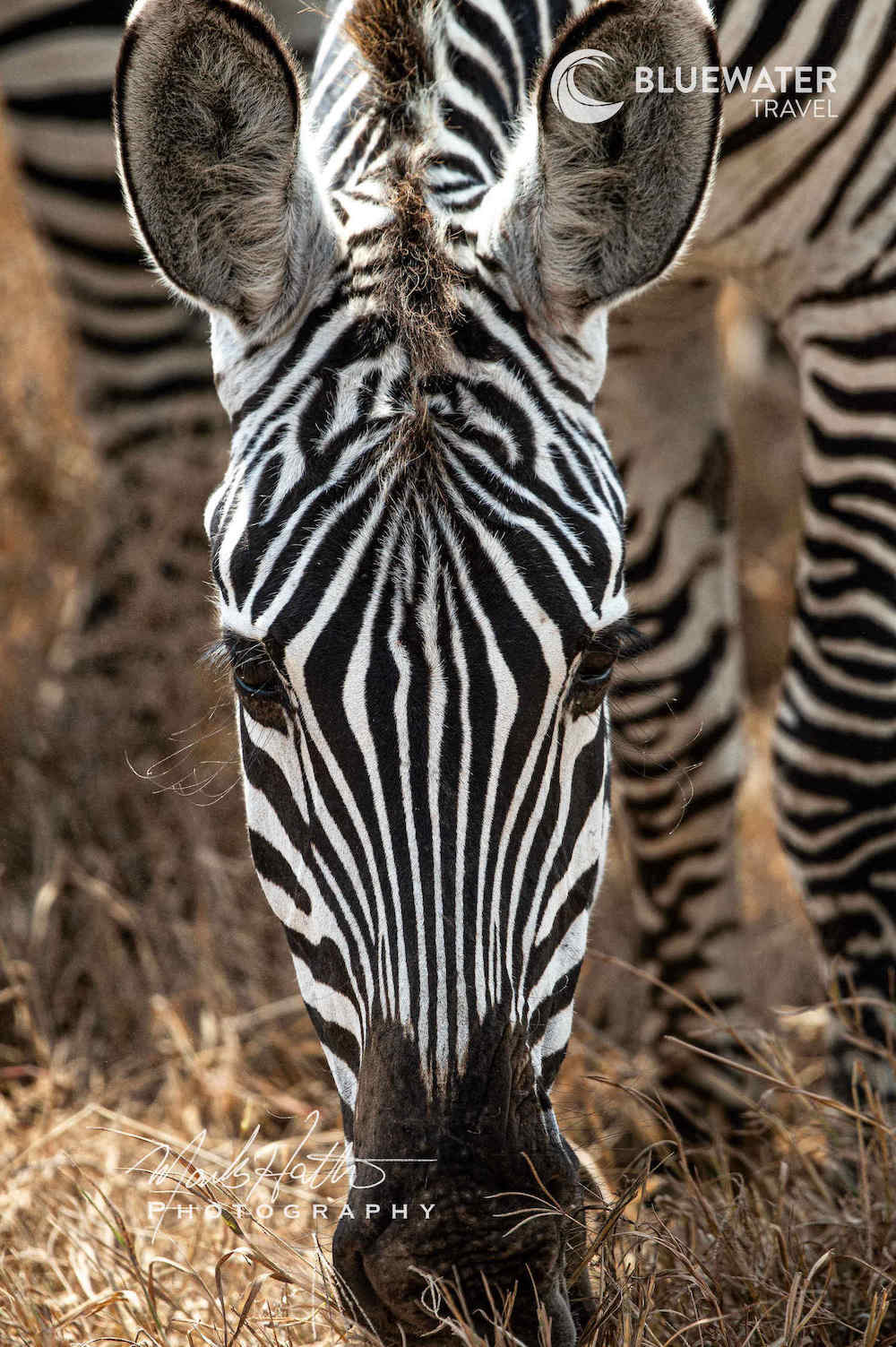
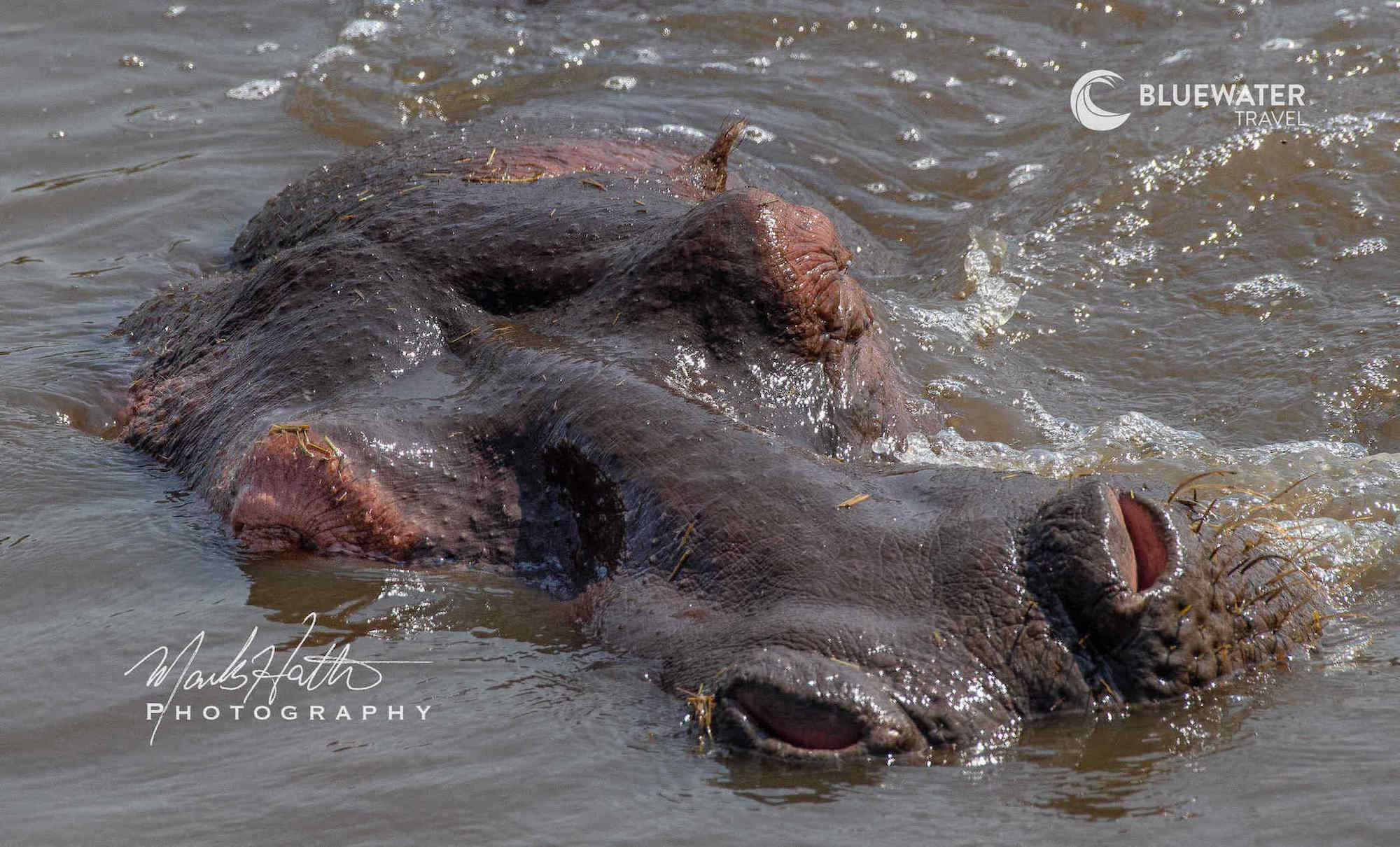
By late afternoon we find ourselves on the banks of the Tarangire River observing a herd of elephants doing what elephants do: babies play and swim in the shallow river while adults wallow in mud-holes before applying a coating of dust and dirt with prehensile trunks. For fifty minutes we are voyeurs into a complex society of intelligent beasts, observing what they are doing, which is always what they’ve done for millennia.
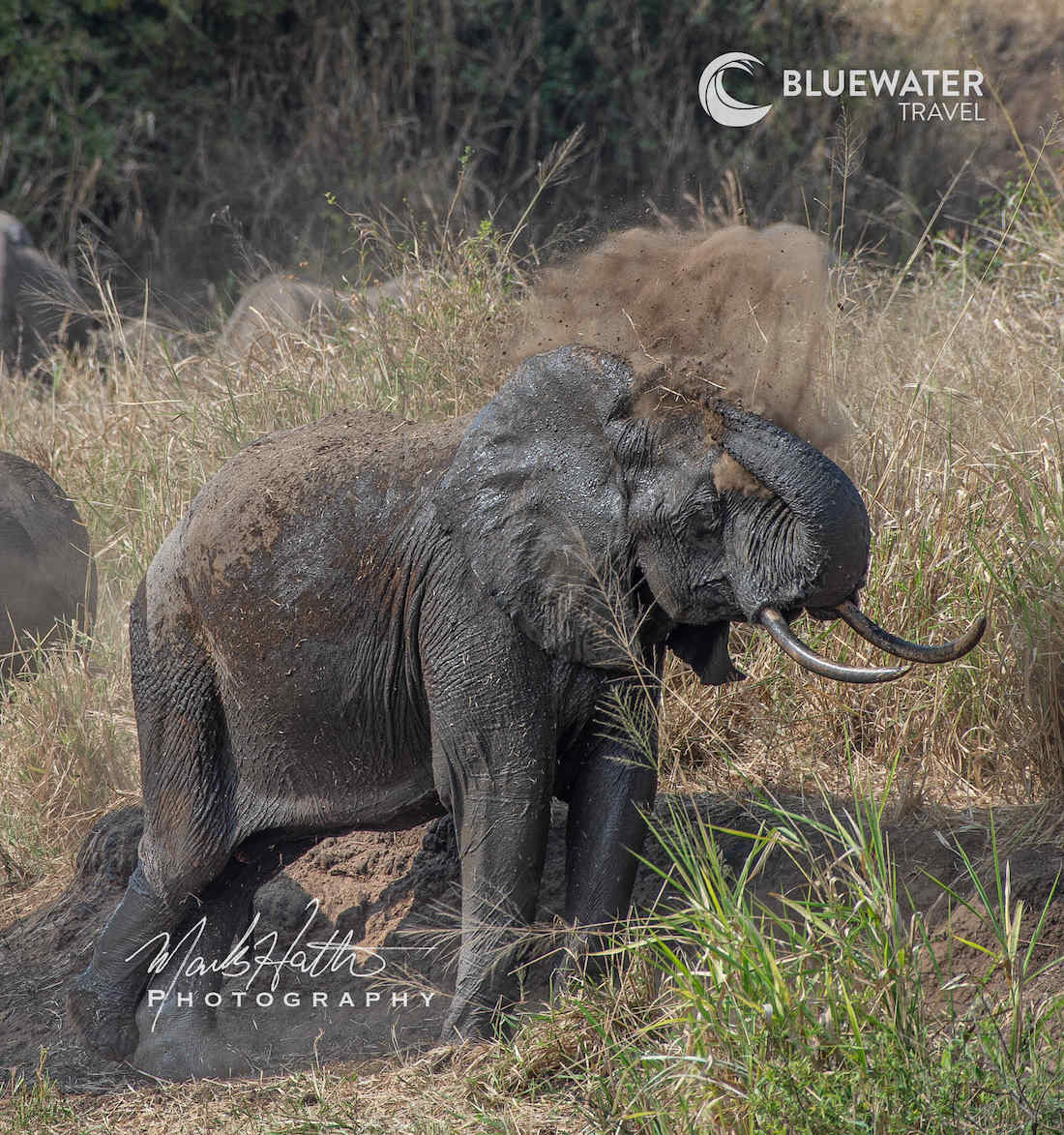
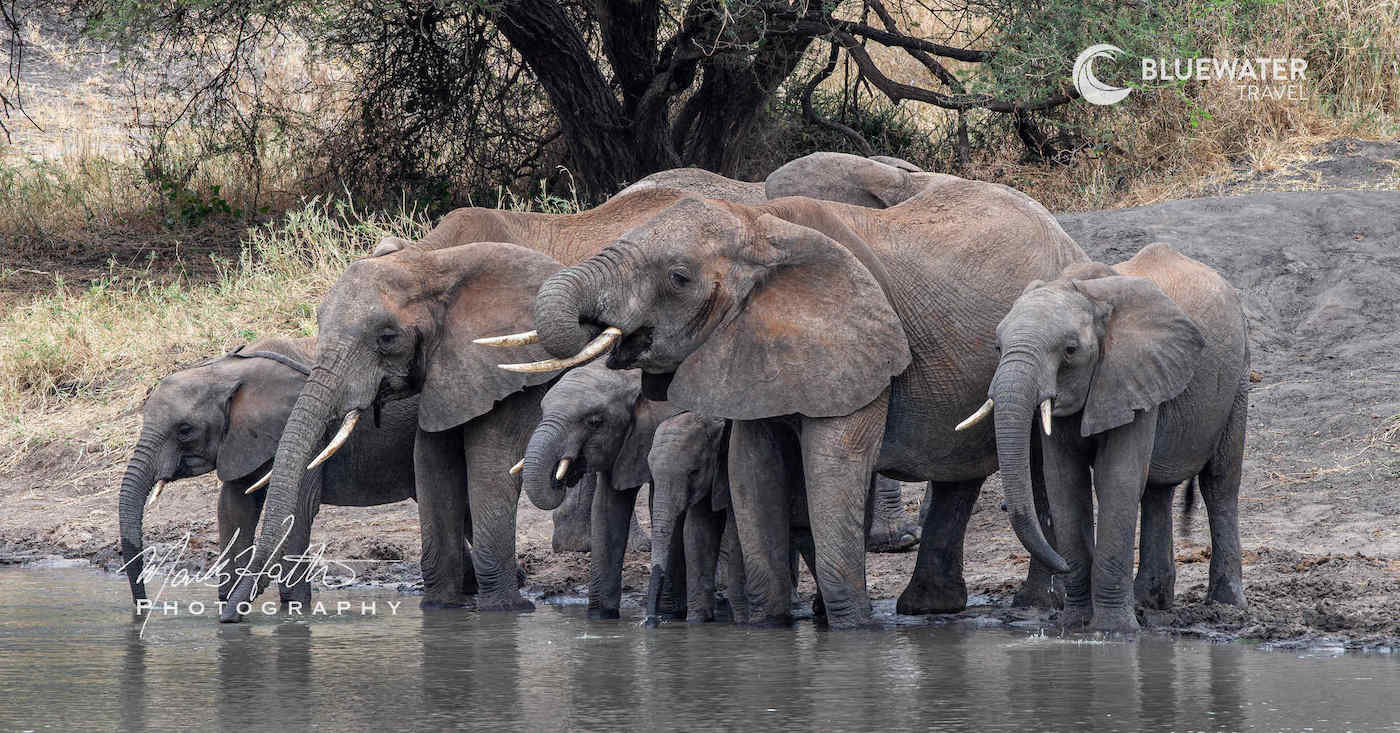
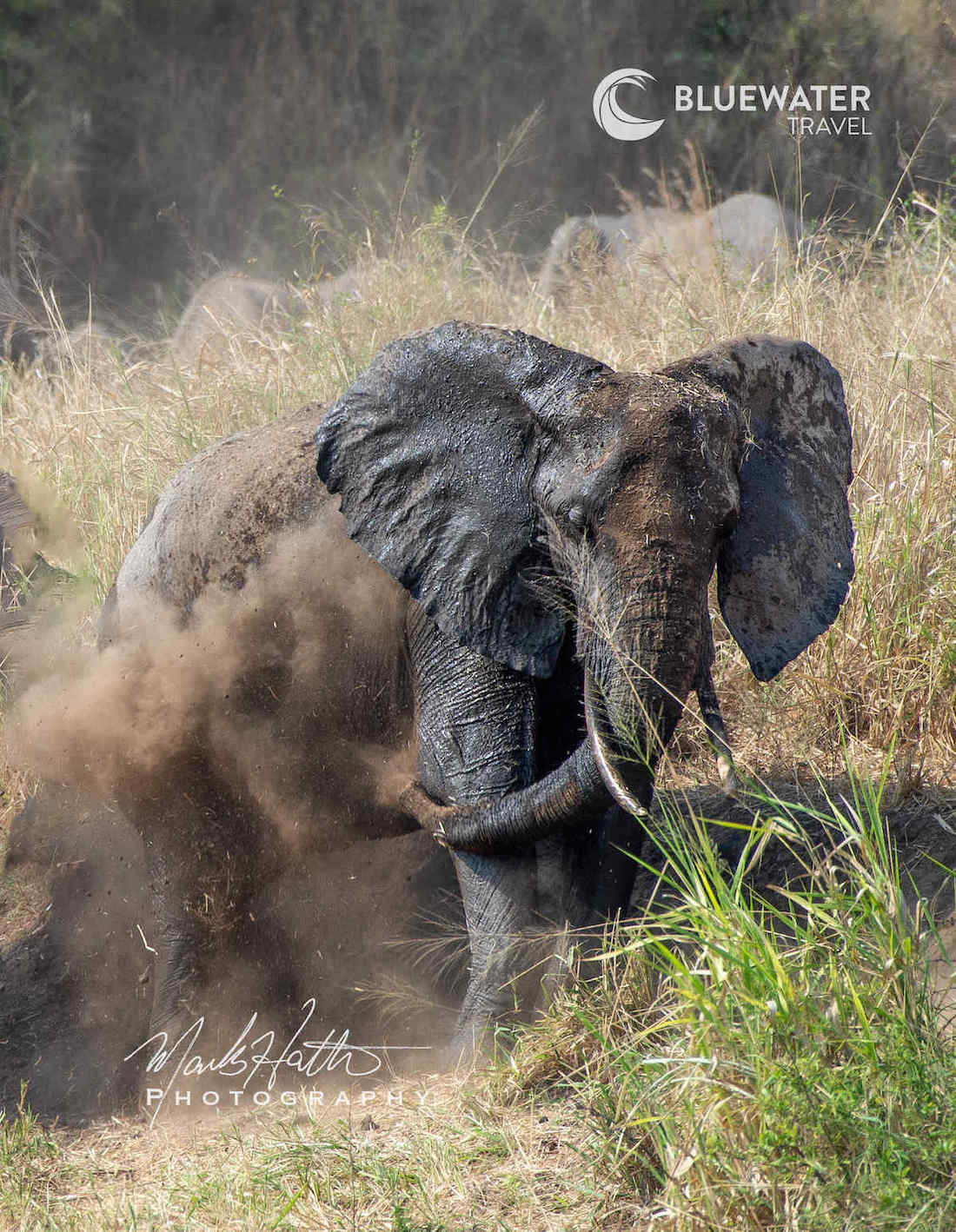
We finish the day with a hearty, buffet-style meal at Tarangire Lodge, perched on a forest bluff above river, before falling hard asleep in our luxurious tent-camp beds.
Ngorongoro Crater
On day three we roll-out early. It’s a transition day and we want to complete a half-day Safari at Tarangire before traveling north, up the side of Oldeani Volcano, to Ngorongoro Farm House, for an overnight stop before dropping into the iconic Ngorongoro National Park. We made a good choice to Safari early. Circling vultures by the river signal our reward for lingering in the Park; Elia and Alex find a fresh elephant carcass, complete with tusks, feeding a flock of hungry scavengers!
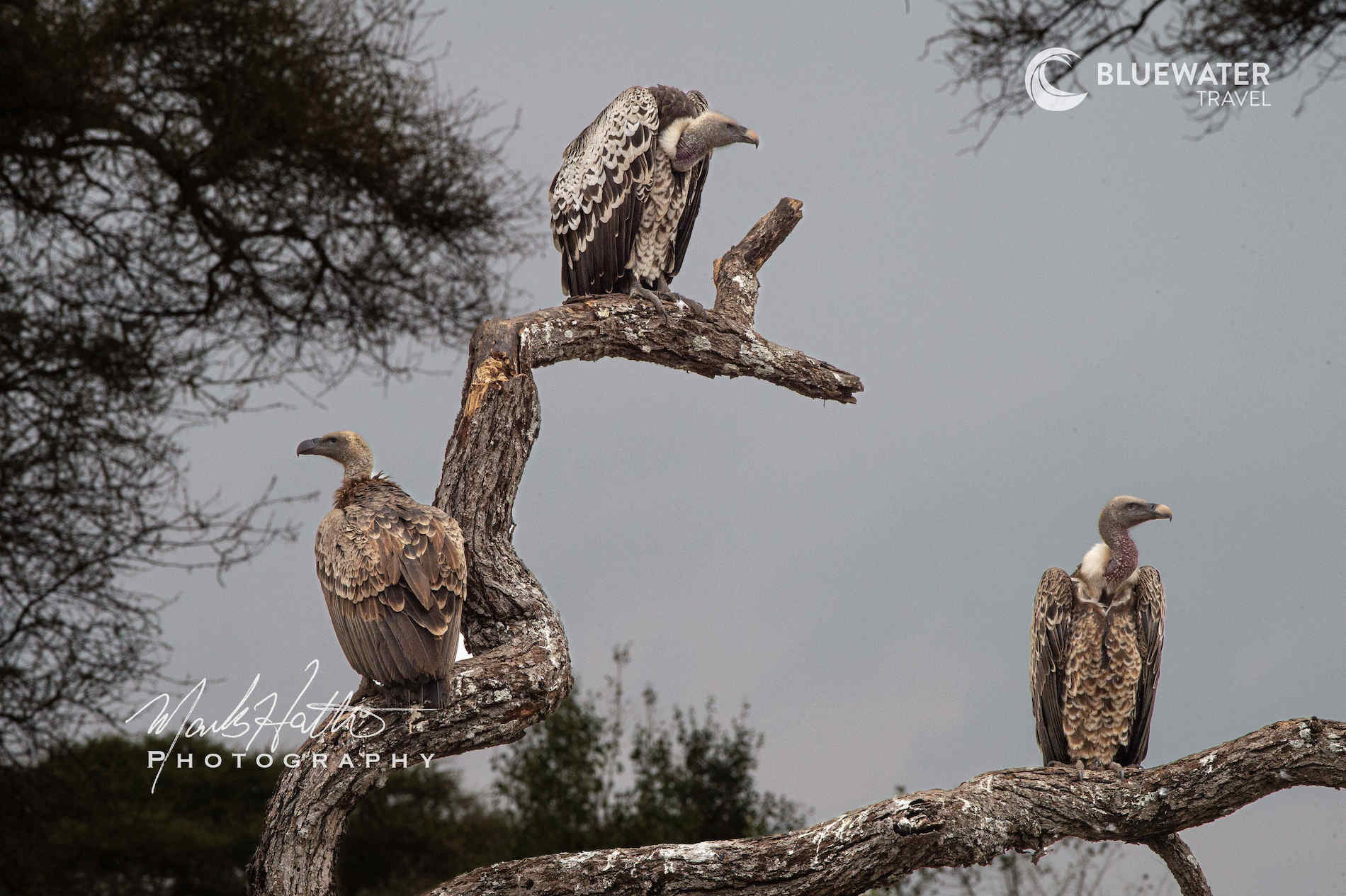
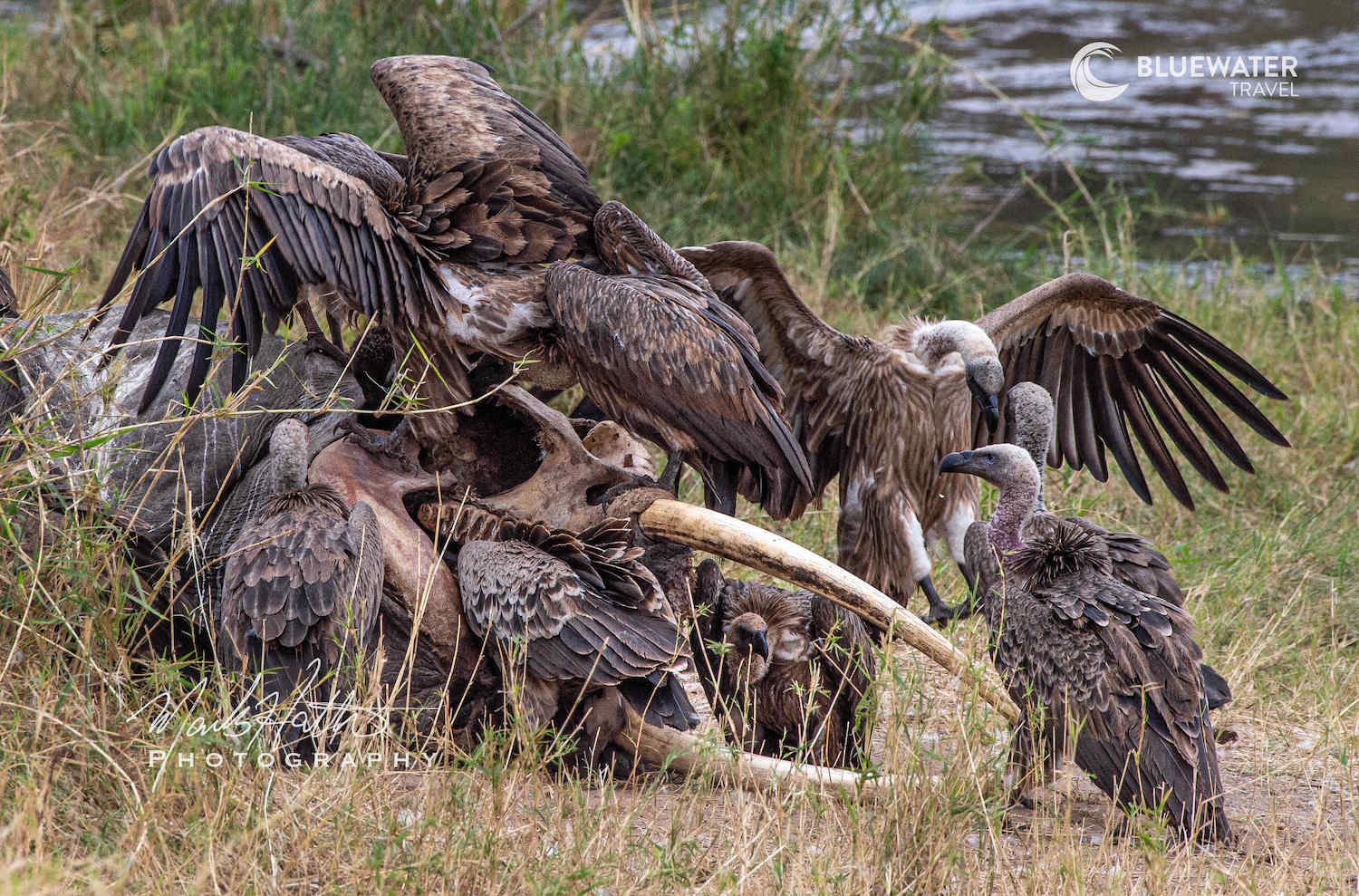
Our time is short, we collect our memories on video and camera sensors before heading out of the wilderness back into civilization for the three hour drive north to the lodge.
Ngorongoro Farm House, nestled on the Oldeani Volcano at nearly 2400 meters, is a spectacular overnight experience. Happy hour cocktails transition to sumptuous dining for our adventurers on a patio overlooking the ground’s colorful gardens and coffee plantation. The “kingly” rooms with thick mattress beds and heavy comforters sleep well in the cool mountain air.
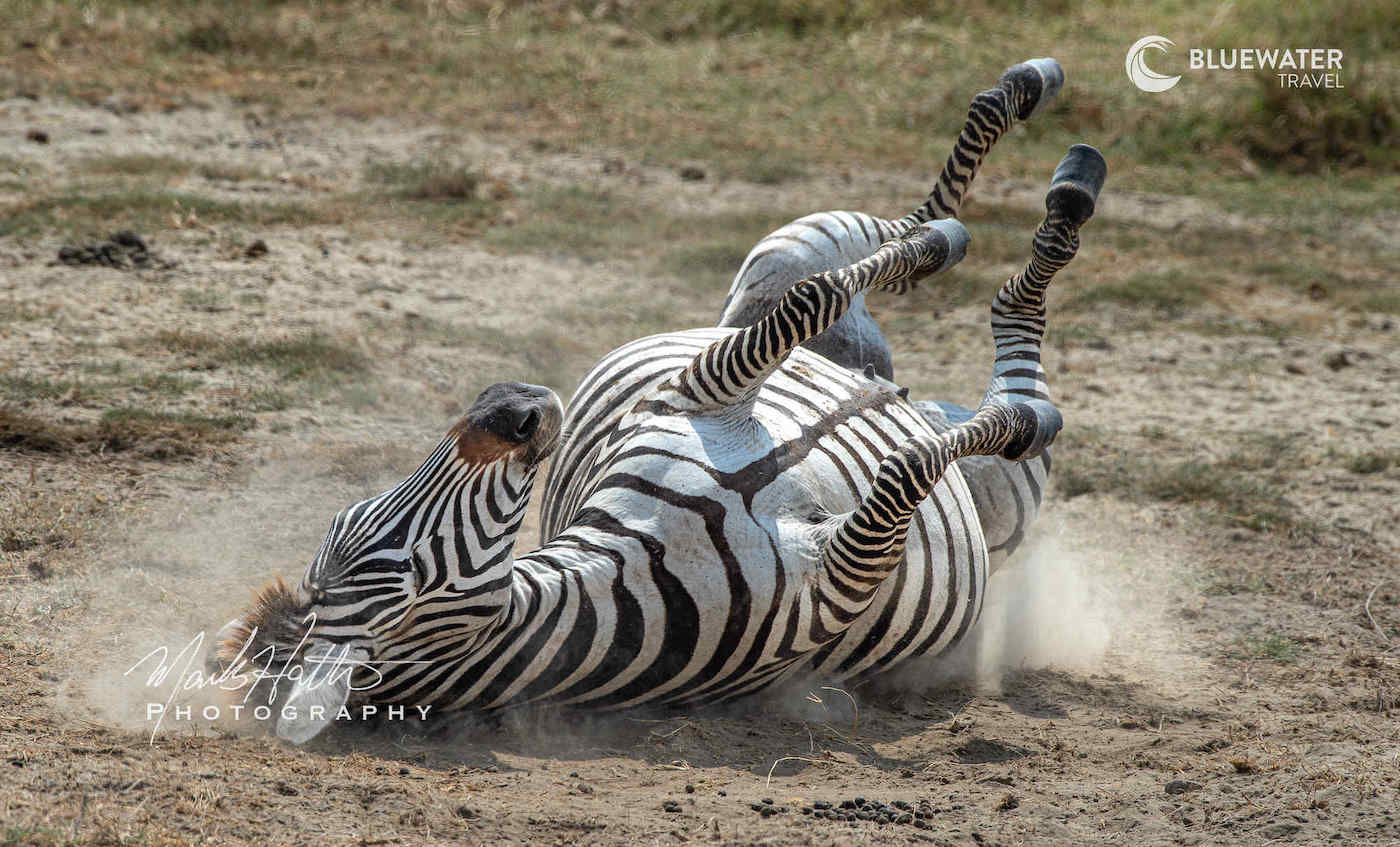
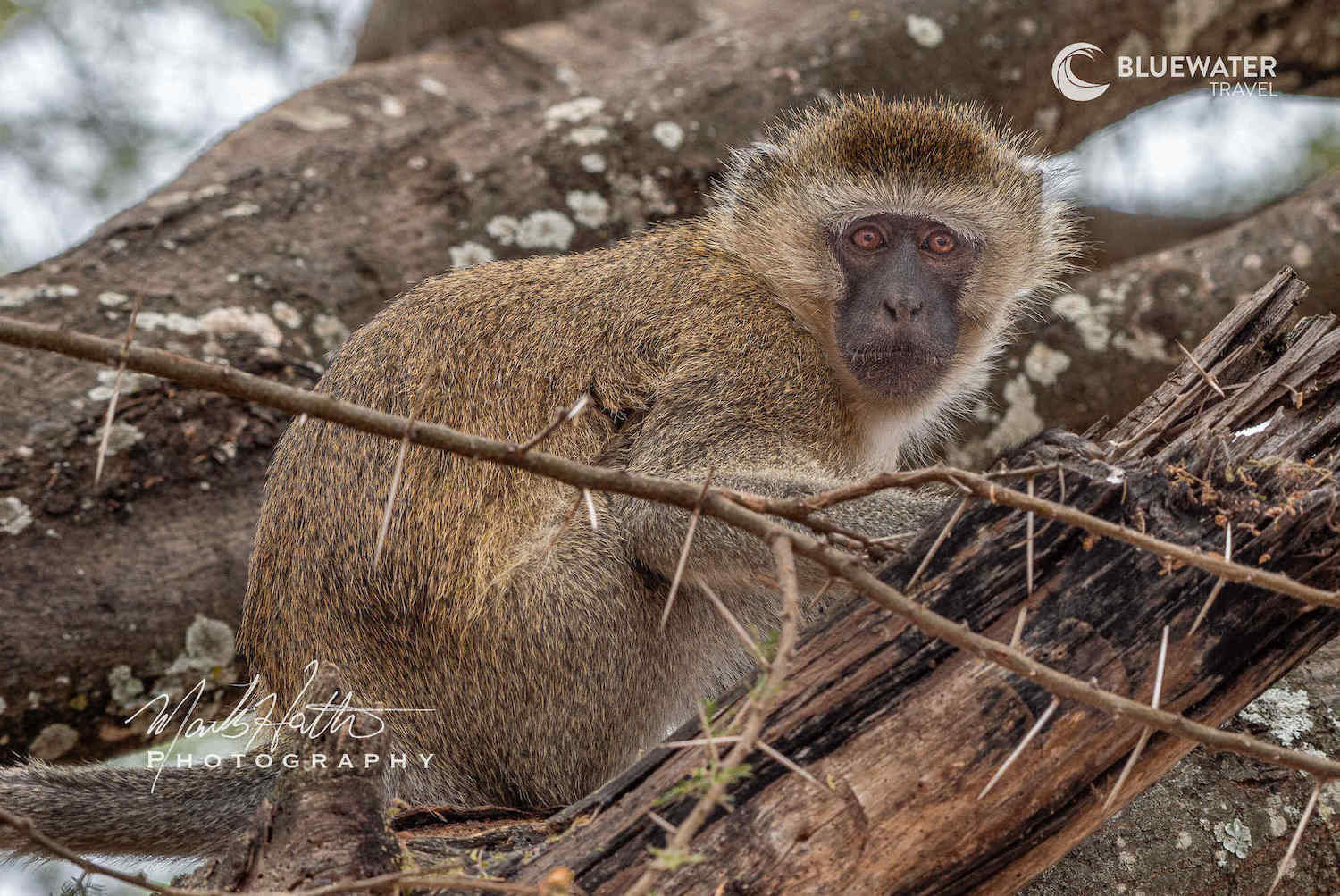
We are only a third of the way into our itinerary but the quote from Danish author, Karen Blixen, already sums up our collective thoughts - “There is something about Safari life that makes you forget all your sorrows and feel as if you had drunk half a bottle of champagne – bubbling over with heartfelt gratitude for being alive.”
Indeed, the following morning we awake with the heartfelt gratitude of life! It’s Ngorongoro National Park day and we cannot contain our excitement. The good news is that our Tarangire immersion has enabled a more selective process of wildlife engagement; with plenty of elephants, giraffe and other animal encounters, often only a couple of arms lengths distance, there is no longer a need to stop for every sighting.
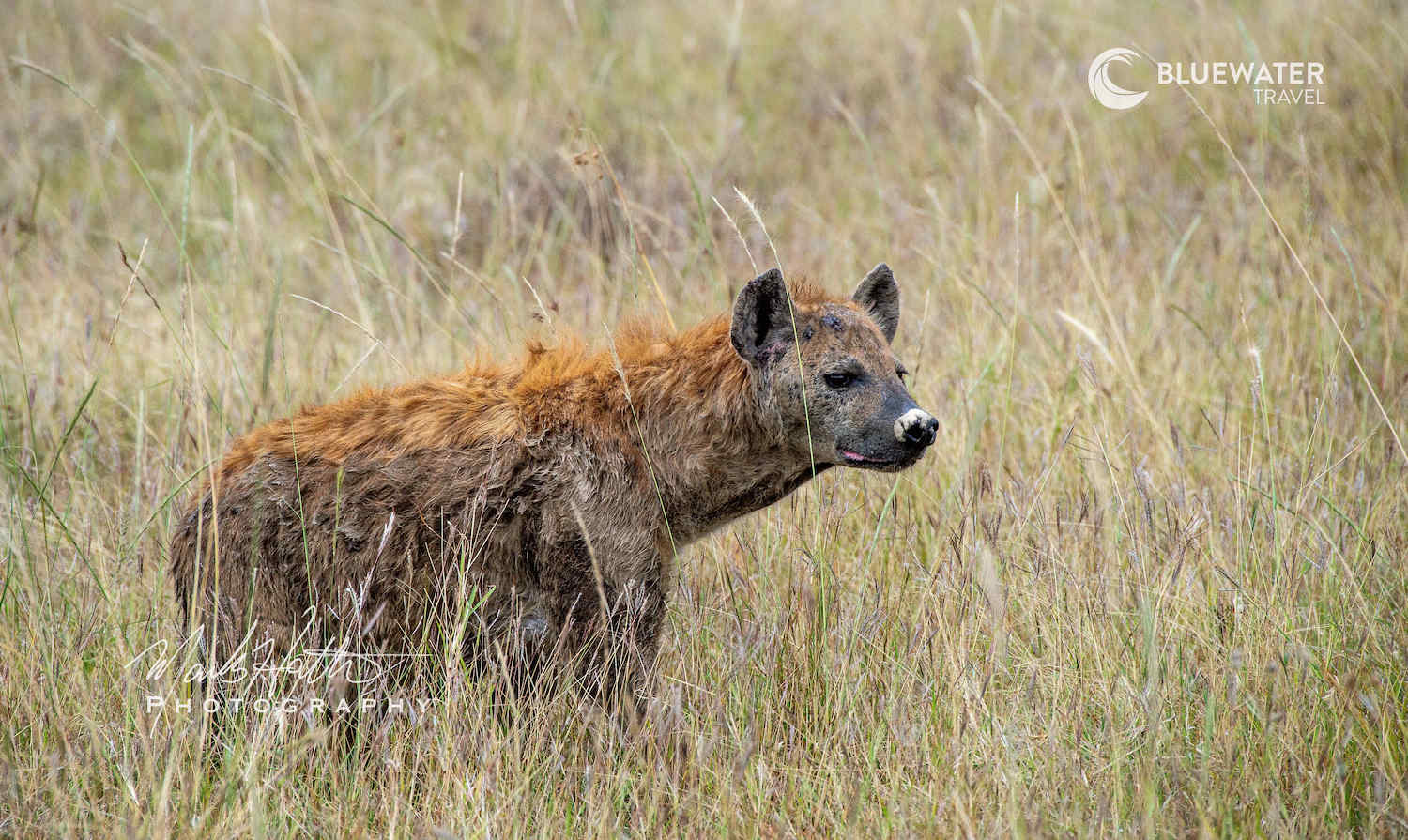
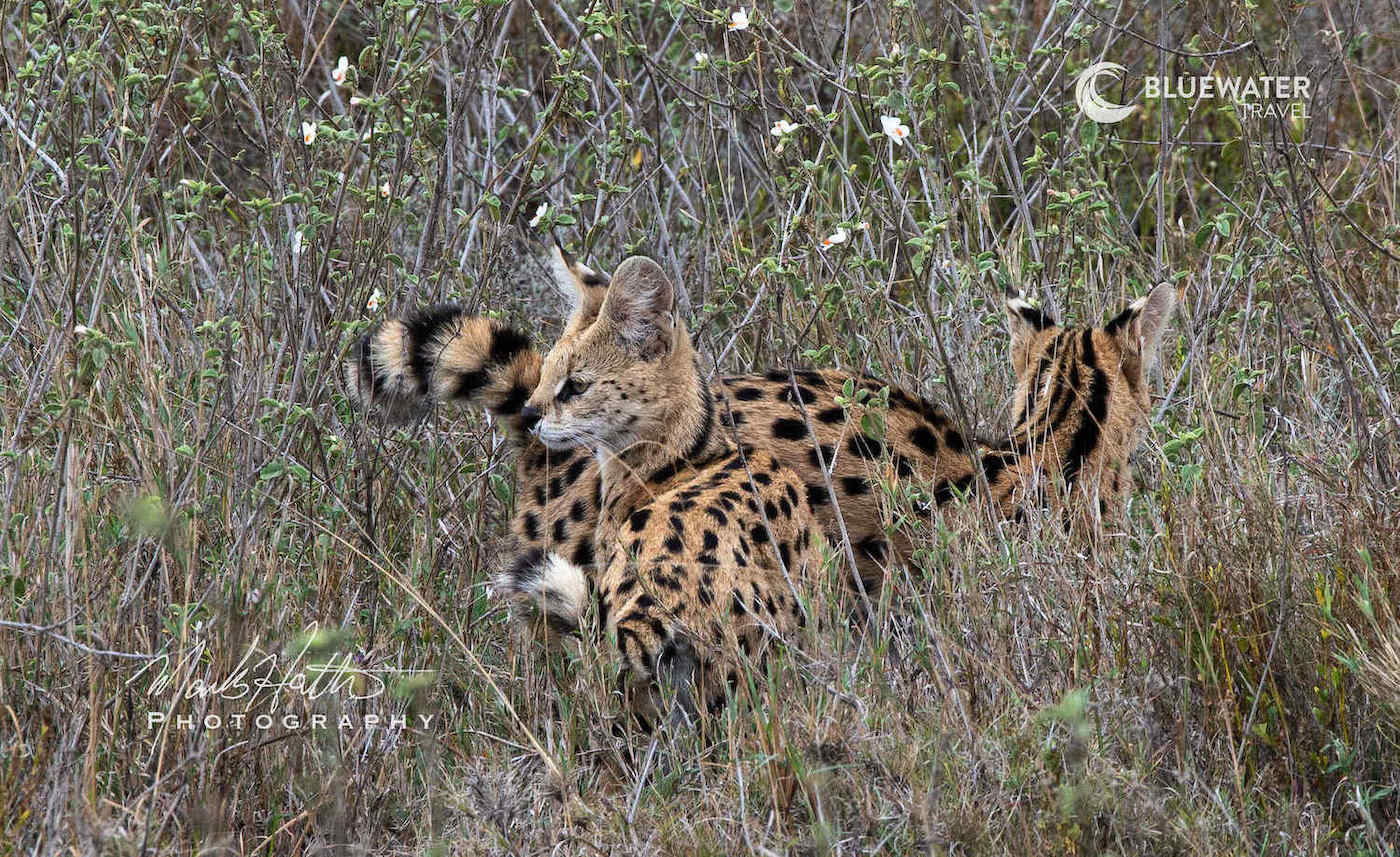
If we had to characterize Tarangire by a single word, I think “elephants” would be that word. The word for Ngorongoro Crater would, hands down, be “herds.” Indeed, Ernest Hemingway said it best - “Out of the corners of my eyes, I could see the wildlife. And it was majestic. The land was here before we were, and it will be here when we’re gone.”
From zebra to gazelle, wildebeest to buffalo, the expansive bowl of the crater floor around the central lake presents with astounding numbers of herd animals now, no more than arms length from our vehicles, in many cases. So close were they that our shooters shifted from capturing full body portraits to capturing head shots and then creative shots of only the animal’s eyes!
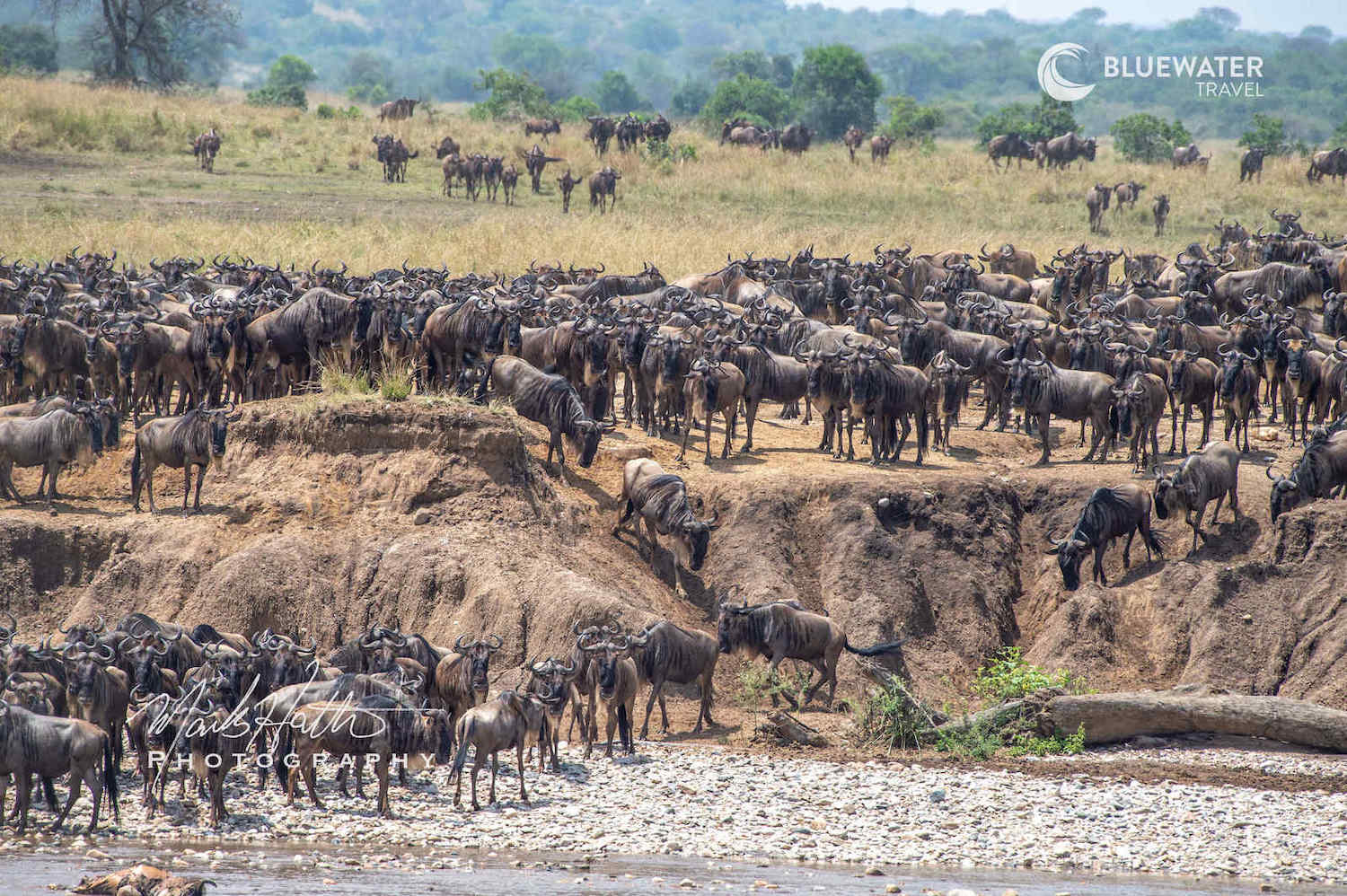
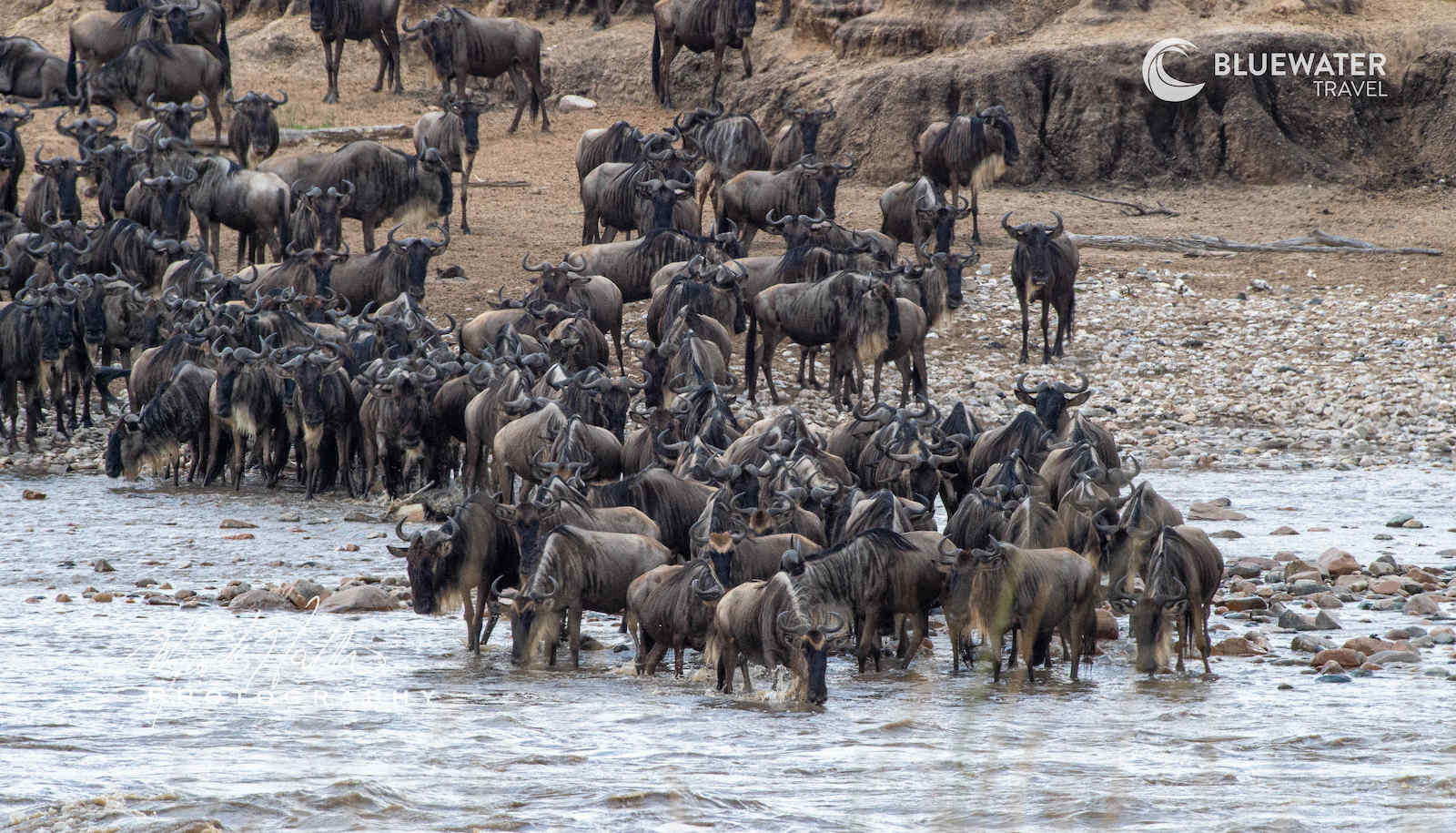
While seemingly vast when you are on the crater floor, it only takes a few hours to cover the entire Ngorongoro National Park. And it’s a long drive over dusty roads to reach the Serengeti, so we climb our way out of the crater after lunch and again head north.
The Conservation area between Ngorongoro and the Serengeti is expansive. Here, indigenous Maasai herding goats and cattle live side-by-side with giraffe, antelope, leopards and lions. The juxtaposition between wild and domestic is surrealistic, but this has been the way of life in Tanzania for eons.
Just before dark we arrive at Lake Masek Tented Lodge on the outer reaches of the Southern Serengeti. We rinse the dust from our throats with wine and Kilimanjaro-brand beer before finishing another hearty buffet-style dinner. It’s dark by the time the last few of our adventurers are ready for a shower and yet another comfortable bed but now we need guides to walk us to our tents. We are, after all, deep in the bush and don’t desire to end up as a meal, hung-up in a leopard tree!
There is an old African proverb: “Every morning in Africa, a gazelle wakes up, it knows it must outrun the fastest lion or it will be killed. Every morning in Africa a lion wakes up. It knows it must run faster than the slowest gazelle, or it will starve. It doesn’t matter whether you’re the lion or a gazelle – when the sun comes up, you’d better be running.”
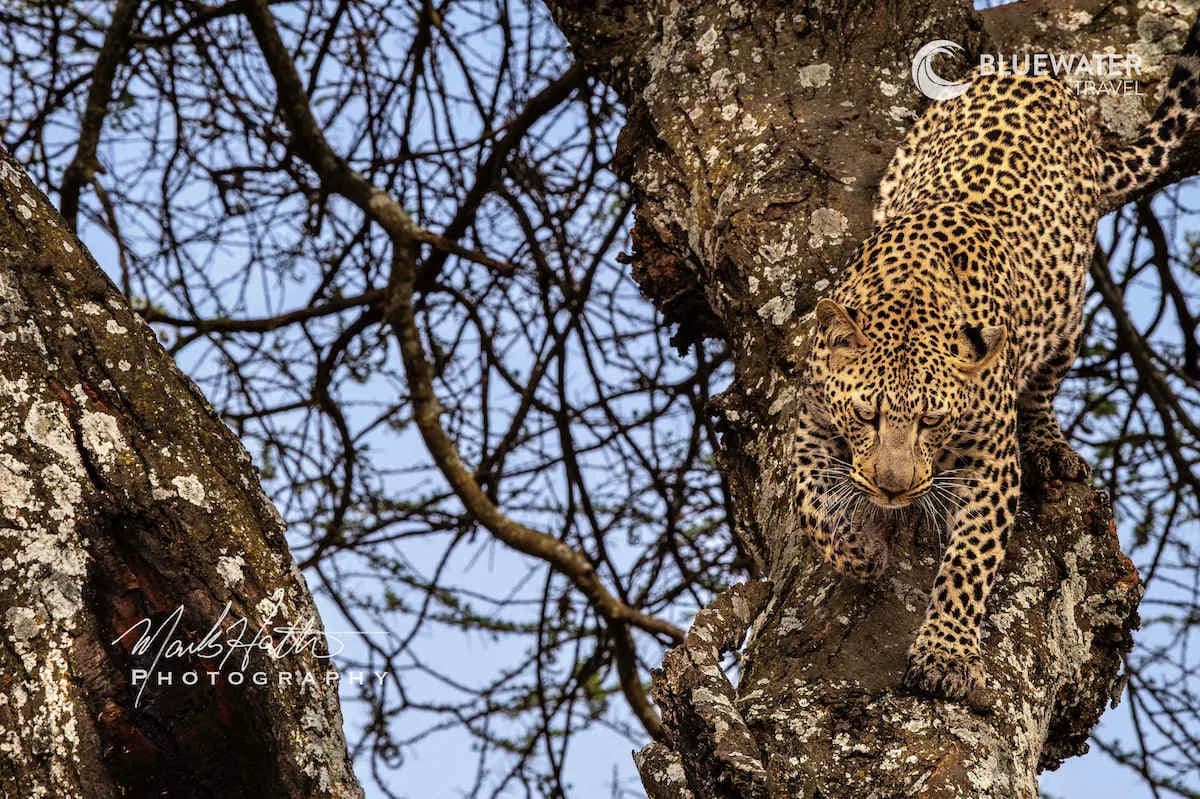
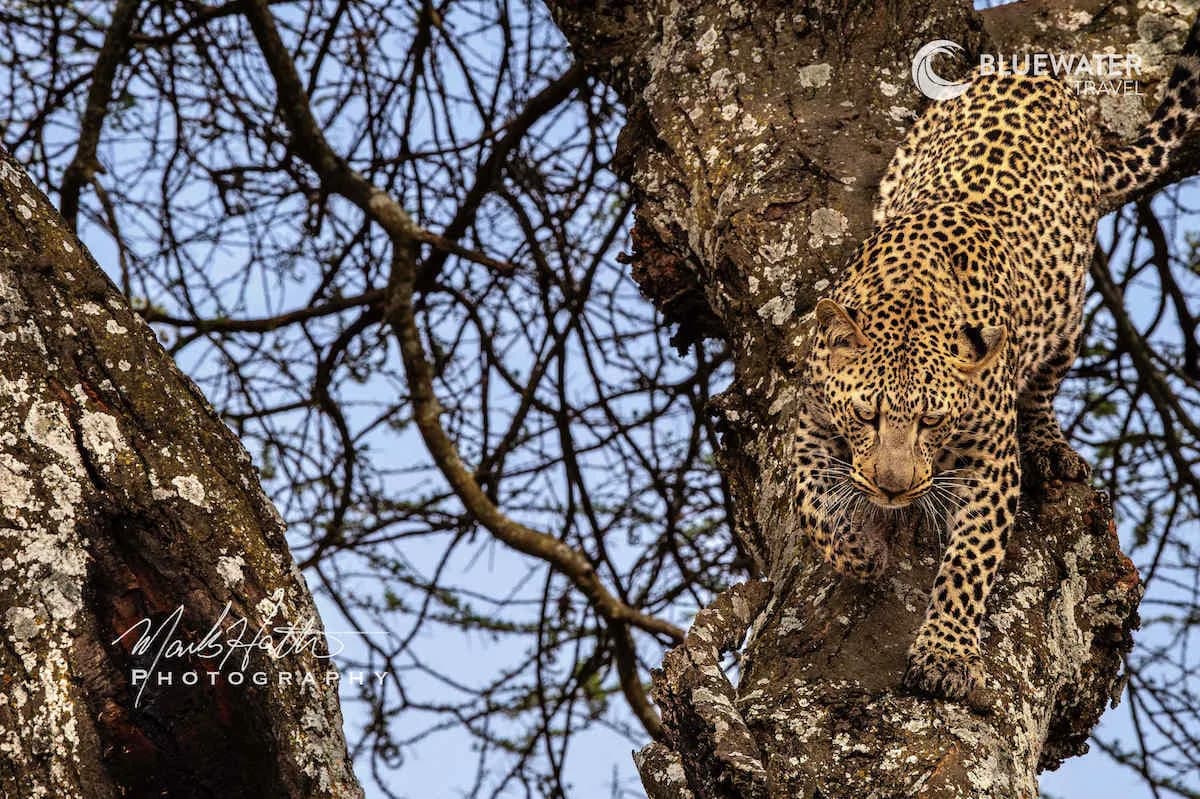
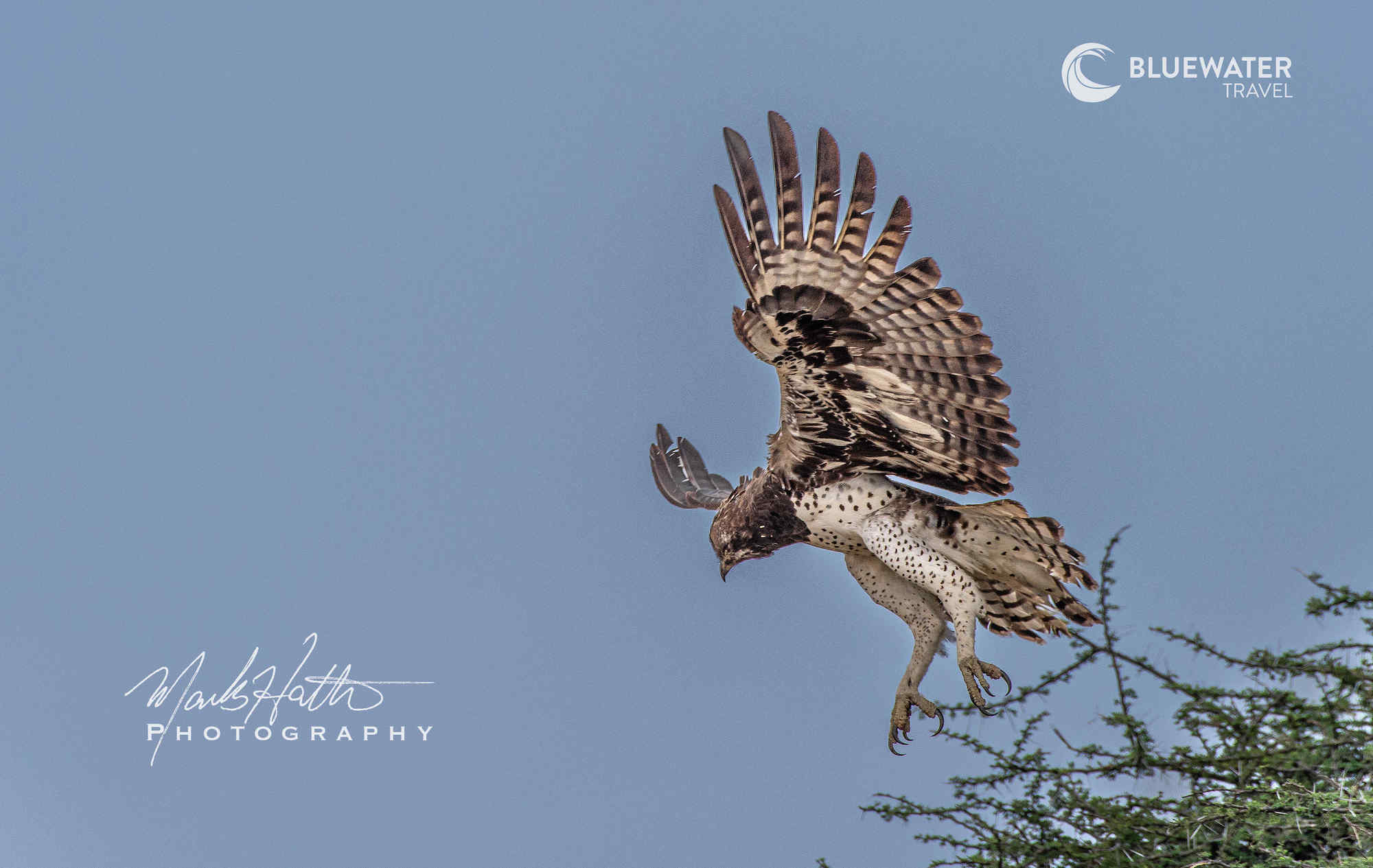
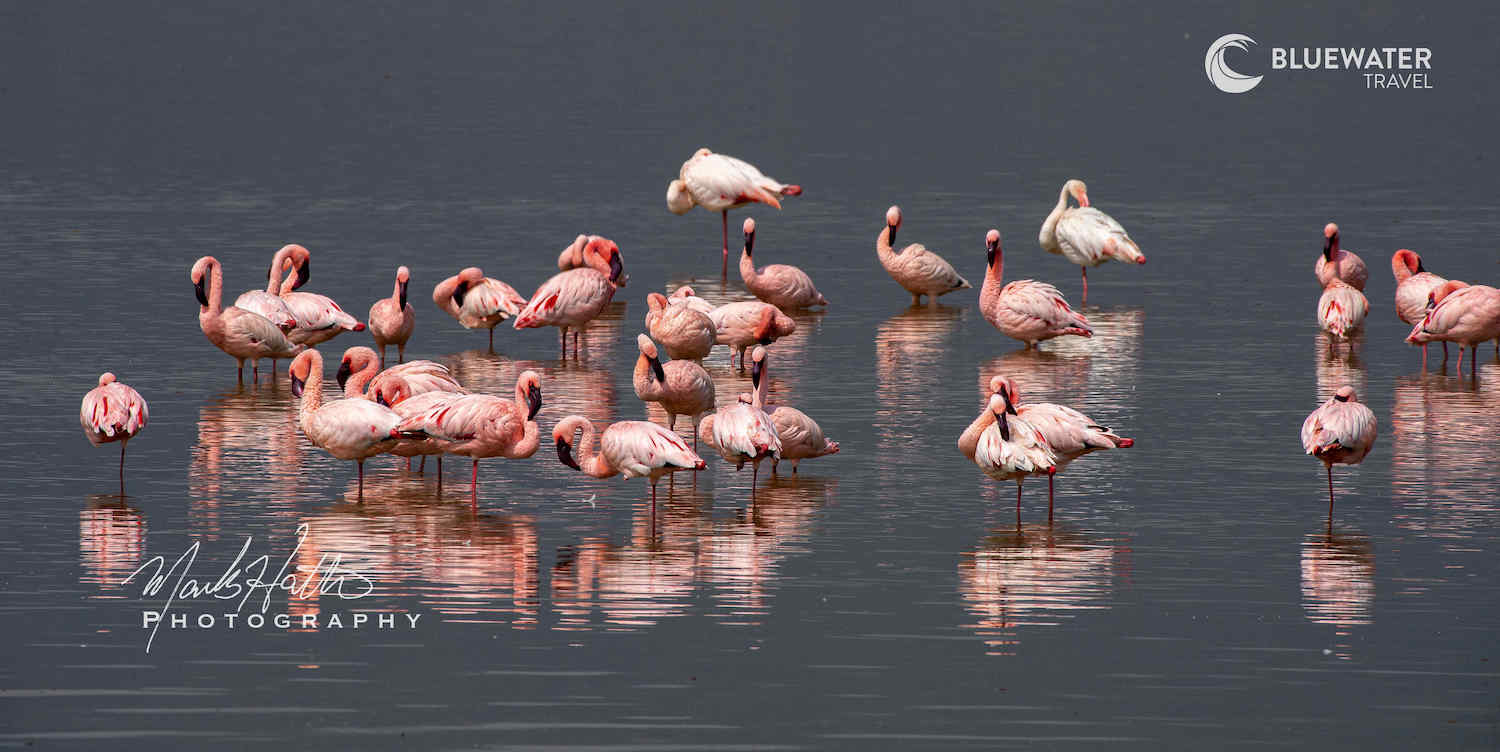
And when the sun came up, we were indeed running, and for good cause! By 7:30am, while shooting flamingos on the shore of Lake Masek we’d had a report of a leopard on a kill, in a tree, about 20 minutes from the lake. In fulfillment of the proverb, our talented guides somehow raced cross-country to who-knows-where, to find the tree in only 15 minutes! Fortuitously, we had an hour with the cat while it consumed nearly an entire gazelle. Eventually it re-settled on a thick branch to clean the blood from its paws and face. Then, hygiene complete, it sauntered down from the tree to the savannah floor to eat the few pieces of gazelle which had fallen while it dined from above.
“Africa changes you forever, like nowhere on Earth. Once you have been there, you will never be the same.”- journalist and author Brian Jackman
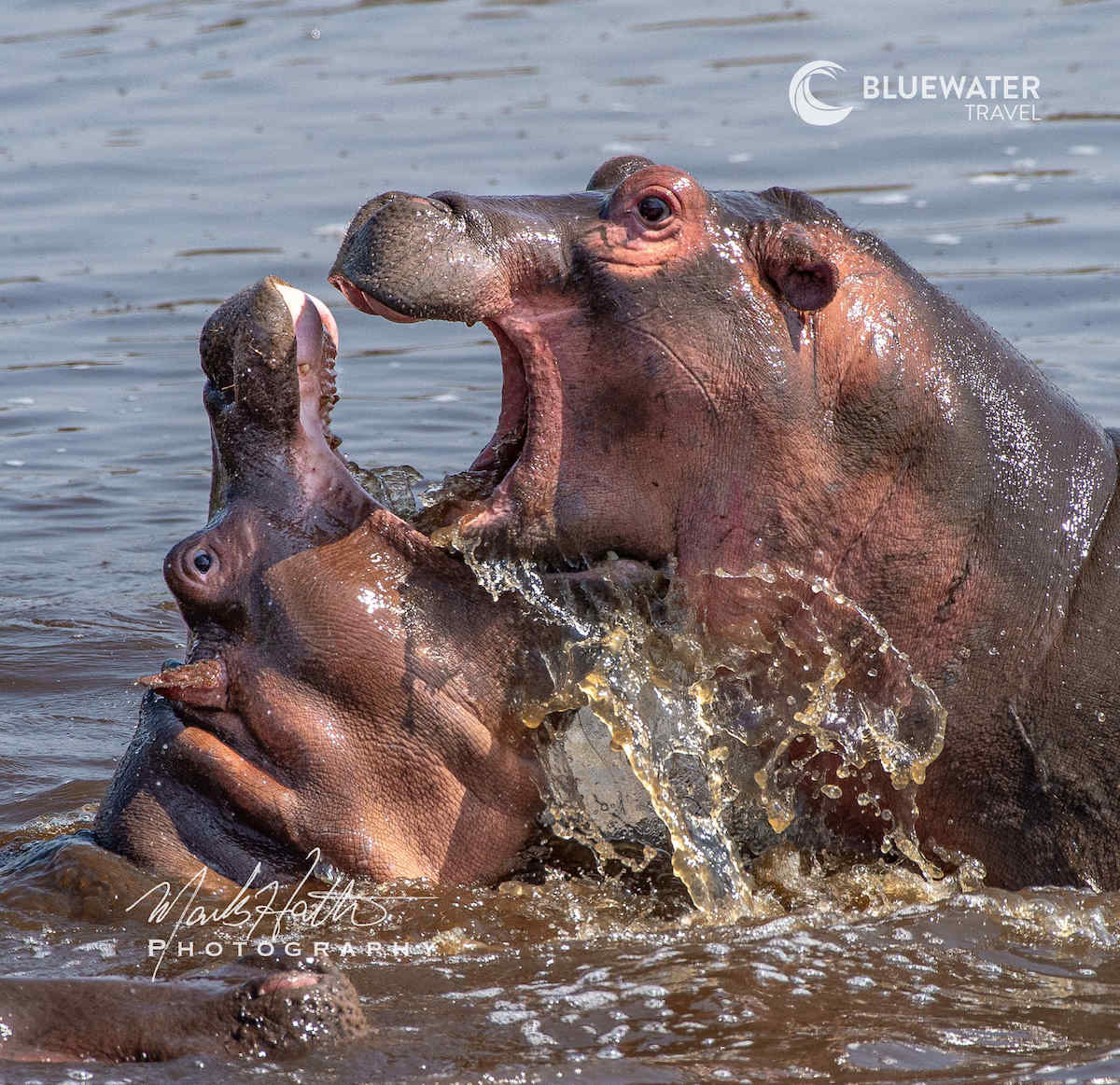
Serengeti Safari
The last leg of our journey has us traversing for several days from the southern end of the Serengeti National Park to the Maasai Mara, a region on the northern boundary intersected by the iconic Mara River. Again, using a single word to characterize south and central Serengeti, I would argue that, “cats” best encapsulates the experience. Indeed, following our leopard encounter, it seemed we could not travel for more than an hour before yet another lion sighting took place.
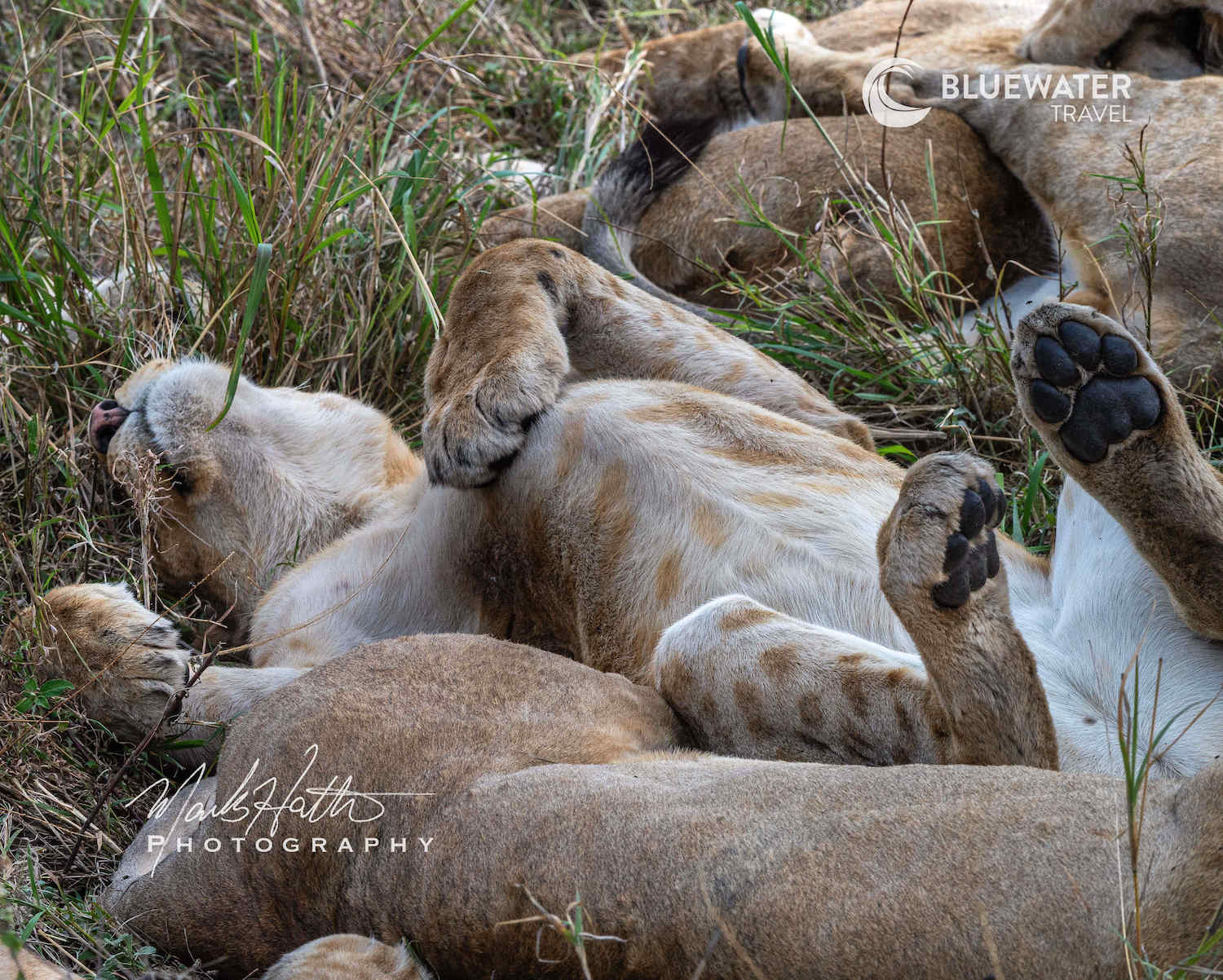
One afternoon, the radio call came across airwaves in Swahili that something special was happening nearby. Once again, Elia and Alex navigated quickly down the dusty savannah roads, across a great treeless expanse to an eventual copse of acacia trees far in the distance. When we arrived we found what could only be described as a “mosh-pit” of lions! Thirteen in a contiguous mound to be exact, with a fourteenth outlier under a tree nearby. The “cat-scrum” included mostly adult females and a few sub-adult males literally piled up on one another. Under the shade of the trees they snoozed, swatted at pesky flies, scratched ears, licked paws and more, completely oblivious to the vehicles taking in the spectacle.
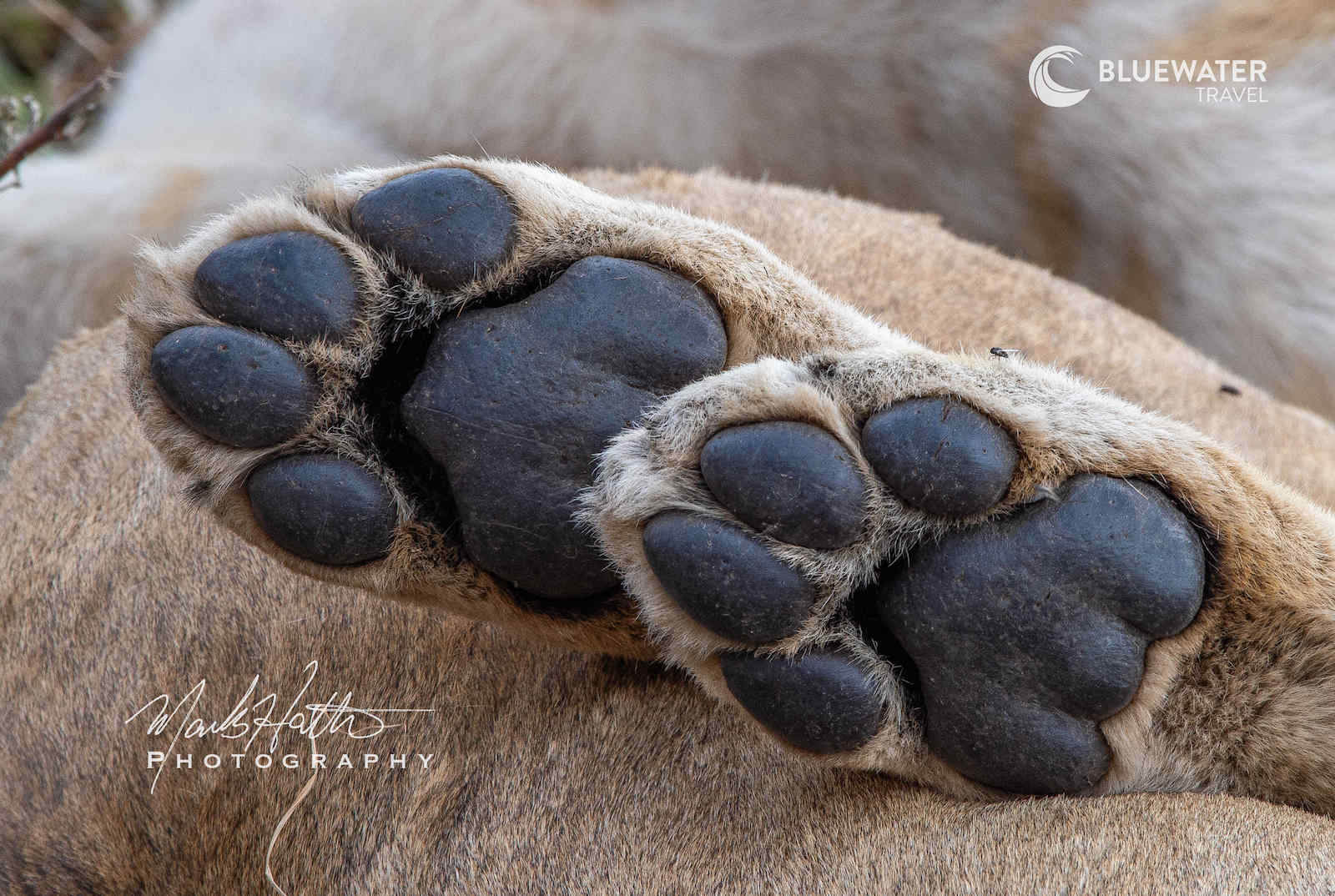
And as if this were not enough, about three kilometers away, our guides found two adult males, fresh off a Zebra kill, chilling by the carcass. In fact, they wanted to lay down in the shade of our parked Safari vehicles as there was not a tree within a kilometer. Some of us, shooting seated from the vehicle’s open windows could literally reach out and pet them…if we were foolish enough to do so!
The Mara River and Wildebeest Migration
Finally, at the northern end of Serengeti, it’s all about “wildebeest” in a single characteristic word. The iconic Mara River is where the storied wildebeest crossing occurs and is the main draw for most on Serengeti Safaris. However, there is no guarantee that a crossing will occur during your visit. Although tens of thousands of wildebeest were gathered on the Kenya side of the river showing signs of wanting to cross, our four-hour wait did not yield a crossing save a brief, failed attempt from about eight animals, who started, then turned back because of heavy river currents.
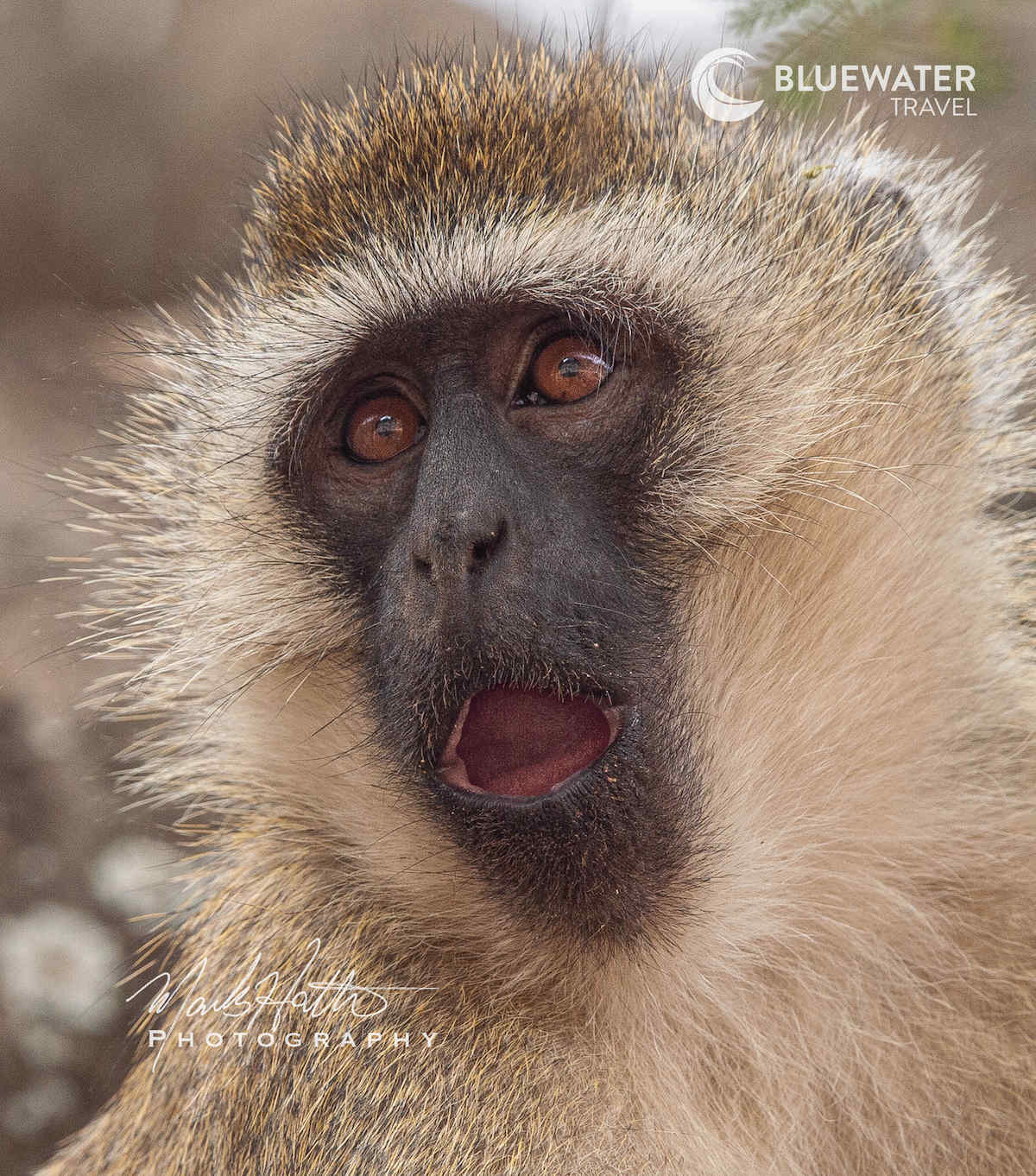
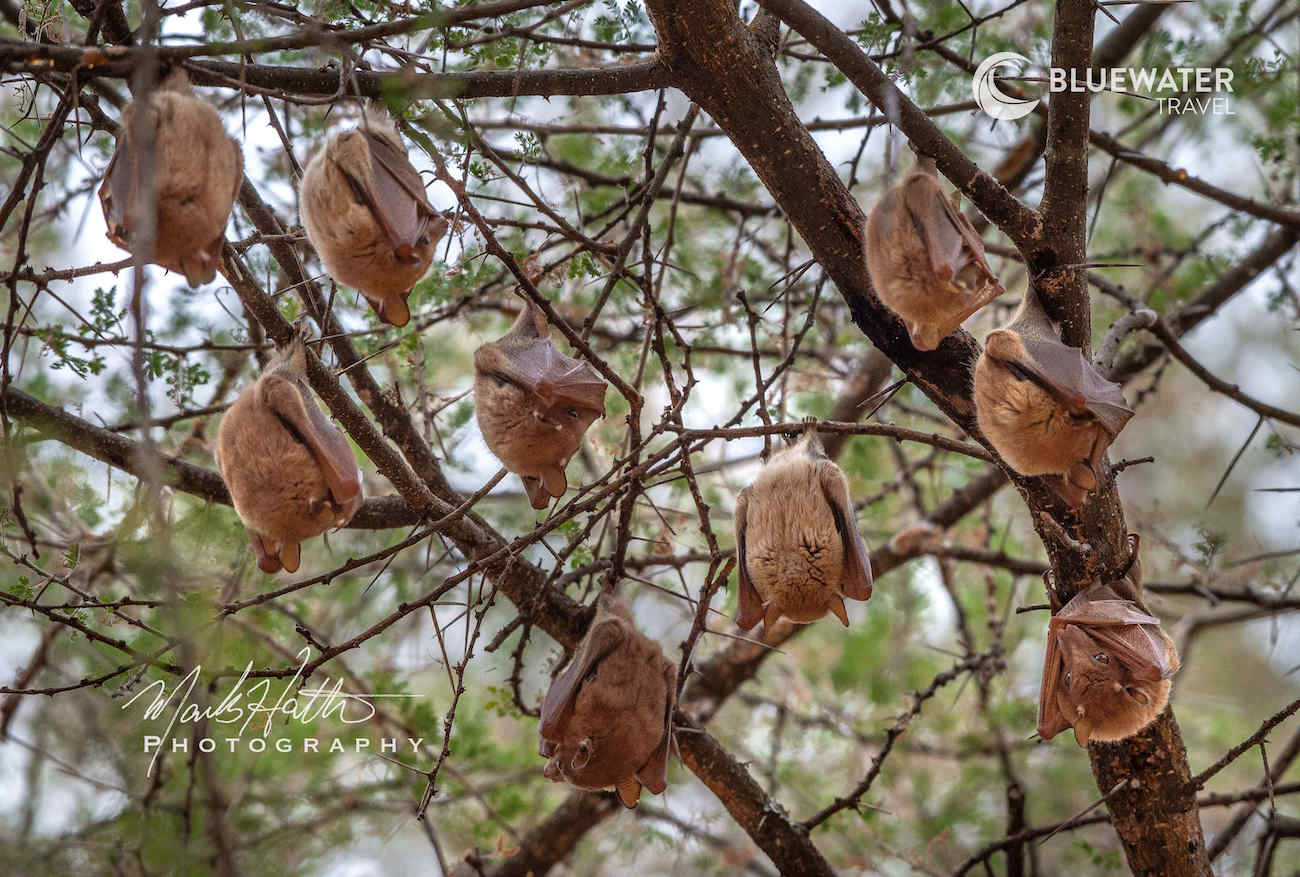
That evening we returned back to Esirai Mobile Migration Camp to hot “bucket showers” and sit-down fine dining accompanied by plenty of wine, beer and spirits! The hot water bottles on our comfortable beds, replete with thick comforters, along with the uber-attentive camp support staff made our three-day stay the most memorable of the entire trip.
Sunrise Balloon Ride
On our penultimate day, we were collected by Serengeti Balloon Adventures at 4am from Esirai to night-Safari our way to a spectacular sunrise balloon ride down the Mara River and across the grassy Serengeti plain to a Champagne breakfast on a beautiful hilltop near our landing zone!
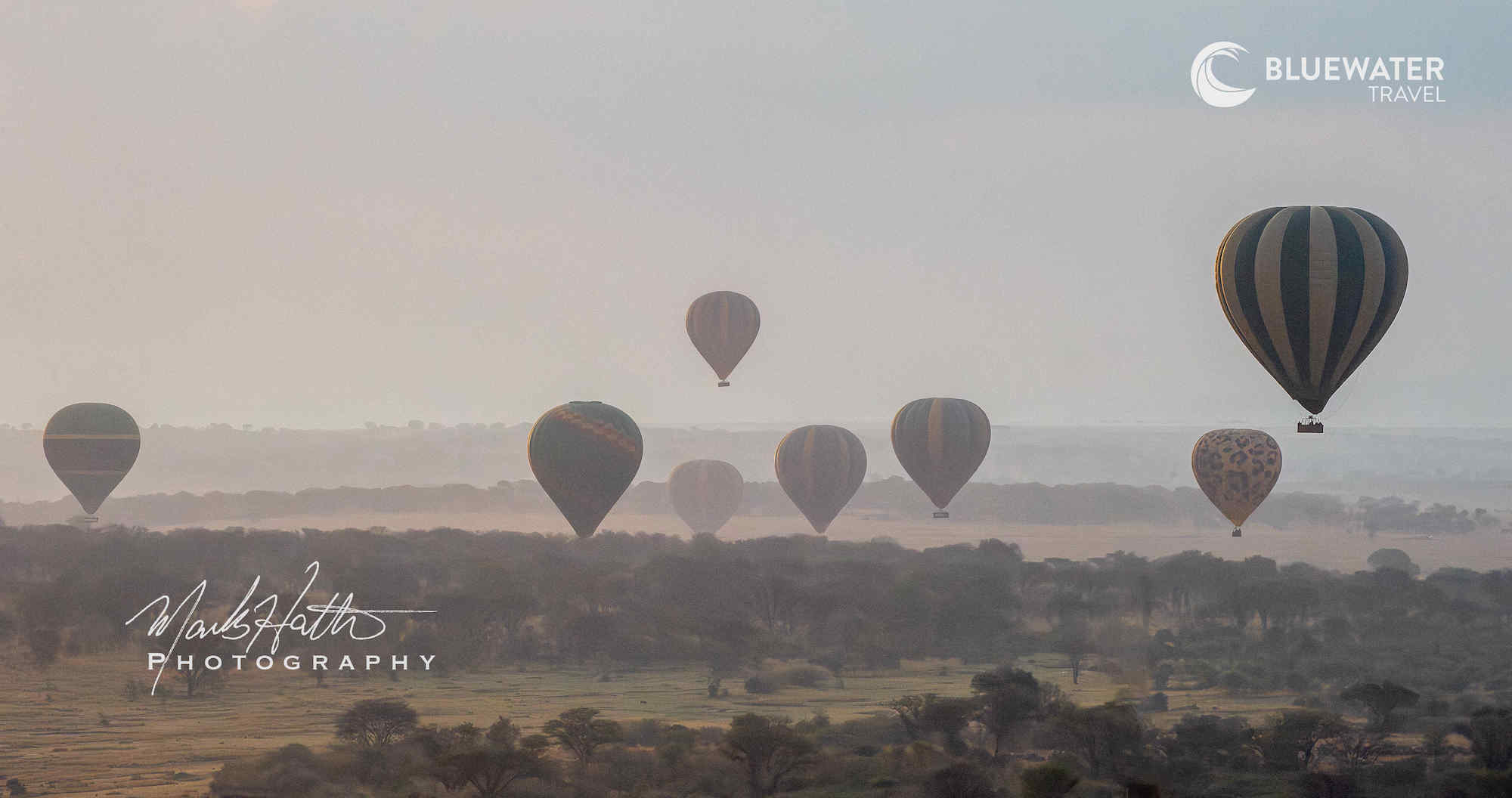
The late Jane Goodall summed-up my thoughts perfectly on that special morning as we ascended above the river at daybreak — “The sunrises and sunsets over the vast plains, the incredible diversity of wildlife, the vibrant cultures of the people – Africa is a tapestry of beauty and wonder that never ceases to amaze me.”
On our final day, 50K wildebeest had gathered at crossing number eight and we had a ring side seat. According to the guides no crossing had occurred in the last eight days due to high water caused by seasonally uncharacteristic nightly rain storms. A crossing could be imminent.
Interested in learning more about our Tanzania trips? Read about our previous trip report.
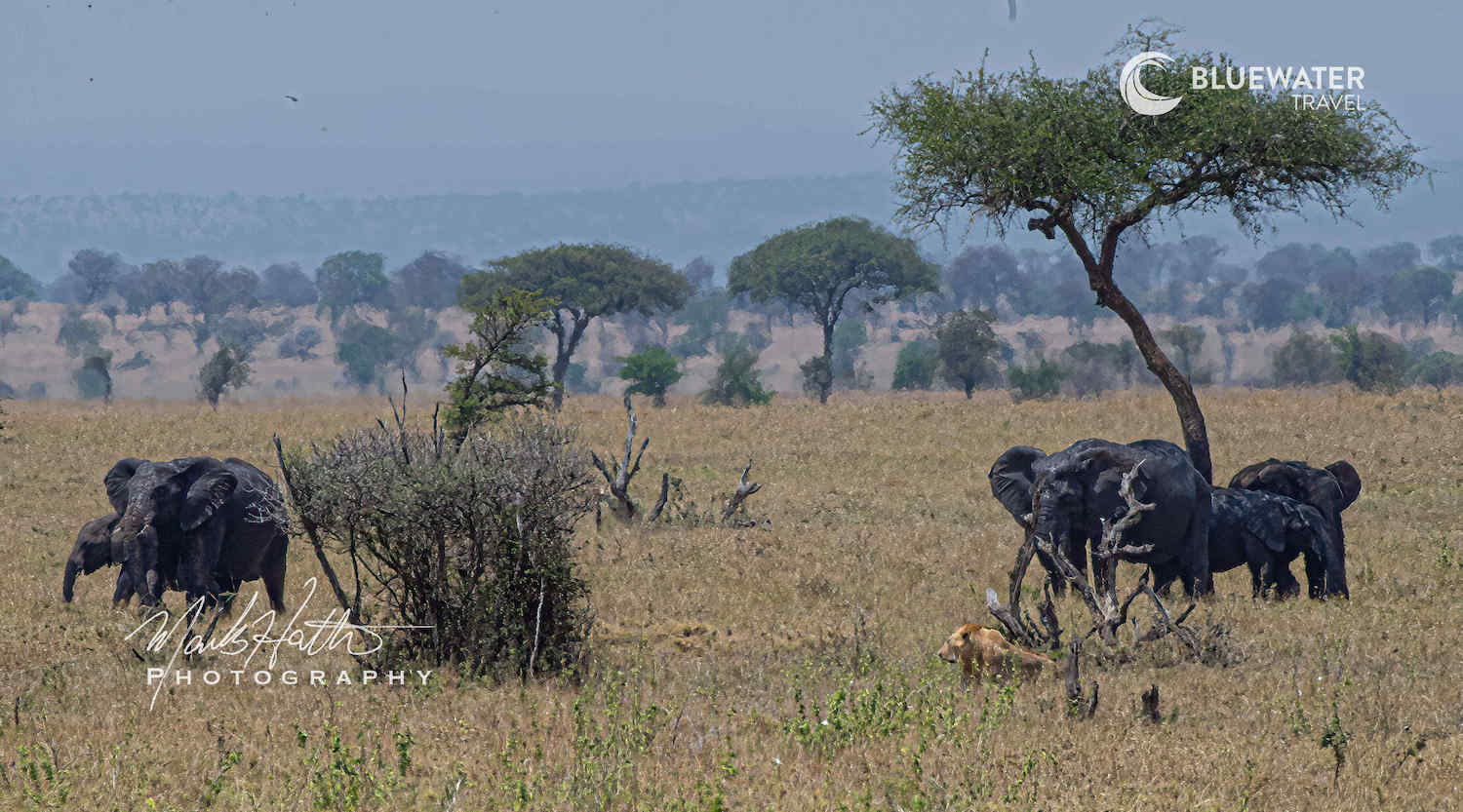
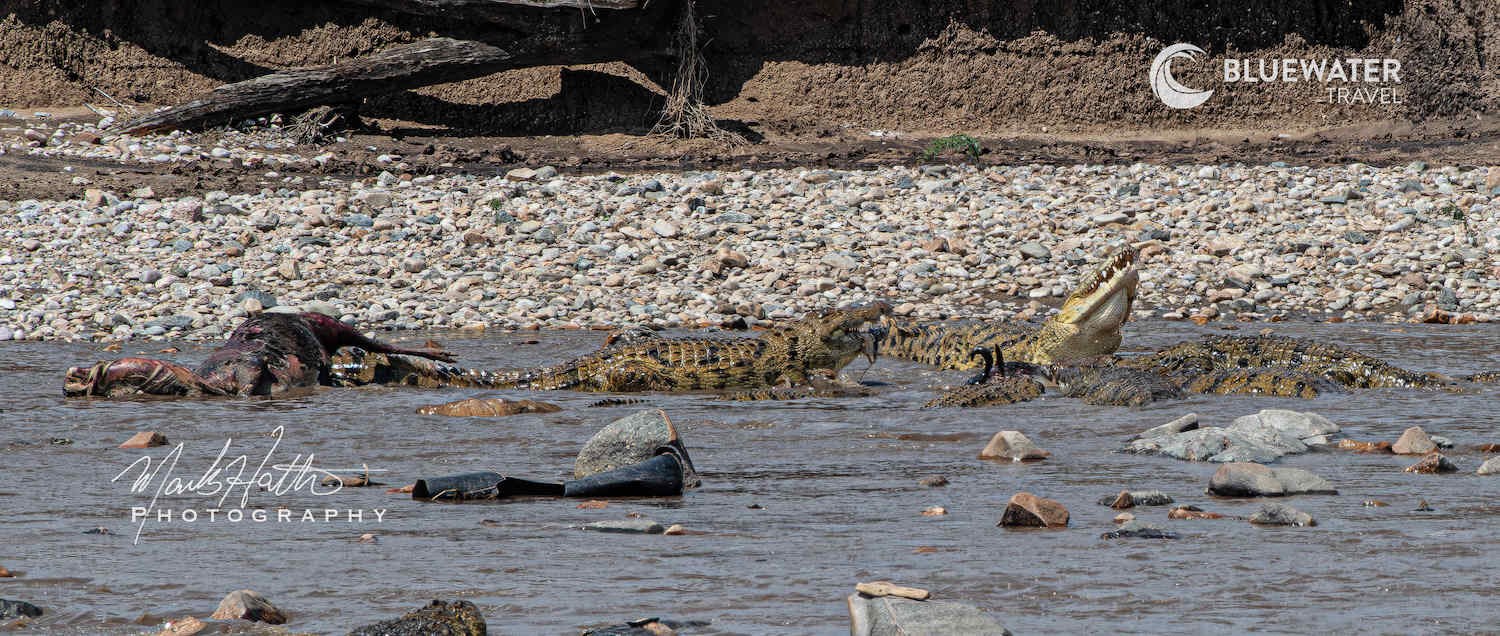
Alas, after eight watchful hours the massive herd moved from crossing number eight toward number ten where they eventually traversed the river at the same time we were flying from the bush airstrip back to Arusha and civilization. In spite of not witnessing one of nature’s most iconic events, there were no tears from our explorers. How could there be?
“The diversity of Africa’s ecosystem is a treasure trove of evolutionary marvels, a testament to the ingenuity of life in adapting to its surroundings.” – Sir David Attenborough
I can only hope to have the privilege of again leading a Bluewater travel trip back to Tanzania in the future!
Check out our upcoming trips to Tanzania!
-optimized.webp&w=640&q=75 "Moorea Trip Recap August 2026")


-optimized-optimized.webp&w=640&q=75 "Solomon Islands Trip Recap 2026")