




Playful Sea Lions and Warm Water
Explore Baja Trip Report 2025
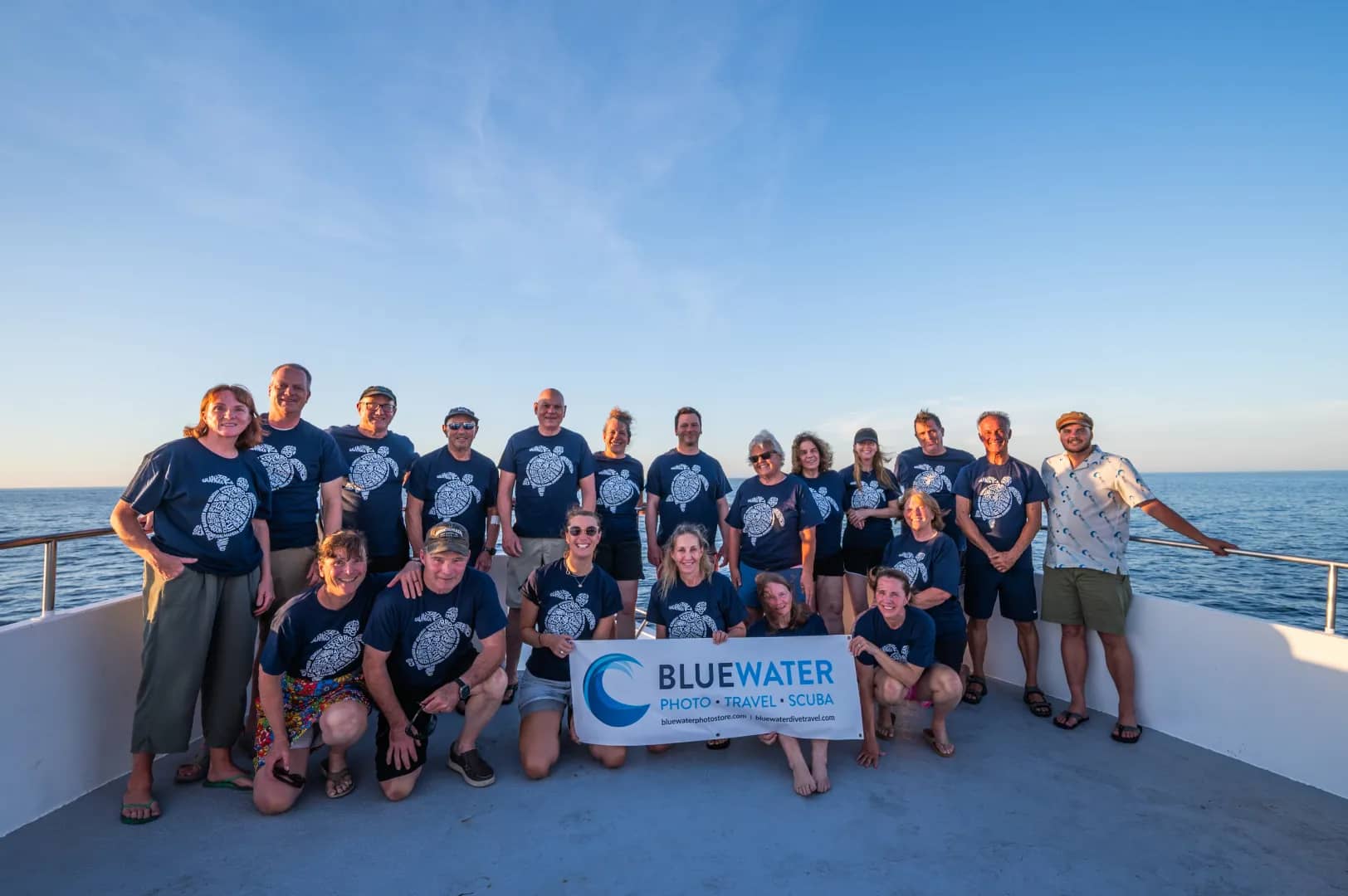
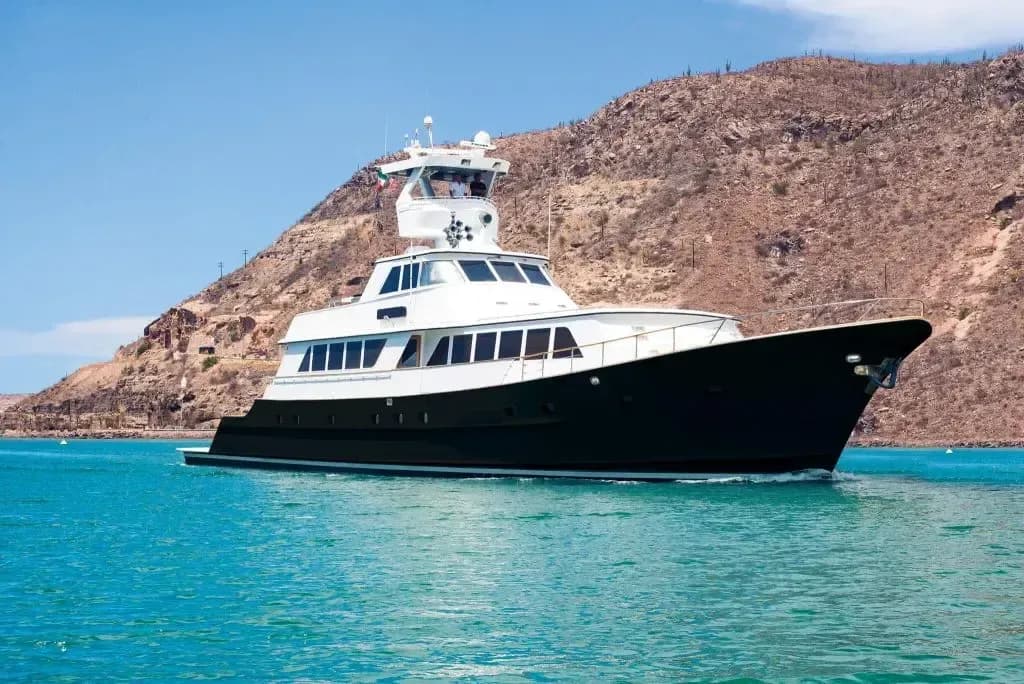
Bluewater Travel is a frequent patron of the Rocio Del Mar liveaboard, as were some guests on the trip who have repeated it over a dozen times! After completing the trip, I will be joining the repeat trip club, too.
Our trip set sail shortly after all guests arrived at 5 am. We were delayed due to a minor maintenance issue, before setting sail with everything in good working order.
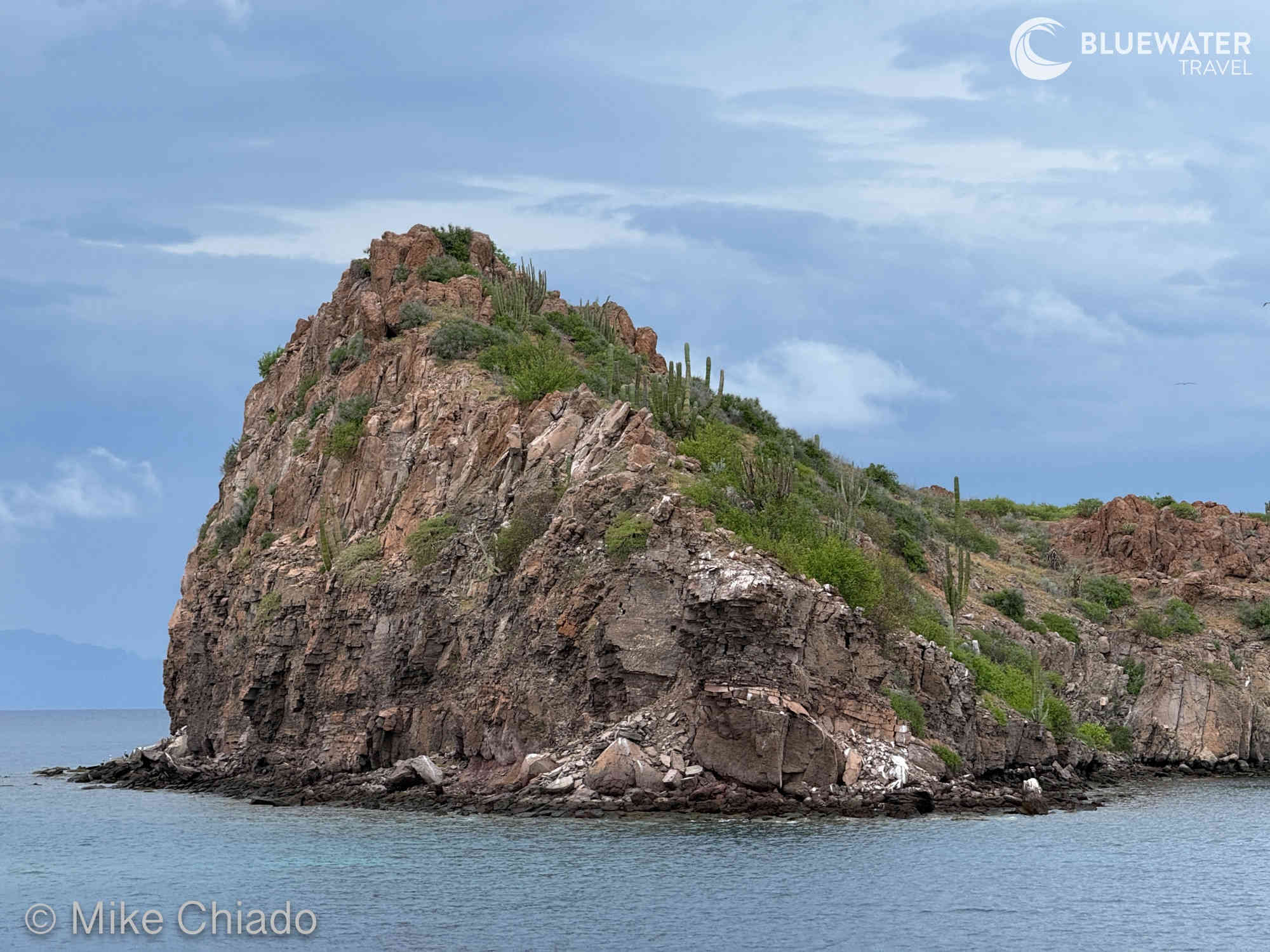
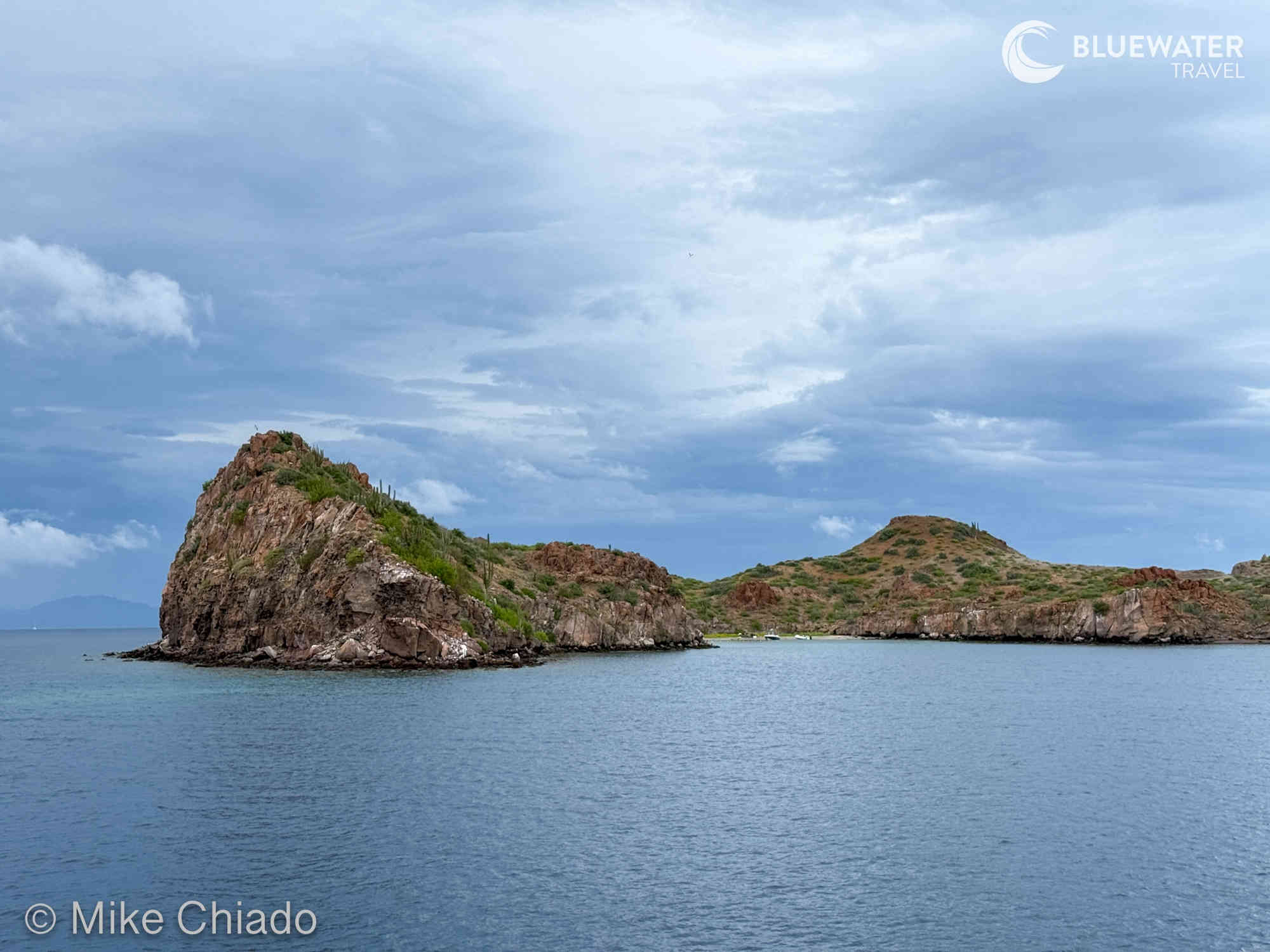
After an easy overnight sail, we awoke at Isla Cerralvo, also known as Jacques Cousteau Island. The crew prepared a light breakfast at 6 am, followed by a full, made-to-order hot meal at 8 a.m. Between the breakfasts, we finished the dive and camera gear setups. The hot breakfast was followed by a dive and safety procedures briefing, group assignments (three groups of six divers), and a site briefing.
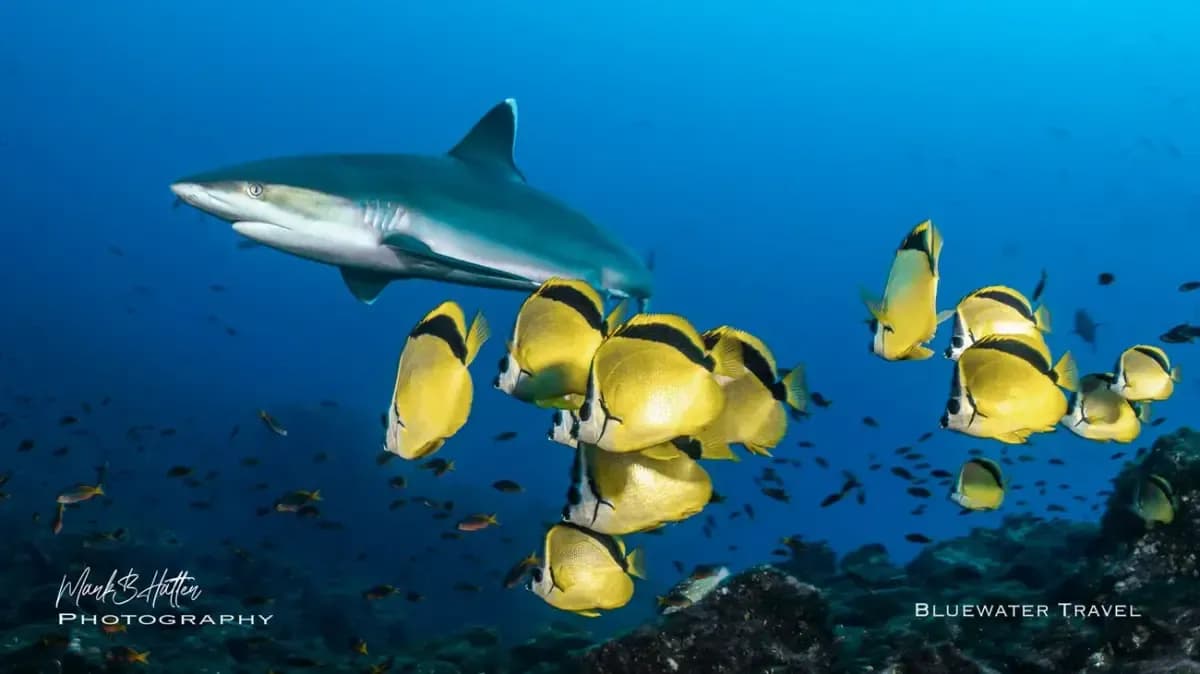
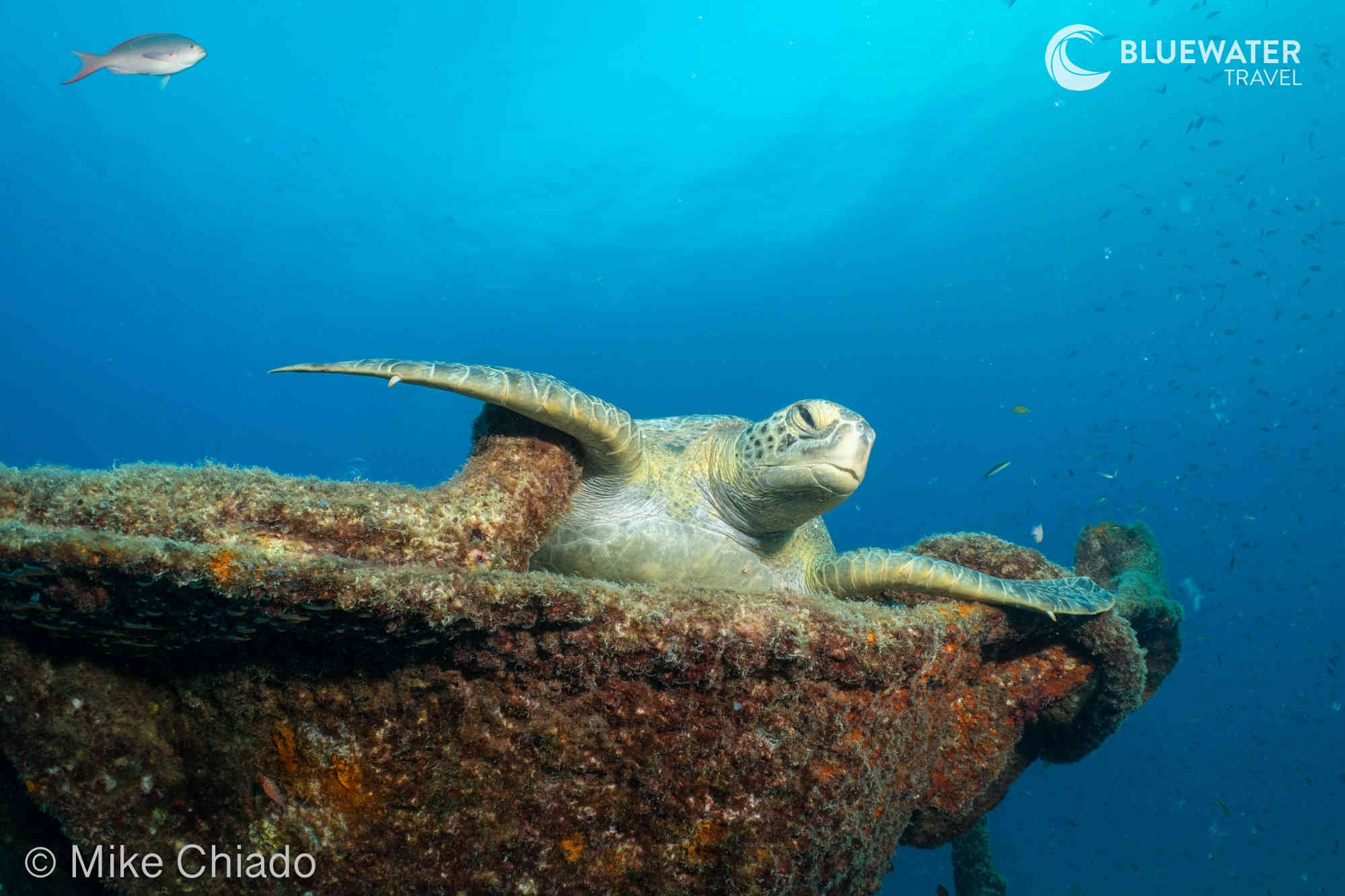
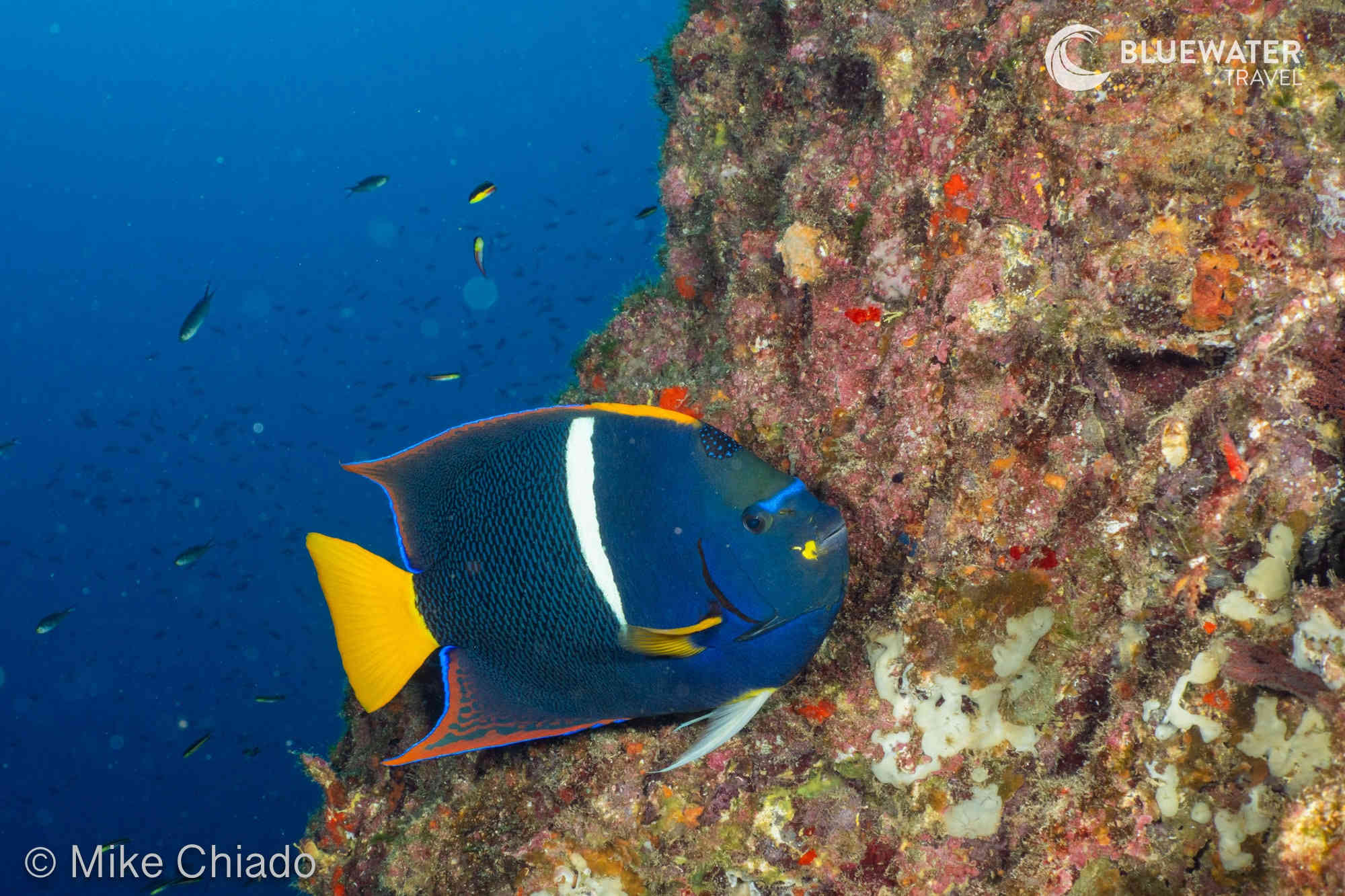
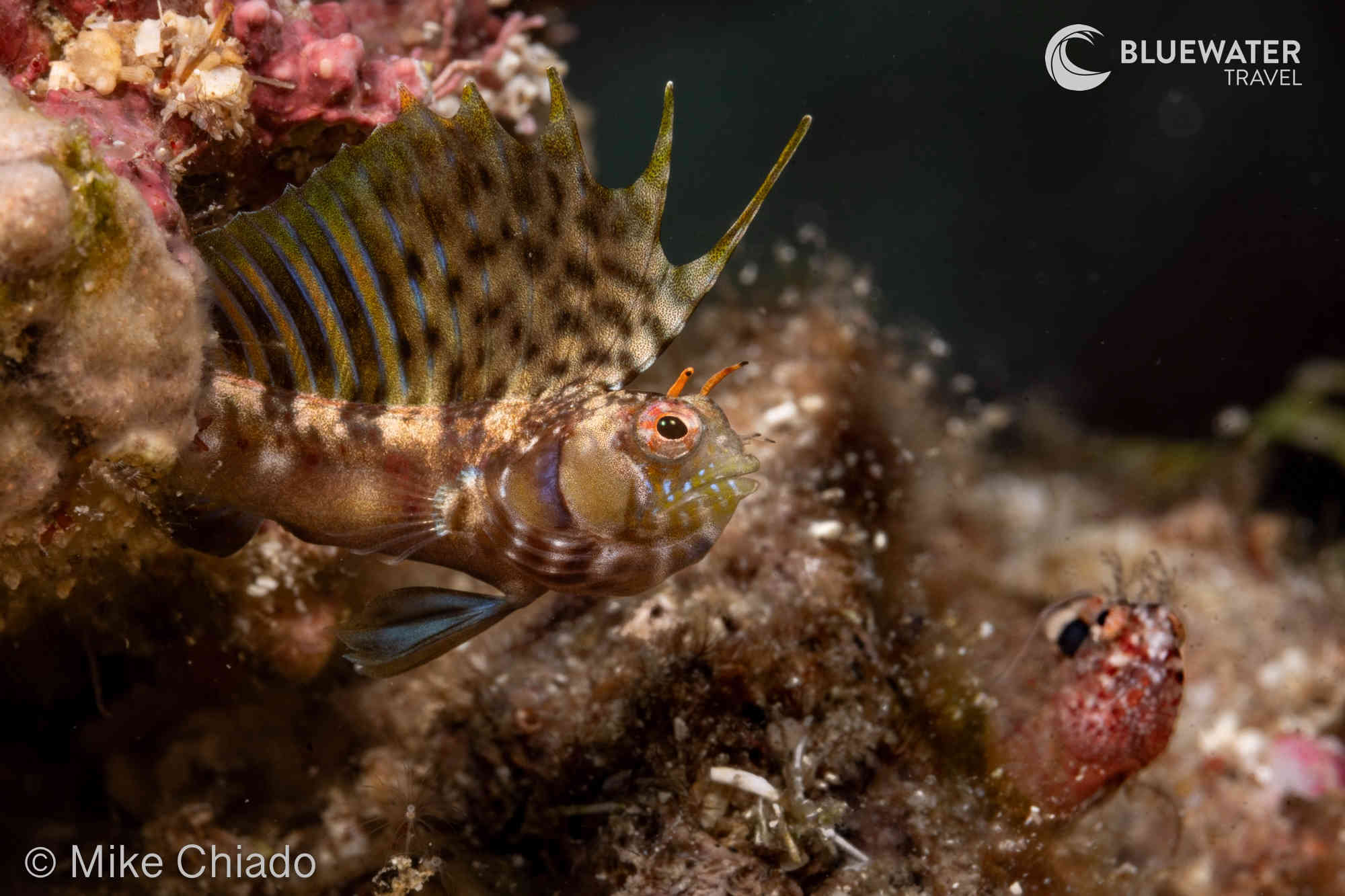
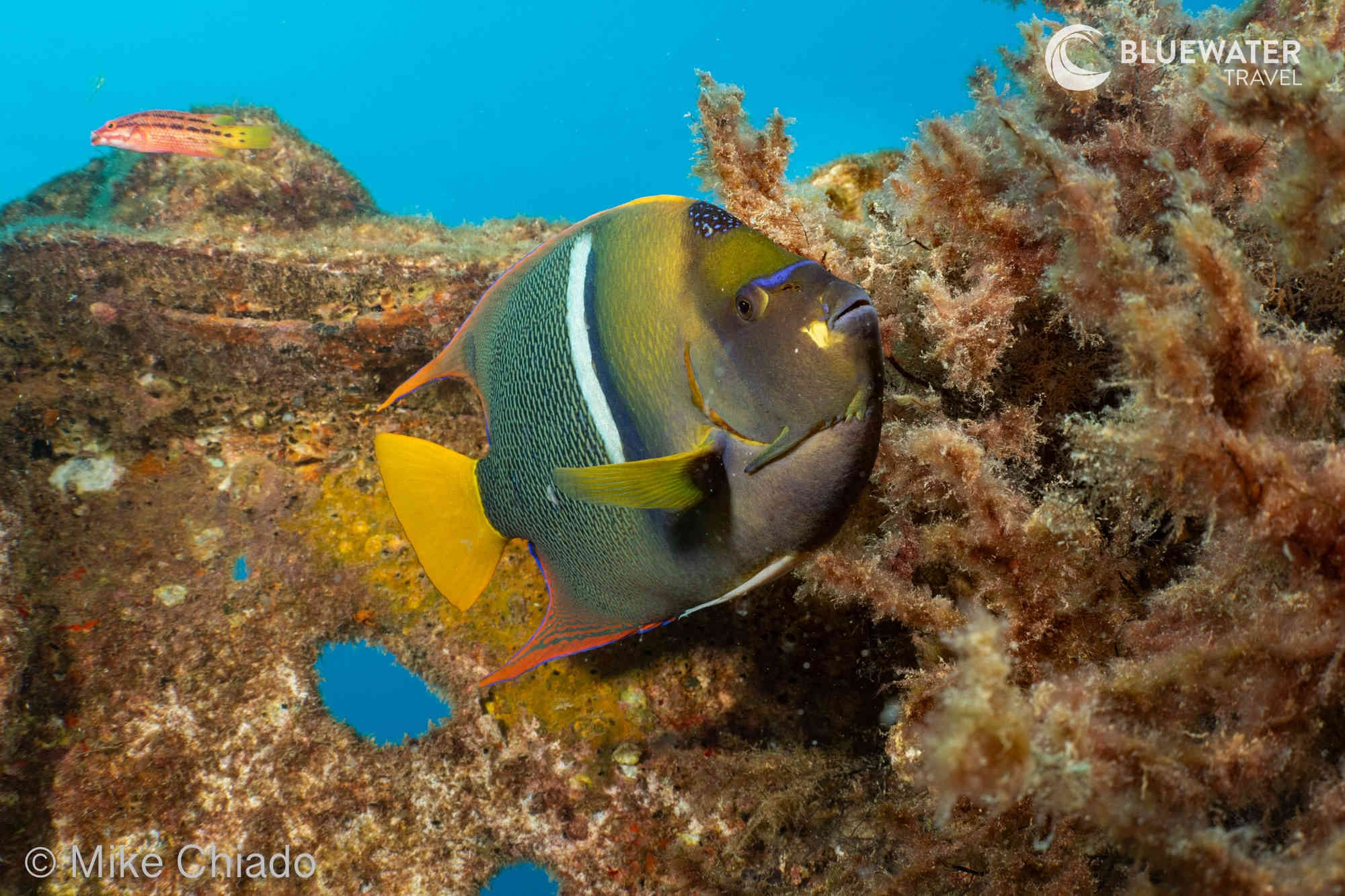
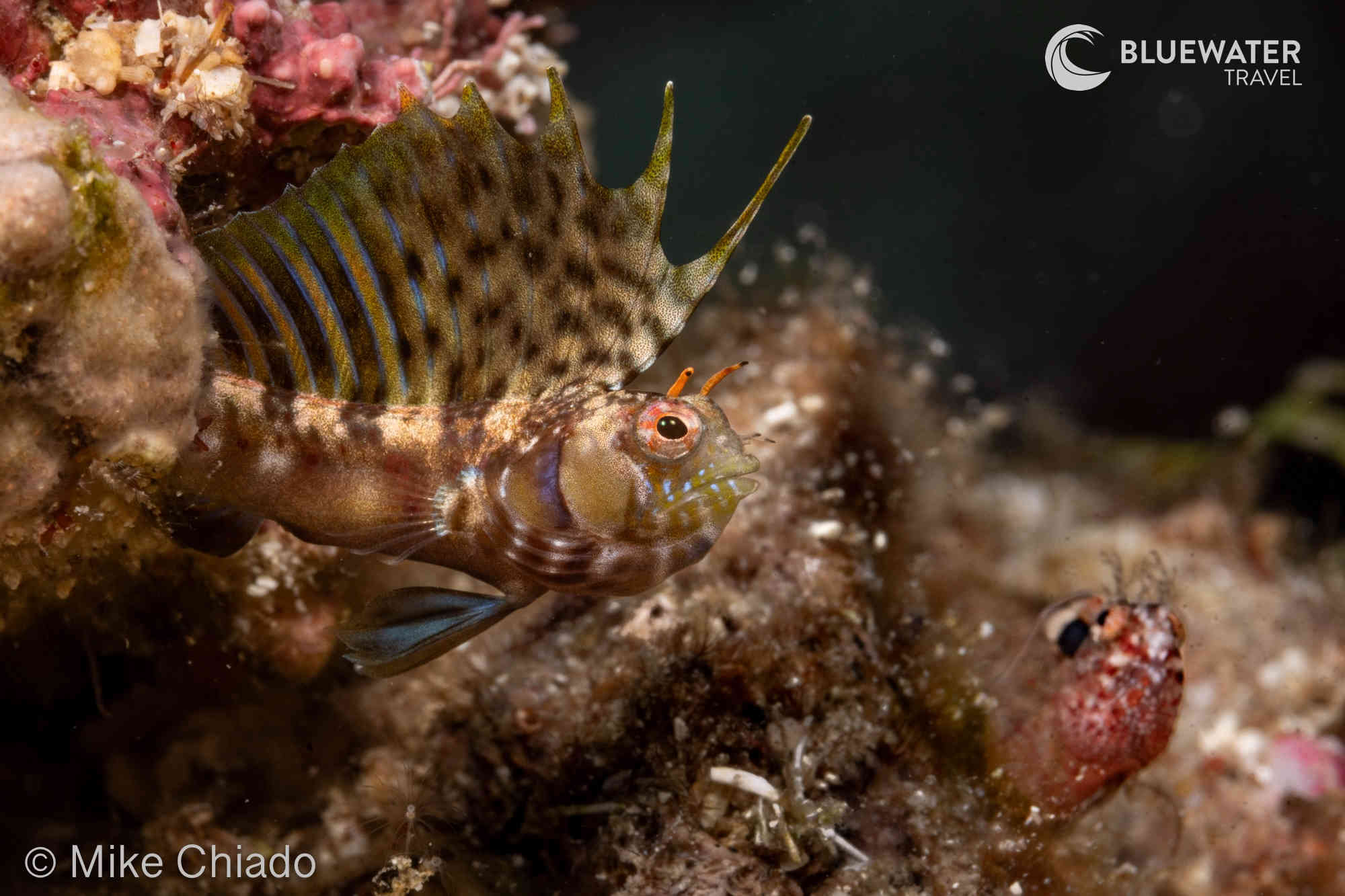
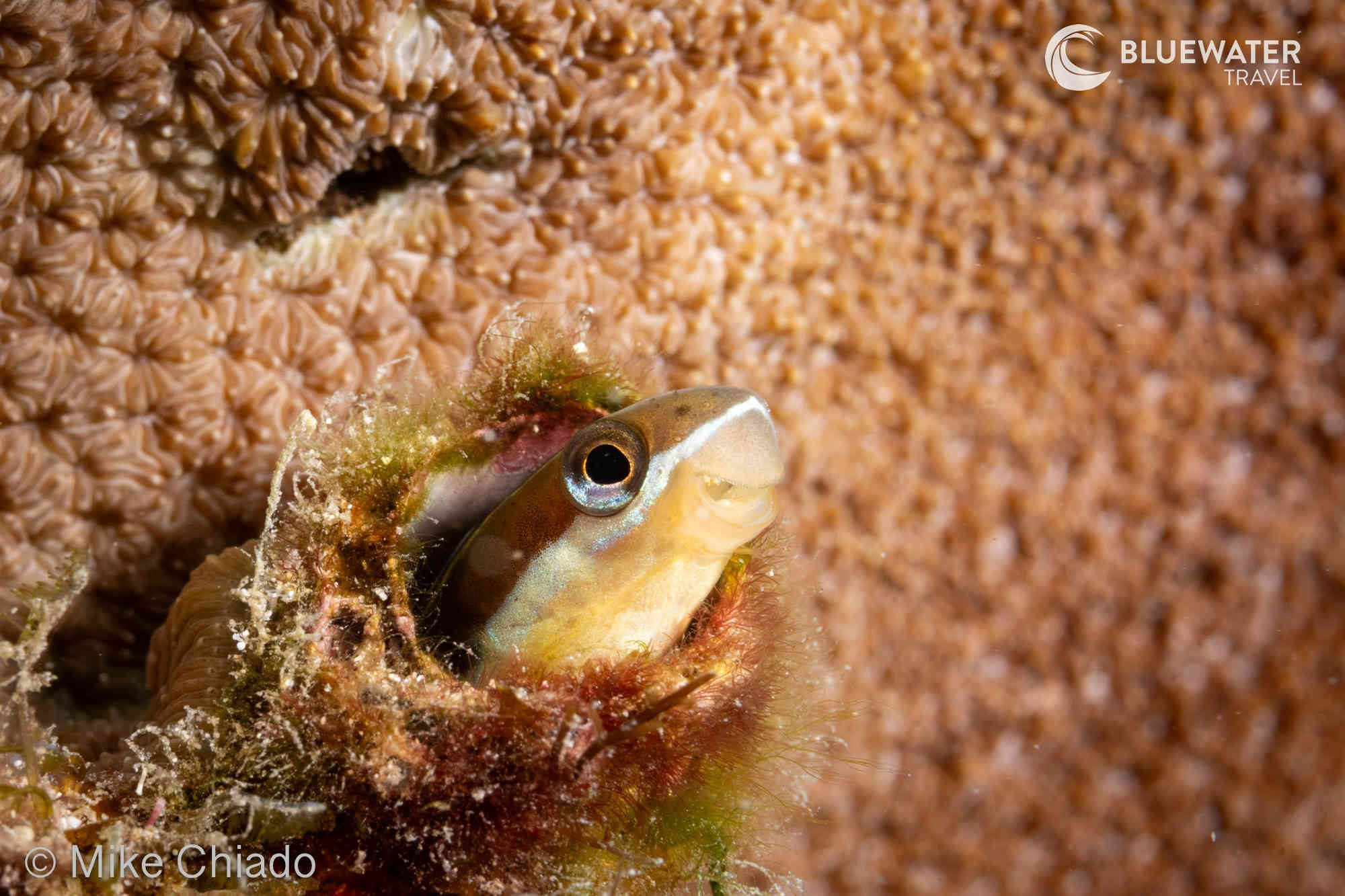
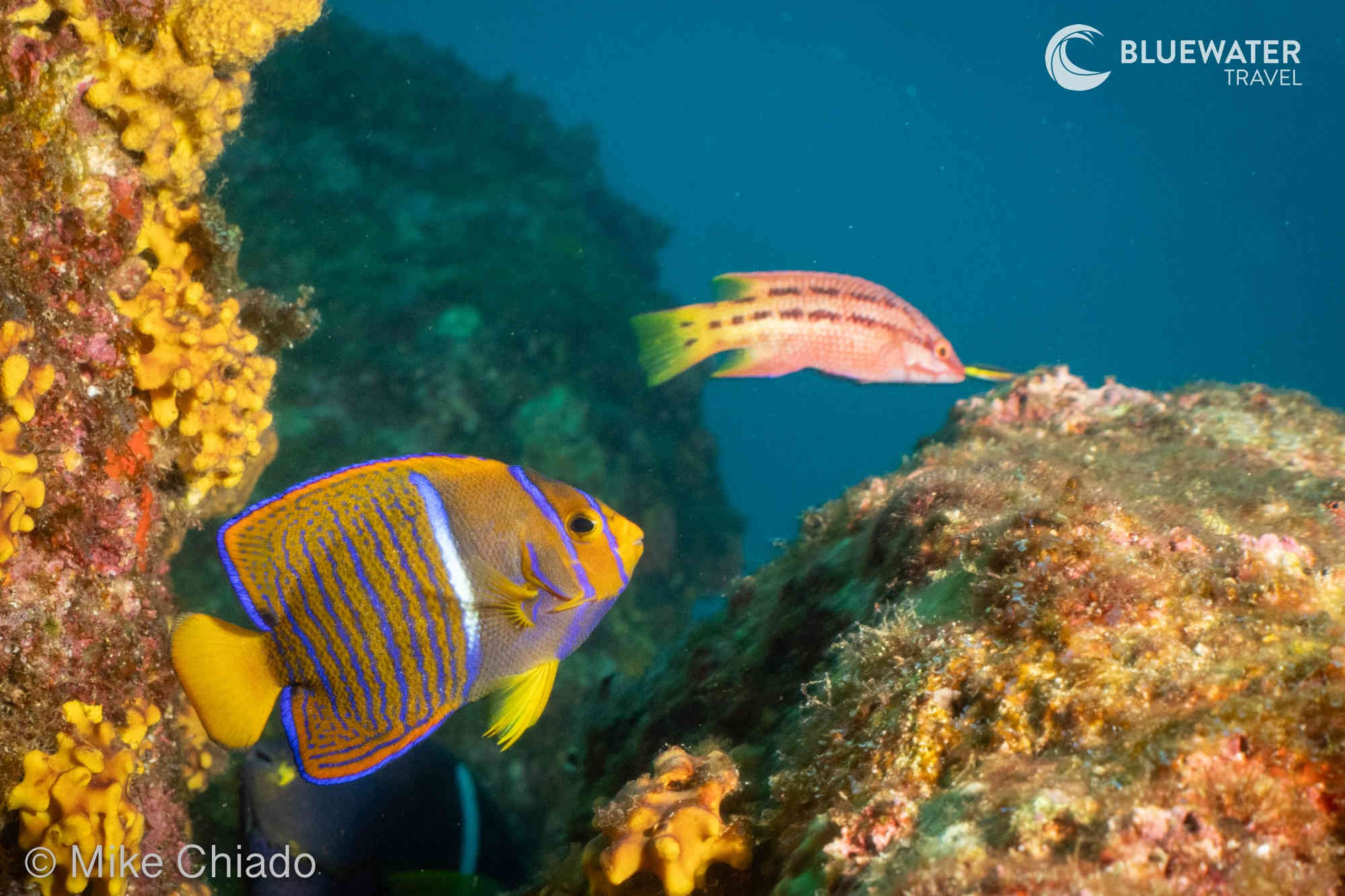
At 10:30 am, the first dive of the trip was underway, finding us in great visibility, warm water (89F), tons of photographic subjects with a napping turtle, moray eels, colorful reef fish, and big sea lions zooming around. Wow, a fantastic first dive! King angelfish in abundance, from juveniles to fully transitioned adults, each with uniquely stunning colors and patterns. Not immediately obvious, but closer observation revealed blennies everywhere, including brown cheek, signal, sabretooth, and Panamic fanged.
Diving off the Rocio Del Mar is via RIBs, rigid inflatable boats. The RIBs are large enough to easily accommodate six divers, a dive guide, a driver, cameras, and scuba gear. Each dive starts with one of the groups being called to the dive deck by their guide, who provides a site briefing. Then the crew assists with loading cameras, donning gear, assisting down a few steps to the swim platform, and onto the RIB. The RIB docking to the Rocio Del Mar is unique. The RIB is actually driven up onto the swim platform, which is at water level, so that the bow of the RIB overlaps. The overlapping of the RIB and mothership creates a rock-solid foundation for divers to enter and exit.
While BCDs are worn getting on the RIB to start a dive, they are doffed in water at the end of the dive. Ending a dive follows these steps: after surfacing with the dive guide, swim a very short distance to the RIB, grab the RIB’s side rope handles, remove weights and pass to the guide, remove the BCD and pass to the guide, grab the RIB ladder, remove fins and pass to the driver, and climb the ladder to complete the water exit. When returning to the mothership, cameras and dive gear are shuttled from the RIB by the crew. BCDs are returned to the dive stations, and the cameras, one at a time, are placed in a freshwater rinse tank.
While the crew deals with gear and cameras, warm showers, either in the room or on the swim platform, await the divers. After a rinse and while the scuba tanks are being refilled, photographers dry their cameras with compressed air provided via hoses at the staging table. Towels are provided on the dive deck, too.
The schedule repeats with a hot lunch, an early afternoon dive, snacks, a later afternoon dive, and dinner. The Bluewater Photo Workshop followed dinner on most days.
The days’ remaining dives were equally exciting and had nearly ideal conditions. We had a very full first day of diving, and that was just a start since the first day skipped the early morning to allow for procedural briefings.
The Rocio Del Mar has an unusual layout. Many dive boats are converted commercial fishing boats, which the crew referred to as ‘scales under the paint’ as a bit of a jab at the concept. Not so with the Rocio. The boat layout was conceived initially as a dive boat, and the decks’ plans place guest cabins adjacent to the dive areas on the main deck. Other boats usually have cabins below deck. With cabins on the main deck, big opening windows are afforded to each cabin. The benefit of cabin windows over, say, dining room windows is that way more time is spent in the cabin than in the eating area. I did enjoy having large operating windows in the cabin for fresh breezes overnight with the air conditioning turned off.
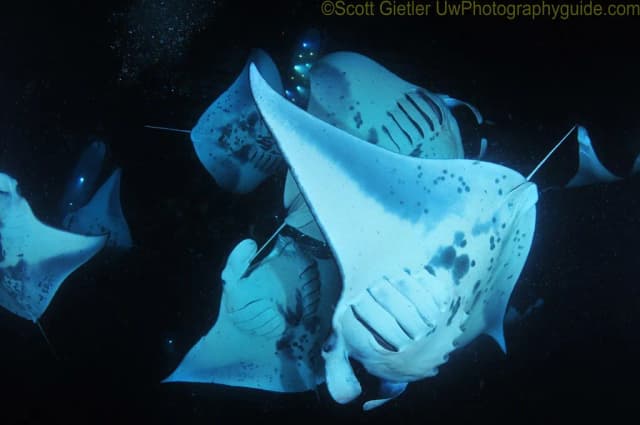
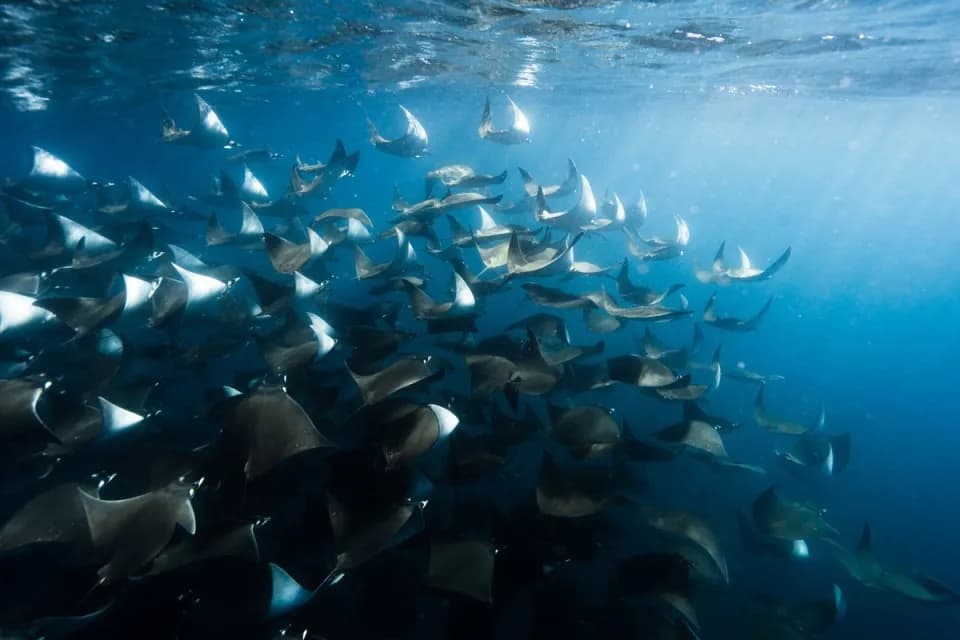
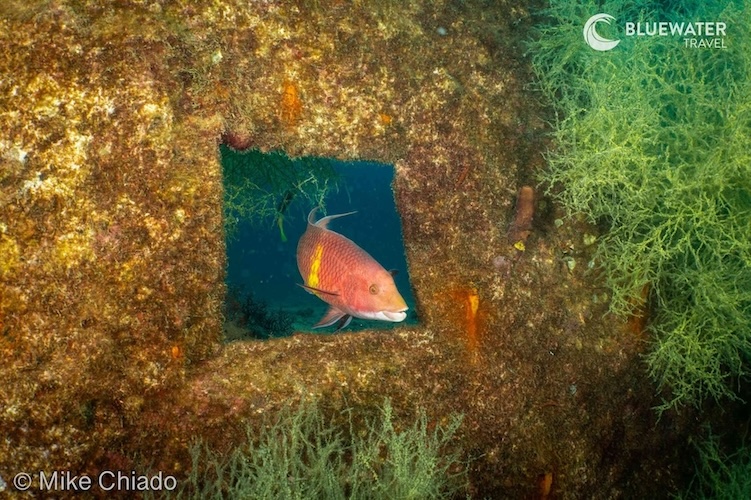
The second day of diving continued with warm waters, although with just a bit less visibility. The sites were Swanee Reef and the Salvatierra and Fang Ming wrecks. Fang Ming is a favorite resting place for turtles, and we found half a dozen in residence. Other photographic subjects included balloonfish and spotted sharpnose puffer, parrotfish, stone scorpionfish, razor surgeonfish, barberfish, coral hawkfish, and lizard triplefin blenny…but the best was to come later in the day. The night dive involved floating lights on the surface over a sandy bottom in 20 feet of water. The artificial lights attracted dozens and dozens of mobula rays. Our three dive groups formed a circle on the sandy bottom on the perimeter of projected light and enjoyed 45 minutes of nature’s ballet, demonstrating the grace and agility of the rays.
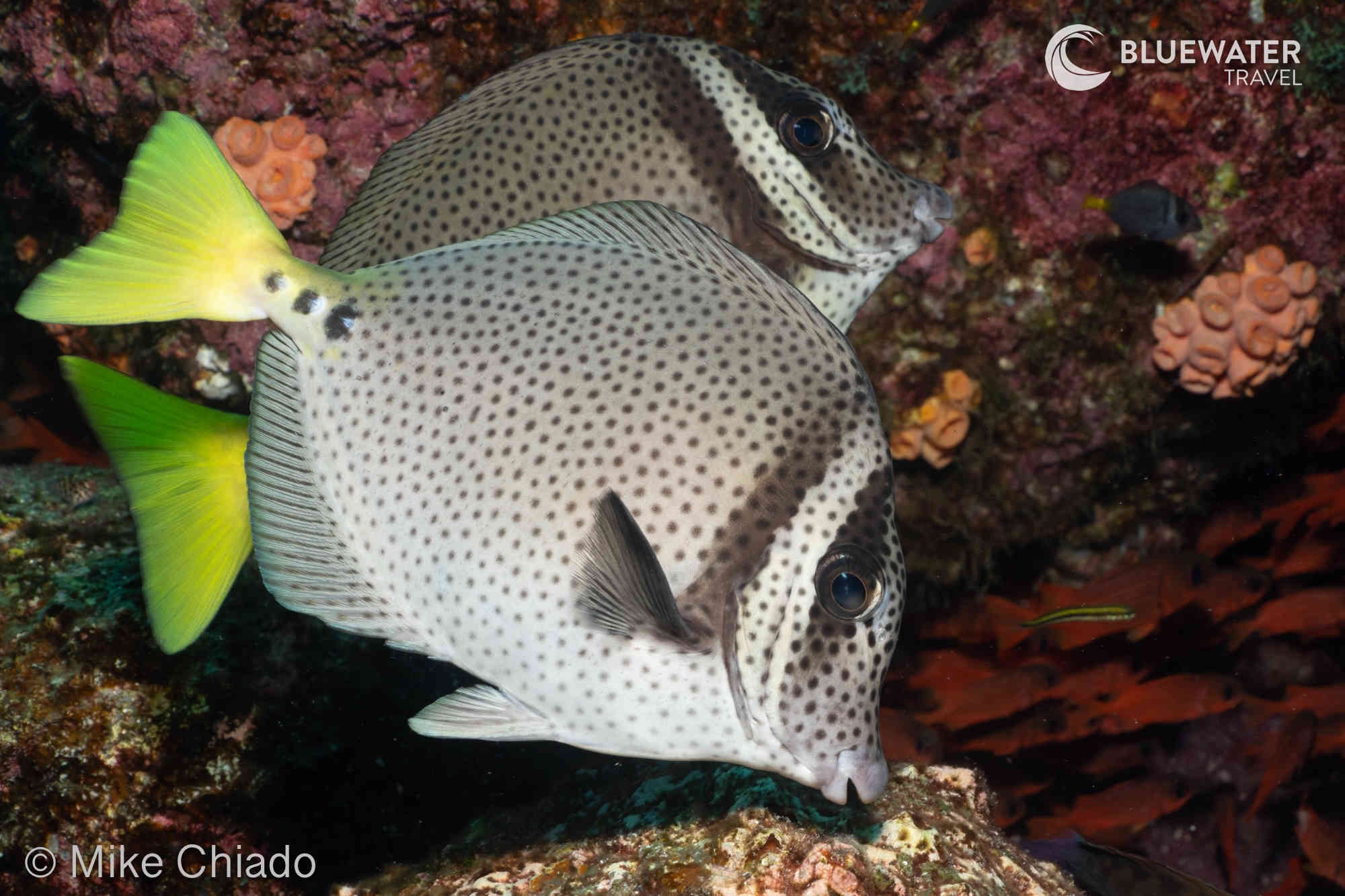
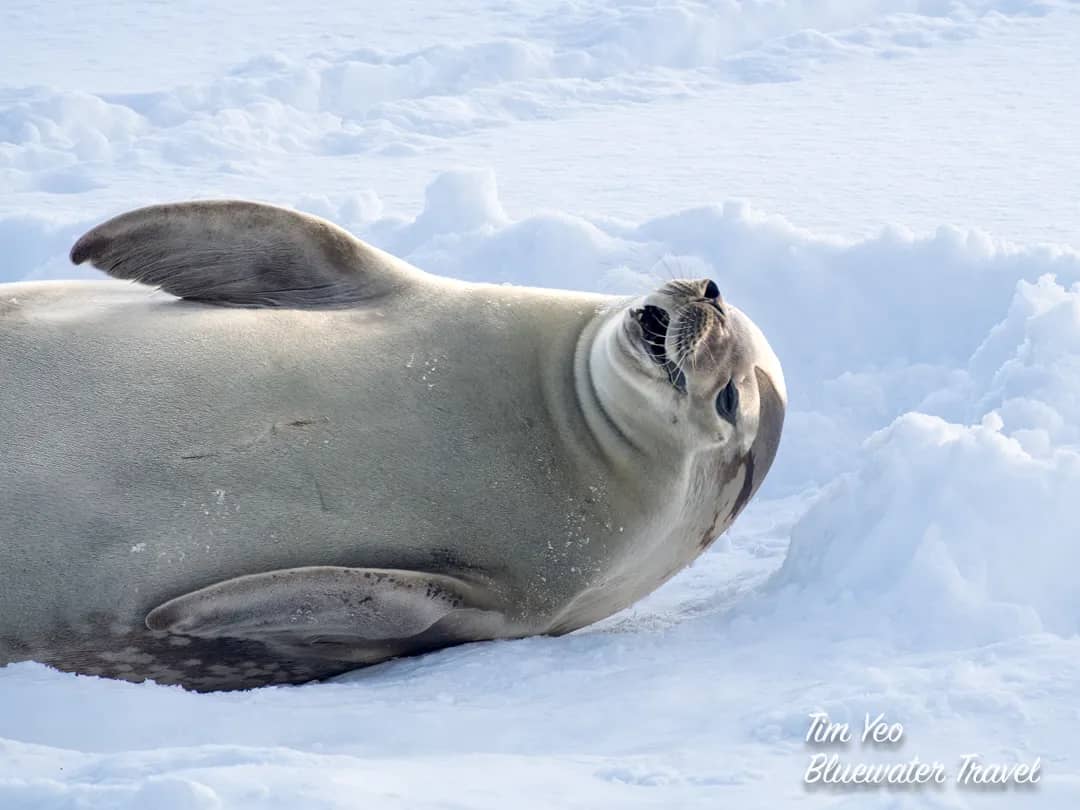
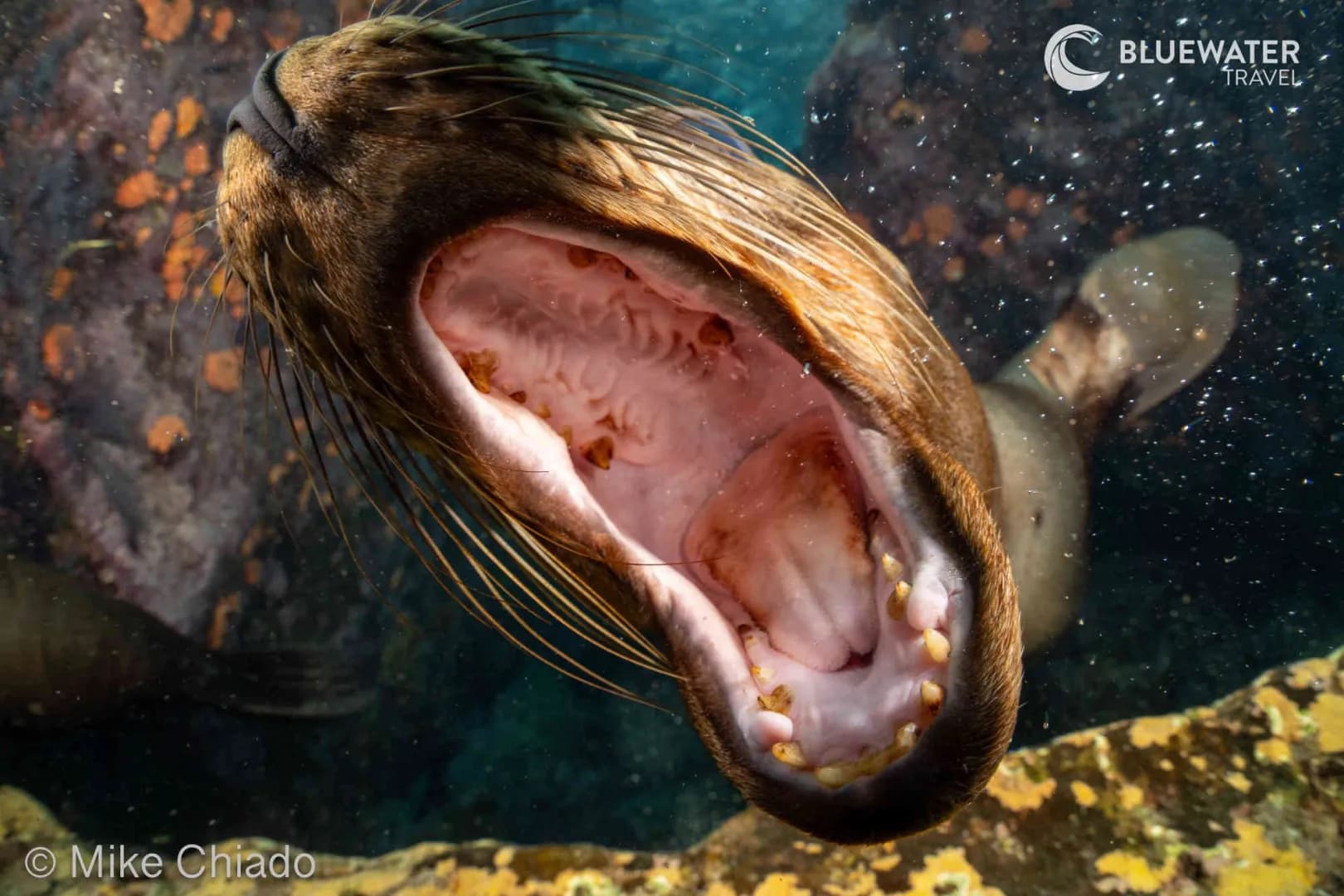
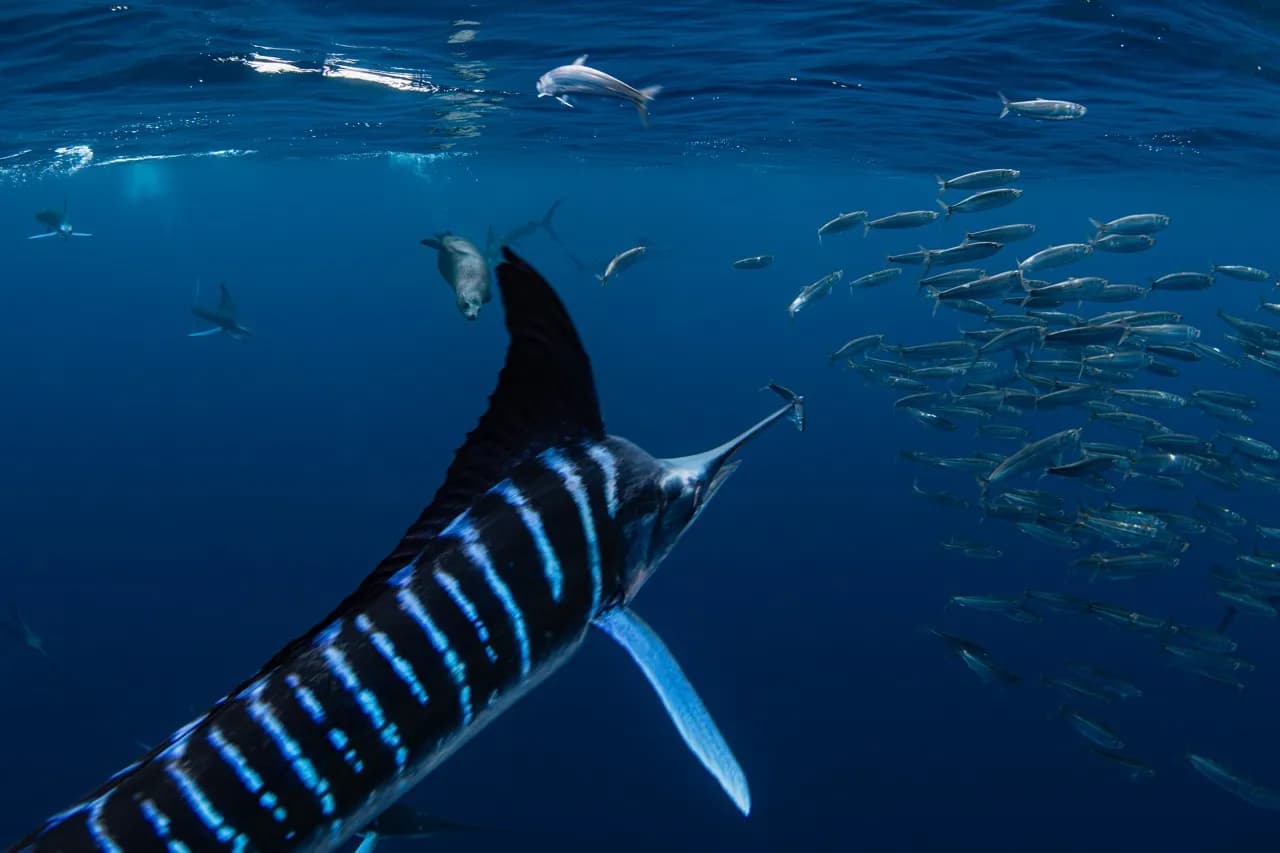
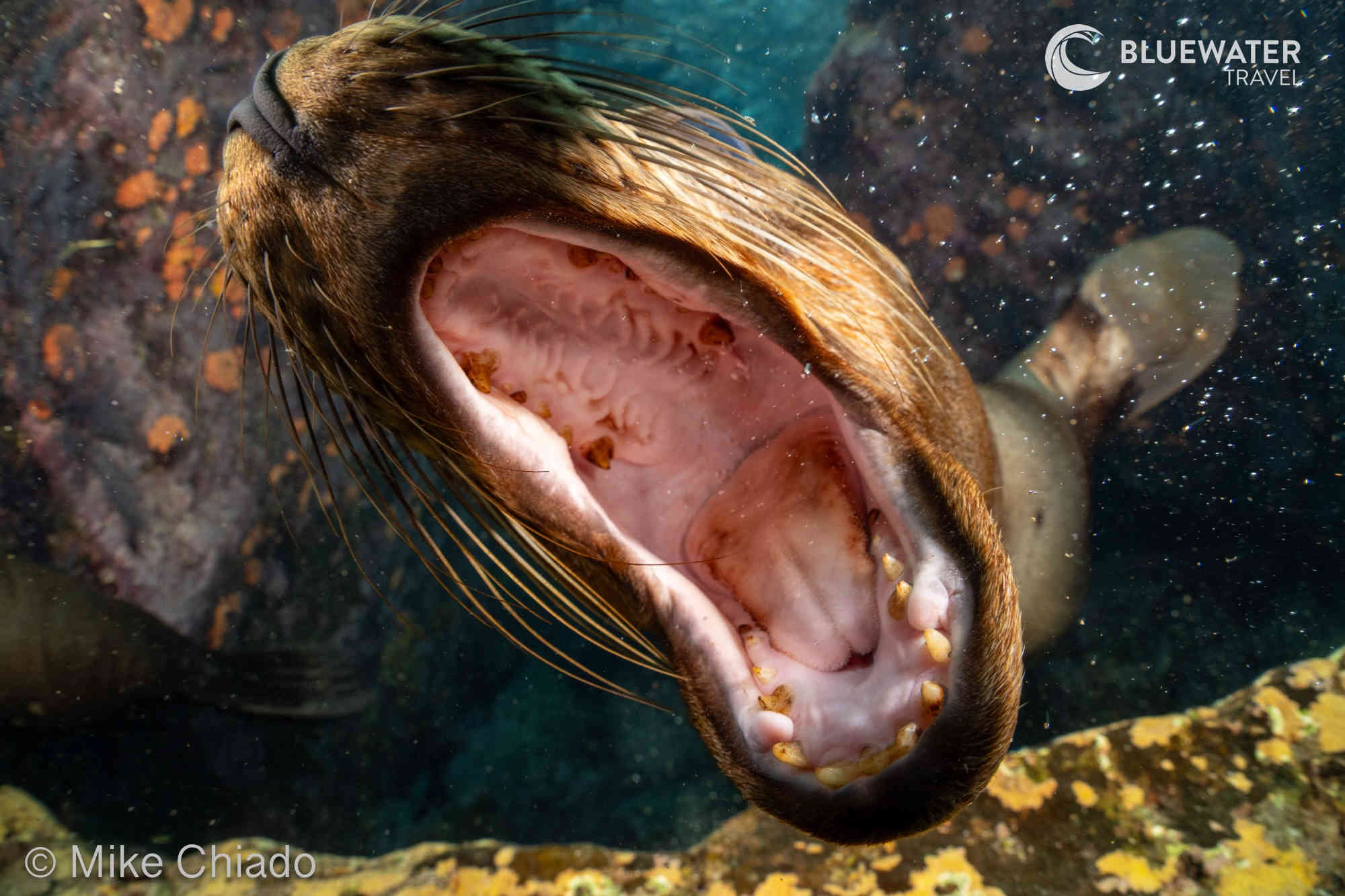
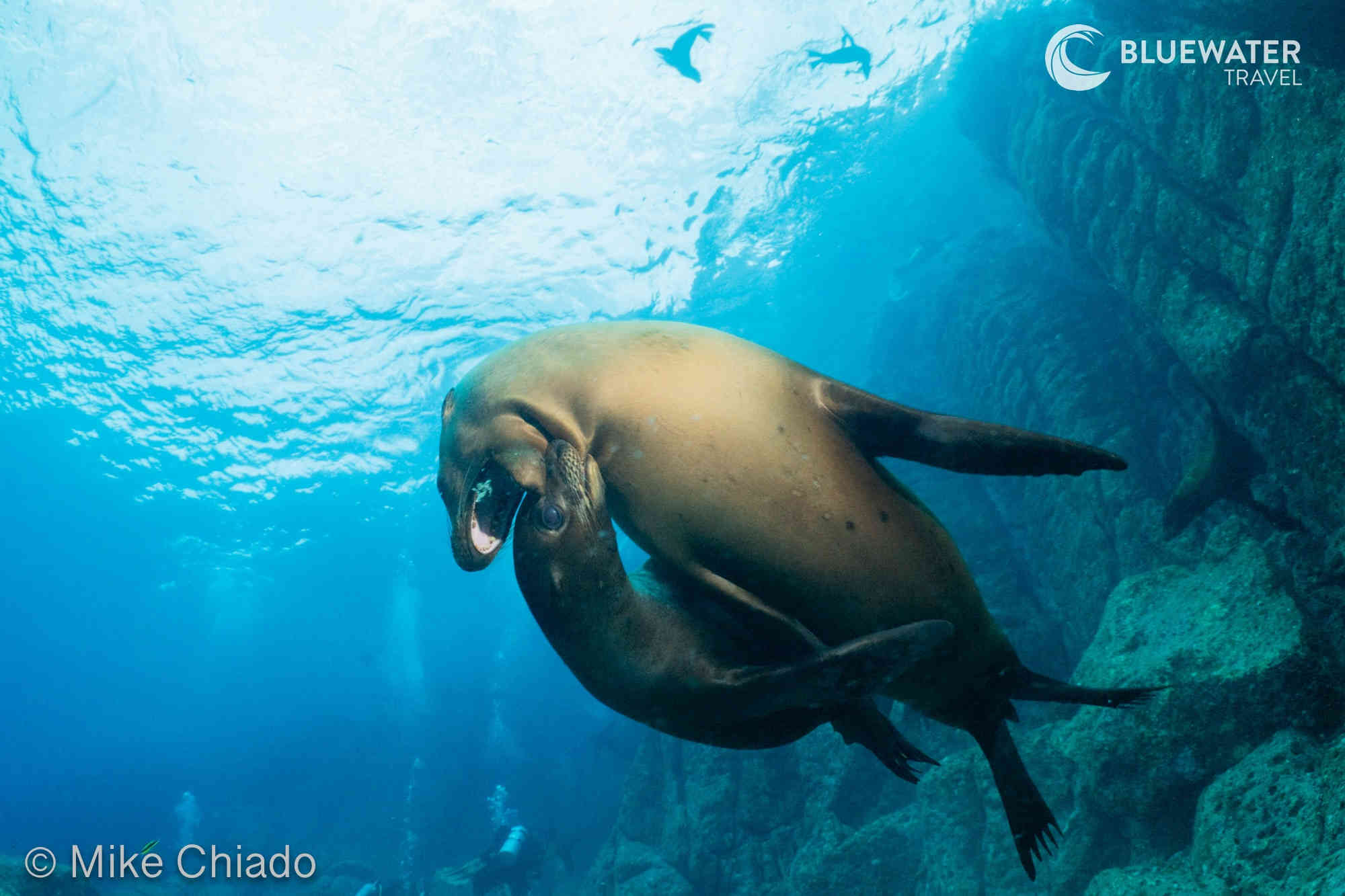
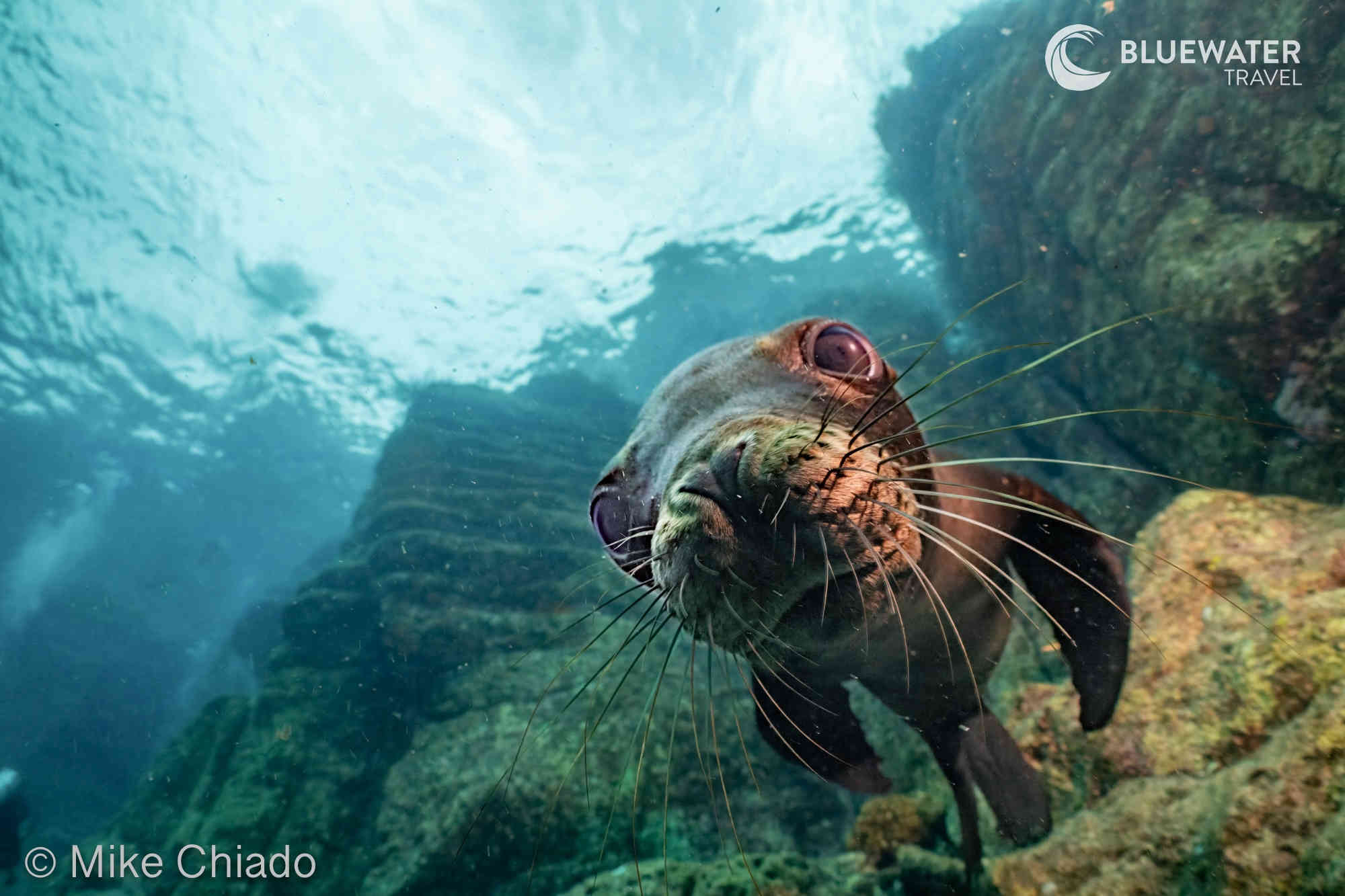
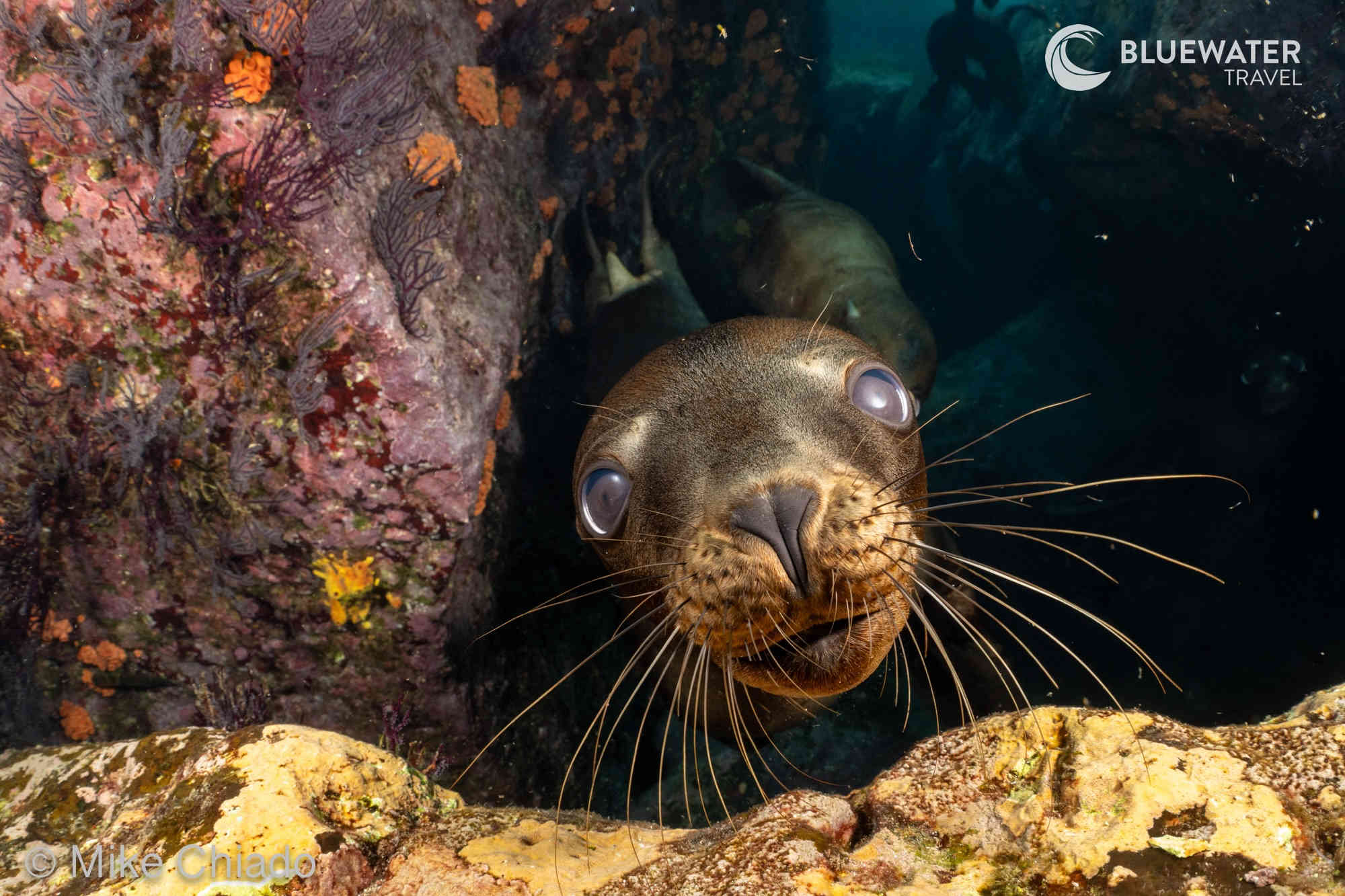
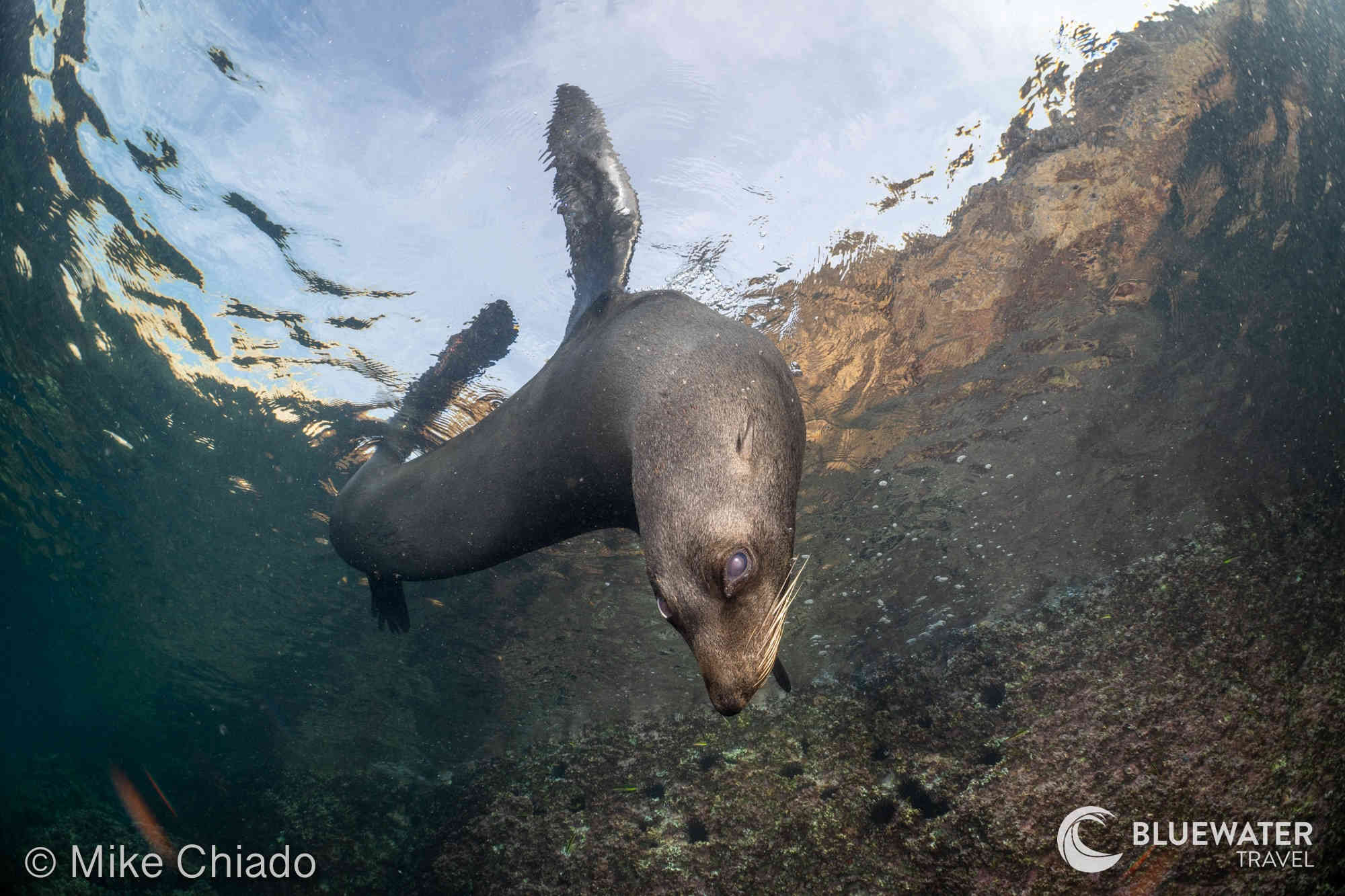
The next day found us at Isla Espiritu Santo with the most playful sea lions I’ve ever experienced. Three fun dives with constant zoom-zooming of these aquatic athletes. The sea lions were very interactive with the divers, and when a sea lion spotted herself in a camera’s dome port, a harmless bite at the port made for crazy pictures. The adolescent lions were in a nearly constant state of playful biting and wrapping themselves in knots around each other. So much entertainment! We all wished the dives lasted longer.
Winds picked up later in the day, and, for our safety, the captain canceled the fourth dive and moved the boat to a protected area. Dinner and the evening photo workshop occupied the remainder of the day.
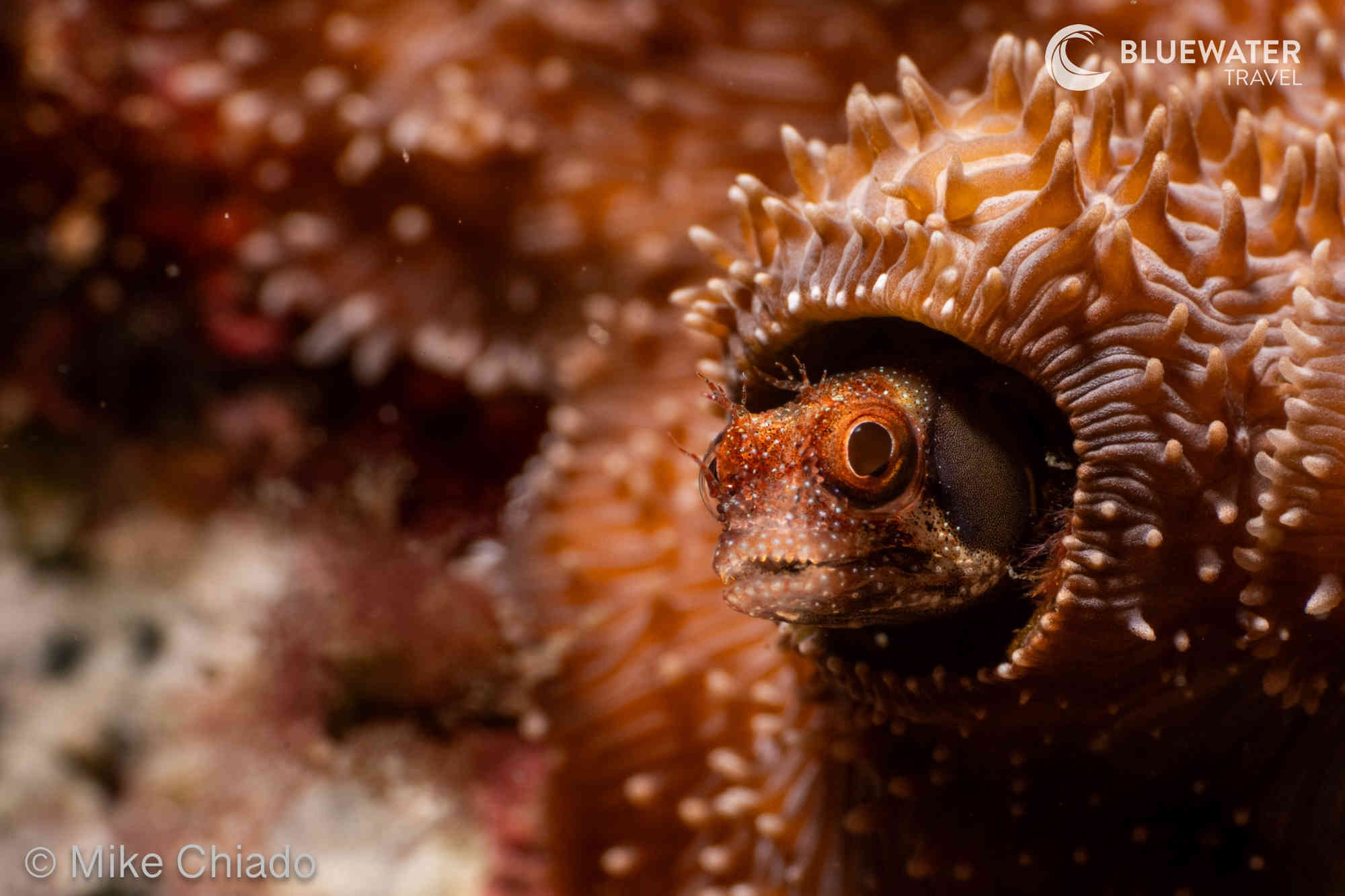
The winds were still strong the next day, and the boat sheltered in behind Isla San Francisco. The calm water was welcome, although the diving was a step down from previous days, and being shallow, challenging with backscatter for photographers. Nonetheless, blennies, king angelfish, sharpnose spotted puffers, seahorses, and damsels provided amusement. The captain did try to move to a better spot during the day, but the winds prevented solid anchoring, and we returned to the morning’s spot.
On the following day, the winds subsided, allowing more range for the boat. However, the weather in the north kept us further south in the Sea of Cortez than the planned itinerary. We revisited the sea lions at Isla Espiritu Santo for one morning dive. Then, the turtle hung out, Fang Ming Wreck, and ended the day at Isla Ballena, a small island adjacent to Isla Espiritu Santo. No complaints for repeating specular sites.
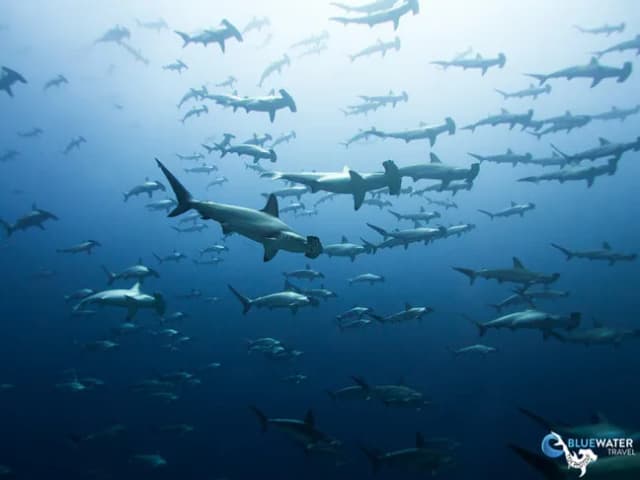
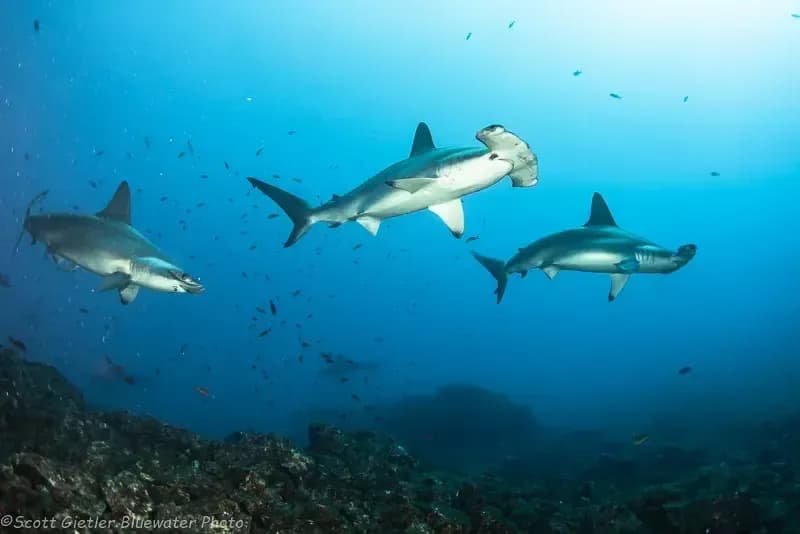
The next day took us to San José Island and Isla Las Animas for sea lions and hammerhead sharks. These sea lions were not as interactive as previous sites, but playful and still, SEA LIONS! Dozens of hammerheads were visible much deeper than our dive profile, especially as the group was on nitrox. A thrill to see the sharks, although disappointing for the photographers.
Being affected by weather on the Pacific side of the Baja Peninsula, the captain inched the boat further north as safety allowed, while providing a variety of sites for diving. An island hike had to be canceled due to an approaching storm, allowing time for the boat to seek safe harbor. Fortunately, the storm spared us, and safety ruled the day.
Heading further north, we entered the waters of Parque Nacional Bahía de Loreto with a dive at Isla Danzante. Many bluespotted jawfish were seen busily cleaning their burrows. Photographers spent most of a dive trying to capture the exact moment the jawfish spits a mouthful of sand.
Guests were offered a night out in the small town of Loreto. Most guests did go ashore, stopping for a cocktail at a beachside hotel before wandering around the colonial buildings, including the Misión de Nuestra Señora de Loreto, a 17th-century church. The group splintered, seeking a restaurant that pleased them and meeting back at the dock at 8 pm for the RIB trip back to the Rocío.
With lots of distance to make up due to weather delays, the Rocío started a 16-hour transit after three dives on the trip’s tenth day. Isla San Ildelfonso Island provided the dive locations before sailing. The sites were mostly wall dives with divers seeking blennies and nudibranchs hiding in crevices, plus the now usual king angelfish, balloonfish, stone scorpionfish, and the first sighting of a redsaddled snake eel.
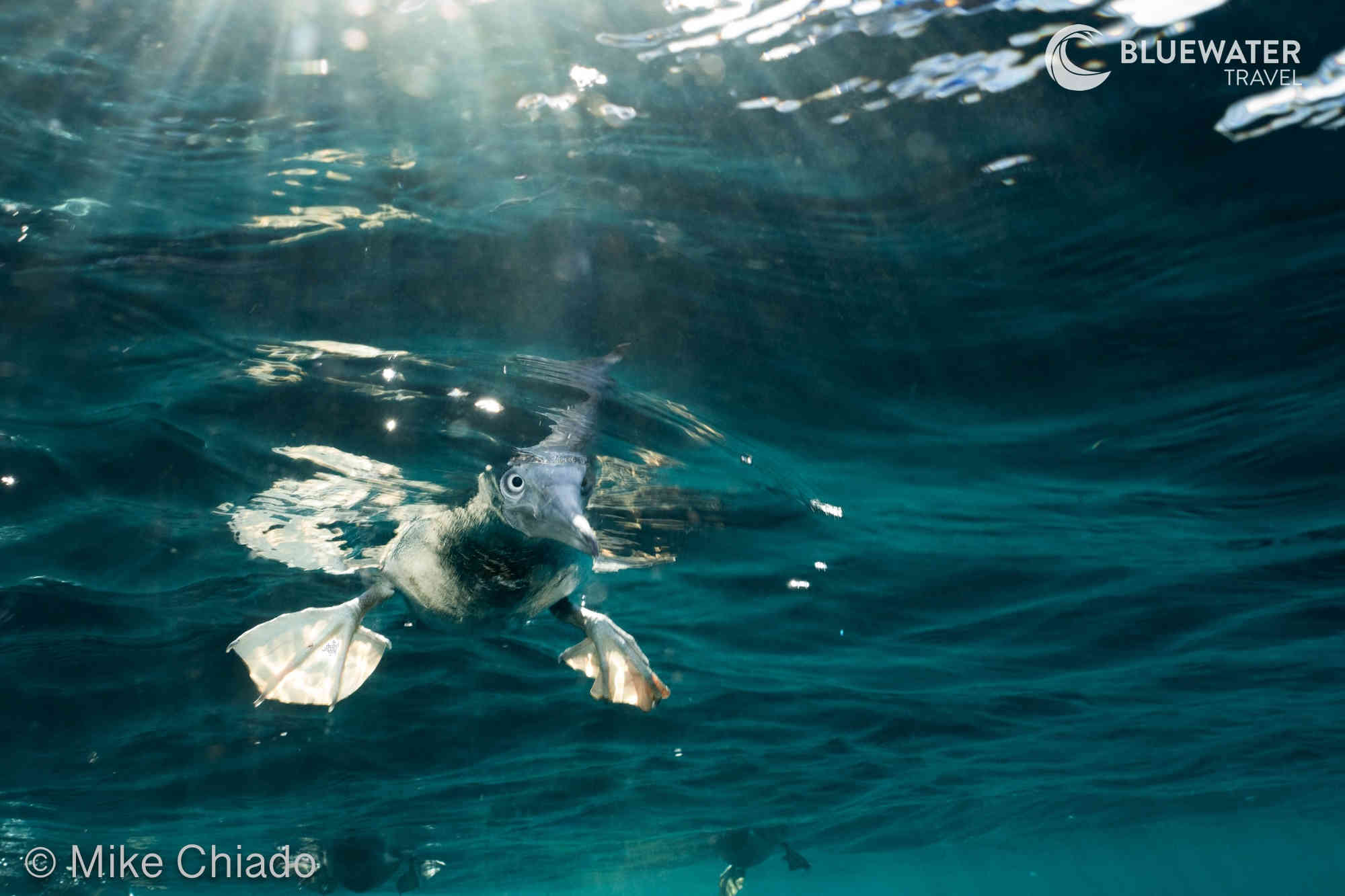
After the overnight crossing, which turned out to be a bit rough, we arrived at Isla San Pedro Martir, a tiny speck of an island in the middle of the Sea of Cortez. Before entering the water, a pod of dolphins seemed excited by the company of the boat and jumped to amuse us. The small size of the island wasn’t indicative of the diving. Hammerheads were spotted, plus more welcomed sea lion action. Sharp-eyed guides spotted an electric bullseye ray - a first for the trip. More nudis were in residence, including a yellow Tylodina Fungina nesting in camouflage on a yellow sponge. (I recall the guides calling the nudi a yellow Asian hat.) Also, the largest school of king angelfish of the trip was present. At the end of the second morning dive, we were entertained by brown-footed boobies, curious about us divers. With their heads poking beneath the surface, they kept a watchful eye.
For the last diving day, we made our way to the Midriff Islands and La Bahía de Los Angeles. Two morning dives were dark, in the shadow of the island, and colder than previous dives. A Cortez stingray passed by as we searched for the giant finespotted jawfish, and giant they were. Their heads are the size of softballs, and their bodies measure over 15 inches. The dive guides brought treats to draw the jawfish out of their burrows for a nice photo op.
Before the final open water transit, snorkeling with whale sharks was arranged with local operators. Guests were briefed by our guides on how to proceed: no flash strobes, rash guards, and no wetsuits, and be prepared for multiple water entries and exits. Visibility was challenging, but better than recent trips. As one photographer put it: we could see them coming, but not able to get head to tail in the shot.
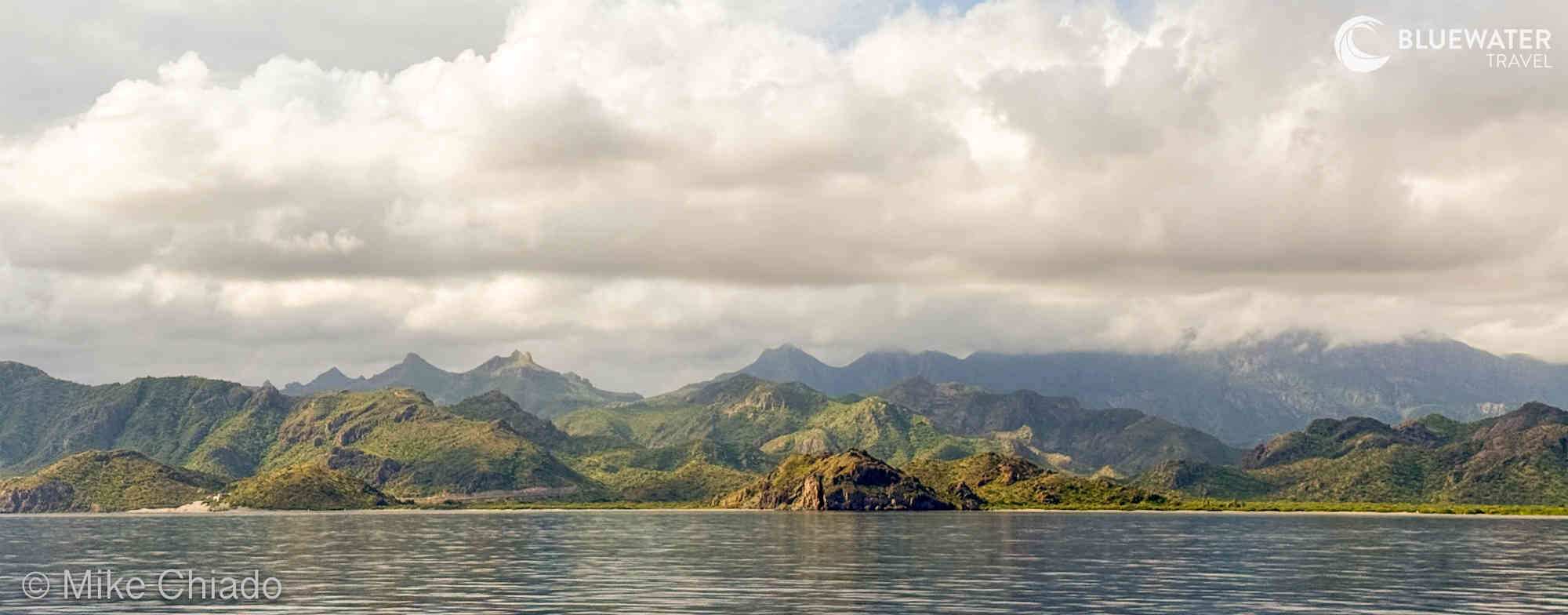
With water activities for guests complete, the Rocio started the last step on the journey to Puerto Peñasco. Fate intervened and created a delay due to an engine failure. With two engines on the Rocio, we were never in danger, but were dramatically slowed by one engine loss. Our ETA changed from 7 am the next day to 3 pm. The crew arranged for the transfer vans to meet guests at the new arrival time for the shuttle back to Phoenix.
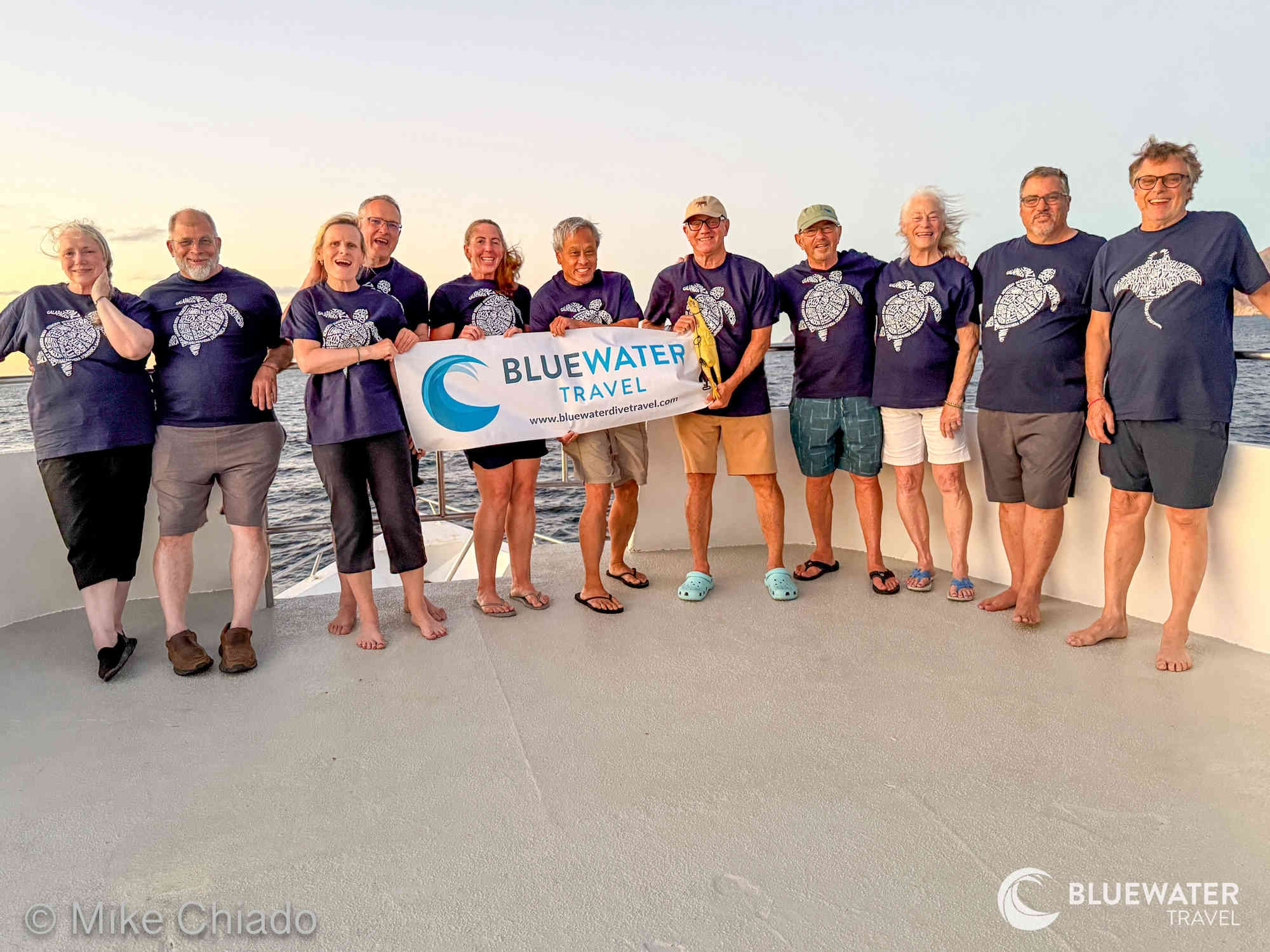
The long journey back provided ample time for the final photo workshop, photo contest, and awards, and a group slide show. After the day’s morning dives, the crew cleaned our dive gear and set it to dry, and with the delay, the last day’s extra time provided plenty of drying time.
Overall, a very good trip, and I look forward to returning in 2027.
Learn more about diving in the Sea of Cortez.
-optimized.webp&w=640&q=75 "Moorea Trip Recap August 2026")