



Galapagos Sharks - Shark Diving with a Purpose
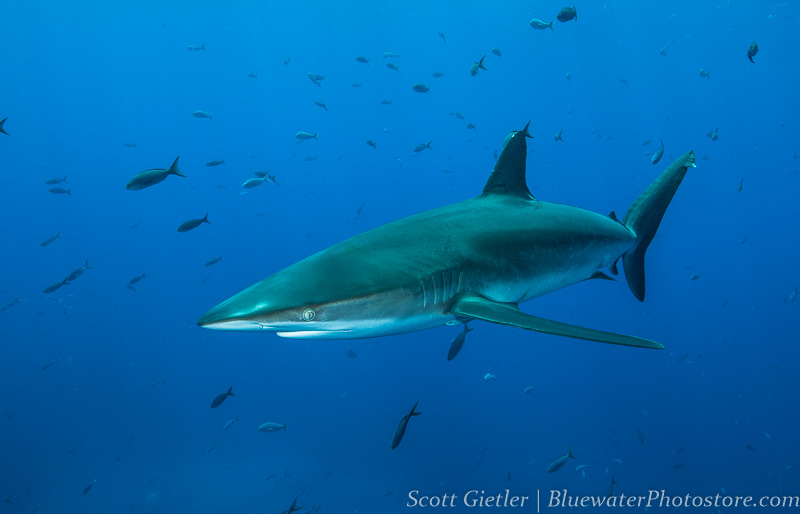
Anyone who has visited the Galapagos Islands will undoubtedly label it as one of the top destinations theyve encountered. Masses of diverse marine life, unique endemic species, and some of the best shark diving in the world. Situated in such a remote location, its no surprise that the areas isolated wildlife has evolved independently, creating a one-of-a-kind trip for nature enthusiasts and divers alike.
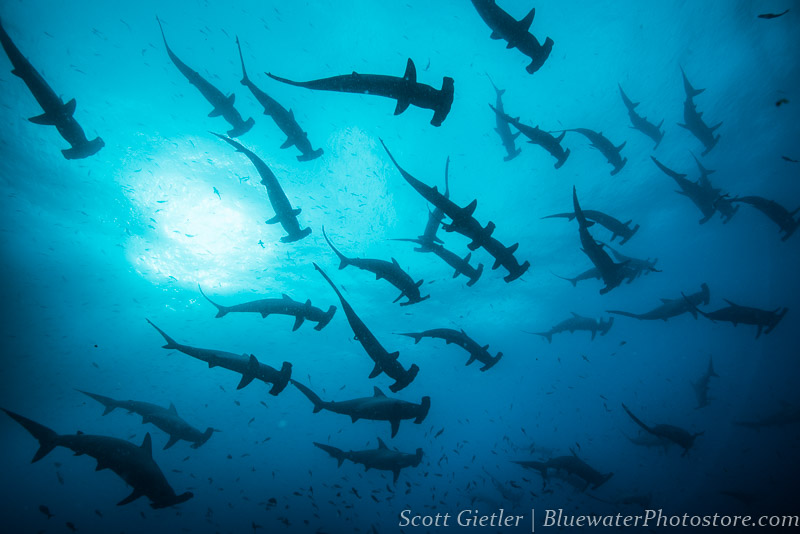
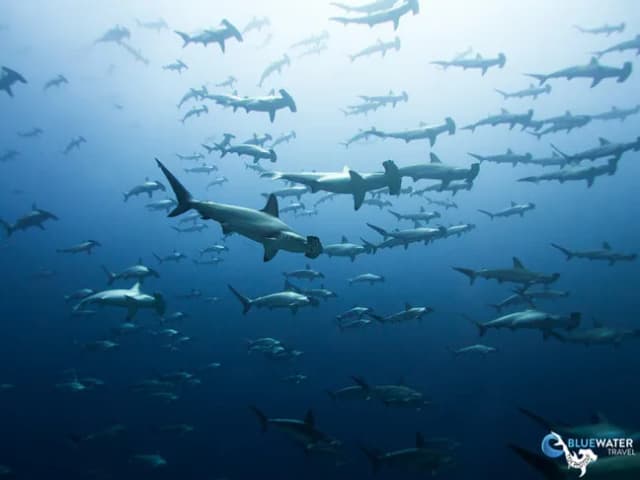
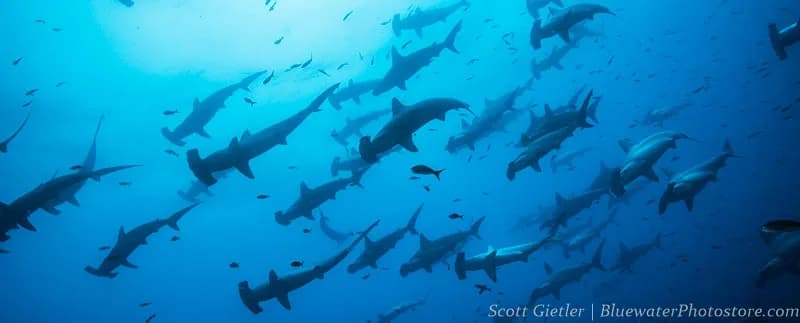
Hammerhead sharks photographed by Scott Gietler
Galapagos Diving
The highlight of any trip to this famous island chain is diving with hammerhead sharks. Huge schools of these weirdly wonderful fish gather in their hundreds around Wolf and Darwin Island, possibly to hunt, or maybe to mate; no one is quite sure. What is known, is that spending time in the water with the Galapagoss resident scalloped hammerheads is an exciting spectacle, and an opportunity not to be missed.
Such unique in-water experiences draw divers the world over to explore the waters of the Galapagos Marine Reserve. Dozens of liveaboards, cruises, and sightseeing boats provide privileged access to upwards of 260,000 visitors each year. As an indication of the value of the regions wildlife, a single hammerhead shark has the potential to generate $5.4 million in tourist revenue throughout its lifetime. It, therefore, goes without saying that protecting the Galapagos National Parks fragile ecosystem is paramount to the survival of the islands as a whole; marine tourism must be practiced sustainably to best protect the regions underwater species.


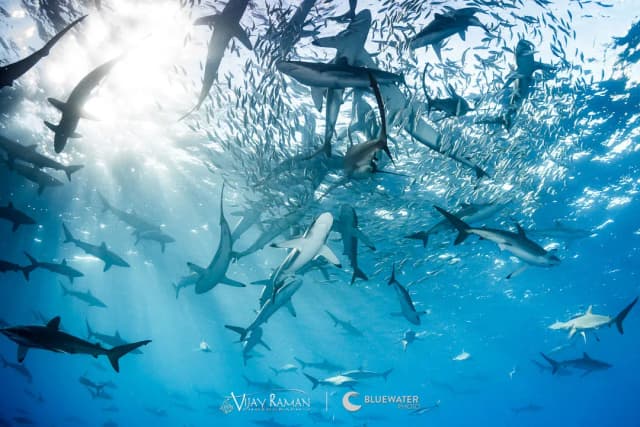
Photos by Scott Gietler (L), Katie Yonker (M), and Tommy Stylski (R)
Fish Trade In The Galapagos
Unfortunately, the value of wildlife is not limited to the tourist industry. Humans have long harvested marine species both as a food source, for valuable by-products, and the wasteful aquarium and eastern medicine markets. As opposed to tourism, where an animals value is in its longevity, the fishing trade relies on a one-time win, rewarding catch volume, and size in return for immediate financial gain.
Long-line Fishing & Shark Fin Market
Fishing and hunting in the waters around the Galapagos Islands are strictly controlled, with a ban on all commercial fishing inside the Galapagos Marine Reserve since 1998. Despite protecting an area of 133,000 square kilometers (51,000 square miles), the effectiveness of the reserve is limited as many migratory species travel hundreds of miles through unregulated waters at the mercy of commercial fishing fleets. One of the most damaging fishing practices is that of longlining, where thousands of baited hooks are spread along a mainline stretching for many miles across the ocean. While longlining may target a specific species, it is indiscriminate in what it catches, with dozens of endangered fish, sharks, marine mammals, and even seabirds falling victim to this devastating fishing method every time the lines are set.
Sadly, the seas around the Galapagos are not spared this onslaught, and every year a huge longline fishing fleet amasses just outside the Ecuadorian Exclusive Economic Zone, maneuvering as close to the rich waters of the Galapagos Islands as is legally permitted. Primarily thought to be targeting squid, as many as 300 vessels ravage this vulnerable resource for several months throughout the summer. Squid are key prey for many Galapagos species including hammerhead sharks, and for those sharks that manage to avoid the longlines, they are now facing a dramatic decline in their food reserves.
Furthermore, in a particularly unique ecosystem such as the Galapagos, as much as 90% of the long-line fishing catch is estimated to be by-catch or non-target species. And it is not only squid that holds a commercial value. Its no coincidence that the fishing fleet amasses so close to one of the biggest concentrations of sharks in the world. Almost all hammerhead and silky shark fins that end up in the biggest shark fin market in the world are thought to originate in the Eastern Tropical Pacific, and with fins fetching an average of $1,000 per kilogram, its debatable as to what species the longliners may actually be targeting.
In 2020, the annual Galapagos longlining onslaught gained global attention for the first time, as the biggest fishing fleet to date was recorded south of the islands. Pressure from the public, media, and numerous interest groups has led to some limited action, however, political pressure has also played a large part in allowing this tragedy to continue relatively unchecked. So what can we, as divers and conservationists, do to help prevent the decimation of one of the greatest fish in our oceans?

Photo by Tim Yeo
Dive With A Purpose
As we discovered earlier, shark tourism reaps huge rewards, not only for local economies, but in the protection of individual animals, and shark species as a whole. Valuing sharks as a living resource, to be nourished and guarded rather than hunted and slaughtered, is vital if we want to continue encountering sharks in our oceans. It, therefore, goes without saying that one of the most effective ways to protect sharks is to dive with them, sharing your experiences and encouraging others to do the same. Only then, will communities learn to appreciate the economic value of living sharks.
Read more about diving in the Galapagos and get in touch with us about the next possibilities to travel to and dive in the Galapagos Islands.
You can also take action to support our trusted partners, Shark Allies, fight against the fin trade, and protect endangered shark species.