

Is Red Sea Diving Safe? Iran, Flight Routes and Liveaboard Safety in Egypt
We’ve had a few divers ask whether the situation in the Middle East affects travel to the Red Sea. It’s a fair question. When a region is in the news, places can start to feel much closer together than they really are.
The short answer is that Egypt’s Red Sea resorts are a long way from Iran, the Persian Gulf and the Strait of Hormuz. Destinations such as Hurghada, Marsa Alam and Sharm El Sheikh are established tourism areas in Egypt, on the western side of the Red Sea. They are not close to the areas most often mentioned in reports about tensions in the Gulf.
Since February, Bluewater’s Red Sea trips have continued to operate as normal, with no cancellations due to the Iran situation. As with any destination, schedules can still be affected by normal factors such as airline changes, weather, operational issues or minimum group numbers, but the regional conflict itself has not stopped these trips from running.
For most divers travelling from the UK, Europe or North America, getting to the Red Sea remains straightforward. Typical routes usually go via Europe, Istanbul or Cairo, rather than through Dubai, the Persian Gulf or the Strait of Hormuz.
The Red Sea is not next to Iran
It can be hard to judge distance from news headlines alone, especially when several countries in the wider Middle East are mentioned together. In reality, Egypt’s Red Sea coast sits on the African side of the Red Sea, while Iran lies much farther east, across the Arabian Peninsula and beyond the Persian Gulf.
The main Egyptian Red Sea diving areas are separated from Iran by a considerable distance, multiple countries and very different travel corridors. The Brothers Islands and Elphinstone are roughly 850 to 900 miles (1,370 to 1,450 km) from the nearest Iranian territory, around 1,200 miles (1,930 km) from Tehran and more than 1,300 miles (2,100 km) from the Strait of Hormuz.
To put that into perspective, 1,300 miles is roughly the distance from New York to New Orleans, or from Los Angeles to Dallas. In other words, these are not neighbouring areas.
The Brothers Islands themselves lie about 42 miles (67 km) off Egypt’s mainland coast. These are offshore Egyptian dive sites reached by liveaboard. They are not in or near Iranian waters.
In practical terms, a diving trip to Hurghada, Marsa Alam or Sharm El Sheikh is not taking travellers into the Persian Gulf region. These are Egyptian resort areas with long-established international tourism, diving and liveaboard operations.
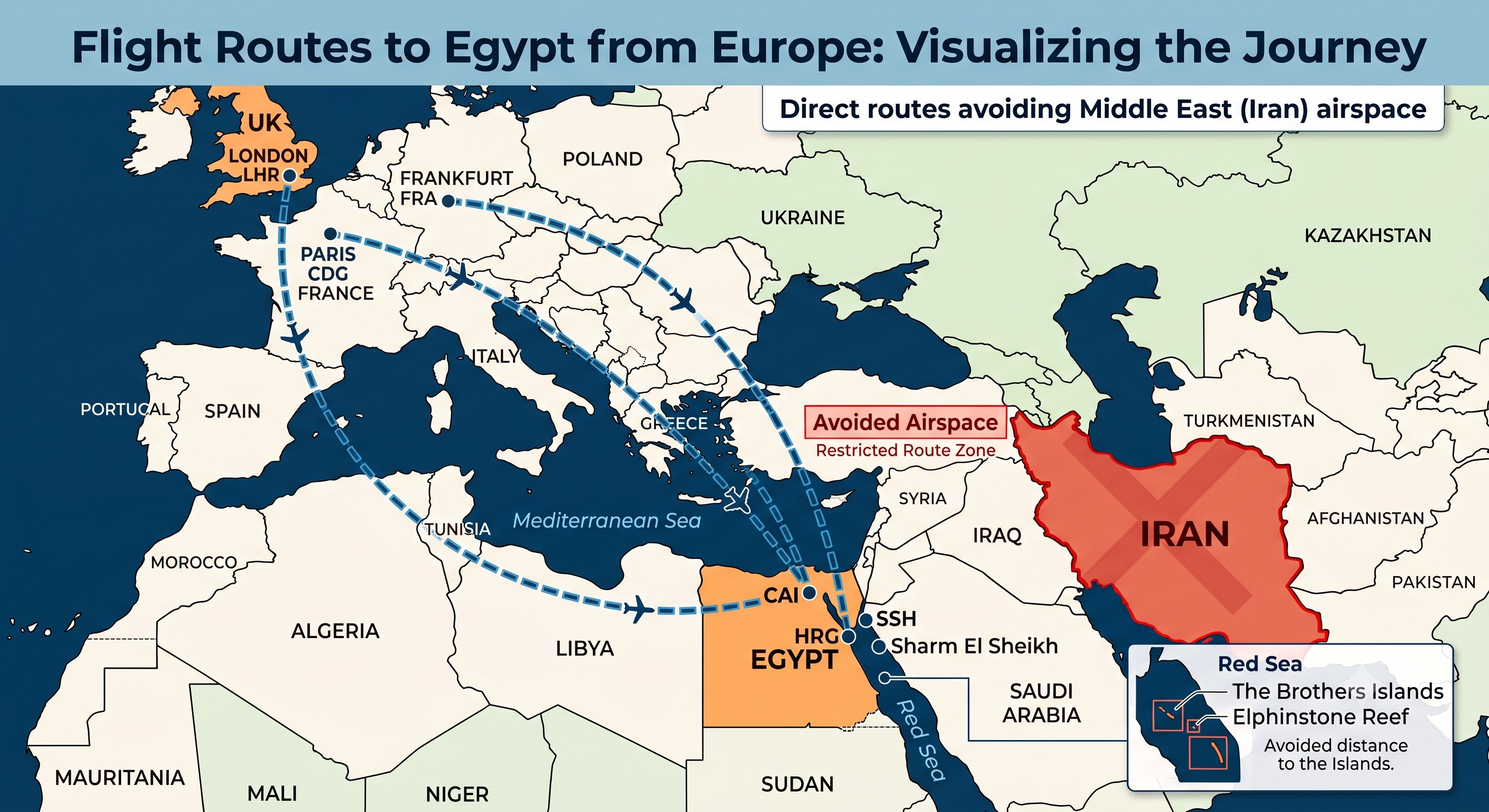
Main airports for Red Sea diving holidays
Most Red Sea diving trips use one of four airports:
- Hurghada International Airport (HRG) is one of the busiest and best-known gateways for Red Sea diving. It is commonly used for resort-based holidays, day boat diving and many liveaboard departures.
- Marsa Alam International Airport (RMF) is useful for southern Red Sea diving, including many resort stays and liveaboard itineraries. It is often used by divers heading to quieter areas farther south.
- Sharm El Sheikh International Airport (SSH) is the main airport for diving in the Sinai region, including Ras Mohammed and the Straits of Tiran.
- Cairo International Airport (CAI) is Egypt’s main international hub. It is often used for onward domestic connections to the Red Sea and works well for travellers adding the pyramids, Cairo or Luxor before or after a liveaboard.
These are well-established tourism airports, used regularly by international visitors travelling to Egypt’s beach resorts, dive centres and liveaboards.
Do flights to the Red Sea go near Iran?
In most cases, no.
Travellers from the UK and Europe often fly direct to Hurghada, Marsa Alam or Sharm El Sheikh, depending on the season and airline. Where a connection is needed, it is commonly through Cairo, Istanbul or a European hub such as Frankfurt, Munich, Vienna, Zurich, Amsterdam or Paris. These flights usually travel across the Mediterranean and into Egyptian airspace, rather than eastwards over the Gulf.
Travellers from the USA normally connect through Europe, Istanbul or Cairo before continuing to the Red Sea. As of July 2026, EgyptAir operates nonstop services to Cairo from New York JFK, Newark, Washington Dulles, Los Angeles and Chicago O’Hare, plus Toronto. This makes itineraries such as Los Angeles to Cairo to Hurghada possible without routing via Dubai, Doha or Abu Dhabi.
A typical Red Sea diving itinerary from the UK, Europe or North America does not need to route through the Persian Gulf or the Strait of Hormuz.
Flight paths can vary by airline, weather and air traffic control requirements, but the usual routes into Egypt’s Red Sea airports are not the same routes used for travel through the Gulf. For many travellers, a flight to Cairo followed by one domestic connection is a simple and practical way to reach the Red Sea.
What if the situation changes before I travel?
This is often what guests are really asking. They want to know whether airlines are still operating, whether flights are likely to be affected, whether trips are running and what happens if circumstances change.
At the time of writing, Red Sea trips are operating, flights are available and the usual tourism corridors into Hurghada, Marsa Alam, Sharm El Sheikh and Cairo remain active. That said, international travel can change quickly, so it is always sensible to:
- Check official government travel advice before departure.
- Monitor airline schedule updates.
- Book travel insurance that includes diving and trip interruption.
- Ask your travel advisor what happens if flights, travel advice or operator schedules change.
- Keep your passport, visa and entry requirements up to date.
Travel insurance policies vary, especially around conflict, government advisories and cancellation coverage. If you are concerned, check the wording carefully or speak directly with your insurer before booking.
Current context and travel advice
Egypt is currently listed as Level 2: Exercise Increased Caution under the U.S. State Department system. The Level 4 Do Not Travel areas are specific areas, including Northern and Middle Sinai, parts of the Western Desert and certain border zones. They do not include the Hurghada to Marsa Alam tourism corridor.
A Level 2 advisory does not automatically mean a destination is unsuitable for travel. Many popular destinations have Level 2 advisories at different times. Before publishing, we recommend checking current examples, but similar advisory levels have applied to popular tourism destinations such as parts of Europe, Costa Rica, Indonesia and other major travel regions.
UK travel advice also separates Egypt’s main Red Sea tourism areas from the higher-risk regions elsewhere in the country. As with any international trip, travellers should check official advice before departure, as guidance can change.
There has also been maritime escalation around Bab el-Mandeb in the southern Red Sea. That is more than 1,000 miles (1,600 km) south of the Brothers and does not place Hurghada, Port Ghalib or the central Red Sea dive sites near that activity. Shipping disruptions in the southern Red Sea are serious for commercial vessels and should be monitored, but a liveaboard departing Hurghada or Port Ghalib for central offshore reefs operates in a different section of the sea.
Is the Red Sea affected by the Iran situation?
Egypt’s Red Sea resorts are not part of the Iran situation. Hurghada, Marsa Alam and Sharm El Sheikh are tourism destinations, and day-to-day travel there is centred around hotels, dive boats, liveaboards, resorts and local hospitality.
The region has been welcoming international divers for decades. It has the infrastructure you would expect from a major dive destination: international airports, marinas, dive centres, liveaboards, hotels, guides and transfer providers.
The important point is to separate general news about Iran and the Persian Gulf from the practical reality of travelling to Egypt’s Red Sea coast.
Why the Red Sea is worth the trip
The Red Sea is one of the world’s classic dive destinations for good reason. It offers warm water, colourful reefs, dramatic walls, healthy coral gardens, excellent visibility, wrecks, sharks and a wide choice of liveaboards and resorts.
For many divers, it is one of the best combinations of accessibility and high-quality diving anywhere in the world. European travellers can often reach the Red Sea on short-haul direct flights, while North American travellers can connect through Cairo or Europe and be diving some of the region’s best reefs within a relatively straightforward itinerary.
The Brothers, Daedalus and Elphinstone are among the best-known liveaboard diving areas in Egypt. These offshore sites are famous for steep walls, current, big blue water, schooling fish, shark encounters and a real sense of adventure.

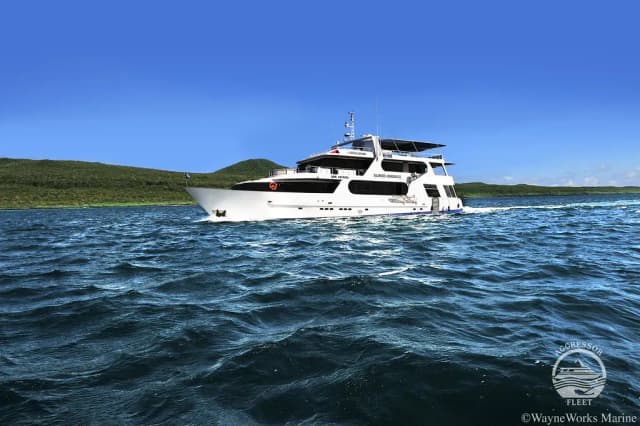
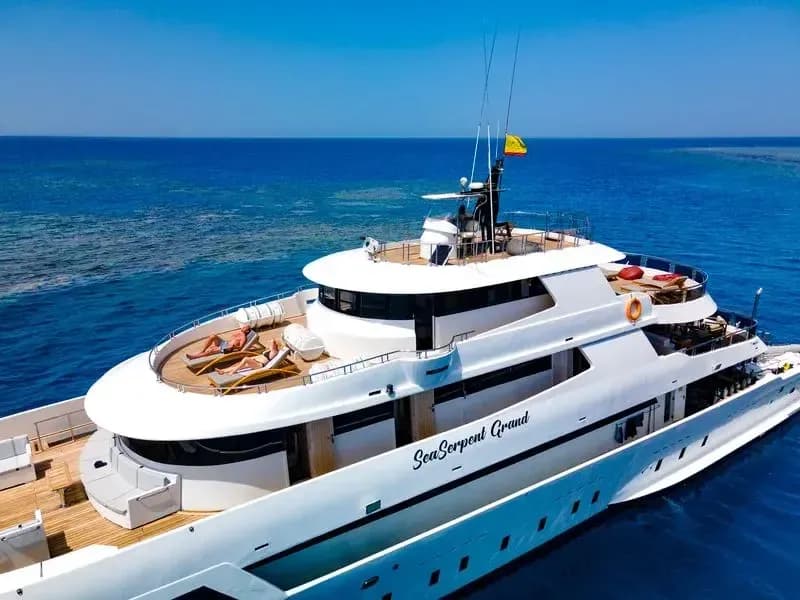
Liveaboard safety: the boat matters more than the brochure
There are two separate safety questions worth answering. The first is geography: how far the dive sites are from Iran and the Gulf. The second is vessel safety: whether the specific liveaboard you are booking meets proper standards.
The geography should reassure most divers. Choosing the right liveaboard is one of the most important parts of planning a Red Sea trip.
In February 2025, the UK Marine Accident Investigation Branch, known as the MAIB, issued a safety bulletin after a series of liveaboard losses in the Red Sea. The bulletin highlighted problems including poor construction, major modifications that reduced stability, missing or out-of-date lifesaving equipment, weak structural fire protection, defective fire systems, unmarked or obstructed escape routes, inadequate safety briefings and crews unfamiliar with the vessel.
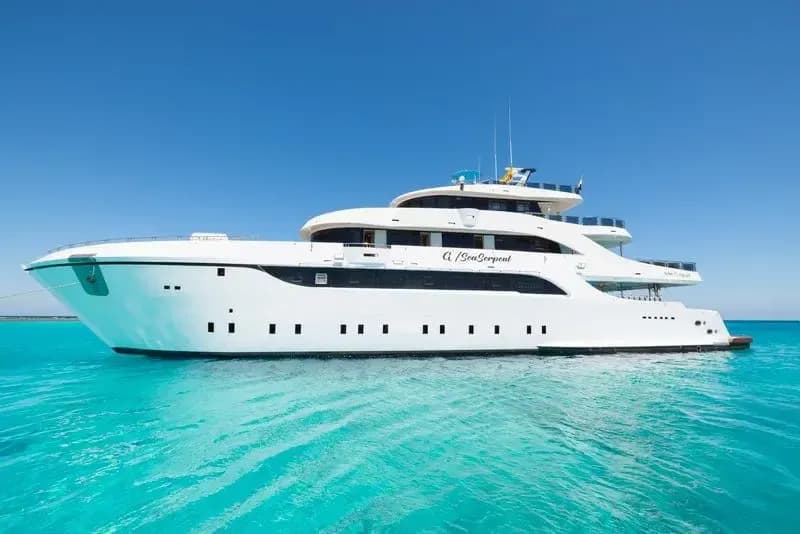
The MAIB’s advice is clear: online review scores do not equal safety. A boat can look beautiful in photos and still fall short in important areas. Divers should book through a recognised provider that can verify the specific vessel, insist on a proper safety briefing and confirm that the exact boat named in the booking is the one they will board.
What Bluewater checks
Bluewater does not treat liveaboard selection as a simple price-and-photos exercise. We work with a range of operators, which means we can help match divers with the right boat, itinerary, season and experience level, rather than simply selling one fleet.
Before recommending a Red Sea liveaboard, our team looks at the operator’s history, the specific vessel, the itinerary, embarkation port, guest feedback, crew experience and any known safety concerns.
Where possible, we also look for details on vessel inspections, emergency systems, fire procedures, escape routes, life-saving equipment and the operator’s policy on last-minute boat substitutions.
If a boat change is proposed, we recommend checking the replacement vessel before accepting it. A substitution should not mean ending up on a boat with lower standards than the one originally booked.
Five questions to ask before the boat leaves
Before your liveaboard departs, ask:
- Can someone physically show me every emergency exit?
- Where are the life jackets kept, and are there enough of the right sizes for everyone on board?
- Will a muster drill or life-jacket drill happen before departure?
- Is there working fire detection on lower decks and in cabins?
- Has the vessel been lengthened, raised or substantially refitted, and was it inspected after that work?
It is also worth getting the exact boat name in writing before you travel. If a different boat is offered at the last minute, ask your travel advisor to assess the substitution before you accept it.
What the diving is actually like on Brothers, Daedalus and Elphinstone routes
The Brothers Islands, Daedalus and Elphinstone are often grouped together as BDE itineraries. These are among Egypt’s most famous offshore dive sites, and the diving can be exceptional.
This is where the Red Sea shows its wilder side. These are not sheltered house reefs or easy shore dives. BDE itineraries are about blue water, walls, current, sharks, schooling fish and remote reefs rising from deep water. For experienced divers, that is exactly the appeal.
Conditions can include current, open water, blue-water ascents and rougher surface conditions, so these trips are generally best suited to confident divers with some experience in current and exposed sites.
The Brothers Islands
Big Brother and Little Brother are offshore islands rising from deep water. They are reached only by liveaboard and are known for steep walls, strong currents, colourful soft corals and two of the Red Sea’s most famous wrecks: the Numidia and the Aida.
The Brothers are also known for shark encounters. Depending on the season and conditions, divers may have the chance to see oceanic whitetips, grey reef sharks, thresher sharks or other pelagic species. Sightings are never guaranteed, but the setting alone makes the Brothers one of Egypt’s most exciting dive areas.
Daedalus Reef
Daedalus lies about 56 miles (90 km) east of Marsa Alam and is marked by a lighthouse. It is a remote, exposed reef with dramatic walls, healthy coral growth and a true blue-water feel.
Daedalus is especially well known for hammerheads and other large pelagics, although sightings are seasonal and depend on conditions. Currents can be strong and dives may involve swimming away from the reef, so divers should be comfortable in mid-water and confident in exposed conditions.
Elphinstone Reef
Elphinstone is a long offshore reef with steep walls, plateaus, large sea fans and excellent visibility. It is one of the Red Sea’s most famous sites and can deliver beautiful reef diving as well as big-animal encounters.
Seasonally, Elphinstone is known for oceanic whitetips, often called longimanus, along with schooling fish and colourful reef life. Surface conditions can be rough and currents are variable, so divers should be able to manage themselves calmly in open water and follow the guide’s instructions closely.


Seasons and conditions
The Red Sea is diveable year-round, but the season affects water temperature, visibility, wind and the probability of certain shark encounters.
For Brothers, Daedalus and Elphinstone routes, the main season is generally spring through late autumn.
- May to September: water temperatures are warmer and this period is commonly considered a good window for hammerhead sightings at Daedalus.
- October to December: the water is still comfortable and there is often a stronger chance of oceanic whitetip encounters at Elphinstone and the Brothers.
- Winter and early spring: the water is cooler, often in the low to mid-20s Celsius, and topside conditions can be windier. The diving can still be excellent, but divers should bring suitable exposure protection.
A few sensible steps before travelling
Before any international dive trip, it is sensible to:
- Check current government travel advice.
- Make sure your passport and visa requirements are in order.
- Take out travel insurance that includes scuba diving, trip interruption and, ideally, medical evacuation.
- Check your airline schedule before departure.
- Ask your travel advisor what happens if flights or local conditions change.
- Keep your trip provider’s contact details handy.
These are normal preparations for a dive holiday abroad, rather than anything unusual for the Red Sea.
Planning checklist
- Confirm the exact boat name, embarkation port and disembarkation port before buying flights.
- Choose a routing through Cairo, Istanbul or Europe if you prefer to avoid Gulf hubs.
- Arrive in Egypt at least one day before embarkation. For more complex itineraries, consider arriving two nights early.
- Buy travel and dive insurance that covers trip interruption, diving injuries and medical evacuation.
- Request a complete vessel-safety briefing and walk the exits yourself before departure.
- Check whether your itinerary is suitable for your certification level, logged dives and experience in current.
We’ve run this route
Bluewater has organised many Red Sea trips, including Brothers, Daedalus and Elphinstone itineraries, photography workshops and north/south combinations.
Our team works with a variety of operators and boats across the region. That gives us a broader view of what is available and helps us match divers with the right liveaboard, itinerary, season, budget and experience level.
For experienced divers, a well-run BDE itinerary can be one of the most rewarding liveaboard trips in the region. The key is choosing the right vessel, understanding the conditions and arriving prepared.
You can read more from recent Bluewater trips and regional reports here:
- Red Sea 2025 Trip Recap
- Egypt & Jordan Trip Recap 2023
- Red Sea Diving on Blue Horizon 2019
- Red Sea Egypt Diving Trip Recap
- More Than Just a Dive Trip: Why Egypt Deserves Your Full Attention
- Red Sea & Middle East Trip Reports
The bottom line
The Brothers, Daedalus and Elphinstone are not close to Iran or the Persian Gulf. Travellers from North America can fly to Cairo and connect within Egypt to reach the Red Sea without routing via Dubai or crossing Gulf airspace. European travellers commonly have direct flights to Hurghada, Marsa Alam or Sharm El Sheikh that do not pass near Iran.
The Red Sea remains one of the world’s most established dive destinations, with long-running tourism infrastructure, international airports, dive centres, resorts and liveaboards. More importantly for divers, it offers outstanding reefs, wrecks, visibility, shark encounters and offshore liveaboard diving that can be genuinely world-class.
That said, the safety of a Red Sea liveaboard depends on the specific vessel and operator. Do not rely on star ratings and photos alone. Ask the right questions, insist on a full safety briefing and use a trusted provider who can verify the boat in writing.
Bluewater’s role is to put the whole trip together: the right route, airport, transfer, season, itinerary and vessel. Speak with one of our Red Sea specialists before choosing a boat based on price or pictures alone.
Explore Red Sea liveaboards View Bluewater’s guided group trips Speak with a Red Sea travel specialist
Frequently Asked Questions
Is Hurghada close to Iran?
No. Hurghada and the Brothers, Daedalus and Elphinstone region are about 850 to 900 miles (1,370 to 1,450 km) from the closest Iranian territory. Tehran is roughly 1,200 miles (1,930 km) away and the Strait of Hormuz is more than 1,300 miles (2,100 km) away.
Are the Brothers Islands near the Persian Gulf?
No. The Brothers Islands are in the Egyptian Red Sea, about 42 miles (67 km) off Egypt’s mainland coast. The Persian Gulf lies beyond the Arabian Peninsula, more than 1,300 miles (2,100 km) away.
Do flights to Hurghada have to connect through Dubai?
No. Travellers can fly to Cairo from several North American airports and connect domestically, or fly directly to Hurghada from many European cities. Neither routing requires Dubai, the Persian Gulf or the Strait of Hormuz.
Can I fly nonstop from the United States to Egypt?
Yes. As of July 2026, EgyptAir operates nonstop services to Cairo from New York JFK, Newark, Washington Dulles, Los Angeles and Chicago O’Hare, plus Toronto.
Are airlines still operating to Egypt’s Red Sea?
At the time of writing, flights to Egypt and the main Red Sea tourism airports are operating. Schedules can change for normal airline, weather or operational reasons, so travellers should always recheck their itinerary before departure.
What happens if the situation changes before I travel?
Check official travel advice, monitor your airline schedule and speak with your travel advisor. You should also review your travel insurance carefully, as coverage for cancellation, conflict, government advisories and trip interruption varies by policy.
Which airport should I use for a BDE liveaboard?
Use Hurghada Airport for most Hurghada and Safaga departures. Marsa Alam Airport is closest to Port Ghalib. Cairo is the main international gateway for many travellers connecting from North America. Always confirm the boat’s start and finish ports before selecting an airport.
Does the Houthi situation at Bab el-Mandeb affect diving at the Brothers?
The Houthi escalation has affected commercial shipping in the southern Red Sea, around Bab el-Mandeb. The Brothers, Daedalus and Elphinstone lie more than 1,000 miles (1,600 km) north of that chokepoint. Guests should still recheck conditions and travel advice before departure.
Is Egypt under a Do Not Travel advisory?
Egypt as a whole is listed by the U.S. State Department as Level 2: Exercise Increased Caution. Level 4 warnings apply to specific areas, including Northern and Middle Sinai, parts of the Western Desert and certain border zones. The Hurghada to Marsa Alam mainland diving corridor is not within those Level 4 zones.
Are Red Sea liveaboards safe?
Some liveaboards have strong safety records, while others fall short. The MAIB has warned against relying solely on online reviews. Book through a recognised provider who can assess the exact vessel and insist on a full safety briefing once on board.
What should I check when boarding a Red Sea liveaboard?
Ask for a full emergency briefing and physically locate exits, muster stations, life jackets, alarms and extinguishers. Confirm whether a drill will be conducted and whether the vessel has undergone major structural changes or recent refits.
Have Bluewater Red Sea trips been cancelled because of the Iran situation?
Since February, Bluewater’s Red Sea trips have continued to operate as normal, with no cancellations due to the Iran situation. As always, individual departures can still be affected by normal operational factors, flight changes or minimum numbers.
Is this itinerary suitable for a new diver?
Usually not. Brothers, Daedalus and Elphinstone routes involve open-ocean conditions, negative entries, strong currents and blue-water ascents. Certification and minimum logged-dive requirements vary by operator, but divers should be comfortable managing themselves in exposed conditions.
Author

Gill Flaherty
Gill is in charge of all Bluewater Travel's Photo Workshops and is a PADI and TDI Instructor in her free time. Gill learned to dive in her home country of Scotland and continued with much of her dive education in the UK. She quickly expanded her diving repertoire with trips to the Red Sea, Mexico, and Indonesia, and was surprised to learn that diving didn’t always involve poor visibility and chilly water temperatures.
Gill has a thirst for travel and adventure and spent a year driving around Europe in a motorhome before settling in Cyprus in the Eastern Mediterranean. After working full-time as a Dive Instructor for three seasons, she now teaches and guides in her free time on the famous Zenobia wreck. When not underwater, Gill can be found paddle boarding, hiking, or rescuing cats.