
Galápagos Trip Report 2026
Led by Trip Leader Nirupam Nigam
Trip Overview
Six hundred and five miles west of mainland Ecuador lies the Galápagos, a small volcanic chain of islands with an outsized influence on our understanding of the natural world. Its unique diversity helped inspire Darwin’s theory of evolution following the voyage of the HMS Beagle. Today, the islands remain a source of inspiration for the few who are lucky enough to make the journey into the middle of the Pacific. Fortunately, no chain of islands is too remote for the intrepid travelers who join Bluewater Travel.
The Galápagos sits at the convergence of five powerful ocean currents. While this mixing creates a unique and diverse mosaic of species, it can also produce challenging dive conditions and strong currents. But with the right planning, training, and dive guides, these conditions can be managed safely.
In May 2026, 18 Bluewater travelers explored the vast expanse of the Galápagos Islands, from the weathered, frigate-filled landscape of Seymour Island to the remote rocky outcroppings of Darwin Island and the ancient marine iguana colonies of Fernandina Island.
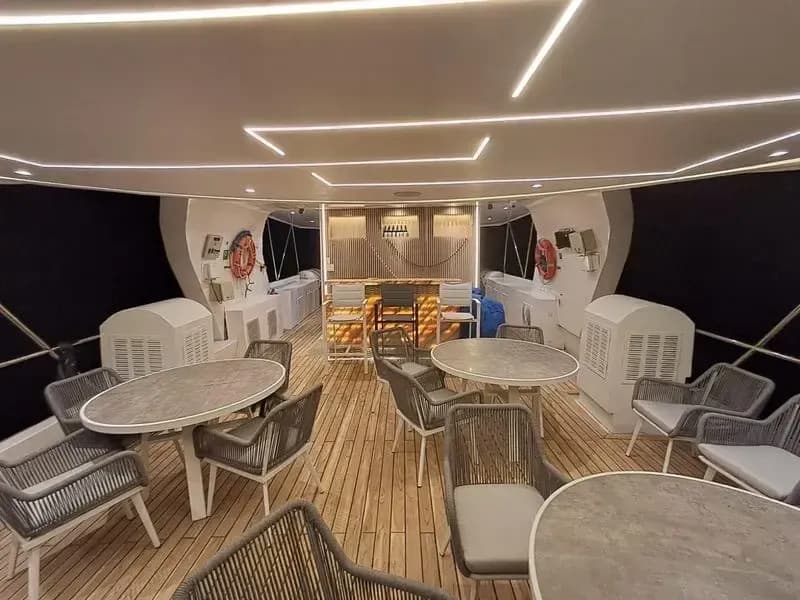
Our 10-day voyage was led by our knowledgeable local guide and cruise director, Ivan, along with Bluewater trip leader Nirupam, who introduced new photo and video topics during daily workshops. Our mothership was the Galápagos Master, our liveaboard home base, with spacious cabins, tasty food, and a very attentive steward, Gustavo. The vessel had enough camera stations for the many photographers on board, as well as a spacious TV room that made daily workshops and image reviews easy.
Arriving in San Cristóbal
By embarkation day, many of our travelers had already spent a few days in the quaint town of San Cristóbal, getting their first taste of what the Galápagos had to offer.
We were greeted almost immediately by friendly Galápagos sea lions lounging on the dock. They were far too comfortable to move as we climbed into the dinghy, or panga, that would take us to the liveaboard.
Once aboard, it became clear that safety was a major priority, with several drills and briefings before departure. After the first briefing—and some welcome pizza—we were pleased to hear that we would soon be getting into the water.
Our excitement was tempered slightly when we learned that the first dive would be a checkout dive focused on deploying an SMB, or surface marker buoy. This is an essential piece of safety equipment in the Galápagos because it allows divers to signal their location to the boat while drifting in strong currents.
Seymour Island
Things began to ramp up on Day 2 with a surprisingly excellent dive. Although visibility was a modest 10 meters, the water was warm, and we saw a mobula ray, a manta ray, and several whitetip reef sharks. It wasn’t a bad start to the trip.
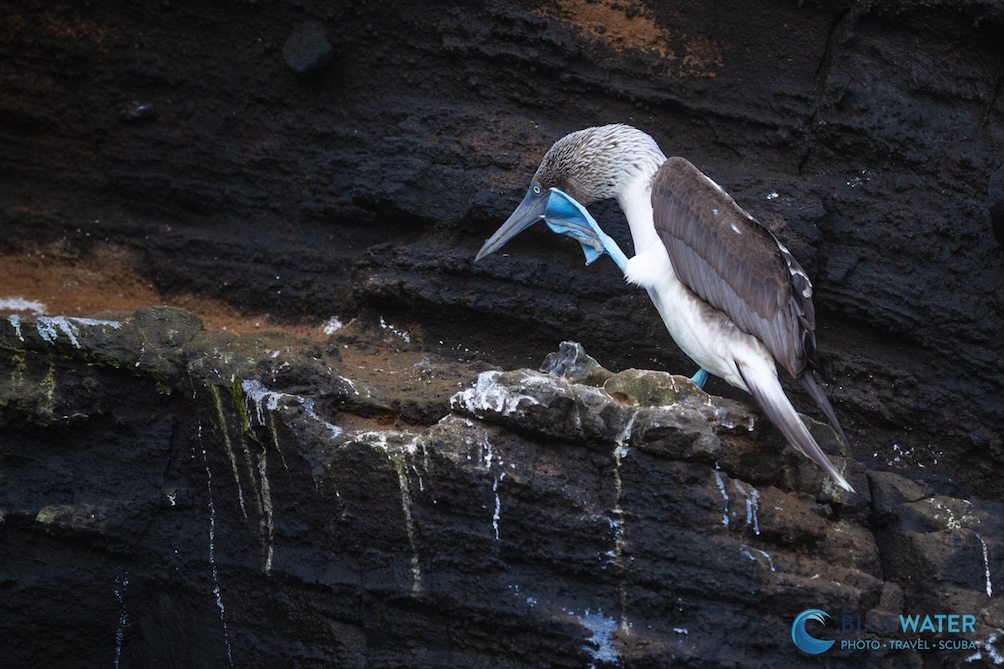
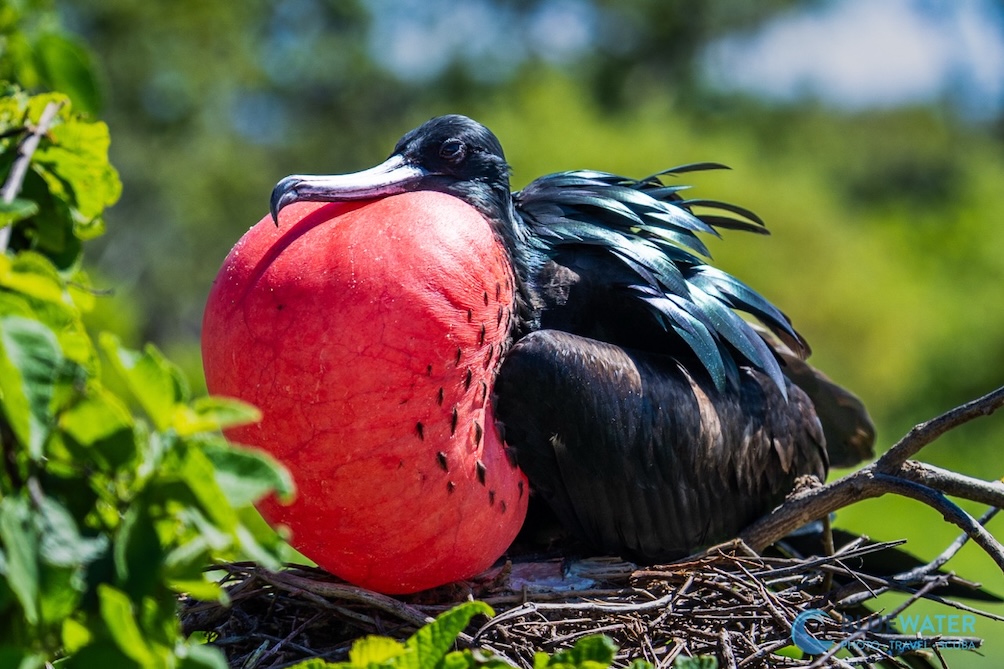
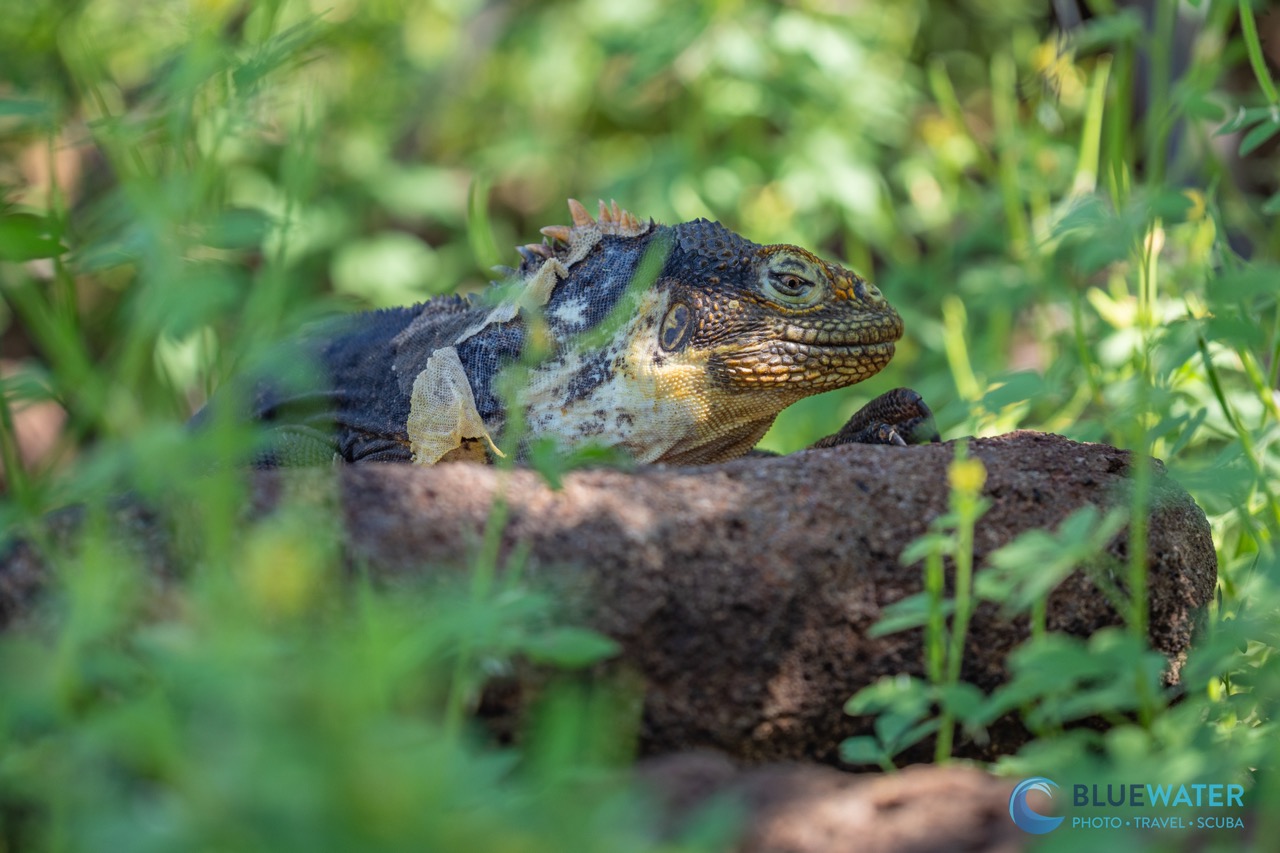
After the dive, we ventured onto land and encountered many of the classic animals for which the Galápagos is known, including land iguanas, male frigatebirds displaying their bright red throat pouches, and a lone marine iguana sunbathing beside the clear azure water.
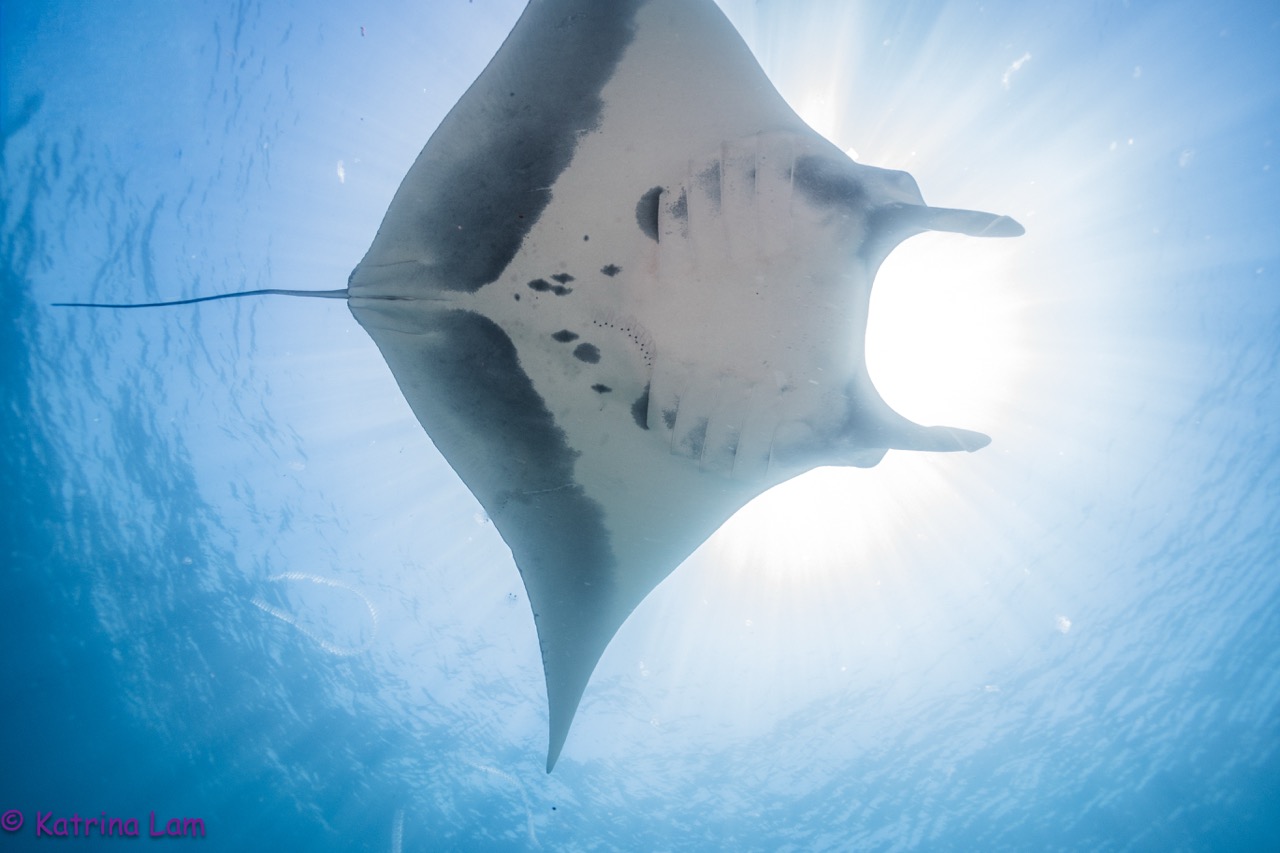
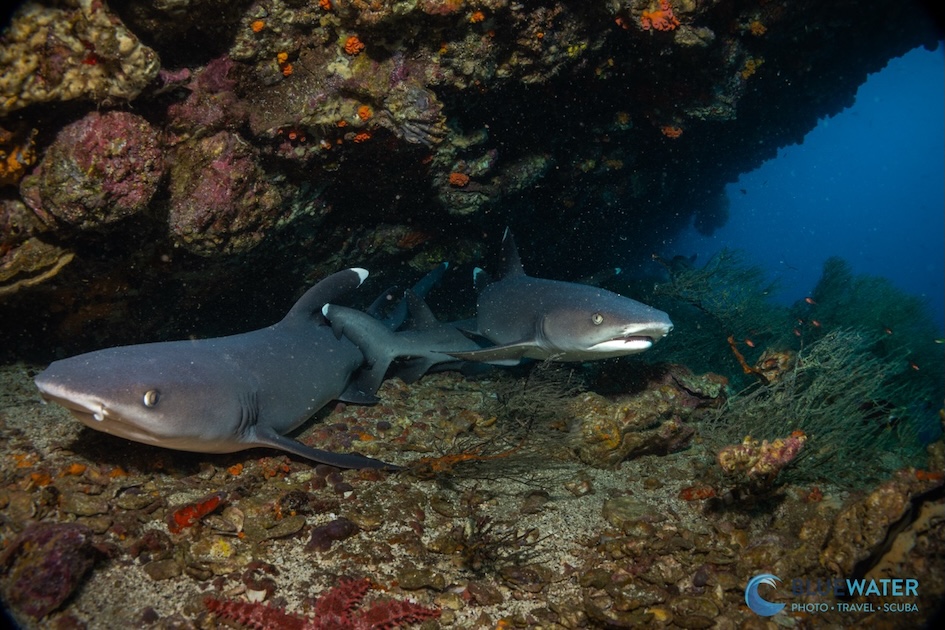
A manta ray swims overhead by Katrina Lam (L) & Whitetipped reef sharks huddle close together (R)
Interested in joining a trip like this? Check out our similar upcoming trips:
• Galapagos Spectacular Hammerhead, Manta, Mola & Marine Iguana Trip 2028
• Cocos Island National Park Pelagic Expedition 2027
Wolf Island
After an overnight journey across the Pacific, we awoke to the rugged and remote landscape of Wolf Island. Wolf and its smaller cousin, Darwin, are famous as gathering places for sharks.
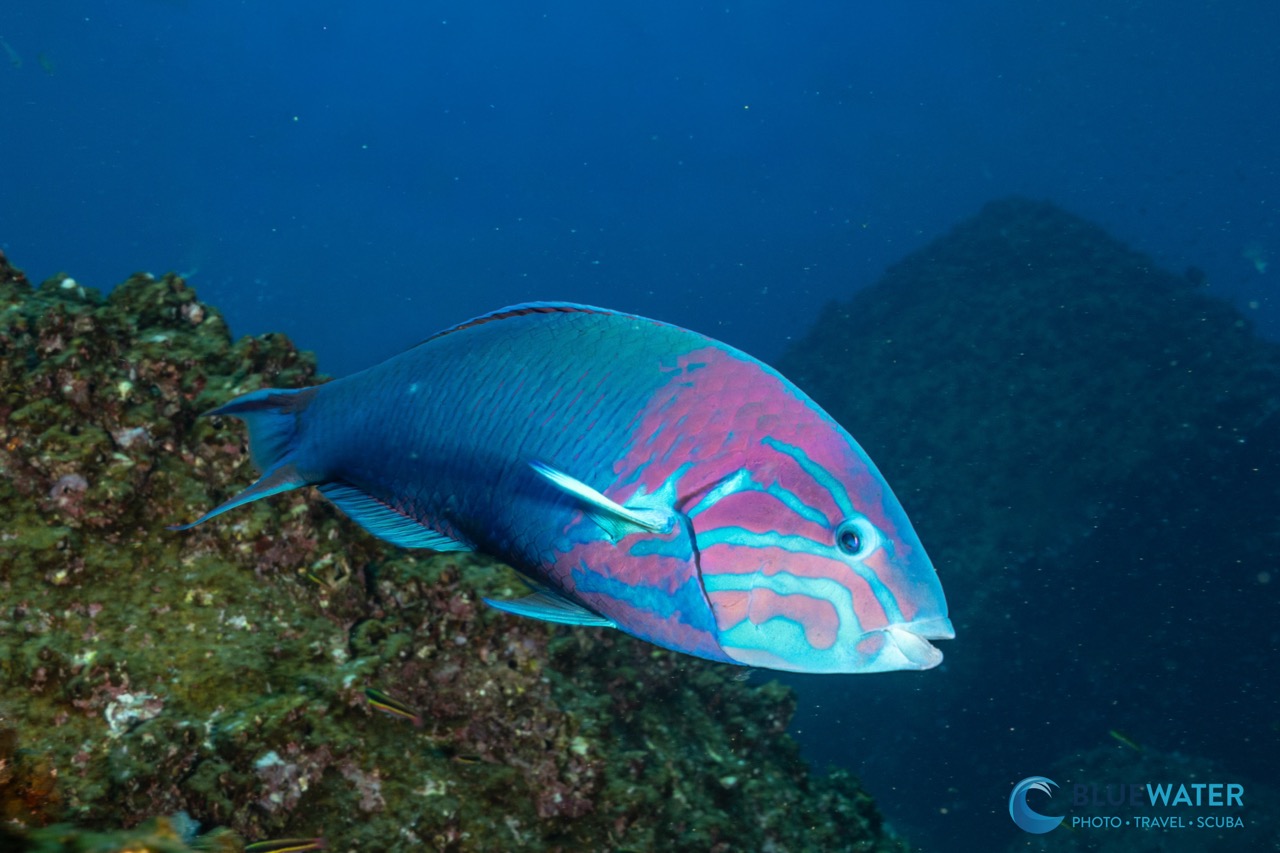
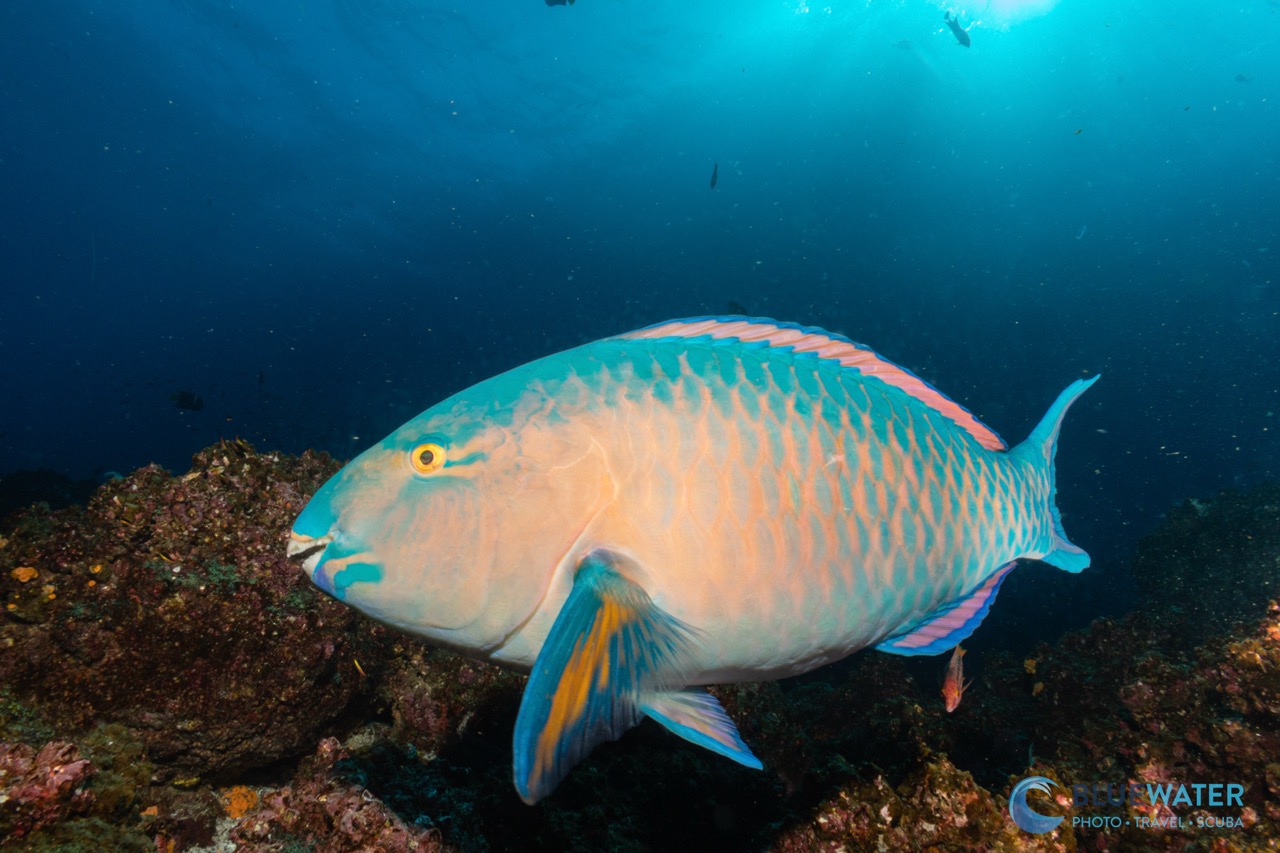
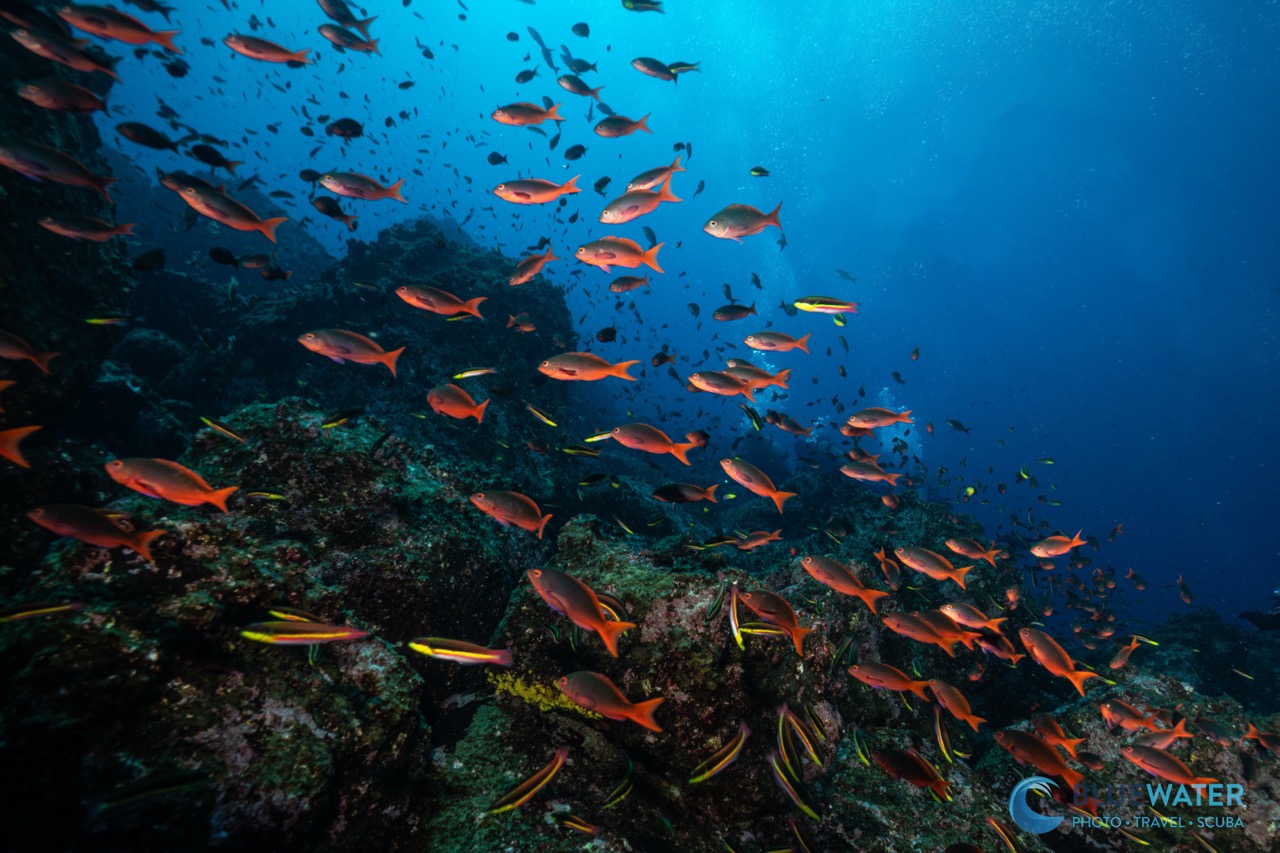
The water here was warmer than in much of the Galápagos, with temperatures ranging from approximately 79 to 83°F. Our first day at Wolf brought large numbers of friendly parrotfish and distant sightings of scalloped hammerhead sharks as they swam in and out of a deep thermocline.
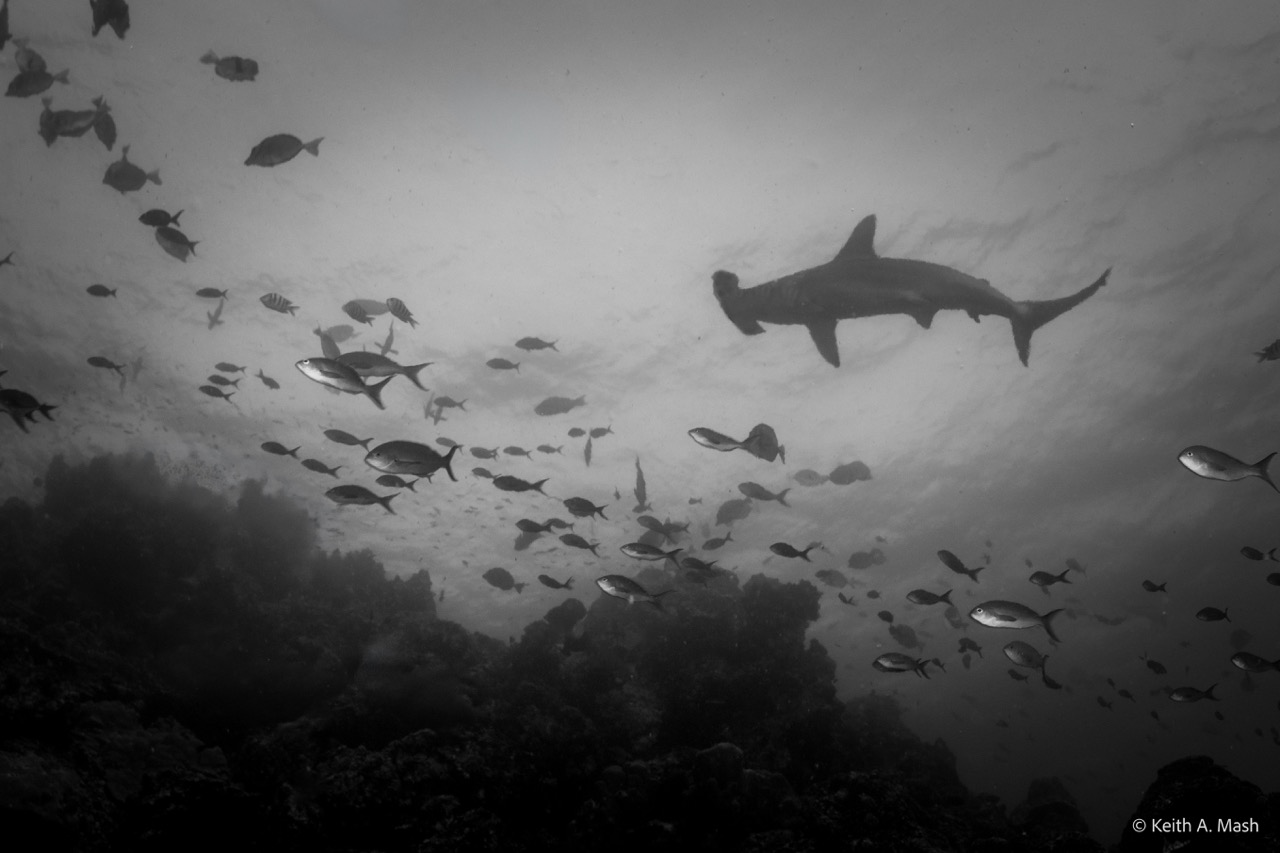
Hammerheads swim off into the distance by Keith Mash
Darwin Island
We ventured even farther into the Pacific to reach Darwin Island, the northwesternmost island in the Galápagos. Darwin was once famous for a large natural rock arch, which collapsed in 2021 and left behind what are now known as Darwin’s Pillars.
The island has only one primary dive area and is a common gathering place for hammerhead sharks and whale sharks, particularly pregnant female whale sharks. Due to unusually warm water associated with developing El Niño conditions, however, there were fewer sharks than we had hoped to see.
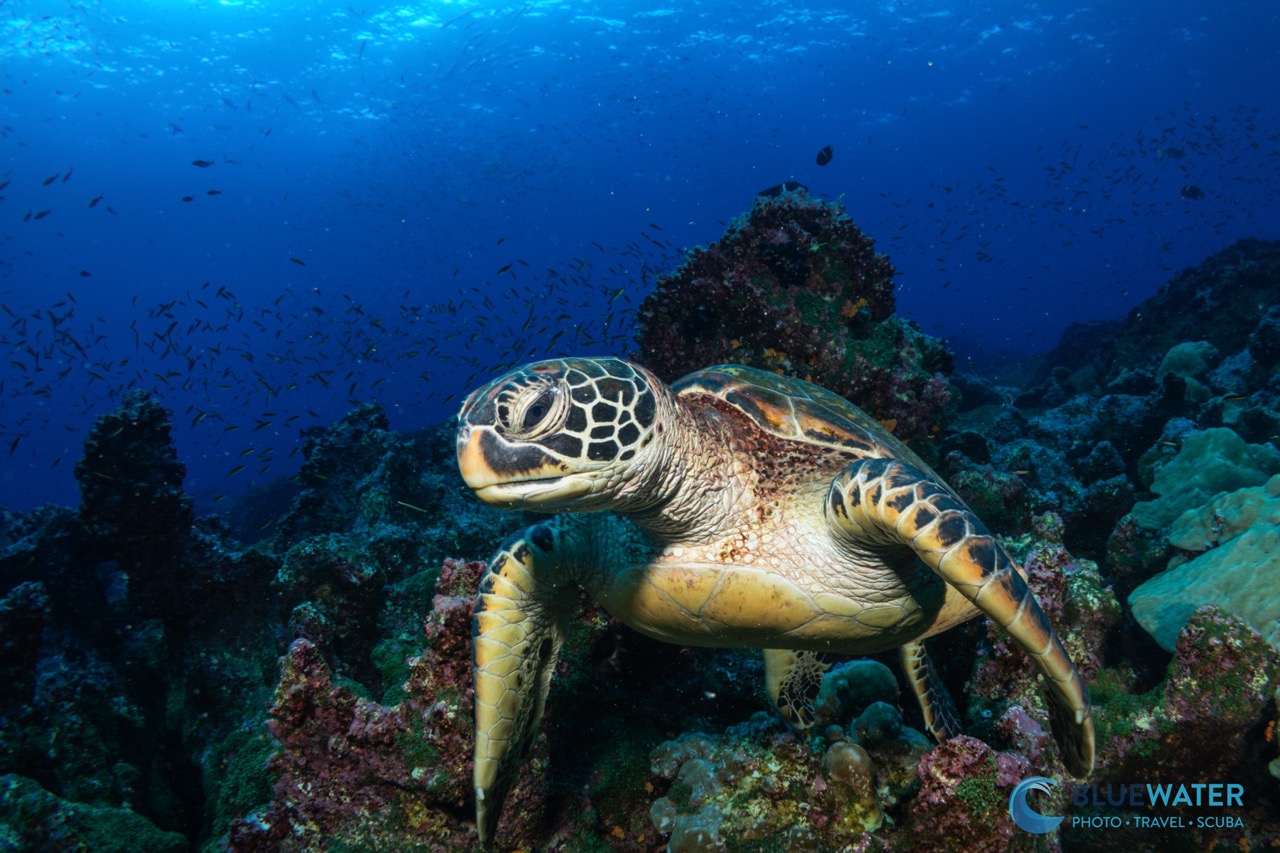
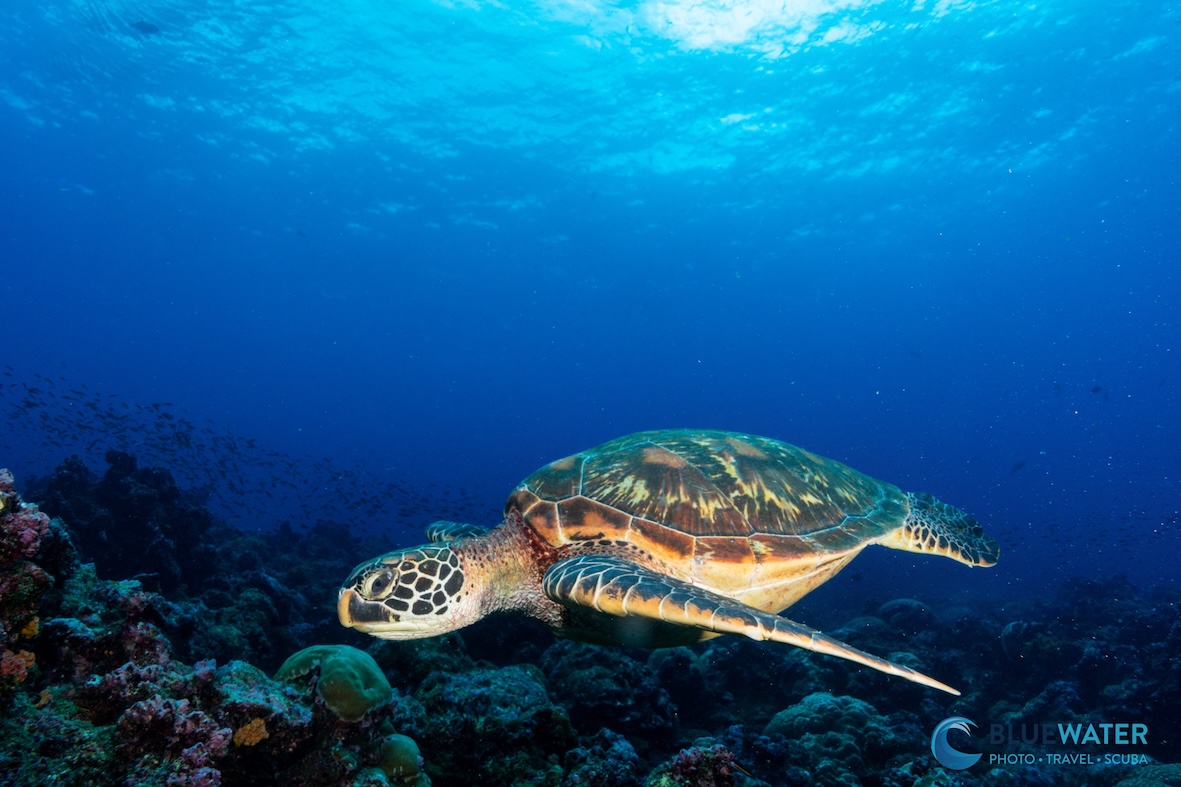
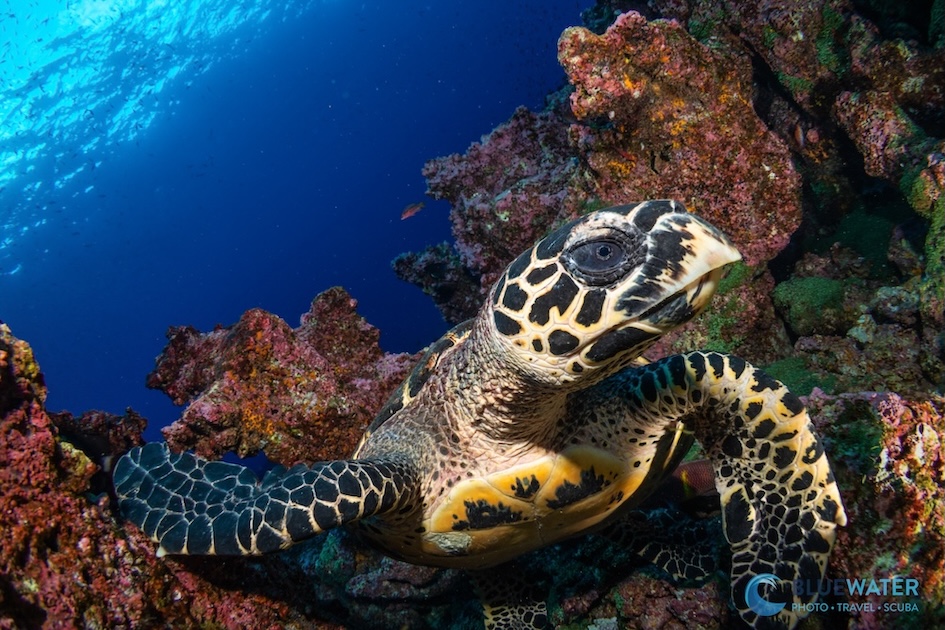
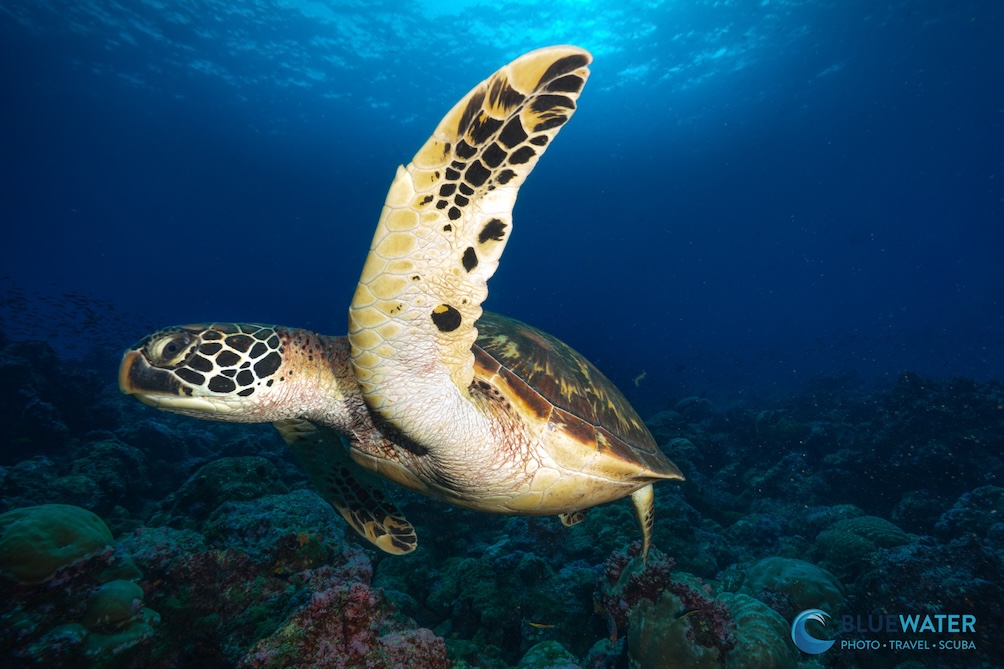
On the first day, the turtles stole the show. Dozens wandered across the rocky reef, feeding on sponges and algae. They seemed completely unconcerned by the presence of divers and photographers. We became so familiar with them that we could identify individual turtles by the patterns on their shells.
Finally, on the second day, most members of each group witnessed a juvenile whale shark passing near the pillars. Some divers managed to get remarkably close and experience the incredible size and power of the world's largest fish.
Wolf Island Again
After our whale shark encounter, we traveled south to Wolf Island once again. The morning began with an excellent dive that included three friendly eagle rays passing close to the group.
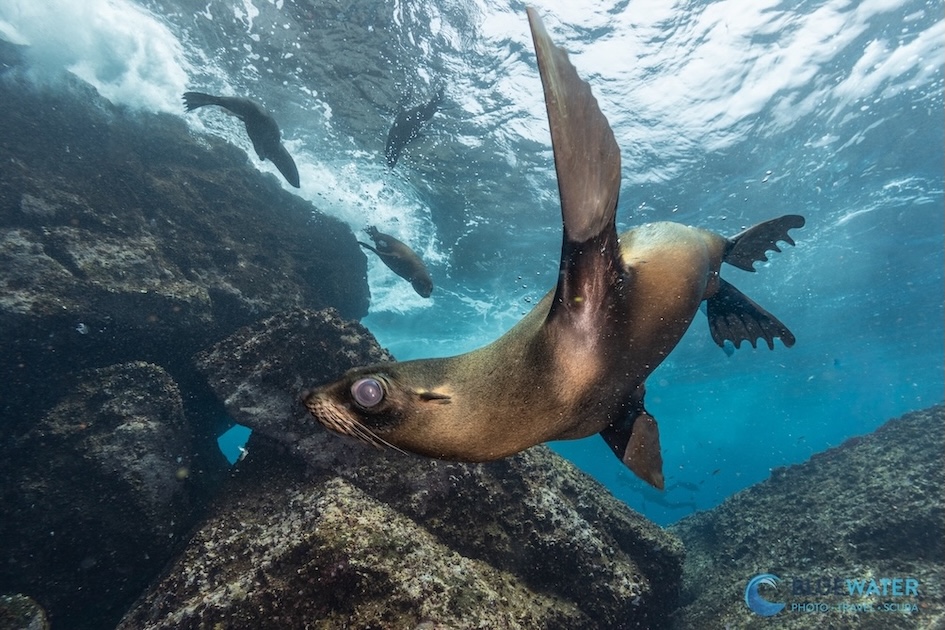
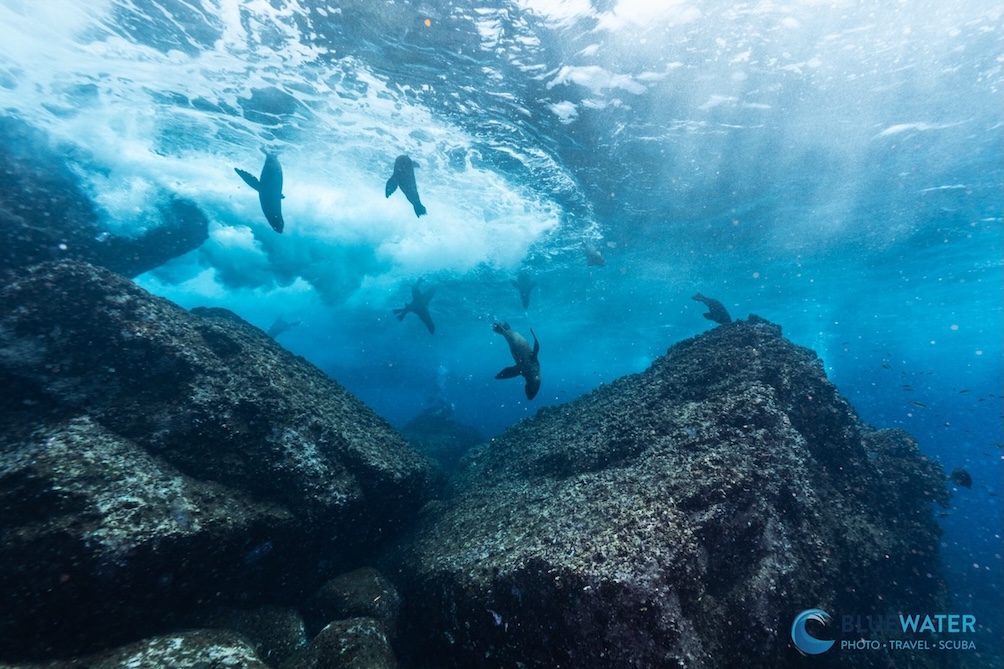
Toward the end of the dive, one group found a colony of playful sea lion pups, which were a joy to watch and interact with. During our safety stop, we found ourselves surrounded by millions of oceanic salps. Ivan told us that their abundance was another indication of the unusual El Niño conditions we were experiencing.
Isabela Island – Punta Vicente Roca
From Wolf, we motored south to the western shore of Isabela Island and the legendary dive site of Punta Vicente Roca.
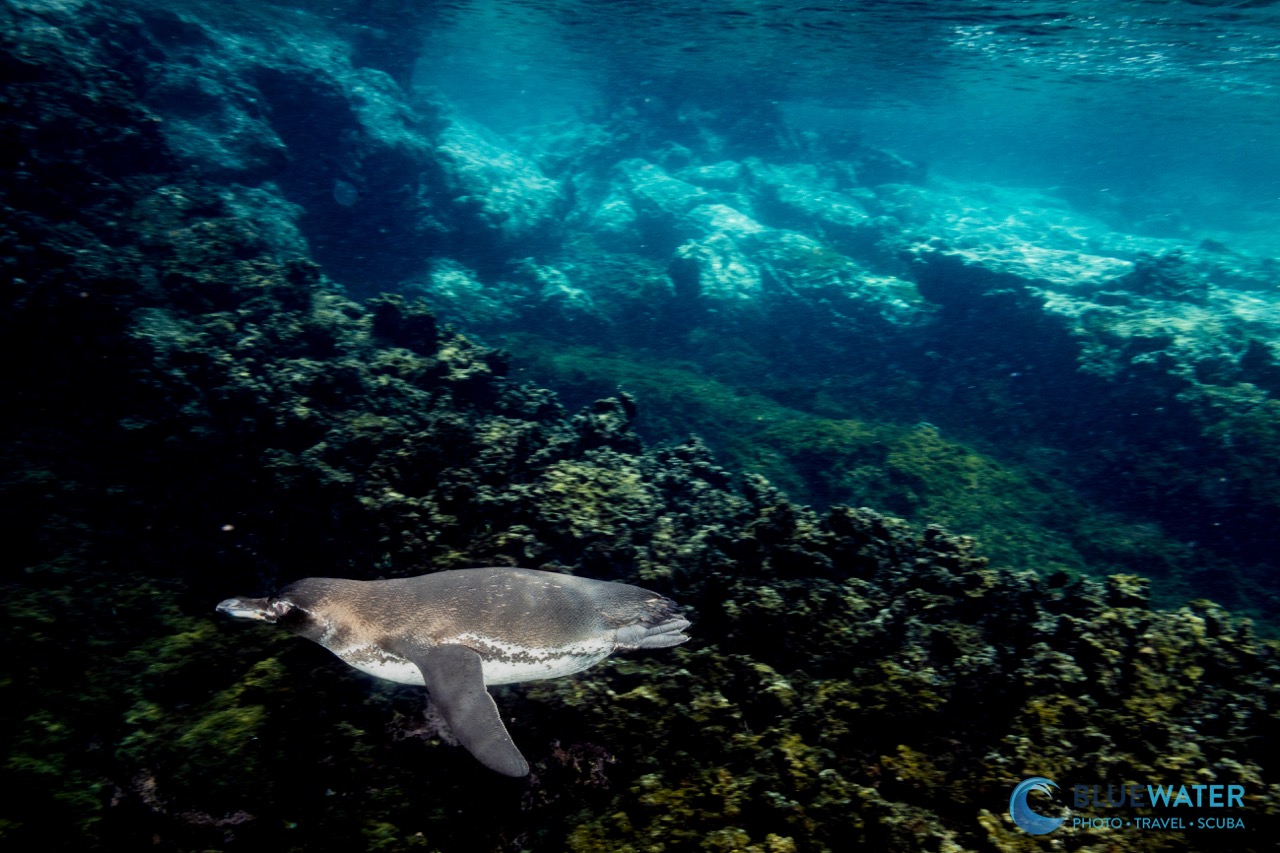
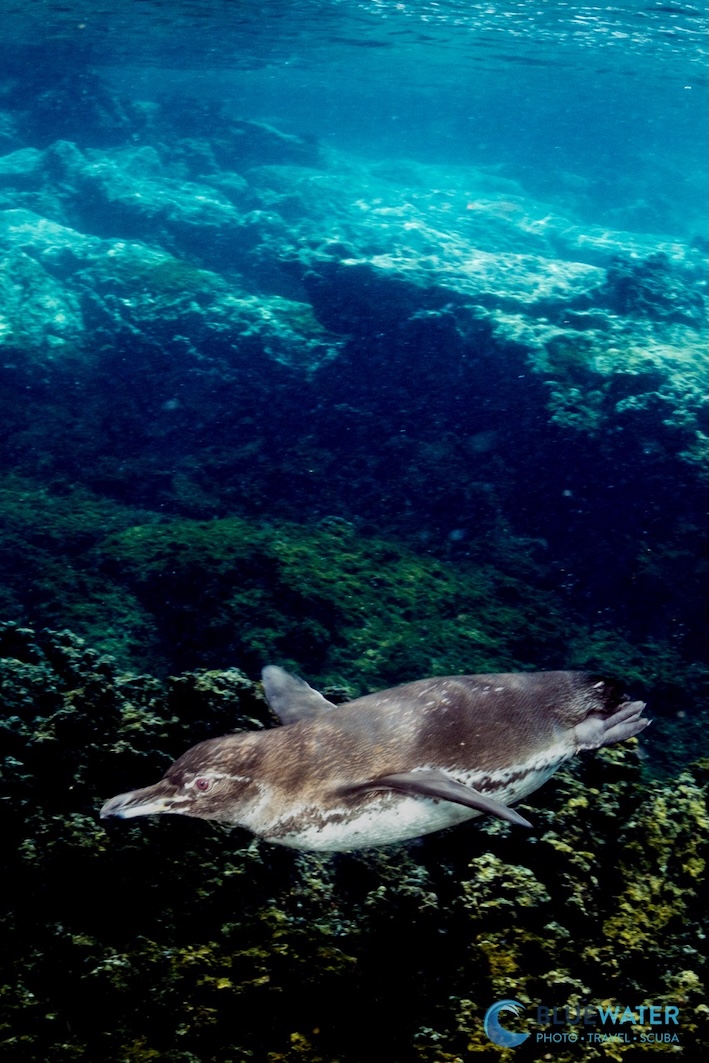
Although the water is normally colder here, temperatures during our visit remained around 76°F because of the El Niño conditions. Punta Vicente Roca is one of the most reliable places in the Galápagos to encounter mola mola. Although the mola mola did not appear for us, one group saw a Galápagos penguin swim past.
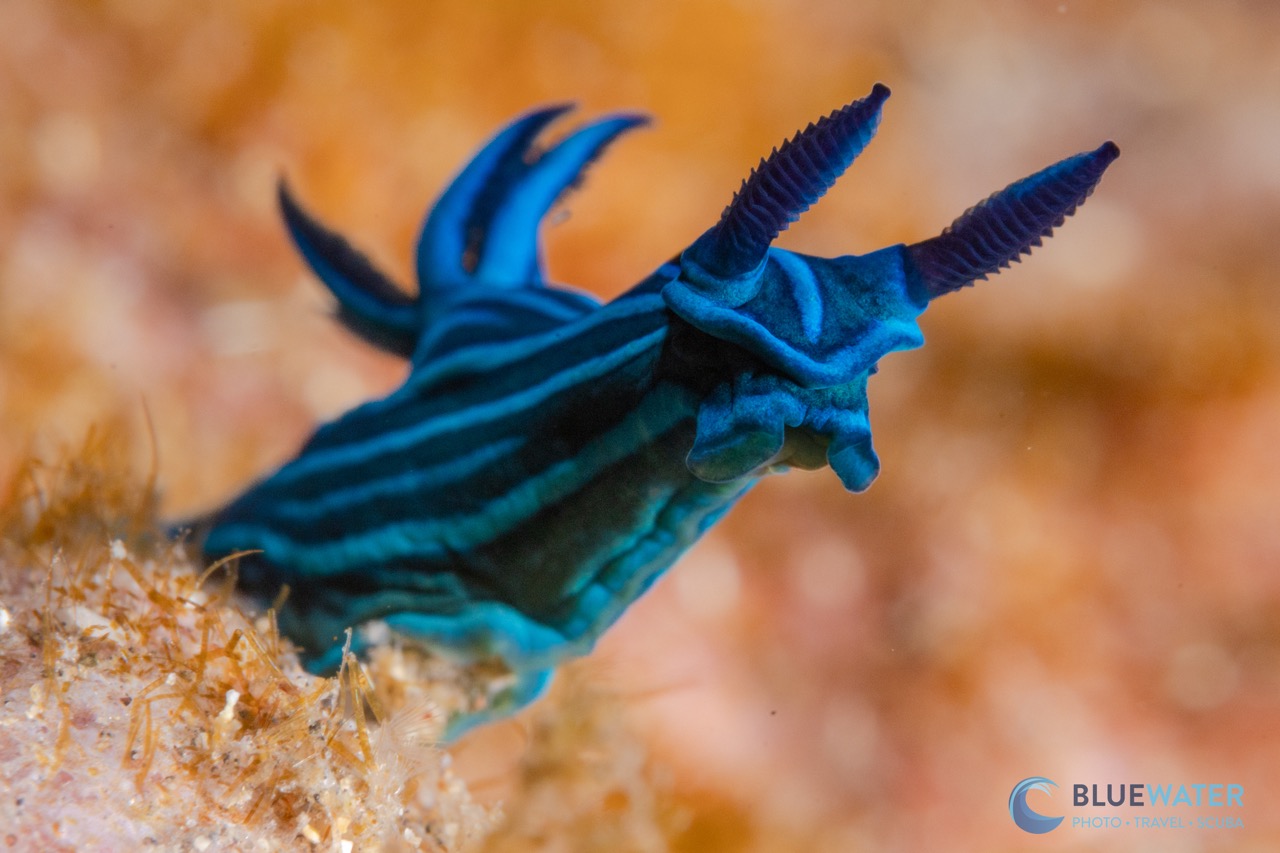
We were also fortunate enough to see around a dozen endemic blue-lined nudibranchs, which looked like tiny sapphires decorating the seafloor. Along with several large green sea turtles, we encountered endemic harlequin wrasse, colorful fish that looked almost like ocean-dwelling koi.
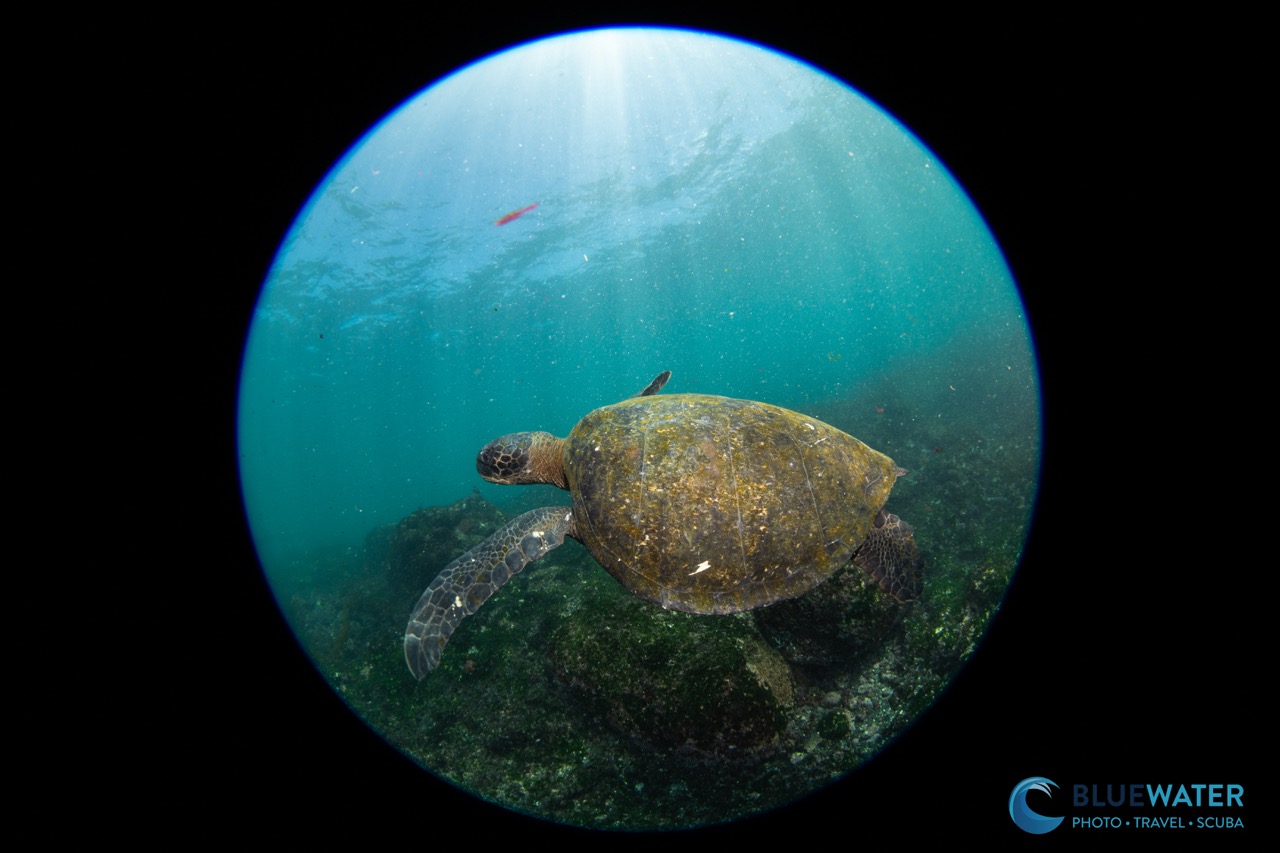
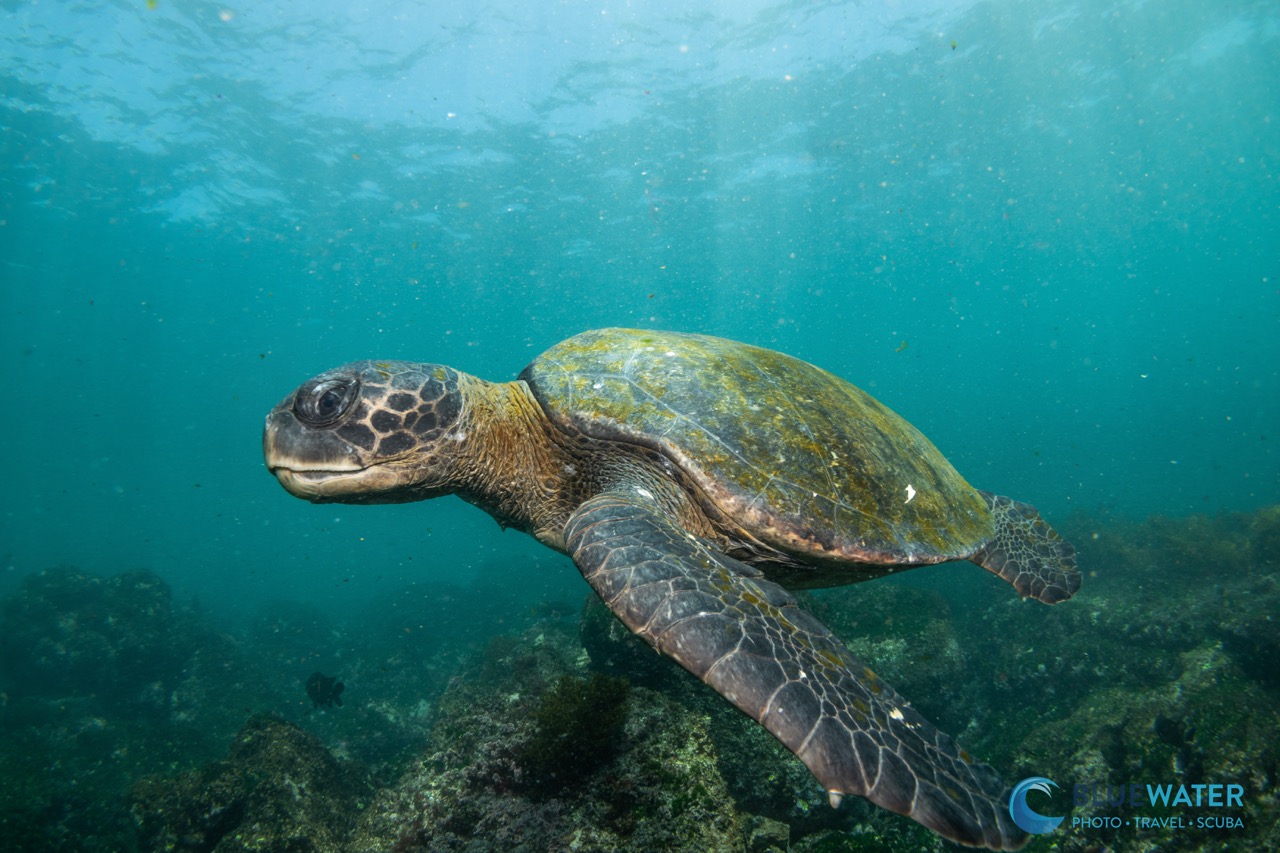
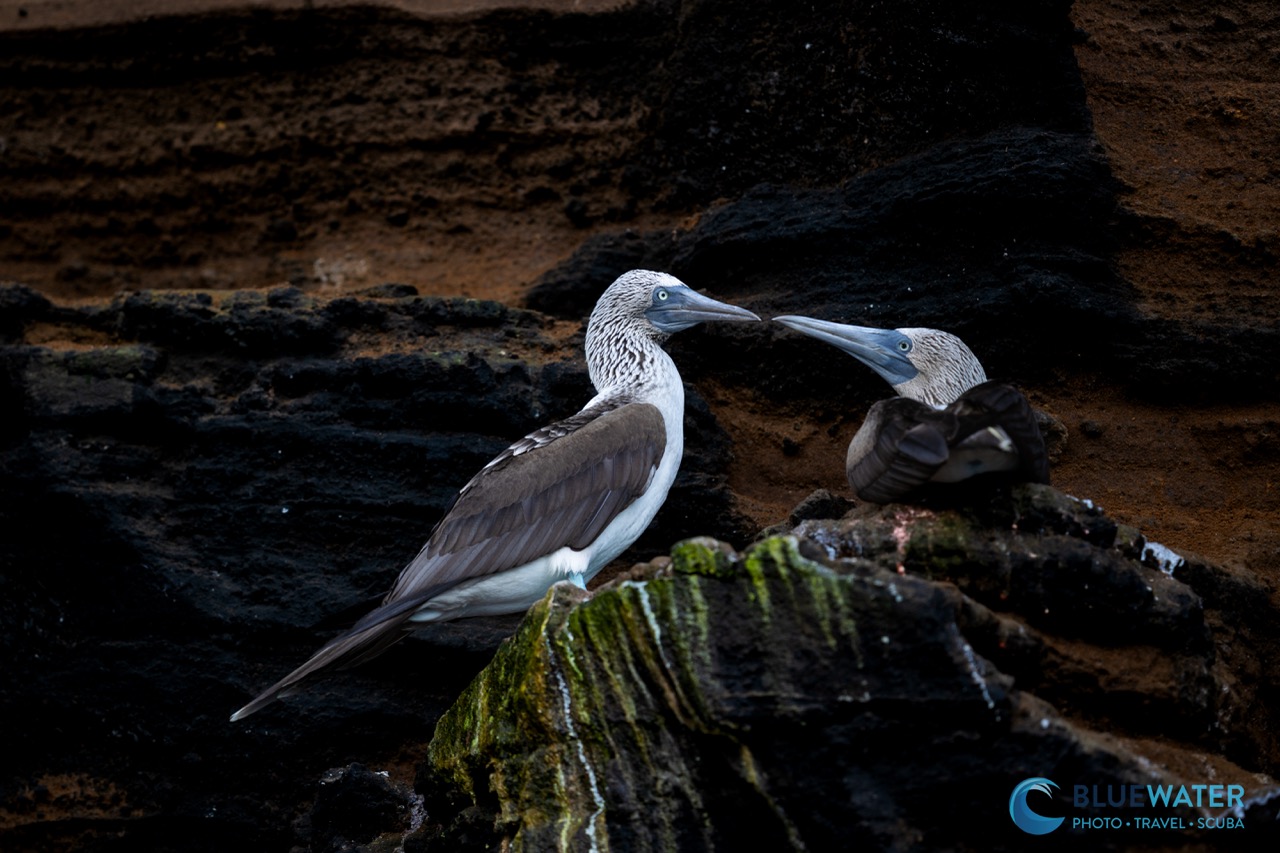
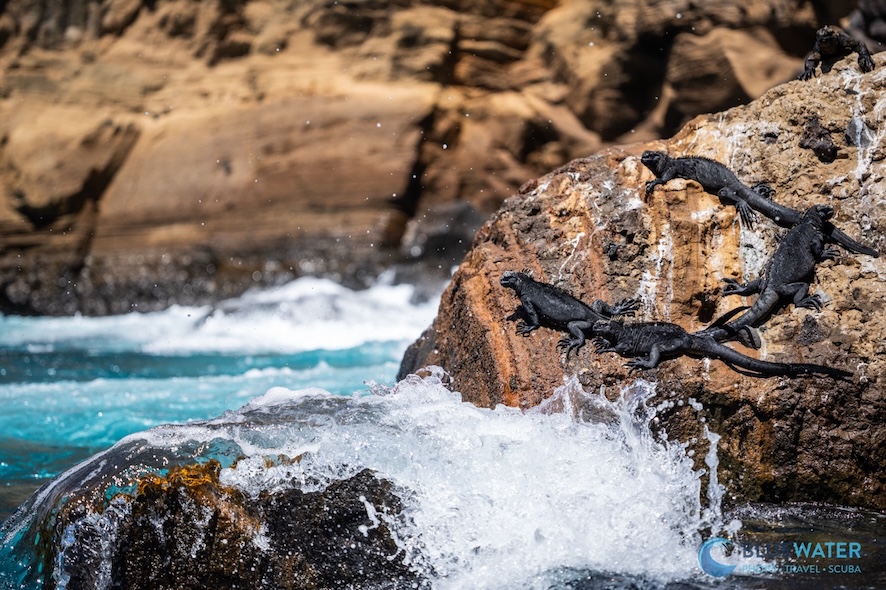
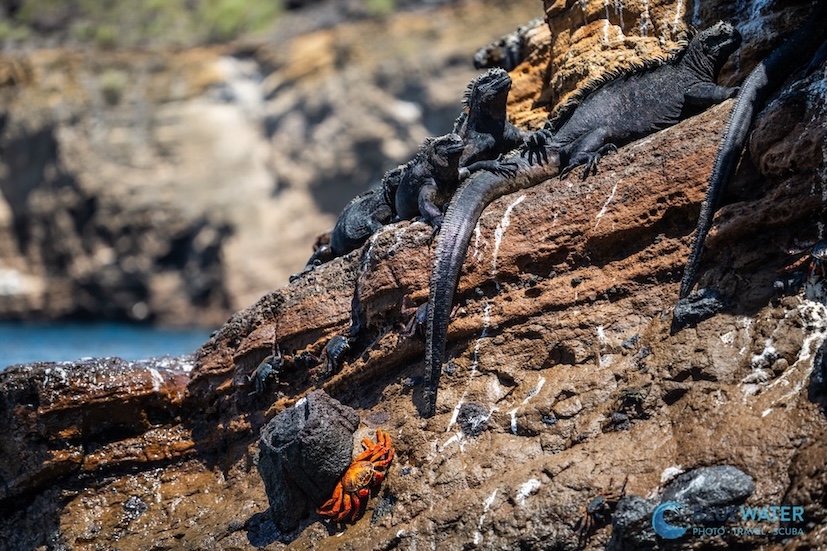
Between dives, we climbed into the pangas and motored toward shore. There, it seemed as though everything the Galápagos had to offer was gathered in one place: penguins, sea lions, flightless cormorants, marine iguanas, and blue-footed boobies, all competing for limited space along the coastline.
Fernandina Island – Cape Douglas
We traveled a little farther west from Punta Vicente Roca to Cape Douglas on Fernandina Island. It was here that we experienced the most incredible day of diving on the trip.
The day began with a deep dive to 30 meters, where we encountered a small but friendly sea robin.
As we moved up the slope, we came across one of the holy grails of diving in the Galápagos: the red-lipped batfish.
While some divers waited to photograph the batfish, a curious Galápagos bullhead shark swam past, close enough for photos.
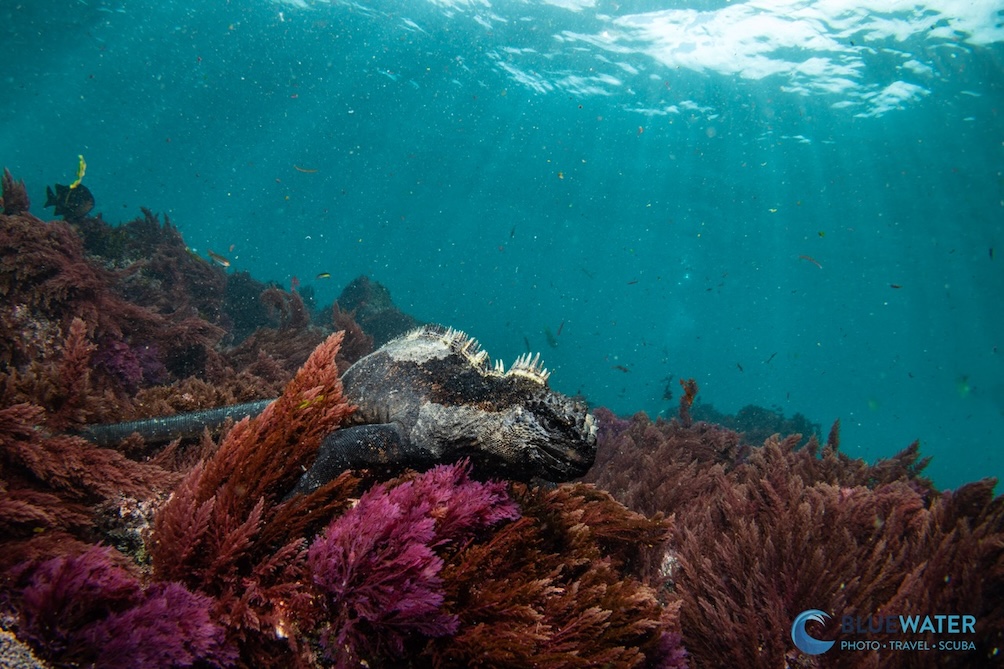
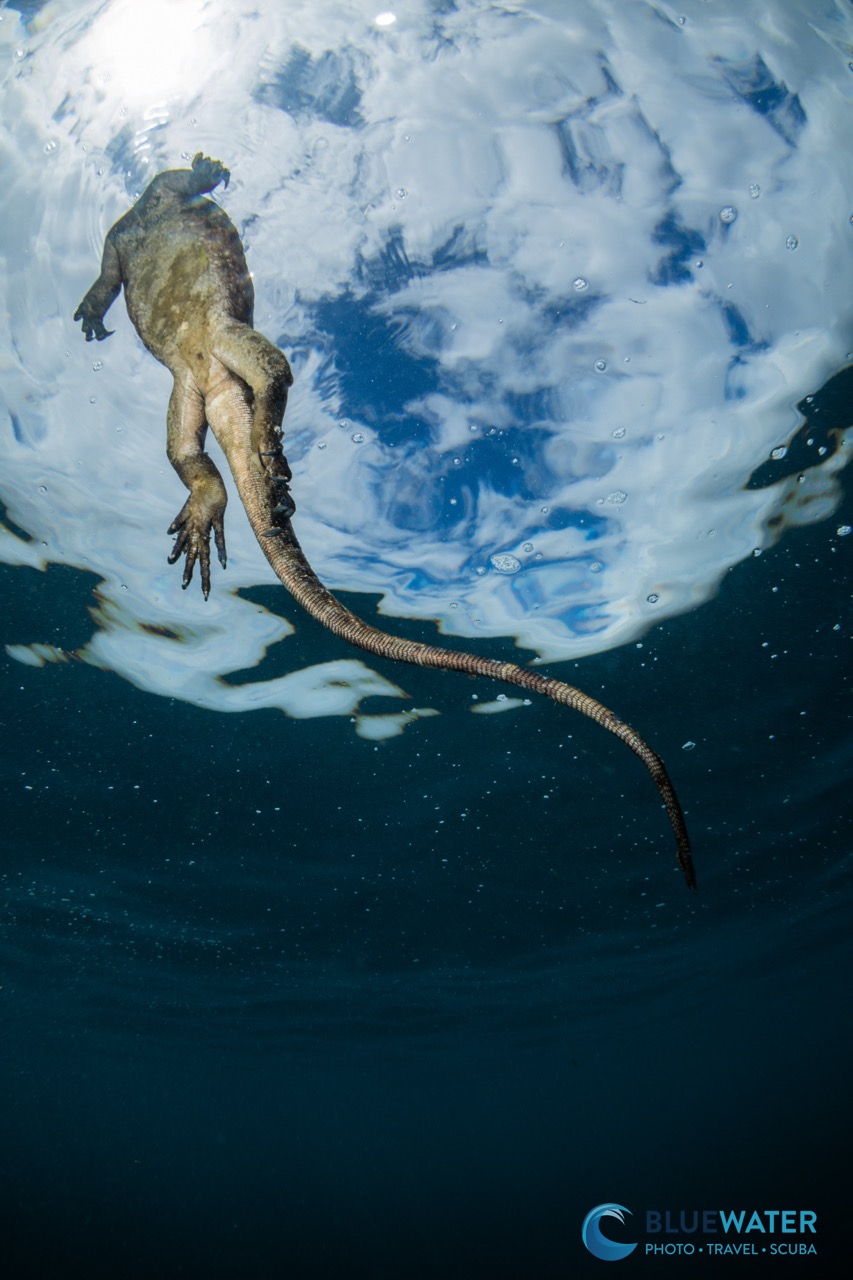
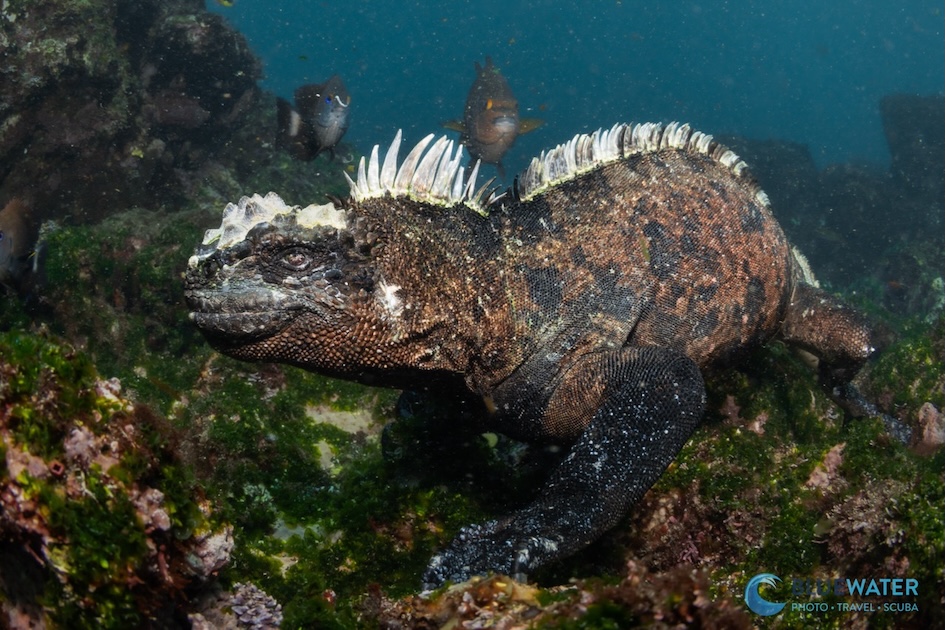
After the morning dive, we experienced the highlight of the trip: swimming up close with marine iguanas.
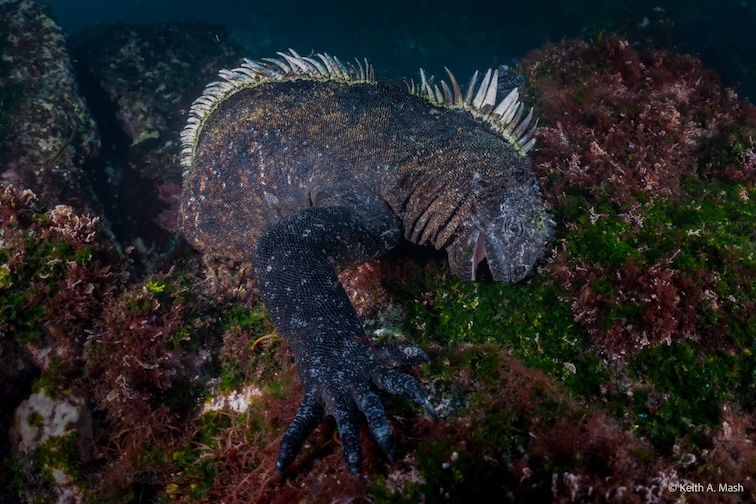
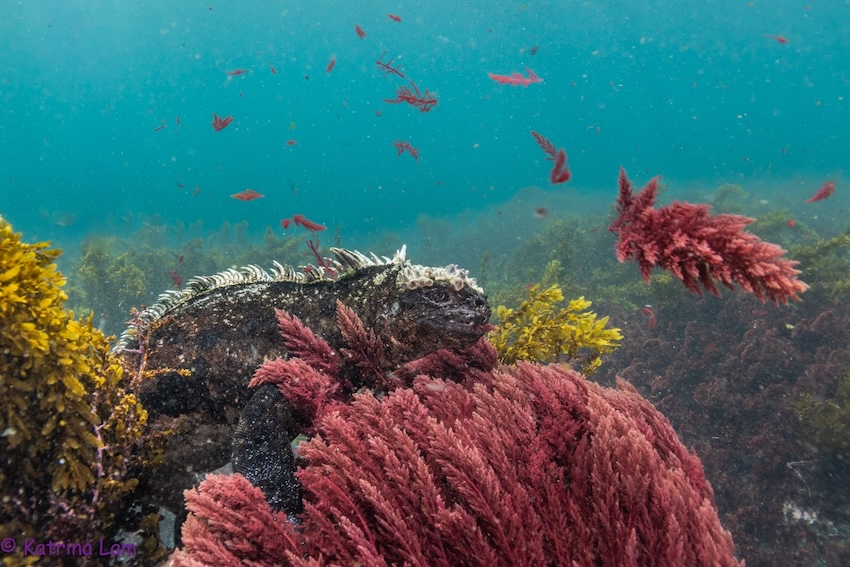
Up close and personal with marine iguanas by Keith Mash (L) & Katrina Lam (R)
Cabo Marshall
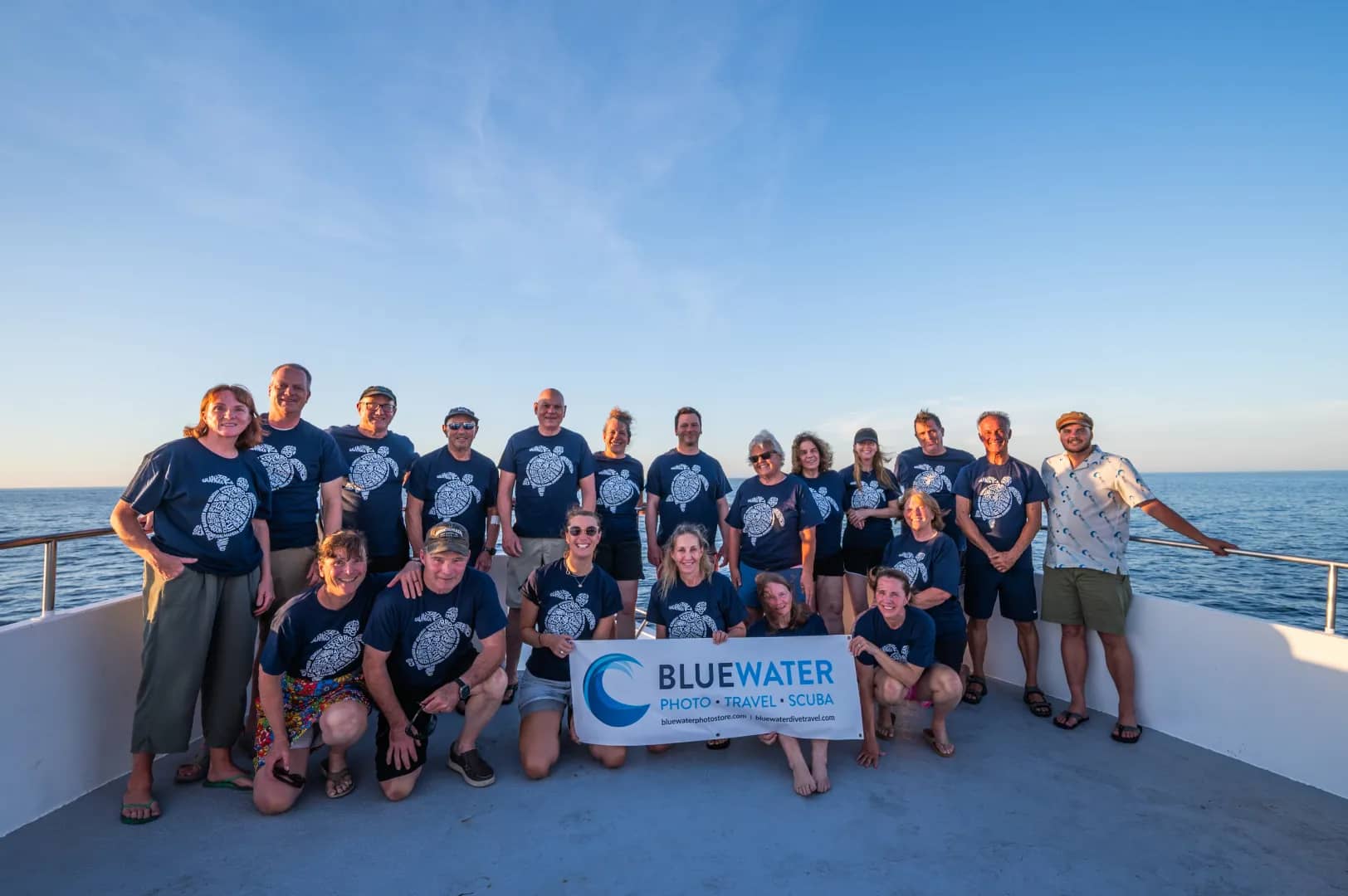
Following our marine iguana encounter, we traveled north around Isabela Island, crossing the equator and stopping for a group photo along the way.
The following morning, we awoke on the eastern side of Isabela at Cabo Marshall. Our first dive was fantastic.
As the day continued, the water became slightly warmer, but the amount of marine life decreased. We were still fortunate enough to spend one surface interval snorkeling along the shore, where we watched a Galápagos penguin hunting underwater.
Cousins Rock and Santa Cruz
Our final dive of the trip was surprisingly one of the best.
It began with close encounters with whitetip reef sharks resting beneath an overhang. From there, we rounded the corner and encountered a large school of milkfish, along with several turtles.
As we made our way back toward the boat, two large Galápagos sharks made several close passes to investigate the group—a fitting end to our final dive.
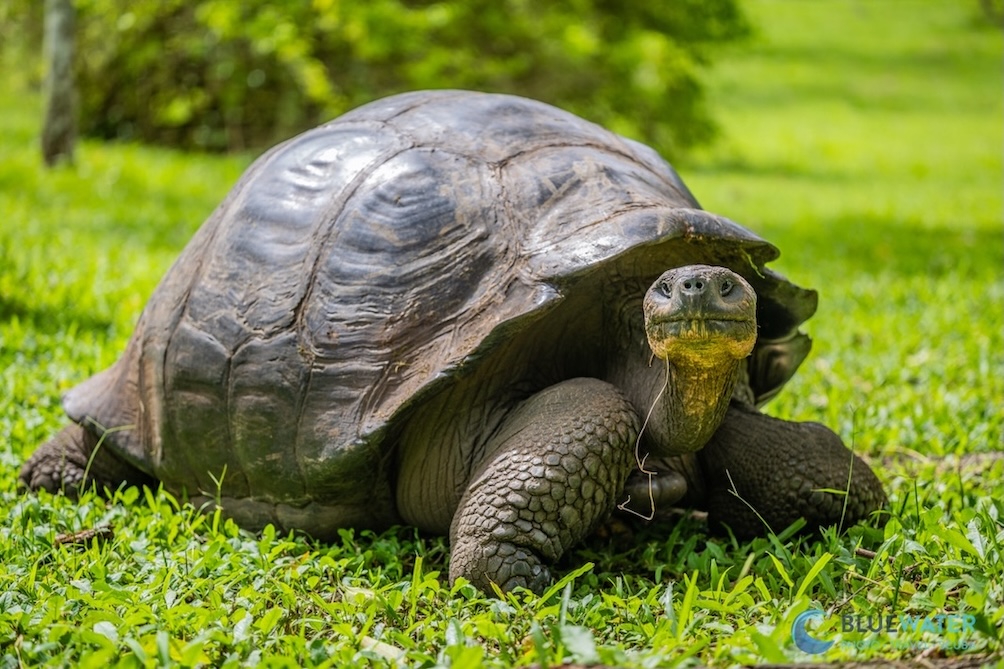
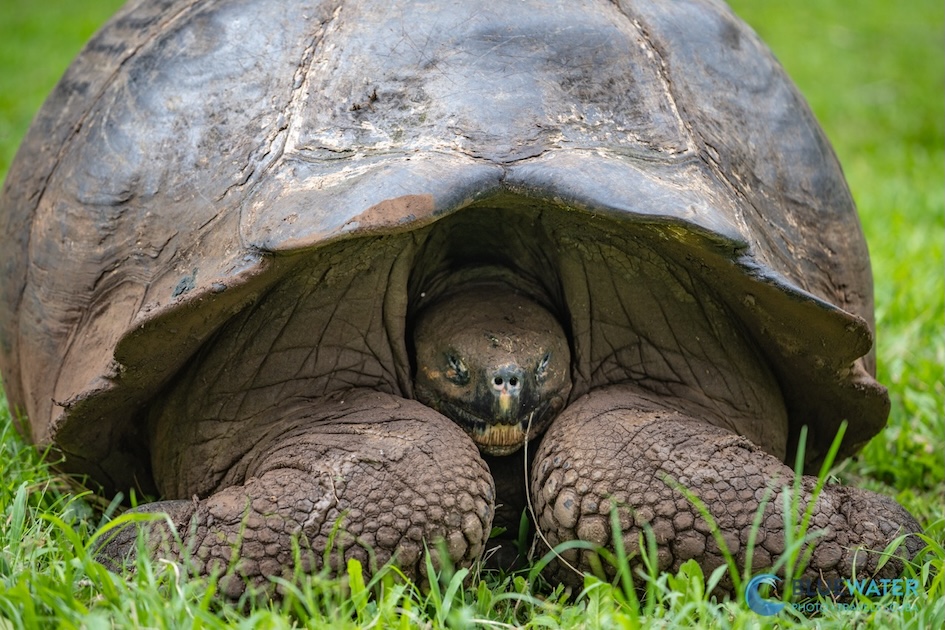
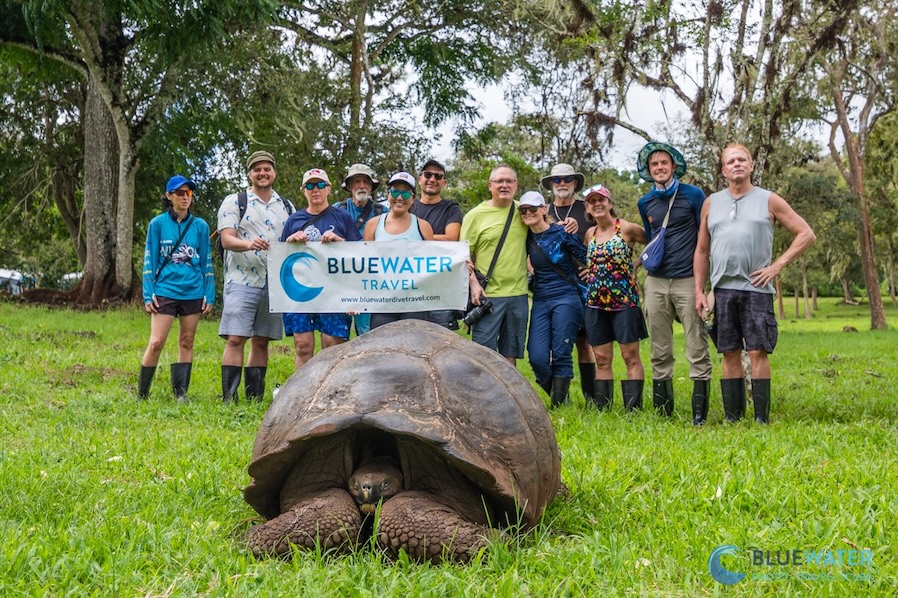
Back on board, we began drying our equipment and preparing for the rest of the day on Santa Cruz Island. That afternoon, we disembarked and drove through the lush highlands to a farm inhabited by one of the islands’ most iconic animals: the Galápagos giant tortoise.
We were also lucky enough to see several species of Galápagos finches, the birds whose variations helped inform Darwin’s ideas about evolution by natural selection.
We spent the rest of the afternoon in the town of Puerto Ayora, a lively, bohemian destination filled with lounging sea lions and excellent food and drink. Our entire group chose to have dinner together in town, accompanied by live music and good company.
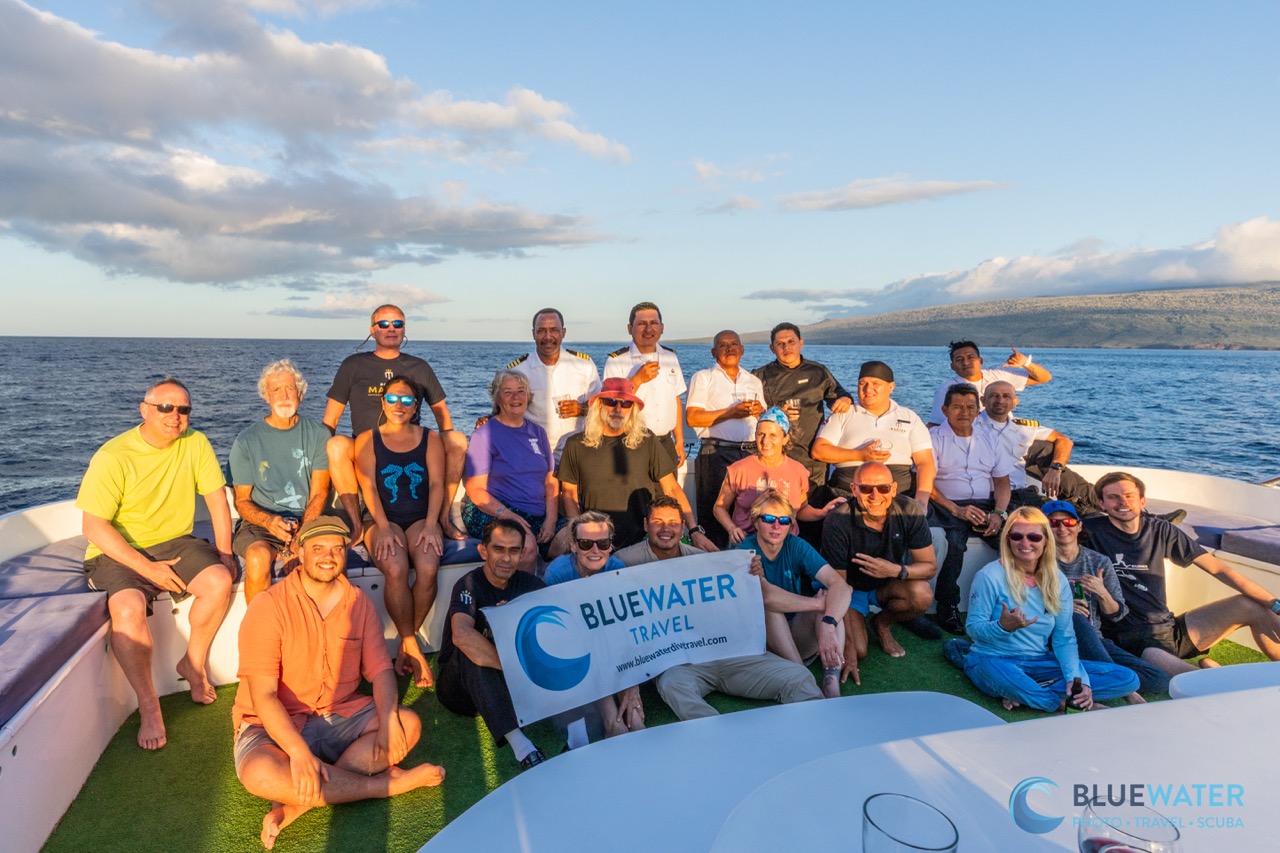
As dinner came to an end, we reflected on ten days well spent, witnessing some of the most unusual and remarkable biodiversity our world has to offer.
Want to see more of our Galapagos Trip? Check out our video recap!
Author


Nirupam Nigam
Nirupam Nigam is the Editor-in-Chief of the Underwater Photography Guide and the President of Bluewater Photo & Video - the world's top underwater photo & video retailer. While growing up in Los Angeles he fell in love with the ocean and pursued underwater photography in the local Channel Islands. After receiving degrees in Aquatic and Fisheries Science and General Biology, as well as a minor in Arctic Studies, Nirupam worked as a fisheries observer on vessels in the Bering Sea and North Pacific. Since then, Nirupam has been a full time underwater photographer and photo gear head.
You can get in touch with him at nirupam@uwphotographyguide.com or through his website www.photosfromthesea.com.
Learn more about Nirupam with this amazing video!