-optimized.webp&w=3840&q=75 "Halmahera Trip Recap 2026 - image")


Halmahera Trip Recap
May 2026
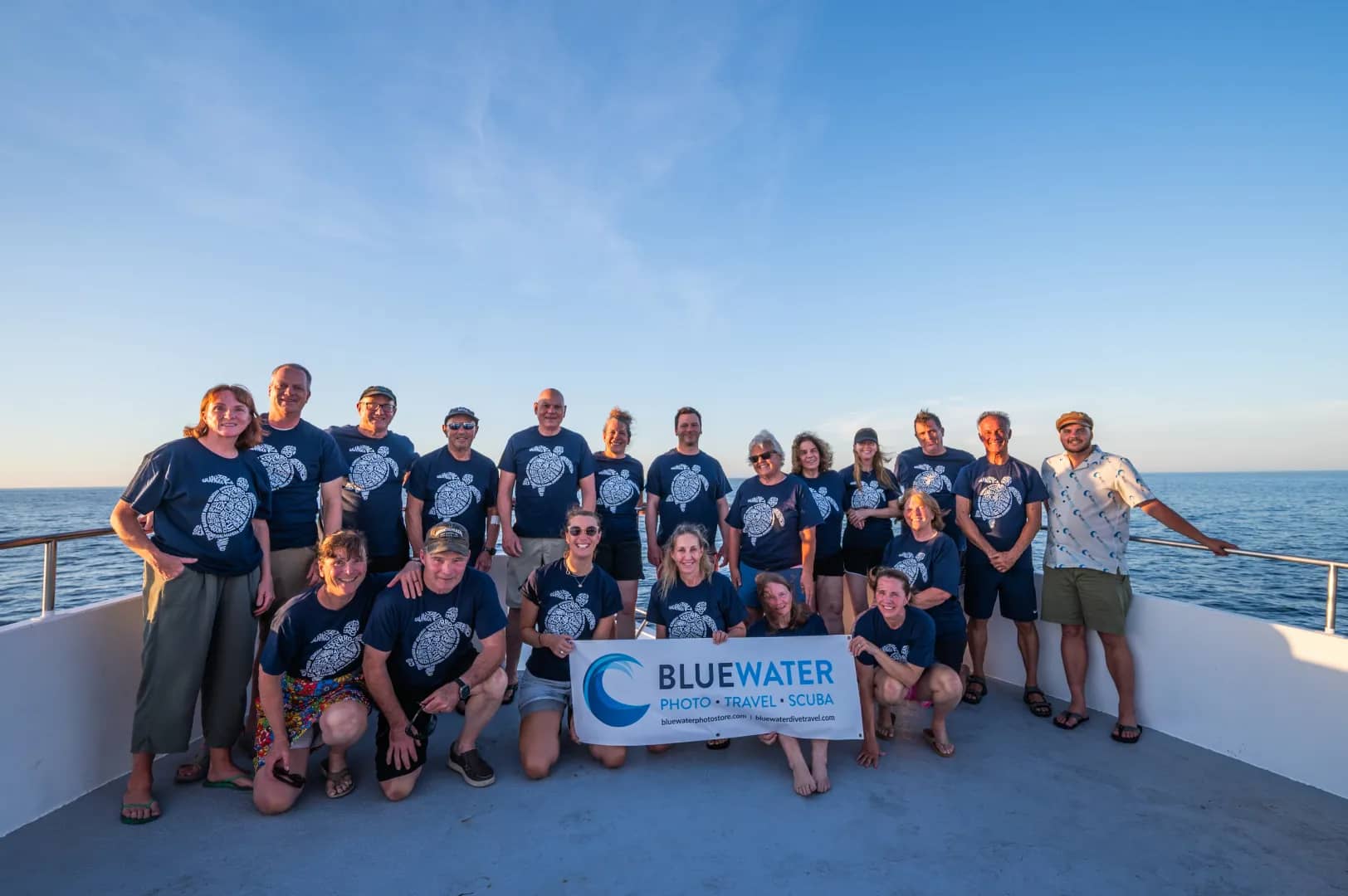
Trip Leader: Tim Yeo
Underwater Camera Equipment Used: Sony a6700, Sony a6700 Ikelite Housing, Sony 10-18mm and Sony 50mm macro lens, dual Kraken KS-160 strobes
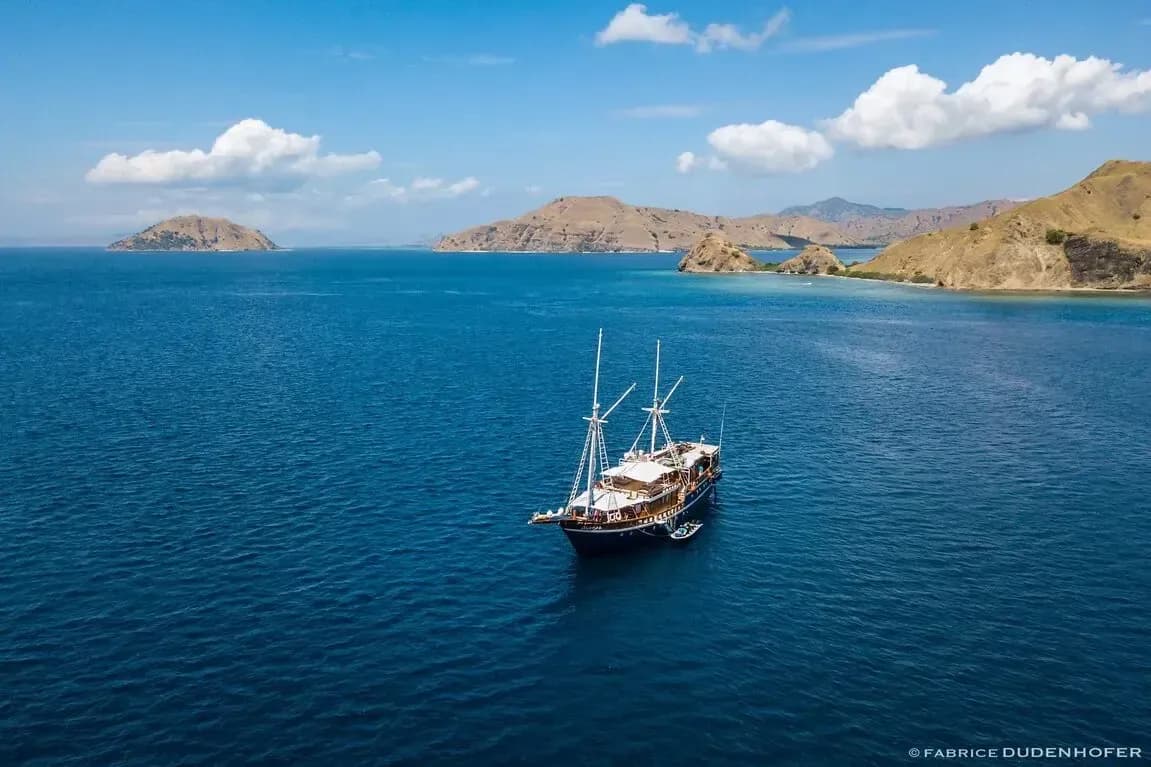
Diving Halmahera Aboard the White Manta
In April 2026, I joined a 7-night liveaboard trip aboard the White Manta to Halmahera, one of
Indonesia’s more remote and less frequently visited dive regions. Halmahera sits in the heart of
the Coral Triangle, but compared to places like Bali, Raja Ampat, or Komodo, it still feels
wonderfully wild and uncrowded. This itinerary offered a relatively quick and easy way to
experience Halmahera, with the trip starting and ending in Lembeh, meaning guests only
needed to fly into Manado’s International Airport, making it one of the more convenient
gateways for a remote Indonesian liveaboard itinerary.
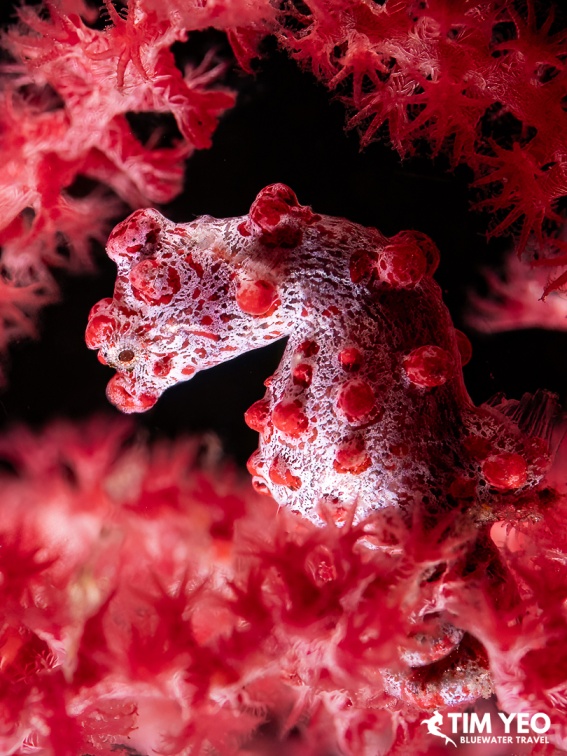
Another huge advantage of this itinerary is that it begins and ends in Lembeh, which is arguably the best muck diving destination in the world. For divers with a little extra time, it is very easy to add a few days before or after the liveaboard to enjoy Lembeh’s famous black sand slopes, rare critters, and world-class macro photography. It also makes the logistics simple: arrive in Manado, transfer to Lembeh, board the White Manta, and begin diving the same day.
Embarkation and the Crossing to Halmahera
We boarded the White Manta on embarkation day and quickly settled into the rhythm of the
boat. That afternoon, we did our checkout dives in Lembeh, followed by a dusk dive before the
boat began the crossing east toward Halmahera. It was a great way to ease into the trip, check
gear and weighting, and enjoy a taste of Lembeh before heading toward the more remote reefs
of Halmahera.
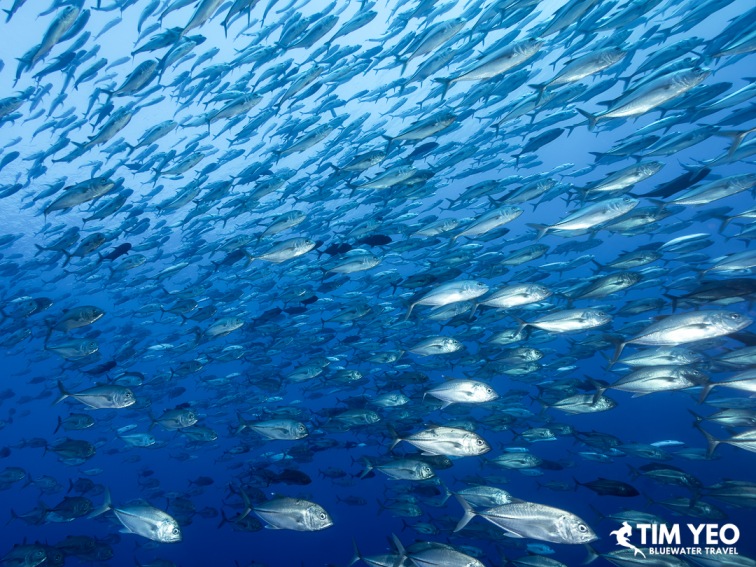
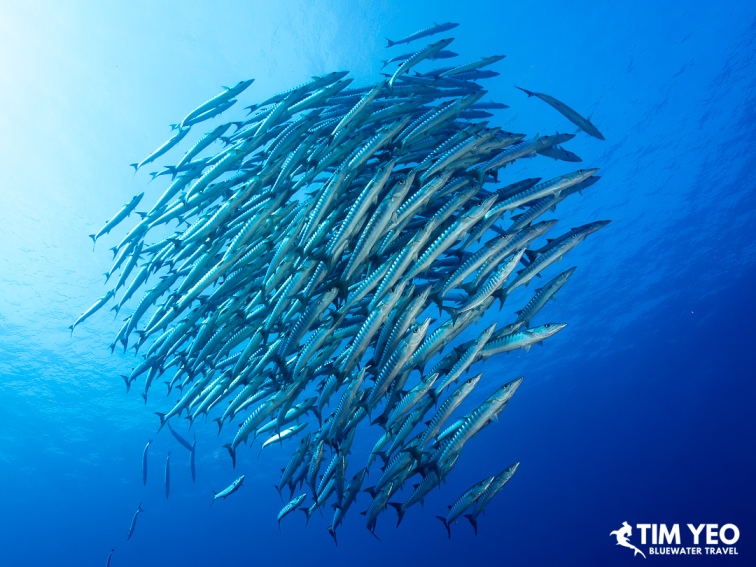
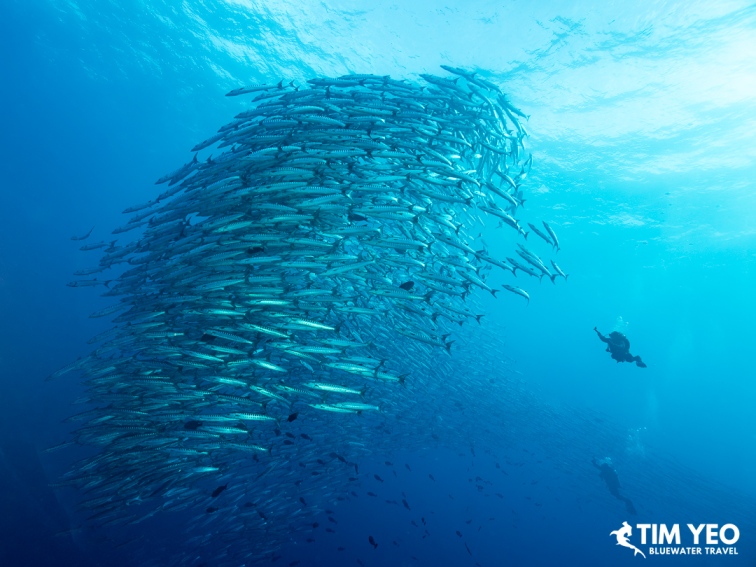
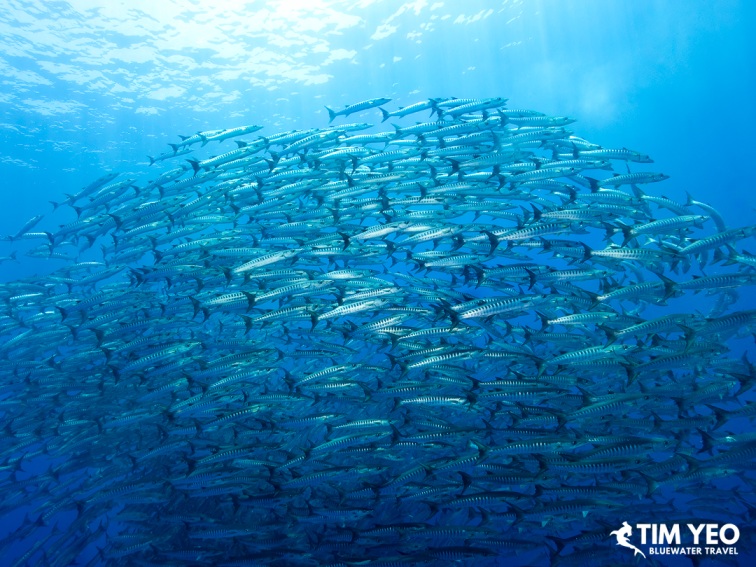
One of the special stops between Lembeh and Halmahera is Tifore, a remote seamount rising from the deep waters of the Molucca Sea. Tifore is one of the big advantages of doing this crossing by liveaboard, and for many of us it became one of the highlights of the entire trip. The water was beautifully clear, and the site was full of action, with large schools of jacks and barracuda circling above the reef. We did three dives at Tifore before continuing the crossing toward Halmahera, and it immediately gave the trip a sense of adventure. There is something very exciting about diving a remote seamount surrounded by deep blue water, knowing that very few divers ever get to visit it.
Diving the Reefs of Halmahera
By Day 3, we reached Halmahera and began four full days of diving in the Siko and Gunange
area. Because this was a shorter 7-night itinerary, we did not try to cover a huge amount of
distance. Instead, we stayed within a focused area and avoided long transits, which allowed us
to do three day dives and a night dive on most days.
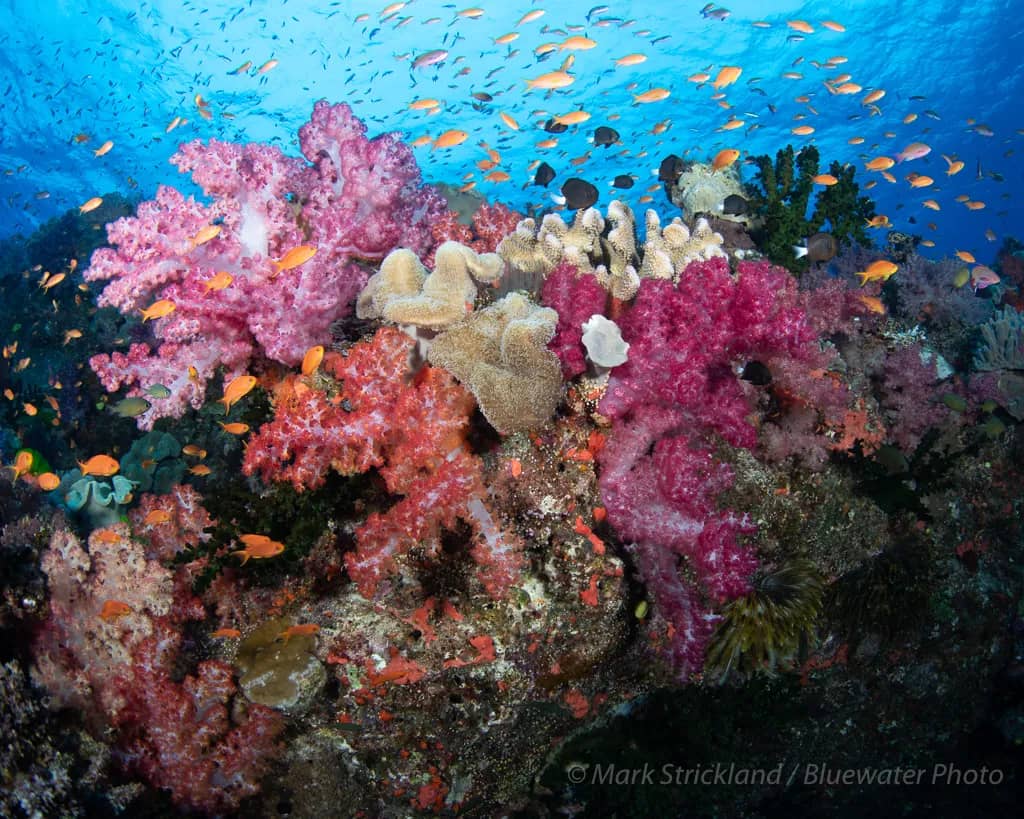
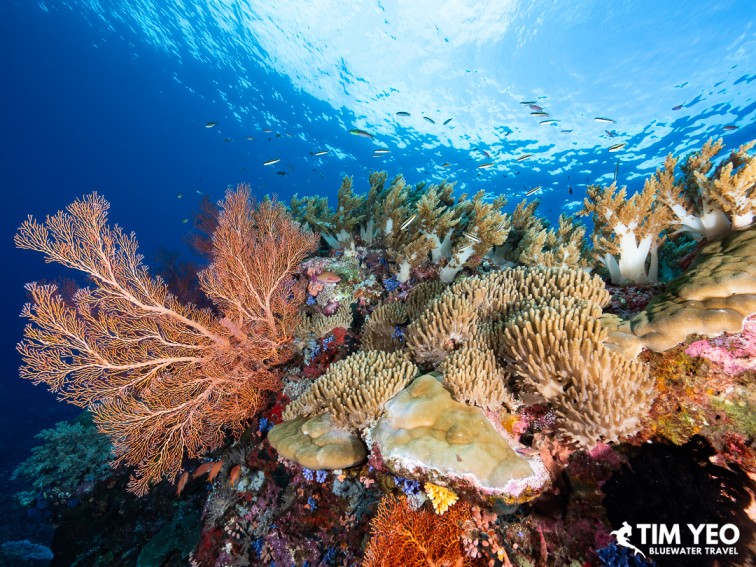
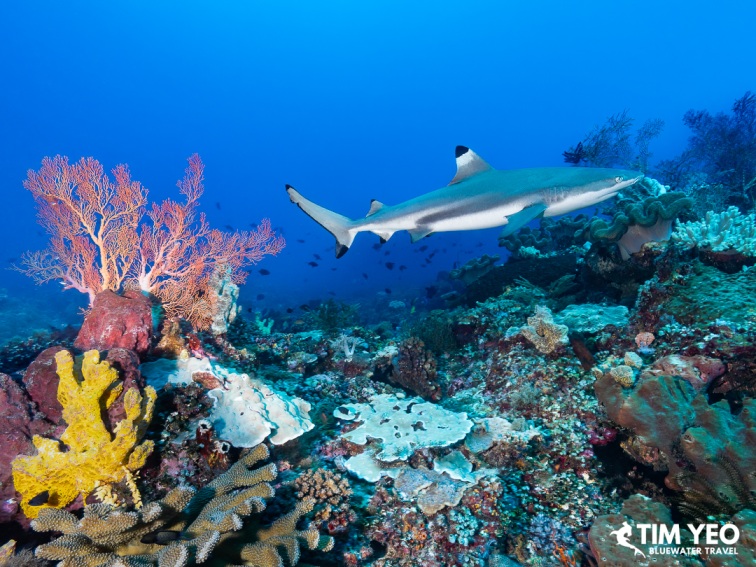
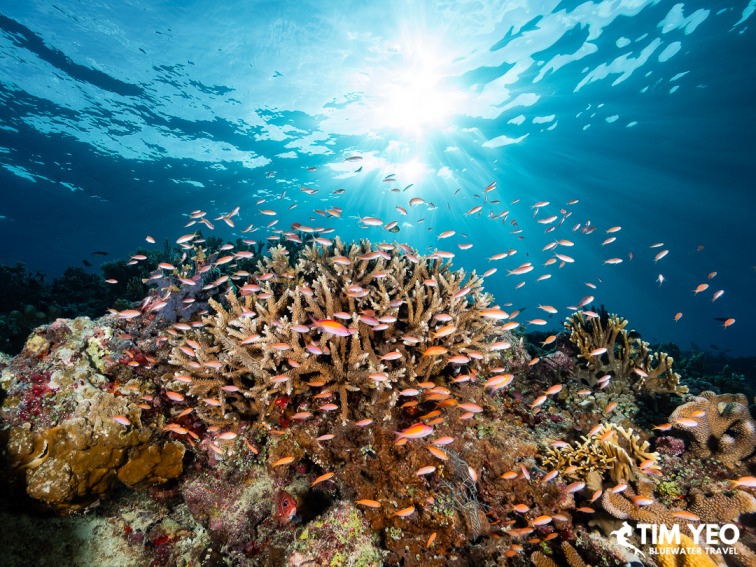
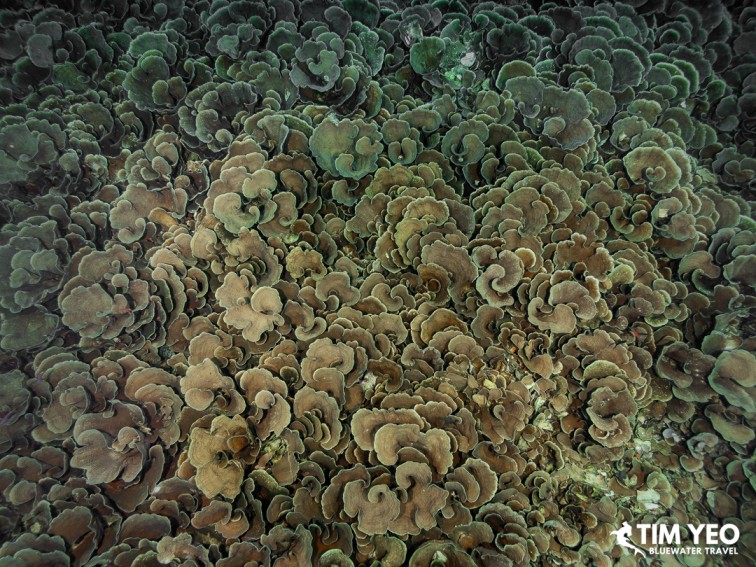
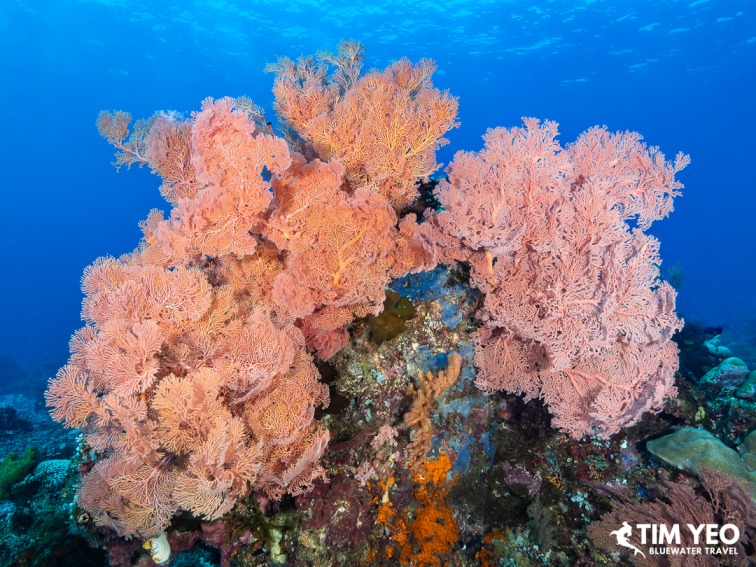
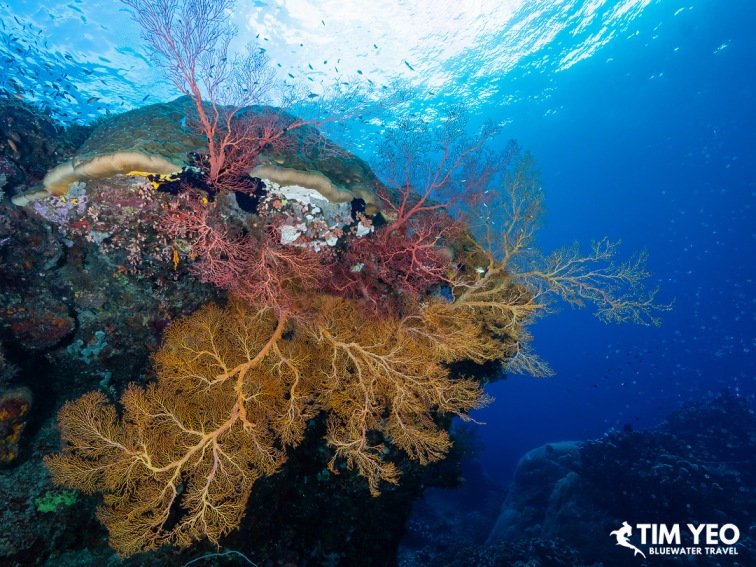
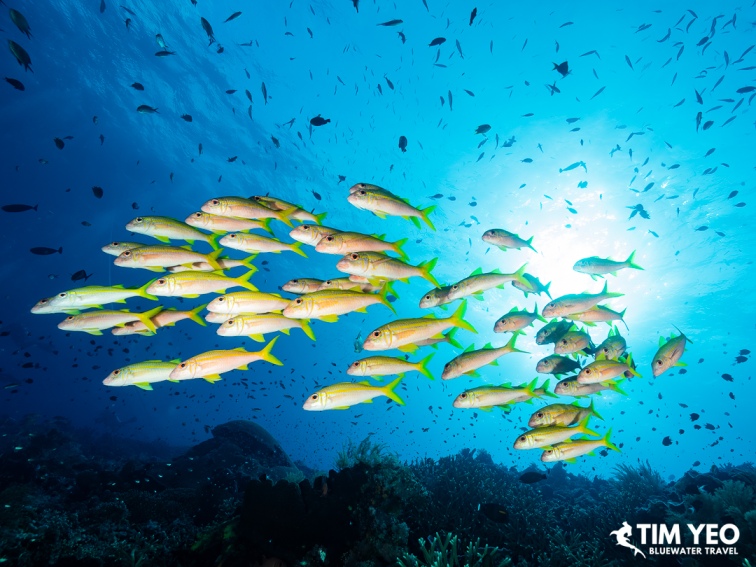
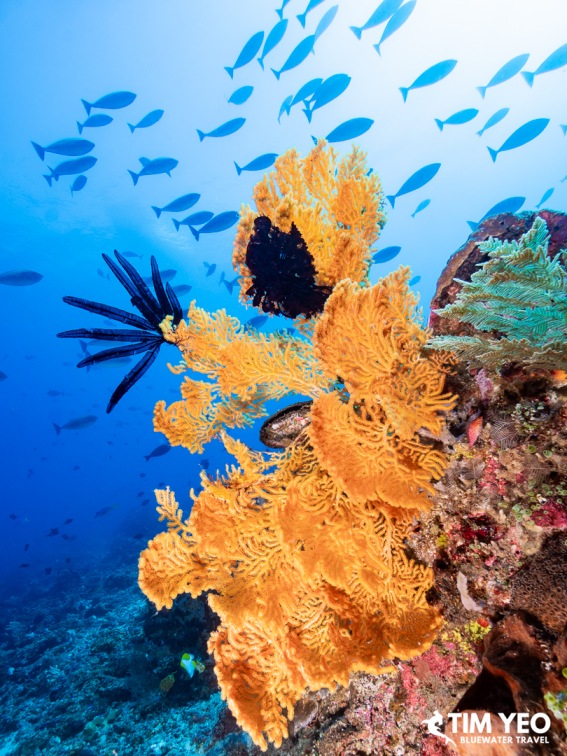
The diving in Halmahera was full of life. On several dives, we hooked into the reef and watched the water column explode with movement. Massive schools of fusiliers streamed past in the current, while red-toothed triggerfish, pyramid butterflyfish, and surgeonfish filled the reef slopes in every direction. These were the kind of dives where it was worth pausing, staying still, and simply watching the reef breathe around you. The reefs themselves were healthy and colorful, with a mix of hard and soft corals, and there was always something happening above, below, and around us.
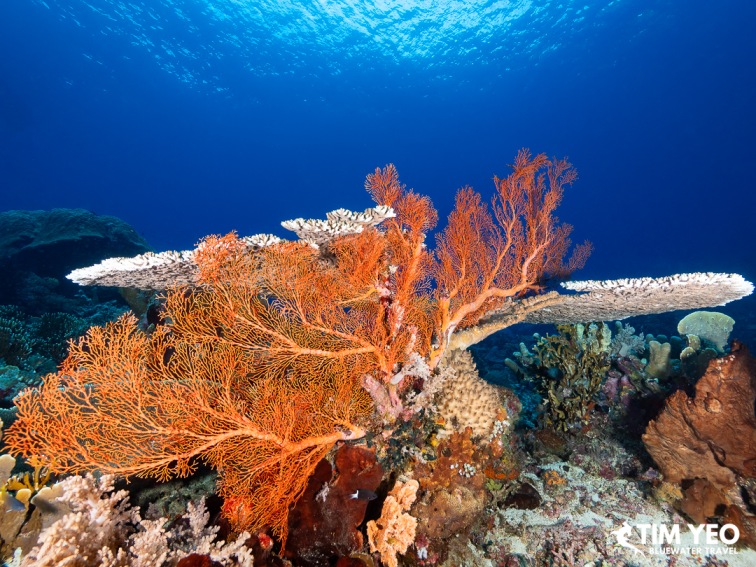
Sharks, Napoleon Wrasse, and a Curious School of Batfish
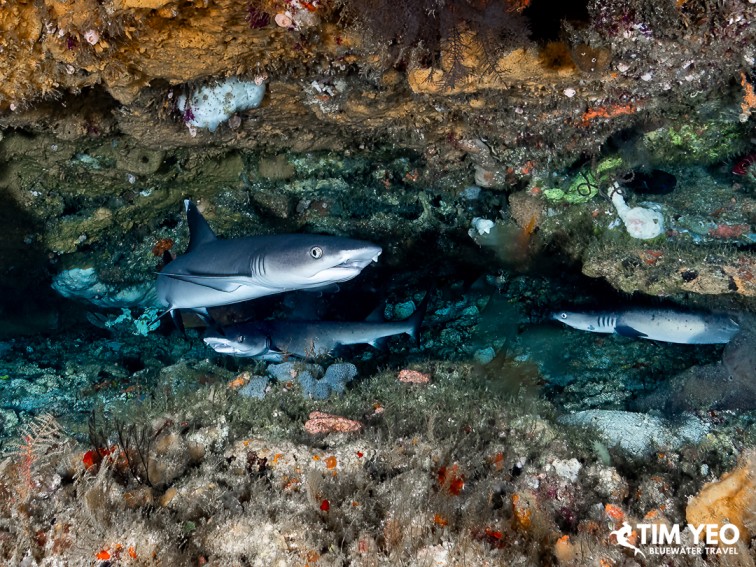
Throughout the week, we also saw plenty of larger marine life. White tip and black tip reef sharks were regular sightings, cruising along the reef or resting in the distance. Napoleon wrasse appeared on several dives, and there was a constant feeling that anything could swim by in the current. Perhaps the thing I liked most was that during our entire time diving in Halmahera, we did not see a single other dive boat. That is a very different feeling from more famous Indonesian dive regions like Raja Ampat and Komodo, where I have sometimes been the twentieth liveaboard to arrive at a dive site. In Halmahera, the reefs still felt quiet, remote, and very much our own.
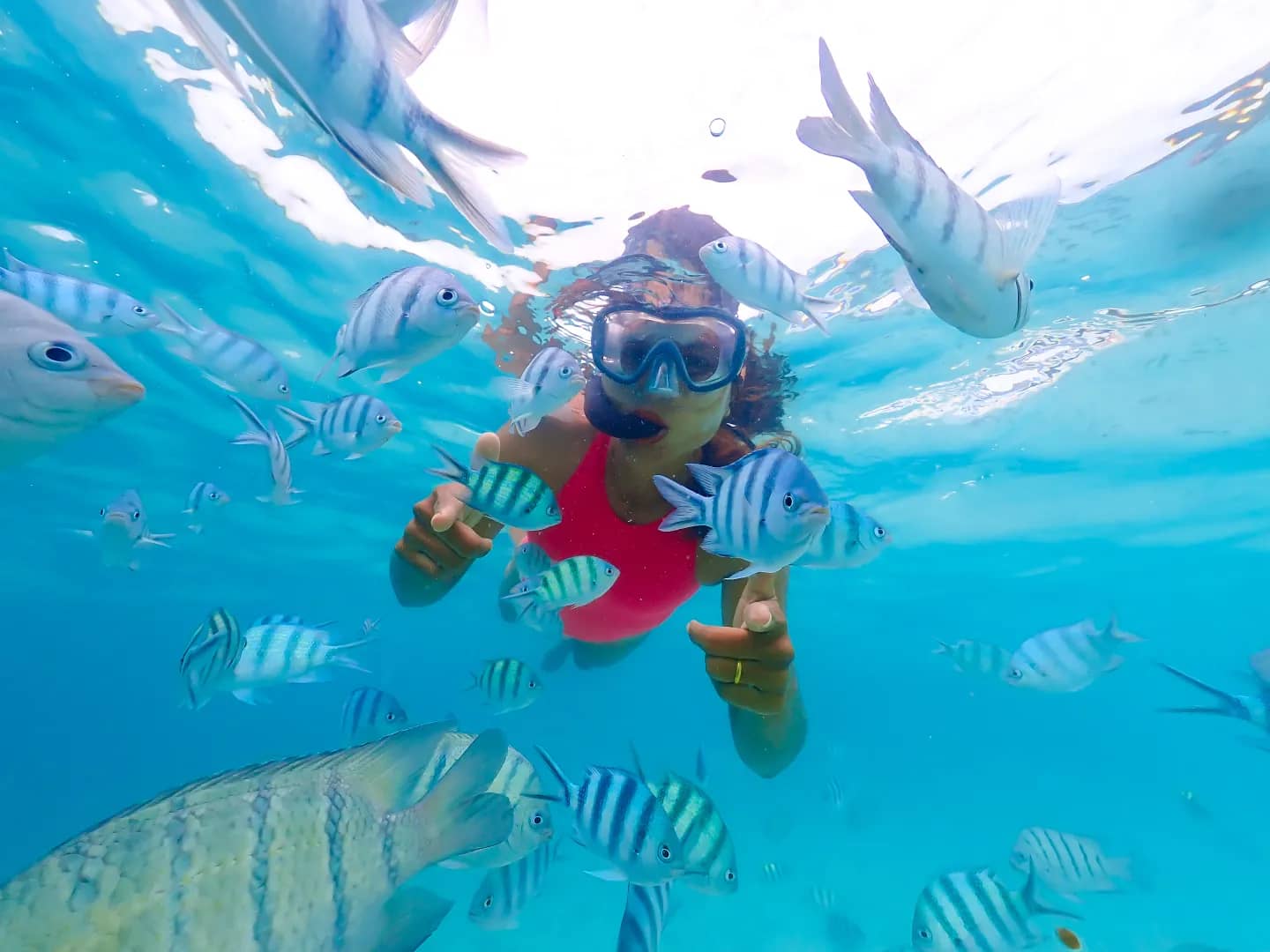
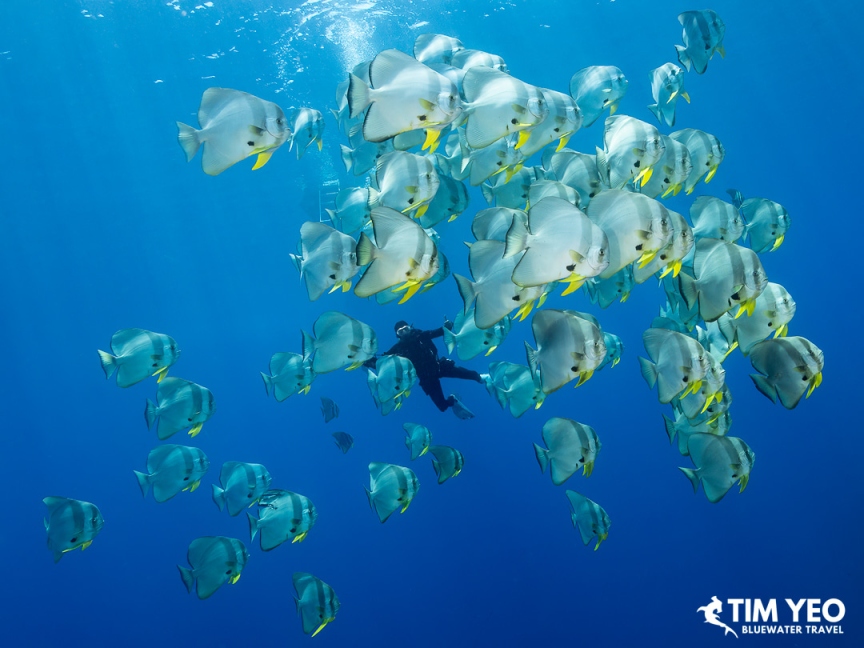
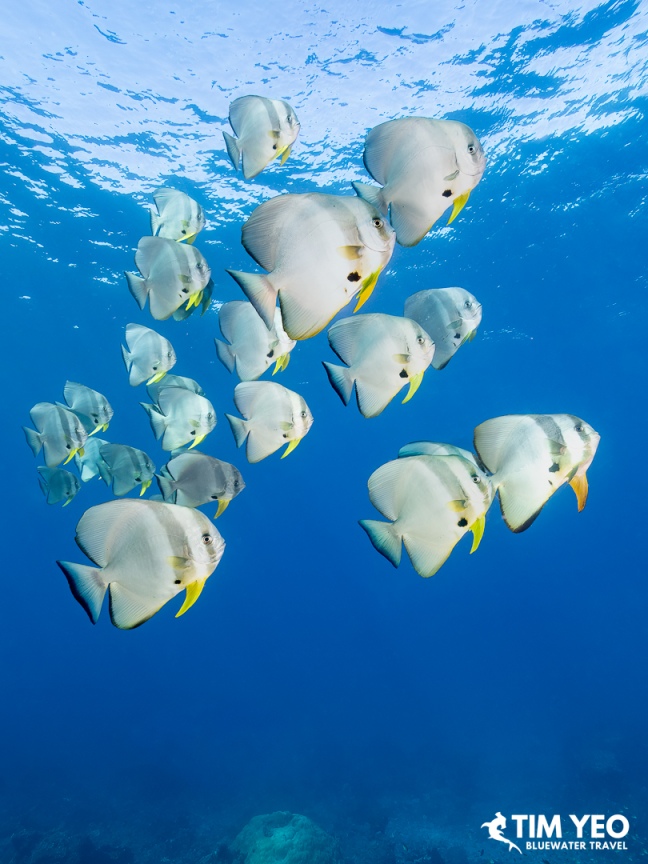
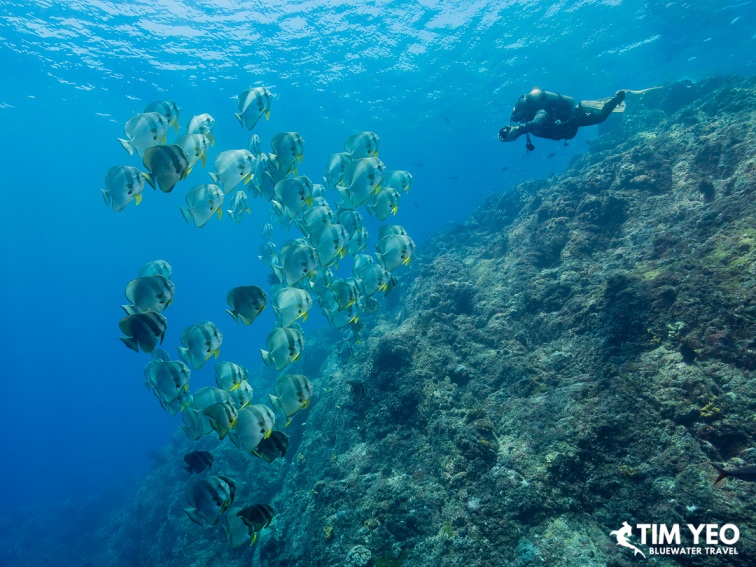
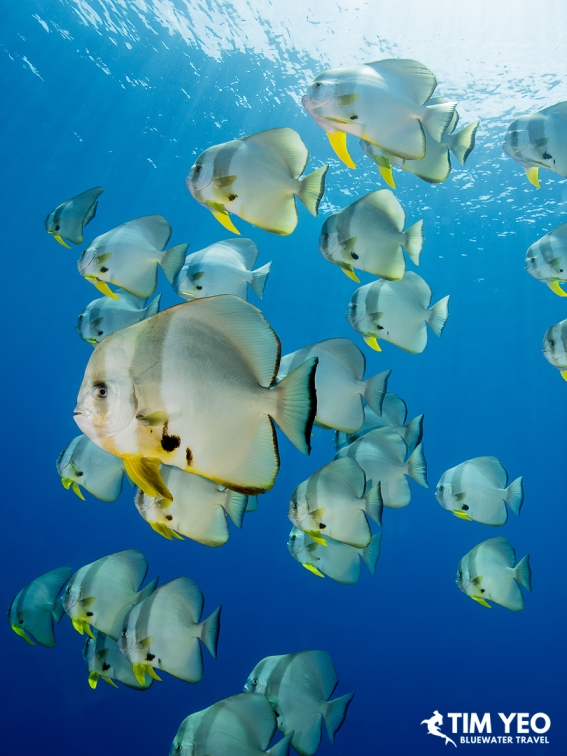
One of my personal favorite moments of the trip came near the surface during a safety stop,
when a friendly school of batfish decided to follow us around. Batfish are always fun subjects,
but this group was especially curious and stayed close as we hovered in the blue. It was a
simple moment, but it captured one of the things I love most about diving: sometimes the best
encounters are not the dramatic ones, but the quiet, unexpected moments at the end of a dive
when the ocean gives you one more surprise.
Night Diving and a Surprise Village Welcome
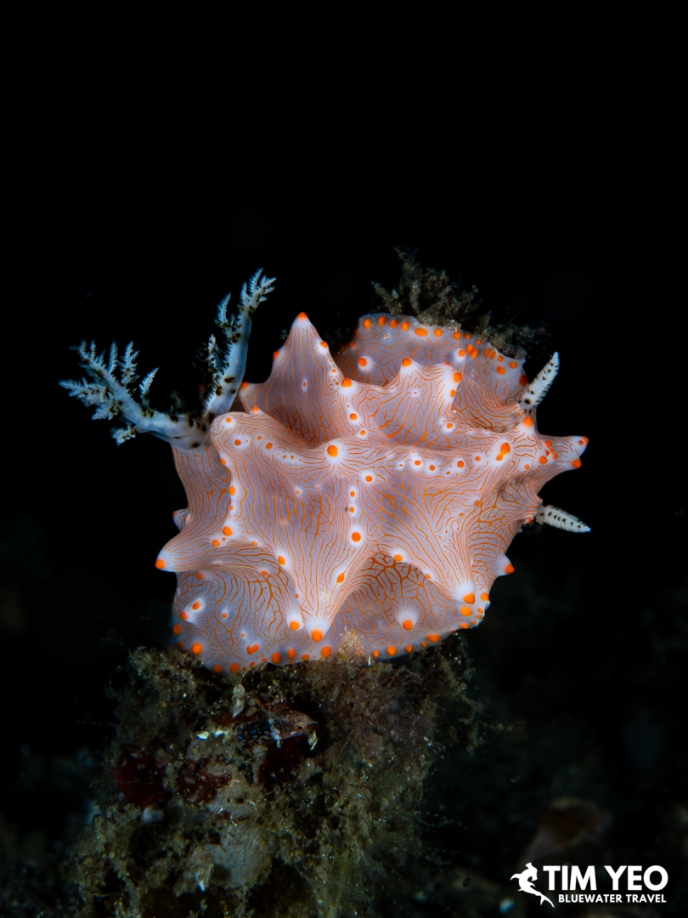
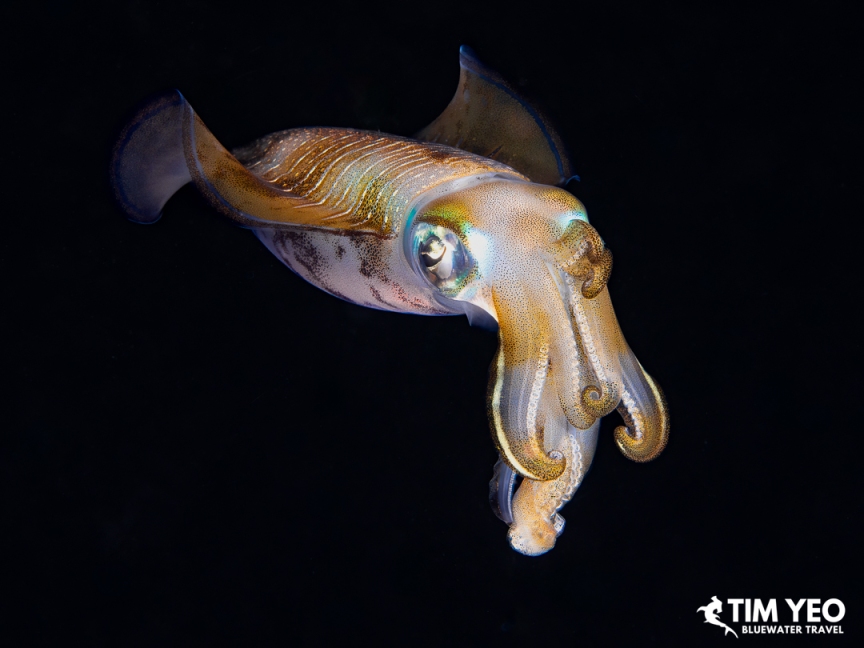
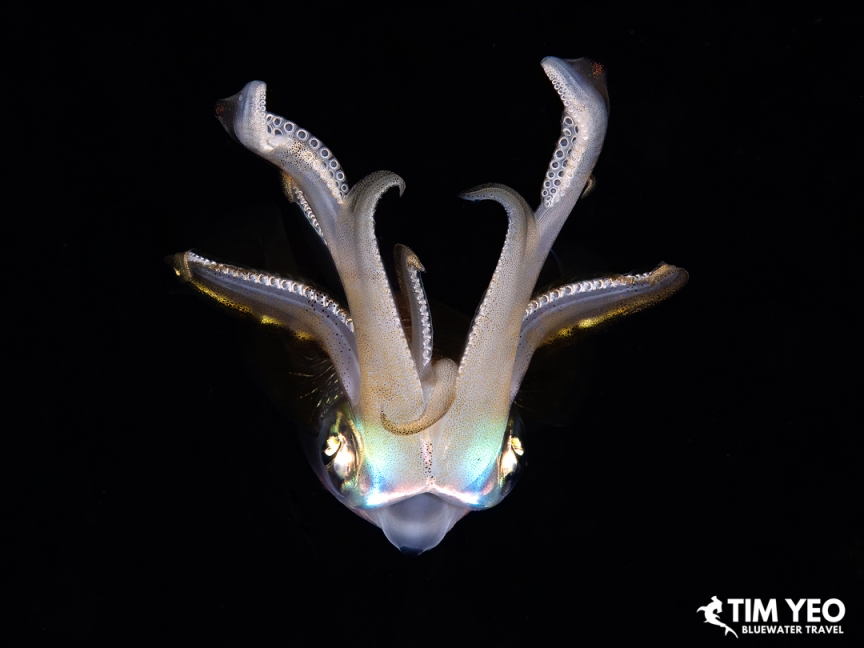
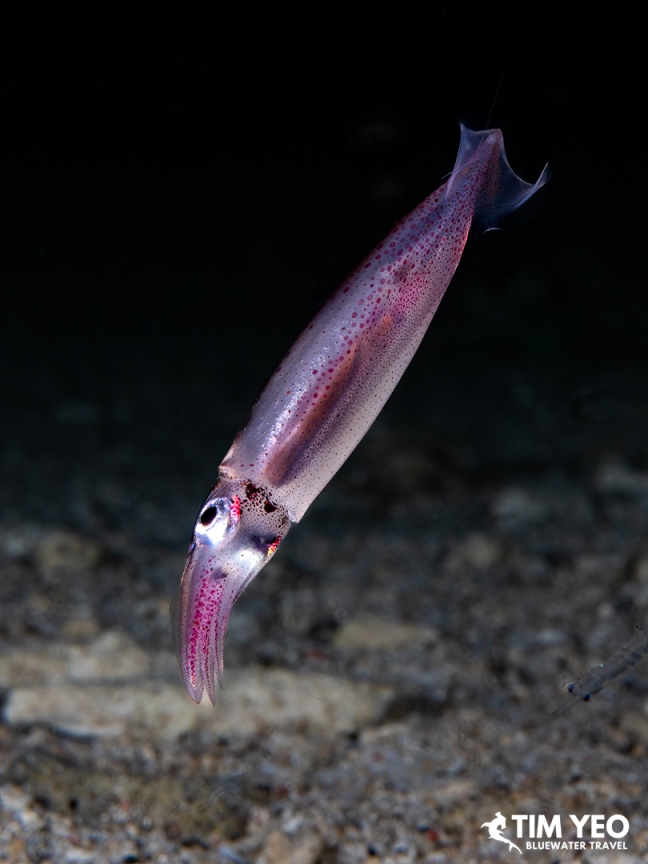
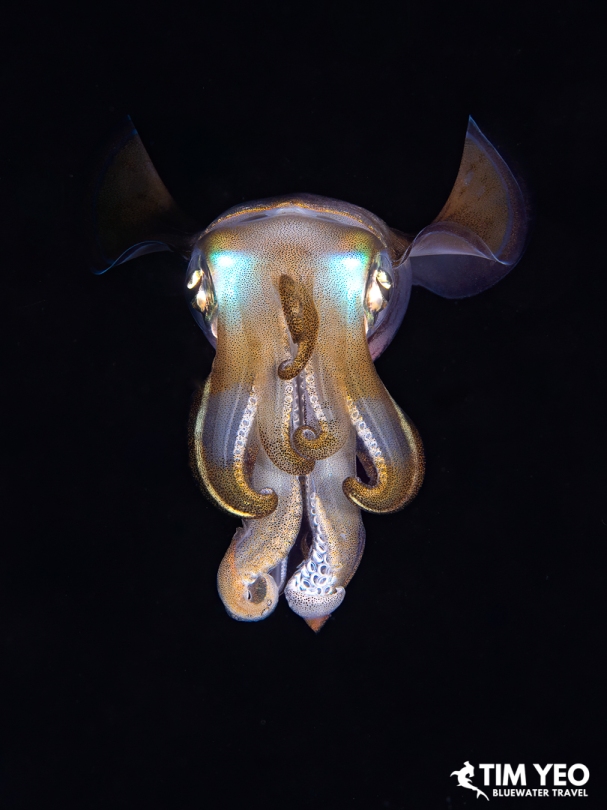
As a macro enthusiast, I also looked forward to every night dive. Halmahera delivered a
completely different experience after dark, with plenty of critters emerging from the reef and
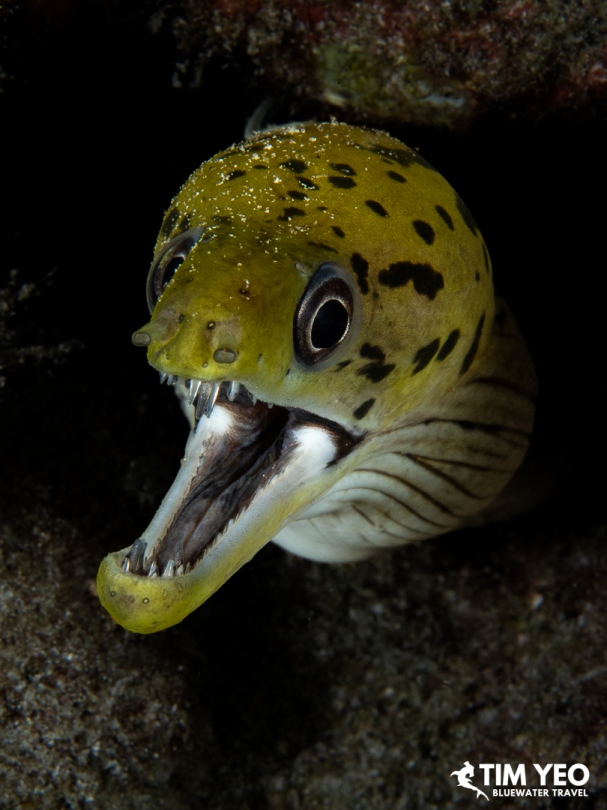
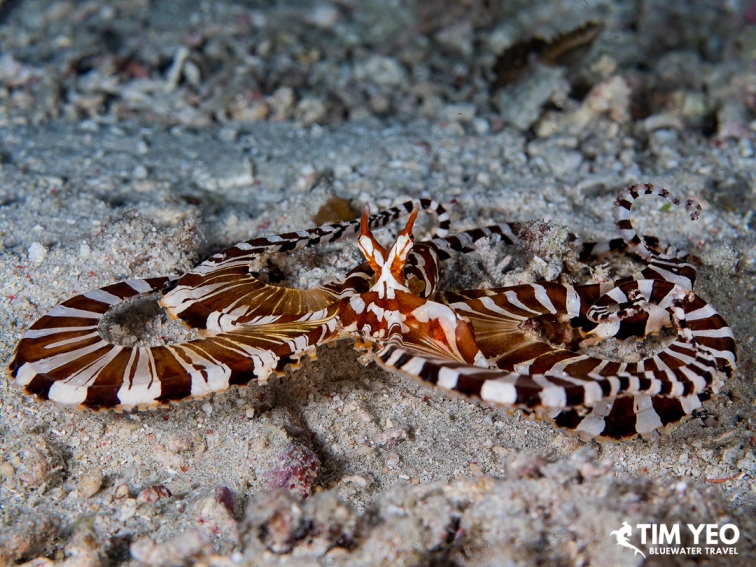
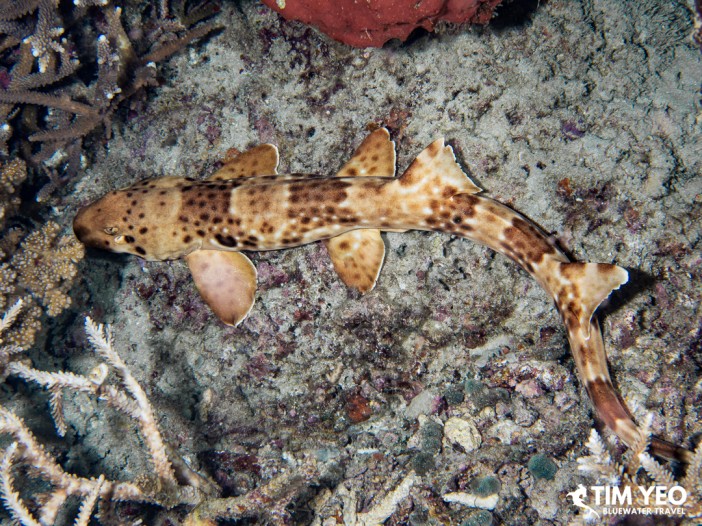
sand. Highlights included squid, cuttlefish, bobtail squid, epaulette sharks, wunderpus, and lots
of nudibranchs. The night dives were productive, varied, and exciting, with enough unusual
subjects to keep photographers very happy. It was also a nice contrast to the bigger, current-
swept reef dives during the day. In a single day, we could enjoy schooling fish, sharks, reef
scenes, and then finish with a critter-filled night dive.
One of the most memorable night dives of the trip was not only about what we saw
underwater, but what happened when we surfaced. We had been diving around a village jetty,
and as we ascended, it seemed like the whole village had gathered on the pier to watch the
underwater light show created by our dive lights. As each diver popped up on the surface, the
villagers cheered and waved. It felt like our night dive had unexpectedly become a local event. It
may have been the first time they had divers exploring around their jetty, and it turned into a
special occasion for them and a very pleasant surprise for us.
Life Aboard the White Manta
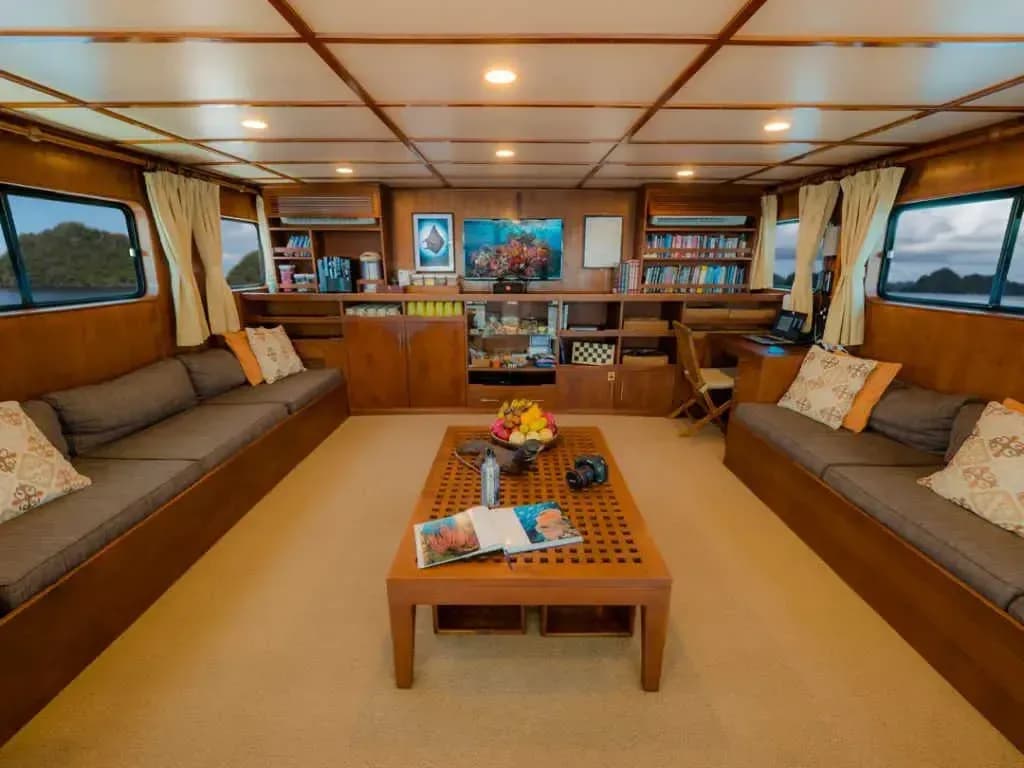
The White Manta was an excellent platform for this itinerary. At 46 meters long with a 10
meter beam, she is a massive and very spacious liveaboard. Even with a full boat of 26 guests,
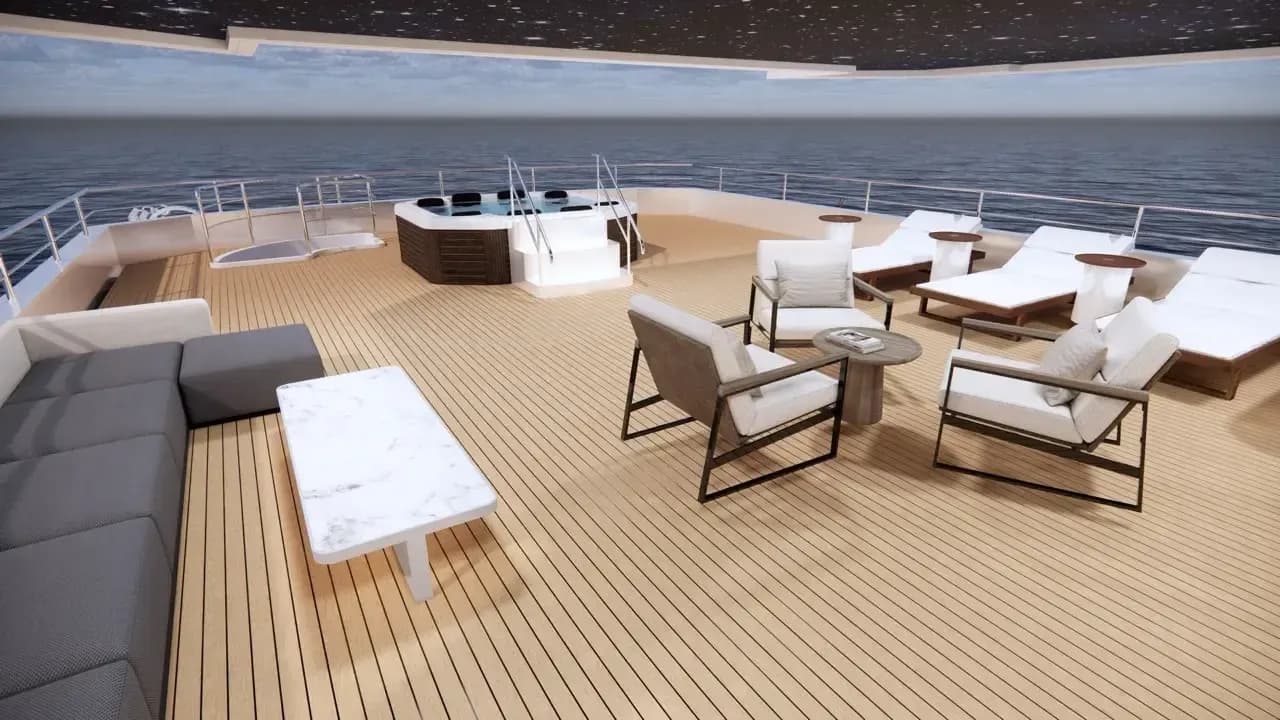
there was always plenty of room to spread out. The covered sun deck is one of the best
features of the boat, with 16 lounge beds and 8 sets of lounge chairs and tables. The indoor
dining area is also very spacious and can easily fit more than 30 guests, while the back of the
top deck has another large lounge area with ample seating for a dozen guests. There is also a
fully stocked fridge and a coffee and tea station in that area, which made it a popular place to
relax between dives.
Diving from a large liveaboard with many guests can sometimes feel crowded or disorganized,
but the White Manta team has the dive operation down to a science. Diving was done from
three large, spacious zodiacs. Groups were kept small, between two and four divers, and no
more than one group entered the water from the zodiac at a time. Even though the zodiacs had
enough room to fit more divers, the system gave everyone plenty of space and made entries
feel calm and controlled. Gear-up times were also staggered, so the dive deck rarely felt
crowded. It was one of the smoothest large-boat dive operations I have experienced.
Back to Tifore: The Perfect Bookend
As we approached the end of the trip, our cruise director gave us a choice: head straight back
to Lembeh and do two final dives there, or stop again at Tifore for our last dives before
continuing to Lembeh for disembarkation. The group unanimously chose Tifore, which says a
lot about how much everyone enjoyed the site earlier in the week. Once again, we encountered
the resident schools of barracuda and jacks, and even though we had already seen them at the
start of the trip, we were no less excited to dive with them again. Tifore was the perfect
bookend to the itinerary: remote, blue, fishy, and only accessible by liveaboard on this route.
On the morning of Day 8, we disembarked from the White Manta and were seamlessly
transferred back to Manado airport for our flights home. The trip was short, efficient, and very
rewarding. It combined the convenience of starting and ending in Lembeh, the excitement of a
remote seamount at Tifore, and four full days of healthy, fish-filled reef diving in Halmahera.
Final Thoughts
For me, this trip was also a reminder that Indonesia still has dive regions that feel genuinely
exploratory. Halmahera delivered healthy reefs, schooling fish, sharks, macro life, night dive
surprises, and a real sense of remoteness. I enjoyed it so much that I am already planning to
return in 2027 on a 10-night Halmahera itinerary starting and ending in Ternate. After this first
taste of the region, I am very much looking forward to a deeper exploration of what has quickly
become one of my new favorite dive regions in Indonesia.
Can't get enough of this trip? Check out our Halmahera 2026 Recap Video!
Author
Tim Yeo
Tim grew up in tiny Singapore, where driving for more than an hour meant you would need a passport. Traveling was always his passion, but Tim became addicted to dive travel soon after he got scuba certified in Malaysia. As his diving addiction grew, Tim eventually became a Staff Instructor with PADI and an Instructor Trainer with SDI. After getting his instructor certification, Tim spent time teaching scuba in Malaysia and Vietnam.
Tim serves as General Manager and COO at Bluewater Travel and is the company's most seasoned trip leader. With a portfolio of leading over 30 group trips, his extensive expertise encompasses a variety of popular dive destinations such as the Galapagos, Raja Ampat, French Polynesia, Fiji, the Red Sea, Palau, Maldives, among others. His travels have taken him across all seven continents and allowed him to dive in all five oceans—the Atlantic, Pacific, Indian, Arctic, and Antarctic.
-optimized.webp&w=640&q=75 "Moorea Trip Recap August 2026")


-optimized-optimized.webp&w=640&q=75 "Solomon Islands Trip Recap 2026")