-optimized.webp&w=3840&q=75 "Moorea Trip Recap August 2026 - image")


Moorea Trip Recap
August 2026
Underwater Camera Equipment Used: Sony a6700, Sony a6700 Ikelite
Housing, Sony 10-18mm lens
Swimming With Humpback Whales in Moorea
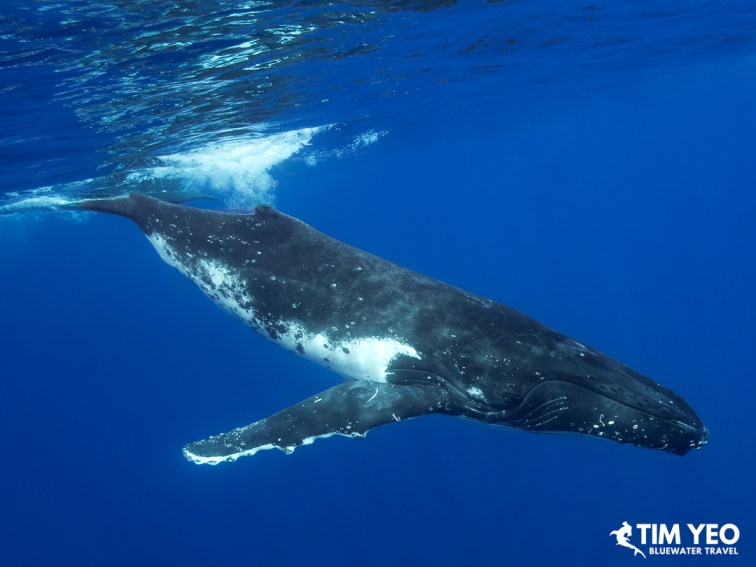
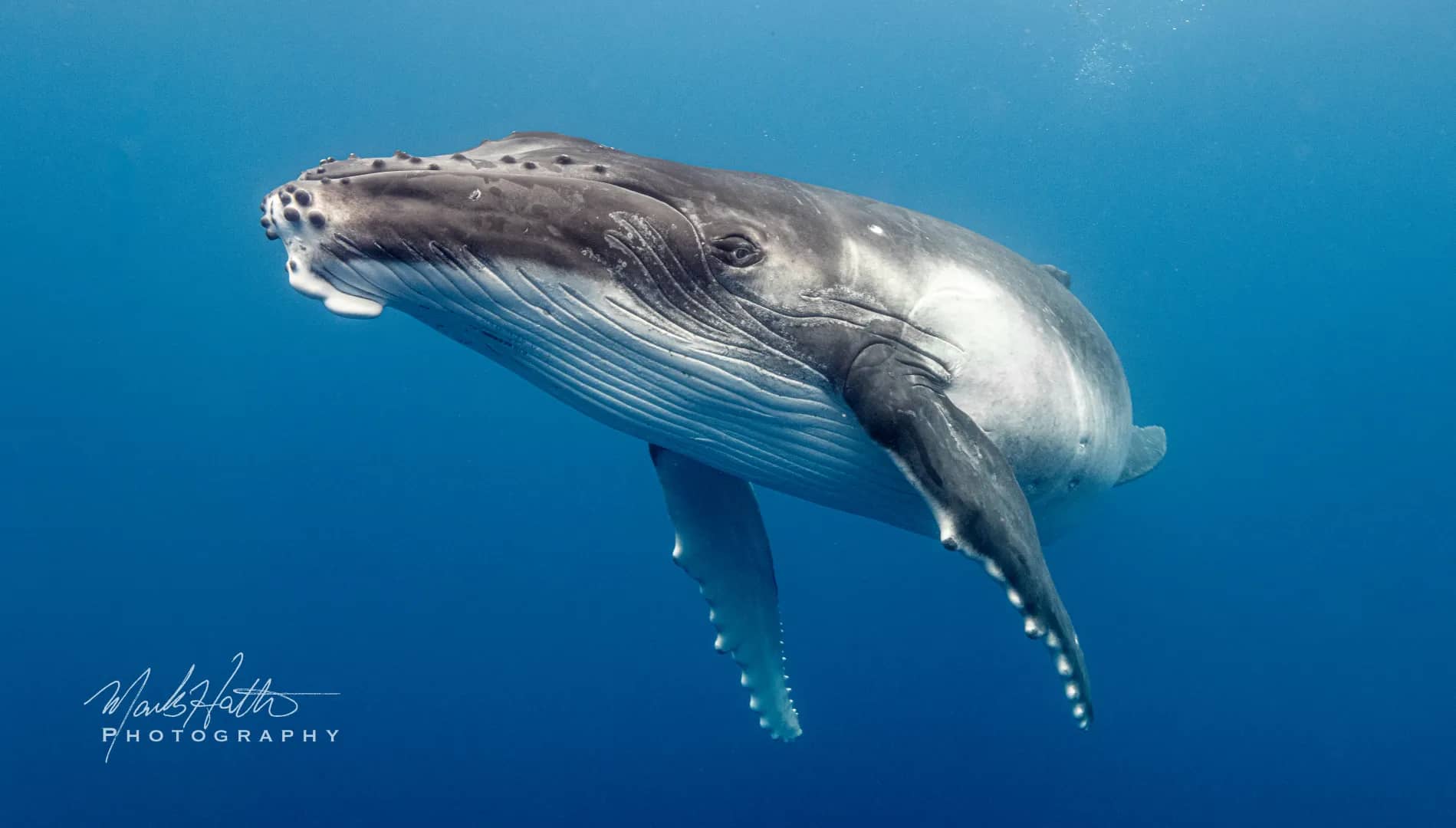
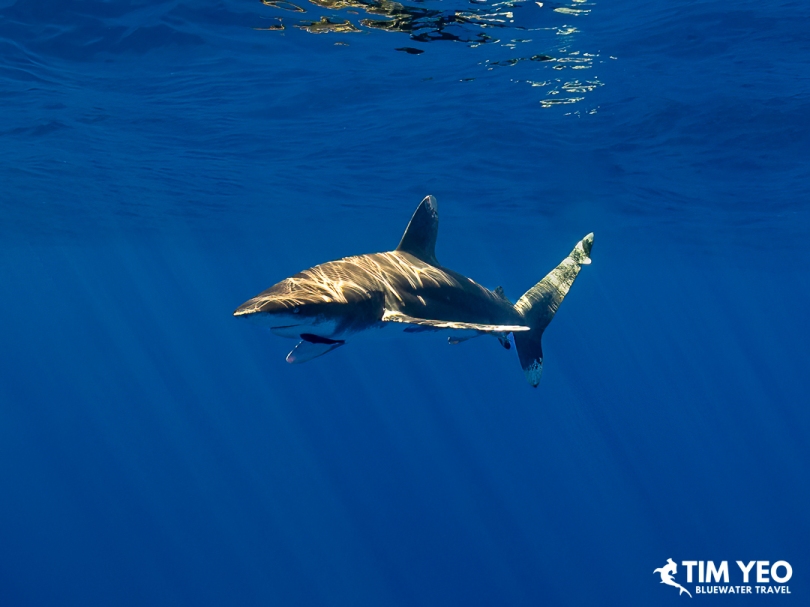
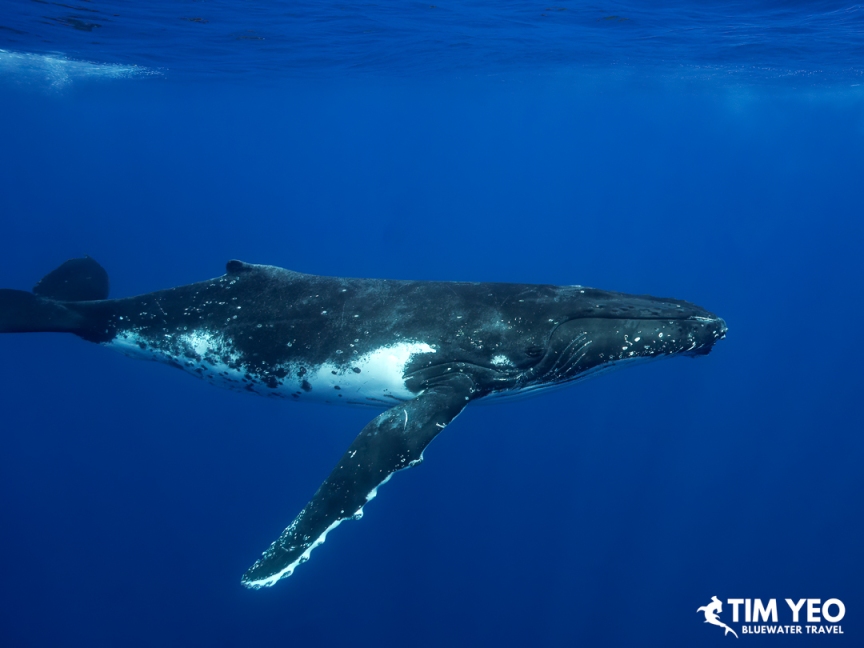
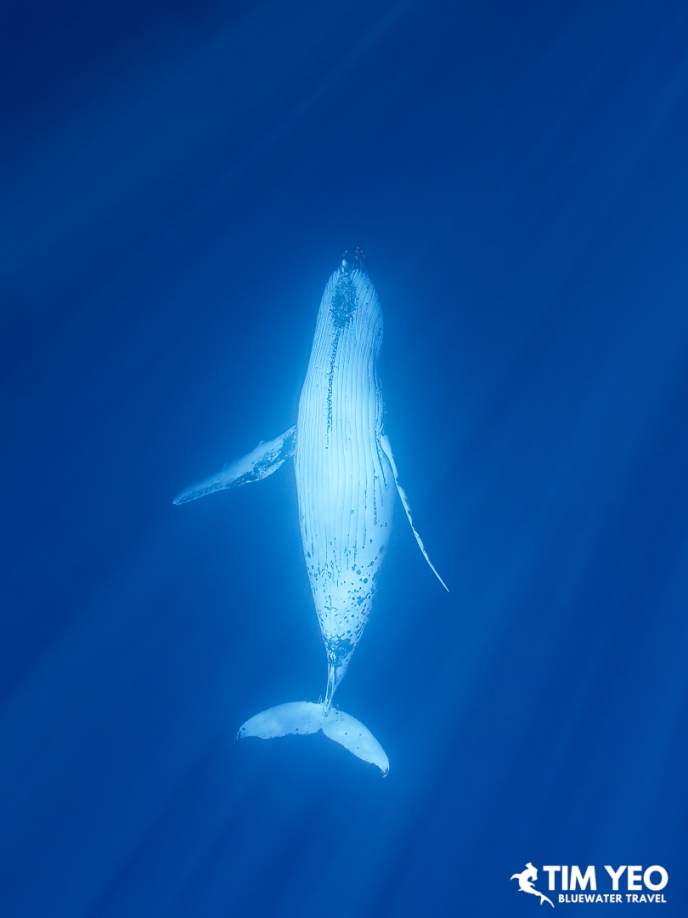
Every year humpback whales migrate to the warm waters of French Polynesia, and Moorea is one of the best places to encounter them. What makes these trips so exciting is that no two days are ever the same. Sometimes we found whales almost immediately and spent hours watching them. Over our five days on the water, we encountered mothers with calves, groups of adults traveling together, whales breaching and slapping their fins and tails, and one incredibly playful young calf that became one of the highlights of the entire trip. We even had an unexpected encounter with an oceanic whitetip shark.
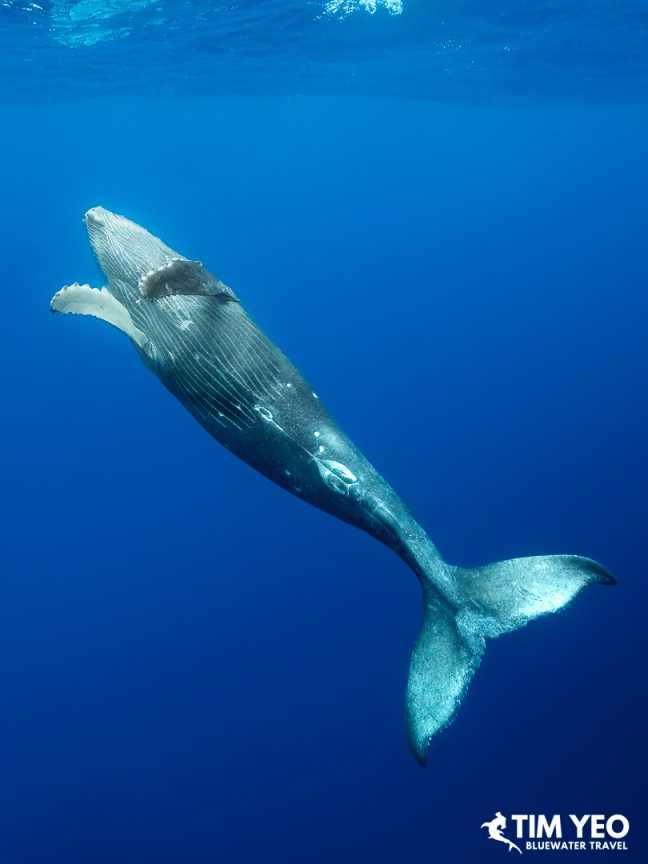
The whales were always the stars, but Moorea also gave us plenty to enjoy between
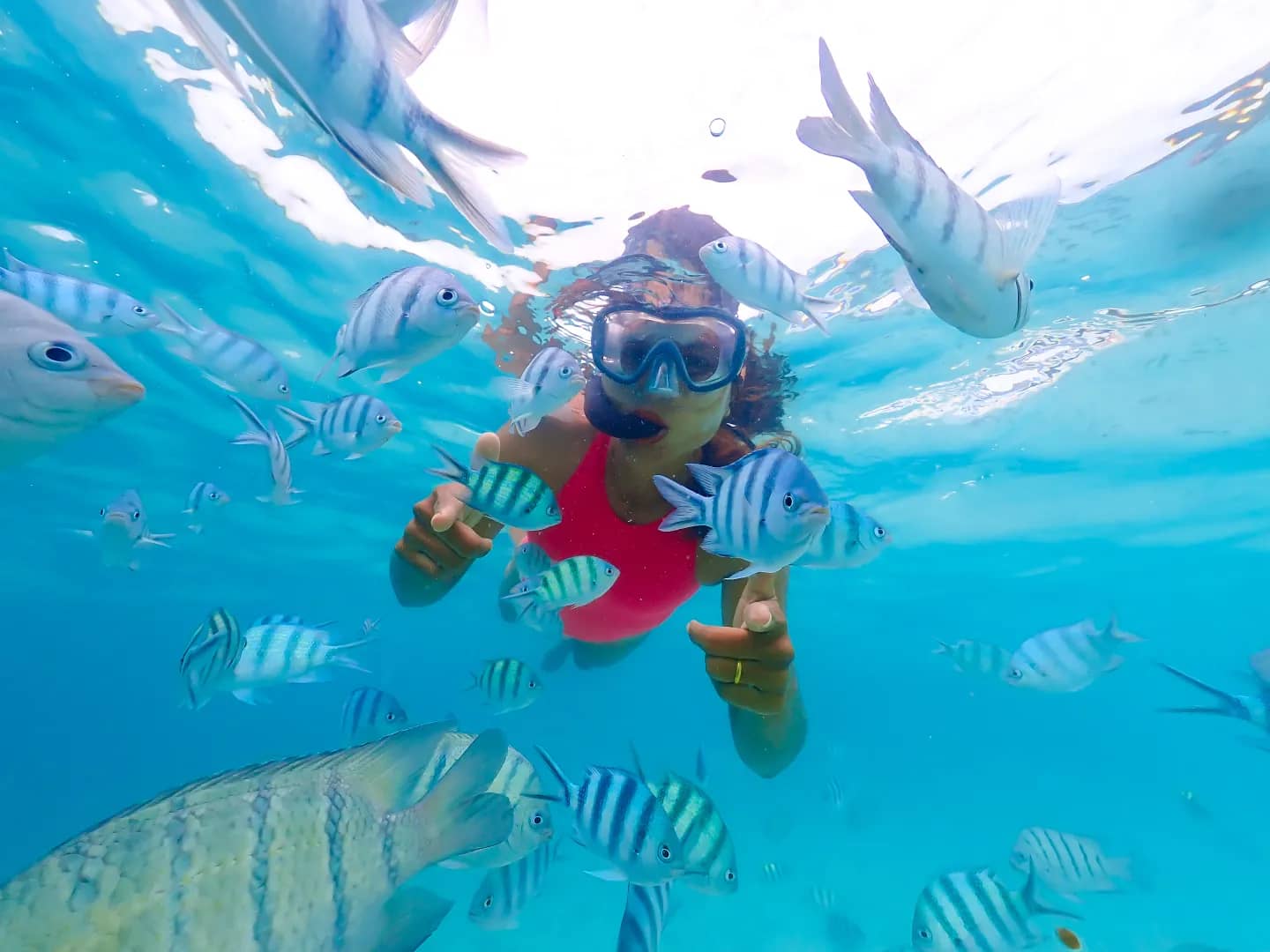
encounters, including snorkeling with stingrays, blacktip reef sharks, turtles and eagle rays,
exploring coral gardens, and cruising through beautiful Cook's Bay.
Planning your own trip? Browse our French Polynesia dive resorts for places to stay in Moorea and beyond.
An Incredible First Day
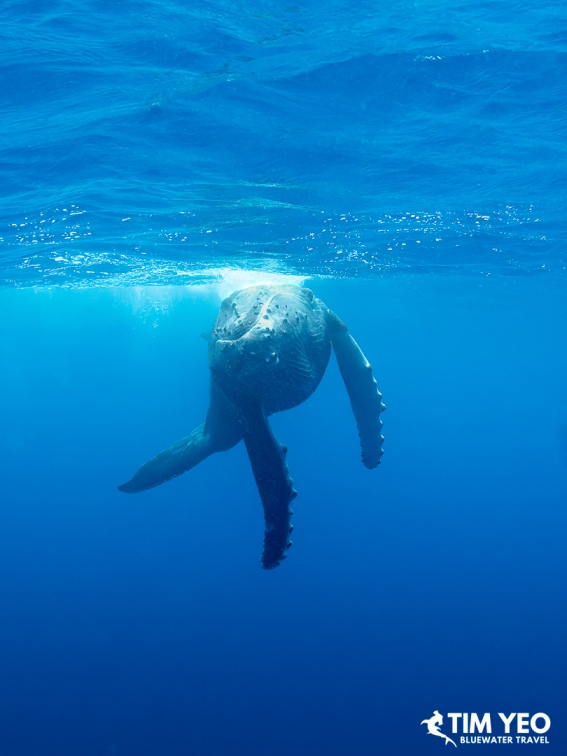
Our first morning could hardly have started better. We left the dock at 7:30 a.m. and almost
immediately after exiting the lagoon spotted three humpback whales. They were active and
moving rather than resting, so instead of entering the water we watched from the boat as they
breached and slapped their fins on the surface.
Before long, three whales turned into several groups of whales scattered across the ocean.
There were so many around that the whale watching boats had plenty of choices.
We decided to follow a pair farther away from the reef, which turned out to be a great decision.
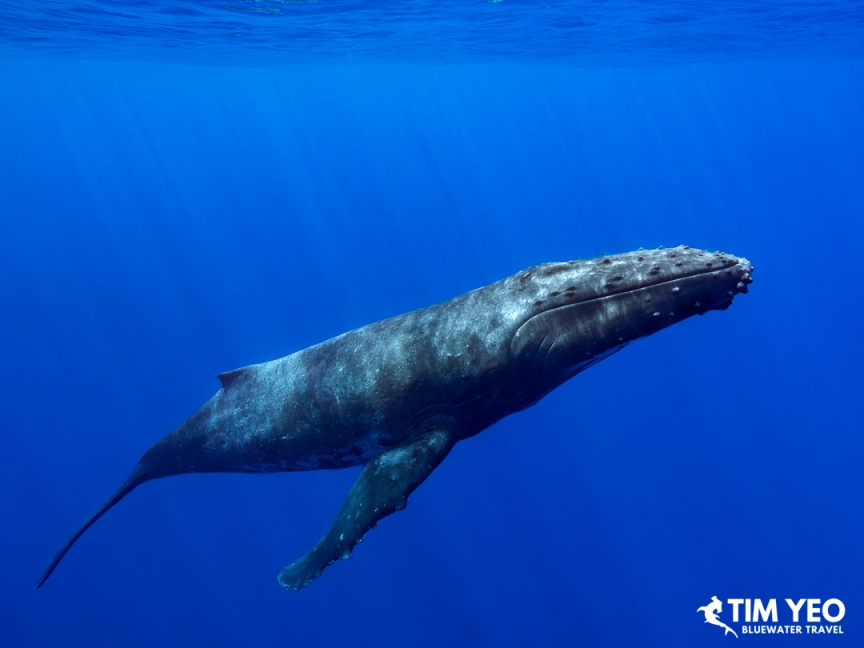
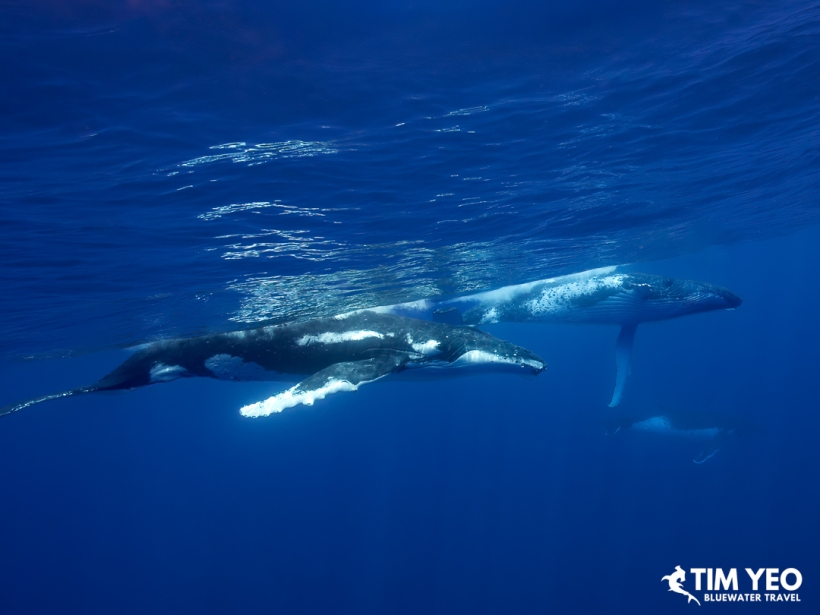
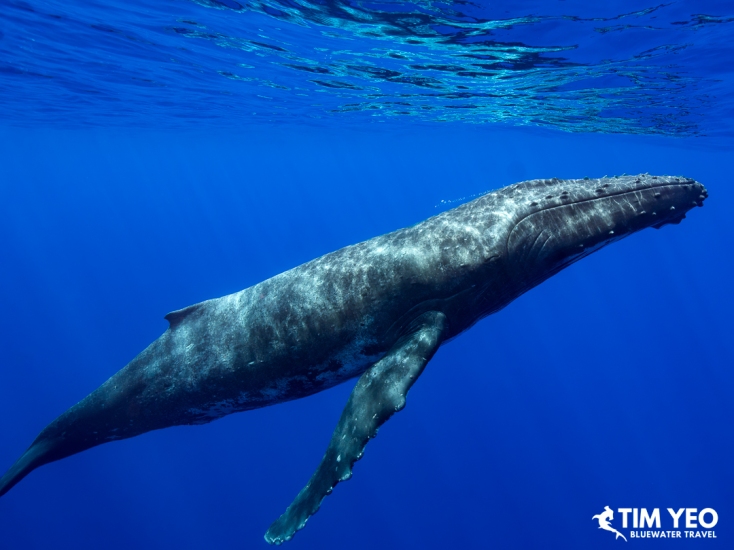
Once the whales settled, we entered the water and spent much of the next hour swimming
with them, enjoying several beautiful passes.
By the time we climbed back onto the boat it was already late morning, so we headed into the
lagoon for lunch. When we returned to the open ocean, the same two whales were still nearby.
Several other boats were already with them, so we waited for our turn before entering the
water again. It was worth the wait.
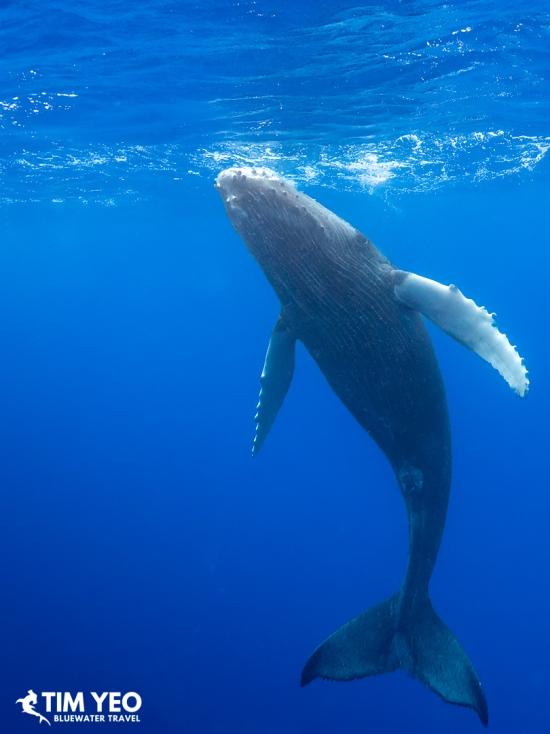
Both whales surfaced to breathe right next to our group. We stayed with them through two
breathing cycles before reluctantly climbing back onto the boat and heading for the hotel.
It was an amazing first day and set a very high standard for the rest of the week.
Whales Everywhere, But Not Always in the Water
One of the lessons of any wildlife trip is that seeing animals and interacting with them are two very different things. On our second day on the water, finding whales was easy. There seemed to be humpbacks everywhere we looked, but most were moving or behaving in ways that did not make them good candidates for an in water encounter. Instead, we spent much of the day watching from the boat.
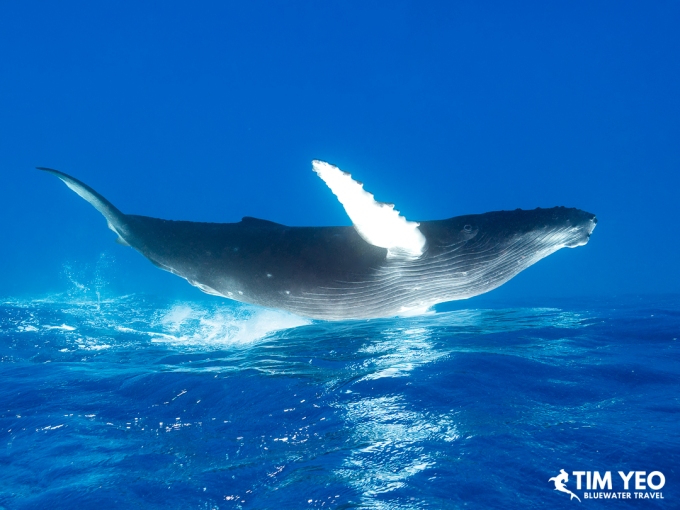
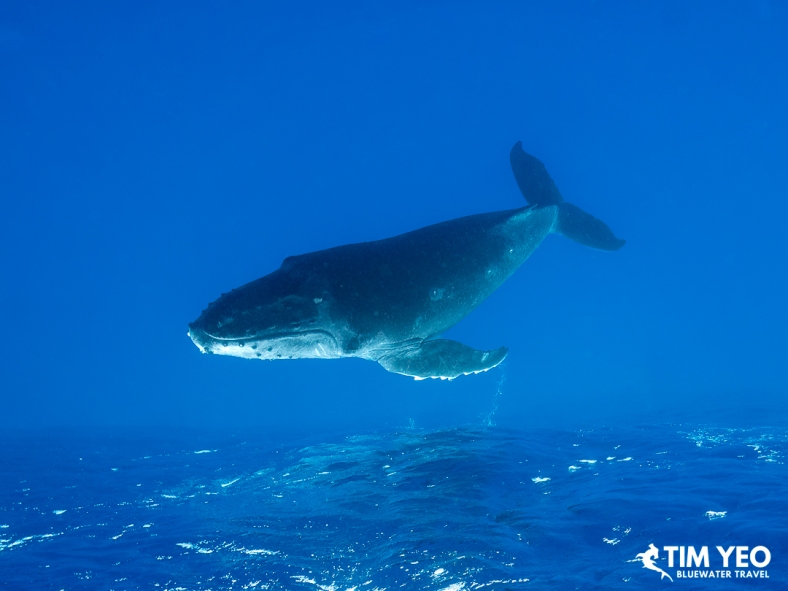
Fortunately, the whales were putting on quite a show. Throughout the day we saw breaches,
tail slaps and fin slaps. Toward the end of our search we entered the water near what we
initially thought were two whales, only to briefly see three before they continued on their way.
Rather than continue pursuing whales that clearly were not interested in interacting with us, we
left them alone and headed back toward the lagoon. Responsible whale tourism means paying
attention to the animals' behavior, giving them space, and understanding when it is better to
simply watch from the boat rather than push for an in-water encounter. We stopped at Stingray
City for lunch and finished the afternoon snorkeling in shallow water surrounded by large
stingrays and blacktip reef sharks.
Mothers, Calves and Four Whales Together
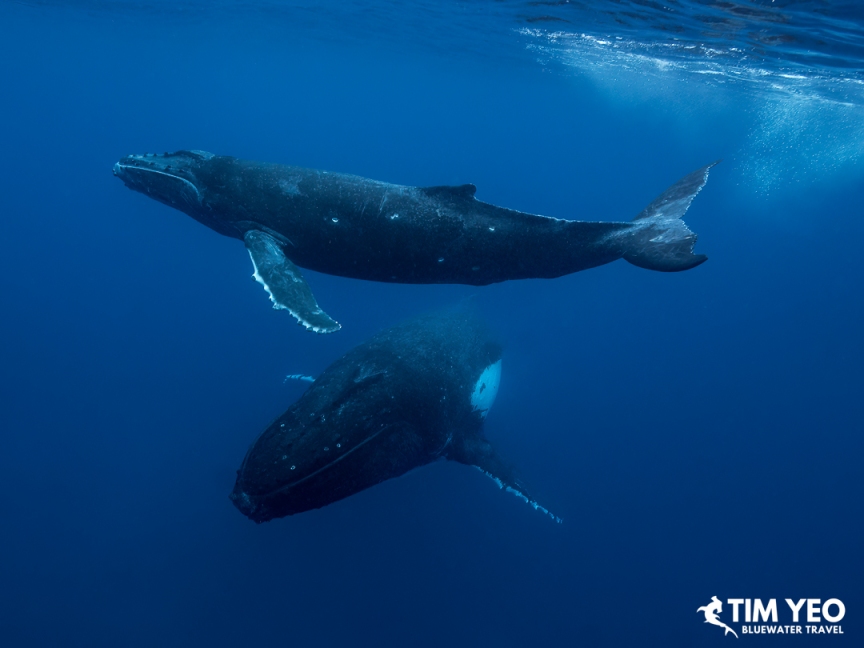
The following morning we received a report almost immediately after leaving the lagoon that a
mother and calf were resting nearby. We arrived around 8:00 a.m. and were the fourth boat, so
we waited until it was our turn before entering the water.
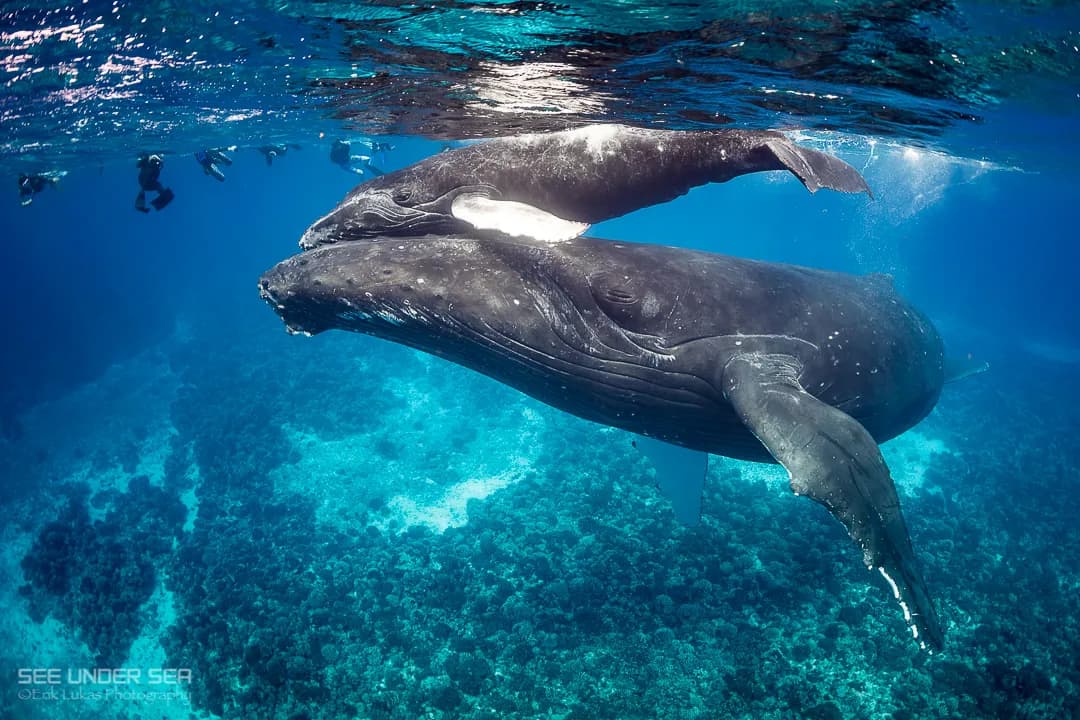
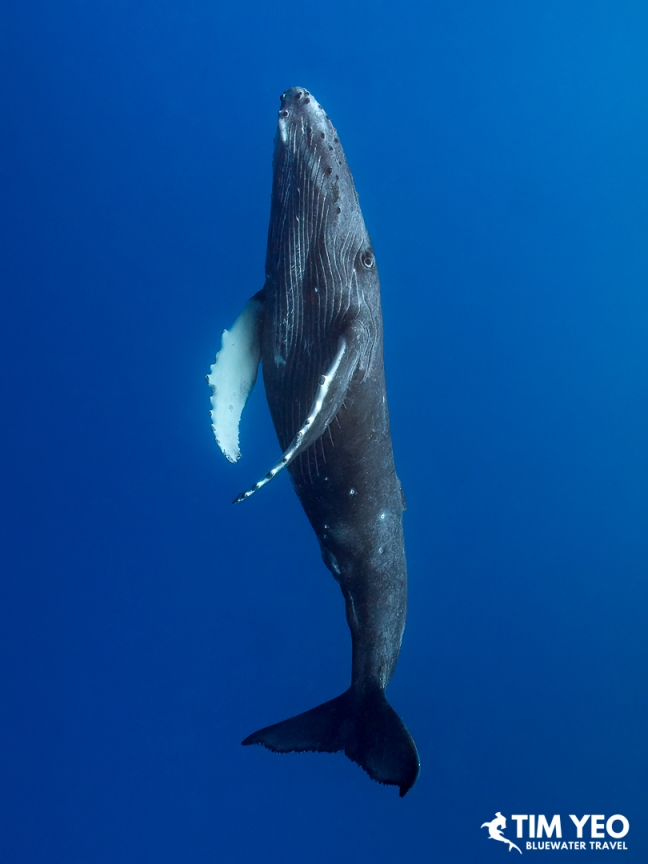
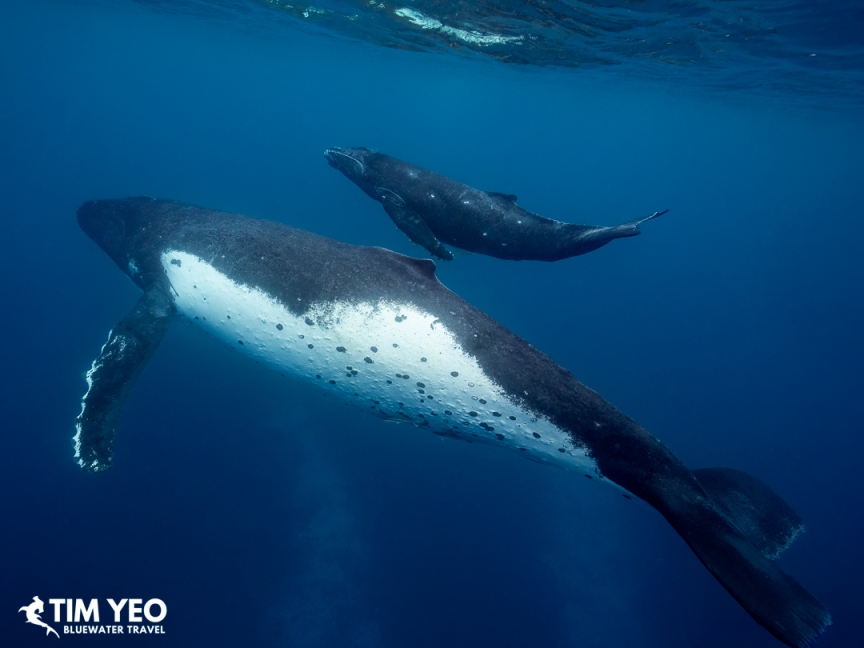
For the next hour we watched the young calf slowly rise from beside its mother to breathe, play
briefly near the surface, and then descend back down to the safety of mom. The calf appeared
very young and the pair was a little shy, so we gave them plenty of space. Even with limited
visibility, watching such a small humpback calf repeatedly rise to the surface beside us was a
beautiful experience.
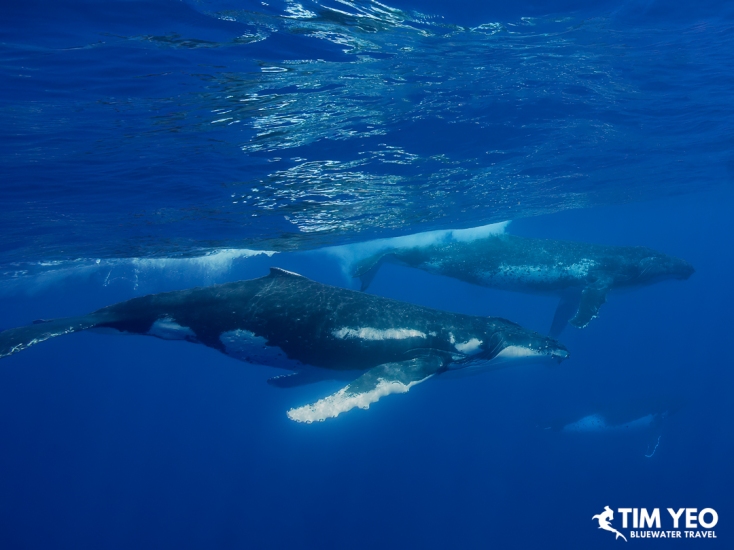
Later that morning we traveled farther offshore and found another group of whales moving
slowly and playing at the surface. Several boats were already there, so once again we waited.
When it was eventually our turn, we entered the water expecting to find two whales. Instead,
we found four. It appeared to be a small heat run, with a large female leading three males
behind her. We eventually made several drops with the group and watched all four whales pass
us underwater while continuing to interact at the surface with fin and tail slaps.
We stopped for lunch offshore while keeping track of the whales. They disappeared for a while,
but just as we were finishing lunch they appeared again, so we geared up for one last attempt.
An Unexpected Oceanic Whitetip
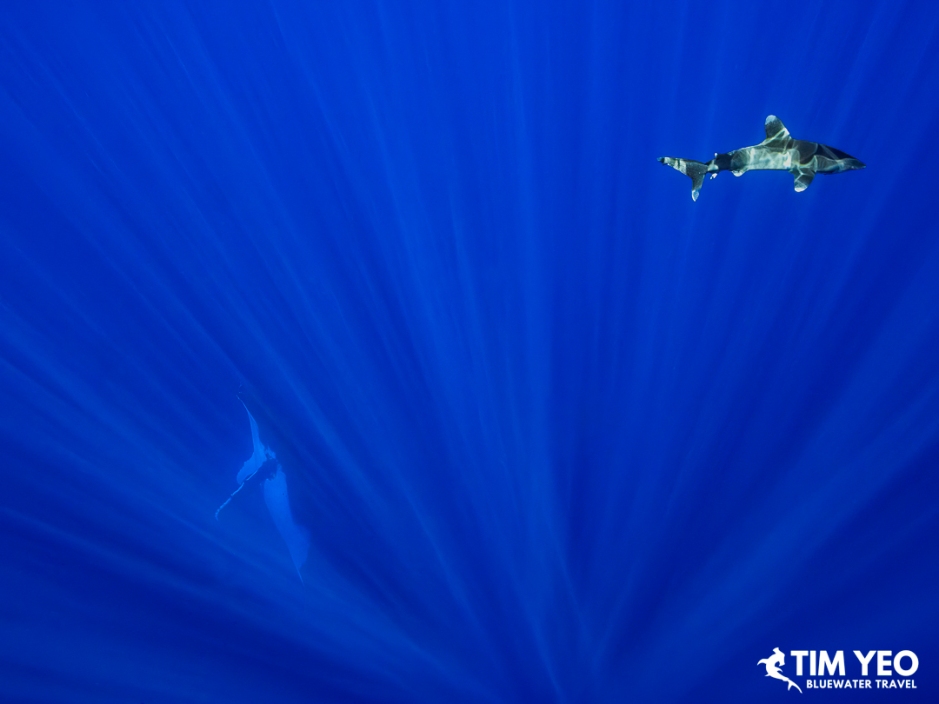
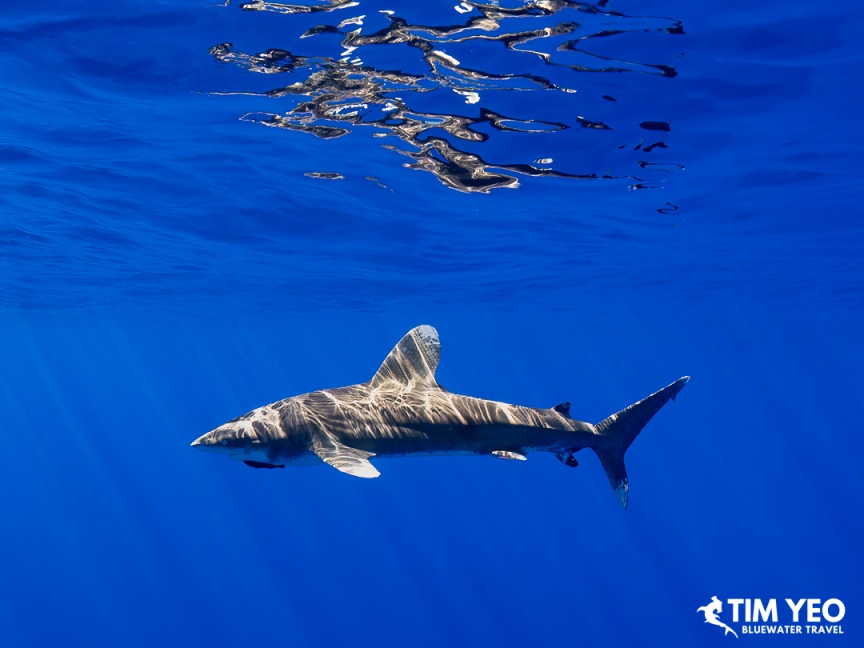
When we reached the whales again, they were resting below us. Then an oceanic whitetip
shark appeared. Our attention quickly shifted from the humpbacks to a large female oceanic
whitetip, roughly two meters long, circling our group. She was very calm and curious and made
several close passes. Eventually the whales surfaced for a breath and continued on their way,
but we stayed in the water a little longer with the shark.
As if that was not enough for one encounter, a tiny sargassum frogfish appeared near one of
our camera dome ports while we waited for the boat to collect us.
Humpback whales, an oceanic whitetip and a tiny frogfish all on the same drop was certainly
not how I expected the afternoon to end. It was one of my favorite moments of the week. Read our Moorea Trip Report 2025 for more from last season.
When the Whales Take a Day Off
Of course, wildlife expeditions also come with quieter days. The next morning we searched
from 7:30 a.m. until around 1:00 p.m. without finding whales that we could enter the water
with. Eventually we called off the search and headed back toward Stingray City for lunch and
another snorkel with the sharks and rays. We then did a drift snorkel where we encountered
five turtles and two eagle rays.
Just when we thought our whale day was over, we spotted a mother and calf inside Cook's Bay
on our way back to the hotel. Swimming with whales inside the lagoon was not permitted, so
we simply stayed on the boat and watched them at the surface.
With rum punches in hand, we finished the afternoon cruising around Cook's Bay while
watching the whales. There are definitely worse ways to end a day.
Want to see more of French Polynesia? Explore our liveaboard trips for remote diving beyond Moorea.
Saving One of the Best Encounters for Last
Expectations were high on our final whale day. The weather was not perfect, but fortunately
humpback whales do not care much about the topside weather. We searched throughout the
morning and found whales, but none were behaving in a way that allowed us to get into the
water.
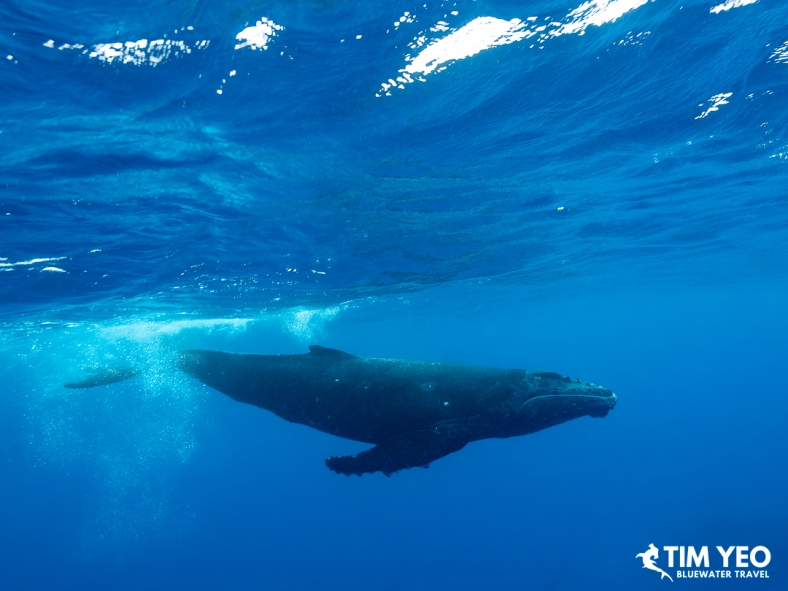
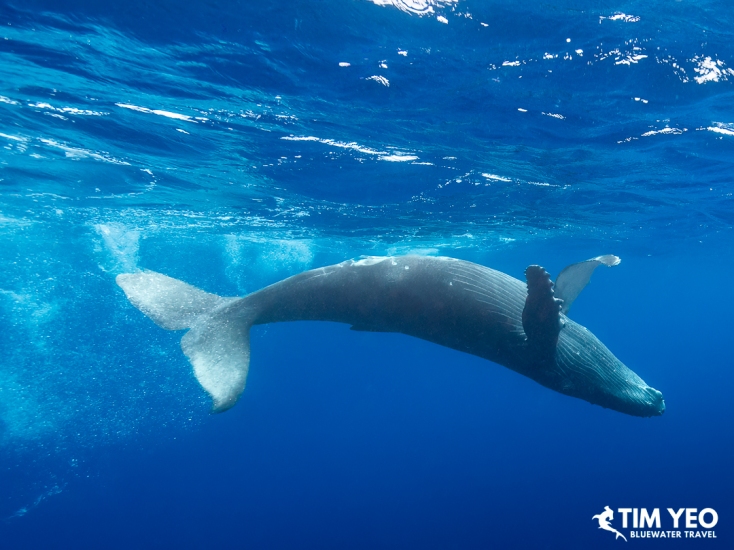
Then, at around 11:30 a.m., we joined several boats following a moving mother and calf. A few
of the boats were operating half day trips and eventually had to return to shore to drop off their
guests. That gave us our opportunity. We entered the water around noon and immediately
realized how young the calf was. It was also incredibly playful and the mother was extremely
relaxed with us being in the water interacting with her baby.
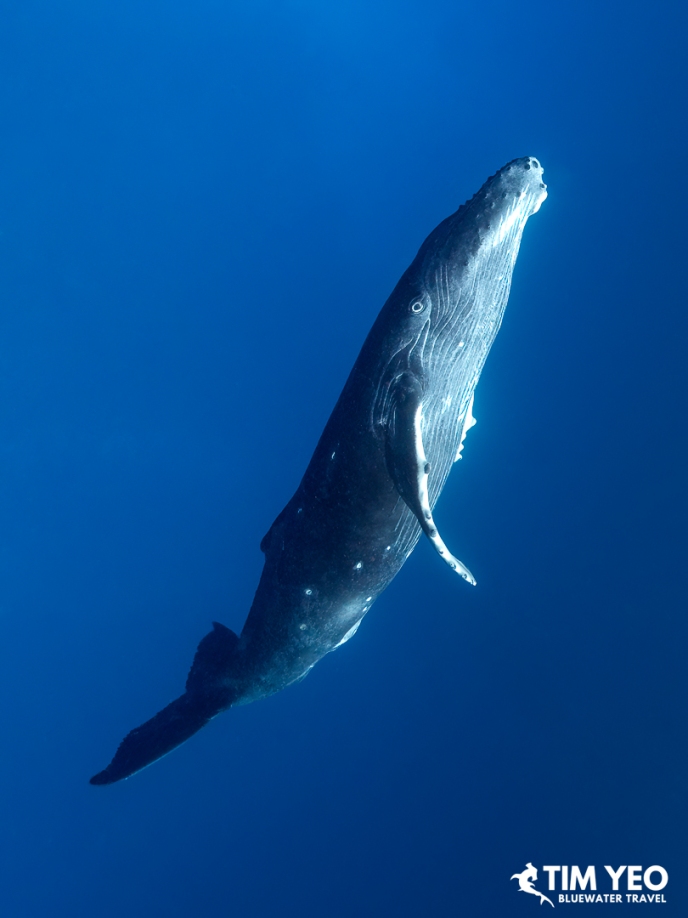
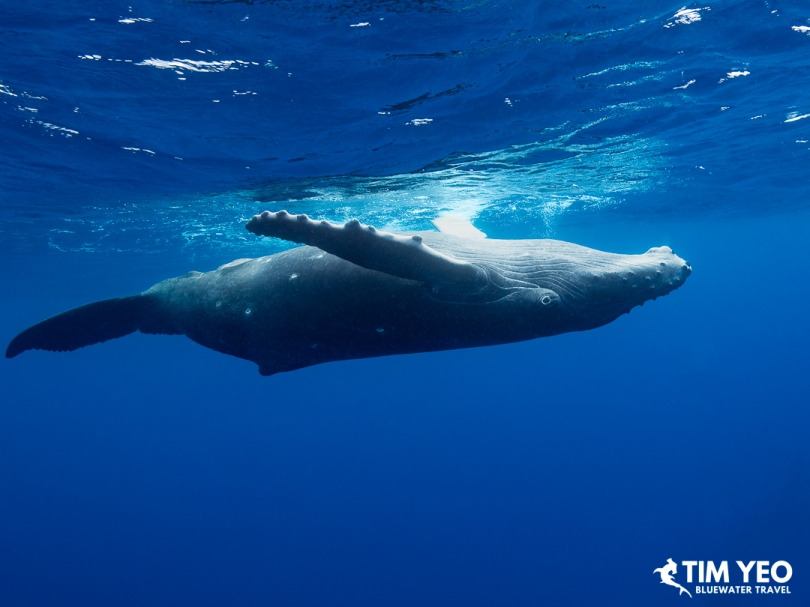
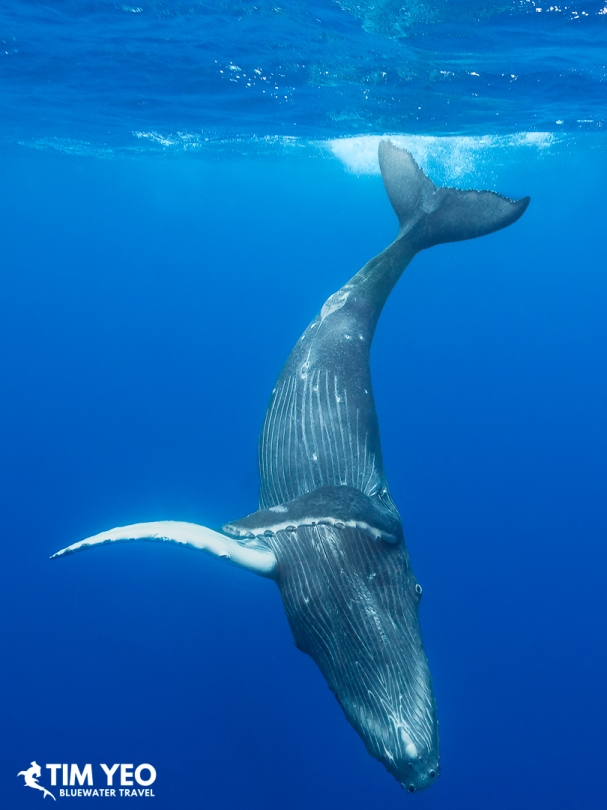
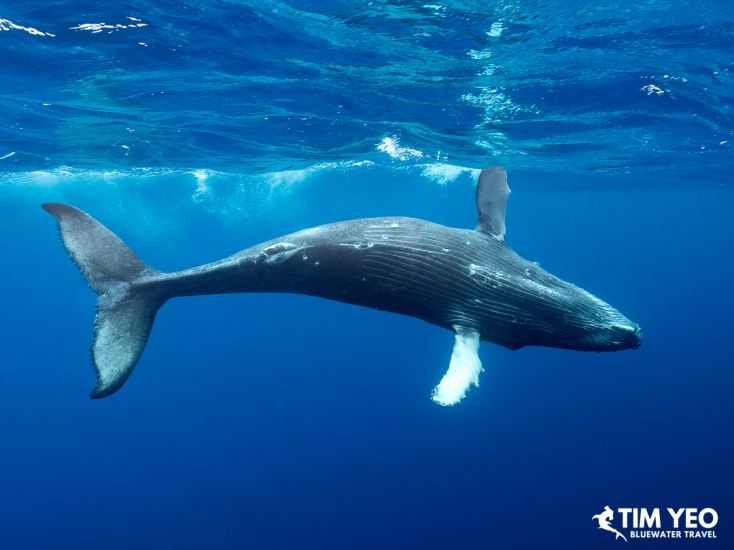
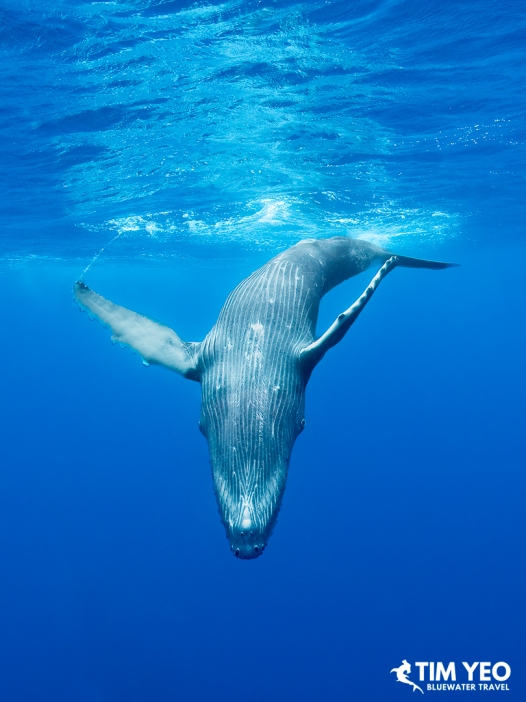
The calf rolled, performed somersaults, slapped its fins and tail, and repeatedly swam over to
investigate us. Each time it passed close by, I found its eyes absolutely mesmerizing, especially
when it seemed to look directly at you as it swam past.
Mom was equally relaxed. Twice she surfaced to breathe and remained nearby afterward,
allowing us to follow the pair to their next resting position without having to rush back to the
boat. We spent about an hour swimming with the mother and calf.
Eventually more boats began arriving and the mother moved farther offshore. We decided that
was a good time to leave them alone and head off for lunch. After several days of very different
whale encounters, spending our final morning with such a curious and animated young calf was
the perfect way to finish our time on the water.
Final Thoughts
This was my sixth year getting in the water with humpback whales, and somehow it is still one
of those wildlife experiences that never becomes routine. What I enjoyed most about this week
was how different every day was. One morning we could leave the lagoon and immediately find
whales breaching all around us. Another day we might spend hours searching without finding
an animal that wanted us nearby. Then suddenly we would be floating quietly beside a mother
and calf or watching four adult whales glide past together. That unpredictability is a huge part
of what makes Moorea special.
For me, the final encounter with the playful young calf was the perfect ending. Watching it roll,
slap its fins and repeatedly swim over to investigate us while its mother rested calmly below
was exactly the kind of interaction that brings people halfway around the world to Moorea.
The whales decide what kind of experience we are going to have each day. As responsible eco
tourists, our job is to respect their space, follow their behavior, and simply be there when they
choose to make the encounter special.
Want to join us in the water? See our whale swimming group trips led by experienced guides.
Author
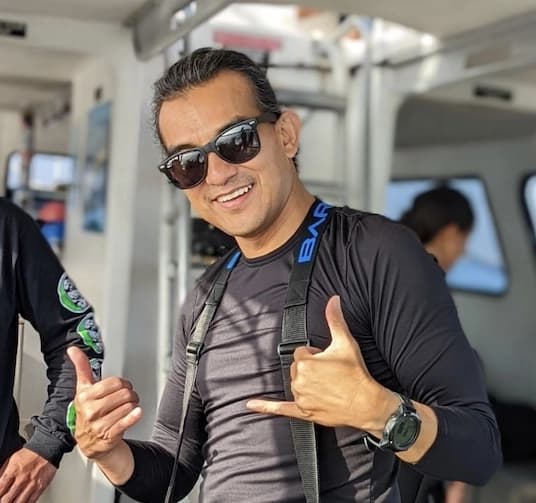
Tim Yeo
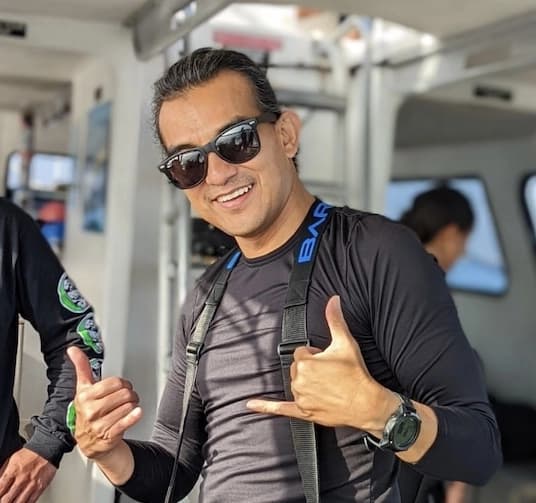
Tim grew up in tiny Singapore, where driving for more than an hour meant you would need a passport. Traveling was always his passion, but Tim became addicted to dive travel soon after he got scuba certified in Malaysia. As his diving addiction grew, Tim eventually became a Staff Instructor with PADI and an Instructor Trainer with SDI. After getting his instructor certification, Tim spent time teaching scuba in Malaysia and Vietnam.
Tim serves as General Manager and COO at Bluewater Travel and is the company's most seasoned trip leader. With a portfolio of leading over 30 group trips, his extensive expertise encompasses a variety of popular dive destinations such as the Galapagos, Raja Ampat, French Polynesia, Fiji, the Red Sea, Palau, Maldives, among others. His travels have taken him across all seven continents and allowed him to dive in all five oceans—the Atlantic, Pacific, Indian, Arctic, and Antarctic.



-optimized-optimized.webp&w=640&q=75 "Solomon Islands Trip Recap 2026")