Shark Species Guide
Sharks are some of the ocean’s most fascinating, misunderstood, and unforgettable animals. From the enormous Whale Shark to the unmistakable Great Hammerhead, the powerful Tiger Shark, the elusive Thresher Shark, and the reef-dwelling “walking” sharks of Raja Ampat, each species has its own behavior, habitat, personality, and story. For divers, learning to recognise these animals is part of what makes encountering them in the wild so rewarding.
At Bluewater Travel, sharks are a major part of the dive experiences we help travelers plan around the world. Our team has spent decades diving with sharks in the Galápagos, Socorro, the Bahamas, Fiji, South Africa, the Maldives, Indonesia, Australia, the Azores, and beyond. We know where particular species are most likely to be seen, when the best seasons occur, which destinations suit different experience levels, and which operators are committed to safe, responsible, and memorable encounters.
This Shark Species Guide introduces some of the world’s most iconic shark species, from famous bucket-list animals to smaller, lesser-known species that are just as remarkable. Whether you are dreaming of schooling hammerheads, a whale shark encounter, a tiger shark dive, or your first close look at reef sharks, this guide is a starting point for understanding the animals and planning the right dive adventure.
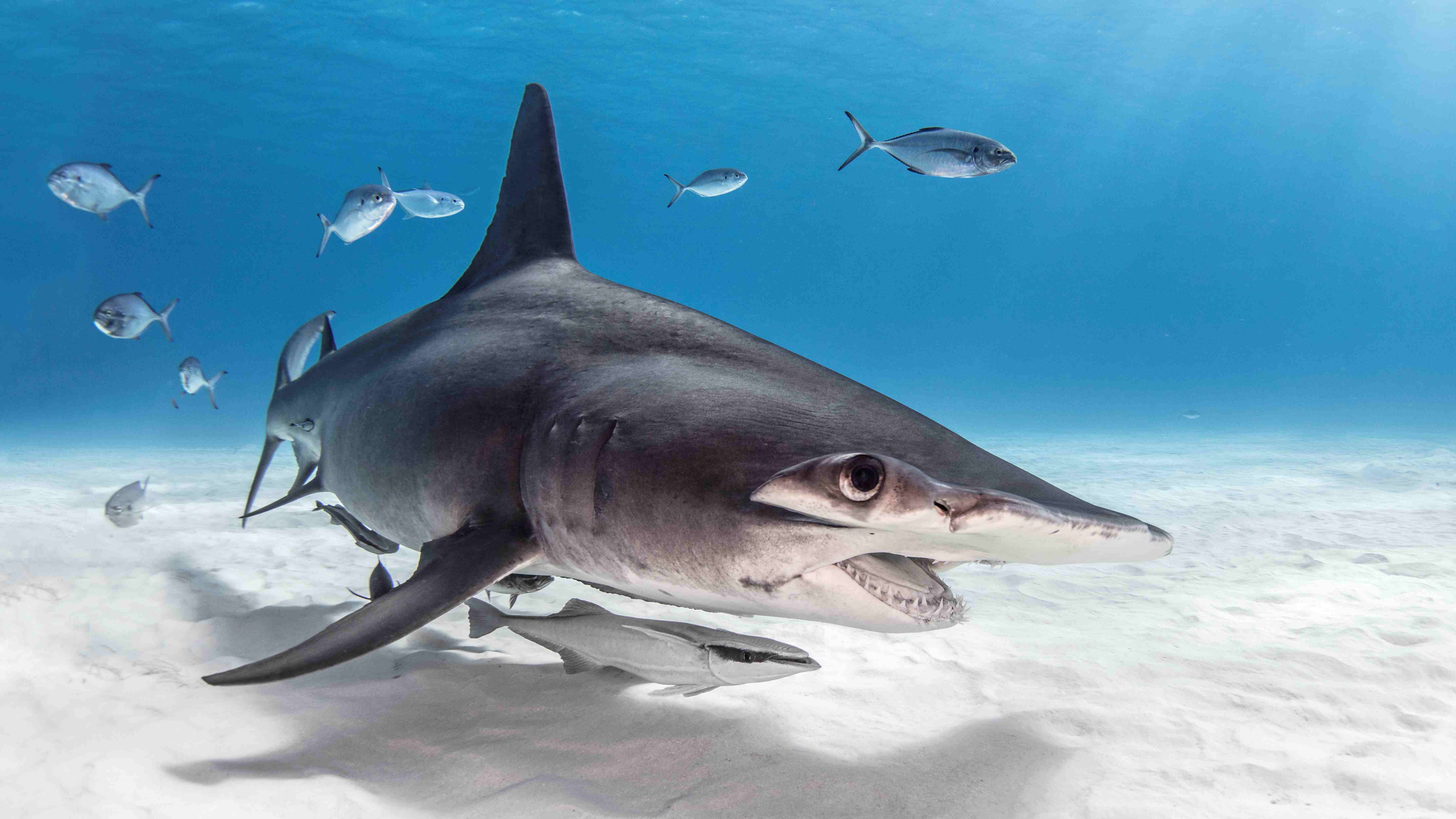
Great Hammerhead Shark
Sphyrna mokarran
- Size: Typically 10–14 ft, up to 20 ft
- Key Dive Destinations: Bahamas, Bimini, Galápagos, Cocos Island, Maldives
- Habitat: Coastal-pelagic waters, reefs, lagoons, continental shelves
- Typical Depth: Surface to 260 ft
- Diet: Rays, bony fish, squid, crustaceans, smaller sharks
- Lifespan: 20–30 years
How to Identify
The Great Hammerhead has an unmistakable wide, nearly straight hammer-shaped head, a tall sickle-shaped dorsal fin, and a powerful streamlined body.
Interesting Fact
Great Hammerheads are known for using their wide heads to pin stingrays to the seafloor while hunting.
Whale Shark
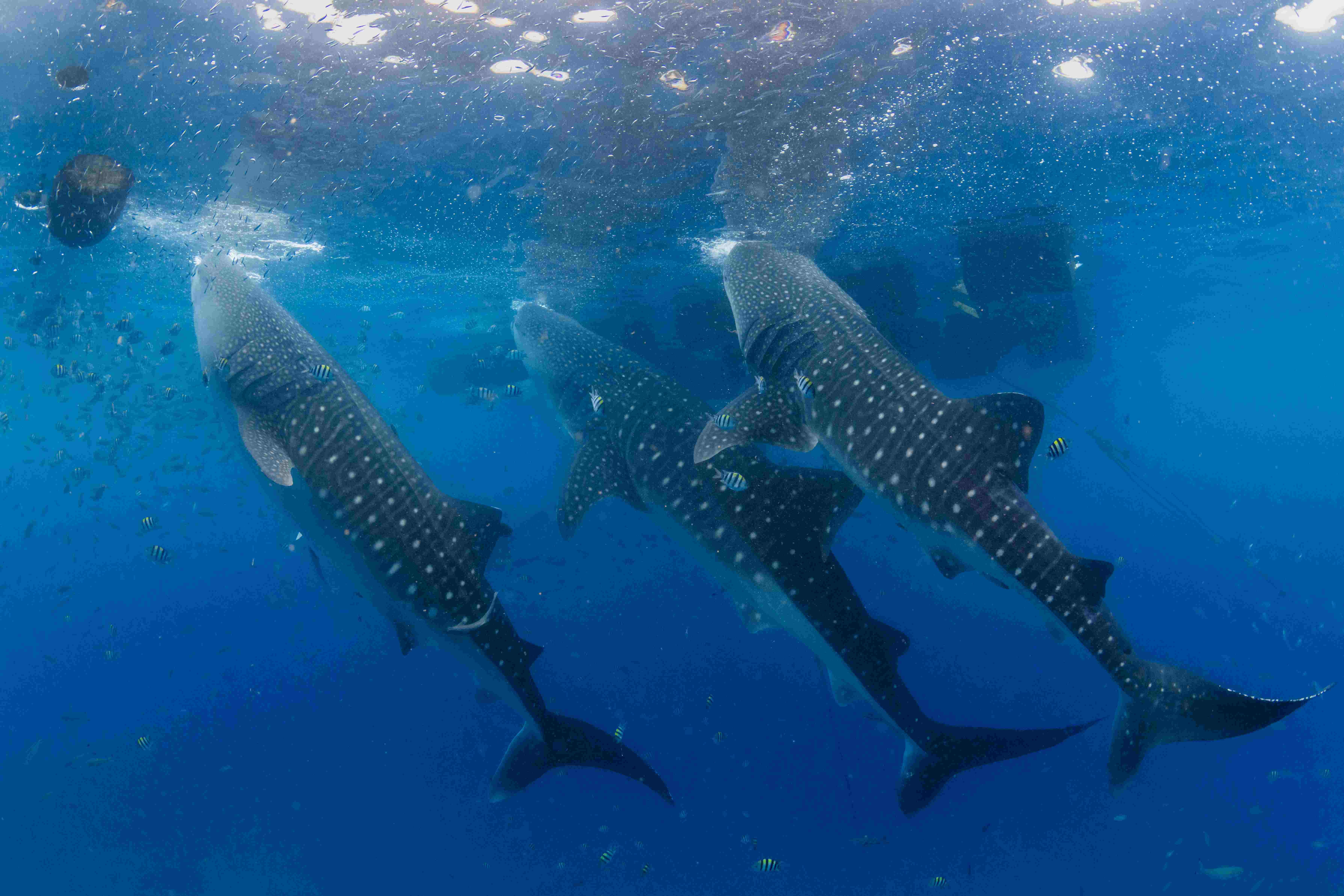
Rhincodon typus
- Size: Typically 18–32.8 ft, up to 61.7 ft
- Key Dive Destinations: Maldives, Philippines, Mexico, Galápagos, Indonesia
- Habitat: Tropical and warm-temperate open waters, reefs, coastal aggregation sites
- Typical Depth: Surface to over 3,000 ft
- Diet: Plankton, fish eggs, krill, small fish
- Lifespan: 80–130 years
How to Identify
Whale Sharks are identified by their enormous size, broad flat heads, wide mouths, and unique pattern of white spots and stripes.
Interesting Fact
Each Whale Shark has a unique spot pattern, much like a human fingerprint.
Tiger Shark
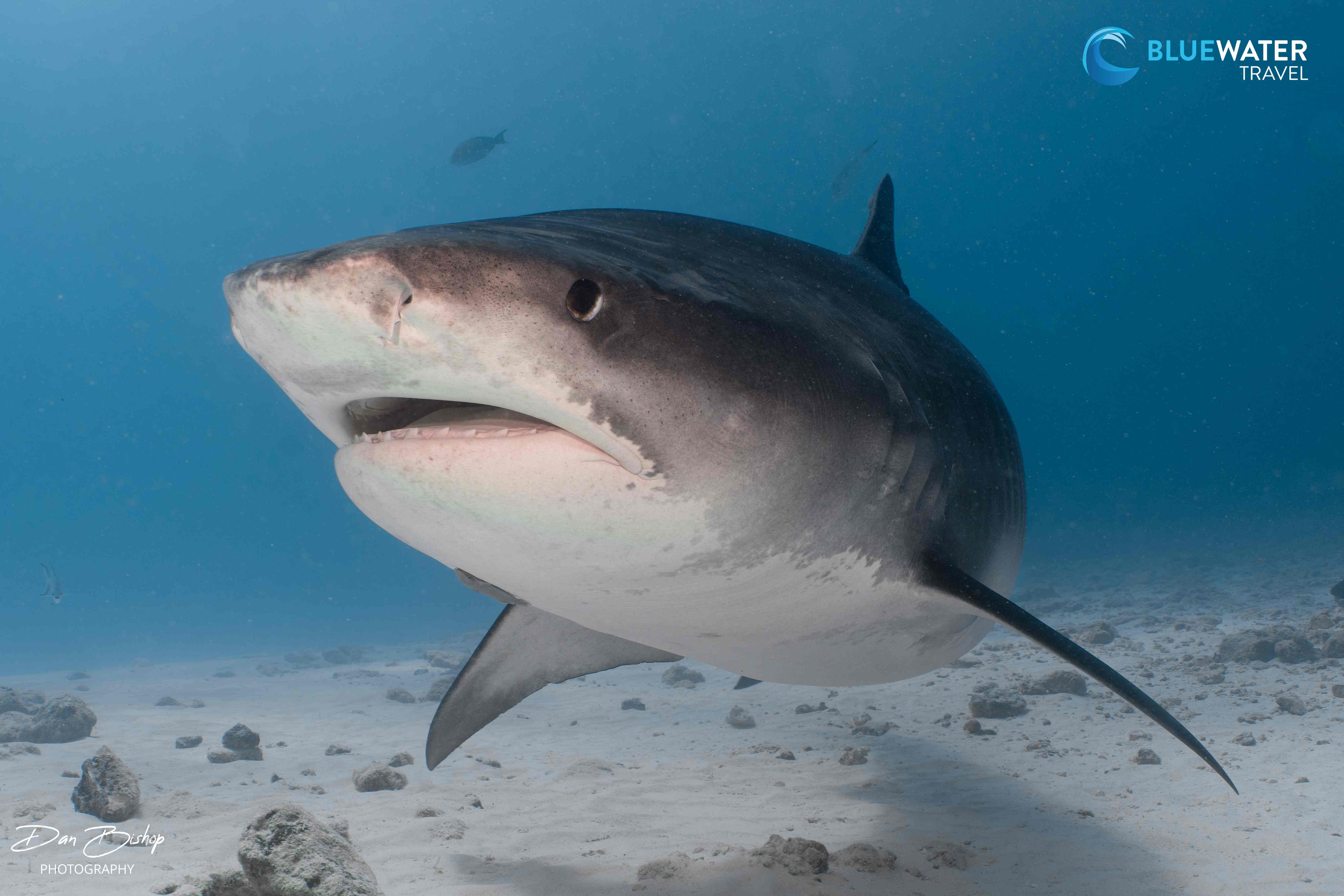
Galeocerdo cuvier
- Size: Typically 10–14 ft, up to 18 ft
- Key Dive Destinations: Bahamas, Maldives, Fiji, South Africa, Hawaii
- Habitat: Tropical and warm-temperate coastal waters, reefs, lagoons, open ocean
- Typical Depth: Surface to 1,150 ft
- Diet: Fish, turtles, seabirds, rays, marine mammals, carrion
- Lifespan: 27–30 years
How to Identify
Tiger Sharks have a broad, blunt snout, large body, and dark vertical stripes that are most visible in younger individuals.
Interesting Fact
Tiger Sharks are sometimes called the “garbage cans of the sea” because of their remarkably varied diet.
Great White Shark
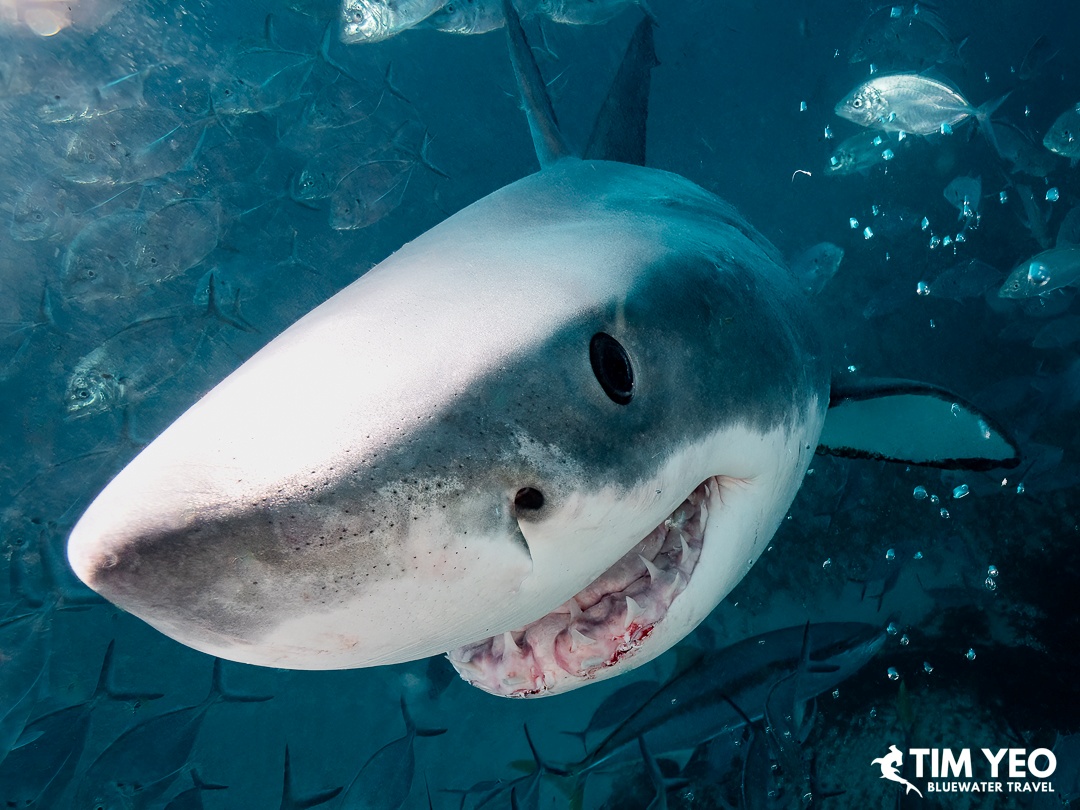
Carcharodon carcharias
- Size: Typically 13–20 ft, up to 21 ft
- Key Dive Destinations: Guadalupe, South Africa, Australia, New Zealand
- Habitat: Coastal and offshore temperate waters
- Typical Depth: Surface to over 3,900 ft
- Diet: Fish, rays, seals, sea lions, dolphins, whales, carrion
- Lifespan: 73+ years
How to Identify
Great Whites have a torpedo-shaped body, large conical snout, triangular teeth, and strong two-tone countershading.
Interesting Fact
Great Whites can launch powerful vertical attacks from below when hunting seals.
Oceanic Whitetip Shark
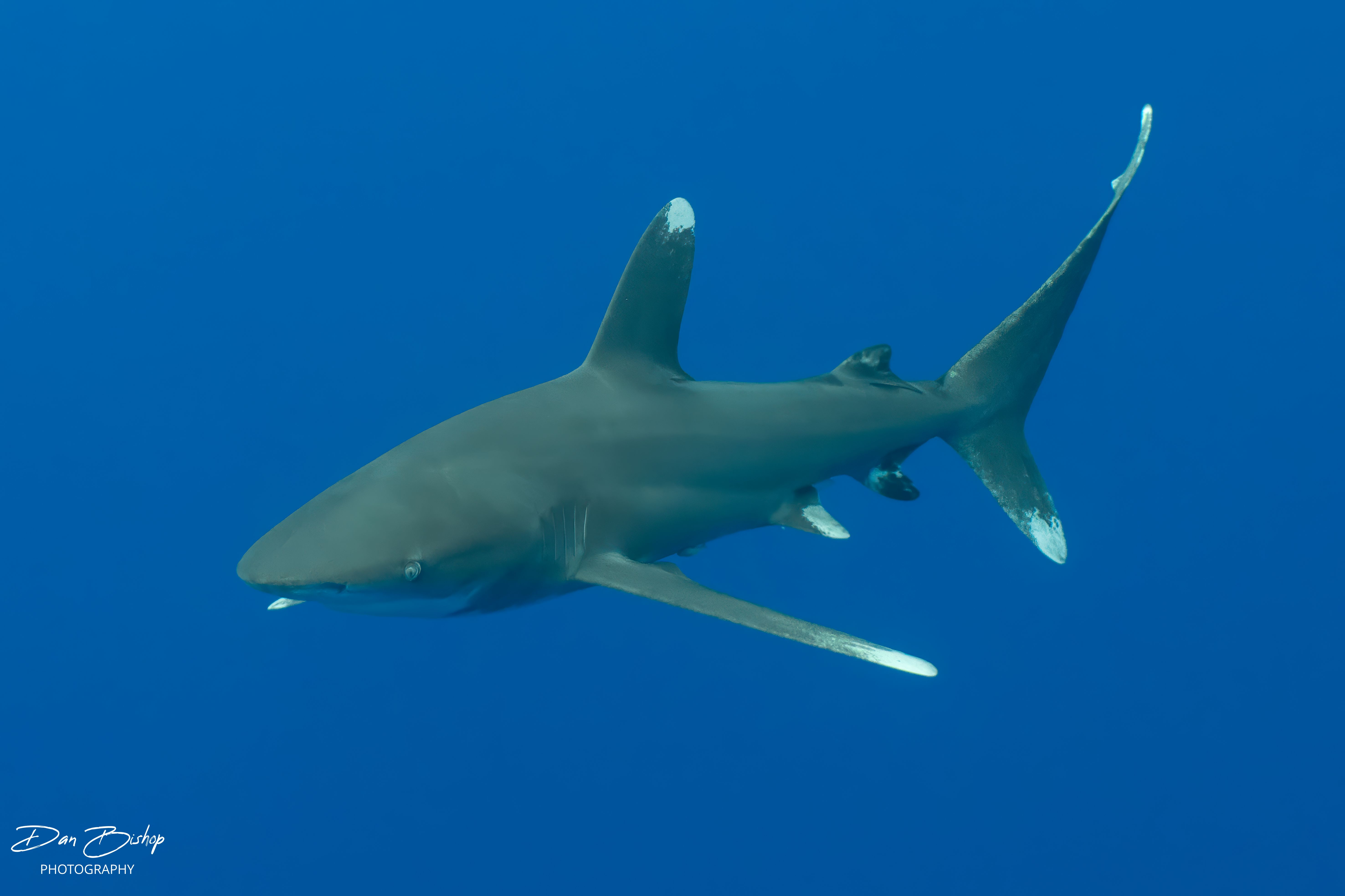
Carcharhinus longimanus
- Size: Typically 8–10 ft, up to 13 ft
- Key Dive Destinations: Red Sea, Bahamas, Cat Island, offshore tropical waters
- Habitat: Open ocean, warm tropical and subtropical waters
- Typical Depth: Surface to 500 ft
- Diet: Fish, squid, seabirds, carrion
- Lifespan: 25–36 years
How to Identify
Oceanic Whitetips have extremely long, rounded pectoral fins and dorsal fins with distinctive mottled white tips.
Interesting Fact
This species is highly adapted for life in the open ocean and often travels far from land.
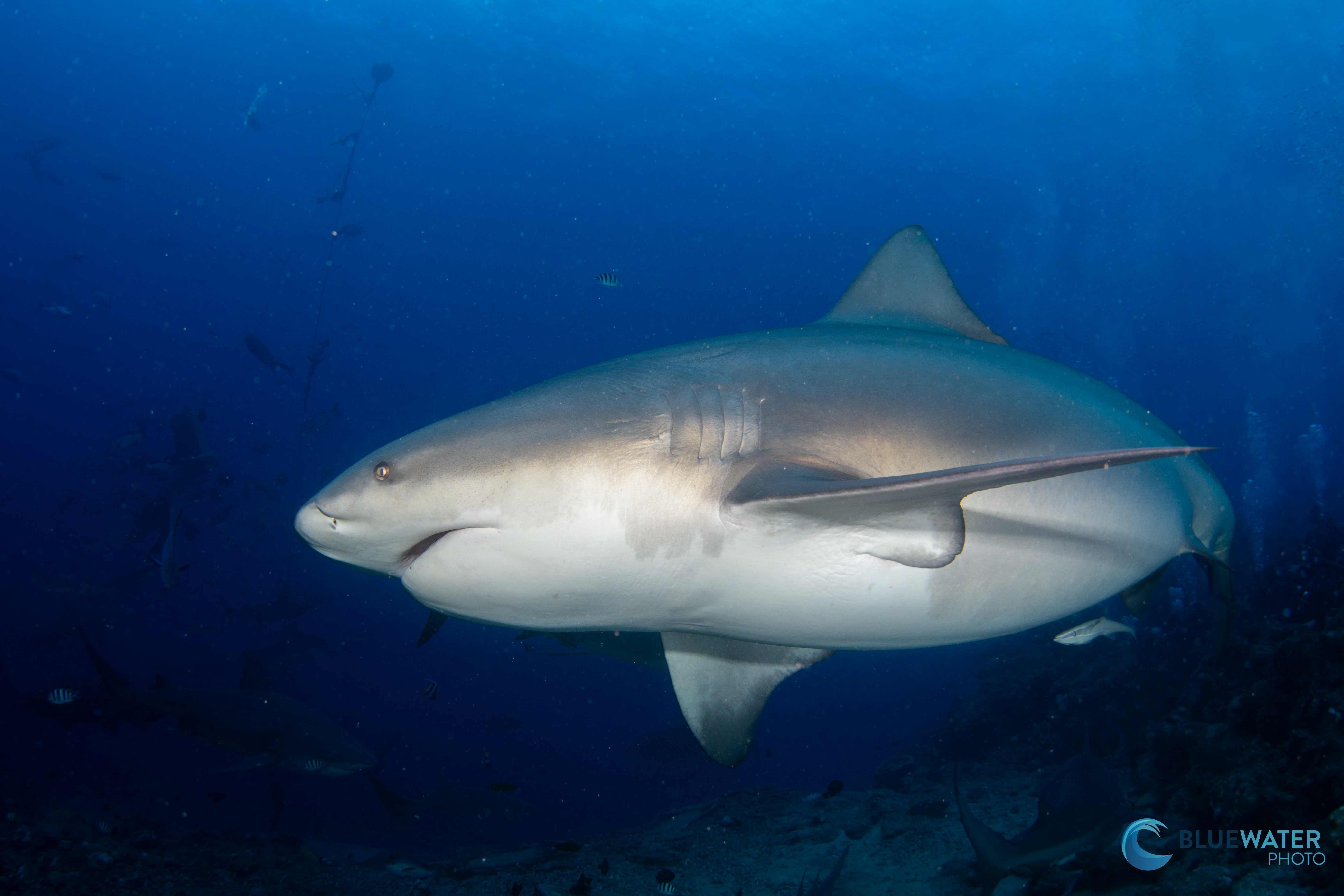
Bull Shark
Carcharhinus leucas
- Size: Typically 7–11 ft, up to 13 ft
- Key Dive Destinations: Fiji, Bahamas, Mexico, Costa Rica, South Africa
- Habitat: Coastal waters, estuaries, rivers, freshwater systems
- Typical Depth: Surface to 500 ft
- Diet: Fish, rays, smaller sharks, turtles, birds, mammals
- Lifespan: 12–30 years
How to Identify
Bull Sharks have a bulky body, short rounded snout, small eyes, and a strong, muscular appearance.
Interesting Fact
Bull Sharks can move between saltwater and freshwater, and have been found far upriver.
Common Thresher Shark
Alopias vulpinus
- Size: Typically 10–16 ft, including tail
- Key Dive Destinations: Philippines, Indonesia, Mexico, offshore temperate waters
- Habitat: Coastal and pelagic waters
- Typical Depth: Surface to over 1,800 ft
- Diet: Schooling fish and squid
- Lifespan: Around 20–50 years
How to Identify
Common Threshers are best recognized by their extraordinarily long upper tail lobe, which can be as long as the body itself.
Interesting Fact
Thresher Sharks use their long tails like whips to stun schooling fish.
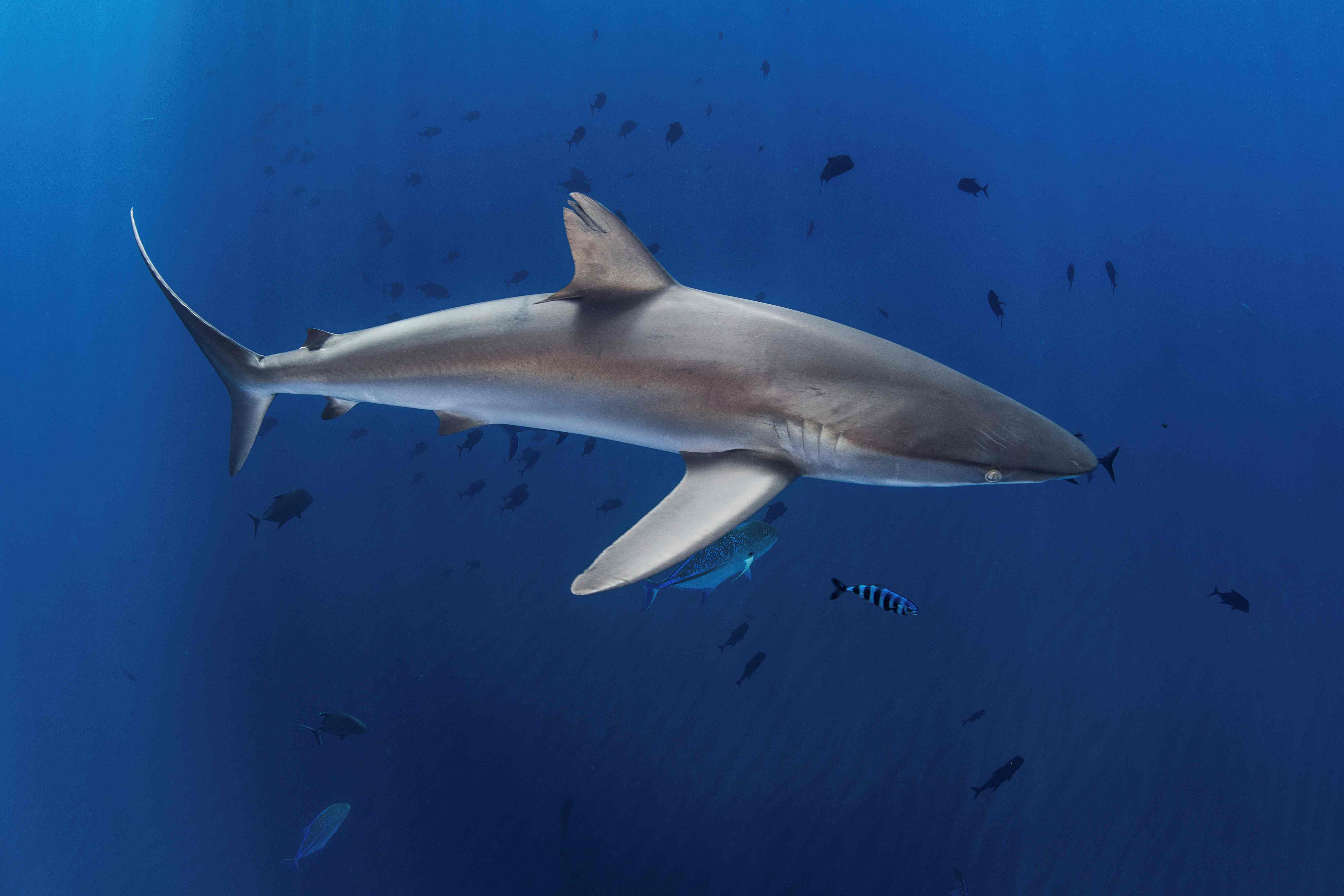
Silky Shark
Carcharhinus falciformis
- Size: Typically up to 11.5 ft
- Key Dive Destinations: Red Sea, Cocos Island, Socorro
- Habitat: Tropical pelagic waters, oceanic reefs, continental shelves
- Typical Depth: Surface to 1,640 ft
- Diet: Fish, squid, pelagic prey
- Lifespan: Around 20–25 years
How to Identify
Silky Sharks have smooth-looking skin, bronze-gray coloration, and a first dorsal fin that begins behind the pectoral fin tips.
Interesting Fact
Their name comes from the unusually smooth texture of their skin compared with many other shark species.
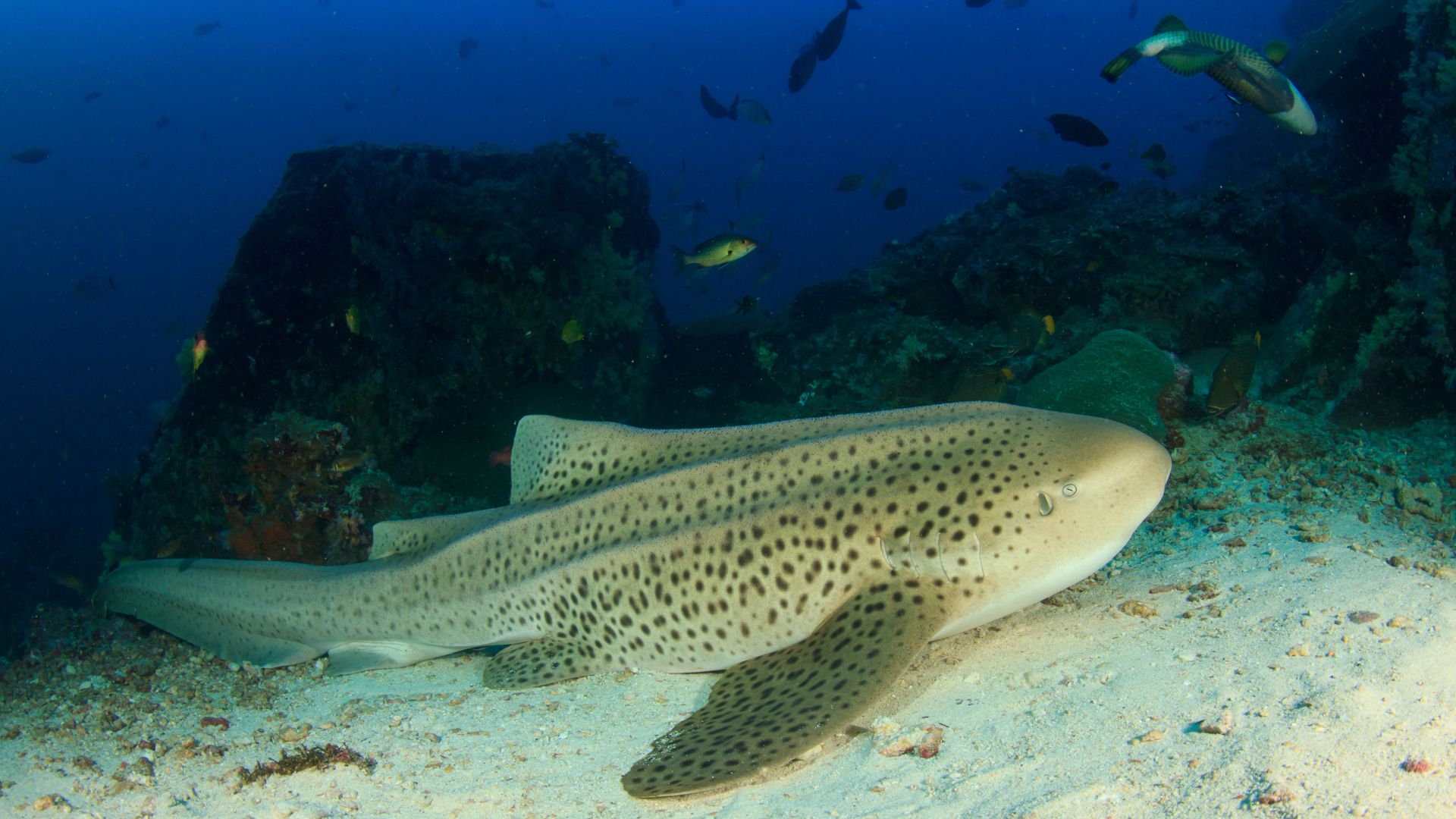
Zebra Shark / Indo-Pacific Leopard Shark
Stegostoma tigrinum
- Size: Typically 6.5–8.2 ft, up to 11.5 ft
- Key Dive Destinations: Thailand, Maldives, Australia, Indonesia, Philippines
- Habitat: Sandy reef flats, coral reefs, lagoons
- Typical Depth: Shallow reefs to around 200 ft
- Diet: Mollusks, crustaceans, small fish
- Lifespan: Around 25–30 years
How to Identify
Juveniles have dark stripes, while adults develop a spotted pattern. They also have ridges along the body and small barbels near the mouth.
Interesting Fact
Despite the name “Zebra Shark,” adults are more commonly spotted than striped.
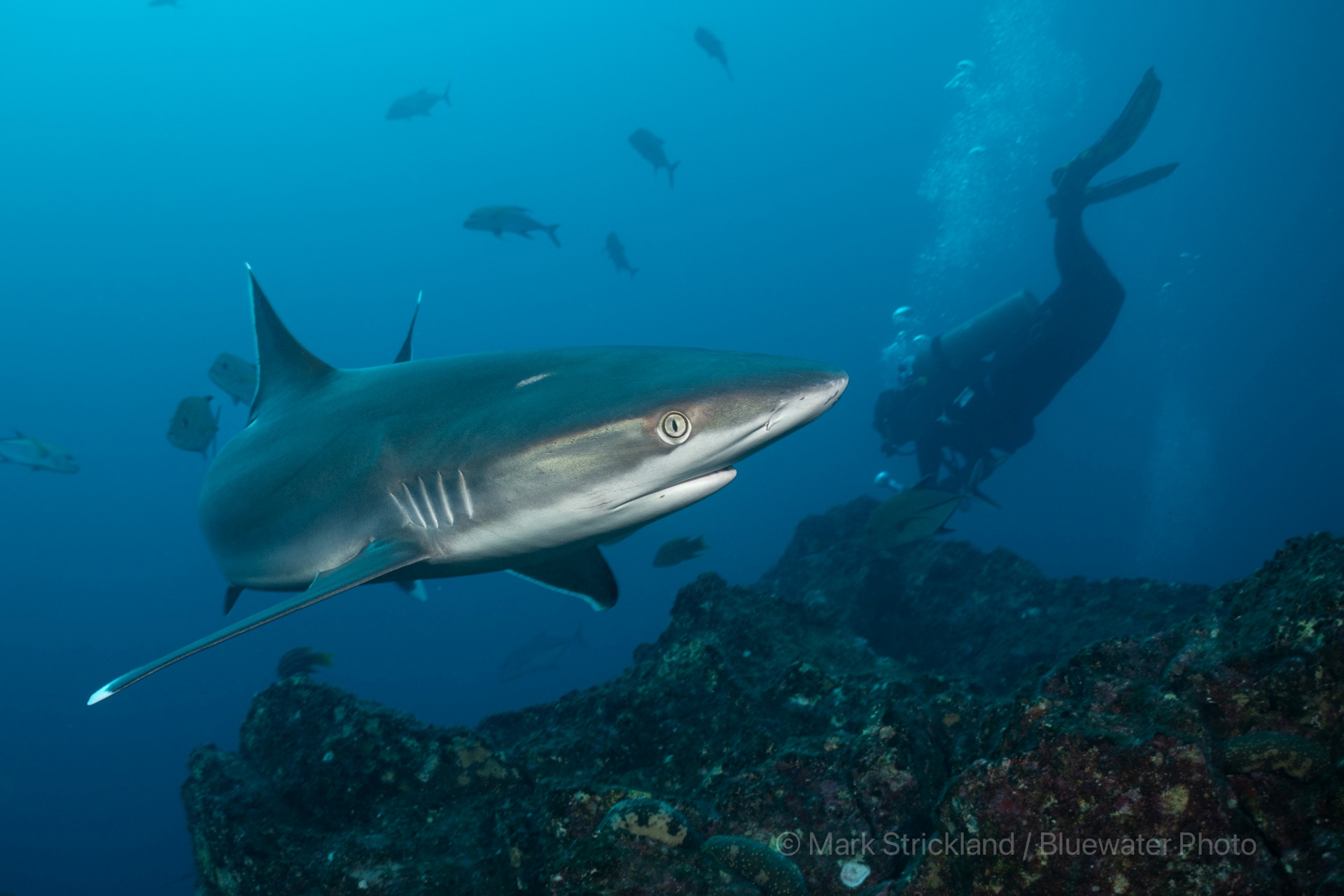
Silvertip Shark
Carcharhinus albimarginatus
- Size: Typically 6–8 ft, up to 10 ft
- Key Dive Destinations: Maldives, French Polynesia, Fiji, Red Sea, Socorro
- Habitat: Offshore reefs, reef drop-offs, islands, banks
- Typical Depth: Surface to around 2,625 ft
- Diet: Reef fish, rays, cephalopods, smaller sharks
- Lifespan: Around 20–25 years
How to Identify
Silvertip Sharks are recognized by bold white margins on all fins, especially the dorsal, pectoral, and tail fins.
Interesting Fact
Silvertips are confident reef predators and are often more assertive than many other reef shark species.
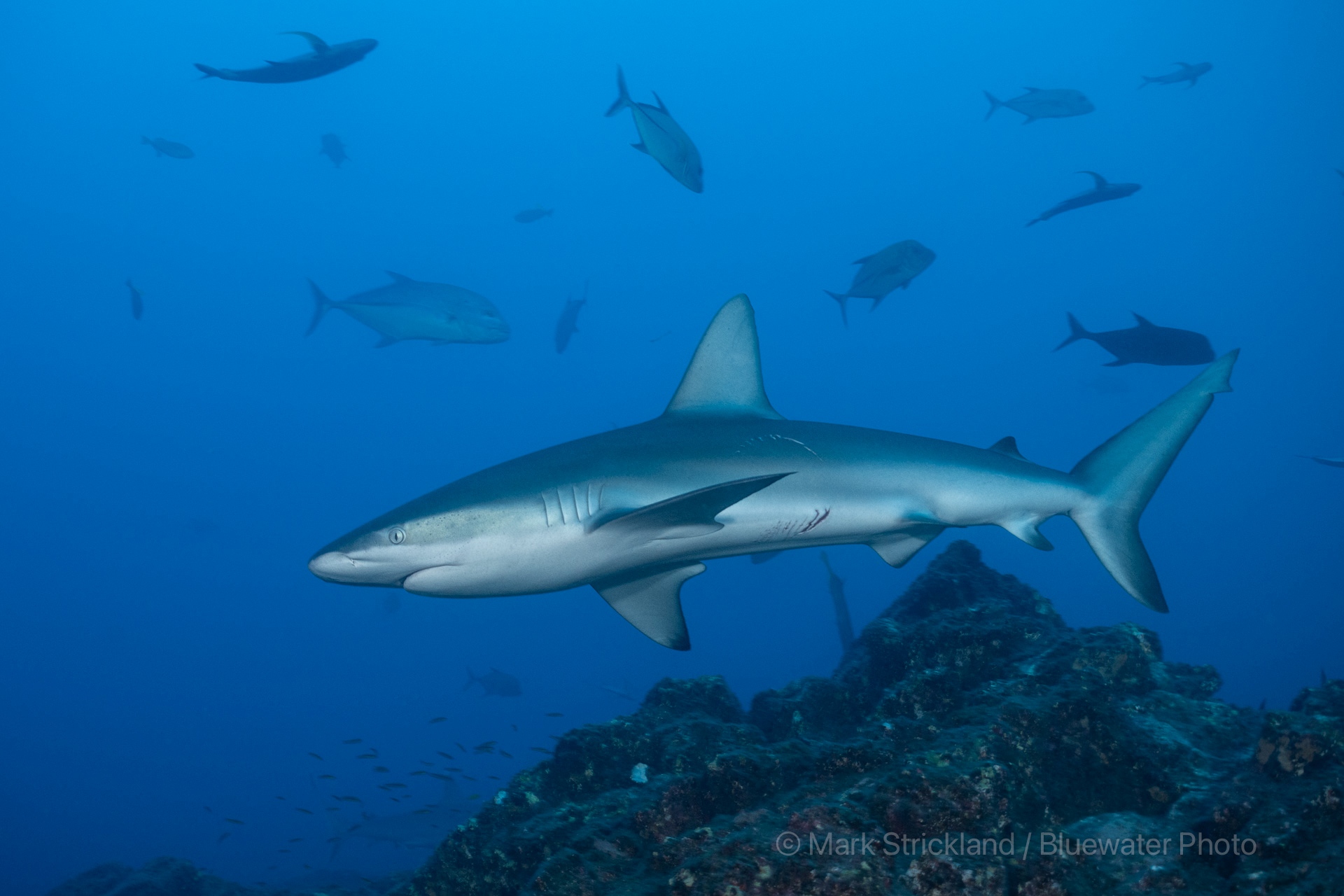
Galápagos Shark
Carcharhinus galapagensis
- Size: Typically around 9.8 ft, up to 12 ft
- Key Dive Destinations: Galápagos, Hawaii, Cocos Island, Socorro, Virgin Islands
- Habitat: Oceanic islands, seamounts, reef slopes, clear offshore waters
- Typical Depth: Surface to around 590 ft
- Diet: Bony fish, squid, octopus, rays, smaller sharks
- Lifespan: Around 20–25 years
How to Identify
Galápagos Sharks have a tall first dorsal fin, a ridge between the dorsal fins, and a robust gray body.
Interesting Fact
When feeling threatened, Galápagos Sharks may display exaggerated swimming movements, including arching and looping.
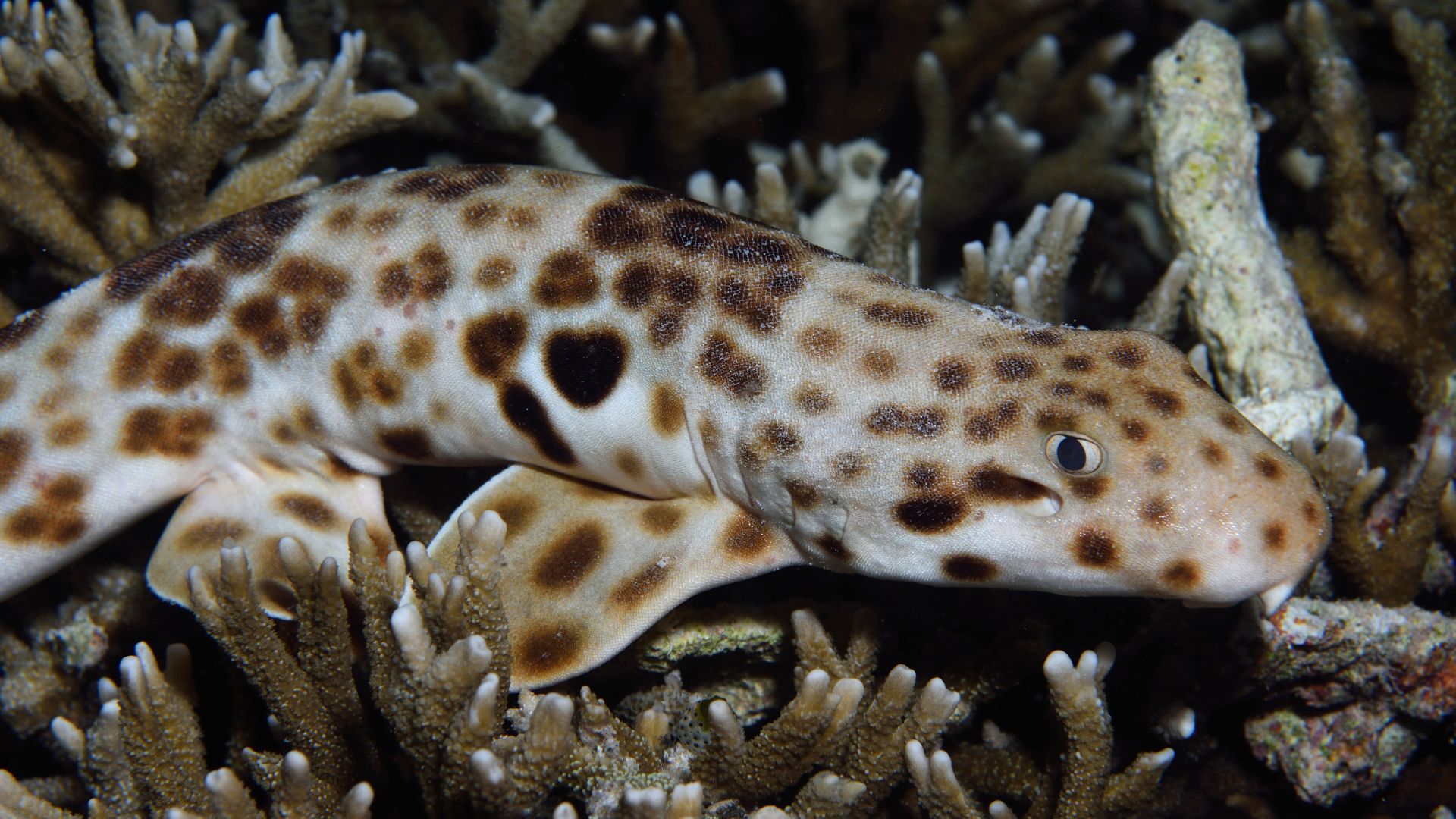
Raja Ampat Epaulette Shark
Hemiscyllium freycineti
- Size: Up to around 3.4 ft
- Key Dive Destinations: Raja Ampat, West Papua, Indonesia
- Habitat: Shallow coral reefs, reef flats, tide pools
- Typical Depth: Very shallow reef habitats to around 40 ft
- Diet: Small crustaceans, worms, mollusks, small fish
- Lifespan: Around 10–20 years
How to Identify
This small shark has a slender body, patterned markings, and distinctive dark shoulder-like spots behind the head.
Interesting Fact
Epaulette Sharks can “walk” along the seafloor using their fins, an adaptation that helps them move through shallow reef environments.
Author


Chris Haysey
I’m Bluewater’s SEO and Content Manager, focused on growing our organic traffic and turning divers’ online research into real trip enquiries. I develop and execute our SEO strategy, manage our content calendar and freelance writers, and make sure our destination guides, blogs and trip pages perform well in search while staying accurate and genuinely useful for divers.
Originally from the UK, I’ve spent much of my adult life living and working overseas, including Greece, Türkiye, Egypt, and across the Caribbean in Antigua, Margarita in Venezuela, Bonaire, Aruba, Curaçao, St Lucia and now Barbados. In my twenties and thirties I travelled as a professional watersports instructor and centre manager, running windsurfing, kitesurfing and sailing operations for hotels and specialist resorts before setting up and managing my own award‑winning watersports businesses in St Lucia and later in the UK.
Alongside this hands‑on watersports career I’ve held senior marketing roles for a variety of companies, from motorsport teams to outdoor activity centres and travel training providers. At Bluewater, I draw on this mix of practical experience and digital marketing know‑how to develop content that reflects real destinations, real dive conditions and real guest expectations. When I’m not working on the website, you’ll usually find me windsurfing, kitesurfing, diving or exploring new coastlines on a paddleboard or mountain bike.


-optimized-optimized.webp&w=640&q=75 "Solomon Islands Trip Recap 2026")