
Truk Lagoon 2026 Trip Report
Trip Led by: Nirupam Nigam
There are few places on this planet where humanity’s past follies are so thickly intertwined with nature’s hope for the future as Truk Lagoon, Micronesia. Chuuk, as it is now called, was the center of Operation Hailstone on February 17-18, 1944. 500 American Naval bombers swept across the skies of this remote tropical paradise and sank over 50 Japanese merchant and warships that were critical to Japan’s supply lines in World War II, killing over 4500 Japanese soldiers.
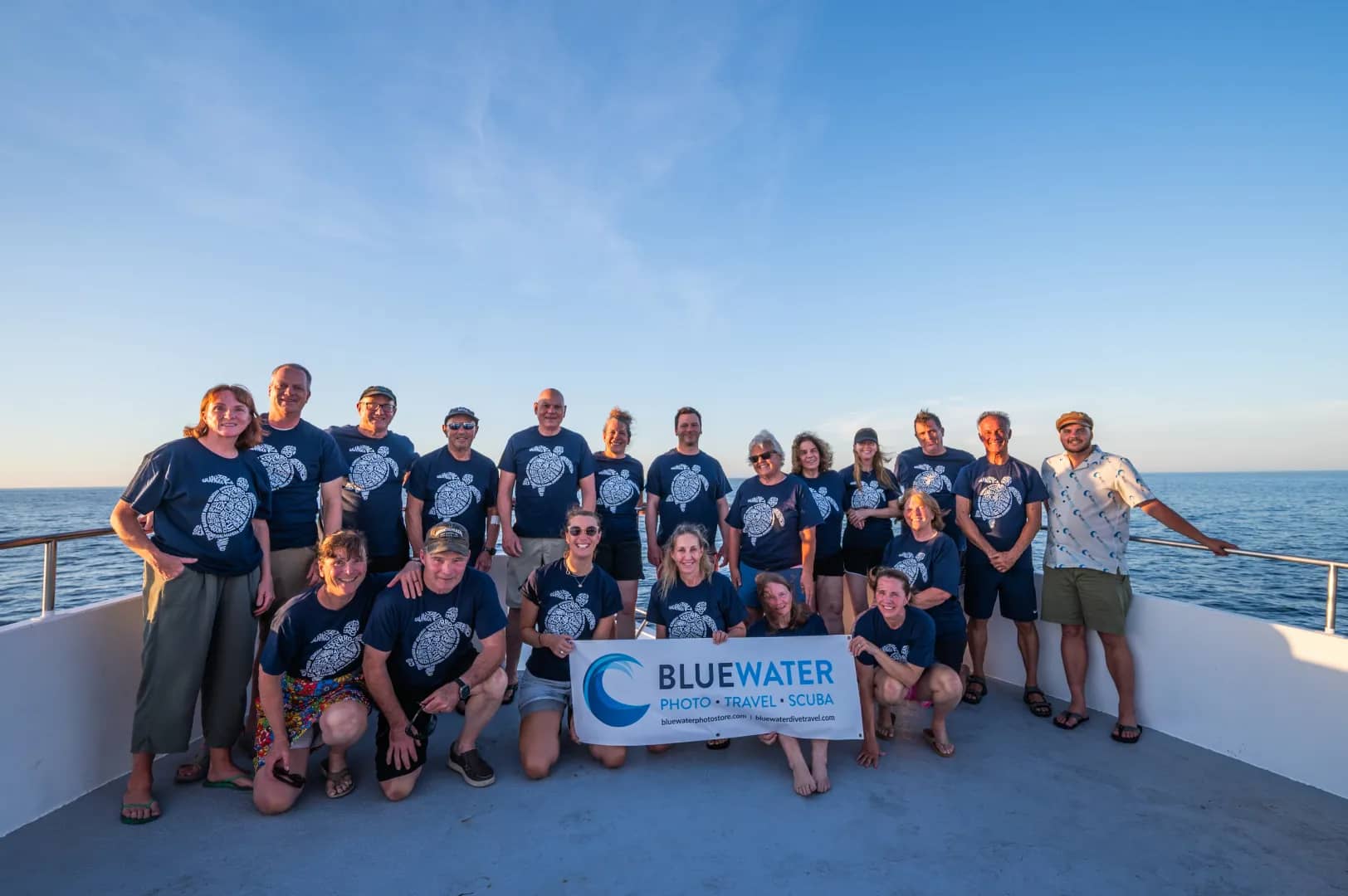
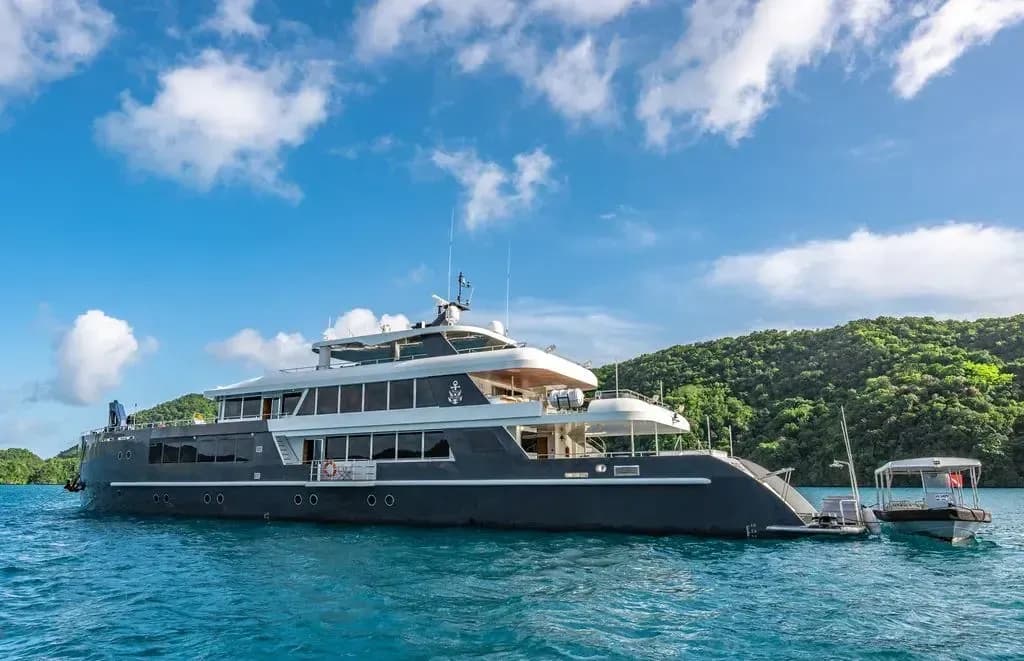
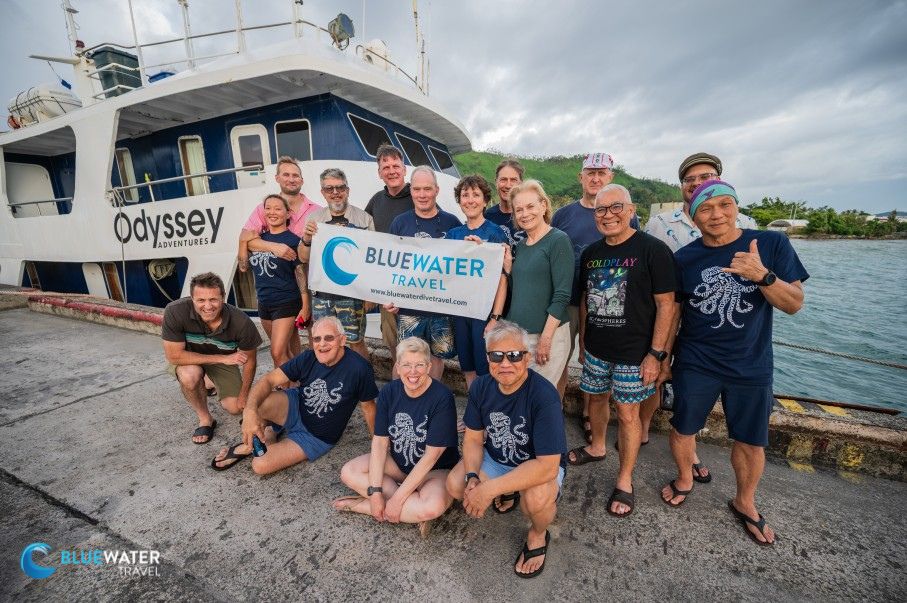
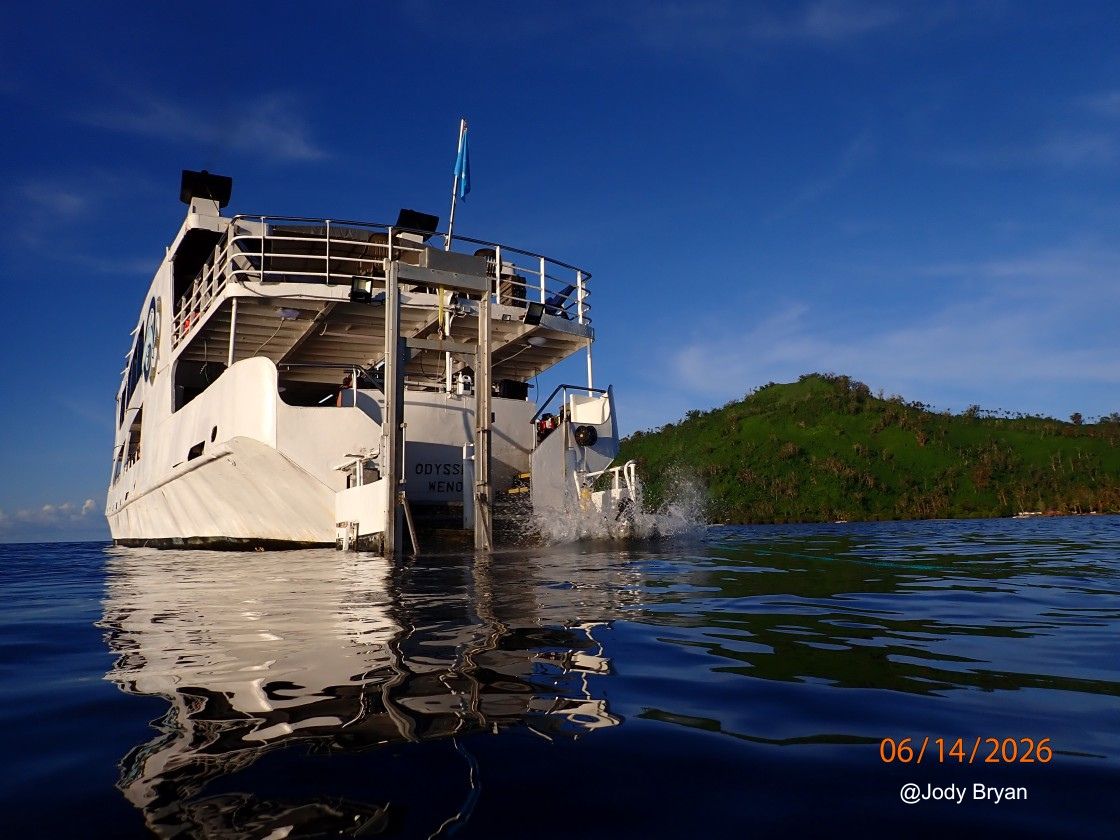
Today, the coral atoll remains littered with remnants from this dark chapter in human history – echoes of Japan’s former imperialistic military might. But 82 years later, each relic of the past is decorated in a colorful adornment of soft coral, fish, and invertebrate life. It is a reminder that nature ultimately prevails over the faults of humanity. And in a few short decades, every reminder of World War II will eventually be reclaimed by the sea. Knowing this, I made it a priority to witness this unique destination while it remains – and I was joined by 18 intrepid Bluewater Travel divers aboard the Odyssey Liveaboard. It was a fitting name for our vessel for the week. An Odyssey it was….
Diving Aboard the Odyssey with Bluewater
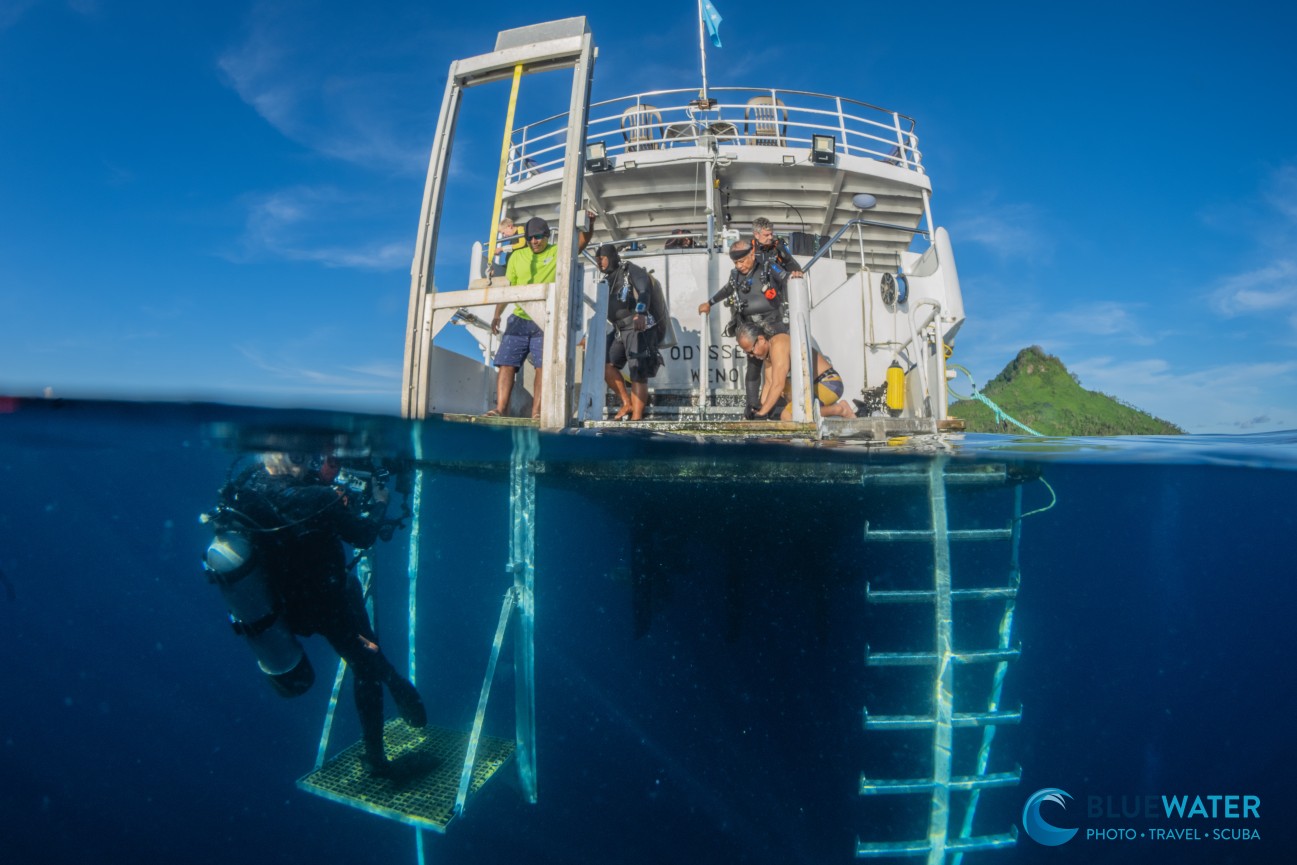
Truk can be a daunting destination to the many divers who have heard of deep wrecks and occasional live ammunition. But the value of the Odyssey is its crew who are all technical diving instructors and know every aspect of the wrecks of Truk down to where the gas masks are placed. The Odyssey is able to mix nitrox and trimix to any desired percentage and the instructors are quick to give you their best recommendations for each dive site. The ship can handle CCR and open circuit tech divers as well as recreational divers seamlessly on the same trip. During our workshop, we had two CCR divers and 16 recreational divers.
Because the wrecks of Truk are so huge and are packed with interesting artifacts and reef scenes, it’s possible to do a whole trip without ever going into deco. But for the divers that are trained for it, the vessel is extremely safety conscious with a hang bar for decompression, carefully staged tanks and snuba regs at the hang bar in case you are low on air. Moreover, the vessel is equipped with an extremely convenient elevator so that it’s seamless to enter and exit the water with heavy camera equipment or multiple stage bottles.
Fortunately, the dive conditions in Truk are just as cooperative. While the visibility can range from 30 ft to 70 ft, there is rarely current and most dives feel like you are diving in a pool. I have never dived in another ocean destination that has had such still water….but that’s also why the Japanese chose the area as their logistical hub.
The Bluewater Travel Underwater Photoworkshop
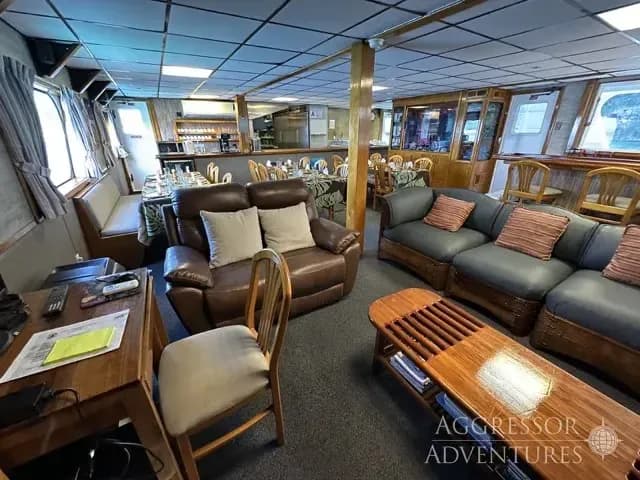
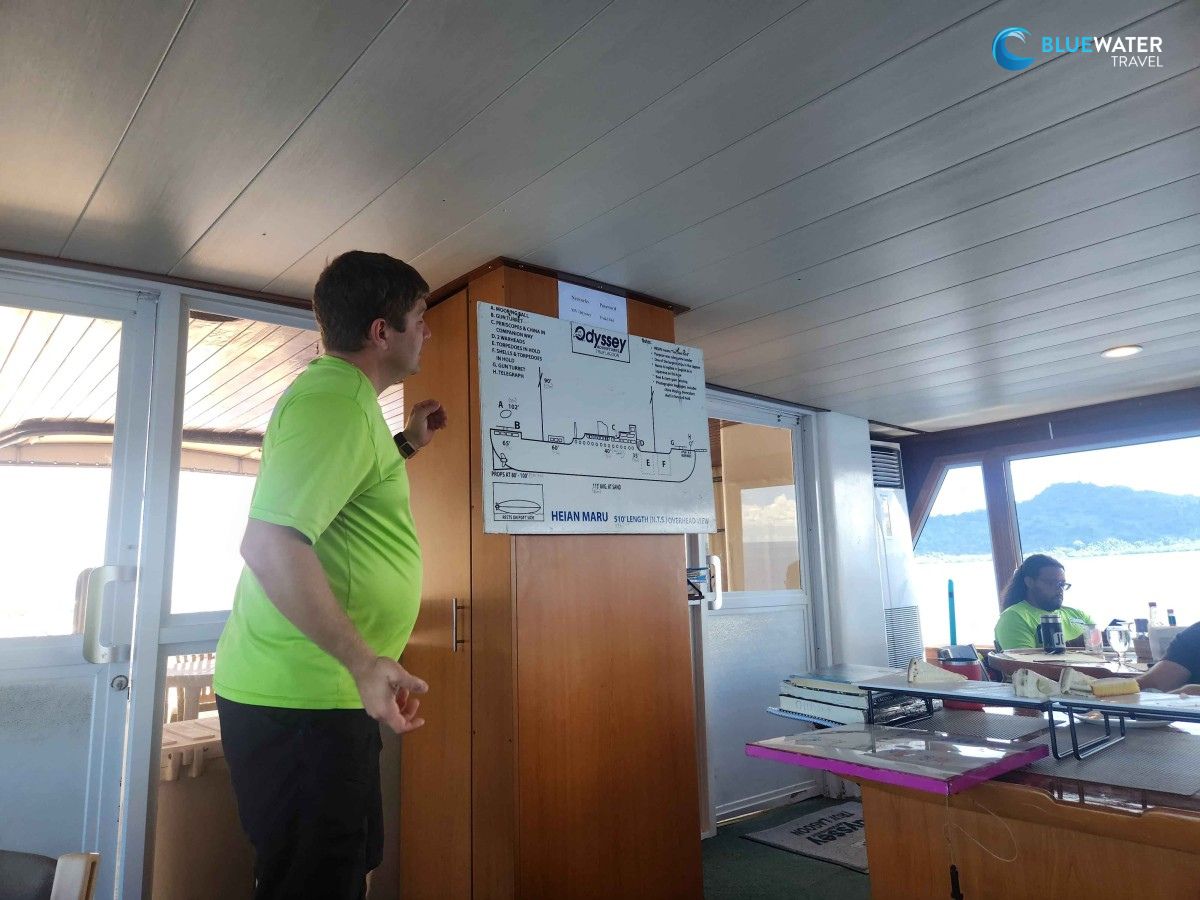
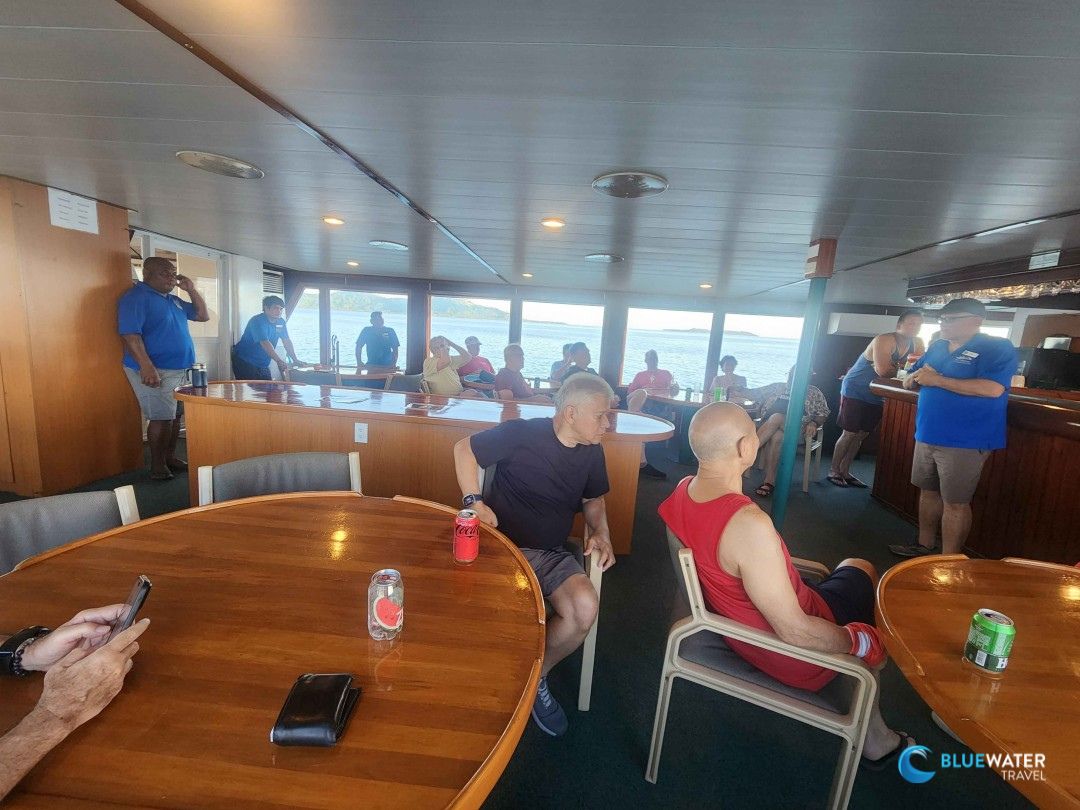
As with all of our Bluewater group trips, our photo workshops are welcoming of both avid photographers and non-photographers alike. In fact, many divers on this trip opted not to take a camera and focused on experiencing the destination. But for those that did want to learn the ins and outs of underwater photography – we were well equipped for it! Every day after dinner, I hosted an hour-long underwater photo and video workshop in the galley of the Odyssey. The galley is beautiful, and it was the perfect activity after a carefully crafted a-la-carte dinner. Below the galley is the perfect staging area and cubbies for cameras and charging batteries. There is also a multi-level camera table on the dive deck. Once we got underwater, I made sure to work with divers who were interested in learning remote lighting, wide-angle techniques, and the basics of using an underwater camera. It was a lot of fun to collaborate with our experienced dive guides on finding the right scenes for spooky lighting and composition.

In addition to daily photo workshops, I had the pleasure of testing a new and exciting camera – the new Sony A7R VI high resolution full-frame camera in an Ikelite housing. I also used Marelux’s new terminal flash repeater with dual Ikelite DS230 strobes.
Getting to Truk
I won’t sugar coat it – getting to Truk is probably the most difficult part of the trip. The quickest way is to take the United island hopper flight that stops at 5-6 different islands along the way from Honolulu. It’s a very unique experience where you have the chance to catch a glimpse of the Marshall Islands and the rest of Micronesia. The trip takes about 12-13 and can be a bit taxing. But it’s a nice feeling getting to Blue Lagoon or Truk Stop and having a nice meal before boarding the Odyssey. For a longer but more relaxing trip, you can also fly into Guam through Tokyo and take a single flight to Truk (the last leg of the island hopper).

Day 1 – Diving the Kiyosumi Maru and Heian Maru
In Truk Lagoon there really aren’t “check out dives” as every dive is a wreck! The first dive of the day was Kiyosumi Maru. Although the Odyssey usually has an open dive deck where everyone can enter and dive when they want, our group opted to have a more formal experience where we split into four to five separate dive groups with a guide. We rotated entry times so that each group could keep spaced out on the wrecks. The CCR divers did two dives a day while the recreational divers did four.

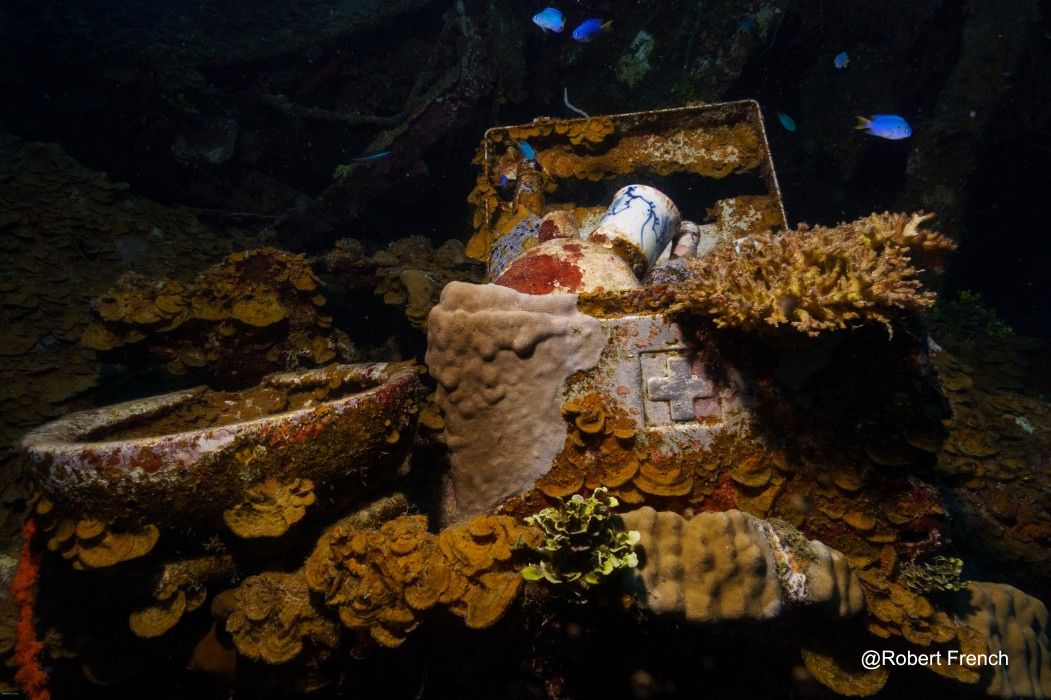
After getting suited up, we hobbled to the stern and onto the ladder, which gracefully brought each diver into the water. The lagoon was extremely calm and I was surprised how much diving our first wreck was like diving in a pool in slightly hazy, 86F water. Danny, the dive master for my group, led us around the wreck. At the top of the Kiyosumi, divers had placed artifacts like a museum including a gasmask, compass, and a beautiful lantern.

Our second dive, the Heian Maru, is the largest ship in the lagoon. While it’s a long swim, the wreck has turned into a mini reef ecosystem teaming with fish, coral, and octopus. We did some of our first wreck penetrations and explored the engine room where I found a lone canteen – a brutal reminder of the human cost of the war. The stern of the wreck was the true highlight as it had a massive propeller that made for a unique photo with a diver for scale.

Day 2 – Fumizuki Warship, Hanakawa Maru, and Kensho Maru
On the morning of the second day we did our deepest dive first – the Fumizuki warship. It’s a small but unique wreck as it is one of the few warships sunk in the attack. The stern gun was unique.
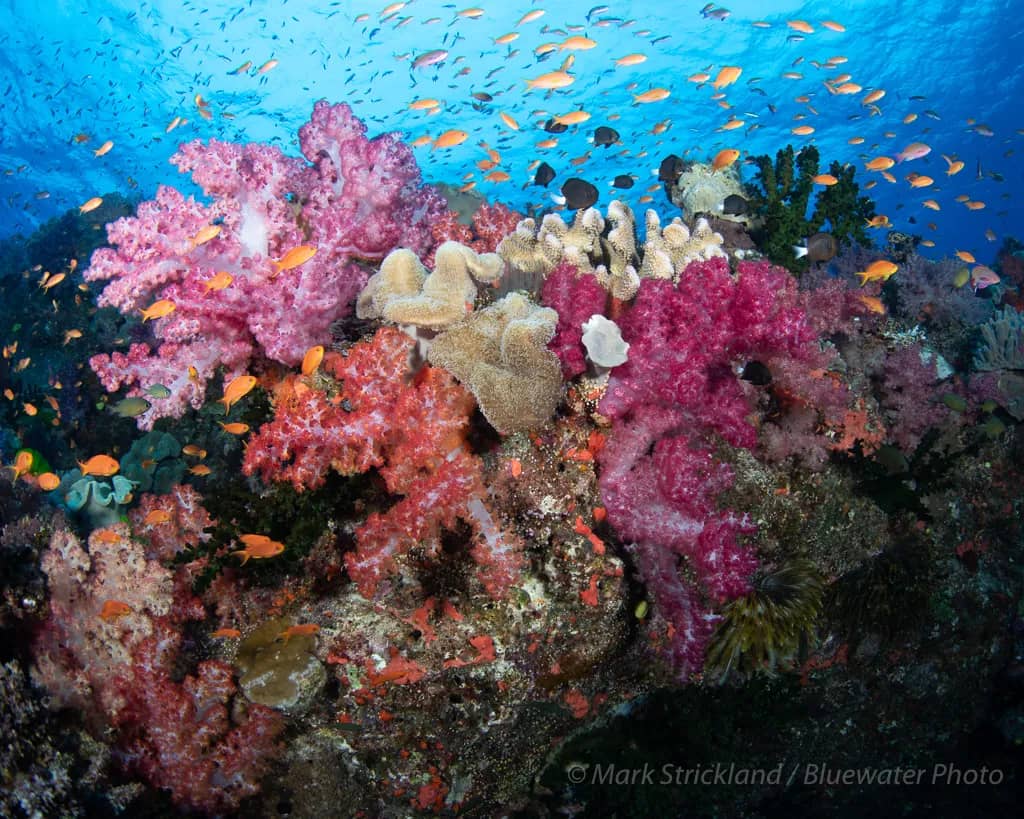
The second dive of the day was perhaps the most beautiful in the lagoon – the Hanakawa Maru. It was completely covered in soft coral and reminiscent of Fiji. However, it was quite small and shallow which made it a bit of a crowded dive.
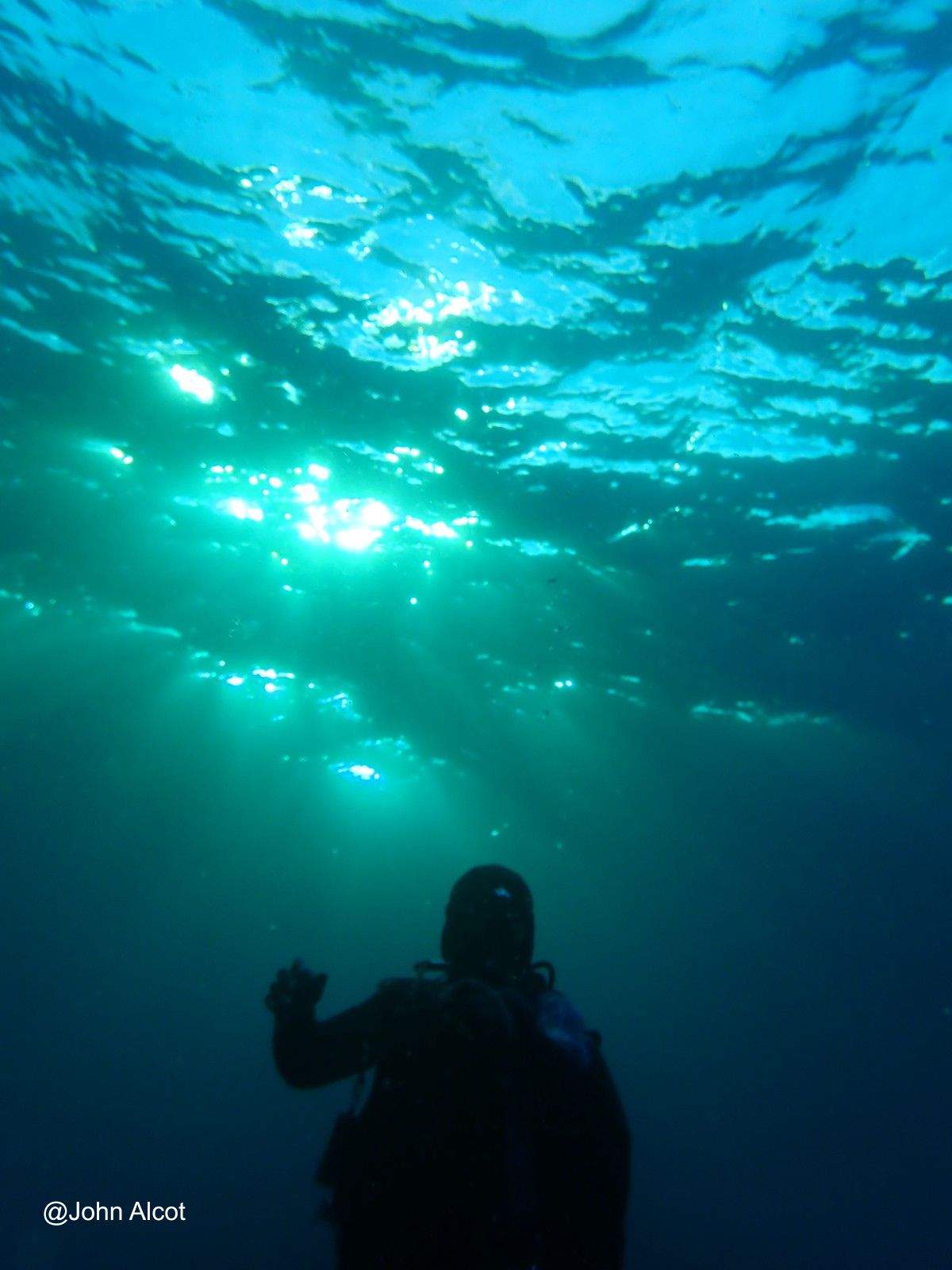
We then moved the boat back across the lagoon to the Kensho Maru. The wreck was famous for an engine room with a catwalk and a skylight. It was a fun picture to take with the dive guides modeling for us above the catwalk with their lights. We also set up some remote lighting with mixed results.

Day 3 – I-169 Submarine and Shinkoku Maru
On the morning of the third day, we dived our first and only submarine wreck of the trip – the I-169. The sub sits in 140 ft of water but the top of the wreck is about 90ft. The story of the sub is tragic. As the air raid was happening, the crew forgot to close a hatch and it flooded. They remained trapped in the submarine for a couple of days before they died and Japanese rescue efforts were unsuccessful. You can see the remnants of the wires used to try to pull the sub back up. The wreck itself was not covered in life which made it easier to see the defined structure and shape of the submarine.

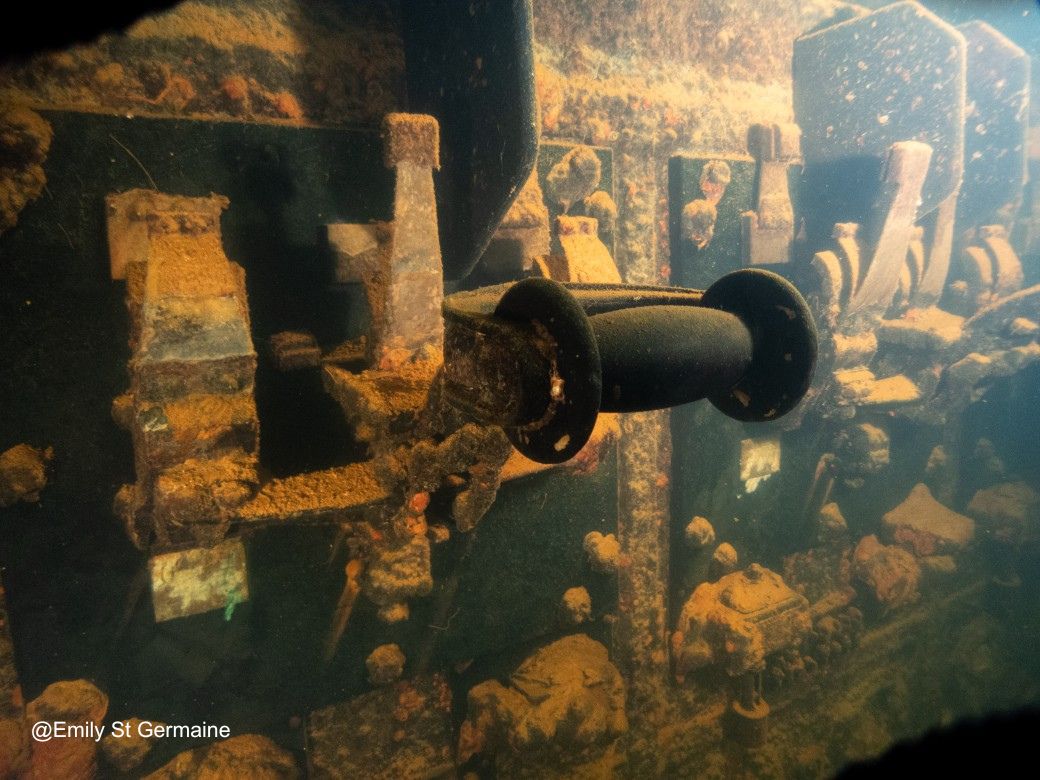
The last three dives of the day were on the wreck of the Shinkoku Maru – one of the top dives in the lagoon. Similar to the Hanakawa, the Shinkoku Maru is teaming with sea life including beautiful soft corals, reef sharks, barracuda, turtles, and tons of reef fish. It’s a large wreck with an overgrown bow gun and very photogenic telegraphs placed throughout the ship. Watching the glass fish and fusiliers weave through the soft coal is like watching a starry milky way come to life.


Day 4 – Hoki Maru and Fujikawa Maru
One of the most famous scenes in Chuuk are the Trucks of Truk Lagoon. These assorted tractors and trucks are found deep in the hold of the Hoki Maru at 130 ft of depth. The hold is small and narrow but with the right guides, we were able to navigate the wreck successfully and even saw additional engines for Japanese zeros and depth charges.

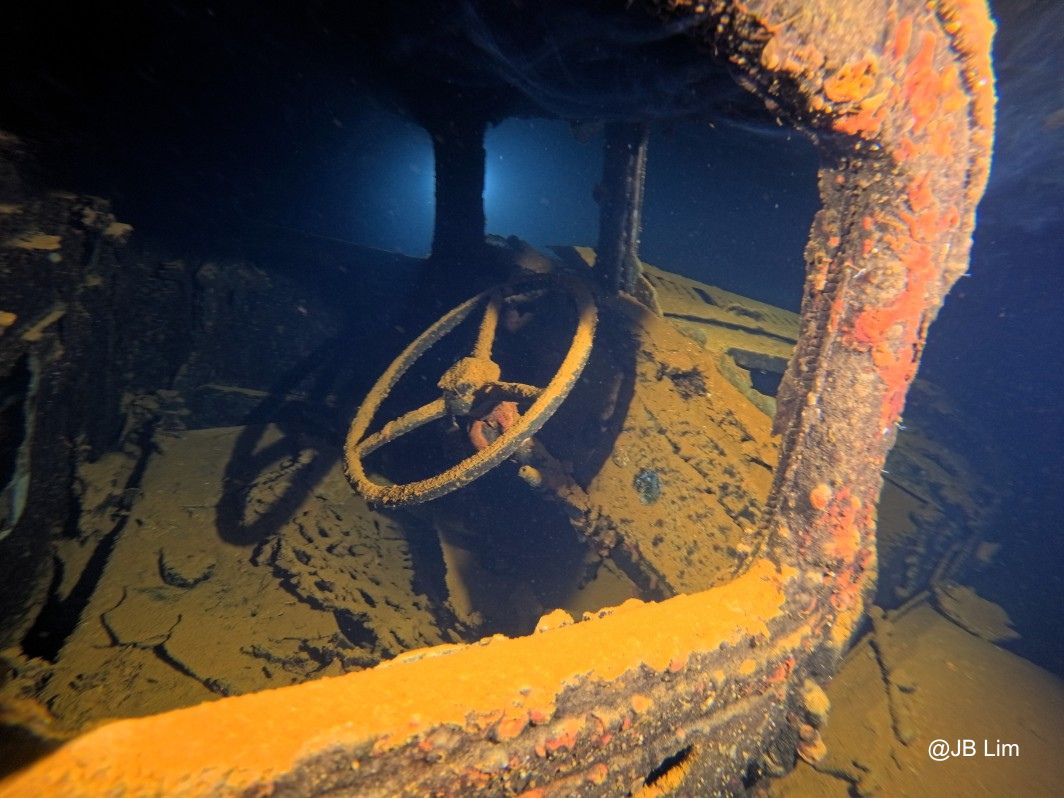
In the afternoon we dived the famous Fujikawa Maru. This wreck has a very photogenic bow gun where we played around with remote lighting by placing a strobe at the end of the gun and making it “fire” after 82 years. Heading toward the aft of the ship, we took turns entering the machine shop home to the famous R2D2 air compressor. Nearby in the hold there was the remains of Japanese Zero planes but they were difficult to see as the water became quite murky. In the evening after dinner we shook things up with a presentation on identifying marine life with Jonathan Lavan.


Day 5 – Nippo Maru and Seiko Maru
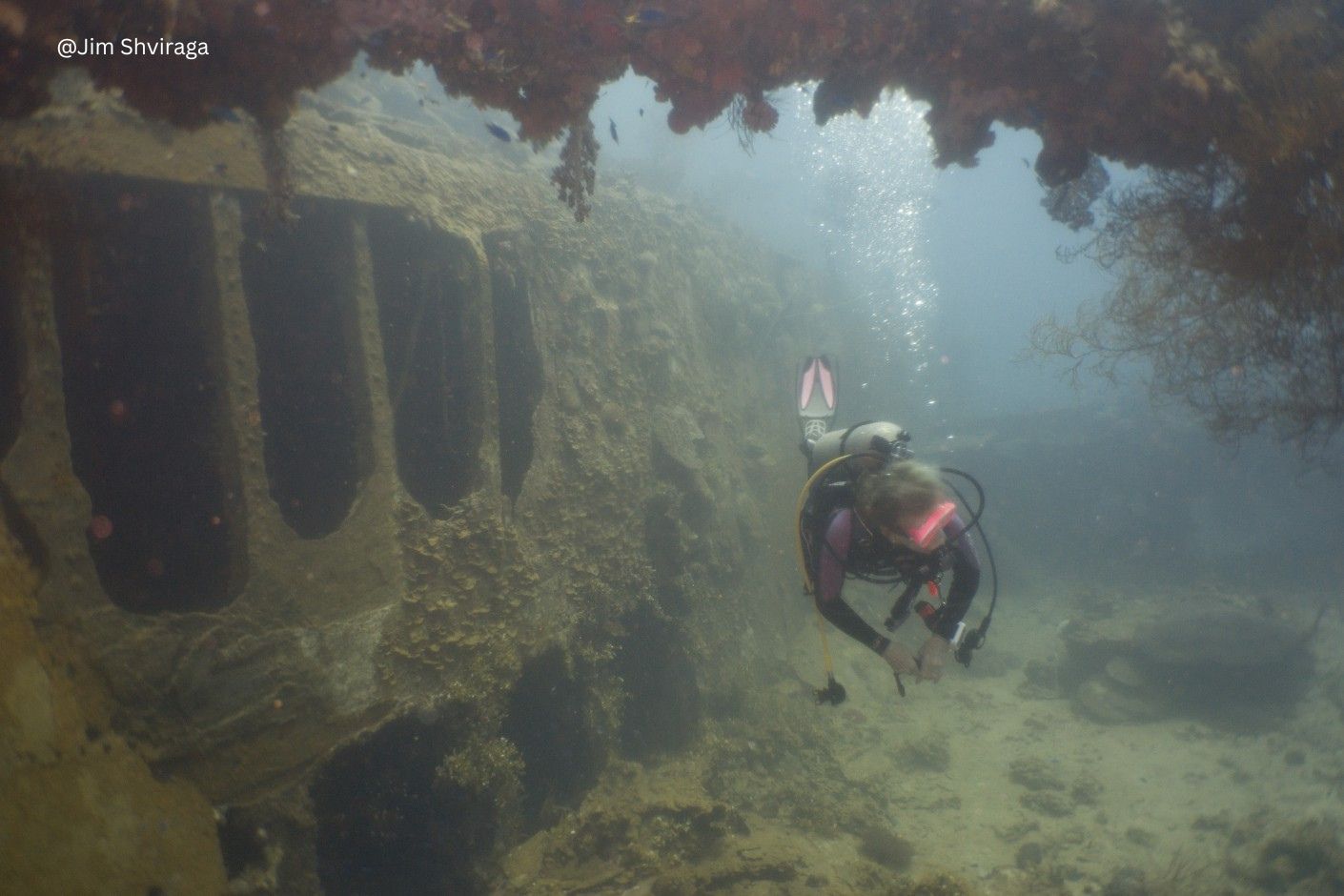
On the morning of our fifth day, we dived the Nippo Maru. This wreck is famous for a Japanese battle tank on the deck of the vessel, a unique bridge, and a series of gas masks placed on top of one of the holds. The mast of the Nippo Maru was also teaming with life!


In the afternoon we dived the Seiko Maru which had a series of beams that looked like a kelp forest. It was a fun place to practice remote lighting with a very cooperative dive guide. As we returned to the ship in the afternoon we were greeted by a couple of gray reef sharks.
Day 6 – The San Francisco Maru and Fujikawa Maru
During our final day of diving we got to experience the most famous wreck in Truk Lagoon. The San Francisco Maru, or “the million dollar wreck”, is known for its incredible cargo of tanks, truks, mines, and other ammunition. However, with the deck at 165 ft, it’s a decompression dive. Therefore, we split the group up into deco/tech divers and recreational divers who finished the day diving on the Fujikawa Maru. Many of our recreational group wanted to go back there to have another shot at photographing R2D2 – which was surprisingly difficult in such a hard to reach machine shop.


For those that dived the San Francisco Maru, while it was a short and deep dive, it was also a safe dive. The guides all carried extra gas and staged bottles on the wreck. We quickly dived to the bow of the ship and then made our way past the 75mm bow gun to the three type 95 ha go tanks on deck. That was about all we had time for! After 30 minutes of deco, everyone was back on board to complete a fantastic circuit of Truk Lagoon.
As we neared the end of the trip, we had a full image review with the group and a friendly photo contest. Everyone’s images were spectacular and there was a huge amount of improvement throughout the trip. Wreck photography isn’t easy – it requires a lot of thought about ambient vs artificial light and creative techniques to blend the two. I was very proud how far everyone’s images had come. As some of our group departed on to Pohnpei and others continued on home, we spent some time ruminating on what a beautiful, harrowing, and impactful dive destination Truk is – all at the same time.
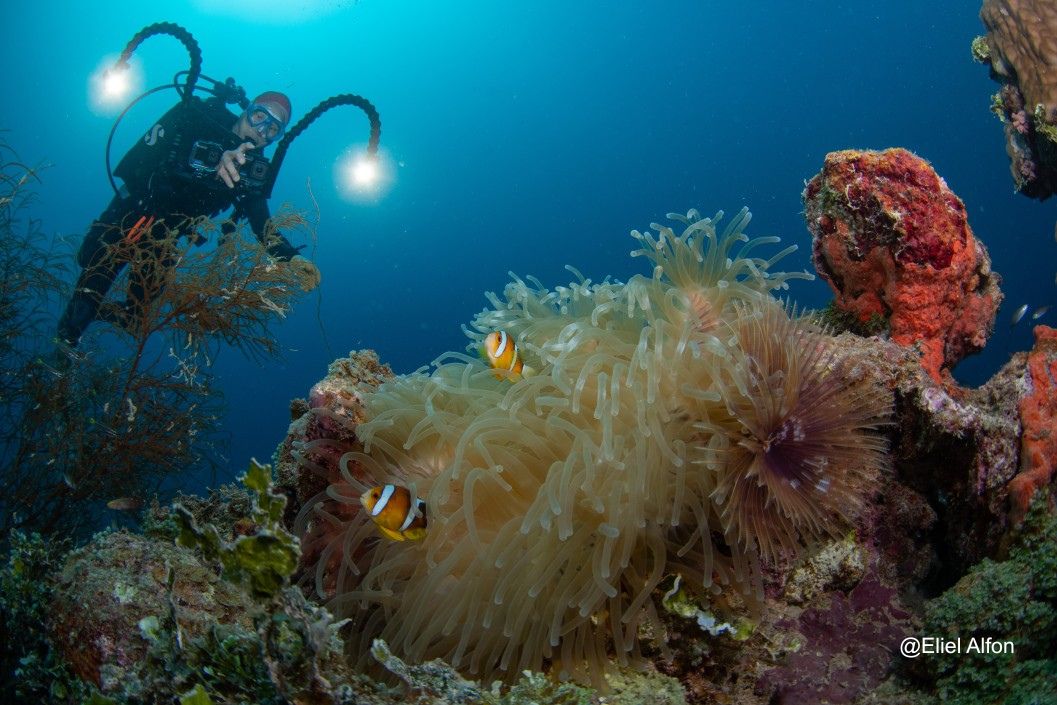
Want to learn more about our 2026 Truk Lagoon trip? Check out our recap video!
Author


Nirupam Nigam
Nirupam Nigam is the Editor-in-Chief of the Underwater Photography Guide and the President of Bluewater Photo & Video - the world's top underwater photo & video retailer. While growing up in Los Angeles he fell in love with the ocean and pursued underwater photography in the local Channel Islands. After receiving degrees in Aquatic and Fisheries Science and General Biology, as well as a minor in Arctic Studies, Nirupam worked as a fisheries observer on vessels in the Bering Sea and North Pacific. Since then, Nirupam has been a full time underwater photographer and photo gear head.
You can get in touch with him at nirupam@uwphotographyguide.com or through his website www.photosfromthesea.com.
Learn more about Nirupam with this amazing video!


-optimized-optimized.webp&w=640&q=75 "Solomon Islands Trip Recap 2026")