


Bluewater Travel Galapagos May 2018 Trip Report
By Katie Yonker
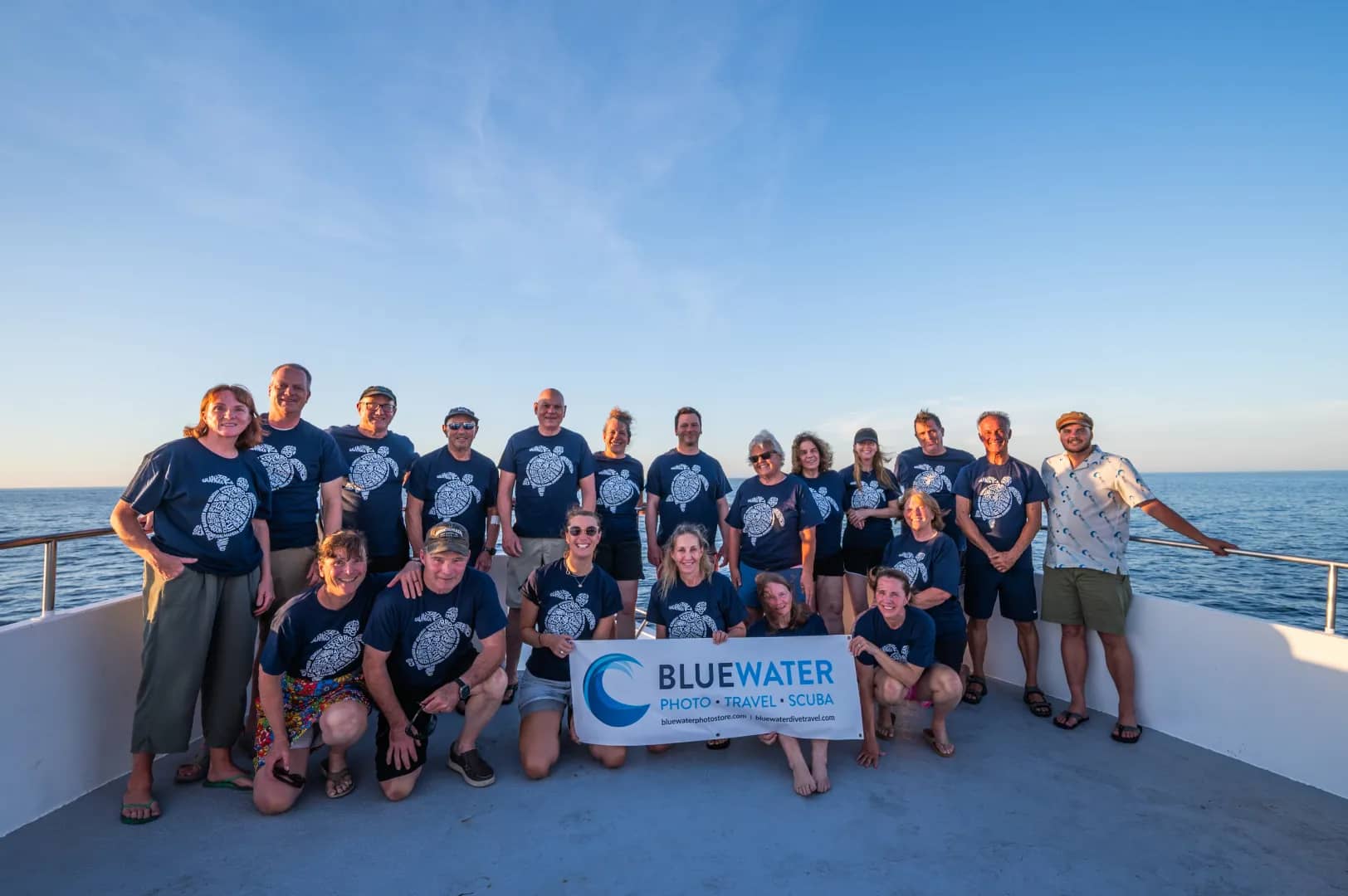
Ask any diver about their favorite dive destination or where they want to go next, and the Galapagos Islands are sure to be near or at the top of the list, and for excellent reason. Located nearly 600 miles from mainland Ecuador, this archipelago of volcanic islands is 97% designated national park. The islands lie at the convergence of the Equatorial, Cromwell, Humboldt, and Panama currents, resulting in a strange mix of both tropical and temperate environments, which is reflected in the complex and unusual plants and animals that inhabit them. Nearly 20% of the marine species are endemic, including the peculiar marine iguana. Theres so much that makes the Galapagos special, and I was ecstatic to have the opportunity to bring a group of divers to experience these islands, many for the first time.
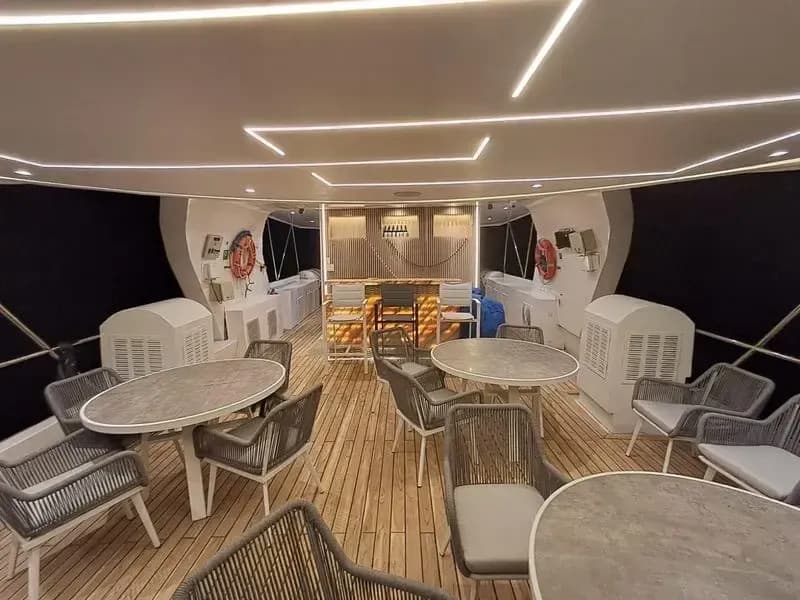
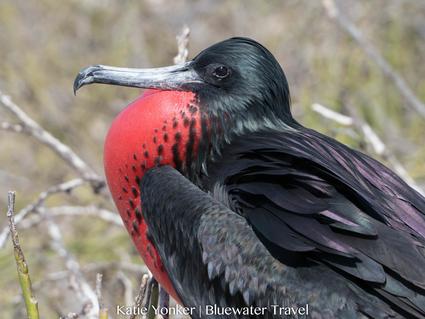
Upon arrival into San Cristobal, we were picked up and transported to the Galapagos Master, a 105 liveaboard with eight guest cabins accommodating 16 divers. After getting settled in and enjoying a nice lunch, we kicked off the diving by doing a fun check out dive at Isla Lobos, home to many sea lions. The following day we did one dive at Mosquera, but the highlight of the day was the land visit to North Seymour Island. Here we encountered several blue-footed boobies, land iguanas, sea lions, frigate birds, and pelicans. We were also lucky enough to witness the impressive mating dance of the blue-footed booby.


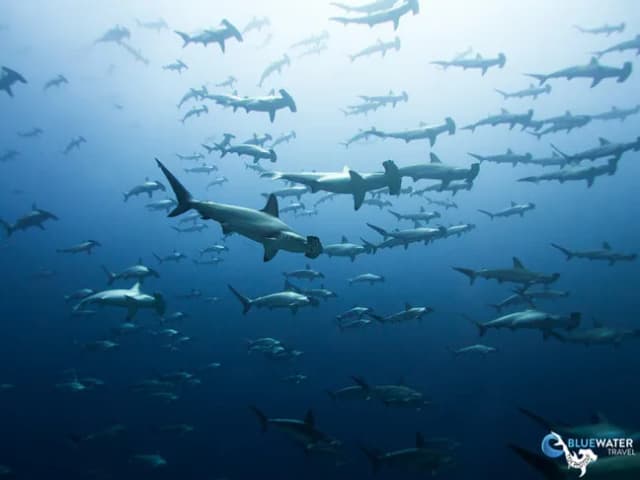
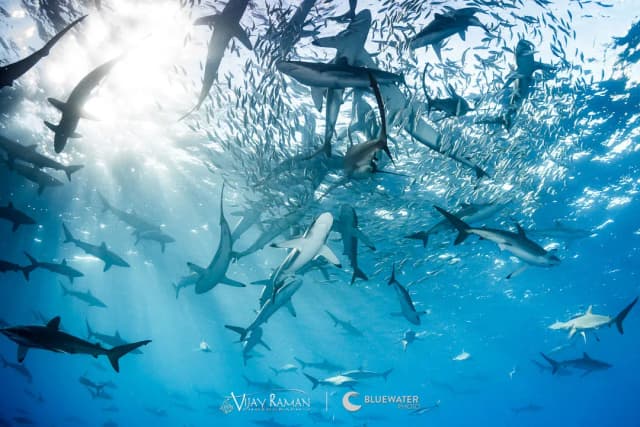
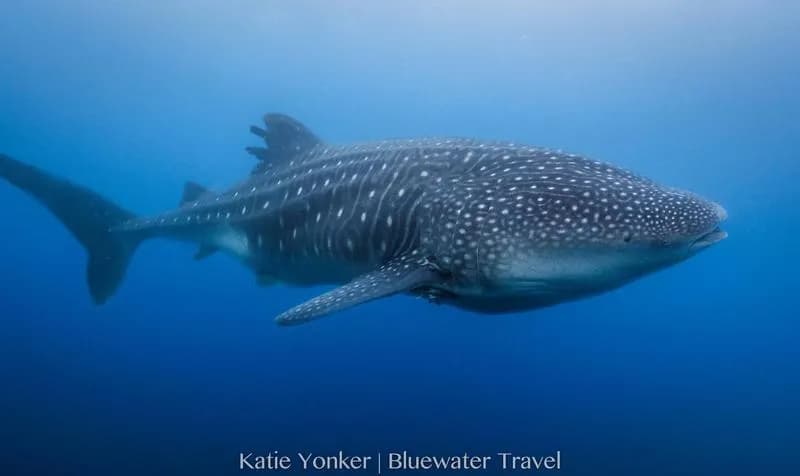
The next four days were spent at Darwin and Wolf, considered by many to be the best diving in the Galapagos. Here we encountered schooling hammerheads, Galapagos sharks, white tips, black tips, turtles, jacks, dolphins, sea lions, schooling eagle rays, moray eels, and even a brief encounter with a tiger shark! Uncommon for the Galapagos, we experienced little to no current, few thermoclines, and lower than average visibility. Despite that, the dives at Wolf and Darwin were spectacular. Perhaps the biggest surprise was that we had four separate encounters with whale sharks - a very pleasant surprise considering May is technically not whale shark season. They say everything is bigger in the Galapagos, and the whale sharks are no exception! The largest we sighted was estimated to be 45 - 50 feet in length.


After Darwin and Wolf it was time to make our way to Punta Vicente Roca, where the water temperatures are commonly 10 20 degrees F (or more!) colder, and where youre likely to find the peculiar mola ramsayi. It was hard to imagine the diving at Punta Vicente Roca could match that of our first four days, but it did not disappoint. Not only did we see several mola, but we also saw a Pacific seahorse, red-lipped batfish, a sea robin, a school of mobula rays, hammerheads, and an octopus.


After Punta Vicente Roca it was time to head to Cape Douglas, the only place in the world where you can dive with marine iguanas. The creatures are odd indeed even Darwin described them as "hideous-looking" and "most disgusting, clumsy lizards." But despite their knotty salt-encrusted heads and wide-set eyes, these animals are unique indeed. They resemble large lizards, though they have evolved blunt noses for grazing on seaweed, laterally flattened tails to assist in swimming, and powerful limbs with strong claws to help them cling to rocks. They spend the first few hours after sunrise basking in the sun, after which they enter the water to begin grazing on the algae. Because they lose heat rapidly in cold water, only the larger iguanas dive for food, and only for a short time before returning to the rocks to warm up again.

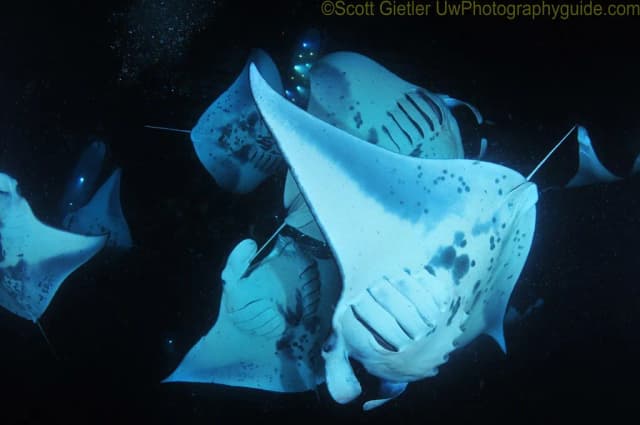
The last two stops on our itinerary were to Cape Marshall and Cape Douglas. The highlights at Cape Marshall were the Pacific mantas and schooling barracuda, while Cape Douglas treated us to schooling mobula rays, frogfish, and some neat macro critters. Of course, no trip to the Galapagos would be complete without a stop to Santa Cruz to visit the giant Galapagos tortoises. We opted to go a local farm on the opposite side of the island to escape the hordes of tourists and view the tortoises in a more natural environment.


After ten days of diving, we were astounded not just by the quantity, but the variety of marine life we encountered. The Galapagos Islands are rewarded with pleasant weather year-round, so there is no best time to visit these magnificent islands it just depends on whether you want to go during peak whale shark season and your tolerance for cold water. Regardless of when you go, your visit to the Galapagos Islands is sure to be a unique, educational, and memorable experience unlike any other!

About the Author
Katie Yonker is the Director of Operations and a Travel Advisor for Bluewater Travel. An avid diver and travel planner, Katies adventures have taken her to the far reaches of the globe to destinations such as Micronesia, Indonesia, the Philippines, French Polynesia, Palau, Australia, Papua New Guinea, Fiji, Red Sea, South Africa, Maldives, Hawaii, Galapagos, Cocos, Socorro, Central America, the Caribbean, and many non-dive locations.
-optimized.webp&w=640&q=75 "Moorea Trip Recap August 2026")