




_-optimized-optimized.webp&w=3840&q=75 "Samambaia Liveaboard Special Packages")
-optimized.webp&w=3840&q=75 "Ilike Liveaboard Special Packages")
Raja Ampat Trip Report 2026
Words & Images By: Mike Smith
Trip Overview
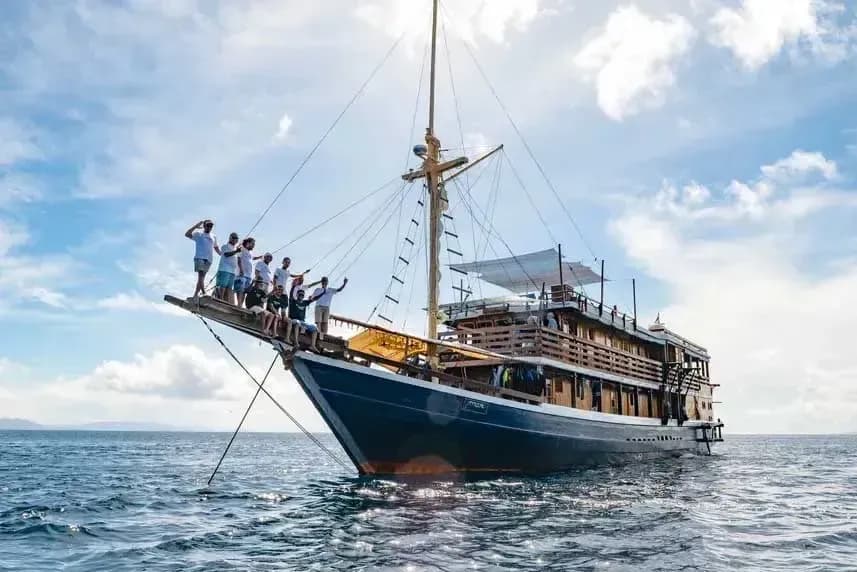
The Bluewater Travel Underwater Photography Workshop aboard the Damai liveaboard in Raja Ampat was an unforgettable 11-night adventure packed with world-class diving, intensive learning, and nonstop photographic opportunities. Running from 2nd to 13th February 2026, the trip followed an energetic “eat, dive, repeat” rhythm, perfectly suited to one of the most biodiverse marine environments on the planet.
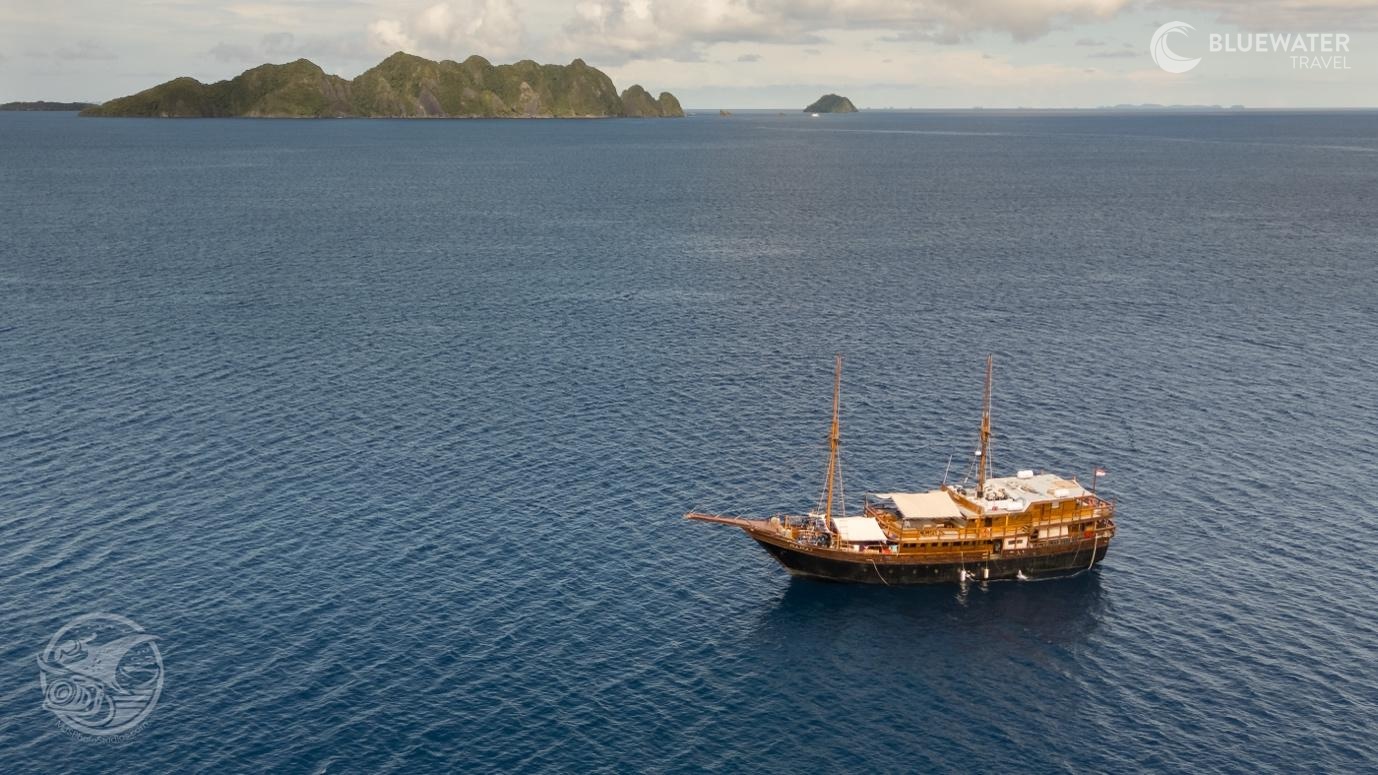
I led the trip as trip leader and photography professional, delivering structured workshop sessions where we could fit them into the busy schedule throughout the voyage. With a demanding dive schedule (mostly four dives per day, and the first dive often at 7:00am to avoid crowded dive sites), our days were full from sunrise to evening. The early starts were well worth it; slipping into iconic reefs before other boats arrived allowed us to photograph pristine scenes and natural behaviors in calm, undisturbed conditions. Unfortunately, some guests succumbed to various ailments throughout the trip, but that did not dampen the spirits, and everyone well enough to dive and shoot made the most of every opportunity.
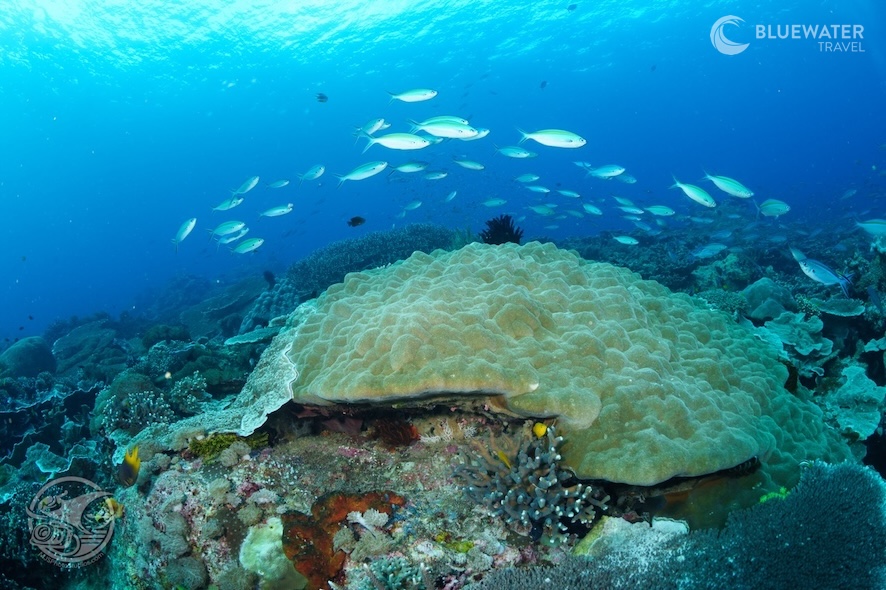
Central Raja Ampat – Big Reefs & Big Energy
We began in the central region of Raja Ampat, spending the first four days diving some of the area’s most famous sites. At Cape Kri, we were greeted by extraordinary fish density - schools of fusiliers, trevally, barracuda, and swirling bait balls layered over vibrant coral reefs. It was the perfect environment to focus on wide-angle photography, composition, and managing dynamic reef scenes. Some of my favourite images are those that demonstrate the sheer volume of life on this reef.
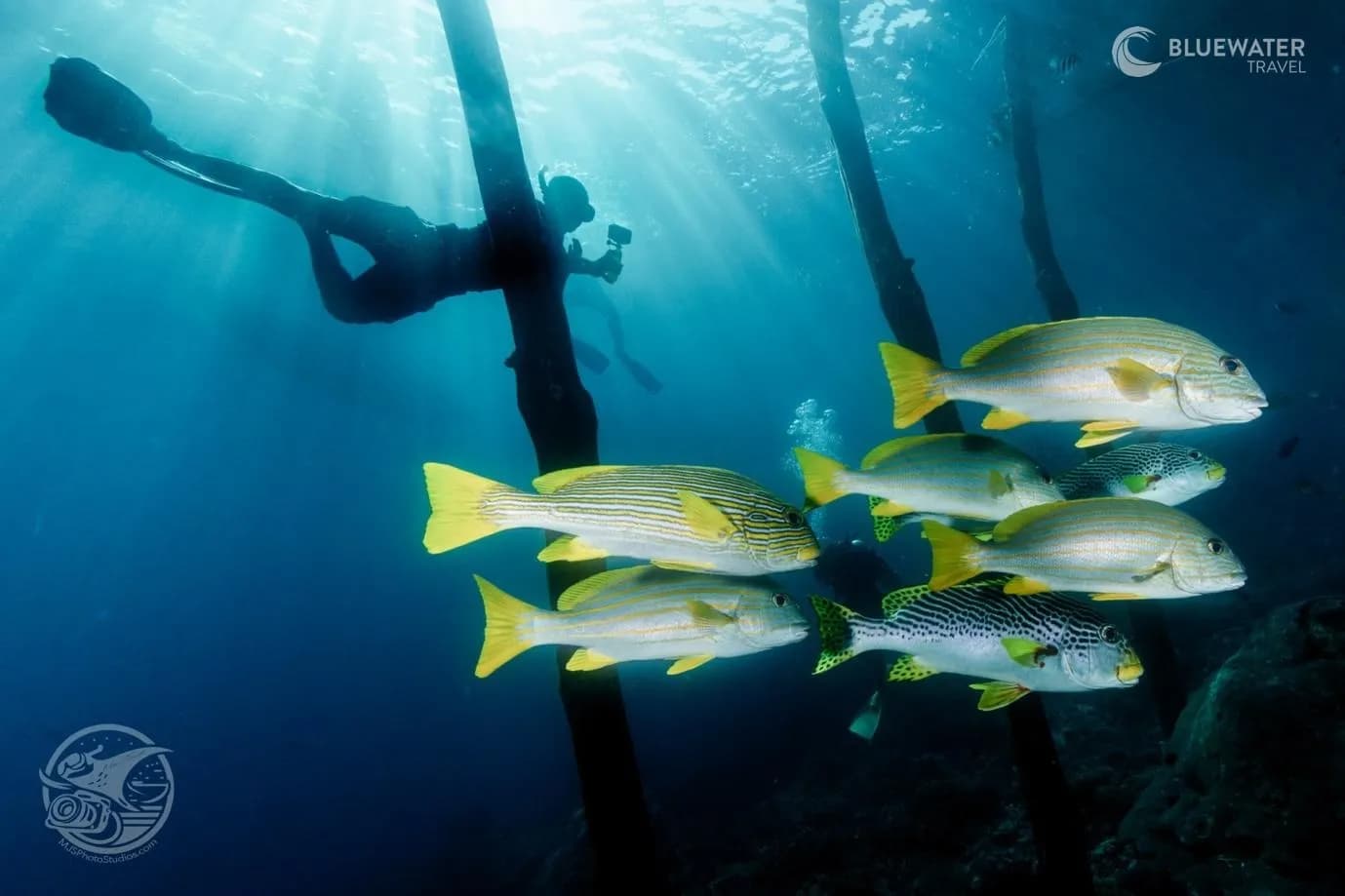
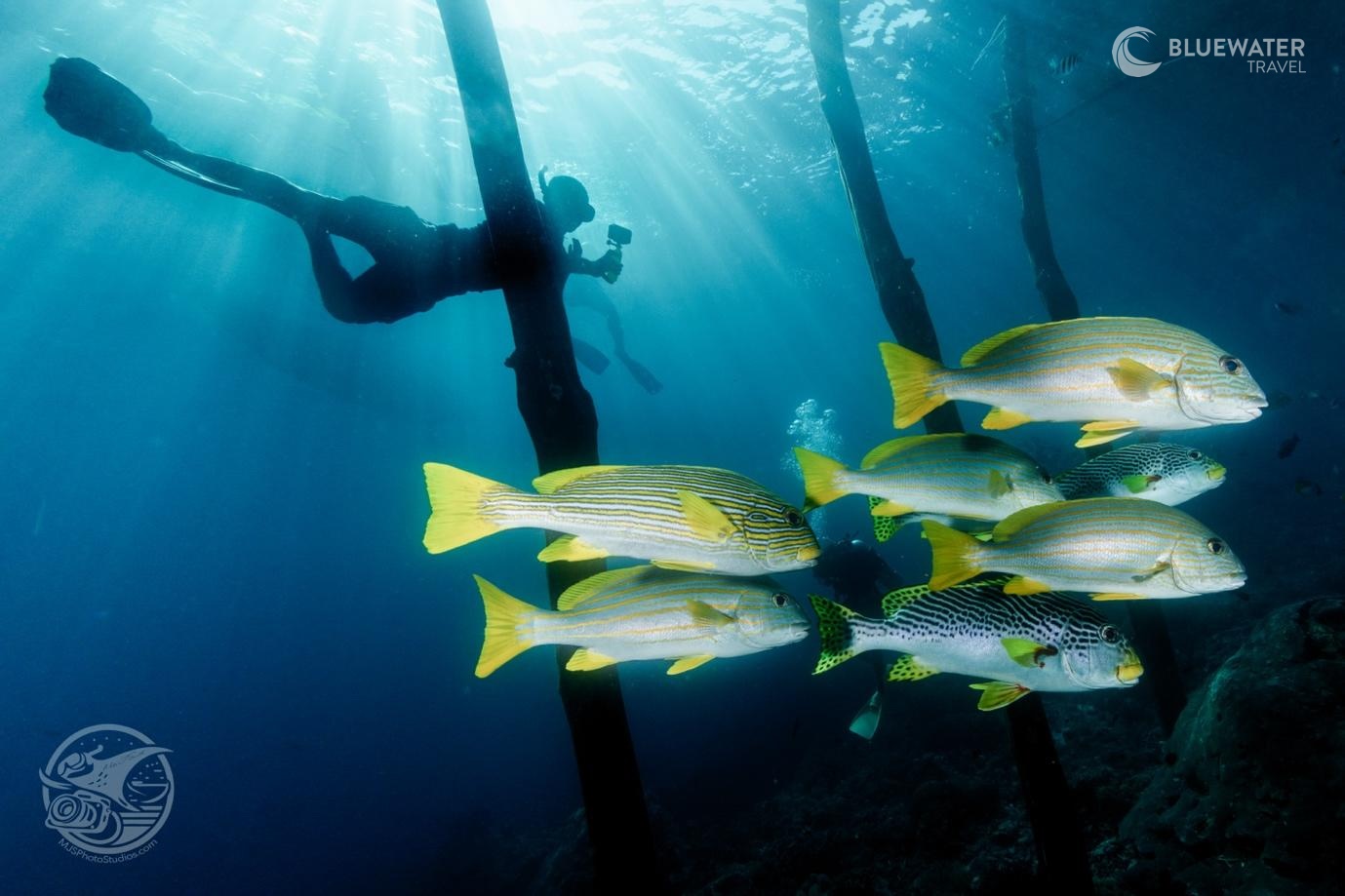
Nearby Sawandarek Jetty offered a different but equally photogenic experience. The jetty’s structure created beautiful leading lines, natural framing, and striking contrasts between ambient light and strobe-lit subjects. Here, we worked extensively on balancing ambient exposure with strobe output—ensuring clean foreground lighting while retaining the mood of the blue water background.
During these central dives, workshop sessions emphasized:
• Wide-angle composition techniques
• Strobe placement to evenly illuminate reef scenes
• Techniques to minimize backscatter
Given the sheer biomass at these sites, controlling lighting was critical. We focused on pulling strobes wider and backwards to reduce particulate illumination and feathering light carefully across large subjects - particularly schooling fish and reefscapes.
Southern Raja Ampat – Dramatic Topography & Pelagic Encounters
Midway through the trip, Damai repositioned to the south, where the landscape shifts dramatically. Towering limestone outcrops, sea fans, and dramatic swim-throughs created endless creative possibilities.
At Boo Window, we worked on framing subjects through the famous limestone “window,” using careful positioning to combine strong reef foregrounds with open blue water backgrounds. Composition and perspective were central themes here - choosing the right lens, managing distortion, and ensuring balanced lighting across complex scenes.
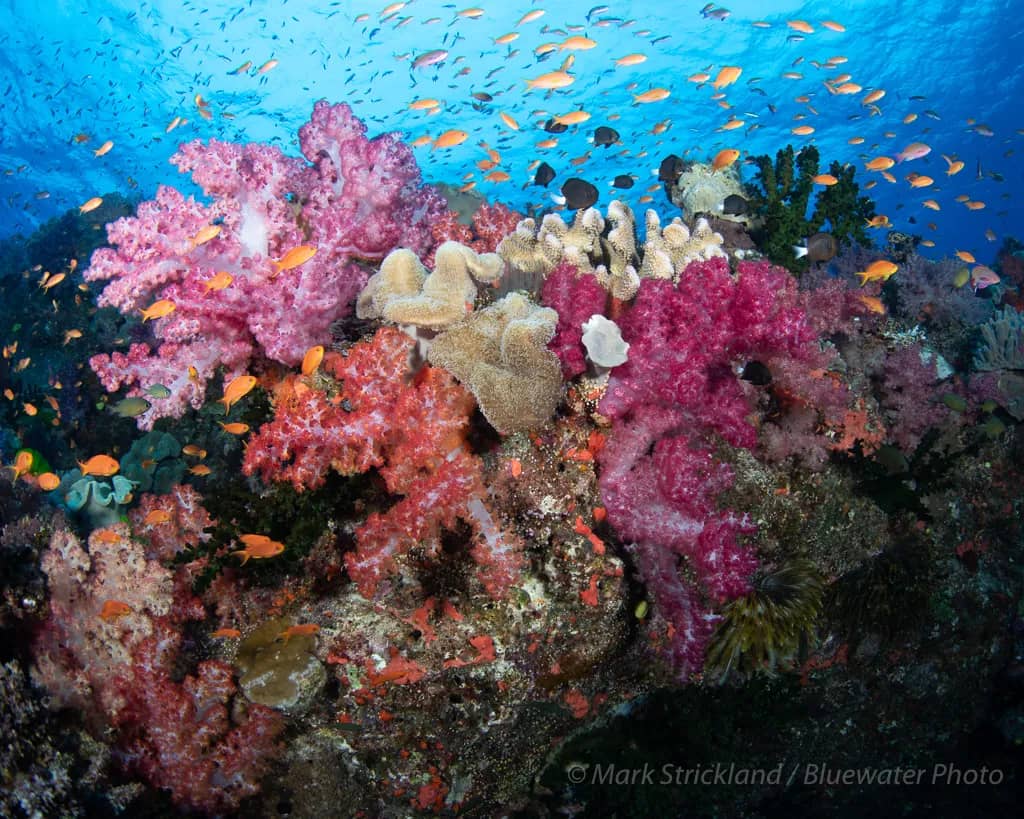
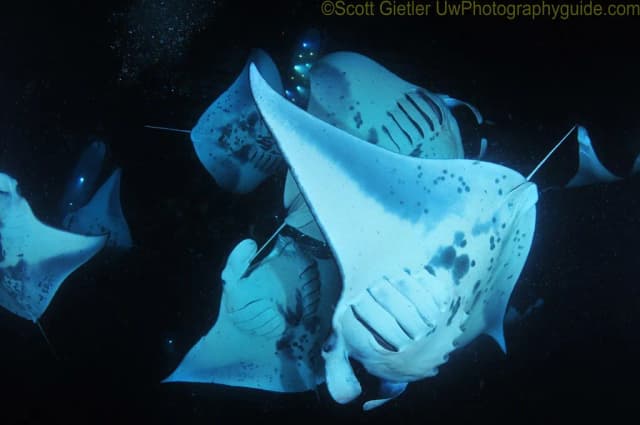
At Magic Mountain, I was really hoping we’d have manta encounters to provide opportunities to refine fast-paced wide-angle technique. However, the mantas continued to be elusive, and instead, we had the incredible abundance of colour provided by the soft corals to attract our attention. These colourful bommies, teaming with life, gave the perfect opportunity to practice getting close and evenly lighting the subjects.
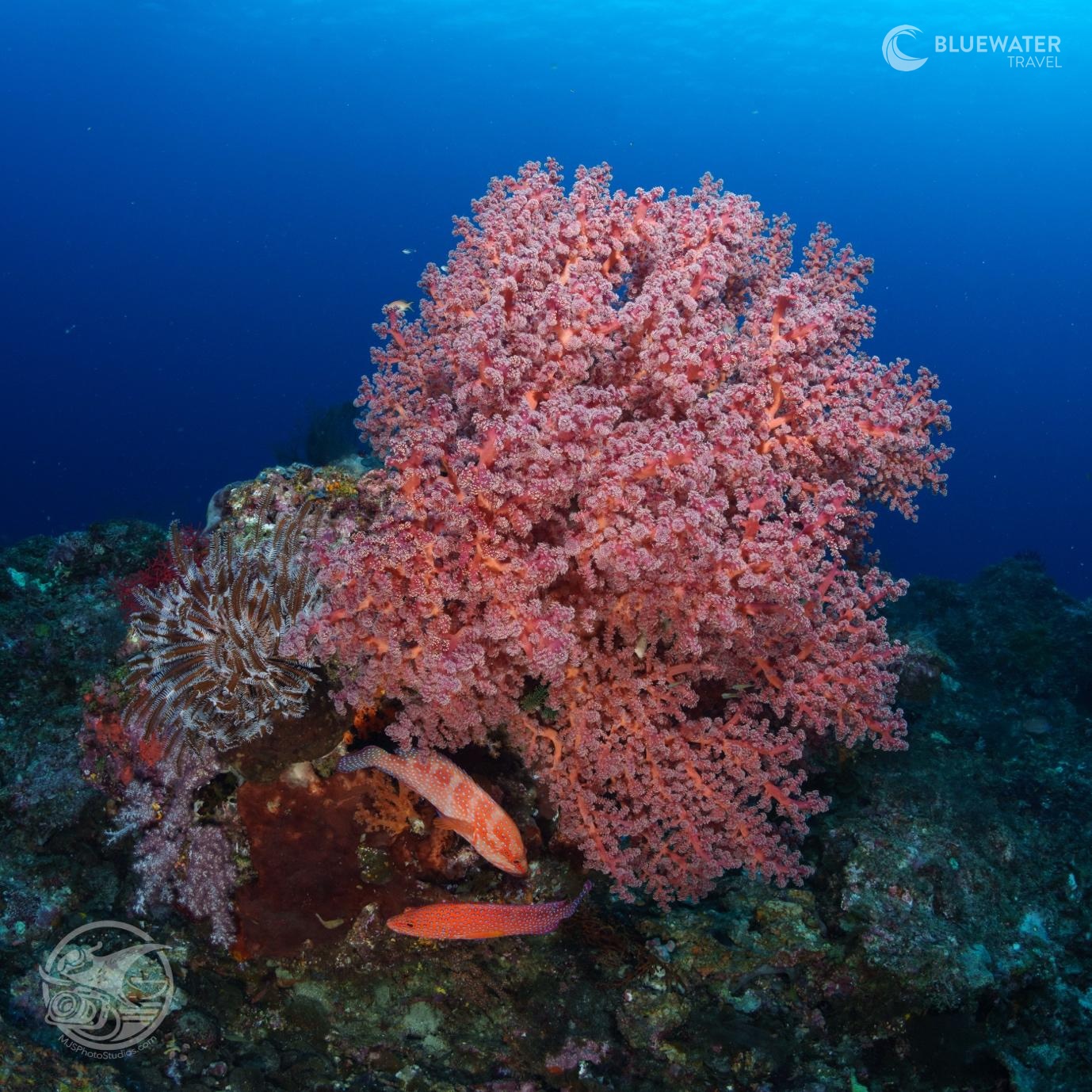
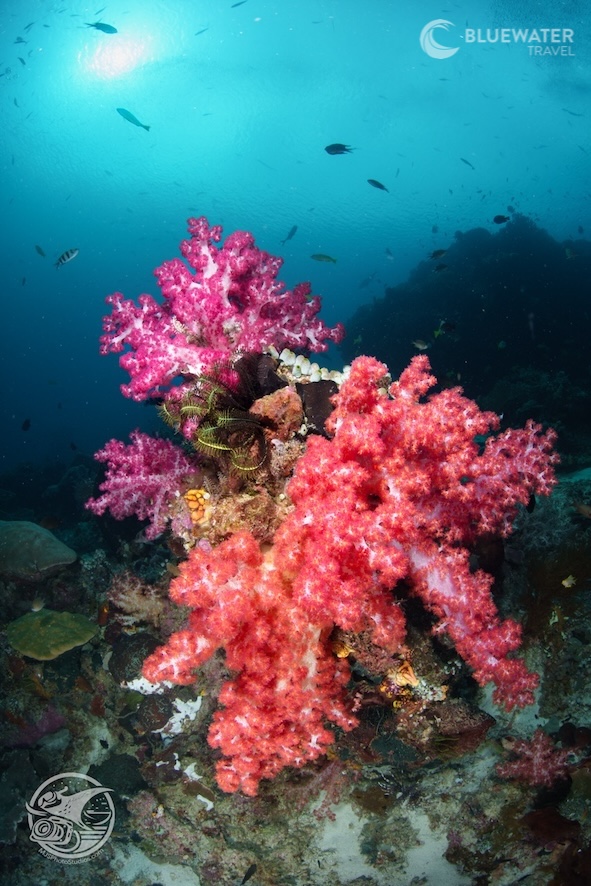
Meanwhile, Four Kings offered dramatic reef structures and colorful soft corals, perfect for both wide-angle scenics and creative close-focus wide-angle imagery.
Macro & Technical Development
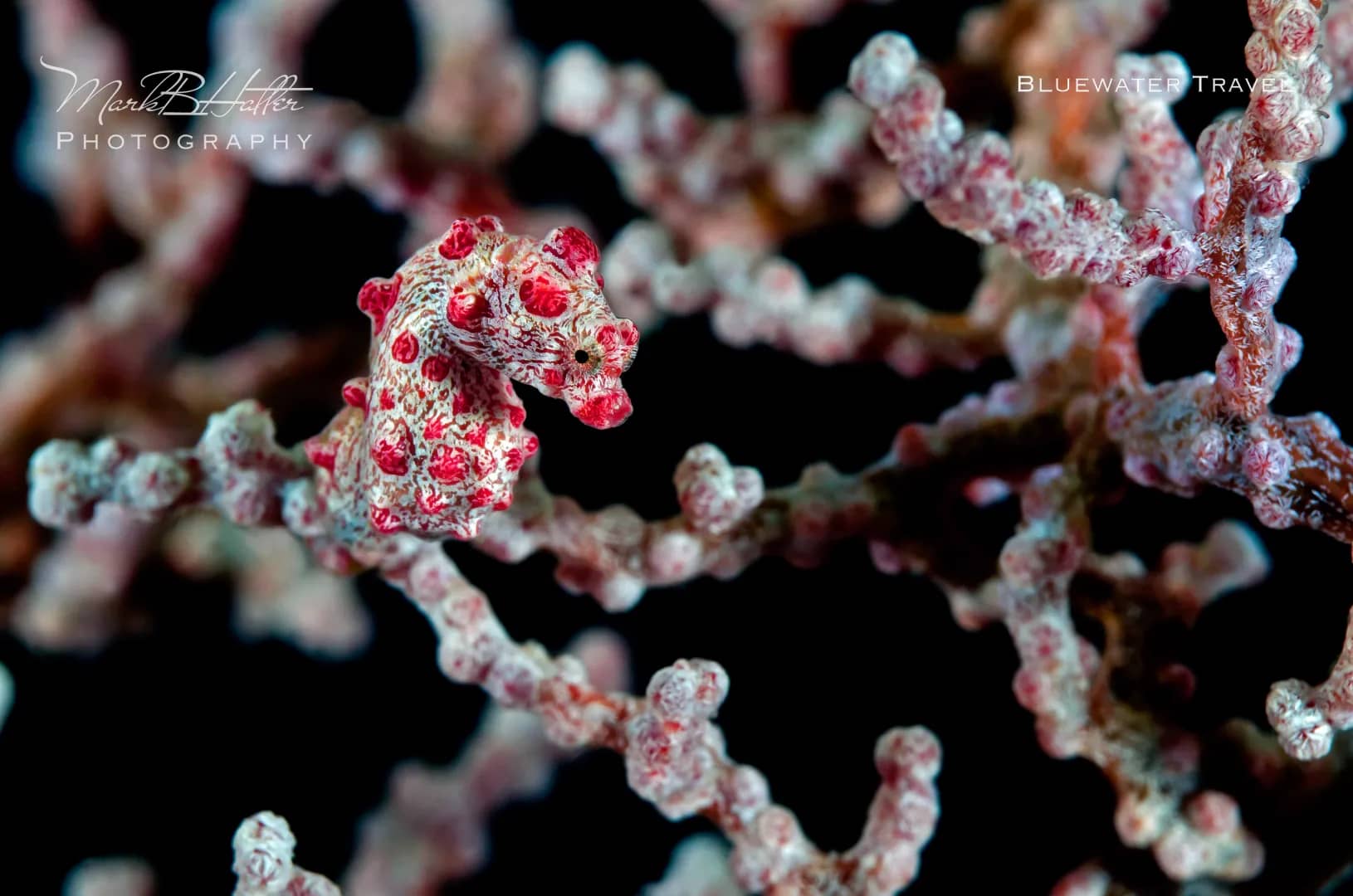
Although Raja Ampat is celebrated for its wide-angle grandeur, we also dedicated time to macro photography, especially during calmer dives and in more protected areas. We explored:
• Precise strobe positioning for small subjects
• Creating black backgrounds through exposure control
• Avoiding backscatter in particulate-rich water
• Refining focus techniques and depth-of-field control
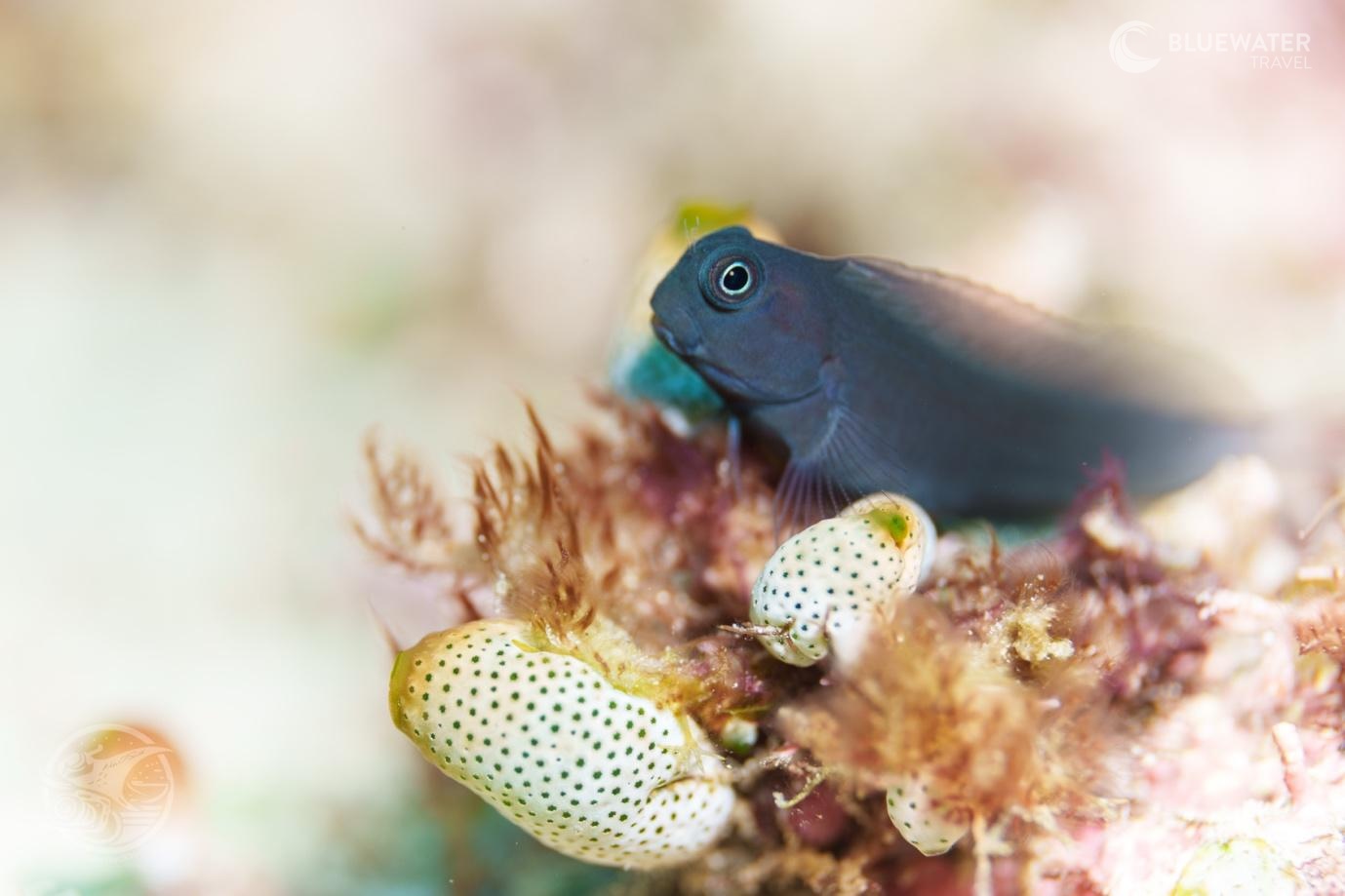
Throughout the week, I delivered structured workshop sessions covering both wide-angle and macro photography, with particular emphasis on lighting and strobe positioning. Even lighting across large reef scenes while keeping shadows controlled and avoiding backscatter became a recurring theme. Many participants commented that understanding strobe positioning in dynamic Raja Ampat conditions was one of the most valuable takeaways of the trip. I also spent time demonstrating how I use Lightroom to catalogue and process my images. Participants took lots of opportunities for 1:1 time to discuss specific challenges, ideas, and share techniques.
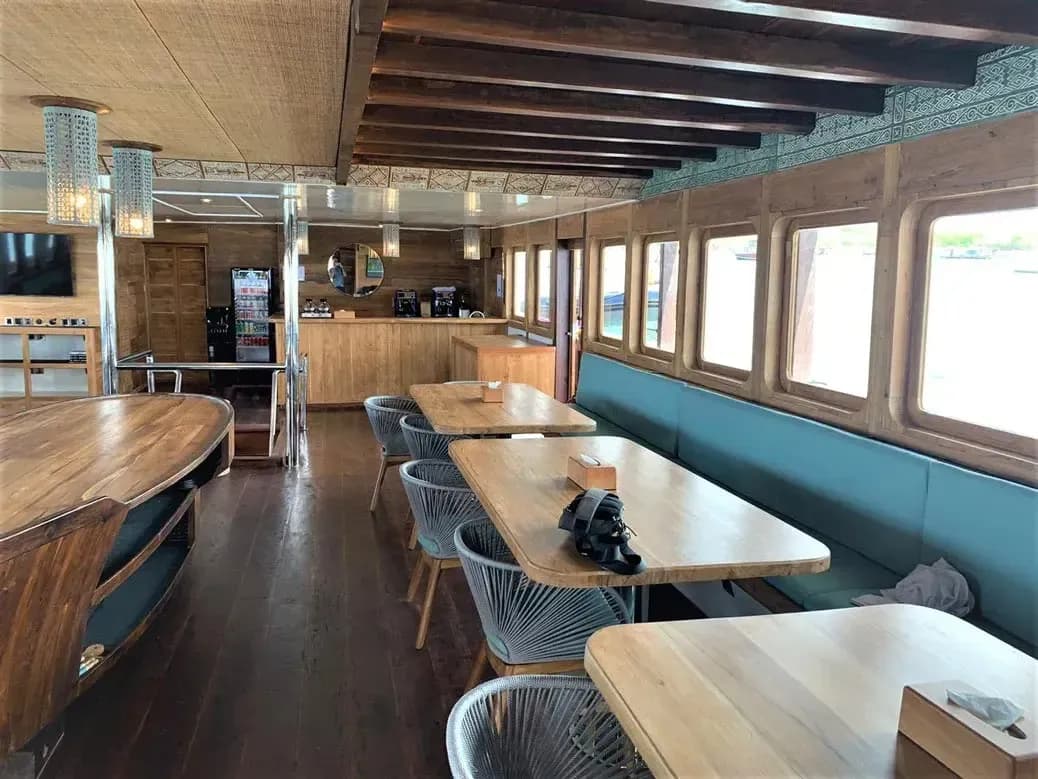
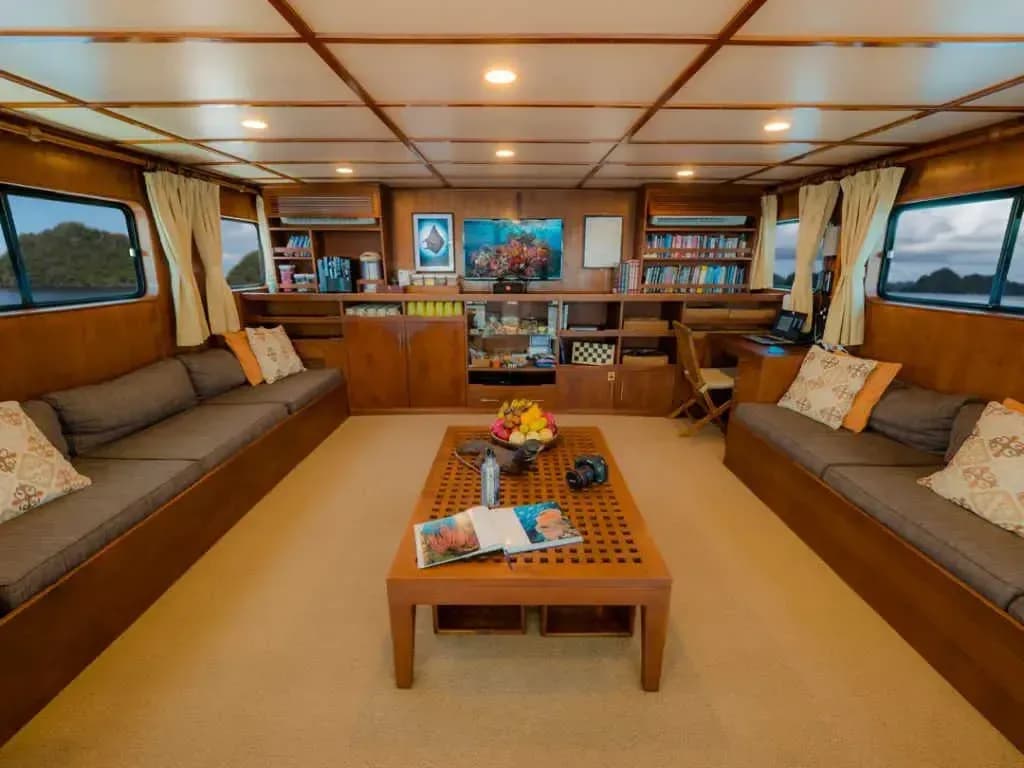
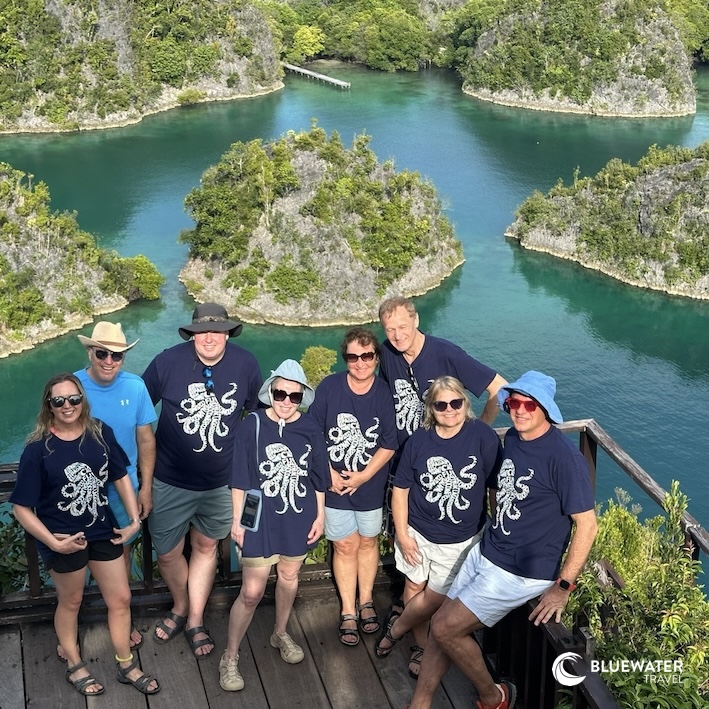
The combination of relentless diving, structured education, and the luxury and comfort of the Damai liveaboard created a uniquely immersive experience. With four dives per day, incredible biodiversity, and a passionate group of photographers committed to growth, the workshop captured everything that makes Raja Ampat extraordinary.
We ended the trip with a photography competition and image-sharing video to round out a fabulous 10 days. Congratulations to Dagmara, John D and Terra, who won the categories and will each receive a voucher.
From sunrise dives at Cape Kri to leopard shark reintroduction projects, the February 2026 Damai expedition truly embodied the spirit of Bluewater Travel: world-class diving, expert instruction, and the shared pursuit of stronger underwater imagery.


-optimized-optimized.webp&w=640&q=75 "Solomon Islands Trip Recap 2026")