



Tubbataha, Philippines Liveabord Expedition
Trip Recap April 2026 by Tim Yeo
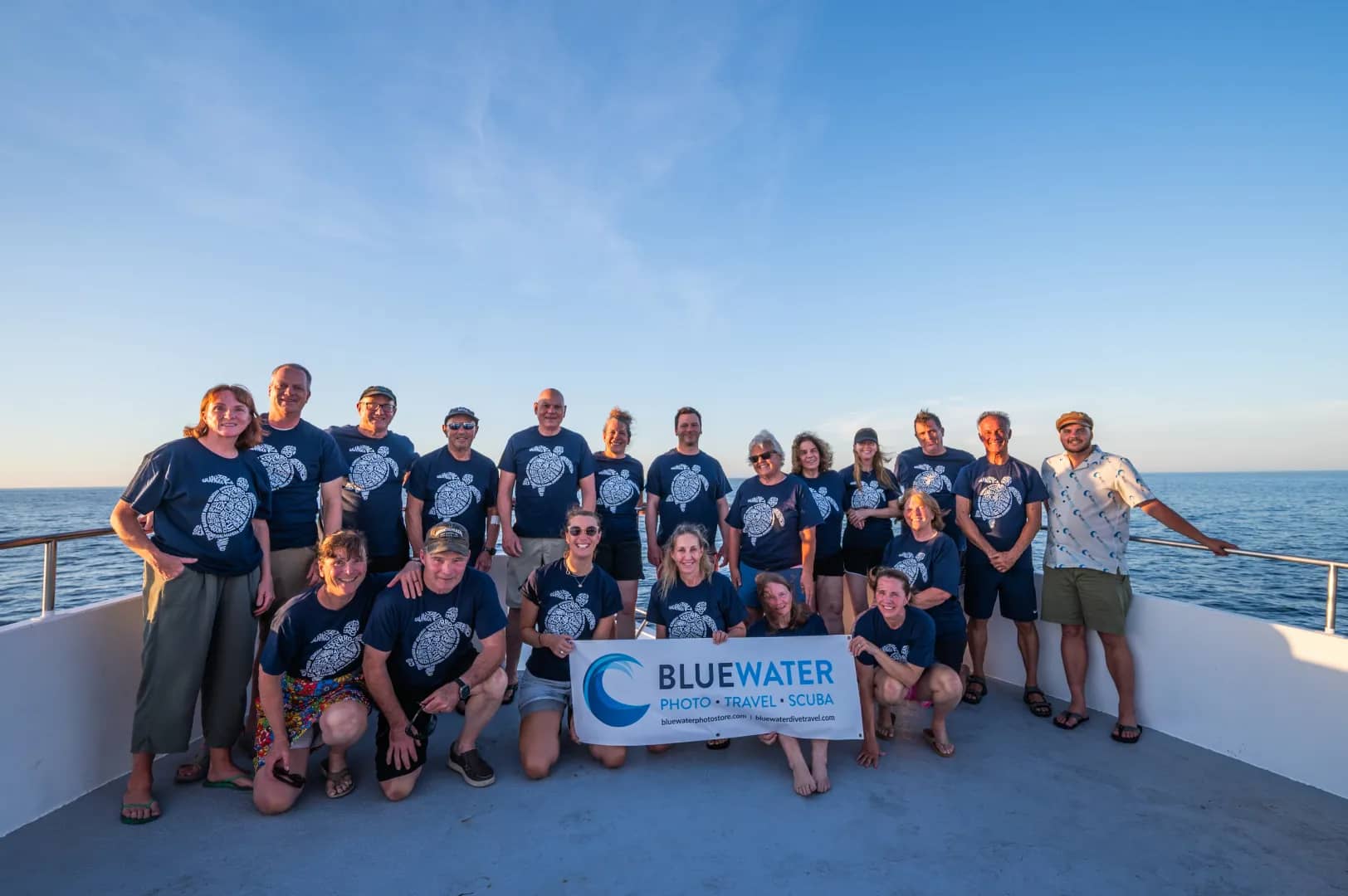
This trip brought together a small group of close friends for an unforgettable week exploring two very different sides of Philippine diving. We started with a short extension in Dumaguete before heading to Tubbataha aboard the MY Gypsy, combining world-class macro diving with some of the healthiest reefs and best reef diving in Southeast Asia.
Dumaguete Extension: World Class Macro Diving
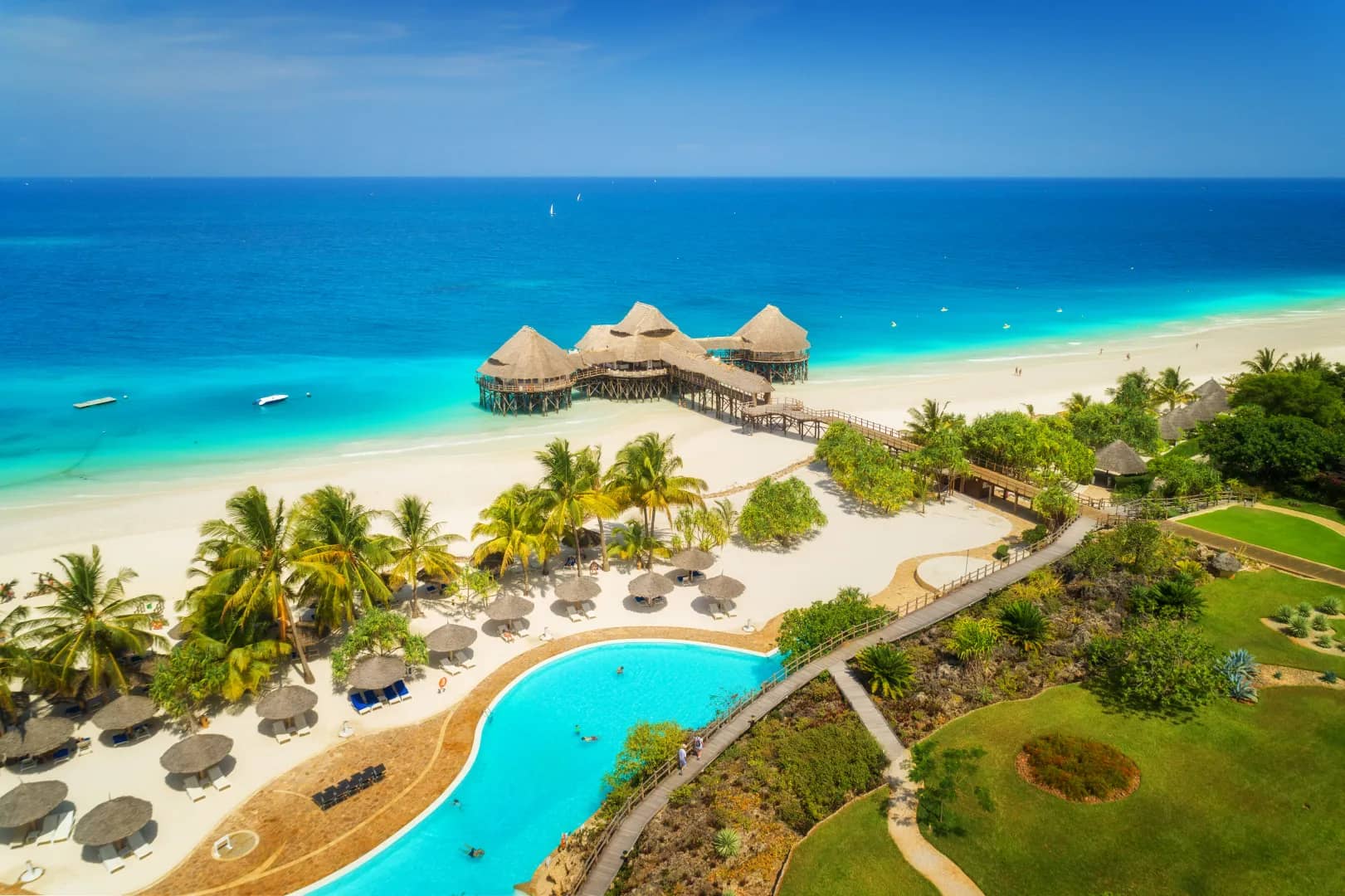
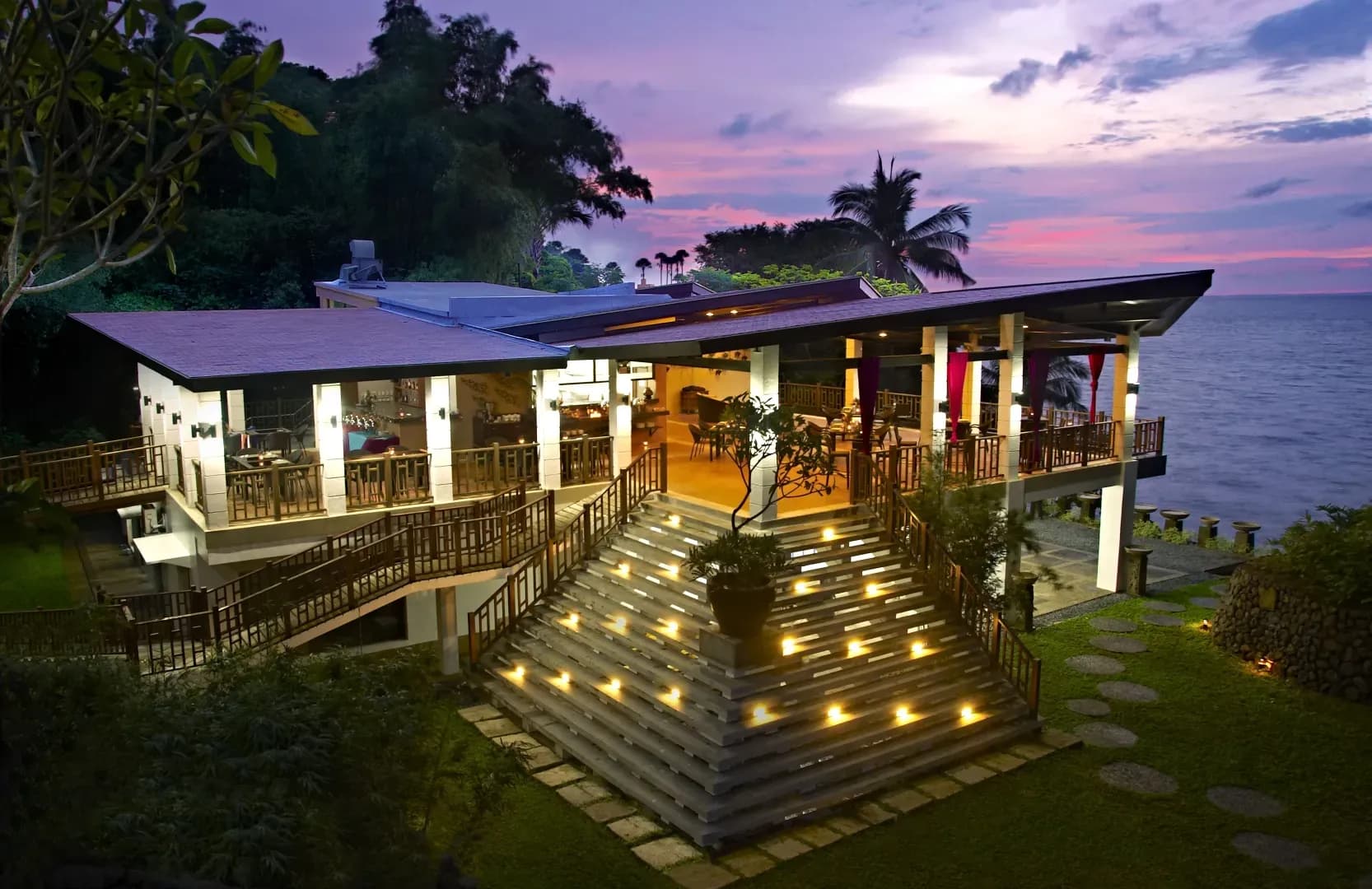
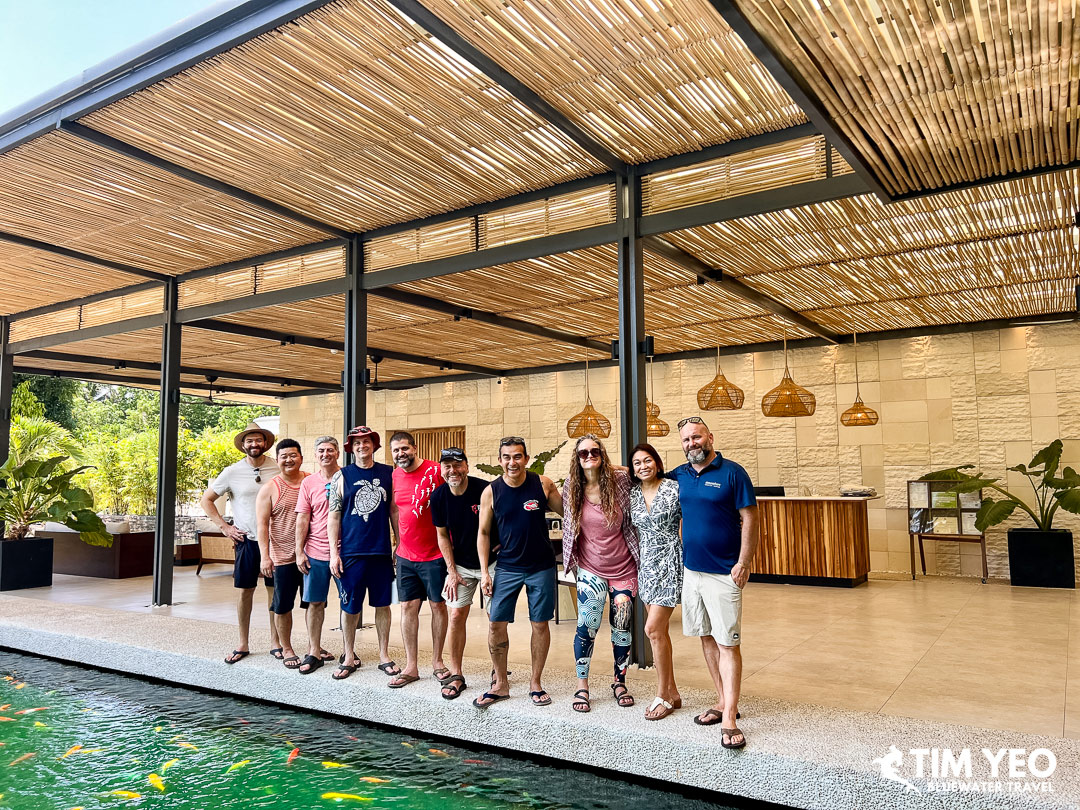
We began the trip with three nights at Atmosphere Resort & Spa, which was the perfect way to ease into the adventure. The resort offers a luxurious but relaxed atmosphere and provides easy access to both muck diving sites and nearby reef systems like Apo Island.
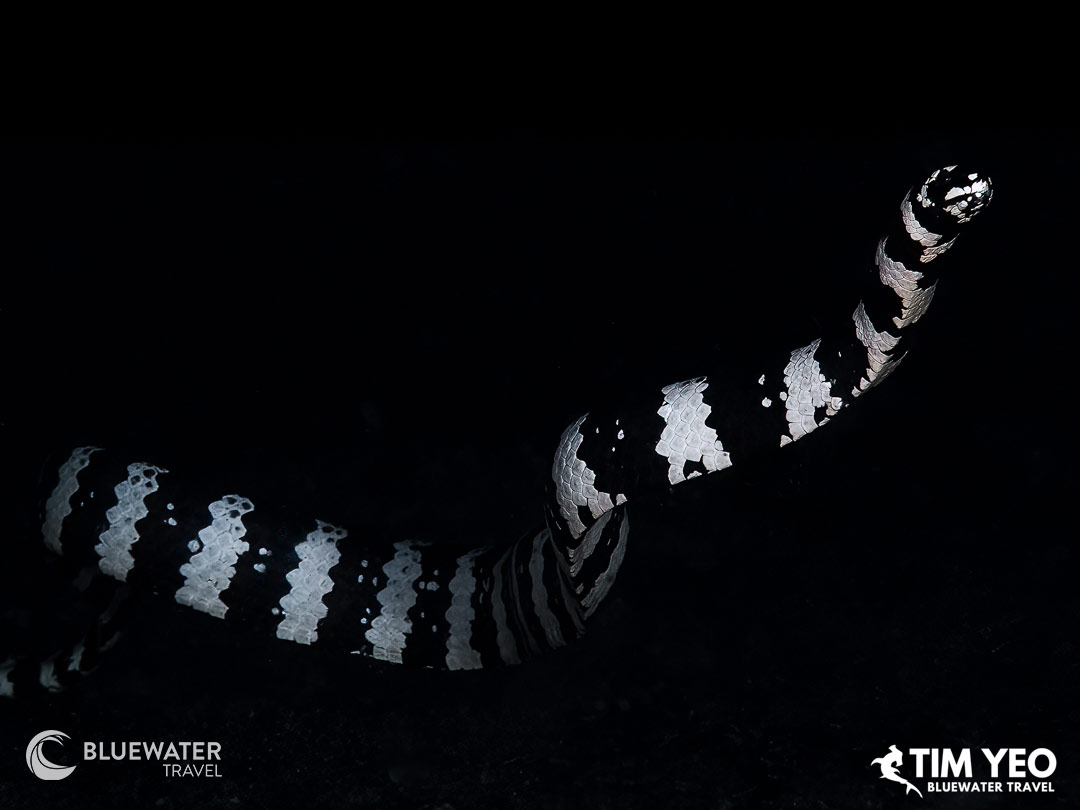
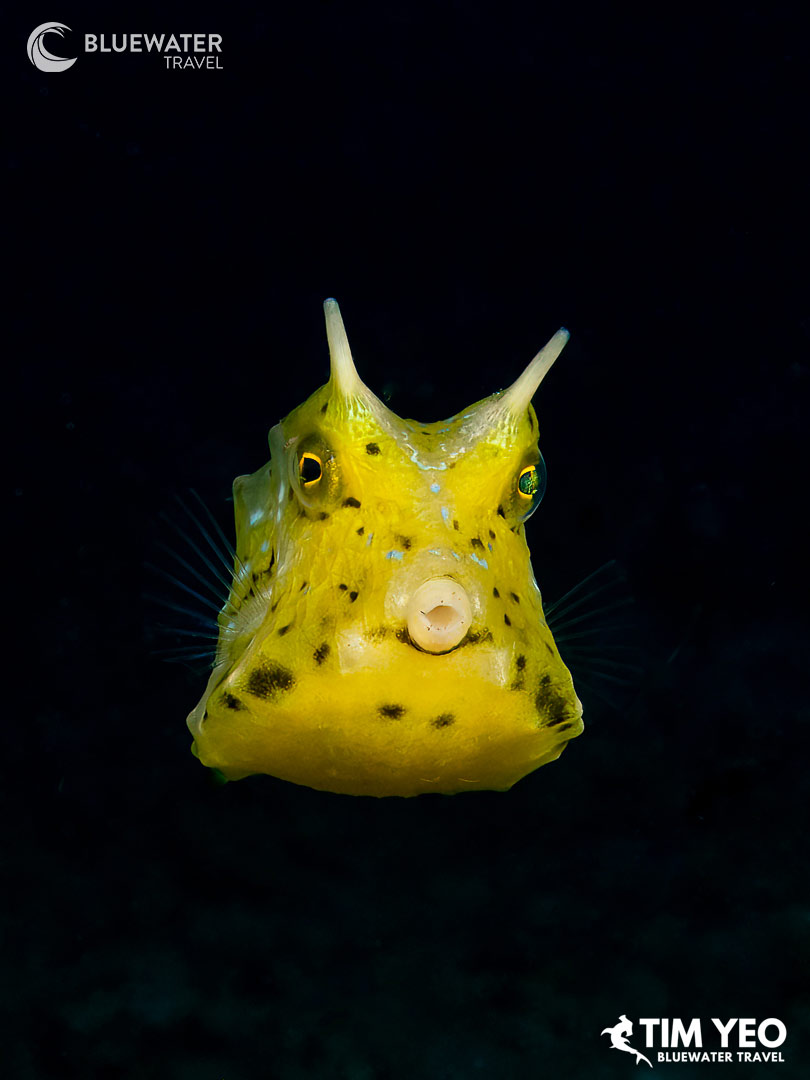
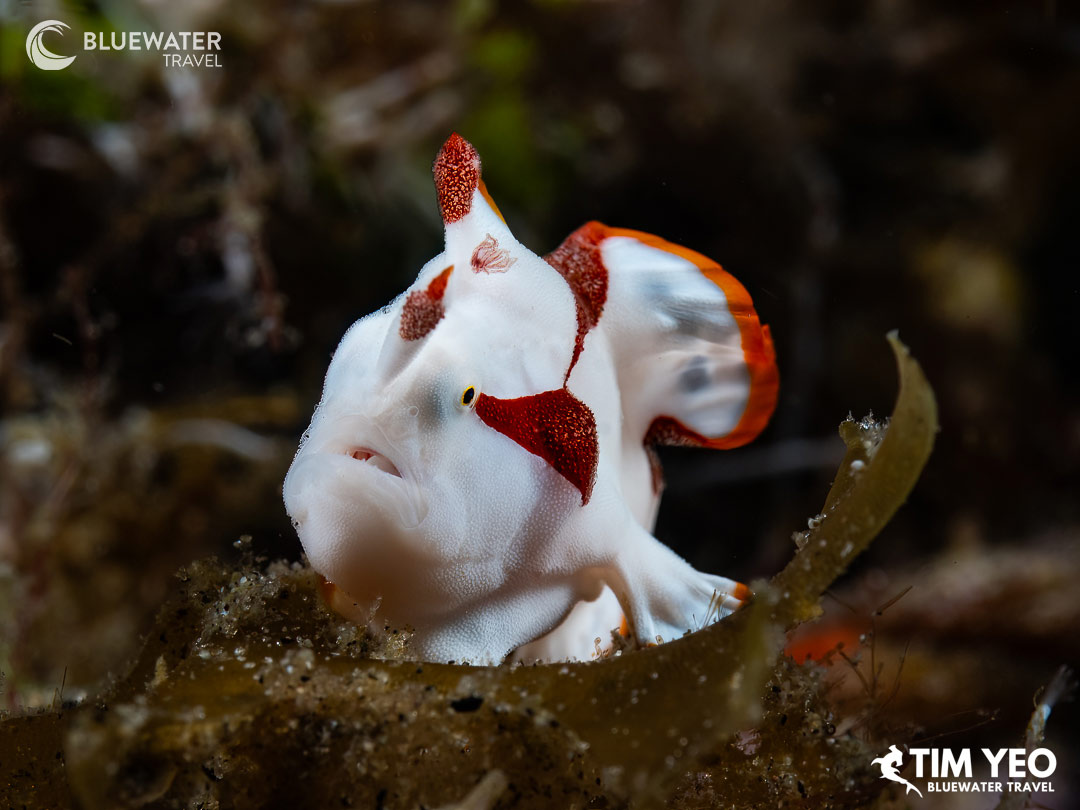
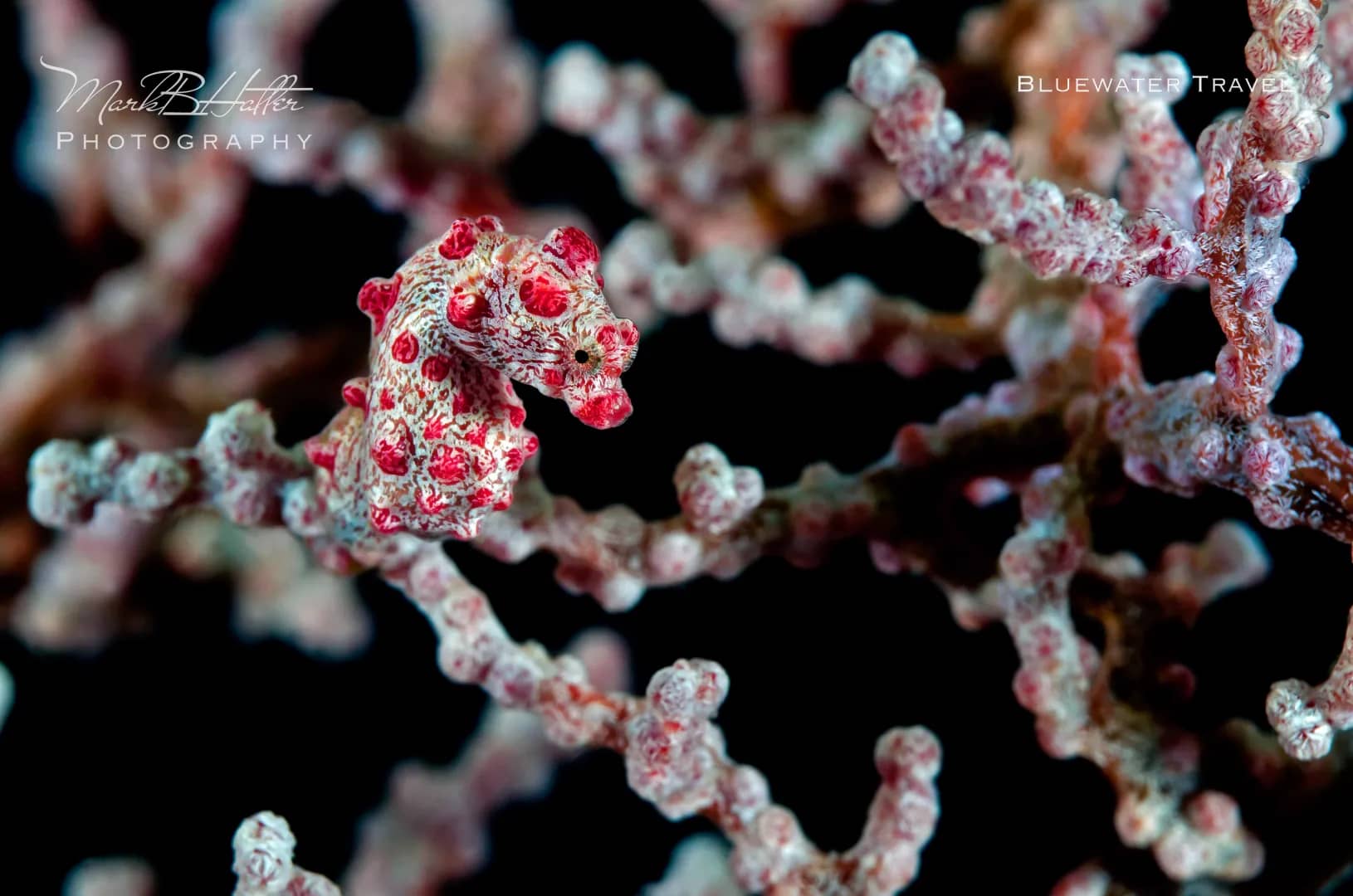
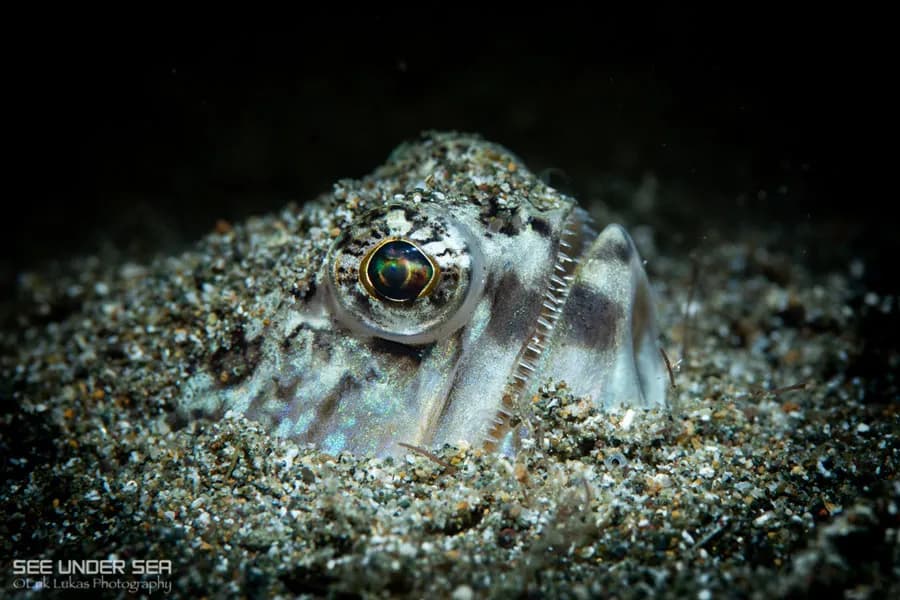
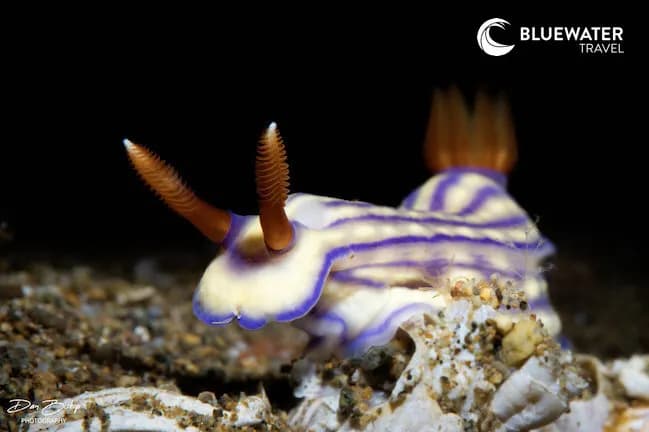
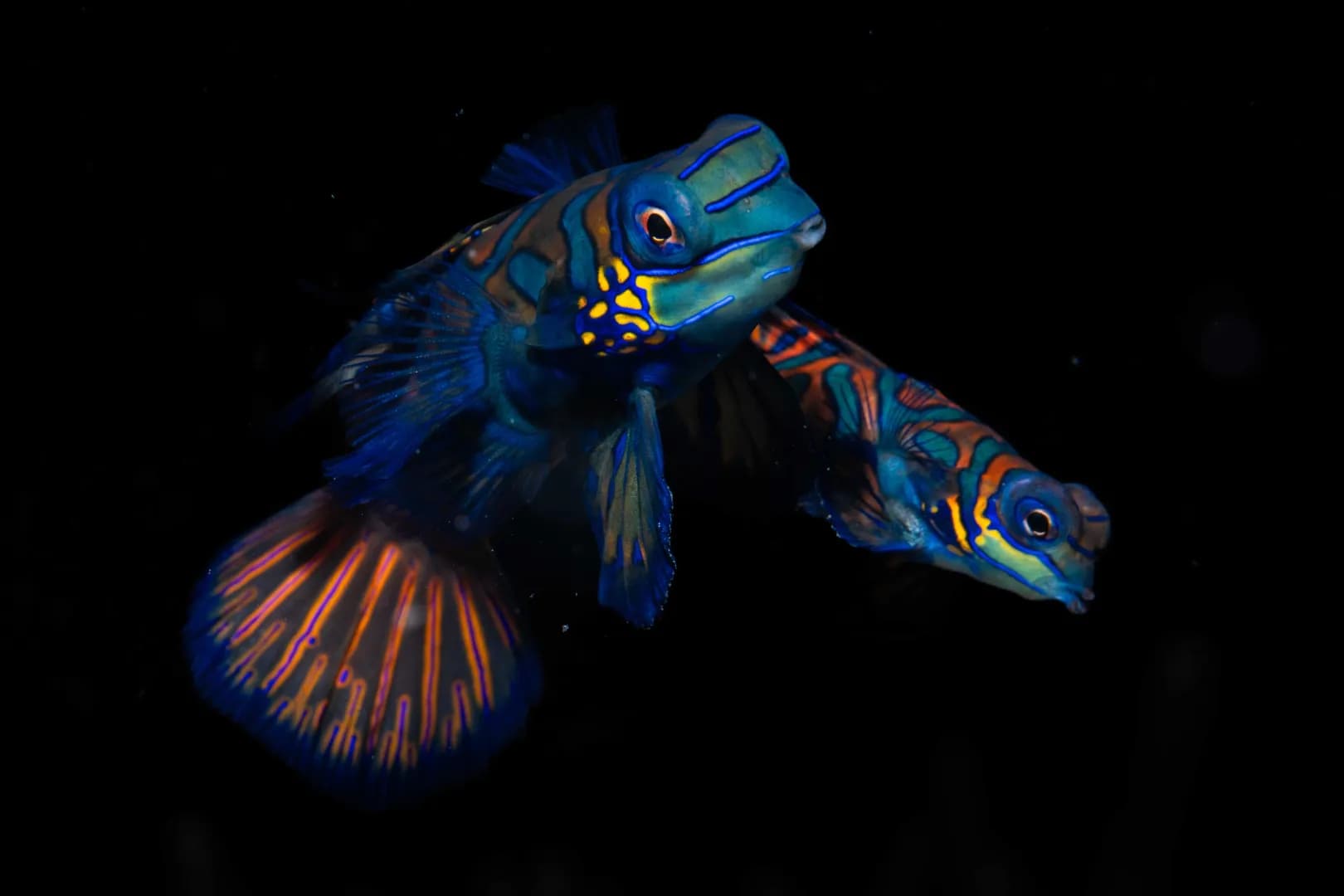
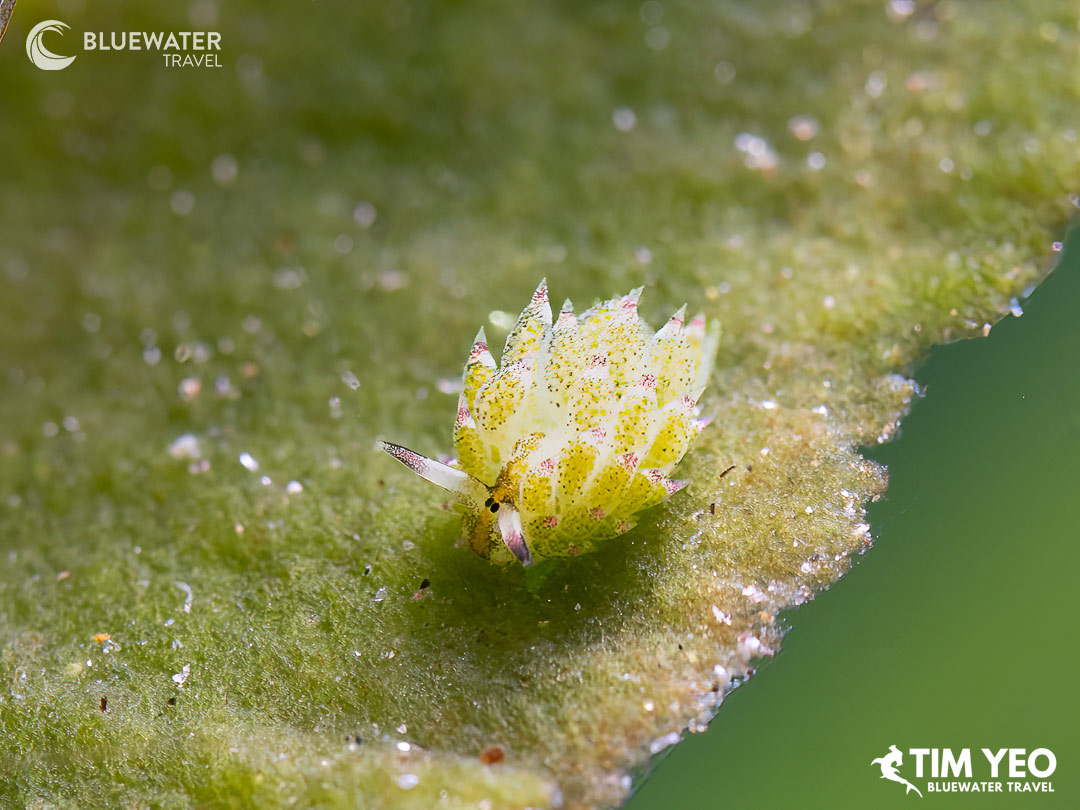
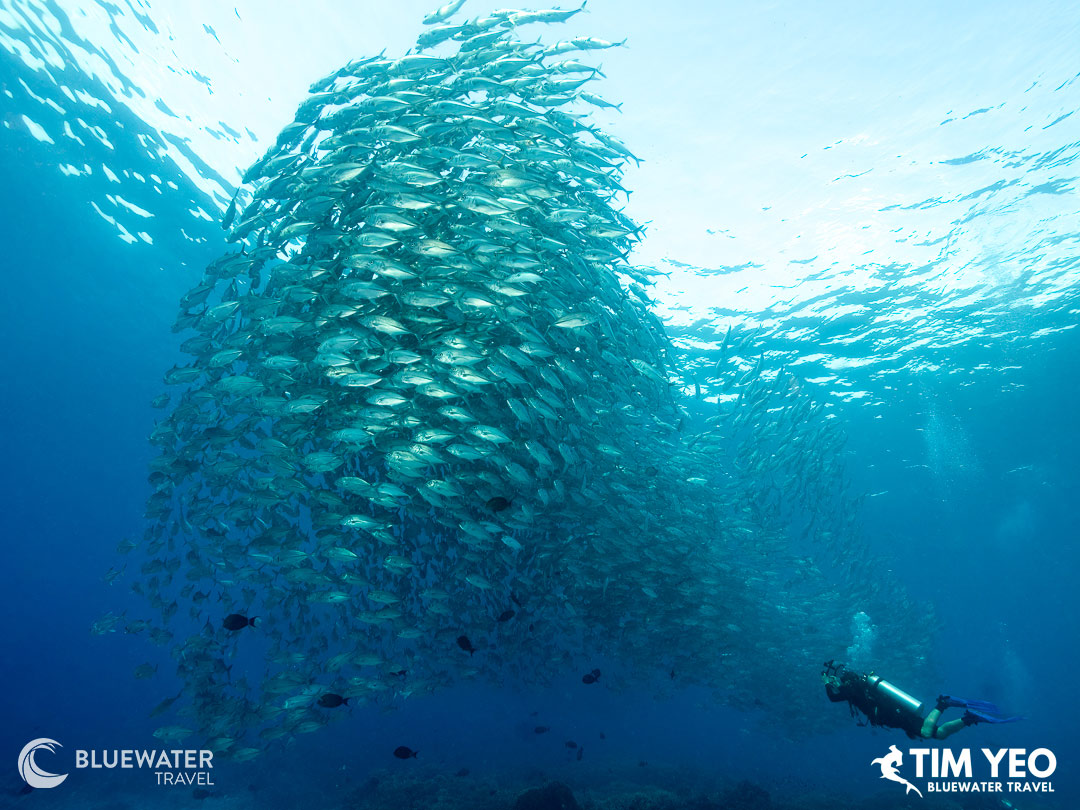
Even in just a few days of diving, Dumaguete delivered an incredible amount of marine life. We encountered large schools of jacks, many green turtles, sea snakes, and healthy reef life, while the muck diving produced a constant stream of critters for photographers. Frogfish of various sizes, seahorses, nudibranchs, shrimp, crabs, squid, and countless other macro subjects kept everyone busy underwater.
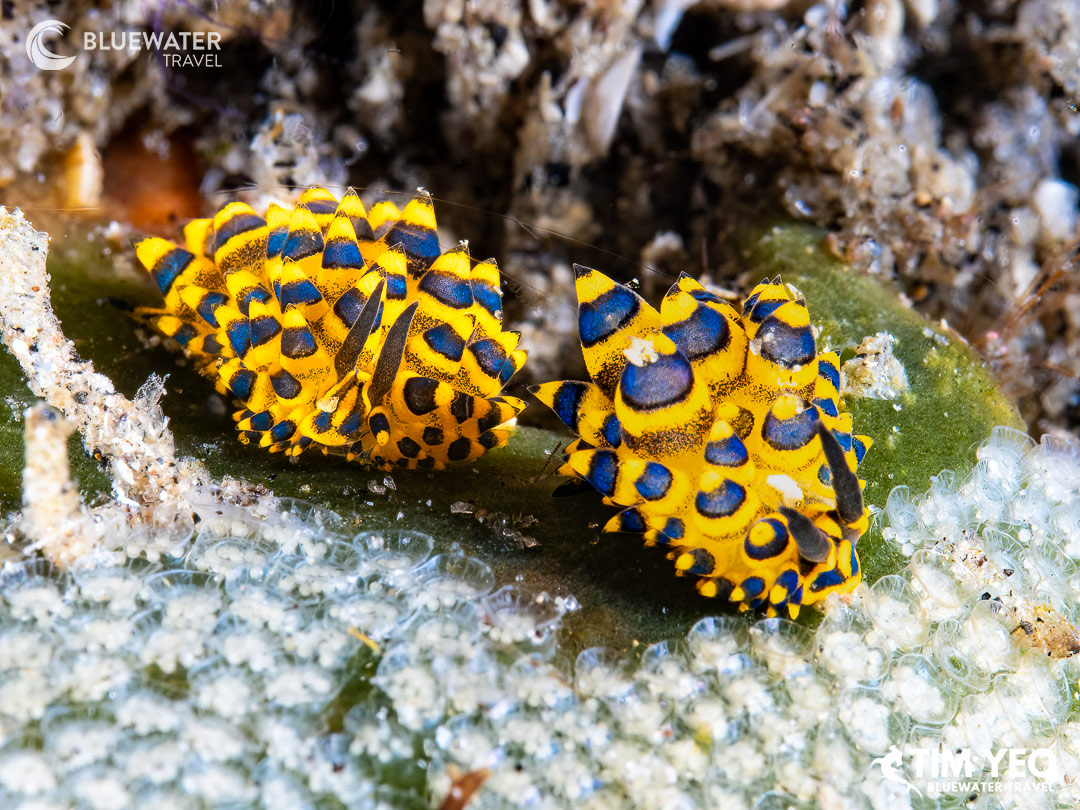
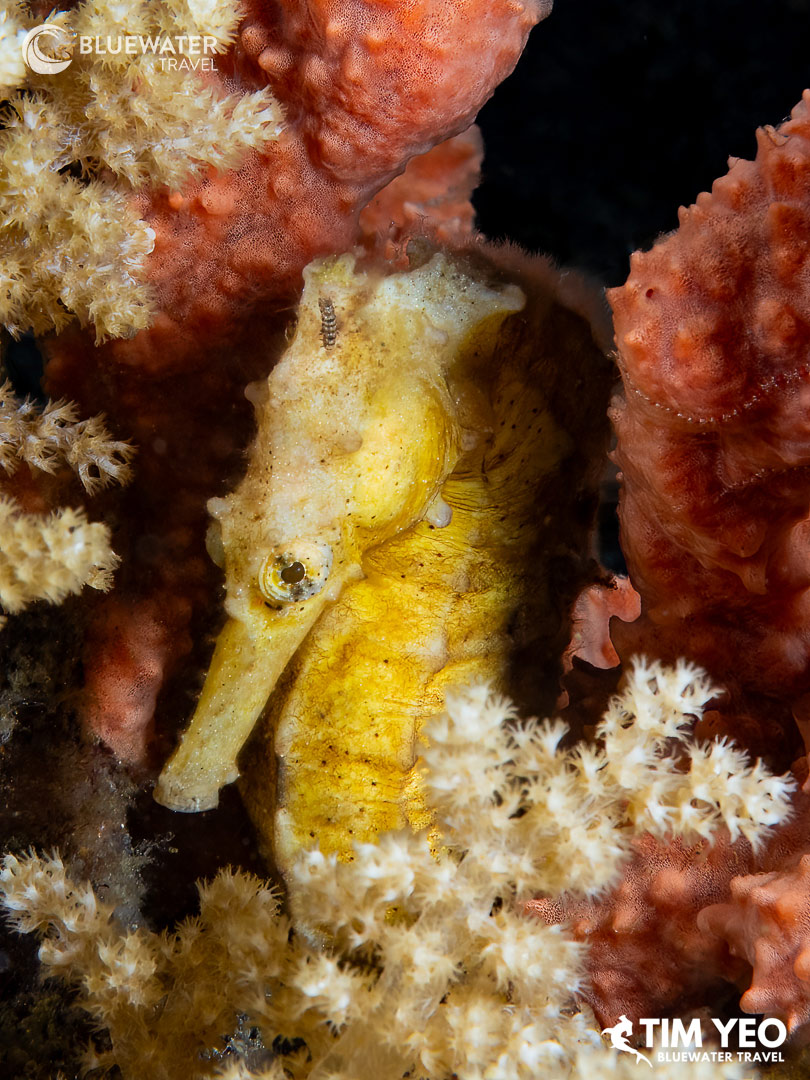
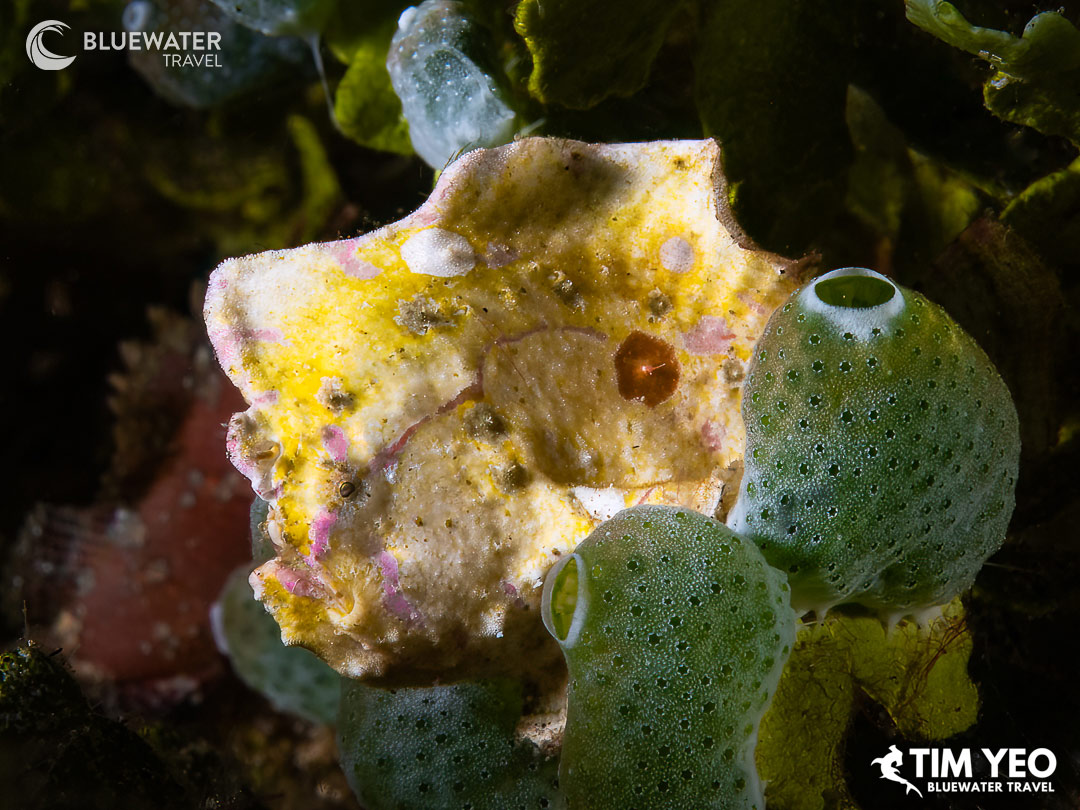
Dumaguete remains one of the best destinations in the world for divers who enjoy searching for small and unusual marine life while enjoying surface intervals at dive resorts with all the luxuries they are used to at home, and more.
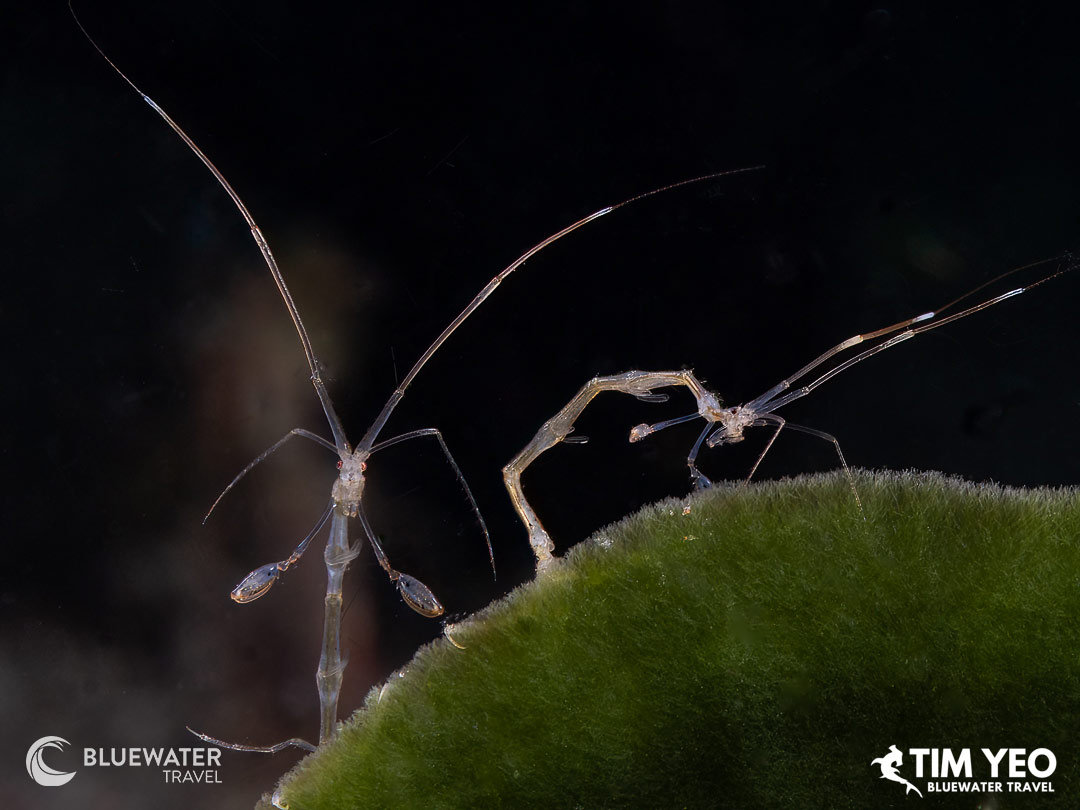
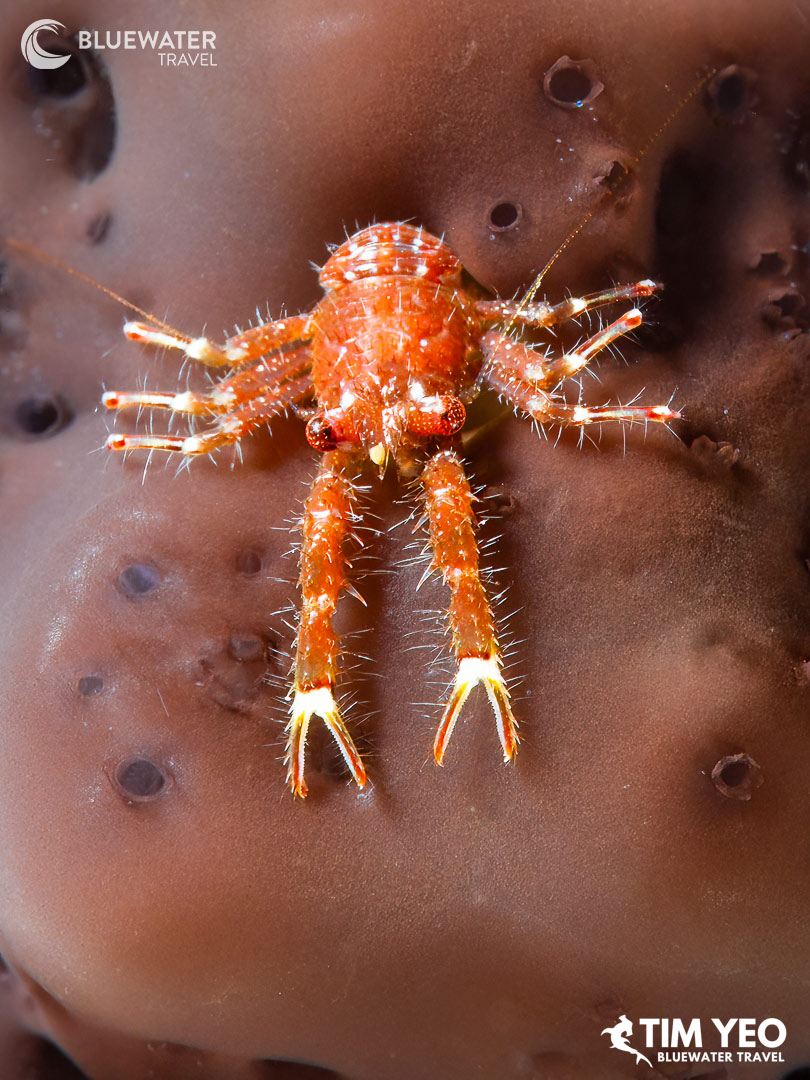
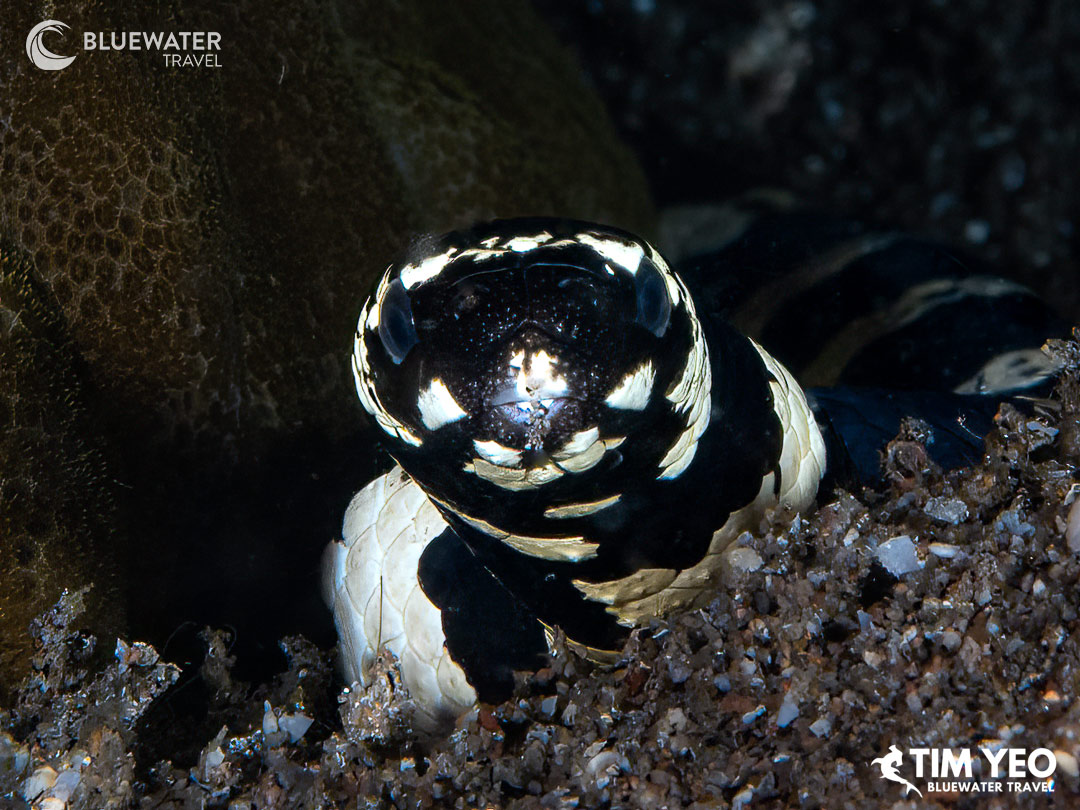
The Gypsy Liveaboard Experience
From Dumaguete, we drove to Sipalay to board the MY Gypsy for our expedition to Tubbataha Reefs Natural Park a UNESCO World Heritage Site.
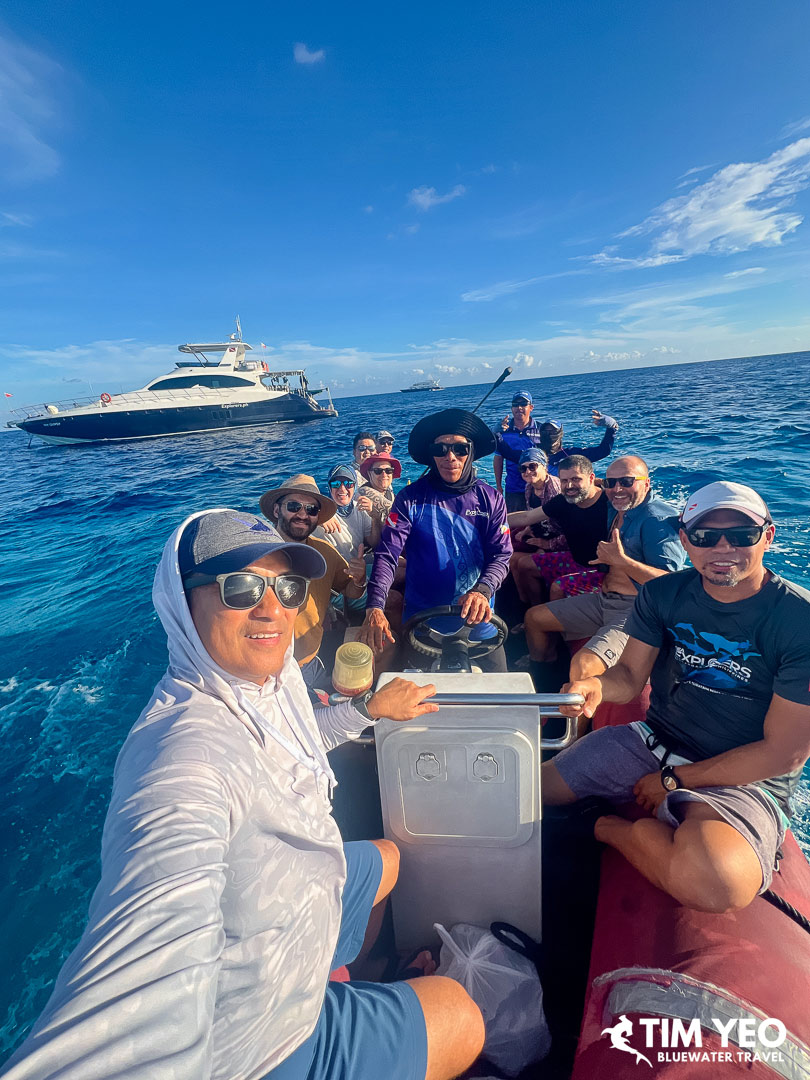
The Gypsy was a great fit for our small group. With just four cabins and a maximum of eight divers onboard, the atmosphere felt relaxed and uncrowded throughout the week. The boat has plenty of comfortable outdoor lounge areas, including a spacious flybridge with couches where we spent time relaxing between dives and in the evenings. The shaded bow area also became a favorite place to enjoy the sea breeze during surface intervals.
One feature we especially appreciated was the Seakeeper stabilization system, which dramatically reduced rocking during the long crossings to and from, and while in Tubbataha. Combined with the vessel’s slower cruising speed, the ride was remarkably smooth and comfortable even when conditions became windy.
Another highlight was the diving setup itself. With only eight divers onboard and two dive guides, we divided into small groups of four divers per guide, which made for a much more relaxed experience underwater. The zodiac was spacious enough for both camera systems and dive gear, and entries and pickups were efficient throughout the trip.
The food onboard was also consistently excellent. Meals were simple but very well prepared, with hearty breakfasts, fresh lunches, and rotating dinner menus that included dishes like beef tenderloin, seafood, curries, and grilled fish.
Diving Tubbataha
The real highlight of the trip, however, was what awaited underwater.
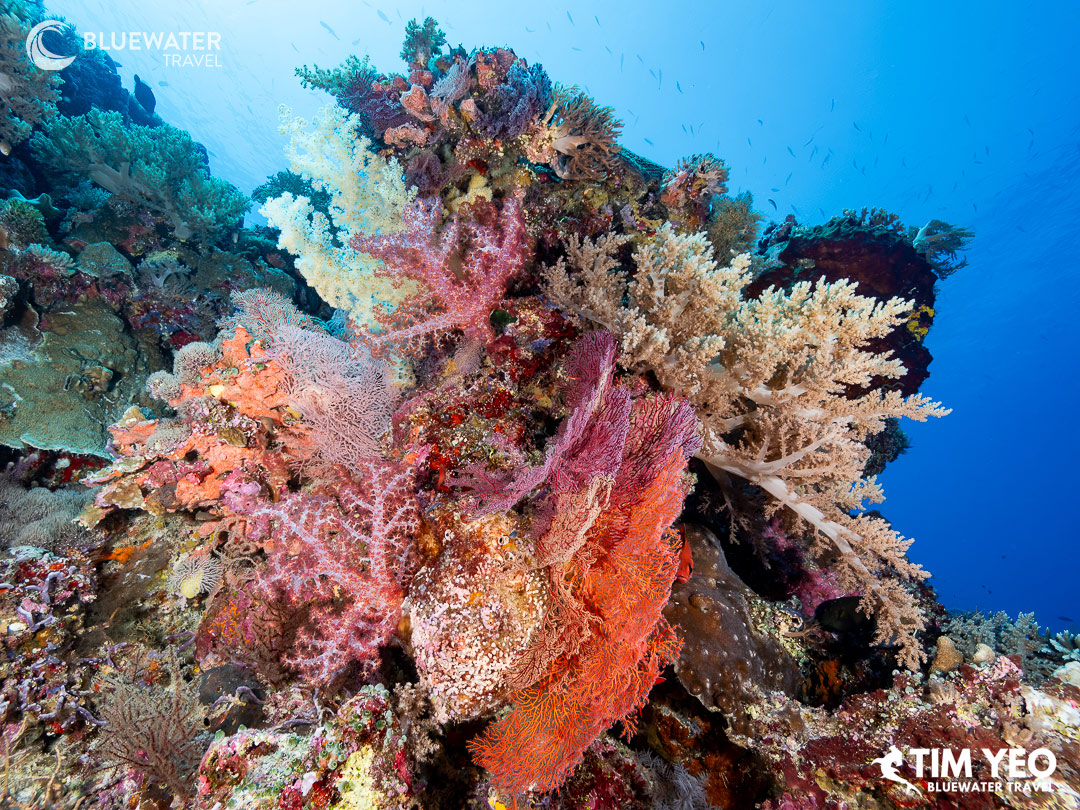
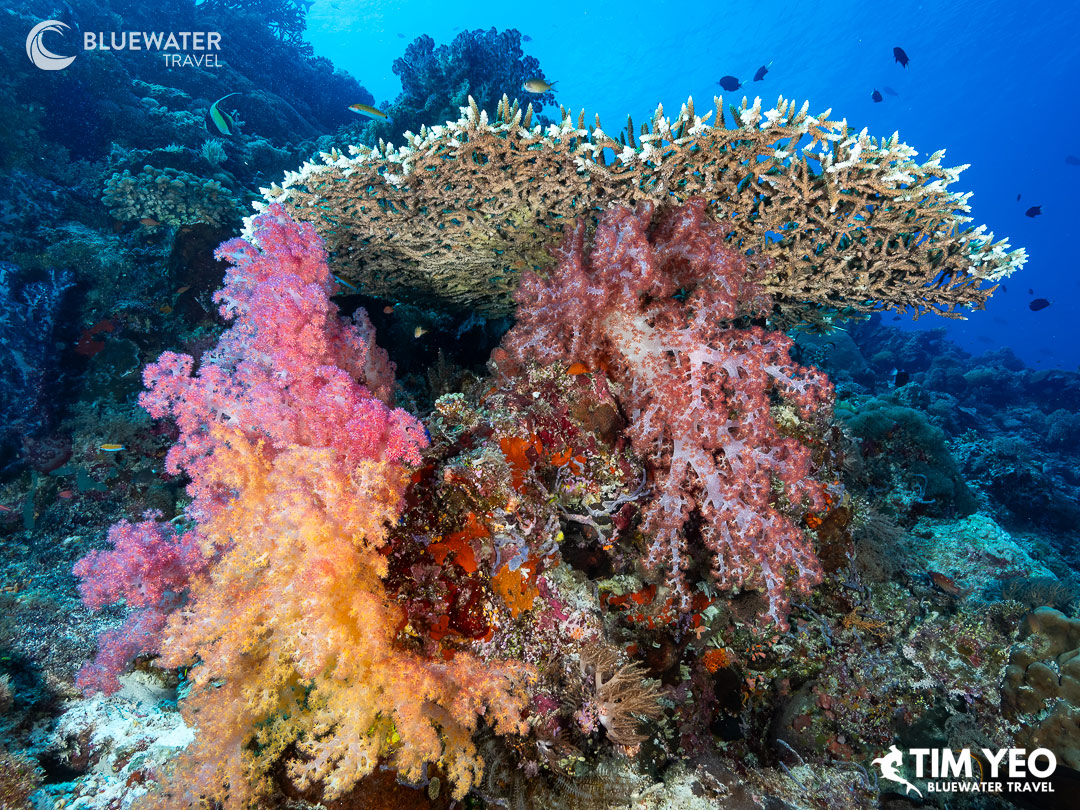
Tubbataha is one of those rare places that immediately reminds divers what reefs are supposed to look like. Because the park is so remote, well protected and strictly enforced, the reefs are exceptionally healthy and packed with marine life.
Most dives in Tubbataha are drift dives along walls and reef slopes. The zodiac would drop us at one point on the reef and we would simply drift with the current while the reef unfolded below us.
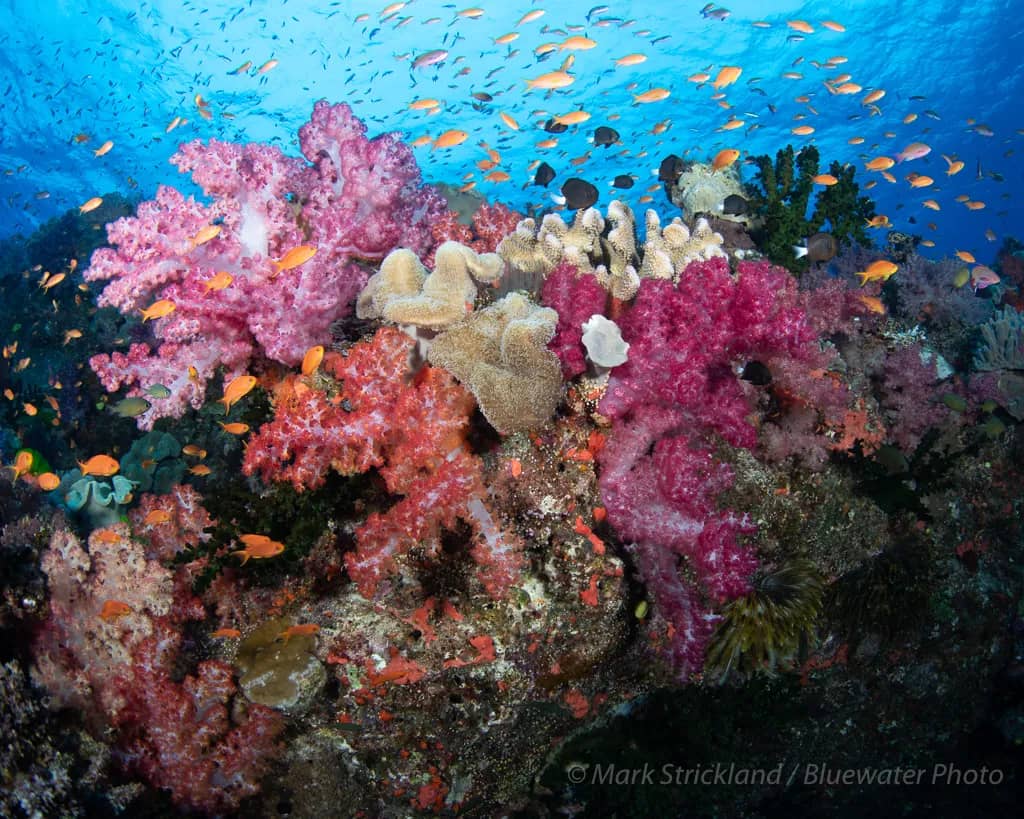
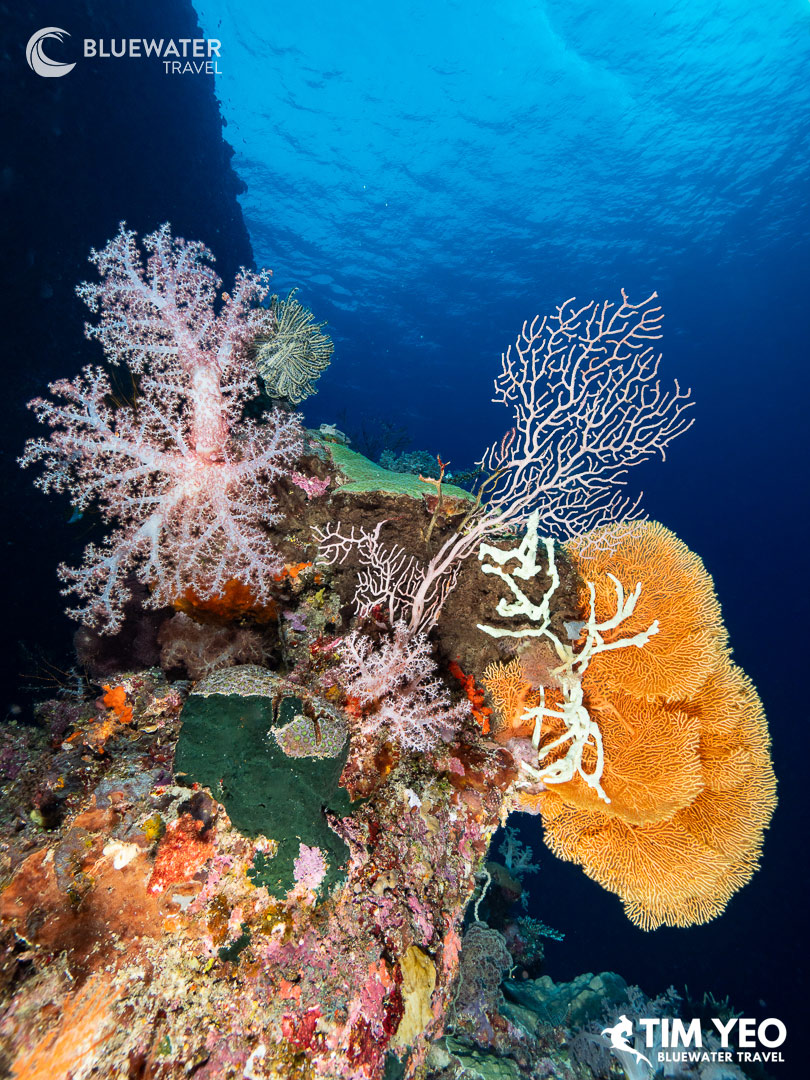
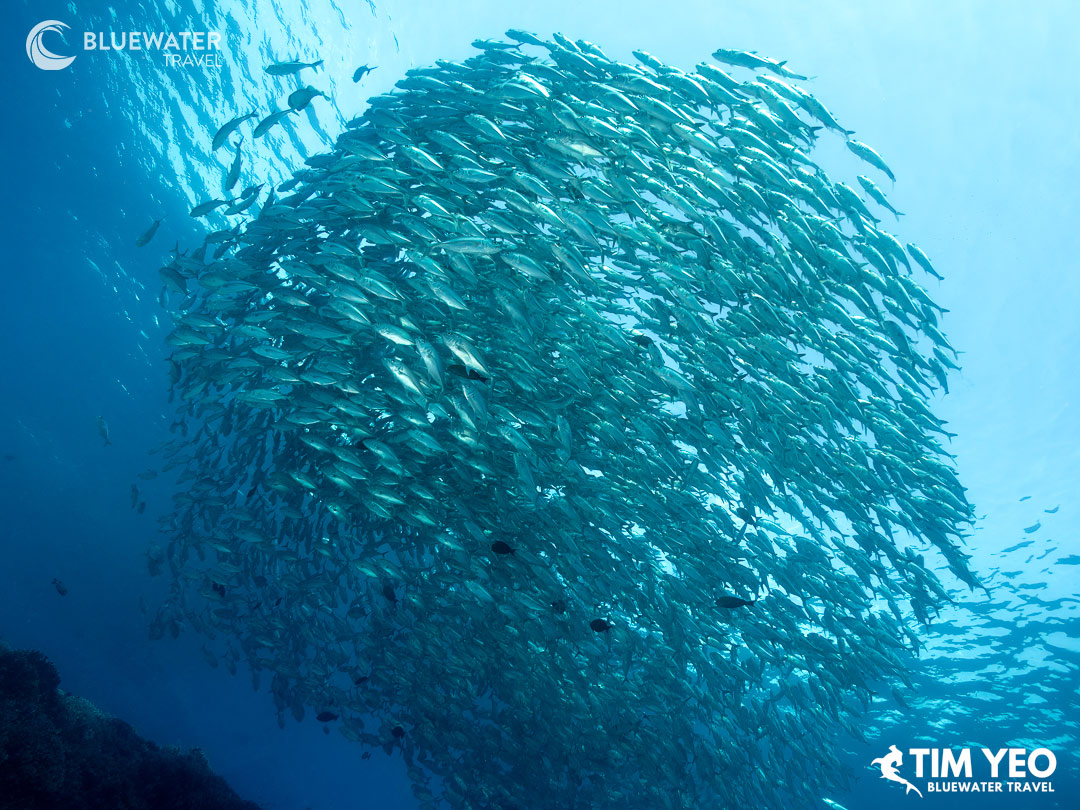
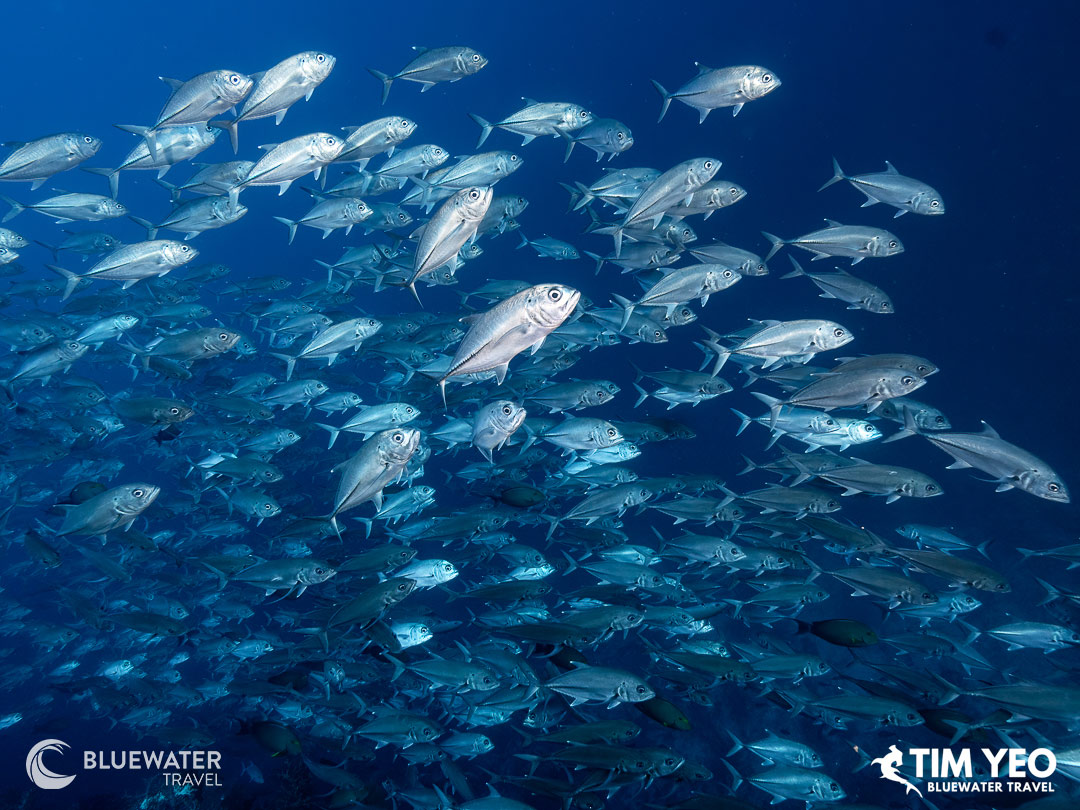
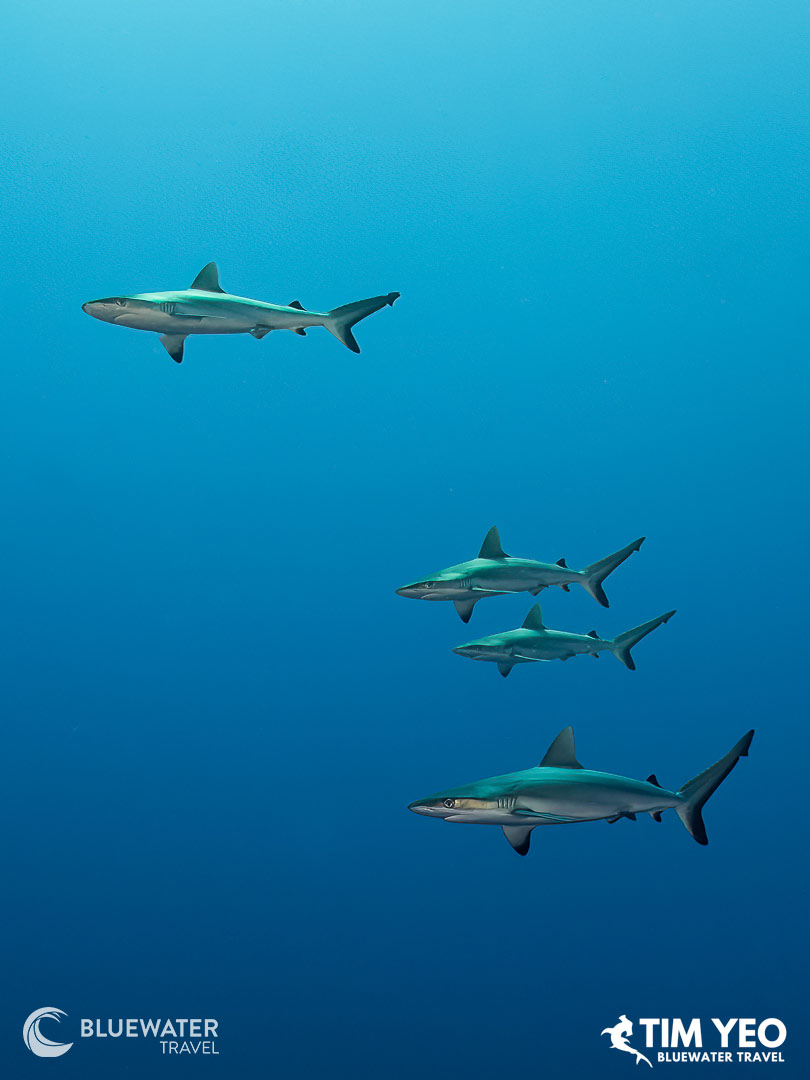
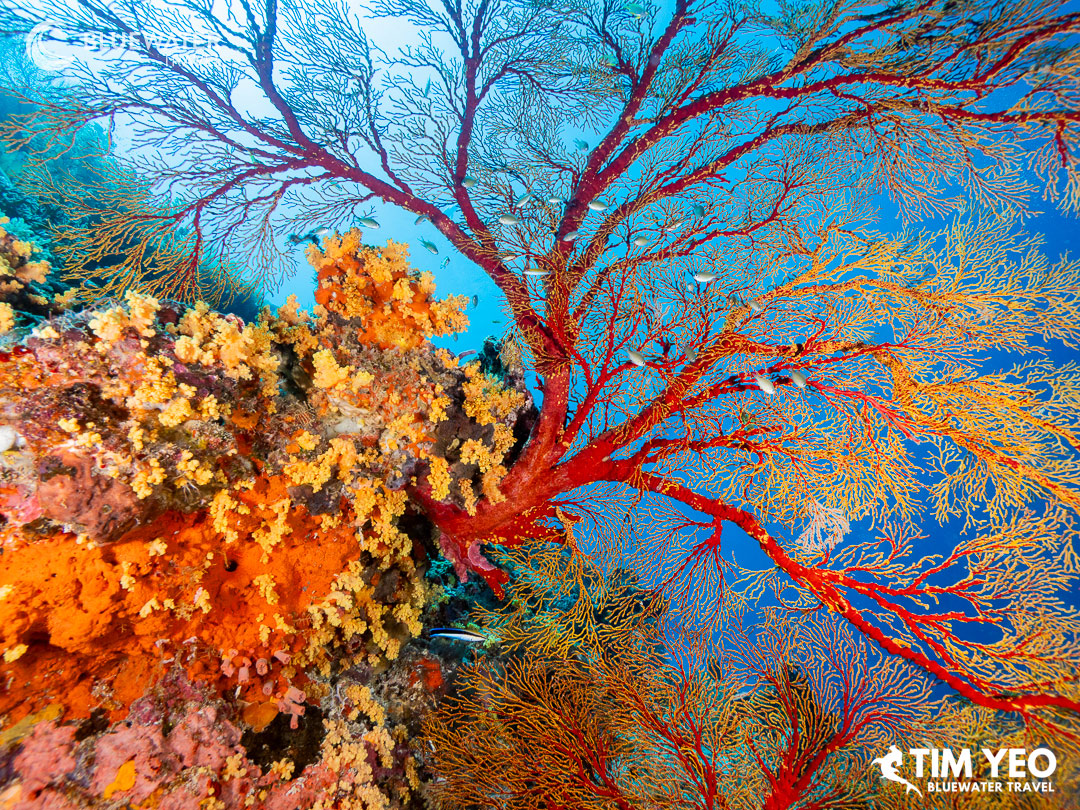
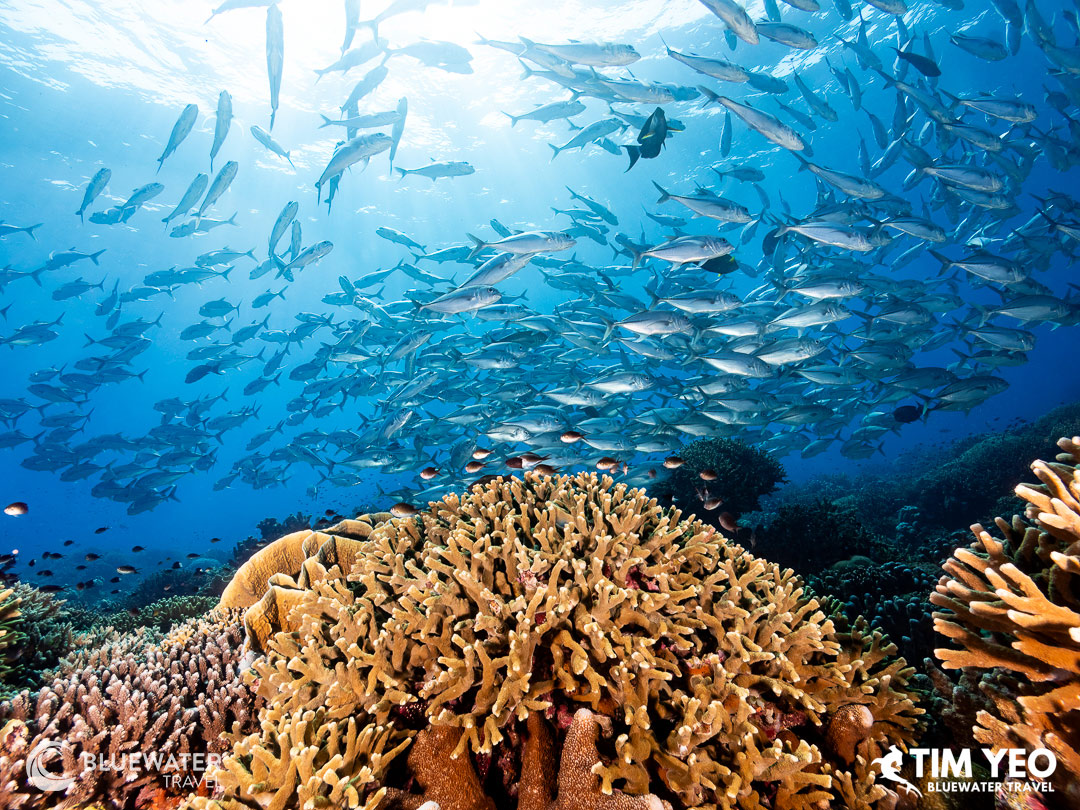
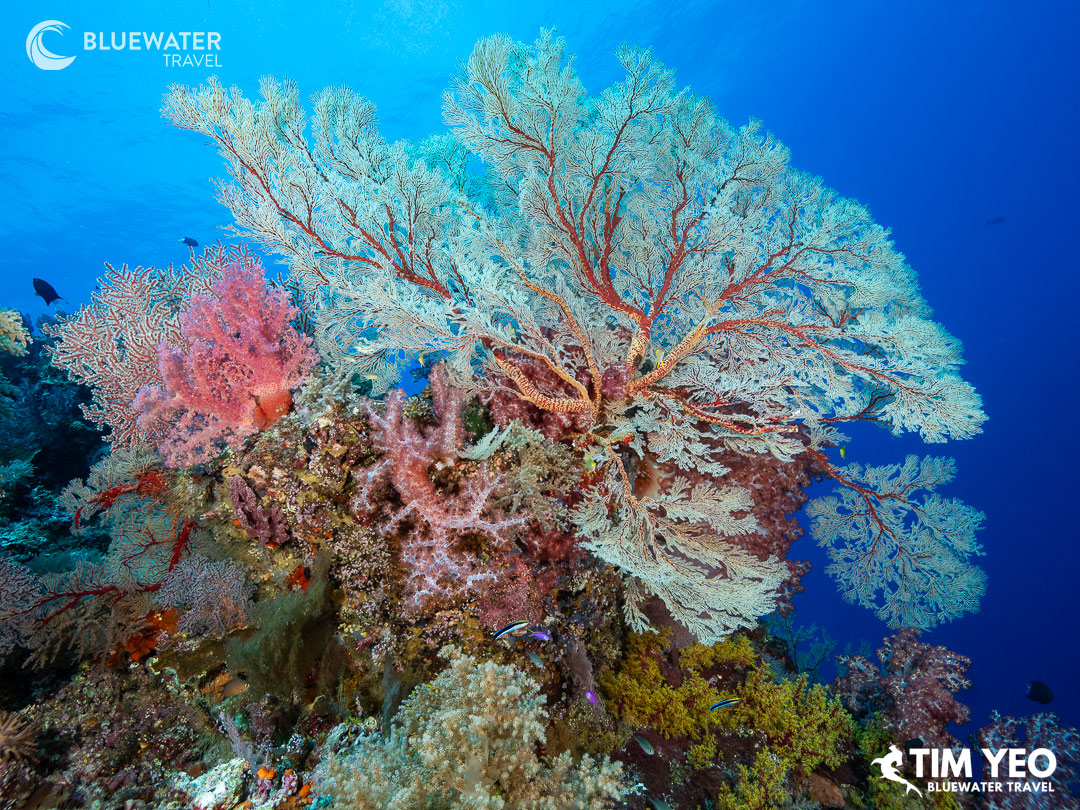
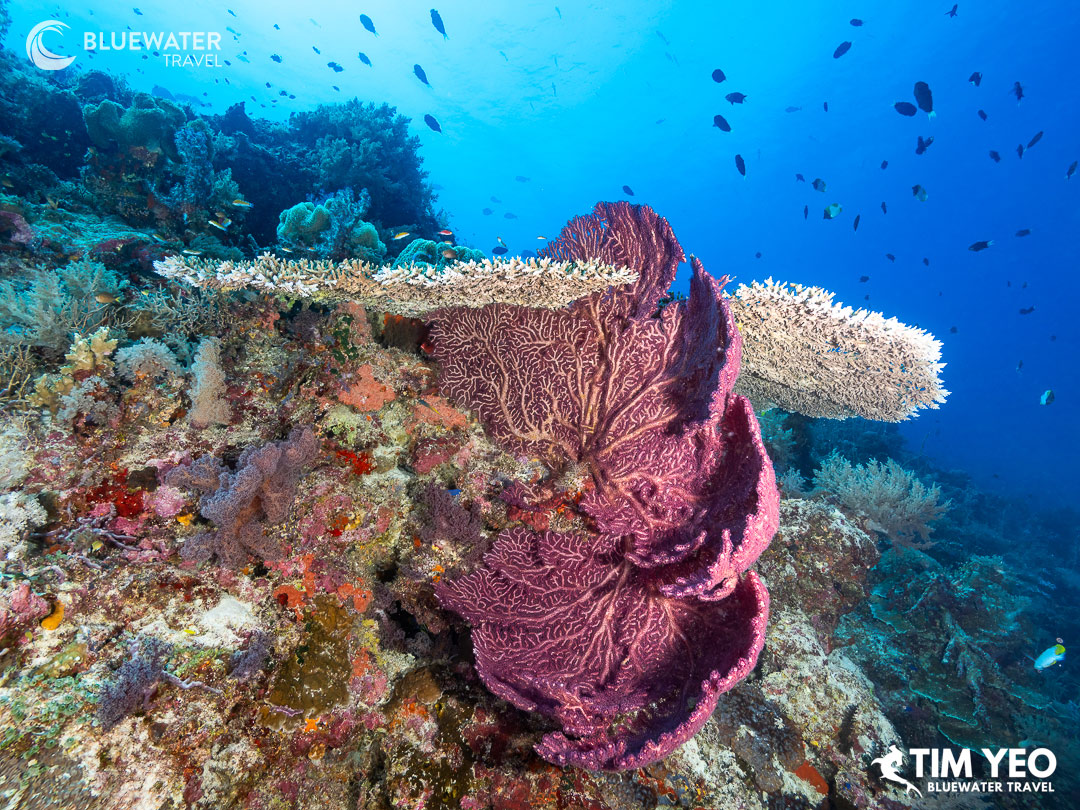
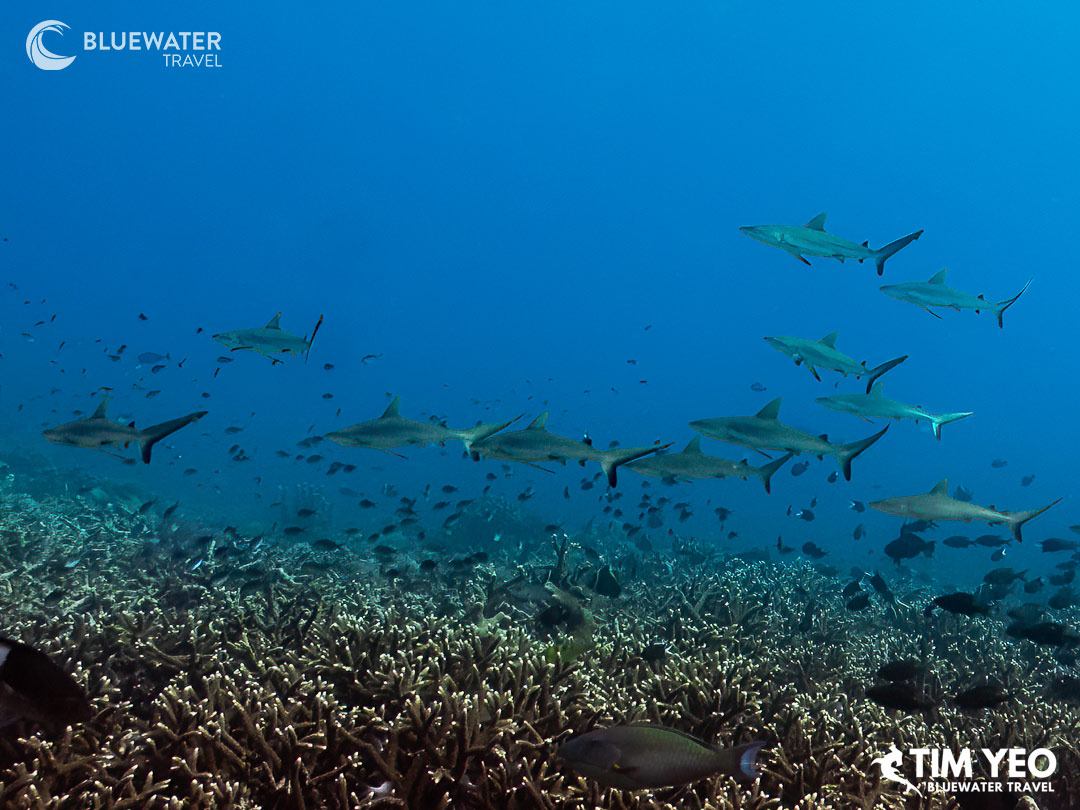
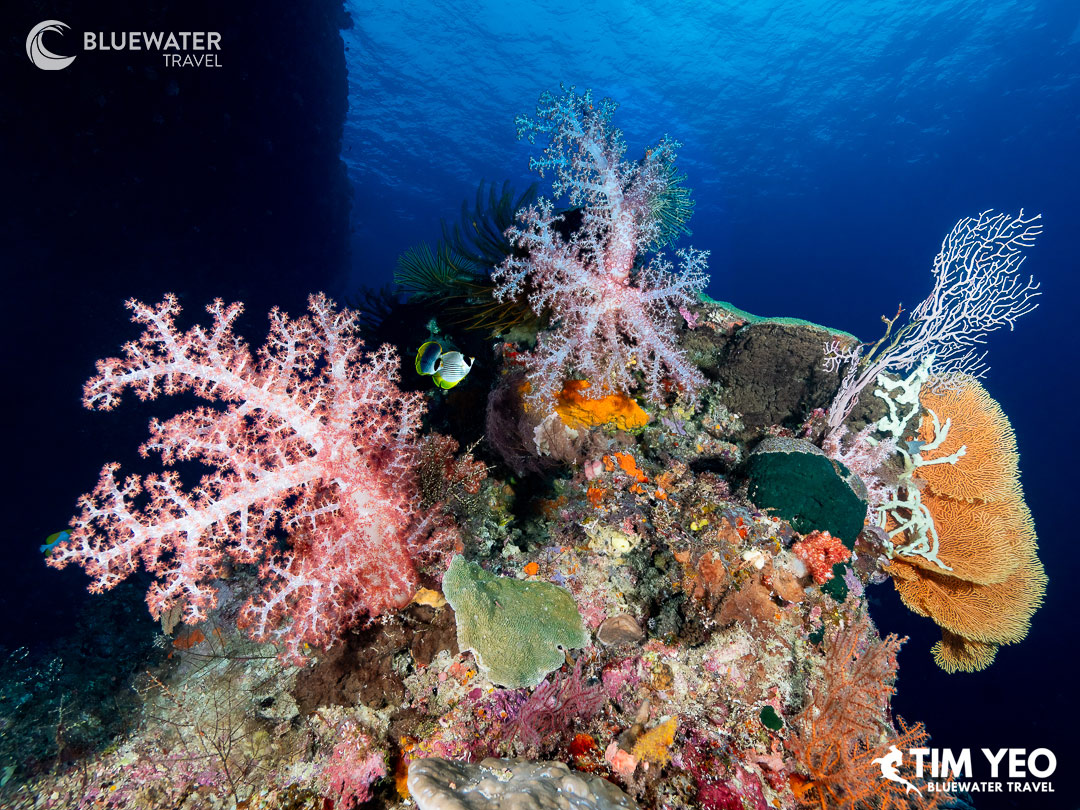
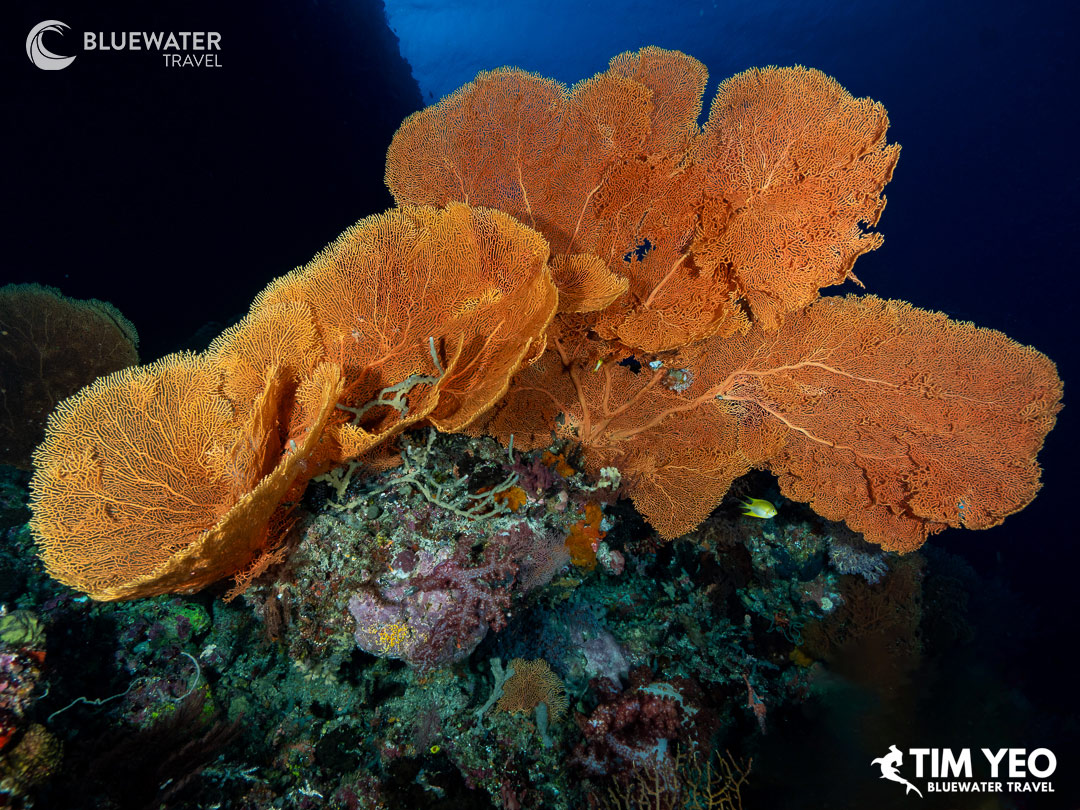
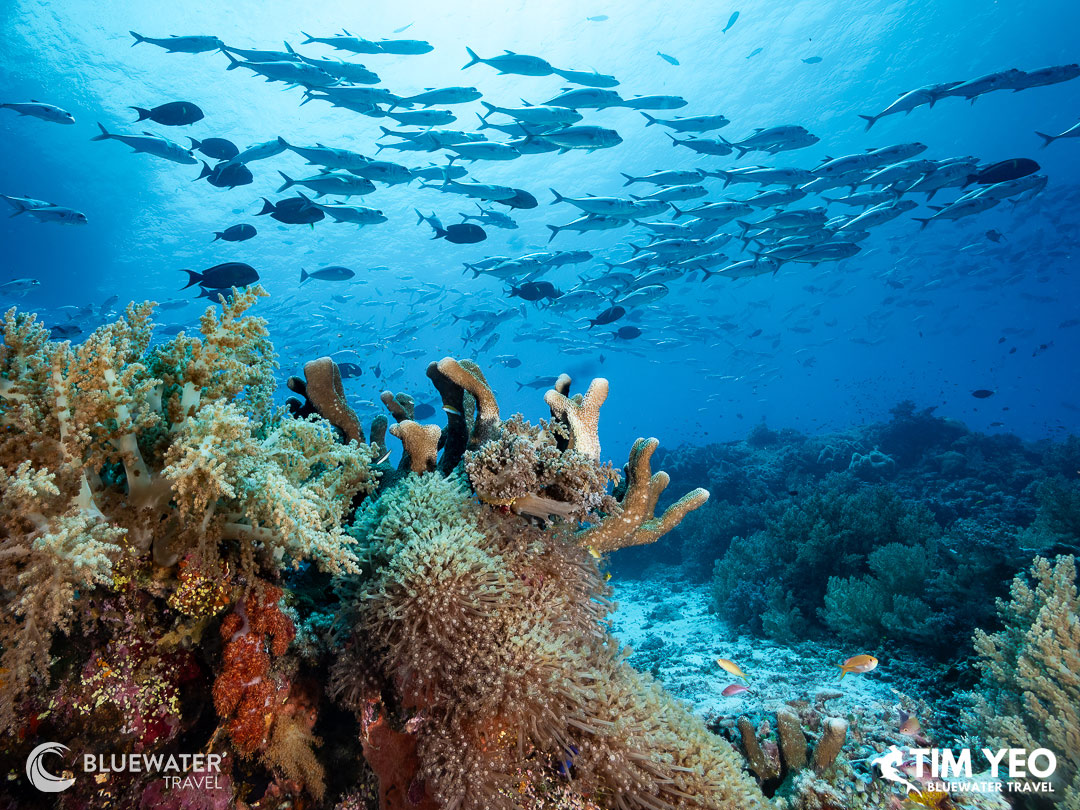
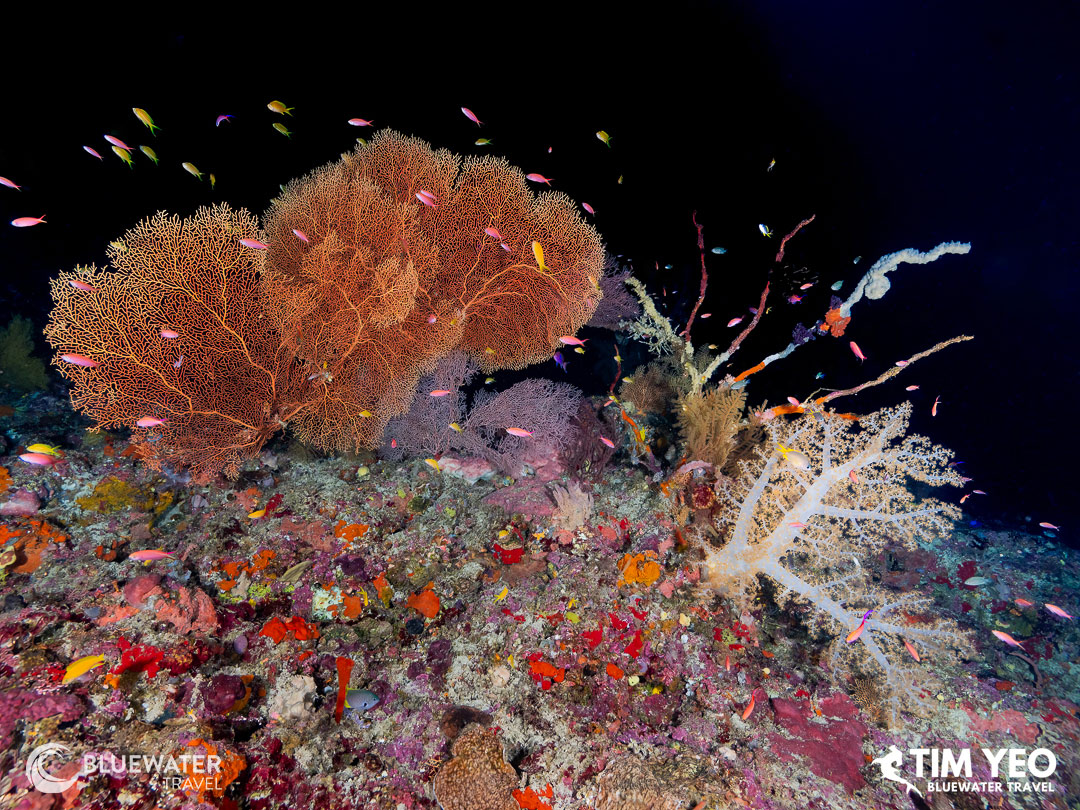
Below 60 feet, the walls were covered in enormous gorgonian sea fans, giant barrel sponges, and colorful soft corals. Out in the blue, we regularly encountered tuna, schools of jacks, grey reef sharks, and on one dive, even a scalloped hammerhead shark.
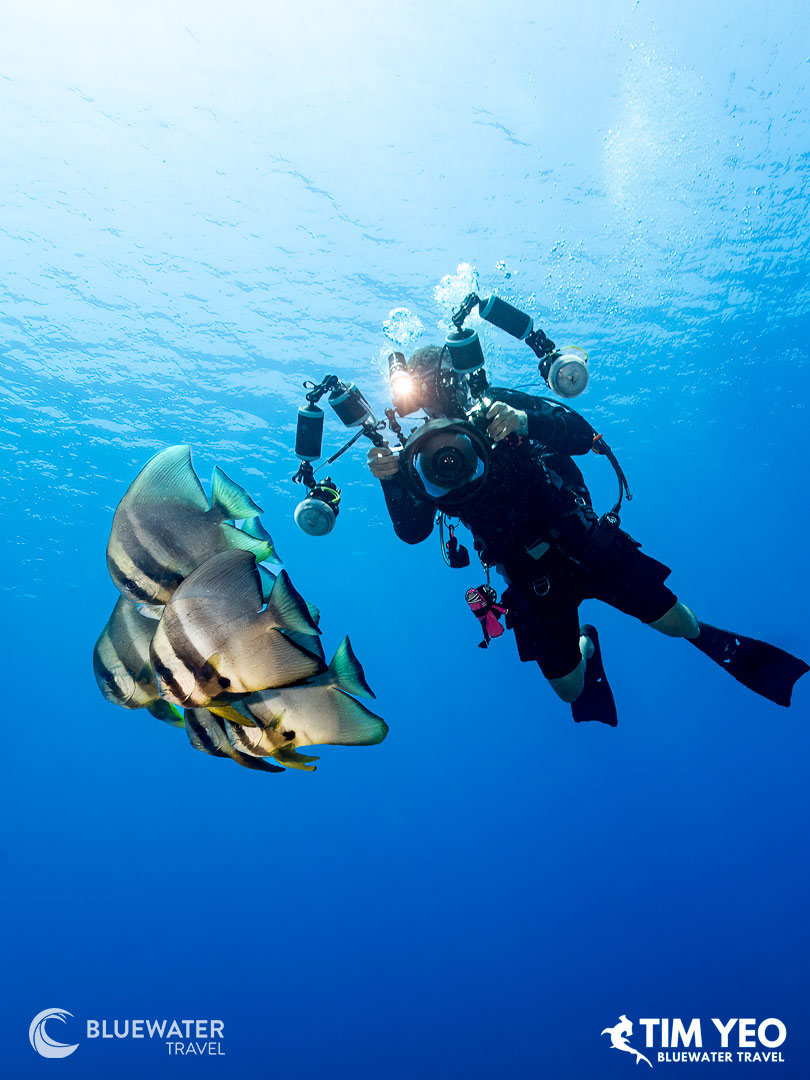
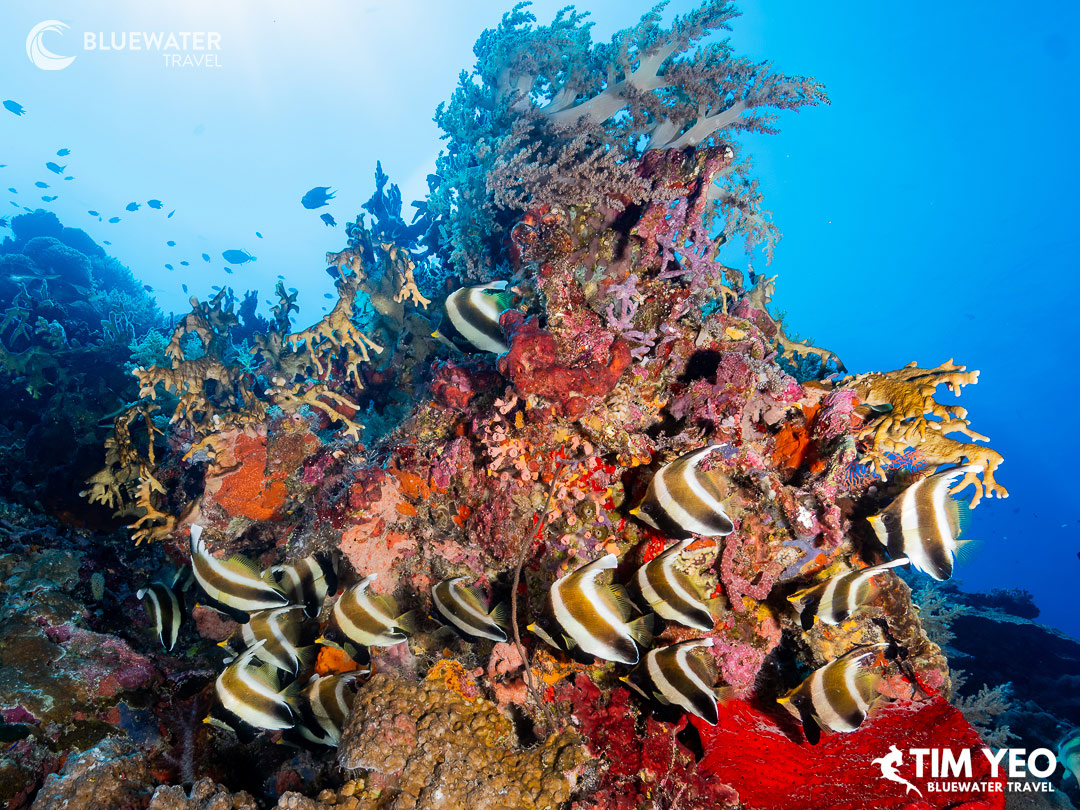
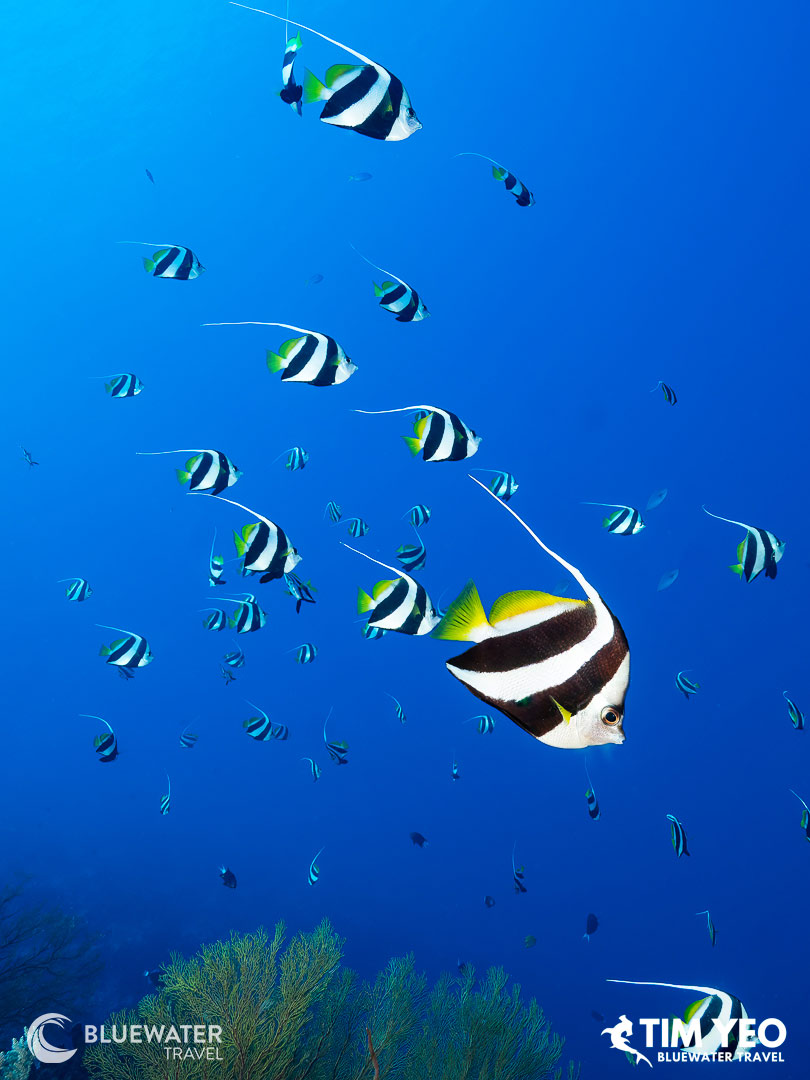
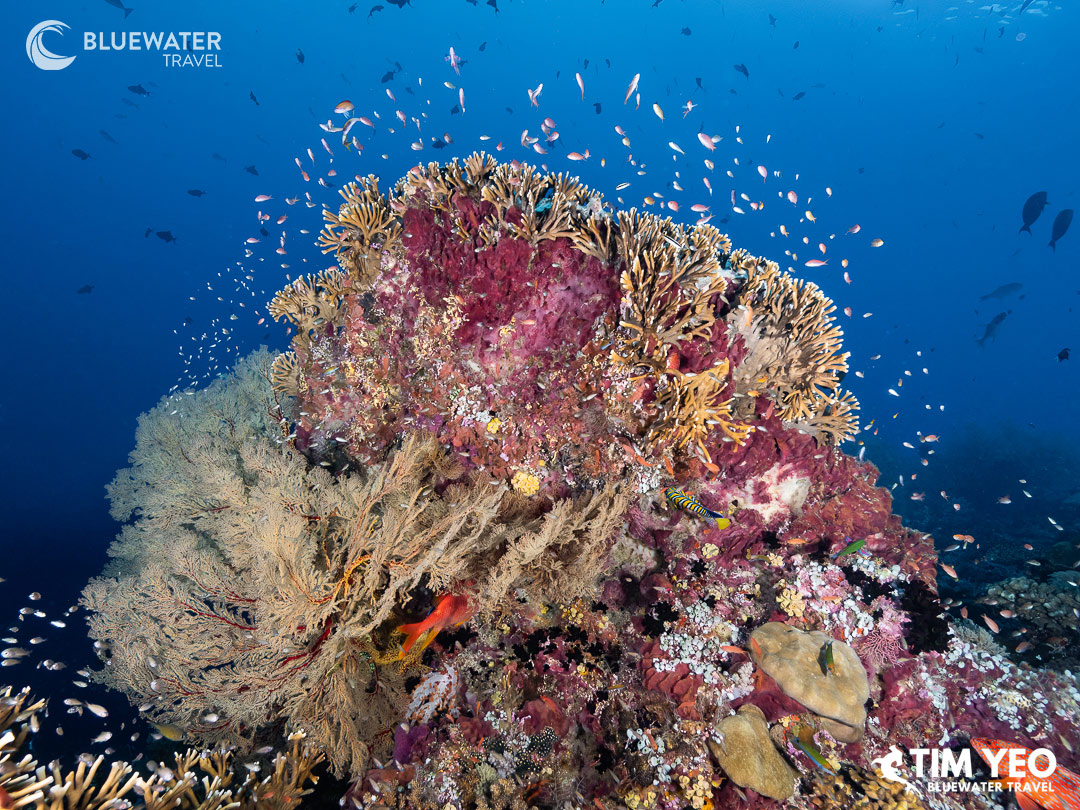
As we moved shallower, the reef transformed into sprawling hard coral gardens filled with life. Large table corals and dense staghorn coral formations stretched across the reef tops, with anthias hovering over nearly every section of reef. Schools of longfin bannerfish and other reef fish filled the water column, making every dive feel alive from start to finish.
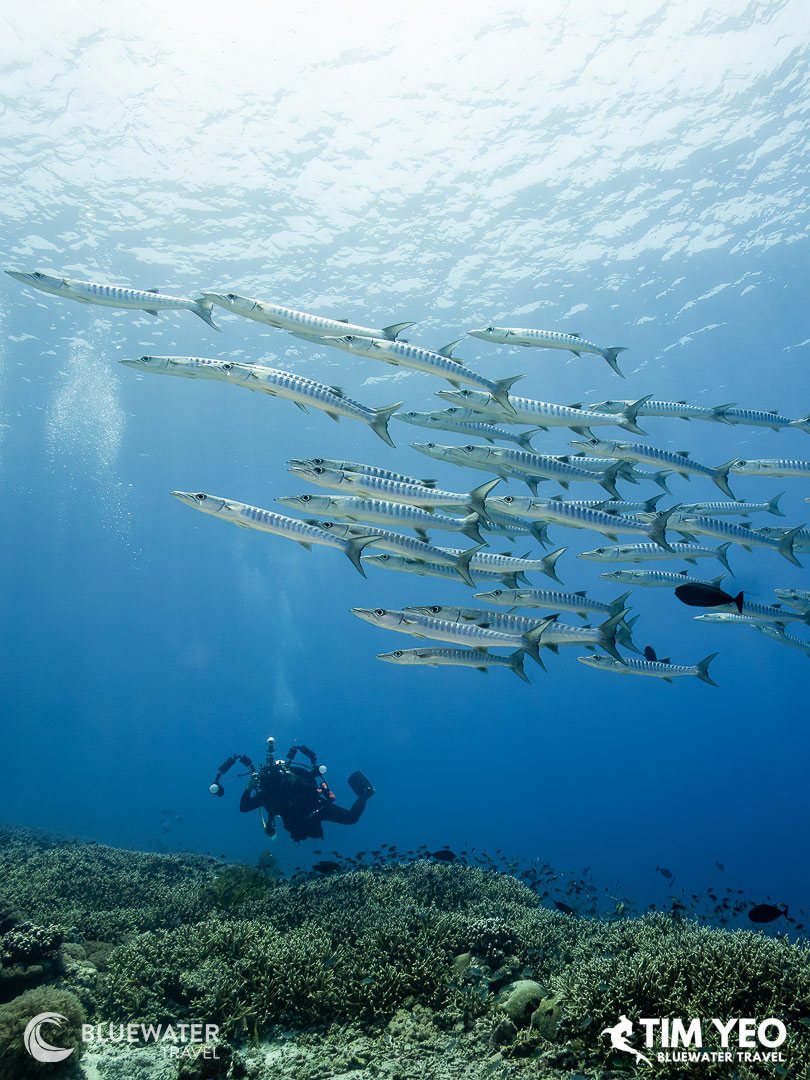
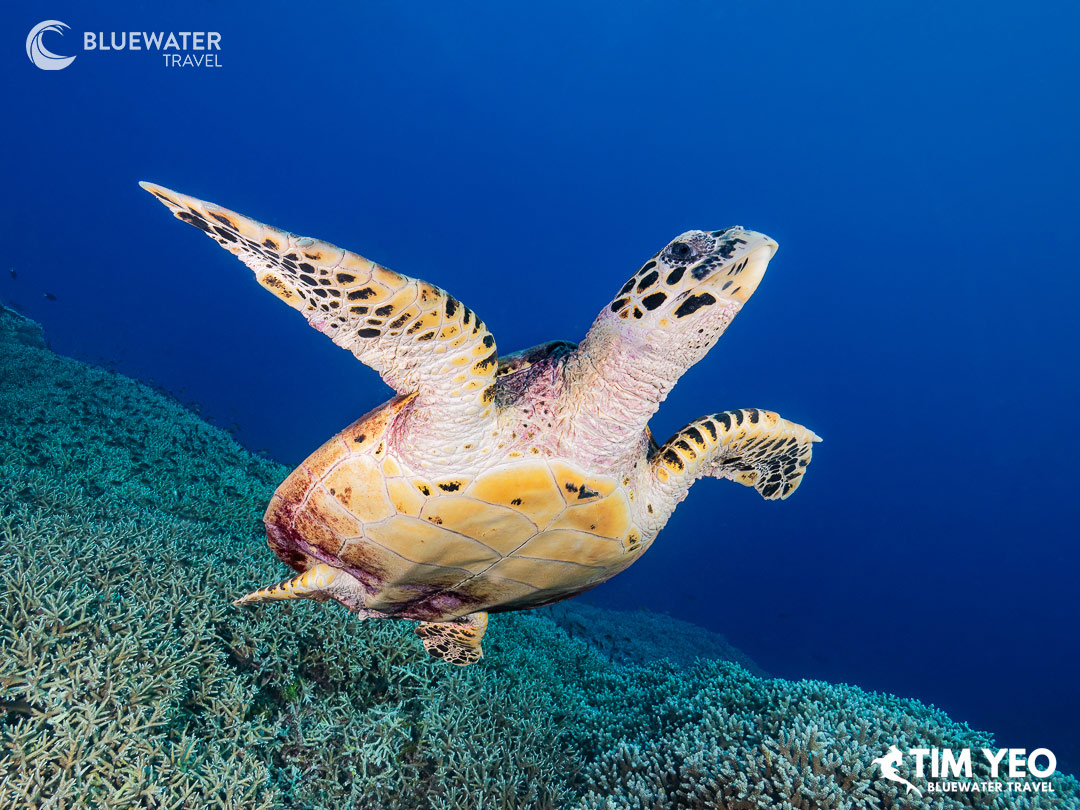
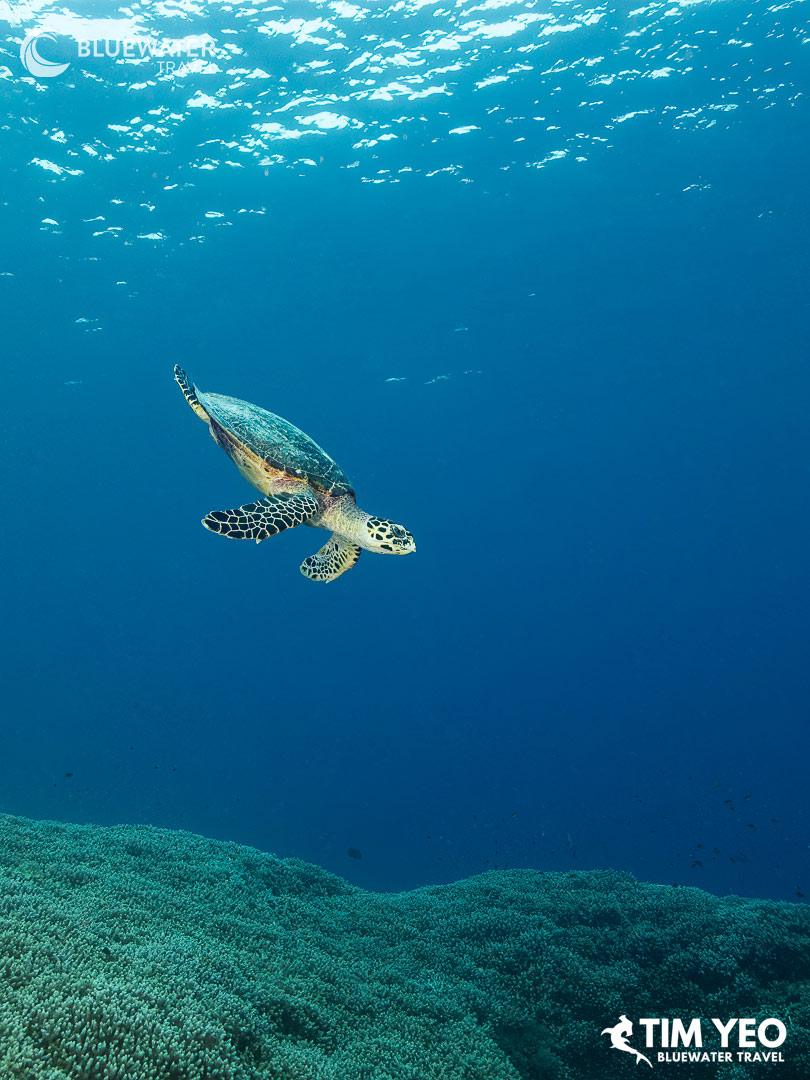
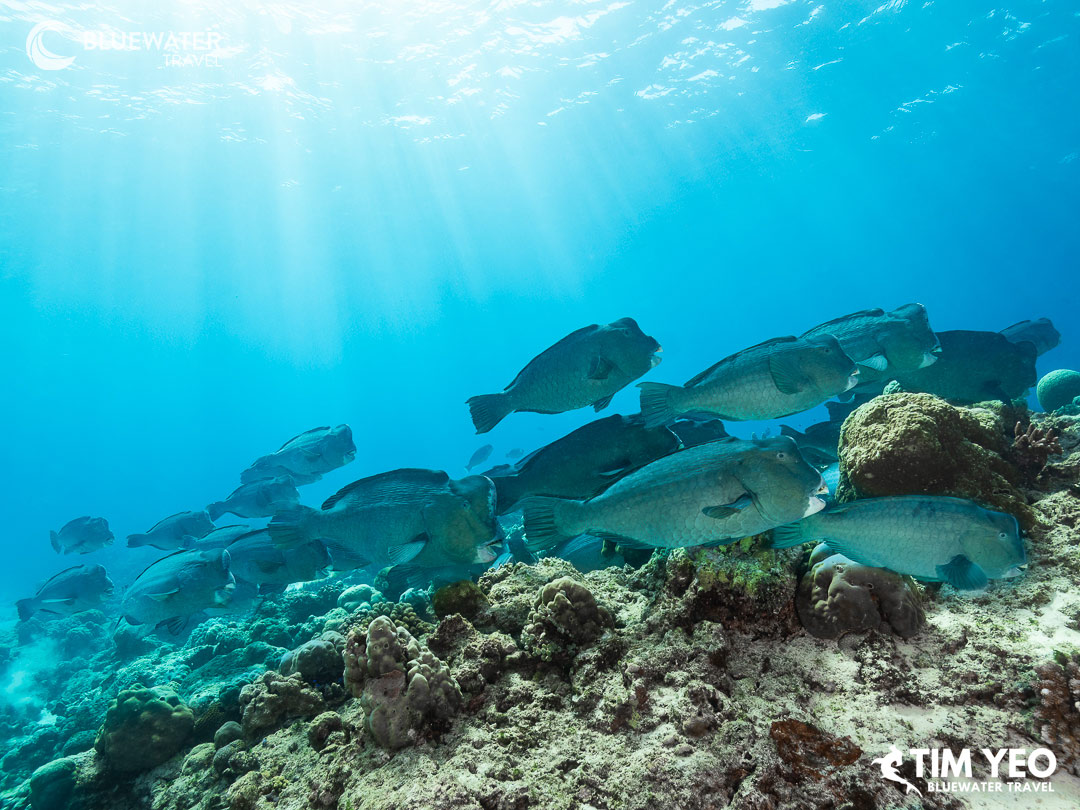
Many dives ended in shallower water between 15 and 30 feet, where coral bommies and sandy patches provided habitat for turtles, white tip reef sharks, juvenile grey reef sharks, octopus, crocodile fish, and sweetlips. Several dives finished with large schools of jacks and barracuda circling in the blue, while one especially memorable dive had us swimming with a school of bumphead parrotfish in only 15 feet of water.
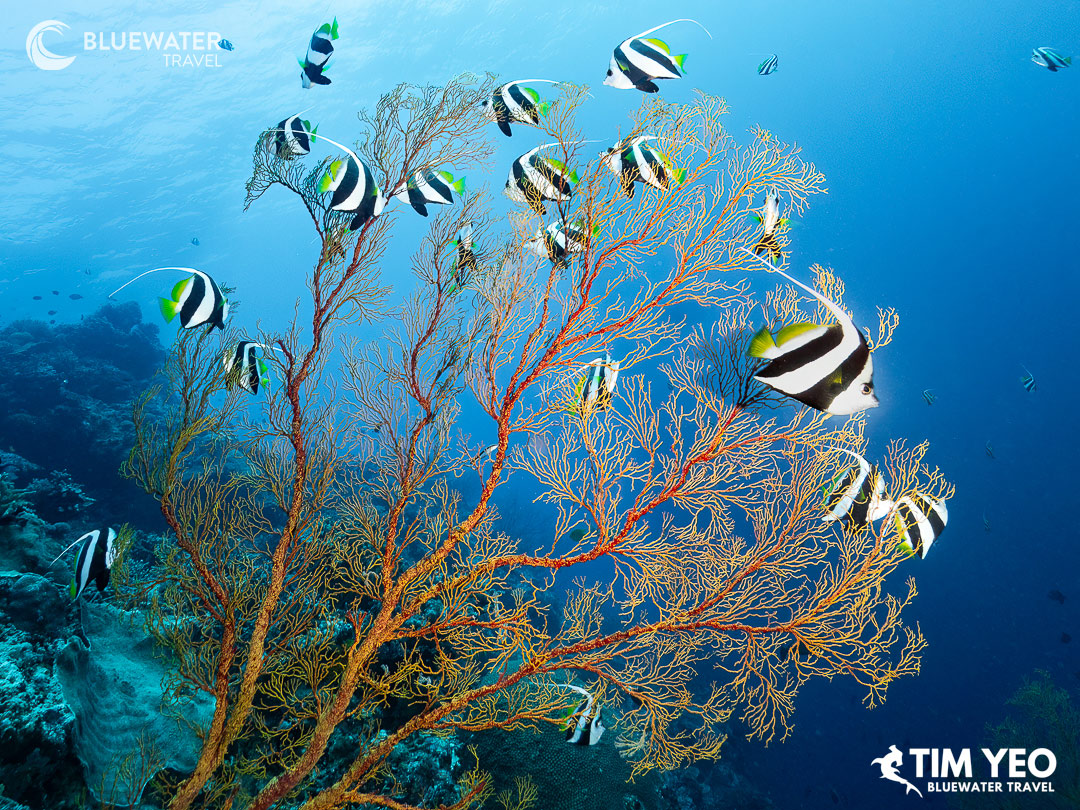
Because night diving is not allowed in the marine park, the schedule typically included four day dives each day, while transit days featured two or three dives. We also skipped one dive to visit the Tubbataha ranger station, where we learned more about the conservation efforts that protect this remarkable ecosystem.
Join Bluewater Travel on a guided group trip to Tubbataha
Remote Tubbataha Liveaboard Expedition 2028
Apr 19, 2028 - Apr 25, 2028
Join Bluewater Travel for our newest itinerary, exploring the stunning marine life and pristine coral reefs of Tubbataha Reefs Natural Park.
Cagayancillo: A Hidden Highlight
One unexpected highlight of the itinerary was diving around Cagayancillo, a remote island located between Sipalay and Tubbataha that sees very few divers. Since the island is only realistically accessible by liveaboard or charter aircraft, the dive sites feel truly remote and untouched.
One of my favorite dives of the trip was a site appropriately named Gorgonian Garden, where we drifted past enormous sea fans, some well over 10 feet across. Combined with excellent visibility and virtually no other divers in the area, it felt like exploring a forgotten corner of the ocean and it was a wonderful end to our dive trip.
Final Thoughts
Tubbataha is absolutely deserving of its reputation as one of the best dive destinations in Southeast Asia. The reefs are incredibly healthy, fish life is abundant, visibility often exceeded 80 feet, and the warm blue water made every dive enjoyable.
What made this itinerary especially rewarding was the combination of diving styles. Starting in Dumaguete allowed us to spend time searching for rare macro life before transitioning to the wide angle paradise of Tubbataha’s walls, abundant marine life, and pristine coral reefs.
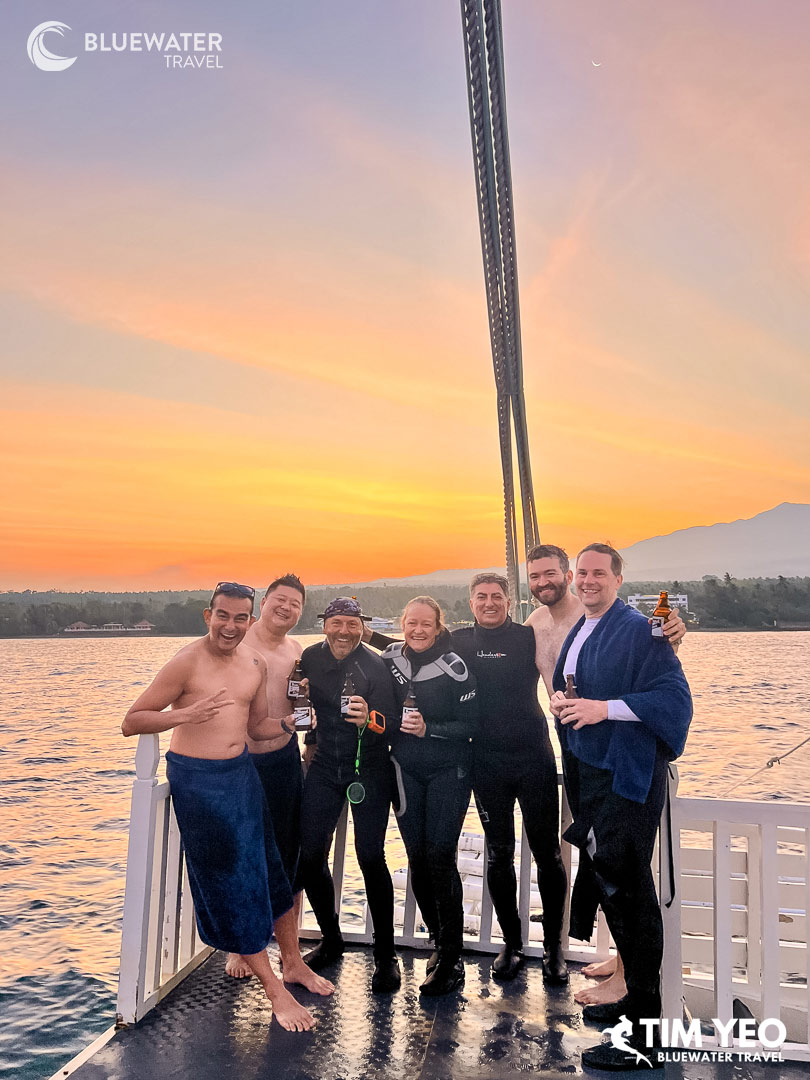
For our small group, this was one of the most enjoyable dive trips we have done together and a reminder of just how diverse and spectacular diving in the Philippines can be.
Check out a first-hand account of this Tubbataha Dive Trip!
Author
Tim Yeo
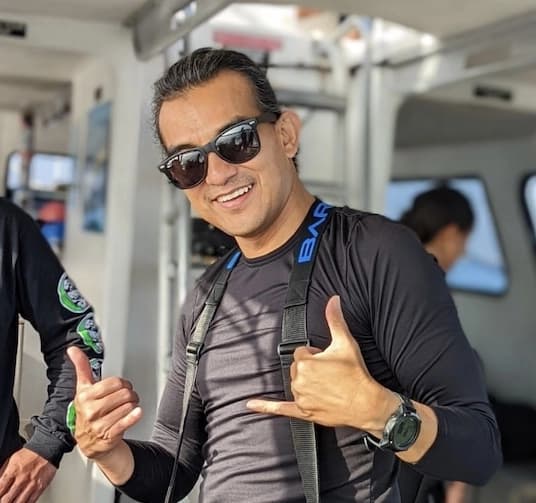
Tim grew up in tiny Singapore, where driving for more than an hour meant you would need a passport. Traveling was always his passion, but Tim became addicted to dive travel soon after he got scuba certified in Malaysia. As his diving addiction grew, Tim eventually became a Staff Instructor with PADI and an Instructor Trainer with SDI. After getting his instructor certification, Tim spent time teaching scuba in Malaysia and Vietnam.
Tim serves as General Manager and COO at Bluewater Travel and is the company's most seasoned trip leader. With a portfolio of leading over 30 group trips, his extensive expertise encompasses a variety of popular dive destinations such as the Galapagos, Raja Ampat, French Polynesia, Fiji, the Red Sea, Palau, Maldives, among others. His travels have taken him across all seven continents and allowed him to dive in all five oceans—the Atlantic, Pacific, Indian, Arctic, and Antarctic.
-optimized.webp&w=640&q=75 "Moorea Trip Recap August 2026")


-optimized-optimized.webp&w=640&q=75 "Solomon Islands Trip Recap 2026")