Quick Overview
Choosing the best scuba diving in the world depends on what you want from a trip: big animals, healthy reefs, macro photography, wrecks, easier resort diving, or a more challenging liveaboard expedition. For 2026, Bluewater Travel’s dive travel experts have ranked 13 standout destinations based on first-hand experience, guest feedback, marine life, seasonal reliability, reef health, logistics, and overall trip value.
This guide compares the top destinations at a glance, then breaks down who each trip is best suited to, when to go, and what to expect underwater.
Introduction
The best scuba diving destinations are not always the easiest to rank. A trip with schooling hammerheads in the Galápagos is very different from a macro photography week in Anilao, a coral-rich liveaboard in Raja Ampat, or relaxed drift diving in Cozumel. That is why this 2026 list is built around practical trip planning rather than generic “bucket list” claims.
Bluewater Travel’s advisors and trip leaders spend the year visiting dive destinations, leading group trips, speaking with operators, and collecting detailed feedback from guests. We use that first-hand knowledge to assess not just what a destination is famous for, but what divers can realistically expect: conditions, seasons, marine life, operator quality, access, and whether the experience still feels worth the journey.
Below, you’ll find our ranked list of the best scuba diving destinations for 2026, with quick comparison tables and destination notes to help you choose the right trip for your experience level, travel style, and underwater priorities.
How We Chose the Best Diving in the World for 2026
This list is based on destinations our team knows through recent travel, hosted trips, operator relationships, and guest feedback. We prioritised places that consistently deliver strong diving experiences rather than destinations that only sound impressive on paper.
For 2026, we considered:
- Marine life quality: including big-animal encounters, reef fish life, macro subjects, and seasonal highlights.
- Reef and ecosystem health: especially coral coverage, biodiversity, and overall underwater condition.
- Reliability: how consistently a destination performs across a typical trip, not just on a perfect day.
- Conditions and diver suitability: including currents, water temperature, visibility, depth, crossings, and required experience level.
- Logistics and value: how practical the destination is to reach, and whether the overall experience justifies the time and cost.
- Guest and trip leader feedback: what divers are reporting after real trips, including operator quality and overall satisfaction.
Who This List Is For
We have deliberately included a mix of major expedition-style trips and easier, high-reward destinations. Advanced divers looking for big animals and challenging conditions should focus on places such as the Galápagos, Socorro, Raja Ampat, French Polynesia’s passes, Papua New Guinea, and the southern Red Sea. Divers who want warmer water, easier logistics, or a trip that works well with non-diving companions may prefer Cozumel, Fiji, Dumaguete, Anilao, the Maldives, French Polynesia, or the northern Red Sea.
If you are still building experience, pay close attention to the conditions described in each section. Some destinations on this list involve strong currents, blue-water safety stops, negative entries, cold water, or remote liveaboard itineraries. Others offer more flexible resort-based diving and gentler sites.
If I could only pick three trips for 2026, based on everything we’ve seen over the last couple of seasons, I’d still put Galápagos, Raja Ampat and Socorro at the top — for very different reasons. Galápagos for pure wildness and schooling sharks, Raja Ampat for reef health and biodiversity, and Socorro for intimate manta and shark encounters that are hard to beat anywhere else.
– Scott Gietler, Founder of Bluewater Travel
Our dive travel experts can help you choose the right destination, liveaboard or resort, and travel dates at no extra cost.
Email a specialist or use the inquiry form below.
Destination Comparison at a Glance
Use this table to compare the 2026 destinations by best season and key diving highlights, including sharks, whale sharks, mantas, coral, macro life, wrecks, whales, and pelagics. If you already know what you want to see underwater, this is the quickest way to narrow down your shortlist.
| Destination | Best Season | Sharks | Whale Sharks | Mantas | Corals | Macro | Wrecks | Whales | Pelagics |
| Galápagos Islands | Year-round | ✔ | ✔ (Jun to Nov) | ✔ (Dec to May) | - | - | - | - | ✔ |
| Palau | Year-round (best Sep–May) | ✔ | - | ✔ (Nov to May) | ✔ | - | ✔ | - | ✔ |
| Raja Ampat | Oct–May | ✔ | - | ✔ (Oct to Apr) | ✔ | ✔ | - | - | ✔ (Oct to Apr) |
| Anilao (Philippines) | Year-round (best Oct–Jun) | - | - | - | - | ✔ | - | - | - |
| Socorro Islands (Mexico) | Nov–Jun | ✔ | ✔ (Nov to Jan & May/Jun) | ✔ (Nov to Jun) | - | - | - | - | ✔ |
| Fiji | Year-round (best Jun–Nov) | ✔ (May to Nov) | - | - | ✔ | ✔ | - | - | - |
| Dumaguete (Philippines) | Year-round (best Oct–Jun) | - | ✔ | - | ✔ | ✔ | - | - | - |
| Papua New Guinea | May–Dec | ✔ | ✔ | ✔ (Sep to Dec) | ✔ | ✔ | ✔ | - | ✔ (Jun to Nov) |
| Cozumel (Mexico) | Year-round (best May–Jul) | - | - | - | ✔ | - | - | - | - |
| French Polynesia | Year-round | ✔ | - | - | - | - | - | ✔ (Jul to Nov) | ✔ |
| Lembeh (Indonesia) | Year-round (best May–Oct) | - | - | - | - | ✔ | - | - | - |
| Red Sea (Egypt) | Year-round | ✔ | - | ✔ (Jun to Aug) | ✔ | - | ✔ | - | ✔ |
| Maldives | Year-round | ✔ | ✔ (Jan to Apr) | ✔ (Jun to Nov & Jan to Apr) | ✔ | ✔ | - | - | - |
Best Dive Destinations by Diver Type
Use this guide to match the destinations to your diving style, experience level, and main reason for travelling. It is especially useful if you are choosing between several very different types of trip.
| Diver Type / Priority | Top Picks from Our 2026 List | Why These Work Well |
|---|---|---|
| Big animals | Galápagos, Socorro, French Polynesia, Maldives, Papua New Guinea | These destinations offer some of the strongest opportunities for sharks, mantas, whale sharks, seasonal whales, or mixed pelagic encounters, depending on when you travel. |
| Macro and critter photography | Anilao, Lembeh, Dumaguete, Papua New Guinea, Raja Ampat | Anilao and Lembeh are standout muck and blackwater destinations, while Dumaguete, PNG, and Raja Ampat combine macro subjects with reefs and wider-angle opportunities. |
| Beginners or easier conditions | Cozumel, Fiji, Dumaguete, Anilao, northern Red Sea, selected Maldives itineraries | These destinations offer warm water, good resort infrastructure, and a range of sites, although conditions can still vary by season and exact location. |
| Strong currents and advanced trips | Galápagos, Socorro, Raja Ampat, French Polynesia’s passes, Red Sea Deep South | Best for divers who are already comfortable with current, drift diving, negative entries, deeper sites, blue-water safety stops, or remote liveaboard diving. |
| Best close to North America | Cozumel, Socorro, Galápagos | Cozumel is the easiest warm-water reef option, while Socorro and the Galápagos are more advanced big-animal expeditions within relatively practical reach from North America. |
| Best close to Europe | Red Sea, Maldives, French Polynesia via Paris | The Red Sea is usually the most straightforward option from Europe, with liveaboard and resort choices. The Maldives and French Polynesia can also work well depending on flight routes and trip length. |
| Reef-focused diving | Raja Ampat, Fiji, Papua New Guinea, Red Sea | These are strong choices for coral coverage, reef fish life, colour, and classic wide-angle reef scenes. |
1. Galápagos Islands, Ecuador
The Galápagos Islands remain one of the strongest choices in the world for advanced divers who want wild, unpredictable, big-animal diving. Located 560 miles off the west coast of Ecuador, this isolated volcanic archipelago offers cold-water upwellings, nutrient-rich currents, and an unusually high concentration of large marine life. It is not the easiest destination on this list, but for experienced divers it can be one of the most rewarding.
Best for: Advanced divers, shark encounters, whale sharks in season, marine iguanas, pelagics, and photographers who want rare wildlife.
Not ideal for: New divers, nervous divers, anyone uncomfortable in current or cold water, or travellers who are prone to seasickness on longer crossings.
Bluewater tip: Choose your season carefully. The cooler months are often associated with stronger big-animal action, while the warmer season can bring somewhat easier conditions and different wildlife highlights.
Why Dive the Galápagos?
Diving in the Galápagos Islands is about scale, movement, and surprise. On the right itinerary, divers may encounter schooling scalloped hammerheads, Galápagos sharks, silky sharks, turtles, eagle rays, mobula rays, marine iguanas, sea lions, and seasonal whale sharks. Above water, the islands are equally distinctive, with species such as Galápagos giant tortoises, blue-footed boobies, and other wildlife that helped shape Darwin’s work on evolution.
The region is protected within the Galápagos National Park and Galápagos Marine Reserve, and is designated a UNESCO World Heritage Site. That protection, combined with the islands’ isolation and oceanographic conditions, is a major reason the diving feels so different from most tropical reef destinations.

Best Dive Areas in the Galápagos
For many experienced divers, the headline sites are around Wolf and Darwin Islands. These remote northern islands are known for schooling scalloped hammerheads, Galápagos sharks, silky sharks, turtles, mantas, and seasonal whale shark sightings. They are also where the Galápagos feels at its most exposed and dramatic, with current, depth, and blue-water conditions playing a major role in the experience.
Punta Vicente Roca offers a very different style of dive and is one of the area’s standout cold-water sites. Divers may see mola mola visiting cleaning stations, along with red-lipped batfish, frogfish, barracuda, seahorses, and large schools of salemas. It is a particularly rewarding area for underwater photographers who want unusual species rather than a standard warm-water reef scene.
Conditions and Experience Level
The Galápagos is best suited to experienced advanced divers. Expect cooler water, changing visibility, current, surge, negative entries on some itineraries, and open-ocean crossings that can be rough. A thicker wetsuit or layered exposure protection is often needed, and divers should be comfortable managing buoyancy and safety stops away from a reef or fixed reference point.
That challenge is part of what makes the destination so special. The Galápagos is not about easy, predictable reef diving; it is about diving in a remote marine environment where the rewards can include some of the most memorable wildlife encounters of a diver’s life.
The Galápagos is also one of the more practical world-class big-animal destinations for travellers from North America. If you are comparing major dive trips within reach of the US, see our guide to the best dive destinations nearby the US. You can also read our Galápagos travel tips before planning your trip.
For a first-hand look at the destination, read our Bluewater trip report from the Galápagos.


Galápagos Practical Info
Diving season: Diving is possible year-round. The warmer season typically runs from December to May and is often associated with manta encounters, while the cooler season from June to November is known for whale shark opportunities around the northern islands.
Skill level: Advanced. The Galápagos is best suited to experienced divers who are comfortable in current, cooler water, thermoclines, choppy surface conditions, and occasional negative descents.
Water temperature: Cold to moderate. Temperatures can range from around 60–75F (16–24C) in cooler areas and seasons to around 70–86F (21–30C) in warmer conditions. A 5mm or 7mm wetsuit is usually recommended, depending on itinerary and personal tolerance.
Getting there: Challenging but straightforward with planning. Fly internationally to Mariscal Sucre International Airport (UIO) in Quito or José Joaquín de Olmedo International Airport (GYE) in Guayaquil, then connect to San Cristóbal (SCY) or Baltra (GPS), where most liveaboards depart.
Where to stay: Liveaboards are the best option for reaching the most remote and productive dive sites, especially Wolf and Darwin Islands. Standard itineraries are often 8 days/7 nights, with some longer 11 day/10 night trips offering extra time in the north.
Non-diving activities: Most liveaboards include at least one land-based excursion with a licensed Galápagos naturalist. Depending on the itinerary, you may see giant tortoises, land iguanas, blue-footed boobies, great frigatebirds, flightless cormorants, and other distinctive wildlife.
View the availability of some of the best liveaboards in Galápagos and book online at the best price.
2. Palau
Palau earns its place on this list for variety. In one trip, divers can experience current-swept reef hooks, blue holes, steep walls, World War II wrecks, shark action, manta cleaning stations, and seasonal spawning events. It is also one of the more flexible destinations in the Pacific, with both liveaboard and resort-based options.
Best for: Divers who want variety, drift diving, reef hooks, sharks, mantas, wrecks, and a choice between liveaboard and land-based diving.
Not ideal for: Divers who want only very calm, shallow reef dives, or travellers looking for a simple beach-resort holiday with diving as a minor add-on.
Bluewater tip: If you want to see spawning events, plan around the moon phase rather than simply choosing the driest month.
Resort and Liveaboard Diving in Palau
One of Palau’s biggest strengths is that many of its best dive sites can be reached from both liveaboards and land-based resorts. Liveaboards are a good choice for divers who want to maximise time underwater, with some itineraries offering up to five dives per day. Resorts usually run at a more relaxed pace, often with 2–3 dives per day and more time for kayaking, snorkelling, land tours, or simply enjoying Palau between dive days.
There are also land-based operations that run a more structured, liveaboard-style weekly schedule, where divers stay ashore but dive with the same guide and visit a wide range of sites throughout the week. This can be a strong option for divers who want consistency, good site coverage, and access to restaurants, culture, and topside activities in the evenings.

Learn about Palau dive resorts and view live availability of Palau liveaboards.
Currents, Reef Hooks, Wrecks and Spawning Events
Expect plenty of drift diving in Palau, and be prepared to use a reef hook at some channel and corner sites. When used correctly on dead sections of reef, a reef hook allows divers to hold position in the current and watch the action unfold. Common highlights include Napoleon wrasse, tuna, jacks, reef sharks, eagle rays, and mantas.
Palau also has a strong wreck-diving element. Its role in World War II left a number of wrecks around the islands, including the Iro Maru, a Japanese oil tanker with a torpedo-damaged bow, and the Teshio Maru, a Japanese army cargo ship.


For experienced travellers and photographers, Palau’s spawning events can be a major reason to visit. Around new and full moons, species such as bumphead parrotfish, red snapper, unicornfish, and Moorish idols may aggregate to spawn, often attracting predators and creating fast-moving, highly memorable dives. These events are timing-sensitive, so speak with a specialist if this is a priority.
Palau Practical Info
Diving season: Year-round. The drier season generally runs from October to May, although Palau can be dived outside these months. September can be an appealing transition period between the rainier and drier seasons.
Skill level: Beginner to experienced, depending on sites and conditions. Some dives are suitable for newer divers, while current-swept sites and reef-hook dives are better for confident divers.
Water temperature: Warm, typically around 81–84F (27–29C) year-round.
Getting there: Fly internationally to Roman Tmetuchl International Airport (ROR) in Koror, then transfer by shuttle, taxi, or rental car to your hotel or liveaboard departure point.
Where to stay: Palau offers both resorts and liveaboards across a range of budgets and travel styles. Combining a liveaboard with a few resort nights can work well if you want both intensive diving and time ashore.
Non-diving activities: Strong. Kayaking, snorkelling, waterfall hikes, Rock Islands tours, and World War II history sites make Palau a good option for mixed-interest trips.
3. Raja Ampat, Indonesia
Raja Ampat remains one of the strongest reef-diving destinations in the world for 2026. It combines exceptional coral coverage, huge fish life, regular manta encounters, rewarding macro subjects, and dramatic topside scenery. Divers can explore by liveaboard or resort, while snorkellers and non-divers can still enjoy the islands, viewpoints, wildlife, and shallow reefs.
Best for: Reef lovers, underwater photographers, manta encounters, fish life, soft corals, and divers who want a remote, nature-focused trip.
Not ideal for: Travellers who need easy flight logistics, reliable nightlife, fast internet, or a very short trip.
Bluewater tip: Choose between a resort and liveaboard based on how much ground you want to cover. Resorts can be excellent for a focused area, while liveaboards are better for combining multiple regions such as Dampier Strait and Misool.
Marine Diversity and Reef Health
Located in the heart of the Indo-Pacific Coral Triangle, Raja Ampat is known for exceptional marine biodiversity and some of the world’s most colourful reef scenes. Divers can expect a mix of hard and soft corals, dense schools of reef fish, macro life, reef sharks, and manta rays, depending on the area and season.
It is also one of our top Indonesian photography destinations, because many sites offer both wide-angle reef scenes and smaller subjects on the same dive. For divers who enjoy colourful reefscapes, Raja Ampat is also a strong contender among the world’s best coral reef destinations.

Dampier Strait and Misool
Two of Raja Ampat’s best-known diving regions are Dampier Strait and Misool. In Dampier Strait, Cape Kri is famous for the number of fish species recorded on a single dive, and the area is known for fish biomass, reef sharks, wobbegong sharks, and current-fed reef action.
Further south, Misool offers a different style of diving, with sites such as Boo Windows, Nudi Rock, and Whale Rock. Expect colourful soft corals, dramatic reef structures, mangrove areas, and excellent wide-angle photography opportunities. Many divers choose a liveaboard if they want to experience both northern and southern Raja Ampat in one trip.
Raja Ampat is home to over 600 species of hard coral and 1,700 species of reef fish. With so many species in one place, only those with the shortest attention spans will be able to see everything Raja Ampat has to offer on a given dive.
– Nirupam Nigam, Bluewater Travel Trip Leader
Read about our Dive with Bluewater trip to Raja Ampat.


Raja Ampat Practical Info
Diving season: October to May is generally considered the best season, with lower rainfall, calmer seas, and better visibility in many areas.
Skill level: Moderate to advanced. Many dives are suitable for intermediate divers, but previous current experience is strongly recommended.
Water temperature: Warm, typically around 80–86F (27–30C) year-round.
Getting there: Challenging, but worth planning properly. A common route is to fly internationally into Jakarta (CGK), then take a direct flight to Domine Eduard Osok Airport in Sorong (SOQ), the departure point for many liveaboards and resort transfers.
Where to stay: Liveaboards are a strong choice for covering multiple regions, with options ranging from simple to luxury. Examples include the MSY Seahorse and the Mari Liveaboard. Resort-based diving is also excellent, with options such as Cove Eco Resort and Sorido Bay Resort.
Non-diving activities: Nature-focused. Birdwatching for birds of paradise, viewpoint hikes, snorkelling, jellyfish lake visits, kayaking, and cultural tours may be available depending on where you stay. Nightlife is limited and internet can be unreliable in some areas.
4. Anilao, Philippines
Anilao is one of the most practical and rewarding macro destinations in Asia. Within easy reach of Manila, it offers short boat rides, a wide choice of dive resorts, excellent local guides, and a mix of muck, reef, wall, sand, and blackwater diving. It is especially strong for photographers, but it also works well for divers who want a focused, land-based trip with simple logistics.
Best for: Macro photographers, critter hunters, blackwater diving, short boat rides, and divers who want an easy land-based trip from Manila.
Not ideal for: Travellers looking for big animals, nightlife, extensive non-diving activities, or a classic white-sand beach holiday.
Bluewater tip: If photography is your priority, choose a resort and guide team with strong macro expertise, and allow enough dive days to revisit productive sites.
Macro, Muck and Blackwater Diving
For divers focused on small subjects, Anilao is one of the top destinations in the Philippines. Dive sites range from healthy reefs and walls to sand slopes, muck sites, and small wrecks, many within a short boat ride from the resorts.
Blackwater diving is a major draw. These night dives take place over deeper water, where strange larval-stage creatures and pelagic macro subjects rise from the depths after dark. For patient photographers, it can be one of the most unusual and rewarding forms of diving in Anilao.

Anilao’s guides are known for their ability to find extremely small and well-camouflaged subjects. Depending on conditions and luck, divers may see nudibranchs, shrimp, crabs, frogfish, seahorses, pipefish, small squid, cuttlefish, stargazers, and bobbit worms. The destination is not about big-animal encounters; it is about slowing down, looking closely, and getting help from guides who know where to search.
If you combine an easy van ride from Manila with a large selection of dive resorts, an endless number of dive sites, excellent dive guides, short boat rides, a complete lack of surge in the water, and thousands of different fish, corals, and critters, you end up with one of the best locations for macro, fish, and coral reef diving in the world.
– Scott Gietler, Owner and Founder of Bluewater Photo & Travel
Interested in diving Anilao? Read our 2023 Anilao trip recap.


Read more about Anilao: the Macro Heaven.
Anilao Practical Info
Diving season: Year-round, with the main dive season typically running from October to June. Resorts can be busier in April and May.
Skill level: All levels. Many sites are suitable for newer divers, although photographers and experienced divers will get the most out of the macro and blackwater opportunities.
Water temperature: Warm, typically around 80F (27C).
Getting there: Easy. Fly into Manila International Airport (MNL), then transfer by road to Anilao, usually around 2–3 hours depending on traffic.
Where to stay: Anilao is primarily a resort-based diving destination, with a good range of comfortable and higher-end dive resorts.
Non-diving activities: Limited. Most resorts are designed around diving and underwater photography, with some snorkelling, kayaking, and relaxation between dives.
View the availability of some of the best liveaboards and dive resorts in the Philippines and book online at the best price.
Our dive travel experts can help you choose the right liveaboard or resort and travel dates at no extra cost.
Email a specialist or use the inquiry form below.
5. Socorro Islands, Mexico
We have long recognised the Socorro Islands as one of our favourite big-animal dive destinations. Formally known as the Revillagigedo Archipelago, this remote East Pacific region is a liveaboard-only destination with strong currents, deep blue-water diving, and close encounters with mantas, sharks, dolphins, and seasonal whales. It is also the favourite dive destination of Bluewater General Manager Tim Yeo.
Best for: Giant oceanic mantas, sharks, dolphins, humpback whales, and advanced divers who want remote liveaboard diving.
Not ideal for: Beginners, divers who prefer calm shallow reefs, or travellers who want non-diving activities during the trip.
Bluewater tip: Socorro is all about timing. Ask your travel advisor which months are best for your priority species, as whale sharks, humpbacks, and bait balls are seasonal.
Memorable Encounters With Pelagics
Socorro offers a quality of big-animal diving that is often compared with the Galápagos, but with easier access from North America. Located around 240 miles from Cabo San Lucas, Mexico, this UNESCO World Heritage Site is known for steep walls, offshore pinnacles, and strong currents that attract large marine life.
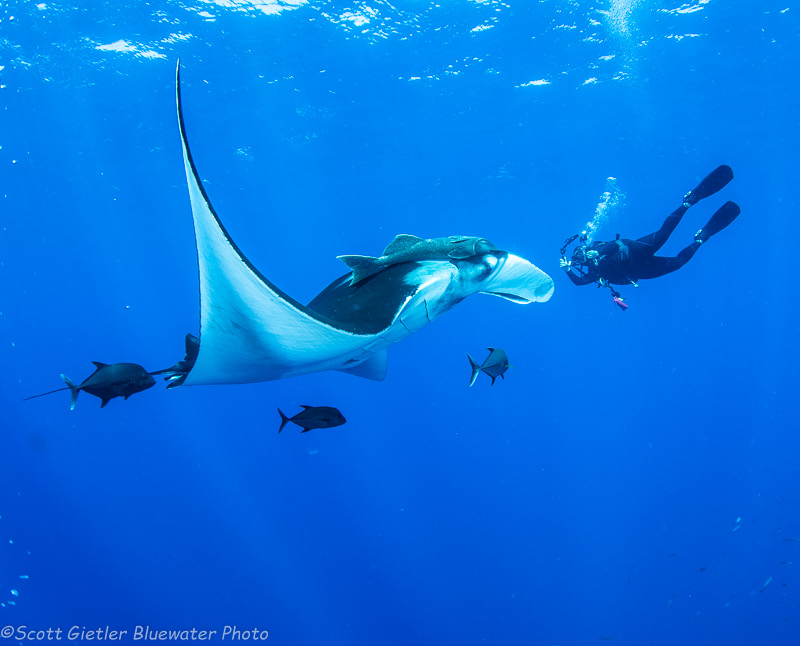
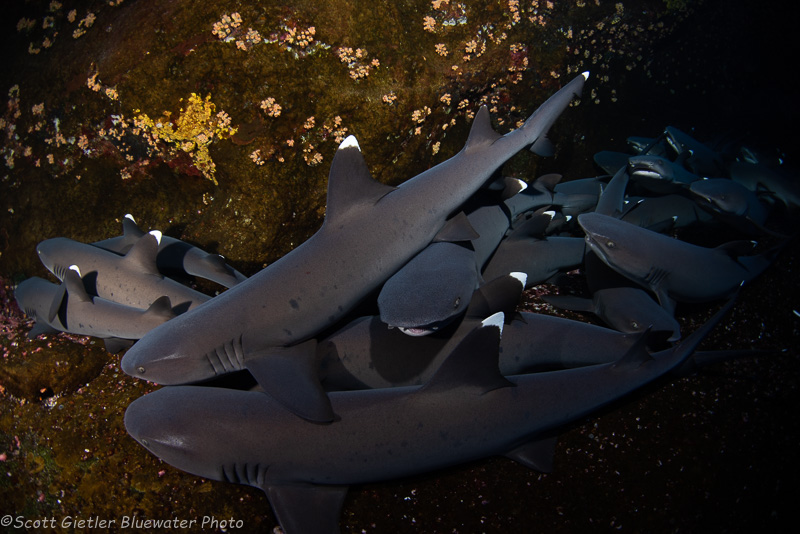
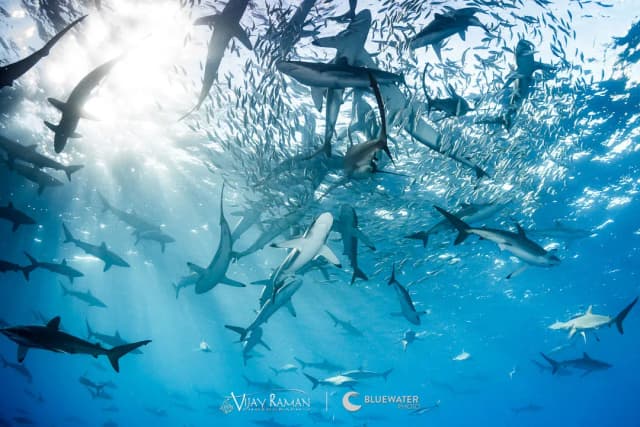
The most famous encounters are with giant oceanic mantas, which regularly visit cleaning stations and often interact closely with divers. Socorro is also one of our top shark diving destinations, with opportunities to see Galápagos sharks, silky sharks, hammerheads, and whitetip reef sharks, depending on site and season.
The marine life encounters are so memorable that one-third of the guests on our 2022 group trip joined us again on our 2023 Travel with Bluewater trip to Socorro.
The Boiler and Roca Partida
Two of Socorro’s best-known dive sites are The Boiler and Roca Partida. At The Boiler, divers can encounter the resident population of oceanic manta rays that visit the submerged pinnacle’s cleaning stations. These encounters can be exceptionally close, with mantas gliding overhead and circling divers in the water column.
Roca Partida is known for high-energy shark diving, including Galápagos, silky, hammerhead, and whitetip reef sharks. Divers may also see large gamefish such as tuna, wahoo, and marlin, as well as dolphins, occasional whale sharks, and humpback whales in season.
Find out about exciting shark cage diving destinations.


Interested in diving in Mexico? Check out our list of Mexico dive resorts.
Socorro Practical Info
Diving season: November to May is the primary dive season, although species vary during this period. November and December are good months for whale sharks, humpback whales are present in February and March, and May and June are strong months for bait balls and whale sharks.
Skill level: Advanced. Socorro is suitable for experienced divers due to choppy seas, deep sites, and often strong currents.
Water temperature: Cold to mild, ranging from around 70–74F (21–23C) in February and March to around 82F (28C) in November, December, May, and June.
Getting there: Fly to Los Cabos International Airport (SJD) and follow your agent’s instructions to reach your liveaboard departure point. Some boats may depart from Cabo San Lucas, which is also served by Cabo San Lucas International Airport (CSL). Once onboard, most boats take around 24 hours to reach the Socorro Islands.
Where to stay: Liveaboards are the only way to dive the uninhabited Socorro Islands. Options range from budget to luxury, and most trips last around eight nights. The MV Valentina and the Socorro Aggressor are examples of liveaboards that visit this area.
Non-diving activities: None while on the liveaboard. Before or after the trip, Cabo San Lucas and San José del Cabo offer activities such as golf, fishing, and cultural excursions.
View the availability of some of the best liveaboards in Socorro and book online at the best price.
6. Fiji
Fiji is one of the Pacific’s classic reef-diving destinations, especially for divers who love soft corals, colourful wide-angle scenes, and a strong topside culture. Located in the South Pacific, around 1,300 miles northeast of New Zealand, the roughly 300 islands of the Republic of Fiji offer excellent diving for a wide range of experience levels.
Best for: Soft corals, colourful reef photography, resort-based diving, shark encounters, and trips that work well for divers and non-divers.
Not ideal for: Divers looking for a macro-only muck diving trip or remote liveaboard-style expedition diving.
Bluewater tip: If you want the most dramatic soft coral displays, ask about current-fed sites such as Rainbow Reef and Bligh Water when choosing where to stay.
Soft Coral Capital of the World
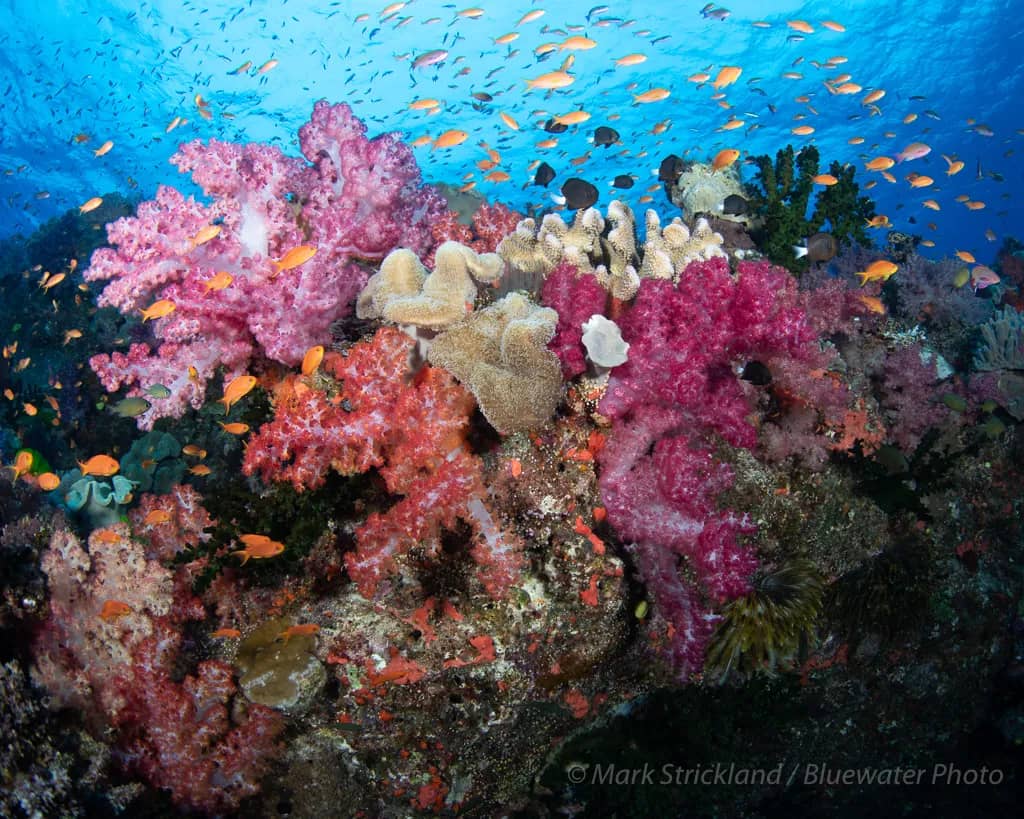
Fiji is widely known for its soft coral reefs, which provide a vivid backdrop for underwater photography. The best coral displays often appear when currents are running, so divers should be comfortable with some current if they want to experience the most dynamic sites.
The reefs support a wide range of marine life, including angelfish, butterflyfish, anemonefish, anthias, hawkfish, moray eels, and ribbon eels. Fiji is not only a reef destination, however. Beqa Lagoon is home to one of the world’s notable shark dives, where the Shark Reef Marine Park can host several shark species, including grey reef, whitetip reef, silvertip, lemon, bull, and tiger sharks.

"Fiji has a reputation as the soft coral capital of the world, and divers who have been to Fiji can attest to that honour. The soft coral gardens found at dive sites around the Bligh Waters and Rainbow Reefs regions will mesmerise any diver with the cacophony of colours and multitude of anthias dancing around them. Bula!"
– Bluewater General Manager & Trip Leader Tim Yeo


Learn what to expect while diving in Fiji by reading our Dive with Bluewater Fiji trip recap.
Fiji Practical Info
Diving season: Year-round. We like the transitional months of October and November. Weather varies between islands, but the dry season generally runs from June to October, with cooler air temperatures, more wind, and often better underwater visibility. The wet season usually runs from December to April, with warmer air temperatures.
Skill level: Beginner to experienced. Fiji has diving for all levels, although current experience is recommended for many of the best sites.
Water temperature: Cool to warm. The dry season is usually around 74–76F (24C), with August often the coolest month. The wet season is usually around 80–83F (27–28C), with February and March often the warmest months.
Getting there: Fiji is one of the more accessible Pacific destinations. Fly into Nadi International Airport (NAN) on the main island. If transferring to an outer island, the domestic terminal is next to international arrivals, and many domestic flights are under 60 minutes.
Where to stay: Most diving is resort-based, with a wide range of accommodation options. Read Tim Yeo’s review of Paradise Taveuni, or learn more about our Preferred Partner, Volivoli Beach Resort. A small number of liveaboards also operate around the Fijian islands.
Non-diving activities: Abundant. Fiji offers village visits, temples, waterfall and cave hikes, golf, day cruises, and boat hire to explore outlying islands.
Check out our list of Fiji dive resorts or contact us to help you plan your trip.
7. Dumaguete, Philippines
Dumaguete, in the Philippines, remains one of Bluewater’s long-time favourite destinations because it combines easy resort-based logistics with excellent macro, muck, reef, and wall diving. The nearby Dauin coast and Apo Island make this a particularly strong choice for divers who want both critter hunting and colourful wide-angle reef scenes on the same trip.
Best for: Macro, muck diving, Apo Island reefs, underwater photography, and relaxed land-based diving.
Not ideal for: Divers looking for remote liveaboard expeditions, dramatic pelagic action, or nightlife-focused travel.
Bluewater tip: Stay long enough to split your time between the Dauin muck sites and Apo Island. The contrast between the two is what makes Dumaguete so rewarding.
Exceptional Variety in a Small Area
Dumaguete is unusual because it caters to several dive interests at a high standard. The inshore Dauin sites are just minutes from many beachfront resorts and offer excellent macro and muck diving. Divers can search for frogfish, dragonets, pipefish, nudibranchs, squid, octopus, seahorses, shrimp, and crabs. On our trips, some guests have seen 40 frogfish on one trip.

Less than 35 minutes from Dauin, Apo Island offers a very different style of diving, with coral walls, reefs, turtles, sea snakes, blue ribbon eels, and large schools of jacks. There is also notable macro life around Apo Island, so divers with different interests can often enjoy the same sites together. Few destinations offer this range of dive styles in such a compact area.
Interested in diving the Philippines? Check out our list of top dive sites in the Philippines.


Dumaguete Practical Info
Diving season: Year-round. The primary dive season runs from October through June, and we like to visit in June and July near the end of the dry season.
Skill level: All levels, from beginner to technical.
Water temperature: Warm, around 80F (27C) year-round.
Getting there: Fly internationally to Manila International Airport (MNL), then take a one-hour domestic flight to Dumaguete-Sibulan Airport (DGT).
Where to stay: Dumaguete has a good range of land-based resorts, from luxury properties to more affordable options. Some liveaboards visit the area on Visayas itineraries, but we usually prefer land-based resorts because the dive sites are within easy reach.
Non-diving activities: Moderate. Many resorts offer whale shark snorkelling trips to Oslob, along with spas, restaurants, pools, and snorkelling. This makes Dumaguete a strong option for divers travelling with non-divers.
Our dive travel experts can help you choose the right liveaboard or resort and travel dates at no extra cost.
Email a specialist or use the inquiry form below.
8. Papua New Guinea
Papua New Guinea is one of the more adventurous destinations on this list. It is remote, logistically challenging, and less developed than many mainstream dive regions, but it rewards well-prepared travellers with reefs, walls, macro, currents, wrecks, and strong cultural experiences. PNG is best suited to divers who value exploration over luxury.
Best for: Adventurous divers, remote reefs, macro, wrecks, walls, cultural travel, and photographers who want variety.
Not ideal for: Travellers expecting luxury resorts, simple logistics, fine dining, or a polished mass-tourism experience.
Bluewater tip: Choose the region carefully. Milne Bay, Kimbe Bay, and Kavieng each offer a different style of diving, so your route should match your priorities.
Remote Reefs, Macro and Wrecks
PNG is not defined by one single type of diving. Instead, it offers a broad dive portfolio across several regions, including coral reefs, walls, macro sites, current-fed dives, and World War II wrecks. This variety is the main reason to consider Papua New Guinea, especially if you have already visited more accessible destinations in the Coral Triangle.

Milne Bay is a strong choice for macro and critter-focused diving, with subjects such as flatworms, ghost pipefish, nudibranchs, seahorses, frogfish, and rhinopias. Kimbe Bay is known for coral reefs and encounters with barracuda, sharks, and occasional whales. Around Kavieng, divers can explore World War II wrecks and look for larger animals such as sharks, dog-tooth tuna, and barracuda.


Planning a Papua New Guinea Dive Trip
Because of PNG’s remote location and travel complexity, we strongly recommend planning with an experienced dive travel agent. Bluewater Travel has run group trips to Papua New Guinea, and some of our advisors have visited the country multiple times. This experience helps with choosing the right region, setting expectations, and reducing the risk of avoidable travel disruptions.
Papua New Guinea Practical Info
Diving season: Year-round, with high season from May to November. Recommended months vary by region, so read our guide to diving Papua New Guinea for more detail.
Skill level: All levels, depending on region and site selection.
Water temperature: Warm, usually around 79–88F (26–31C) year-round.
Getting there: Very challenging. Fly into Jacksons International Airport (POM) in Port Moresby from Manila (MNL) or Singapore (SIN), and plan to spend a night before taking a domestic flight to your chosen dive region.
Where to stay: Resorts with dive facilities are available in the most popular areas, and some liveaboards also operate in PNG. Resorts are generally basic but comfortable, so do not expect high-end luxury or fine dining in this remote region. Tell your travel advisor about your expectations before booking.
Non-diving activities: Nature and culture focused. PNG offers surfing, birdwatching, kayaking, hiking, fishing, and opportunities to learn about local Indigenous cultures.
9. Cozumel, Mexico
Cozumel is one of the easiest high-quality dive destinations to reach from North America and Europe. Warm water, good visibility, dive-focused resorts, and reliable drift diving make it a strong choice for divers who want an accessible Caribbean trip with plenty of time underwater. It also combines well with the nearby cenotes of the Yucatán Peninsula for a very different freshwater cavern experience.
Best for: Easy Caribbean logistics, drift diving, warm water, colourful sponges, resort-based trips, and combining reef dives with cenotes.
Not ideal for: Divers looking for remote liveaboard exploration, guaranteed big-animal encounters, or untouched coral conditions.
Bluewater tip: If you want variety, add a mainland extension for cenote diving rather than treating Cozumel as a reef-only trip.
Drift Diving, Sponges and Nearby Cenotes
Cozumel sits along the Mesoamerican Barrier Reef and is known for warm, clear water, steady currents, colourful sponges, and a wide range of reef fish. The island’s dive-focused resorts and day-boat operations make it easy to log several dives during a short trip, with sites available for both newer and more experienced divers.
Underwater photographers will find both wide-angle and macro opportunities, although lens choice will depend heavily on the site and conditions. Like much of the Caribbean, some corals around Cozumel have been affected by bleaching events, but the diving remains enjoyable, particularly because of the sponges, fish life, and accessible drift dives.


"The reefs are very nice. Some coral has bleached, but I hardly noticed it because there are so many colourful sponges. I also had an awesome close encounter with a huge eagle ray feeding in the sand."
– Scott Gietler, Bluewater Travel, after visiting Cozumel in November 2023
The nearby cenotes on the mainland of the Yucatán Peninsula add another reason to choose Cozumel. These freshwater sinkholes offer a completely different style of diving, with limestone caverns, light beams, and clear water. They can be visited on a day trip from Cozumel, or you can spend additional time in Playa del Carmen if you want several days of cenote diving.
Cozumel Practical Info
Diving season: Year-round. We like visiting Cozumel from May to July, when there are fewer crowds and good weather. High season runs from December to April. The cenotes are a true year-round option and are less affected by weather.
Skill level: All levels, although some sites are better suited to divers with drift-diving experience.
Water temperature: Warm, typically around 75–85F (24–29C).
Getting there: Easy. Fly to Cozumel International Airport (CZM), then take a short shuttle or taxi to your resort. There are direct flights to Cozumel from many major airports.
Where to stay: Cozumel has plenty of dive-friendly resorts and hotels, from all-inclusive chain resorts to smaller properties.
Non-diving activities: Plentiful. Cozumel offers shopping, restaurants, nightlife, parasailing, kayaking, fishing, horse riding, and nature or cultural tours.
10. French Polynesia
French Polynesia is a warm-water destination with a strong mix of reef, shark, and big-animal experiences. While many islands offer good diving for a range of levels, the destination stands out most for the shark dives around Rangiroa and Fakarava, and for seasonal humpback whale snorkelling around Moorea.
Best for: Shark encounters, warm-water diving, humpback whale snorkelling, clear water, and combining diving with a resort-based island holiday.
Not ideal for: Travellers looking for budget diving, macro-heavy itineraries, or a single-island trip that covers every highlight.
Bluewater tip: Match your island choice to your goal: Fakarava and Rangiroa for sharks and passes; Moorea for seasonal humpback whale snorkelling.
Warm-Water Diving With Big Animals
Often casually referred to as Tahiti, French Polynesia is spread across a vast area of the South Pacific. The islands of Rangiroa, Bora Bora, and Fakarava, a UNESCO Biosphere Reserve, are among the region’s best-known diving areas. Divers can encounter lemon, whitetip, blacktip, grey reef, and hammerhead sharks, along with barracuda, eagle rays, dolphins, turtles, and reef fish.
"The reefs are just as healthy as last year, the sharks are just as abundant, as is the rest of the marine life like Napoleons, schools of paddletail snappers, red snappers, and blue-striped snappers."
– Tim Yeo, General Manager, Bluewater Dive Travel

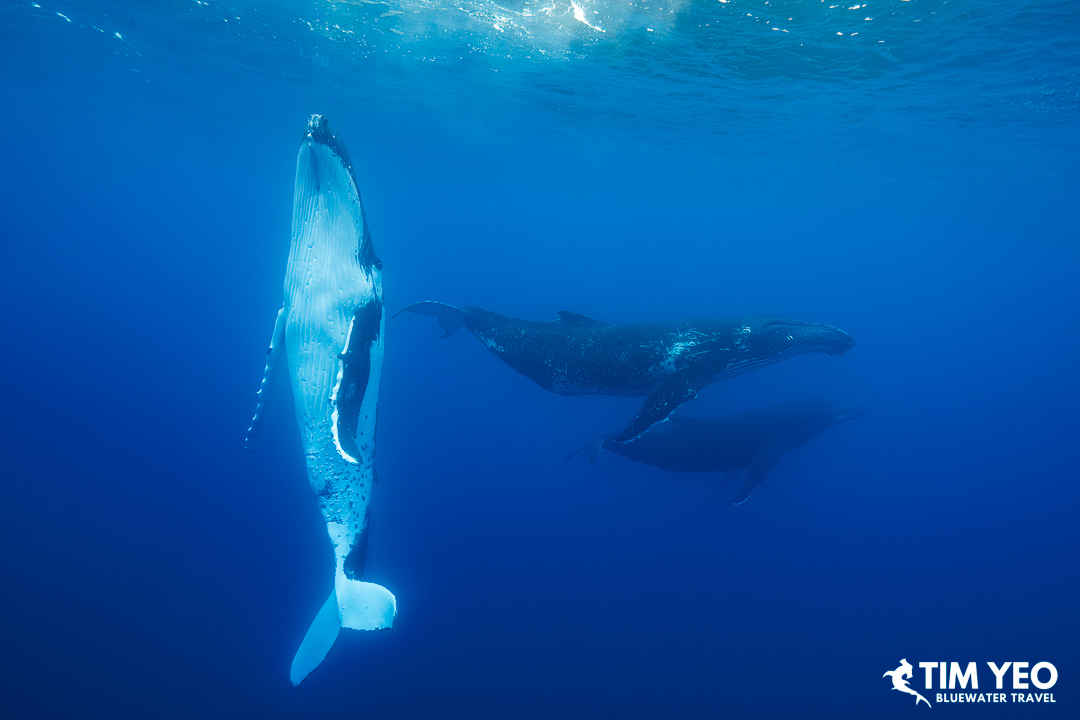
Moorea, to the southwest, also offers accessible shark diving, with slack currents and underwater topography that can suit a range of experience levels. The island is especially well known for seasonal humpback whale snorkelling from July to November, when whales migrate through the area to mate or nurse calves.
Read about our 2023 Moorea trip.

Check out our Moorea destination guide.
French Polynesia Practical Info
Diving season: Year-round, although December and January are wetter months. For humpback whale snorkelling, visit between July and November.
Skill level: All levels, depending on island and site choice.
Water temperature: Warm, usually around 79–84F (26–29C), with average temperatures around 81F (27C).
Getting there: Fly from Los Angeles International Airport (LAX) or San Francisco International Airport (SFO) to Faaʻa International Airport (PPT) on Air Tahiti Nui, then take a ferry or short domestic flight to outlying islands.
Where to stay: Resorts are the most common option, with choices across a range of comfort levels. Some liveaboard diving is also available.
Non-diving activities: Plentiful. Resorts can often arrange Polynesian dance experiences, pearl farm visits, hiking, sightseeing, and local market visits.
Find a French Polynesia dive resort or contact us for land-based options.
11. Lembeh, Indonesia
The Lembeh Strait in North Sulawesi is one of the world’s classic macro and muck diving destinations. It is easy to reach from Manado, has a strong selection of photographer-friendly resorts, and is known for expert local guides who specialise in finding tiny, well-camouflaged subjects. Lembeh is best suited to divers who enjoy slow, patient diving rather than big scenery or pelagic action.
Best for: Macro photography, muck diving, rare critters, calm conditions, and dive-focused resorts.
Not ideal for: Divers looking for big animals, sweeping reefscapes, strong currents, or a beach-holiday atmosphere.
Bluewater tip: If you want more variety, combine Lembeh with Bunaken’s walls and Bangka’s reefs for a broader North Sulawesi itinerary.
Macro Critters and Muck Diving
Lembeh’s dark volcanic sand provides the backdrop for some of the best critter hunting in the dive world. Divers can search for pipefish, seahorses, frogfish, nudibranchs, mimic octopus, rhinopias, shrimp, crabs, and other small or unusual subjects. The diving is usually calm and relatively easy, making it a strong place to practise macro photography.

Diving in Lembeh is primarily resort-based. With warm water, generally consistent conditions, and guides who understand macro behaviour, it is a favourite among photographers who want long, unhurried dives and repeated opportunities to work with small subjects. Non-photographers who enjoy slow observation will also appreciate the chance to find species they may never have seen before.
"The sheer diversity of marine life in Lembeh is astonishing. From the elusive rhinopias to the comical frogfish to the court jester of Lembeh, the mimic octopus, we encountered a myriad of creatures... On any trip where a long list of highly valued subjects are found on the first day, you know you are in a special place."
– Erik Lukas, Trip Leader on Bluewater’s October 2023 Lembeh Workshop


Lembeh Practical Info
Diving season: Year-round, with slightly cooler water in July and August and warmer water in January and February.
Skill level: All levels, with a strong focus on underwater photography.
Water temperature: Warm. Temperatures are around 77F (25C) in July and August, when extra layers can help on longer dives, and up to around 82F (28C) in January and February.
Getting there: Fly into Manado (MDN), with routes via Singapore (SIN) or Jakarta (CGK). Resorts typically offer airport pickup, and transfers to Lembeh are straightforward.
Where to stay: Diving is almost entirely land-based, with a good selection of comfortable and luxury resorts. Some resorts are set on hillsides and involve more walking or stairs, so check the layout before booking if mobility is a concern.
Non-diving activities: Limited. Tangkoko National Park is the main excursion, with opportunities to see tarsiers and Celebes crested macaques.
Join Bluewater Travel’s next photography workshop in Lembeh:
Lembeh Macro Critter Workshop 2026 | Sep 17–24, 2026 | Trip Leader: Mark Hatter | From $2,153
Our dive travel experts can help you choose the right liveaboard or resort and travel dates at no extra cost.
Email a specialist or use the inquiry form below.
12. The Red Sea
The Red Sea remains one of the most versatile dive regions in the world, with clear water, colourful reefs, famous wrecks, and both resort-based and liveaboard options. It is especially popular with European divers because of its accessibility, but it also works well for travellers who want to combine diving with ancient history in Egypt or Jordan.
Best for: Reef diving, wrecks, clear water, liveaboards, shore diving, and combining diving with cultural sightseeing.
Not ideal for: Divers who only want remote tropical islands, or beginners booking advanced southern liveaboard routes without enough experience.
Bluewater tip: Choose your region carefully. Northern itineraries are best for classic reefs, wrecks, and shore-based options; southern routes are better for remote reefs and pelagic encounters.
Reefs, Wrecks and Ancient History
The Red Sea offers a combination of accessible diving and high-quality marine life. Its isolated geography and distinctive climate support a high level of regional biodiversity, with extensive hard and soft coral reefs, walls, canyons, and a large number of reef fish species, some of which are endemic to the region.

Broadly, the Red Sea can be divided into northern and southern diving regions. The northern sites from Hurghada to Dahab, including Sharm El-Sheikh, offer sheltered inshore reefs, walls, resort house reefs, and accessible wrecks. The most famous wreck is the SS Thistlegorm, but the Dunraven and Carnatic are also popular with wreck divers.


Further south from Hurghada, the diving becomes more remote. Sites such as the Brothers, Elphinstone Reef, and Daedalus Reef are known for steep drop-offs, overhangs, stronger conditions, and the possibility of pelagic encounters, including oceanic whitetips, thresher sharks, and occasional hammerheads. These routes are best suited to more experienced divers.
To learn more about what it is like to dive in the Red Sea, read our Egypt and Jordan trip recap.
Red Sea Practical Info
Diving season: Year-round diving is available, although some liveaboards do not run during the cooler months of January and February. Air temperatures are especially hot from June through August, and northern resorts can be busy from March through May and September through November.
Skill level: All levels, although Deep South itineraries require more experience.
Water temperature: Cool to warm. Temperatures can reach around 84F (29C) in summer and drop to around 70F (21C) in winter.
Getting there: There are regular flights to Sharm El-Sheikh International Airport (SSH) from the UK and other European hubs. You can also connect via Cairo International Airport (CAI) to reach Hurghada or Marsa Alam, which are departure points for many liveaboards.
Where to stay: Red Sea liveaboards, such as the Emperor Elite or M/Y Blue Melody, are good value and allow divers to cover more sites in one trip. Resorts in Dahab and Sharm El-Sheikh are popular for northern reefs, shore diving, and day boats. The more remote southern sites are best reached by liveaboard.
Non-diving activities: Plentiful. Options include shopping, dining, cultural excursions, camel rides, desert trips, sightseeing, watersports, and extensions to ancient sites in Luxor and Cairo, including the Pyramids of Giza.
Interested in diving the Red Sea? Find a liveaboard trip or contact us for land-based options.
13. Maldives
The Maldives is not only a honeymoon destination; it is also one of the Indian Ocean’s strongest regions for manta rays, whale sharks, sharks, channel diving, and resort or liveaboard-based dive travel. With more than 1,000 islands spread across multiple atolls, it offers everything from private-island luxury resorts to boutique stays on locally inhabited islands, plus a wide choice of liveaboards for covering a larger area.
Best for: Manta rays, whale sharks, reef sharks, channel diving, liveaboards, luxury resorts, and mixed dive/non-dive trips.
Not ideal for: Divers who dislike current, travellers seeking low-cost remote travel, or those who want a single easy answer on the “best” atoll.
Bluewater tip: Choose your atoll and season around your target species. Fuvahmulah, Baa, Ari, and the central atolls can offer very different experiences.
Amazing Atolls and Exciting Encounters
Diving in the Maldives is well known for larger marine animals, including whale sharks, manta rays, and several shark species. What you see depends partly on the atoll and season. Fuvahmulah is known for tiger sharks, Alif Alif for mantas, and Baa for whale sharks. Hanifaru Bay is a snorkel-only site famous for aggregations of manta rays and regular whale shark encounters. There are dive sites suitable for beginners, although many of the most exciting dives are in channels where strong currents attract fish life and pelagics.


"The corals are not in beautiful shape, but the marine life is abundant and there are lots of sharks. Fish are not shy at all, and we even had a macro dive for a bit of a change. We saw lots of fusiliers, snappers, Napoleon wrasse, sharks, big rays, eels, and mantas."
– Anne, Bluewater Travel Advisor, after visiting the Maldives in September 2023
"Dive sites in the Southern Atolls of the Maldives boast a great mix of sharks, healthy reefs, and macro subjects... Diving with tiger sharks at Tiger Zoo was amazing."
– Dan Bishop, Bluewater Trip Leader, after his 2024 visit to the Maldives
The topside scenery is a major part of the appeal. White sand beaches, turquoise lagoons, small tropical islands, and dramatic sunsets make the Maldives especially attractive for couples, mixed diver/non-diver trips, and travellers who want strong diving with a relaxed island setting. However, divers whose main priority is pristine, colourful coral should also consider destinations such as Fiji or Papua New Guinea.
Interested in diving in the Maldives? Find Maldives liveaboard availability or discover our top Maldives dive resorts.
Maldives Practical Info
Diving season: Year-round, with the rainy season generally from May through July. We often recommend January to April and August to November for strong overall conditions and marine life encounters, but the best timing depends on the atoll and what you most want to see.
Skill level: Suitable for all levels, although some channel dives are better for experienced divers who are comfortable in current.
Water temperature: Warm year-round, usually around 80–86F (27–30C).
Getting there: Fly into Velana International Airport (MLE) in Malé, then continue by domestic flight, speedboat, seaplane, or liveaboard transfer depending on your itinerary.
Where to stay: Options include luxury private-island resorts, smaller hotels and guesthouses on local islands, and a wide range of liveaboards. The right choice depends on your budget, desired comfort level, preferred atoll, and whether you want a dive-focused or more mixed holiday.
Non-diving activities: Moderate to plentiful, depending on where you stay. Private islands usually offer spas, dining, beaches, and watersports such as kayaking or paddleboarding. Local islands offer more cultural access, although visitors should be aware of local rules around dress and alcohol. Liveaboards may include beach barbecues, island visits, kayaking, and, on some vessels, spa treatments.
This list is only a starting point. Bluewater Travel can help you access many more outstanding dive destinations, from remote liveaboard routes to easy resort-based holidays. You may also want to explore our top remote dive destinations and our guide to the top 20 dive sites in the world.
How To Book A Trip
Bluewater Travel can help you book resorts, liveaboards, guided group trips, and custom dive holidays in the destinations above, as well as many other regions around the world. Our advisors know the diving styles, seasonal patterns, boats, resorts, cabin layouts, and operator differences, so we can help match the trip to your experience level, budget, and marine life goals.
Email us or use the live chat box to speak with a dive travel specialist.
Frequently Asked Questions
1. How did you choose these best scuba diving destinations for 2026?
We based this list on Bluewater Travel’s first-hand destination knowledge, recent trip reports, advisor feedback, guest experiences, marine life quality, reef health, seasonal reliability, and overall logistics. The goal is not simply to name famous dive destinations, but to recommend places we would confidently suggest to our own guests for 2026.
2. Which destinations are best if I want excellent diving without difficult conditions?
If you want memorable diving without a highly demanding expedition feel, consider Cozumel, Fiji, French Polynesia, the Maldives, Dumaguete, Anilao, and the northern Red Sea. These destinations can offer excellent marine life, good operator choice, and more flexible logistics. Site selection still matters, so we recommend choosing operators and itineraries that match your comfort level.
If budget is a major factor, destinations such as Cozumel, Dumaguete, Anilao, and the northern Red Sea can often provide strong value compared with remote or liveaboard-only destinations such as Galápagos, Socorro, or parts of Papua New Guinea.
3. Where should I go if I mainly want big animals?
For sharks, mantas, whale sharks, whales, and other large marine life, we usually focus on a few standout options:
- Galápagos: schooling hammerheads, whale sharks, and wild, advanced diving.
- Socorro: giant oceanic manta rays, sharks, and seasonal humpback whales.
- French Polynesia: shark-rich passes and seasonal humpback whale snorkelling.
- Maldives: manta rays, whale sharks, reef sharks, and channel diving.
- Palau and selected Red Sea routes: strong shark action combined with excellent reef or wreck diving.
The best choice depends on your experience level, preferred travel style, and the specific species you most want to see.
4. Which destinations are best for macro and underwater photography?
For macro and critter-focused diving, Anilao and Lembeh are still two of the strongest choices in the world. Dumaguete and Papua New Guinea are excellent if you want a mix of macro subjects and reef diving, while Raja Ampat offers both world-class wide-angle scenery and rewarding macro opportunities.
If photography is a priority, tell us your camera setup, whether you prefer macro or wide-angle, and any specific subjects you want to photograph. We can then suggest suitable resorts, guides, workshops, and seasonal timing.
5. Why book through Bluewater Travel instead of directly with a resort or liveaboard?
Bluewater Travel works with dive operators worldwide and can help you compare the details that are difficult to judge from a website alone: dive deck layout, cabin location, guide quality, photographer support, seasonal timing, transfer logistics, and which itineraries are best for specific marine life. Our service does not cost extra compared with booking directly in most cases, and you have a dive-focused team supporting you before and during your trip.
This is especially useful for destinations where timing, itinerary, operator choice, or experience level can dramatically affect the quality of the trip.
Author
-optimized.webp&w=828&q=75)
-optimized.webp&w=3840&q=75 "Scott Gietler")
Scott Gietler
Scott is the founder of Bluewater Travel. Scott's areas of expertise include some of our top dive destinations like Indonesia, Mexico, Philippines, Fiji, Galapagos, French Polynesia and the United States.
Scott is also the founder of the Underwater Photography Guide and Bluewater Photo. What started out as a small project has grown to a point where it is starting to interfere with Scott's sleep. When it interferes with his diving, then it will be a problem.
Scott lives in California.If possible he tries to get out diving each week with some of the other members of the staff.
An avid marine naturalist, Scott is the author of the Field Guide to Southern California Marine Life. He was the LAUPS photographer of the year for 2009, and his photos have appeared in magazines, coffee table & marine life books, museums, galleries and aquariums throughout California. He enjoys teaching photography underwater and in workshops.



-optimized-optimized.webp&w=640&q=75 "Solomon Islands Trip Recap 2026")