
Quick Overview
Swimming, snorkelling, or scuba diving with whale sharks is one of the most memorable big-animal experiences in the ocean. This guide highlights six of the best places to see whale sharks in the water: Wolf and Darwin Islands in the Galápagos, Socorro in Mexico, Isla Mujeres, La Paz, Oslob in the Philippines, and Bahía de los Ángeles in Mexico.
Each destination offers a different kind of encounter. Some are remote, wild, and best suited to experienced scuba divers. Others are easier to access and offer very high sighting rates, but may involve more boats, crowds, or ethical trade-offs. The right choice depends on whether you want a natural wildlife experience, an easy snorkelling trip, or a serious dive expedition.
- Most wild and natural for advanced divers: Wolf and Darwin Islands, Galápagos; Socorro Islands, Mexico.
- Highest-access snorkelling encounters: Isla Mujeres, Mexico; Oslob, Philippines.
- Best balance of access and natural encounters: La Paz and Bahía de los Ángeles, Mexico.
- Best for scuba divers: Galápagos and Socorro.
- Best for snorkellers: Isla Mujeres, La Paz, Bahía de los Ángeles, and Oslob.
- Best for avoiding provisioned encounters: Galápagos, Socorro, Isla Mujeres, La Paz, and Bahía de los Ángeles.
Introduction
Seeing a whale shark underwater is a humbling experience. Despite their immense size, whale sharks are filter-feeders, moving through the ocean in search of plankton, fish eggs, krill, and other small food sources. For snorkellers and divers, the encounter can range from a calm surface swim beside a feeding shark to a sudden blue-water appearance on a remote dive site.
Over the years, the Bluewater Travel team has visited many of the world’s whale shark hotspots. The six destinations below are the ones we most often discuss with travellers because they combine seasonal reliability, access, marine life, and meaningful in-water experiences. If you are new to marine megafauna encounters, our Beginner’s Guide to Swimming with Whales and Whale Sharks is a good place to start.
In this guide:
- Wolf and Darwin Islands, Galápagos — scuba diving
- Socorro Islands, Mexico — scuba diving
- Isla Mujeres, Mexico — swimming or snorkelling
- La Paz, Mexico — swimming or snorkelling
- Oslob, Philippines — swimming, snorkelling, or diving
- Bahía de los Ángeles, Mexico — snorkelling
Note: In this article, “dive” refers to scuba diving, “swim” refers to getting in the water with whale sharks, and “snorkel” refers to surface-based encounters using mask, snorkel, and fins.
-optimized.webp&w=640&q=75)
Expert insight from Scott Gietler, Founder & CEO of Bluewater Travel
One of the most common questions I have heard since starting Bluewater Travel in 2011 is, “Where is the best place to see whale sharks?”
There are three main types of whale shark destinations. Some are feeding areas where whale sharks gather near the surface to feed on plankton, krill, or fish eggs. These are usually best for snorkelling. Others are remote dive sites where large, often adult whale sharks pass through seasonally. These are better suited to experienced scuba divers. A third category includes places where whale shark encounters are possible but inconsistent; these are often heavily marketed, even though many visitors do not see one.
For snorkellers, the best sites are usually those where whale sharks are feeding naturally near the surface. For divers, destinations such as the Galápagos and Socorro can offer more dramatic encounters, but they require the right timing, experience, and expectations.
Because whale shark movement depends on plankton, currents, water temperature, and food availability, the best location can shift from year to year. Speaking with a specialist before you book can make a real difference.
– Scott Gietler, Founder and CEO
1. Wolf and Darwin Islands, Galápagos — Scuba Diving
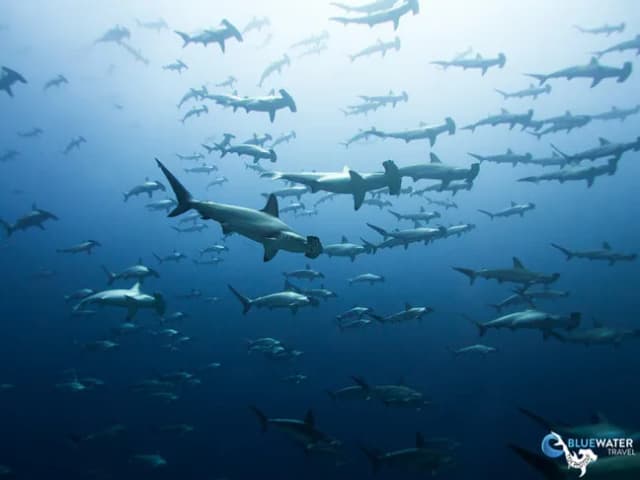
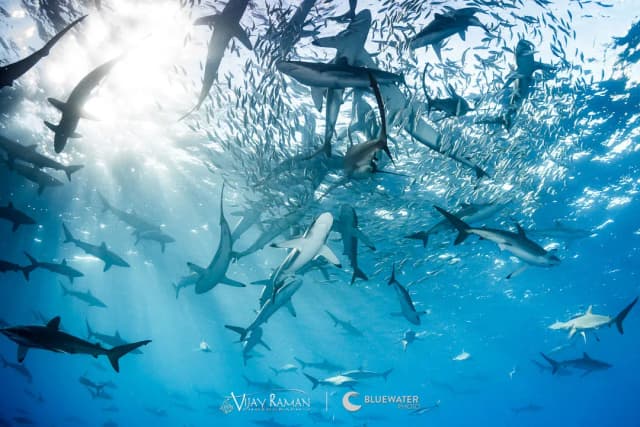
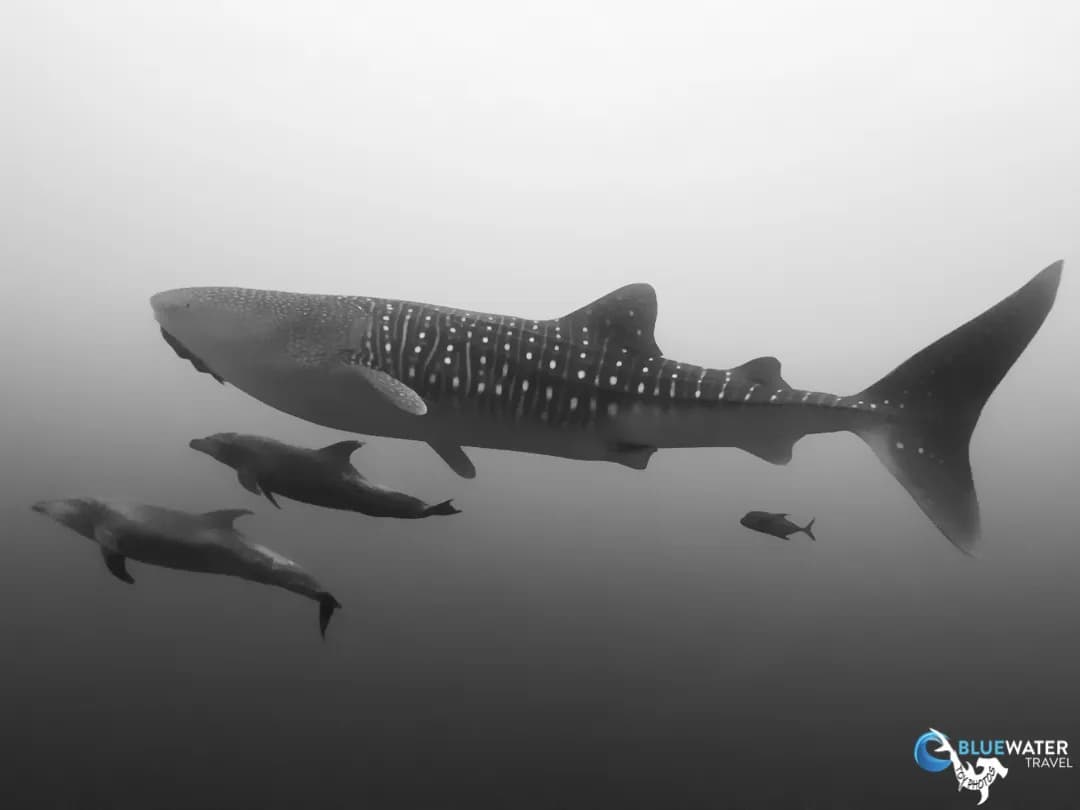
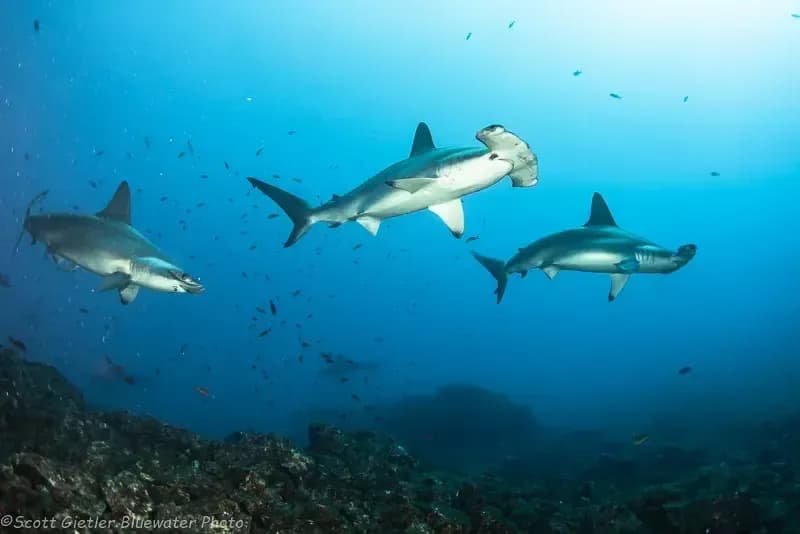
Wolf and Darwin Islands, in the far north of the Galápagos, are among the most exciting places in the world to scuba dive with whale sharks. Encounters here are wild, dramatic, and unpredictable. Whale sharks often appear suddenly from the blue during dives that may also include hammerheads, Galápagos sharks, silky sharks, dolphins, rays, turtles, and huge schools of fish.
Best for: Advanced divers, large whale sharks, remote liveaboard diving, and big-animal encounters.
Not ideal for: Beginners, snorkellers, or divers uncomfortable with current, depth, cooler water, and remote conditions.
Bluewater tip: Choose a liveaboard itinerary that reaches Wolf and Darwin during peak whale shark season, and be prepared for strong current and blue-water action.
When to Go
The main whale shark season at Wolf and Darwin is generally from June to November, when cooler, nutrient-rich water and upwelling conditions increase marine life activity. These months are also known for stronger currents and cooler water, so proper exposure protection is important.
What to Expect
Unlike surface-feeding destinations, Galápagos whale shark encounters usually happen while scuba diving. The sharks may pass along reef edges, appear in open water, or cruise by a dive group with little warning. Keeping up with them is often impossible, so the best strategy is to stay calm, listen to your guide, and be ready when one appears.
The Galápagos Whale Shark Project continues to study why adult whale sharks, many of them large females, visit the waters around Wolf and Darwin.
“Everything is bigger in the Galápagos, and the whale sharks are no exception. Swimming with these gentle giants is always an incredible experience, but the 40–50-foot whale sharks we saw in the Galápagos were nearly double the size of those I have encountered elsewhere.” — Katie Yonker, Travel Agent & Trip Leader
The marine life around Wolf and Darwin is unlike almost anywhere else in the world, which is why the Galápagos also appears in our guides to the best shark diving and top scuba diving bucket list destinations.
Interested in diving the Galápagos? View our range of Galápagos liveaboards or read our 2022 Galápagos trip report by Mark Strickland.
2. Socorro Islands, Mexico — Scuba Diving
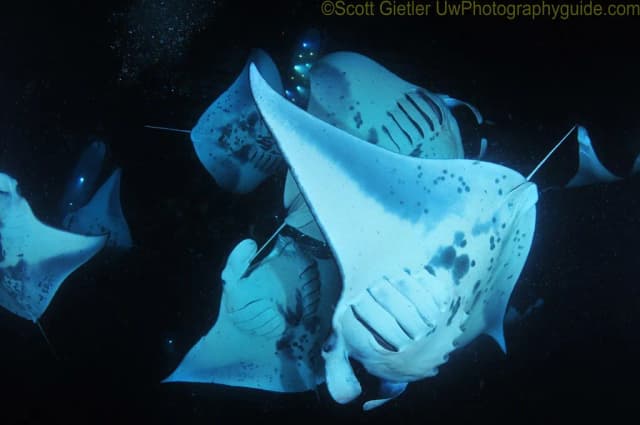
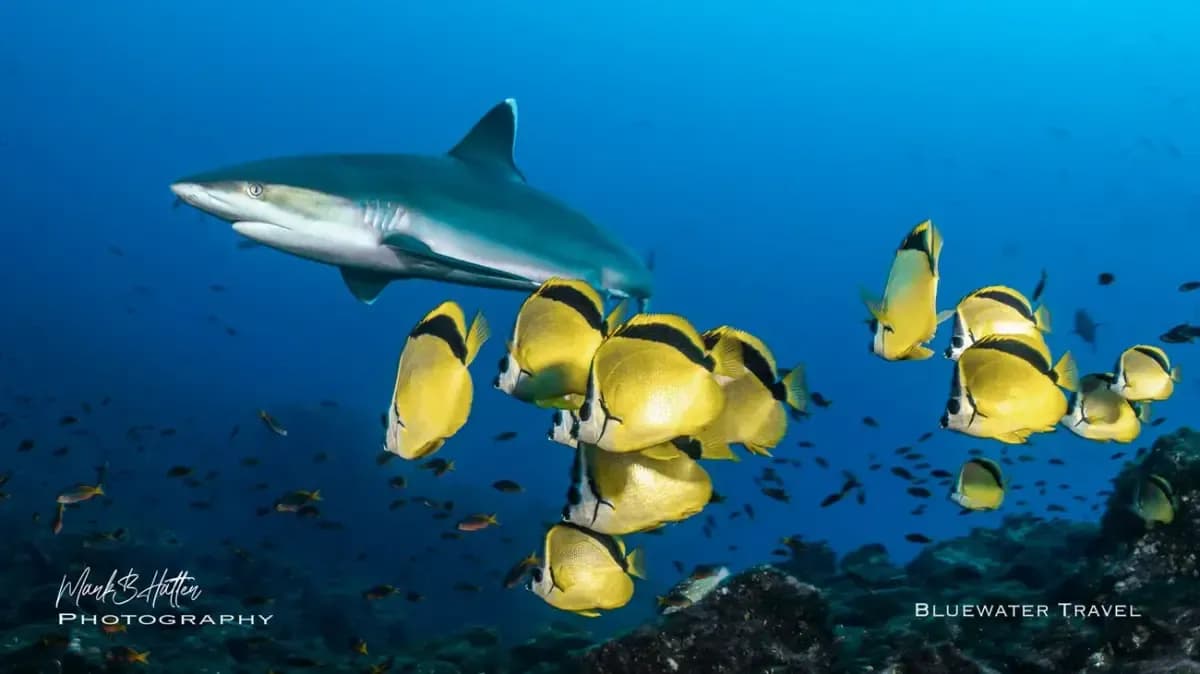
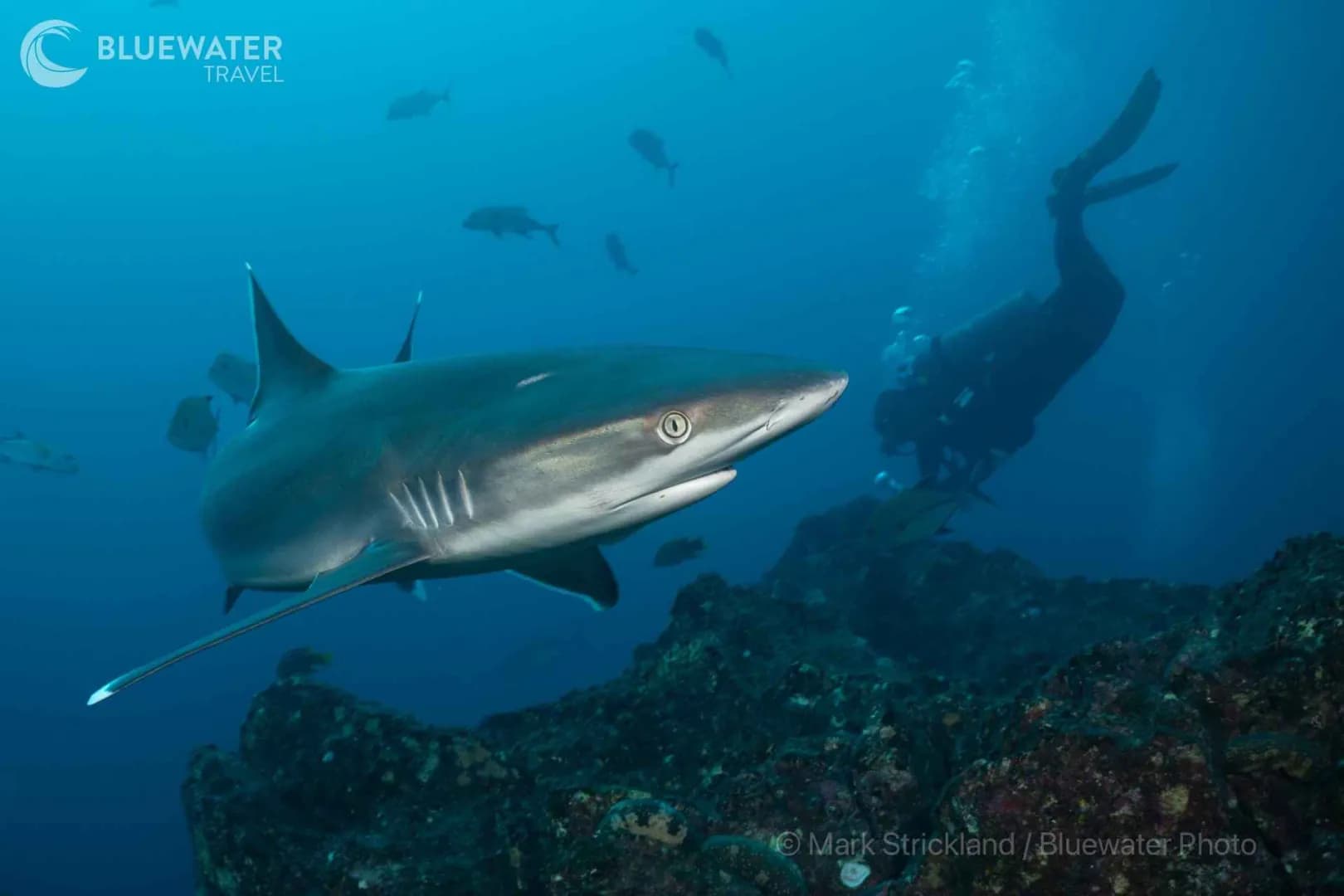
Located roughly 240 miles southwest of Cabo San Lucas, the Socorro Islands, also known as the Revillagigedo Archipelago, are a remote liveaboard destination famous for giant oceanic manta rays, sharks, dolphins, humpback whales, and occasional whale sharks.
Best for: Advanced divers, remote liveaboards, mantas, sharks, dolphins, and occasional whale shark encounters.
Not ideal for: Travellers who want guaranteed whale shark sightings or easy snorkelling conditions.
Bluewater tip: Go to Socorro for the full pelagic experience, not for whale sharks alone. Mantas, sharks, dolphins, and remote seamount diving are the main draw.
When to Go
Whale sharks are most commonly discussed around the warmer parts of the Socorro season, especially late spring and early winter windows, although sightings are not guaranteed. The broader Socorro liveaboard season usually runs from November to June, with different highlights at different times of year.
What to Expect
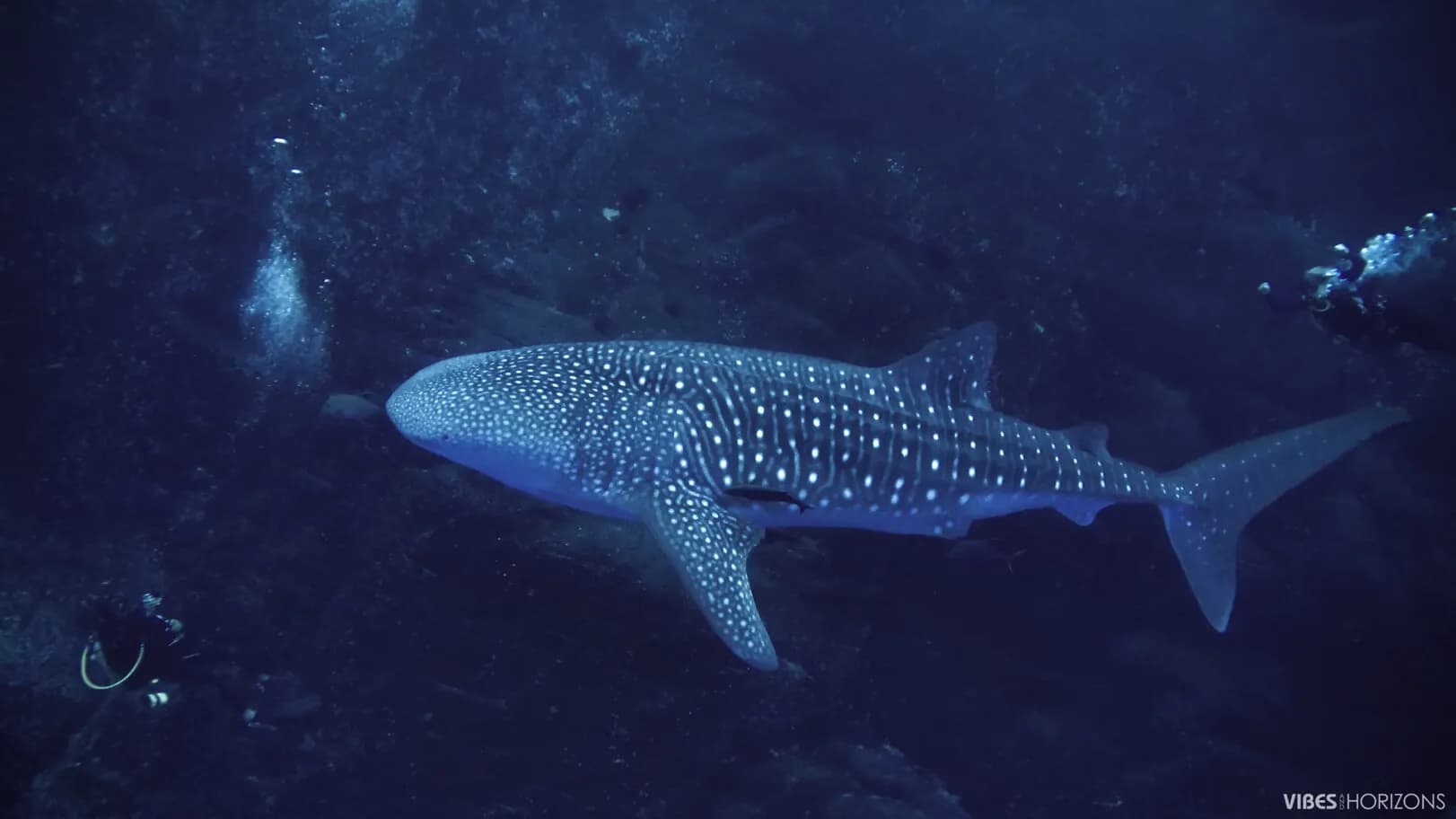
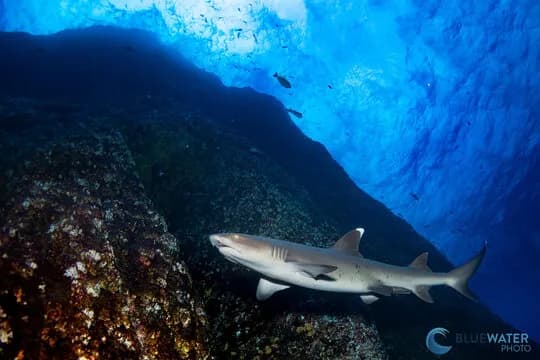
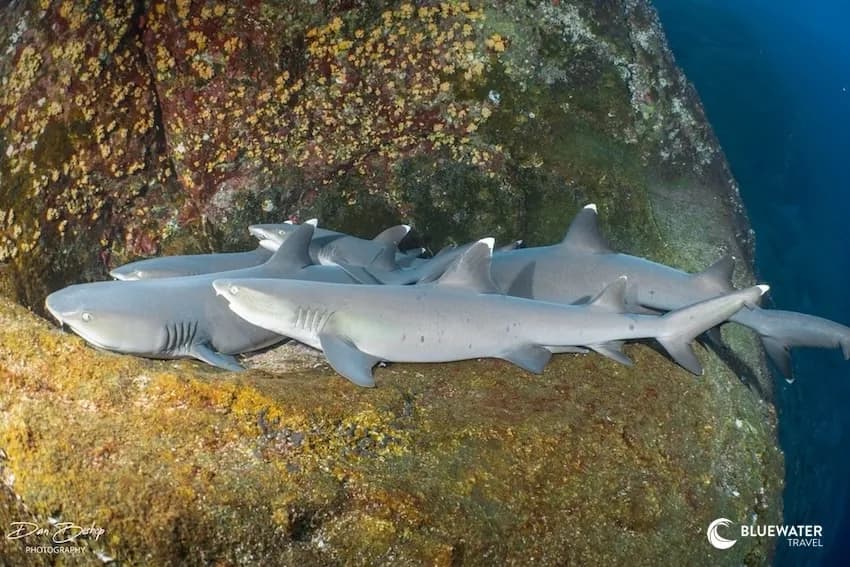
Socorro is not a classic surface-feeding whale shark destination. Encounters are usually chance sightings during scuba dives, often around remote sites such as Roca Partida. The diving can involve current, depth, blue water, surge, and open-ocean conditions, so this destination is best suited to experienced divers.

Photo by @vibesandhorizons
“My favourite whale shark destination is the Socorro Islands, Mexico. Also known as the Revillagigedo Islands, this remote archipelago includes San Benedicto, Socorro Island, and Roca Partida, arguably my favourite dive site anywhere on the planet. Socorro is my top destination for whale shark diving because they can appear alongside large schools of jacks, dolphins, and manta rays.” — Tim Yeo, Travel Agent and Trip Leader
Learn more about Socorro diving: View our Socorro liveaboards or read our 2023 Socorro trip report by Mark Hatter.
3. Isla Mujeres, Mexico — Swimming and Snorkelling
Isla Mujeres, off the coast of Cancún, is one of the most accessible places in the world to snorkel with whale sharks. During summer, whale sharks gather in the waters north of the island to feed on plankton and fish eggs, often near the surface.
Best for: High-probability whale shark snorkelling, easy access from Cancún, and surface-based encounters.
Not ideal for: Travellers seeking solitude, remote wilderness, or scuba diving with whale sharks.
Bluewater tip: Expect boats and other snorkellers during peak season. Choose a responsible operator and go in with realistic expectations about crowding.
When to Go
The main season is typically from mid-June to early September, with July and August often producing the strongest encounter rates. Conditions and aggregation patterns can vary by year.
What to Expect
Isla Mujeres is a snorkel-only whale shark destination. Operators search for feeding sharks offshore, then place small groups in the water under guide supervision. The whale sharks may be feeding on plankton or, in some areas, on fish eggs from spawning events. Manta rays may also be seen on some trips.

“Although this is a snorkel-only destination, the opportunity to swim with whale sharks in July and August is about as close to a reliable marine life encounter as you can find. The event is natural, but it is also popular, so expect boats and other snorkellers. Regulations help manage the experience and protect the animals.” — Adam Gibson
Planning a trip to Isla Mujeres? Contact Bluewater Travel for advice on timing, operators, and logistics.
4. La Paz, Mexico — Swimming and Snorkelling
La Paz, on Mexico’s Baja California Sur peninsula, offers regulated whale shark snorkelling in the Bay of La Paz. These are wild, non-provisioned encounters, usually with juvenile whale sharks feeding on plankton in relatively sheltered waters.
Best for: Natural whale shark encounters, Sea of Cortez wildlife, and combining whale sharks with sea lions or mobula rays.
Not ideal for: Travellers expecting tropical coral reefs, warm clear water every day, or effortless swimming.
Bluewater tip: The plankton that attracts whale sharks often reduces visibility. Bring a wetsuit and focus on the wildlife experience rather than crystal-clear water.
When to Go
Whale shark season in La Paz generally runs from autumn into spring, depending on local regulations and feeding activity. October and November are popular months because the water is often warmer, while winter can be cooler and greener but may pair well with other Baja wildlife experiences.
What to Expect
Encounters take place in a regulated area of the bay. Boats search for sharks, then guides place small groups in the water when conditions allow. The sharks are not fed, so behaviour remains natural. They may appear slow because of their size, but snorkellers often need to swim hard or position themselves carefully to get a good view without blocking the animal’s path.
“Whale sharks in La Paz have the wonderful distinction of being predictable but wild. No one is feeding these sharks. Because of this, they have very little interest in people, and it can be a hectic affair trying to keep up with them. It can be better to be smart than physical: position yourself where you think the whale shark might go next and be careful not to get in its way.” — Nirupam Nigam, Editor-in-Chief, Underwater Photography Guide
Interested in Baja? View our upcoming Baja trips or contact Bluewater Travel for help planning a custom trip.
5. Oslob, Philippines — Swimming, Snorkelling, or Diving
Oslob, at the southern tip of Cebu, is one of the easiest places in the world to see whale sharks close to shore. It is commonly offered as a day trip from Cebu, Moalboal, or Dumaguete-area resorts, and the encounter is accessible to swimmers, snorkellers, and sometimes divers.
Best for: Easy access, high encounter rates, families, and travellers who prioritise close-up sightings.
Not ideal for: Travellers who want fully wild, non-provisioned whale shark behaviour or a quiet natural setting.
Bluewater tip: Understand the ethics before booking. Oslob’s reliability comes from provisioning, which has raised conservation concerns.
When to Go
Oslob operates year-round because whale sharks are provisioned. This makes sightings unusually reliable compared with natural feeding destinations, but it also creates the ethical concerns that make Oslob controversial.
What to Expect
Local fishermen feed the whale sharks, which brings them very close to shore on a regular basis. This can create an easy and memorable encounter, particularly for families or travellers with limited time. However, the site can be crowded, with many boats and people in the water, and the provisioning changes the nature of the encounter.
Many divers and conservationists have mixed feelings about Oslob because feeding can alter whale shark behaviour and movement patterns. If you prefer fully wild encounters, consider La Paz, Bahía de los Ángeles, Isla Mujeres, Socorro, or the Galápagos instead.

“In Oslob, Philippines, a day trip from Dumaguete, there is a whale shark experience different from most others in the world. Dozens of large whale sharks arrive in usually clear blue water to be fed by fishermen. A multitude of boats brings guests, most without fins, in a circle to swim with the whale sharks.” — Scott Gietler, Bluewater Travel Owner and Trip Leader
Learn more about the surrounding region: Read our 2023 Dumaguete Photo Workshop report or our Malapascua and Visayas trip report.
6. Bahía de los Ángeles, Mexico — Snorkelling
Bahía de los Ángeles, also known as the Bay of Los Angeles, lies in the northern Sea of Cortez. It is more remote than La Paz or Isla Mujeres, but it can offer excellent natural whale shark snorkelling during the right season.
Best for: Natural whale shark snorkelling, remote Sea of Cortez trips, liveaboards, and adventurous travellers.
Not ideal for: Travellers wanting simple logistics, luxury resort infrastructure, or guaranteed calm seas.
Bluewater tip: Calm wind makes a big difference. Small-boat conditions can become uncomfortable when the bay is choppy.
When to Go
Prime months are generally July, August, and September, when whale sharks enter the bay to feed on plankton. As with all wild encounters, sightings depend on weather, food availability, and local conditions.
What to Expect
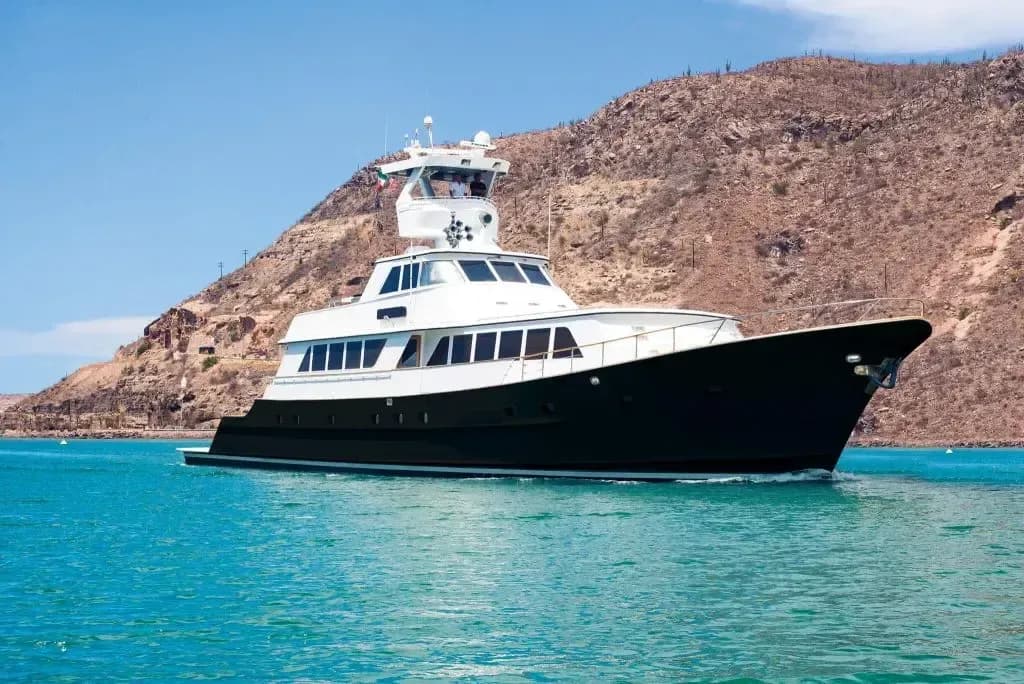
Local fishermen often take visitors out in pangas, either from shore or from liveaboards such as the Rocio del Mar. Whale sharks may be found feeding near the surface, and on lucky days, one may remain nearly stationary while feeding vertically in the water column.

There is also good scuba diving in the region, with colourful fish, nudibranchs, macro subjects, and classic Sea of Cortez marine life. However, the whale shark experience itself is primarily snorkel-based.
Other Places to Swim or Dive with Whale Sharks
There are many other places where whale sharks may be seen, including Ningaloo Reef in Western Australia, the Similan Islands and other areas of Thailand, Donsol in the Philippines, Triton Bay, Cenderawasih Bay near Raja Ampat, Mozambique, Mafia Island in Tanzania, parts of Costa Rica, Belize, and occasionally around Bali or Maui.
Some of these destinations can offer excellent encounters, but they may be more remote, less predictable, more expensive to reach, or highly seasonal. If whale sharks are the main reason for your trip, it is worth checking the most current seasonal advice before you book.
For other large marine life encounters, consider orca expeditions in Norway or our family-friendly grey whale trips to San Ignacio Lagoon, Mexico.
Already booked your trip? Use Bluewater’s packing lists to make sure you have the right gear, clothing, and travel essentials.
Scuba and Snorkel Gear
A comfortable mask, snorkel, fins, and appropriate exposure protection can make a big difference during whale shark encounters. If you need equipment, you can shop scuba and snorkelling gear through Bluewater Photo, including Tusa dive masks, fins, wetsuits, and travel-friendly accessories.
Frequently Asked Questions — Swimming with Whale Sharks
1. Where are the best places to swim or dive with whale sharks?
Top options include Wolf and Darwin in the Galápagos and Socorro in Mexico for scuba diving, and Isla Mujeres, La Paz, Bahía de los Ángeles, and Oslob for snorkelling or swimming. The best choice depends on your experience level, travel style, budget, and how important fully natural behaviour is to you.
2. When is the best time of year to see whale sharks?
Season depends entirely on the destination. Galápagos is generally best from June to November, Isla Mujeres from mid-June to early September, Bahía de los Ángeles in July to September, and La Paz from autumn into spring depending on regulations and feeding activity. Oslob operates year-round because the sharks are fed. Socorro sightings are possible seasonally but should be considered a bonus rather than a guarantee.
3. Do I need scuba certification?
Not always. Many whale shark encounters are snorkel-based and do not require scuba certification. Destinations such as Isla Mujeres, La Paz, Bahía de los Ángeles, and Oslob are primarily swim or snorkel experiences. Galápagos and Socorro are scuba diving destinations and require appropriate certification, experience, and comfort in advanced conditions.
4. Are whale sharks dangerous?
Whale sharks are filter-feeders and are not predators of people. However, they are very large animals, so accidental contact with the body or tail can cause injury. Always follow your guide’s instructions, stay aware of the shark’s movement, and keep a respectful distance.
5. Can I touch a whale shark?
No. You should never touch, ride, chase, block, or harass a whale shark. Responsible operators will brief guests on local rules, which commonly include staying several metres from the shark, avoiding the tail, entering calmly, and limiting the number of people in the water.
6. Is Oslob ethical?
Oslob is controversial because whale sharks are fed to keep them close to shore. This makes encounters very reliable and accessible, but it may alter natural behaviour and has raised conservation concerns. We include Oslob because many travellers ask about it, but we recommend understanding the trade-offs before booking. If you prefer non-provisioned encounters, consider La Paz, Bahía de los Ángeles, Isla Mujeres, Socorro, or the Galápagos.
7. How do I choose a responsible whale shark operator?
Look for operators that follow local regulations, give proper briefings, limit group sizes, avoid touching or chasing animals, use trained guides, and support research or conservation. A responsible operator should also be honest about sighting chances, weather, water conditions, and how the encounter is managed.
8. What should I bring?
Bring a well-fitting mask, snorkel, fins, rash vest or wetsuit, reef-safe sun protection, towel, water, seasickness medication if needed, and a waterproof camera if you want photos. In cooler destinations or on long boat days, exposure protection is especially important.
9. Can children join whale shark tours?
Policies vary by destination and operator. Some trips are suitable for confident children, while others involve open water, current, fast entries, long swims, or rough boat rides. Always check age limits, swimming requirements, and safety policies before booking.
10. Are whale shark sightings guaranteed?
No wild animal encounter is guaranteed. Even in excellent destinations, sightings depend on season, food availability, weather, water conditions, and luck. Some operators may offer a repeat trip during peak season if no sharks are seen, but travellers should be wary of anyone promising a guaranteed wild encounter.
Author
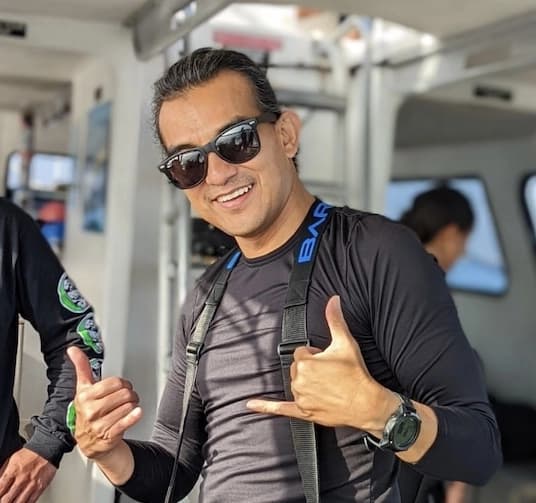
Tim Yeo
Tim grew up in tiny Singapore, where driving for more than an hour meant you would need a passport. Traveling was always his passion, but Tim became addicted to dive travel soon after he got scuba certified in Malaysia. As his diving addiction grew, Tim eventually became a Staff Instructor with PADI and an Instructor Trainer with SDI. After getting his instructor certification, Tim spent time teaching scuba in Malaysia and Vietnam.
Tim serves as General Manager and COO at Bluewater Travel and is the company's most seasoned trip leader. With a portfolio of leading over 30 group trips, his extensive expertise encompasses a variety of popular dive destinations such as the Galapagos, Raja Ampat, French Polynesia, Fiji, the Red Sea, Palau, Maldives, among others. His travels have taken him across all seven continents and allowed him to dive in all five oceans—the Atlantic, Pacific, Indian, Arctic, and Antarctic.