

$798 OFF
Special
Expert advice on diving,
seasons, and logistics
Free planning help
when you’re ready to book
Exclusive dive packages
tailored for you
Special

Special
Special

Special

Special
Special
_-optimized-optimized.webp&w=3840&q=75 "Samambaia Liveaboard Special Packages")
Special
-optimized.webp&w=3840&q=75 "Ilike Liveaboard Special Packages")
Special

Special
Special

Special

Special
Scuba Dive Level
All Levels
Visibility
50 to 131 feet (15 to 40 meters)
Average Water Temperature
84
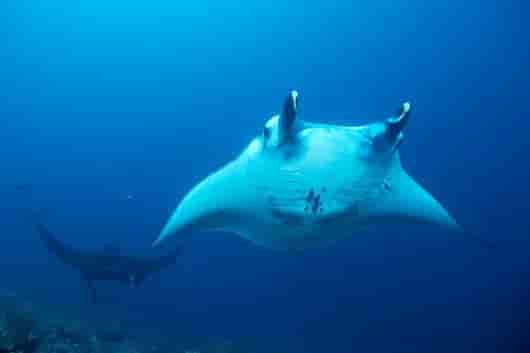
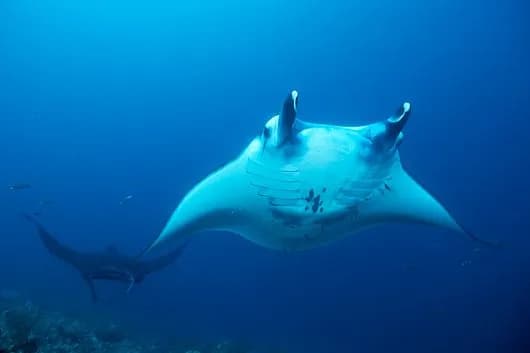
Manta Ray Encounters
Pelagic Encounters

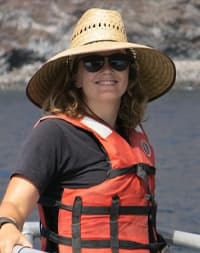
Jessie Hug is a highly experienced professional in the dive industry with over 12 years of experience. She is originally from Switzerland but currently resides in La Paz, Mexico, and is fluent in multiple languages including English, German, French, and Spanish. Jessie has worked and dived in various popular and remote destinations worldwide including Honduras, Mexico, Indonesia, and the Maldives.
As a PADI IDC Staff Instructor and SSI Instructor, she has certified hundreds of student divers.
She possesses exceptional knowledge and skills in the field of scuba diving. After many years diving in resorts, she has worked the last 5 years on liveaboards, where she could truly enjoy her passion for the marine megafauna.
Jessi won Top Sales Agent of 2024 for Bluewater Travel!
My son and I did a dive trip to Komodo in August 2023. The area is amazingly scenic - rugged, arid mountains, beautiful white sand beaches, and crystal clear water. The coral in the area appears to still be very pristine, and the marine life is mind-boggling. We saw sharks, mantas, sting rays, eels, turtles and hundreds of types of colorful fish. The short hike in Komodo Nat'l Park is also a highlight - the dragons are incredible creatures.We had one crossing (~12-14 hours) that was a bit rough, but otherwise the sailing is pretty smooth.Would highly recommend this region for avid divers!
Since my previous visit to Flores and Komodo Island, many remarkable changes have taken place. Over the course of ten years, the small town of Labuan Bajo has undergone significant development, now boasting an international hospital, numerous dive centers, a wide array of hotels and restaurants, and an impressive airport.The diving in Komodo remains as awe-inspiring as I remembered. Expect to encounter stunning coral formations, frequent sightings of sharks, majestic manta rays, and captivating schools of fish. It's important to note that Komodo is primarily geared towards experienced divers, as the currents can be incredibly strong, particularly in North Komodo at sites such as Cauldron, Crystal Rock, and Castle Rock. Divers should exercise caution and feel comfortable navigating challenging conditions.In terms of diving options, I wholeheartedly recommend choosing a liveaboard experience over day trips. Having personally tried both, I found that liveaboards offer several advantages. First and foremost, liveaboards allow you to be the first divers on the sites, ensuring an uninterrupted and immersive experience. Additionally, liveaboards offer flexibility in adapting to changing conditions, such as selecting alternate dive sites if currents prove too strong. On the other hand, day trips often result in crowded dive sites, as multiple groups arrive simultaneously.In conclusion, I highly recommend Komodo as an affordable alternative to Raja Ampat. It offers a wealth of underwater wonders and provides a remarkable diving experience. To fully appreciate the destination, I recommend allocating at least five days on land as well. This will allow you to explore the captivating landmarks and natural beauty that Flores Island has to offer.
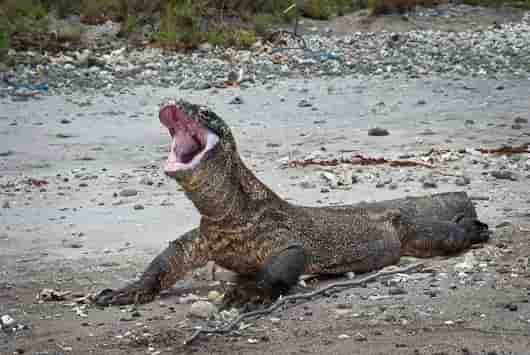
I thought when I was a kid I wanted to go to Komodo to see the dragons. I never dreamed then that it would be scuba diving that would bring me there. Komodo lies in Indonesia within the Coral Triangle, where the richest biodiversity in marine life resides. As a dive destination, Komodo is known for its swift currents and cool thermoclines. Based on these characteristics, I was somewhat reluctant to dive Komodo. Furthermore, reading about diver mishaps in Komodo, which is easy to do because of the Internet, did not settle the issue. A culmination of a diver’s worst nightmare in Komodo was actually a true story: divers had been both swept away and had to fight off Komodo dragons after finding refuge on an island. What I discovered, is that divers in Komodo who are most vulnerable to these incidents are the ones from liveaboards without dedicated boat tenders. It is worth it to pay the price to be on a liveaboard that really knows the area in order to have the best experience.Komodo, like most of Indonesia, is a string of islands created by volcanic eruptions. It is particularly fascinating to me as a diver, as there is a combination of geological, geographical as well as biological phenomena to experience. Smoke plumes surround the peak of Sangeang, but that it is active, is more easily viewed on the sea floor at dive sites like Tiny Bubbles.Although macro life is prolific here, pelagic life is also abundant. I have been on trips where a mixture of oceanic and reef manta rays have swooped around us on successive dives at Manta Alley and seen sharks and dolphins. Manta Alley is a tough spot to reach in summer but it is a beautiful amphitheater formed of volcanic rock where you can sit on the bottom to watch the mantas overhead. The volcanic amphitheater provides a spectacular backdrop for viewing the manta rays, and at times, I have forgotten that I was there to watch the mantas and not the many sessile creatures that live in these walls as permanent spectators to the graceful pelagic animals.Horseshoe Bay is the dive destination within the heart of South Komodo. It harbors a spectacular series of dives within a small area, and at the same time offers the first opportunity to view the infamous Komodo dragon in one of its natural habitats (from the anchored boat), the beach on Rinca Island. Here, crab eating macaques skip around on the rocky section of the beach collecting the shellfish when the tide is out, while the dragons slink out in public only when the sun is at its peak and the sand at its warmest. Fortunately, they do not like to swim so much.The dives in this area often had a bit of current at the surface, so negative entries were necessary. However, once under the surface, the current was not detectable. Cannibal Rock is a fabulous volcanic peak that you circle but never in a single dive, as it is crowded with soft corals, anemones, mating nudibranchs, frogfish, and shrimp. The Yellow Wall o’ Texas is one of the most extraordinary wall dives on the trip, in that the soft corals are swollen open all day long due to currents even in the bright sunlight. It is a hypnotic ride along a wall of soft corals and anemones rhythmically responding to the current.The Three Sisters is a dive site of three underwater pinnacles that become progressively higher and are separated by several meters. The current is flowing into one side of the pinnacles so that there is a big burn at the entry just downstream of the current and in between where the current runs through. The Sisters are full of life everywhere you look. There is small stuff and interesting behaviors between different types of fish to look out for.Beauty is flaunting itself everywhere in Komodo, but it lies deep within the muck dives if you are open to the challenge of finding it. To me, there is something compelling about these dives even though they at first may appear to be desolate. The dive guides always find something. Wainilu is a muck dive situated around a beautiful island, but underwater I felt as if I was immersed in a black and white photo, as there is low visibility and little sunlight. But then finally, a radiant spot of color will appear somewhere and then it is a race to see all that there is on your remaining air.You get that feeling that a dinosaur will appear at any moment, but especially on the night dives. Evolution seems to have a complete lack of any rational purpose when you evaluate the diversity of the creatures on these night dives. I especially liked the night dive at Torpedo Point in Horseshow Bay, as our guide made torpedo rays appear out of the sand, revealed hidden shrimp in basket sea stars, and coerced delicate crabs out of their soft coral hideouts.There were “sand-based” breaks from my boat. A very serious beach volleyball match took place between the crew, guests, and locals from an island and we took an easy hike to Pink Beach on another island to watch the sunset . All serve to emphasize the remarkable diversity of the landscape of Komodo.I am always anxious about leaving Komodo and not ever returning!Best months for divingI have been to Komodo in May, July, and September. All months are spectacular but May was still green, and we were able to dive Manta Alley which was impossible to reach in July.You must take an experienced liveaboard for the best adventure, and I would go for a 10- to 12-day itinerary. Anything else is too short.
I went for a 10-night liveaboard which departed from Bima Bay and combined diving in North and South Komodo.Day 1 – flight from Bali to Bima was delayed so we boarded the liveaboard around 4pm had briefings and orientation, dinner and bintangsDay 2 – Sangeang Island & Gili Banta (blue water, temp 28C, viz 15-25m)Bonto Reef &Techno Reef; both have black volcanic sand with small reef outcroppings, black coral bushes, soft corals. Great for critters. Some disturbance at Bonto Reef could be seen from the recent eruption of Sangeang Api but there appeared little affect to the marine life.Marine Life: Nudibranchs (about 20 different species spotted), ornate ghost pipefish, cuttlefish, snake eels, leaf fishStargazer Reef (AKA Circus / Star Wars) (night)– large sandy area with a few coral bommiesMarine Life: Stargazers!Day 3 – North Komodo & Gili Lawa Laut – (blue water, temp 28C, viz 25-30m)Coral Garden – White sand with coral bommies – little if no current – we used the dive to practice with reef hooks and smb deployment for later in the trip. Marine Life leaf fish, nudibranchs, ribbon eel, moray eels.Castle Rock – large submerged coral pinnacle, strong current, negative entry and fast descent to cleaning station (20-30m). Reef hooks required. Shelter behind the pinnacle when making safety stop. Marine Life: white tips, schools of jacks, snappers, schools of bannerfish & surgeon fish, turtles, Napoleon wrasseCrystal Rock – large coral pinnacle which breaks the surface, secondary smaller pinnacle approx. 50m across a narrow channel. Marine Life: Pygmy seahorse, ladybugs, turtles, school of jacks, white tips, Napoleon wrasseSpanish Dancer Heaven (night)– Reef wall descending to 18m followed by white sand sloping reef. Marine Life: nudibranchs, flat worms, decorator crabs, commensal shrimps, lobster, sponge snailDay 4 – Gili Lawa Laut, Current City & Rinca (blue water, temp 28C, viz 25-30m)Golden Passage – wide channel with reef wall and sandy bottom at approx. 30m. Numerous whip corals. Current was mild but picked up during the dive to medium strength – the drift was fun and easy going. Marine Life: Bumphad parrot fish, Xeno crabs, turtles, candy crabs, blue spotted sting raysShot Gun! (AKA Cauldron) – Sloping reef / coral garden with a large “fish bowl”/ “cauldron” with white sandy bottom at approx. 25m.Gentle drift until the Cauldron lip when we were “shot” over the reef (8m) – fun drift and we managed to keep our group together by kicking slightly to the left and finished up the dive on the other side of the passage in apretty coral garden. Marine Life: pygmy seahorse, leaf fish, turtles, schooling snappers (2 people saw a manta and 1 a dugong!)Makassar Reef – long rubble reef with coral bommies. Mantas come to be cleaned / feed here but we didn’t have any luck. The reef itself is quite dull as you simply drift along keeping a look out for the big stuff. Marine life: white tip, eagle rays, sting ray.Wainlioo (AKA Dragon Besar) Sunset / Night dive – shallow rubble / broken corals followed by a slope with seagrass & coral bommies. Sunset / Night dive. Marine Life: mandarin fish, picturesque dragonets, hairy bat crab (took some time to id that one!), frogfish, pygmy cuttlefishDay 5 – Guided Dragon walk on Rinca, Padar Bay (Greenish & cooler water -25C, viz 10-20m)Dragon Walk was awesome – we saw 5 dragons out and about, some lazing close to the trail others prowling around near to the ranger’s station. Better experience than previous visits to Komodo the guides were informative and helpful.Secret Bay – relatively small site with reef wall starting at 18m – 30m. Plenty of corals, black coral bushes, anemones and barrel sponges. Viz was very poor. Marine Life: hairy squat lobster, mobula rays (just)! Thought the dive site a little lacking in event but if viz better then mobula rays would make it worthwhile.Tiga Dara (AKA3 Sisters)-3 pinnacles fairly close to each other, each covered in corals, loads of crinoids, whip corals. Mild current made it easy to cruise between the pinnacles, viz poor (10m). Marine Life: giant frogfish, xeno crab, devil scorpionfish, nudibranchs, cowries, porcelain crabsSunset on the beach with a few bintangsDay 6 – Nusa Kode, South Rinca (all dives greenish water with 10-15m viz and water temp 24C)Boulders – reef slope with large coral “boulders”. We’d been told there was a rhinopia spotted here so our dive focused on that and we found it at 30m. Medium current. Marine Life: Rhinopia, mobula rays, ribbon eels, nudibranchs, whip coral shrimps, crinoid cuttlefishCannibal Rock- large submerged pinnacle with soft corals,hard corals, sea fans, black corals and whip corals. Marine Life: turtle, frogfish, sea apples, zebra crabsRhino Rocks – sloping dark sand reef with small coral bommies, sea grass and sea fans. Marine Life: frogfish, soft coral cowries, mantis shrimp, pygmy seahorse, cuttlefish, plakobranchs, nudibranchs, zebra crabs, crinoid clingfish, Pegasus seamoths, bobbit worm.Torpedo Alley (night)- sloping dark sand with tiny sponges, corals and seagrass. Marine Life: all manner of decorator crab, octopus, skeleton shrimp, nudibranchs, sea pensDay 7 – 3 dives in Nusa Kode and dragon watching at the beach from the dinghies. We crossed from there to South Komodo and a late night dive was offered at Phinisi Wreck.Day 8 – South Komodo (viz 15-20m, water temp 22-24C)Manta Alley- reef wall with coral outcroppings. Cleaning station at 24m. Channels run between the rocks at 10-15m where mantas can be seen feeding. We made 3 dives and had success each time at the cleaning station, watching the mantas for 20-30 minutes then moving shallower up the reef. We think there were at least 15 different mantas including 2 all black ones. A late night dive was also offered at Pink Beach (Pantai Merah). Dive 2 was the best of the dayDay 9 – Current City & Gili Lawa Laut (blue water, temp 28C, viz 30-40m)Pink Beach – sloping coral garden with numerous bommies and white sand. Large patch of staghorn corals. Marine Life: leaf fish, ribbon eels, common octopus,Batu Bolong – coral pinnacle which breaks the surface has stunning hard and soft corals, a few overhangs and crevices. Need to watch out on the edges as the current can get very strong & turbulent. Marine Life: numerous fish species including puffers, snappers, lionfish, angel fish, nudibranchs, sea spiderCastle Rock – as above though the current was a little stronger and most of the divers were in a “ashing machine” style current during the safety stop – there isn’t much place to hang on, smbs were only deployed when stop was complete. Our guide Dince (who is tiny) had 1 guest hanging off her leg!Crystal Rock / sunset “booze cruise”Day 10- Bima Bay (muck diving, water temp 28C, viz 15-20m)Nudibranch Reef – silty sandy slope with a coral bommies & sponges. Marine Life: many different species of nudibranchsThe Unusual Suspects – sandy slope with coral bommies, shallow sandy area great for extending the dive time (I made a 103minute dive). Marine life: colemani shrimp, zebra crabs, crocodile fish, spiny devilfish, lionfish many types, seahorses, wonderpus, hairy filefish, juv. Barramundi, nudibranchs, frogfish,stone fish, Pegasus seamoths
Where to begin!A group of friends and me went on a Liveaboard throughout the Komodo National Park last summer… it was amazing! A key perk of Komodo is that it boasts a large variety of things to see (mantas, turtles, sharks, napoleons, etc), dive styles (pinnacles, wall dives, etc), and typically great visibility. The dive sites still have that “untouched” feeling, with healthy coral and an abundance of life. As a warning, not all but a few dive sites require 20-30 meters, as well as some challenging currents, so I advise anyone planning on going to be at least PADI Advanced Certified (or equivalent – dependant on Certification Company).Our favorite dive site was of course Karong Makasar - the manta cleaning station. During our time there, the conditions were an EXTREMELY fast drift dive (which was a lot of fun by itself) but gave us the chance to see mantas in all their glory. As a heads up though, this dive is solely for Mantas so it’s a bit of a gamble. It is the one dive site that barely any fish or coral dwell in the area except near the end of the drift so if you’re unlucky… you’ll just have had a fun time pretending to fly like superman… which let’s be honest… is also lots of fun.Not only can you find beauty under the water here, but the National Park boasts some of the most beautiful landscapes I have ever seen. I didn’t touch my book once as I was too busy marveling at the never-ending islands we weaved through. In addition, most Liveaboards make a stop at Komodo Island where you can steady your sea legs and get up-close and personal to some dragons… be sure to bring a slow friend just in case.The best testament I can make for this area is referring back to the conversations I had with the staff on our boat. Many had dove/worked all over the world but had said themselves that this was the best diving they had done. All in all, the combination of beauty above and below the water creates an unforgettable experience that I’ll treasure forever and hope to return to soon.
REVIEW: KOMODO IN JANUARYMost of my life is spent on land, surrounded by the myriad of sounds of the bustling city of Kuala Lumpur and its eclectic mix of 2 million amazing people. When I have time to explore new corners of the world, I often chose to venture below sea level. I have been lucky to be able to dive many different locations around the world and my favorite destination has remained the area in and around Komodo National Park, in Indonesia.I had previously only experienced this fantastic location during the months of July to September. To an experienced diver of 25 years, this region continued to amaze me with its abundance of healthy reefs. I didn't mind donning a 5mm wetsuit. I thought that it could not get any better than this!!Three years ago, a close friend asked me to spend a milestone birthday in January on a liveaboard diving in Komodo. That would put us in the waters there at an entirely different time of year. Why not give it a try??We are just wrapping up that month long celebration and what a surprise to find that I am even more in awe of the wonders of this region!These four weeks delivered endless dives in warmer, clearer waters than ever before! The fact that there were fewer commercial dive boats was a perk! The reefs were totally breathtaking in their abundance of soft and hard corals and I am certain that I saw every species of fish!I have been diving in areas where there is so much evidence of destructive human interaction with the sea: dead reefs, fishless waters, 10-30 divers surrounding me at a time with no concern for conservation of the ocean or the culture supporting the region. This trip to Komodo has restored my faith in the fact that there are areas that flourish and thrive!!One other guest made this Deep South Komodo trip extraordinary. Emma, a bubbly, enthusiastic 13 year old: her excitement at discovering new fish and critters! The thrill of the sea as seen from her perspective warmed my heart and I appreciated every clam, and clown fish and sea cucumber as if it were my first one!! She helped remind me of why I ever started diving!!There is just one dive I MUST share with you because very few bring me to tears while in the water (and for a time after this dive as well!!): my birthday-friend and I had the amazing luck to witness a manta ray peacefully hanging out at a cleaning station. The manta simply glided between the two of us for 30 minutes. To watch nature at this level made this one my favorite ever in Komodo! I was about one meter away from the manta and I was looking into its eyes. I felt such a surge of emotion as I sensed as if she was communicating with me: that despite all of the negative impact that humans may have on the sea: that there is still hope as this was an example of her everyday life: living peacefully in the waters of Komodo.I looked across to my dear friend on the other side of the magical creature and I was sure that she too was sharing this once in a lifetime moment with me.I said a prayer for that manta, as well as all the creatures of the sea: to protect them always.We had a mix of weather: sunny days and sudden rainstorms that produced the most brilliant rainbows! And indeed! There is a pot of gold at the end of those rainbows: experiencing Deep South Komodo aboard a liveaboard in January!!I can't wait to come back again soon!!Sheri Tibbles
Wonderful liveaboard for a 6 day to Northern and southern Komodo Island. We arrived in Labuan Bajo, Flores Is. after a short flight from Bali. Cedric and his team picked us up at the airport. We left at 1 pm with a late afternoon checkout dive and night dive. Fair warning, the currents can be quite strong in Komodo, depending on the tide and lunar cycle. Cedric really knows the dive sites with respect to the tides, so the dive aires are well planned without other boats present.The food is good, not spectacular, but the boat is not a white tablecloth/stemware boat. It's in the mid-price range that caters to good divers. The DM's are all excellent, great spotters (not as good as my wife), and safety-oriented. My wife and I are repeat customers and living in Singapore, we have many choices for liveaboards. The Blank Manta is our favorite. FYI, I rarely or never give five-star reviews.
I spent 10 days diving Komodo, by liveaboard, in 2011.Komodo is split between dive sites in the North and the South. While Komodo National Park comprises a big area, there are also lots of liveaboards that operate in the region - and some of the most popular dive sites, especially in the North (i.e. Crystal Rock), did get crowded.The sites I experienced in North Komodo were dominated by open ocean pinnacles. The diving here is filled with currents, and for experienced divers. But the sites are filled with fish, and some pelagics...and then more fish (photograph below)! In terms of larger animals, we saw lots of turtles, and three large manta rays on a manta focused dive. Unfortunately, we saw only saw few sharks in the North (a couple of whitetips, and a nurse shark). The visibility at the sites in North Komodo was wonderful (40ft+ on every dive). The water in the North is colder, and a 3mm wetsuit was not enough. A 5mm suit, or layered steamer + 3mm suit was enough to keep me warm on these sites.South Komodo is filled with critters, and aside from Cannibal Rock (which is a truly spectacular site), is also less crowded. Some of the critter highlights from my trip were: candy coral crabs, mating blue ring octopi, and pygmy seahorses. The diving here is easier than North Komodo, and appropriate for a wide range of skill levels. The dives in South Komodo were critter focused, and so the visibility was not a concern. However, on most sites visibility was good (25ft+), with the worst visibility I experienced being approximately 15ft, and still great for macro photography.Top-side, the main attraction are the Komodo Dragons, which are impressive animals - however, they are a small part of the trip. Komodo is a truly great dive destination. But it is not a top-side destination.Komodo is almost exclusively a liveaboard destination, and accordingly, is not inexpensive. However, the diving is worth the cost.