
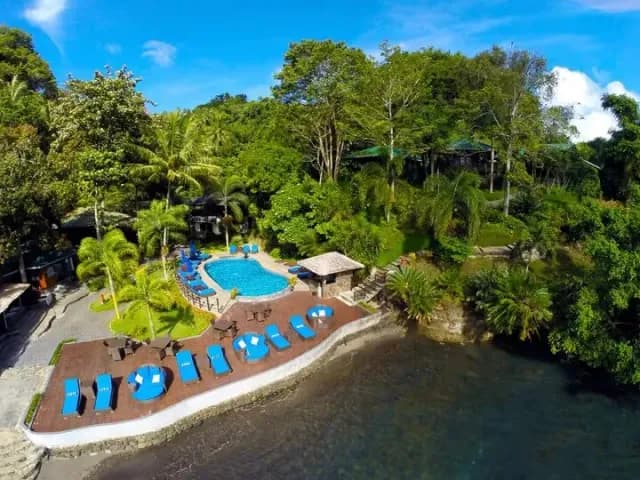


Diving in Indonesia: Overview
- Why it’s special: Indonesia sits at the heart of the Coral Triangle and is one of the richest marine biodiversity regions on earth.
- Signature experiences: Muck and macro diving in Ambon and Lembeh, current-swept reefs in Komodo and Alor, hammerheads and sea snakes in the Banda Sea, and pristine coral gardens in Raja Ampat, Wakatobi, Derawan, Bali, and Bunaken.
- Best suited to: Everyone from newer divers in Bali, Bunaken, and Wakatobi to advanced photographers and liveaboard divers in Raja Ampat, Alor, Komodo, and the Banda Sea.
- Best season: Indonesia can be dived year-round, but the best months vary significantly by region. March to October suits many areas, while Raja Ampat and parts of Maluku are often better from October or November through April.
- How to dive it: Resorts work well for Bali, Lembeh, Bunaken, Wakatobi, and parts of Raja Ampat; liveaboards are ideal for remote regions and combination itineraries.
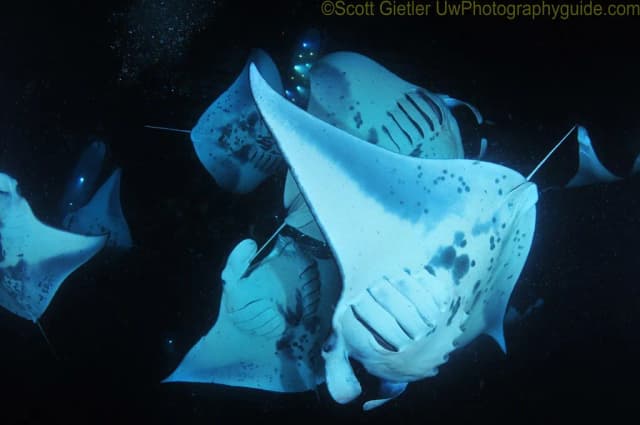
Scuba diving in Indonesia is a must for many serious divers. With an extraordinary concentration of reef fish, corals, macro life, and pelagic encounters, Indonesia is often described as one of the global centres of marine biodiversity. Its position within the Coral Triangle gives divers access to everything from black-sand muck sites and kaleidoscopic reefs to remote seamounts, walls, current dives, manta cleaning stations, and rarely visited liveaboard routes.
Indonesia is also one of the most varied dive destinations in the world. You can spend a week photographing tiny critters in Lembeh, drift over hard-coral gardens in Komodo, look for hammerheads in the Banda Sea, or explore the biodiversity of Raja Ampat aboard a luxury liveaboard. For divers who prefer an easier land-based trip, Bali, Bunaken, Lembeh, and Wakatobi all offer strong resort options.
Over the last decade I’ve led group trips and workshops right across Indonesia, from Bali and Komodo to Raja Ampat, Alor, the Banda Sea, Wakatobi, and Derawan. What keeps me going back is how different each region feels: one week I’m spending entire dives in Lembeh searching for critters the size of a fingernail, the next I’m hanging in the current in Komodo watching mantas and sharks pass by. This guide is based on those trips and on where we actually send guests today, not just on what looks good in a brochure.
For liveaboard divers, Indonesia has some of the best expedition-style diving in the world. Boats such as the Dewi Nusantara, Blue Manta Liveaboard, and Teman liveaboard offer access to some of the country’s most biodiverse and remote regions. For divers looking for something more unusual, trips such as our Halmahera Remote Indonesia Liveaboard Trip – August 2027 explore lesser-known areas with pristine reefs and excellent marine life.
See also: Asia’s top dive destinations.
To help you choose the right region, we have listed ten of Indonesia’s best dive destinations below, with notes on what each area does best, who it suits, and when to go.
View Indonesia liveaboards and availability
Best Diving Spots in Indonesia
Here are ten of the best scuba diving destinations in Indonesia, listed alphabetically:
- Ambon Bay, Maluku – World-class muck and critter diving.
- Alor, East Nusa Tenggara – Remote reefs, currents, macro, and wide-angle photography.
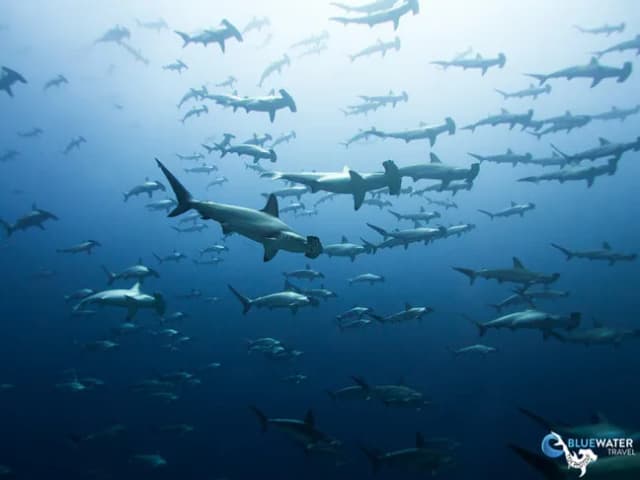
- Banda Sea, Maluku – Sea snakes, schooling hammerheads, walls, and remote liveaboard routes.
- Bali – Easy access, wrecks, mantas, mola mola, reefs, and macro.
- Derawan Islands, East Borneo – Jellyfish lake, mantas, whale sharks, turtles, and relaxed reef diving.
- Komodo, East Nusa Tenggara – Current dives, mantas, big fish action, and classic Indonesian reefscapes.
- Lembeh, North Sulawesi – One of the world’s best muck-diving and macro photography destinations.
- Manado and Bunaken, North Sulawesi – Easy resort-based diving, dramatic walls, reefs, and nearby macro sites.
- Raja Ampat, West Papua – Exceptional coral biodiversity and one of Indonesia’s top liveaboard destinations.
- Wakatobi, South East Sulawesi – Pristine reefs, polished resort diving, and superb house-reef access.
If this is your first time diving in Indonesia, Bali, Komodo, Bunaken, or Lembeh are often excellent starting points. Once you are comfortable with the country’s travel logistics, Raja Ampat, Alor, the Banda Sea, Wakatobi, and Derawan are excellent choices for more remote or photography-focused trips.
See also: Other Dive Areas in Indonesia - Liveaboards and Dive Resorts - Travel Tips
- Best for macro: Lembeh, Ambon, Bali, Alor.
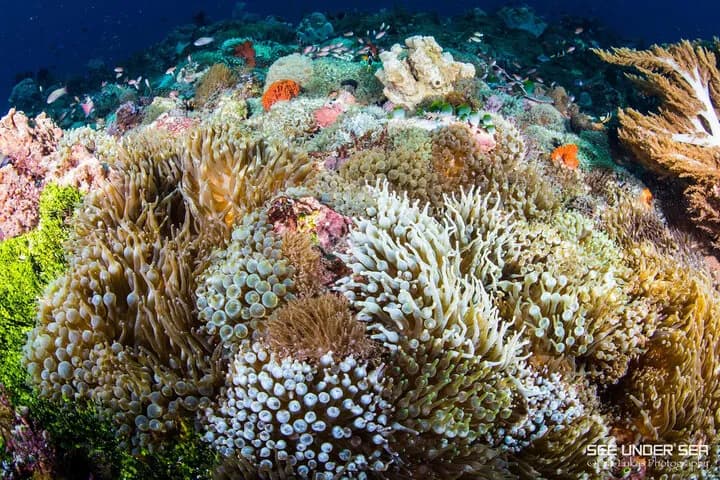
- Best for reefs: Raja Ampat, Wakatobi, Komodo, Alor, Bunaken.
- Best for big animals: Komodo, Raja Ampat, Derawan, Banda Sea.
- Best for beginners: Bali, Bunaken, Wakatobi, selected sites in Lembeh.
- Best for advanced divers: Komodo, Alor, Banda Sea, Raja Ampat.
- Best for liveaboards: Raja Ampat, Komodo, Banda Sea, Alor, Forgotten Islands, Halmahera.
- Best for resorts: Bali, Lembeh, Bunaken, Wakatobi, parts of Raja Ampat.
Below, we note the best months for each destination. If your travel dates are fixed, we can help match you with the Indonesian region most likely to offer good conditions when you are available.
1. Ambon Bay, Maluku
Ambon, the capital of Maluku Province, is best known among divers for world-class muck diving. Its dark-sand slopes and sheltered bay sites are home to some of Indonesia’s most sought-after macro subjects.
Best for: Macro photographers, rare critters, muck diving, and experienced divers who like slow, detail-focused dives.
Not ideal for: Divers looking for big animals, bright coral reefs on every dive, or a wide range of topside activities.
Bluewater tip: Ambon combines well with Banda Sea liveaboard routes, especially for divers who want both macro and remote wide-angle diving in one trip.
Macro and Muck Diving in Ambon Bay
Critters found in Ambon can include rhinopias, frogfish, ghost pipefish, juvenile fish, stonefish, mandarin fish, nudibranchs, harlequin shrimp, Coleman shrimp, wonderpus, mimic octopus, flamboyant cuttlefish, and the much sought-after psychedelic frogfish.

Rhinopias are highly sought after in Ambon.
Ambon is usually dived from land-based resorts, although some liveaboards include it as a start or end point for Raja Ampat or Banda Sea itineraries.
Learn more about diving Ambon, including Ambon resorts and liveaboard options.
Practical Information
- Best season: September to June. July and August are affected by the southeast monsoon.
- Skill level: Beginner to advanced, depending on site and conditions.
- Nearest airport: Ambon (AMQ), with flights from Jakarta (CGK), Sorong (SOQ), and Manado (MDC).
- How to dive it: Mostly resort-based, with some liveaboard itineraries.
- Topside activities: Limited.
2. Alor, East Nusa Tenggara
Alor is one of Indonesia’s most rewarding off-the-beaten-path dive destinations. It offers a mix of wide-angle reef dives, current-swept walls, sloping muck sites, and excellent macro photography.
Best for: Remote reefs, macro and wide-angle photography, strong biodiversity, and adventurous divers.
Not ideal for: New divers who are uncomfortable with current, colder upwellings, or remote logistics.
Bluewater tip: Bring both macro and wide-angle setups. Alor can shift from tiny critters to colourful reef scenes within the same trip.
Remote Reefs, Currents and Macro
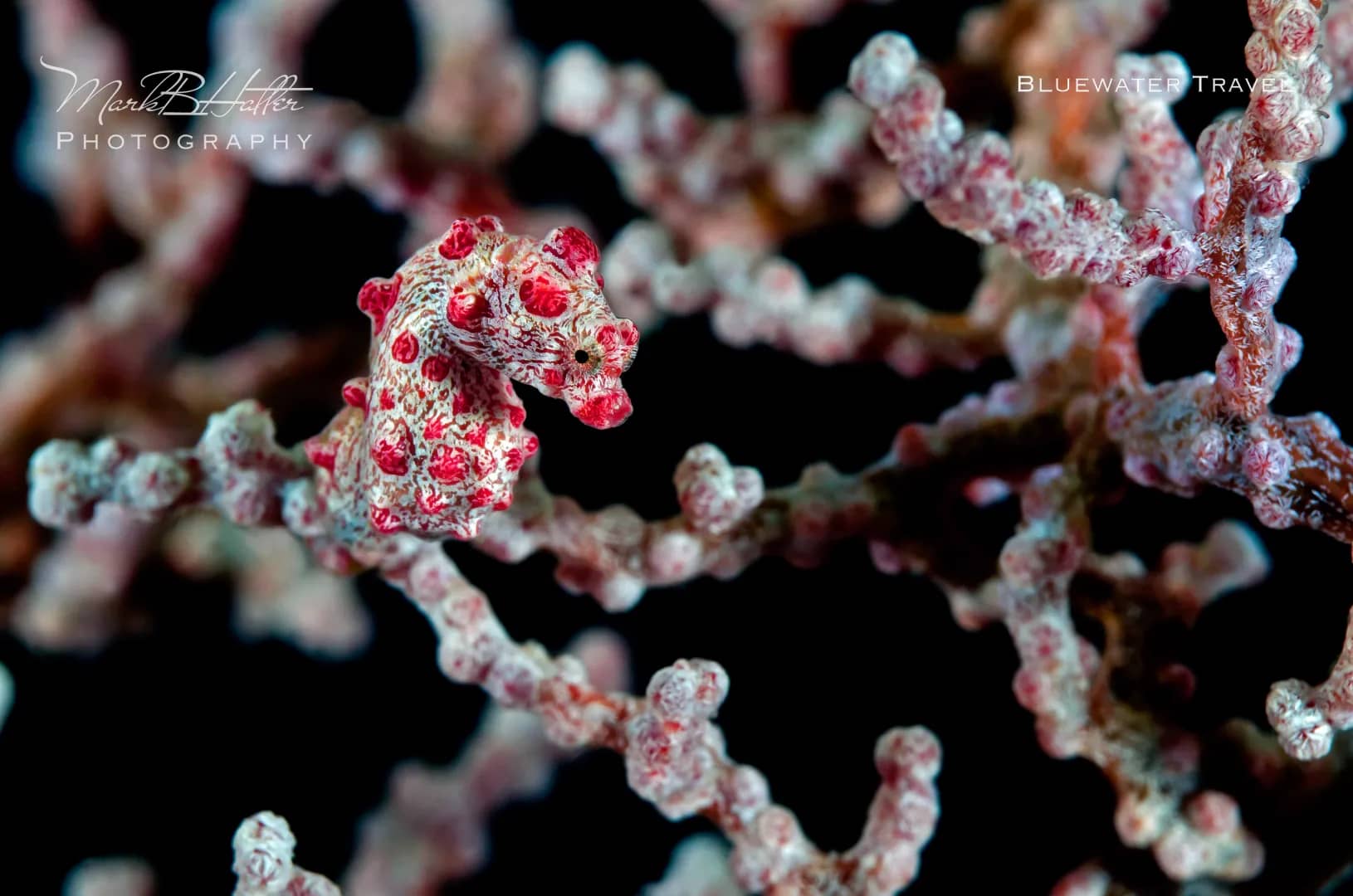
Alor’s reefs are known for colourful coral, sponges, schooling fish, and dramatic topography. Macro photographers can find subjects such as frogfish, leaf scorpionfish, pygmy seahorses, eels, and nudibranchs. Larger animals such as mola mola and sharks are possible, though less predictable.

Most Alor diving is resort-based, although some liveaboards include Alor on itineraries linking Komodo, the Banda Sea, or other remote eastern Indonesian regions.
See Erik Lukas’s full report and photos from his Alor diving trip, or contact us for resort and liveaboard options.
Practical Information
- Best season: March to December generally offers the best conditions. Conditions can be rougher and more unpredictable in other months.
- Skill level: Intermediate to advanced. Some sites can have strong or unpredictable currents.
- Nearest airport: Alor (ARD), usually reached via Jakarta (CGK), Bali (DPS), or regional connections.
- How to dive it: Mostly resort-based, with occasional liveaboard itineraries.
- Topside activities: Limited.
3. Banda Sea, Maluku
The Banda Sea is a remote liveaboard destination visited mainly during seasonal crossing itineraries between regions such as Raja Ampat, Ambon, Alor, and the Forgotten Islands. It is known for dramatic walls, excellent visibility, sea snakes, schooling fish, and the possibility of hammerhead encounters.
Best for: Remote liveaboard diving, walls, sea snakes, hammerhead potential, and adventurous divers.
Not ideal for: Beginners, short trips, or travellers who prefer easy resort-based logistics.
Bluewater tip: Banda Sea trips are highly seasonal. Choose your dates carefully and expect a true expedition-style itinerary.
Sea Snakes, Hammerheads and Remote Walls
Many Banda Sea itineraries include excellent wall dives and macro sites, but the region’s most distinctive encounters are often the sea snakes around Manuk and Gunung Api. The Banda Sea has also become known as one of the more reliable regions in Southeast Asia for schooling hammerhead sightings during the right season, although sightings are never guaranteed.

Due to its remote location and limited infrastructure, the Banda Sea is almost exclusively a liveaboard destination.
Practical Information
- Best season: March to May and September to November generally offer the best conditions for crossing itineraries.
- Skill level: Intermediate to advanced. Some sites can have strong currents and exposed conditions.
- Nearest airports and ports: Common embarkation points include Ambon (AMQ), Alor (ARD), Maumere (MOF), Saumlaki (SXK), and Kaimana (KNG), depending on itinerary.
- How to dive it: Liveaboard only.
- Topside activities: Limited.
4. Bali
Bali is Indonesia’s easiest major dive destination for many international travellers. It offers wrecks, reefs, macro sites, mantas, seasonal mola mola, and a huge range of land-based activities, making it one of the best first trips to Indonesia.
Best for: First-time Indonesia divers, wrecks, mantas, mola mola, macro, and combining diving with culture and topside travel.
Not ideal for: Divers seeking remote wilderness or guaranteed big-animal encounters.
Bluewater tip: Bali works well as a standalone trip or as an add-on before or after Komodo, Wakatobi, or other Indonesian itineraries.
Wrecks, Mantas, Mola and Easy Logistics
Bali’s best diving is found around its eastern and northern coasts, as well as around Nusa Penida and Nusa Lembongan. The island has shore dives, boat dives, muck sites, reef slopes, walls, and some excellent wide-angle opportunities.

Schooling bumphead parrotfish photographed by Bluewater owner Scott Gietler at the USAT Liberty Wreck.
The USAT Liberty Wreck in Tulamben is one of Bali’s signature dives. It is accessible from shore and can be dived repeatedly for both wide-angle and macro photography. Divers may see bumphead parrotfish, Napoleon wrasse, barracuda, jacks, sweetlips, turtles, and numerous reef fish.

Up-close mola mola photographed by Bluewater owner Scott Gietler.
Nusa Penida is known for manta ray encounters and seasonal mola mola sightings. July to October has traditionally been the most popular period for mola mola, although timing can shift from year to year. Water here can be significantly colder than elsewhere in Bali, and conditions can be challenging, so choosing an experienced operator is important.
For land-based diving near Nusa Penida, resorts such as Deep Roots Dive & Yoga Resort offer access to many of the island’s top dive sites. Operators such as Diving Indo in Sanur also run guided trips to Nusa Penida, Tulamben, Padang Bai, and other Bali dive areas.
Bali is also easy to combine with Komodo. Labuan Bajo (LBJ), the embarkation port for most Komodo trips, is roughly a one-hour flight from Bali.
View dive resorts in Bali or learn more about diving Bali.
Practical Information
- Best season: Year-round, although December to February are the rainiest months. Mola mola sightings are seasonal and vary by year.
- Skill level: Beginner to advanced. Bali has many beginner-friendly sites, but Nusa Penida can involve current and colder water.
- Nearest airport: Bali Denpasar International Airport (DPS).
- How to dive it: Land-based resorts and dive centres, with some liveaboard departures to Komodo.
- Topside activities: Excellent. Temples, surfing, beaches, hiking, cultural tours, rice terraces, restaurants, shopping, and wellness retreats.
5. Derawan Islands, East Borneo
The Derawan Islands are a remote island group in East Kalimantan, Indonesian Borneo. The area offers a varied mix of reef diving, turtles, manta rays, schooling fish, jellyfish lake snorkelling, and the chance to snorkel with whale sharks.
Best for: Mantas, turtles, whale shark snorkelling, jellyfish lake, and relaxed tropical diving.
Not ideal for: Travellers who want polished infrastructure, simple logistics, or luxury options on the scale of Bali or Wakatobi.
Bluewater tip: Derawan is rewarding, but logistics and service standards can vary. Work with an experienced advisor to choose the right resort or boat.
Jellyfish Lake, Mantas and Whale Sharks
Derawan diving is spread across several main islands. Kakaban is known for its jellyfish lake, Sangalaki for manta rays and turtles, Maratua for reef sharks, barracuda, and eagle rays, and Derawan itself for drift dives, muck sites, and whale shark snorkelling opportunities.

The diving infrastructure in Derawan is less developed than in some of Indonesia’s better-known destinations, but there are dive resorts and liveaboards operating in the region.
Contact us for Derawan resort and liveaboard options, or learn more about diving Derawan.
Practical Information
- Best season: Year-round, with October to June often best for manta ray encounters.
- Skill level: Beginner to advanced, depending on site and conditions.
- Nearest airports: Berau (BEJ) or Tarakan (TRK), usually reached via Jakarta (CGK) or other domestic hubs.
- How to dive it: Resorts and selected liveaboards.
- Topside activities: Limited, with some snorkelling and island excursions.
6. Komodo, East Nusa Tenggara
Komodo National Park is one of Indonesia’s most exciting dive regions. Located a short flight from Bali, this UNESCO World Heritage Site is famous for current-swept reefs, mantas, schooling fish, sharks, colourful corals, and the iconic Komodo dragons found on land.
Best for: Drift diving, mantas, schooling fish, reef action, liveaboards, and adventurous divers.
Not ideal for: Inexperienced divers who are uncomfortable in current or travellers expecting consistently easy conditions.
Bluewater tip: Komodo’s currents are part of what makes the diving so good. Choose a reputable operator and be honest about your comfort level.
Current-Swept Reefs, Mantas and Big Fish Action
Komodo diving is usually divided into North, Central, and South Komodo. North and Central Komodo are known for warmer water, stronger current, schooling fish, manta sites, and colourful reefs. South Komodo can be colder, greener, and more rugged, with excellent macro life, dramatic walls, and striking scenery.

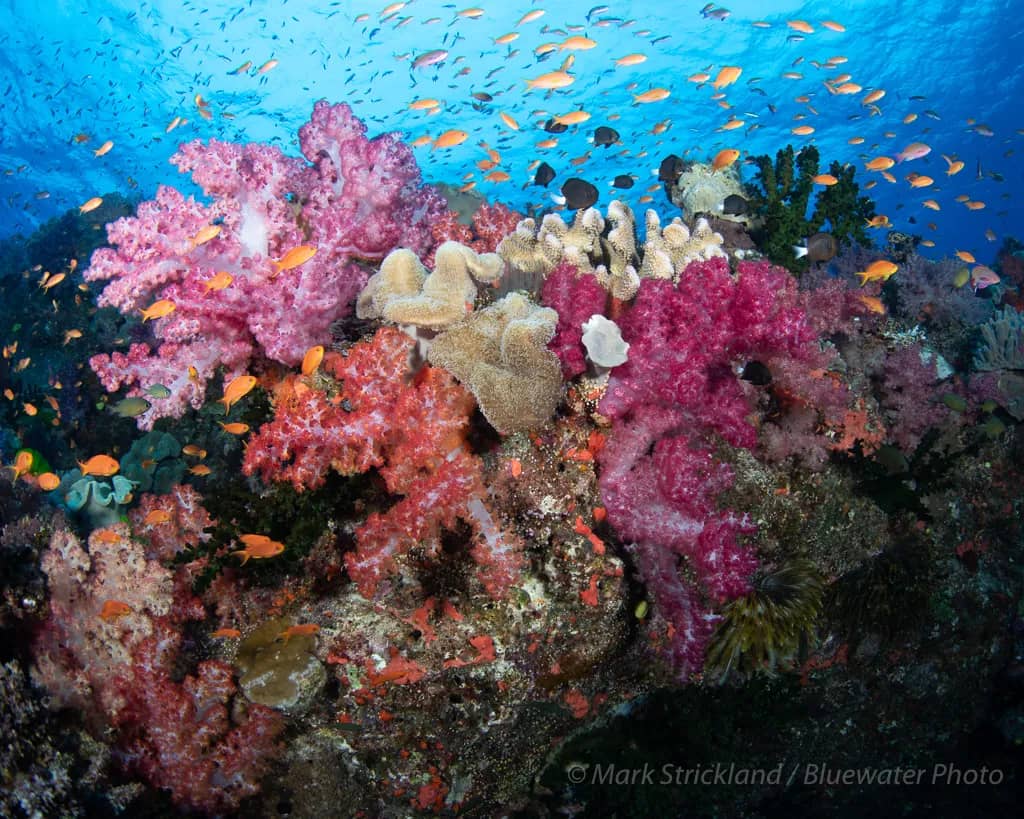
An outstanding variety of coral formations and fish life make Komodo special. Photo by Mark Strickland.
North Komodo is known for exhilarating drift dives, big schools of fish, and pelagic activity. The Cauldron, also called Shotgun, is one of Komodo’s signature dives, where current can carry divers through a channel filled with trevally, snapper, reef sharks, manta rays, and eagle rays.
Central Komodo includes famous sites such as Batu Bolong, known for its dense fish life and coral, and Manta Point, where manta rays may gather to feed or clean during the right conditions. The region also has excellent macro sites.

Schooling sweetlips in Komodo by Mark Strickland.
North and Central Komodo are often best from March to October. South Komodo is typically best from November to February and can feel like a different destination, with cooler water, different marine life, and more dramatic topography. If your itinerary includes both north and south, pack exposure protection accordingly.
Check out Mark Strickland’s photo recap from Bluewater’s Komodo dive trip.
Komodo can be dived by liveaboard or from land-based operators in Labuan Bajo. Because conditions vary and currents can be serious, choosing the right operator is especially important.
View Komodo liveaboards or learn more about diving Komodo.
Practical Information
- Best season: Year-round. March to October is best for North and Central Komodo; November to February is best for South Komodo.
- Skill level: Intermediate to advanced. Strong currents are common at many signature sites.
- Water temperature: Around 27–28C (81–82F) in many northern and central areas; South Komodo can drop to around 23–24C (73–75F) or colder at times.
- Nearest airport: Labuan Bajo (LBJ), reached from Bali (DPS) and other Indonesian hubs.
- How to dive it: Liveaboards, day boats, and dive resorts or hotels in Labuan Bajo.
- Topside activities: Komodo dragon tours, viewpoints, island hikes, beaches, and cultural visits.
7. Lembeh, North Sulawesi
Lembeh Strait is one of the world’s most famous muck-diving destinations. For macro photographers, it offers an extraordinary concentration of rare, strange, and photogenic critters in a compact, easy-to-dive area.
Best for: Macro photography, muck diving, rare critters, easy resort-based logistics, and repeat dive trips.
Not ideal for: Divers who mainly want colourful reefs, big animals, or dramatic wide-angle scenery.
Bluewater tip: Lembeh rewards patience. Slow down, trust your guide, and bring a macro lens or compact camera setup.
Indonesia’s Iconic Macro Diving Destination
On a typical Lembeh trip, divers may see hairy frogfish, flamboyant cuttlefish, juvenile barramundi cod, juvenile pinnate batfish, rhinopias, harlequin shrimp, mandarin fish, snake blennies, unusual anemones, and many species of nudibranchs. It is a destination where a single dive can produce multiple rare subjects.

Hairy frogfish photographed by Matt Sullivan during a Bluewater macro photography workshop in Lembeh.
See the ultimate critter list, with more than 130 macro species found across Anilao, Bali, and Lembeh, on our sister website Underwater Photography Guide.
Lembeh also has strong diving infrastructure. Many resorts are photographer-friendly, with excellent camera rooms and experienced local guides who specialise in finding tiny or camouflaged subjects.
Lembeh is only around a two-hour drive from Manado Airport (MDC), making it easy to combine with Bunaken, Bangka, or Manado Bay.
Learn more about diving Lembeh.
Practical Information
- Best season: Year-round. Conditions are often excellent from March to October, while different critters can appear at different times of year.
- Skill level: Beginner to advanced. Good buoyancy is important for photographers and muck sites.
- Nearest airport: Manado (MDC), with connections from Bali, Jakarta, Singapore, Kuala Lumpur, and other regional hubs.
- How to dive it: Land-based dive resorts.
- Topside activities: Tangkoko National Park for tarsiers and Celebes crested macaques is a popular extension.
8. Manado and Bunaken, North Sulawesi
Manado and Bunaken are excellent choices for divers who want easy logistics, strong resort infrastructure, spectacular walls, and access to several distinct North Sulawesi dive areas in one trip.
Best for: Wall diving, reefs, relaxed resort trips, snorkellers, and combining Bunaken, Bangka, and Lembeh.
Not ideal for: Divers seeking remote liveaboard expedition diving or heavy big-animal action.
Bluewater tip: Combine Bunaken, Bangka, and Lembeh to experience walls, reefs, soft corals, and muck diving in one efficient North Sulawesi itinerary.
Wall Diving, Reefs and Easy Resort-Based Trips
Manado Bay offers a mix of reef and muck sites close to the airport, with subjects such as mimic octopus, flamboyant cuttlefish, seahorses, squid, nudibranchs, and frogfish.

Barracuda tornado in Bunaken, photographed by Bluewater owner Scott Gietler.
Nearby Bangka Island is known for vibrant soft corals, colourful reefs, reef sharks, rays, tuna, barracuda, pygmy seahorses, and shrimp. Bunaken National Park, meanwhile, is famous for dramatic walls, healthy coral, reef sharks, schooling fish, sea snakes, and occasional rays. Dolphins and pilot whales may also be seen from the boat.
Diving in the region is predominantly land-based, with resorts and operators around Manado, Bunaken, Bangka, and Lembeh.
Learn more about diving Manado and Bunaken.
Practical Information
- Best season: Year-round, with March to October often offering some of the best overall conditions.
- Skill level: Beginner to advanced.
- Nearest airport: Manado (MDC), with domestic and regional international connections.
- How to dive it: Land-based resorts and dive centres.
- Topside activities: Snorkelling, village visits, lakes, volcanoes, nature reserves, paragliding, white-water rafting, and Tangkoko National Park.
North Sulawesi Combination Trip: Passport to Paradise
Passport to Paradise is a North Sulawesi dive package that combines three iconic regions: Bunaken Marine Park, Bangka Island, and Lembeh Strait. Instead of losing time to flights or long road transfers, guests travel between resorts by dive boat, with a dive included en route to the next resort.
- Bunaken Marine Park - Murex Manado Resort: Wall diving, dramatic drop-offs, and rich marine life.
- Bangka Island - Murex Bangka Resort: Colourful reefs, soft corals, and excellent biodiversity.
- Lembeh Strait - Lembeh Resort: Muck diving and rare macro subjects.
The itinerary is customisable, allowing you to choose how many nights to spend in each region and how many dives to include.
9. Raja Ampat, West Papua
No guide to diving in Indonesia would be complete without Raja Ampat. Located in West Papua, Raja Ampat is widely regarded as one of the richest reef systems on earth, with exceptional coral diversity, prolific fish life, manta rays, endemic species, and world-class underwater photography opportunities.
Best for: Coral biodiversity, liveaboards, reef photography, manta rays, fish life, and experienced divers.
Not ideal for: Short trips, simple logistics, or divers who are not comfortable with remote travel and occasional currents.
Bluewater tip: A 10-night liveaboard is often the best way to experience both northern Raja Ampat and Misool in one itinerary.
The Richest Coral Reefs in Indonesia
Raja Ampat sits within the broader Bird’s Head Seascape, alongside areas such as Triton Bay and Cenderawasih Bay. Its major dive regions include the Dampier Strait, Misool, Batanta, and areas around Waigeo.
Cape Kri near Dampier Strait is famous for exceptional fish diversity, while Misool is known for soft corals, pinnacles, mangroves, and brilliant reefscapes. Batanta offers excellent muck diving, making Raja Ampat far more varied than many first-time visitors expect.
Marine life may include Raja Ampat epaulette sharks, tasseled wobbegong sharks, Papuan garden eels, reef sharks, manta rays, schooling fish, and a huge range of reef species.

Tasseled wobbegong shark photographed by Katie Yonker in Raja Ampat.
Cenderawasih Bay is best known for close whale shark encounters, while Triton Bay offers nutrient-rich water, distinctive soft corals, and excellent biodiversity, although visibility can be lower.
Raja Ampat can be dived from resorts or liveaboards. A 10-night liveaboard is often the minimum recommended itinerary to see both north and south Raja Ampat, though shorter resort stays and longer expedition routes are also available. Read about Bluewater’s 2024 group trip to Raja Ampat.
View Raja Ampat liveaboards, Raja Ampat dive resorts, or learn more about diving Raja Ampat.
Practical Information
- Best season: Diveable year-round, but October to April is often preferred for many Raja Ampat itineraries. Some areas vary by local conditions.
- Skill level: Intermediate to advanced for many of the best sites. Some resort sites may be suitable for newer divers.
- Nearest airport: Sorong (SOQ). Some liveaboard routes may use different ports, so check your itinerary carefully.
- How to dive it: Liveaboards and dive resorts.
- Topside activities: Limited, but village visits, viewpoints, kayaking, and snorkelling can often be arranged.
10. Wakatobi, South East Sulawesi
Wakatobi National Park is one of Indonesia’s most polished and reef-focused dive destinations. The area is known for healthy reefs, excellent visibility, easy resort diving, and one of the best house reefs in the region.
Best for: Pristine reefs, comfortable resort diving, snorkellers, house-reef access, and relaxed photography trips.
Not ideal for: Divers seeking frequent big-animal encounters, nightlife, or easy independent travel logistics.
Bluewater tip: Wakatobi is one of Indonesia’s best options for divers travelling with snorkellers or non-diving partners who still want excellent marine life access.
Pristine Reefs and Polished Resort Diving
Wakatobi National Park includes the islands of Wangi-Wangi, Kaledupa, Tomia, and Binongko. Its reefs are known for healthy coral, sea fans, sponges, walls, ridges, overhangs, and abundant reef fish. While Wakatobi is not primarily a big-animal destination, eagle rays and reef sharks may be seen.

Reefscape photographed in Wakatobi by Mark Strickland.
Macro life is also excellent, with nudibranchs, seahorses, cuttlefish, frogfish, invertebrates, and reef fish such as sweetlips, lionfish, jacks, angelfish, and leaf scorpionfish.
Divers can choose between resort-based diving and liveaboard diving. The Pelagian operates in the area, while other liveaboards may visit Wakatobi during certain seasonal routes.
Read this Wakatobi trip report or see Wakatobi dive resort and liveaboard options.
Practical Information
- Best season: Year-round.
- Skill level: Beginner to advanced.
- Nearest airport: Bali (DPS) is the main international gateway, with onward connections or charter flights depending on your resort or itinerary.
- How to dive it: Resort-based diving and selected liveaboards.
- Topside activities: Limited, though snorkelling and local village visits can be arranged.
Other Great Dive Areas in Indonesia
Our trip leaders have dived throughout Indonesia and can match you with the right area, dates, boat, or resort at no extra cost.
Email an Indonesia expert
Indonesia is the world’s largest archipelagic country, so new and lesser-known dive areas continue to emerge. Beyond the ten destinations above, divers may also consider Halmahera, Triton Bay, Cenderawasih Bay, the Forgotten Islands, Maumere, Sumbawa, Pulau Weh, and other remote routes across eastern Indonesia.
Some of these regions are best suited to experienced divers or liveaboard travellers, while others work well as add-ons to more established destinations. If you are looking for an off-the-beaten-path itinerary, contact us and we can recommend options based on your dates, budget, and dive experience.
Liveaboards and Dive Resorts in Indonesia
Indonesia offers both excellent liveaboard diving and strong land-based resort options. The right choice depends on how remote you want to go, how much time you have, and whether you prefer a dedicated dive expedition or a more flexible resort stay.
When to Choose a Liveaboard
Liveaboards are ideal for remote regions and combination routes, including Raja Ampat, Komodo, the Banda Sea, Alor, the Forgotten Islands, Halmahera, and some Wakatobi itineraries. They allow you to reach sites that are difficult or impossible to dive from shore.
When to Choose a Dive Resort
Resorts are excellent for Bali, Lembeh, Bunaken, Bangka, Wakatobi, and parts of Raja Ampat. They work well for shorter trips, photographers who want a stable camera setup, divers travelling with non-divers, and guests who prefer more space and flexibility.
Bluewater Travel has extensive experience booking Indonesia dive trips and can help compare liveaboards, resorts, domestic flight routing, seasonal conditions, and itinerary options.
View our selection of dive resorts in Indonesia.
Need recommendations? Contact us by email or through live chat.
Indonesia Travel Information and Tips
About Indonesia
Indonesia is a vast archipelagic country spread across three time zones: UTC+7 in western Indonesia, UTC+8 in central Indonesia, and UTC+9 in eastern Indonesia. Its main island groups include Sumatra, Java, Kalimantan, Sulawesi, Bali and the Lesser Sunda Islands, Maluku, and Papua.
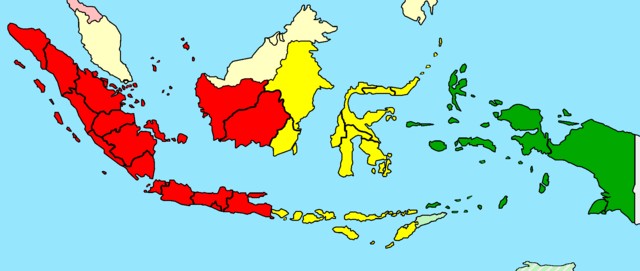
Red = West Indonesia, yellow = Central Indonesia, green = East Indonesia. Source: Wikimedia Commons.
Most of Indonesia’s best-known dive regions are in central and eastern Indonesia, although Derawan in Kalimantan and Pulau Weh in Sumatra are notable exceptions.
Best Time to Dive Indonesia
Indonesia can be dived year-round, but the best season varies by region. March to October is the classic dry-season window for many destinations, including Bali, Komodo, Bunaken, Lembeh, Alor, and parts of Wakatobi. Raja Ampat is often best from October or November through April, while Banda Sea crossings are highly seasonal and usually scheduled around transition months.
If your dates are fixed, the best strategy is to choose the Indonesian region most likely to have favourable conditions during your travel window.
Weather and Diving Conditions
Indonesia’s climate is tropical, with warm air temperatures year-round. In many regions, May to September is drier and October to April is wetter, but there are important regional exceptions.
Water temperatures are often around 26–29C (79–84F), but there are cooler areas and seasonal upwellings. Nusa Penida in Bali and South Komodo can drop to around 18–24C (64–75F), especially during mola mola or southern Komodo seasons. If you feel the cold, bring a hooded vest or 5mm wetsuit for these areas.
How to Get to Indonesia
Your best international gateway depends on your destination:
- Jakarta (CGK): Often useful for Raja Ampat, Ambon, the Banda Sea, Alor, and many remote eastern Indonesia routes.
- Bali (DPS): Best for Bali, Komodo, Wakatobi, and some connections to other Indonesian regions.
- Manado (MDC): Best for Bunaken, Bangka, Lembeh, and North Sulawesi itineraries.
Domestic flights in Indonesia can be complex, and delays or schedule changes are not uncommon. We recommend building in buffer nights before liveaboards and before international flights. Read our guide to booking domestic flights in Indonesia, or ask your travel advisor before confirming flights.
Other Things to Do in Indonesia
Topside options vary greatly by region. Bali has the widest range of cultural, adventure, dining, and wellness activities. North Sulawesi offers wildlife and nature excursions, including Tangkoko National Park. Remote destinations such as Raja Ampat, Alor, Wakatobi, and the Banda Sea are more dive-focused, though village visits, hiking, snorkelling, kayaking, and birdwatching may be possible.
Bluewater Travel can arrange land-based extensions before or after your dive trip. Contact us if you would like help planning a complete itinerary.
Practical Information
- Currency: Indonesian Rupiah (IDR).
- Language: Bahasa Indonesia. English is widely spoken by many dive resort and liveaboard staff.
- Time zone: UTC+7, UTC+8, and UTC+9, depending on region.
- Electricity: 220 volts, usually with two round-pin plugs.
- Safety: Indonesia is generally safe for travellers, but use common sense in busy cities and remote areas.
- Health: Check current medical advice before travel. Recommended precautions may vary by region, especially for rural or remote areas.
Indonesia Diving FAQs
Is Indonesia suitable for beginner divers?
Yes. Areas such as Bali, Bunaken, Wakatobi, and some resort-based parts of Raja Ampat and Lembeh can be suitable for newer divers. More remote or current-exposed regions such as Alor, the Banda Sea, Komodo, and many Raja Ampat liveaboard routes are better for confident intermediate or advanced divers.
Do I need to join a liveaboard to dive Indonesia?
No. Bali, Lembeh, Bunaken, Bangka, Wakatobi, and parts of Raja Ampat have excellent land-based resorts. Liveaboards are best for remote areas and combination routes such as Raja Ampat north-south itineraries, Banda Sea crossings, Komodo routes, Alor, Halmahera, and the Forgotten Islands.
When is the best time to dive Indonesia?
There is no single best month for all of Indonesia. March to October is excellent for many regions, including Bali, Komodo, Bunaken, Lembeh, and Alor. Raja Ampat is often best from October or November through April. The Banda Sea is highly seasonal, with trips often scheduled around March to May and September to November.
Where is the best macro diving in Indonesia?
Lembeh is the best-known macro and muck destination in Indonesia. Ambon is also outstanding for rare critters, while Bali, Alor, Batanta in Raja Ampat, and parts of South Komodo can also offer excellent macro photography.
Where is the best liveaboard diving in Indonesia?
Raja Ampat, Komodo, the Banda Sea, Alor, Halmahera, the Forgotten Islands, and some Wakatobi routes are among the best liveaboard options. The best choice depends on season, experience level, budget, and whether you prefer reefs, macro, mantas, currents, or remote exploration.
Is Raja Ampat better than Komodo?
They are very different. Raja Ampat is best for coral biodiversity, reef fish, manta rays, and rich reefscapes. Komodo is better for current-swept action, mantas, schooling fish, and dramatic drift dives. Raja Ampat often suits photographers and biodiversity-focused divers, while Komodo appeals to divers who enjoy higher-energy diving.
What experience level do I need for currents in Komodo, Alor, and the Banda Sea?
For current-exposed areas, we recommend Advanced Open Water or equivalent experience, recent dives in current, comfort with deeper water, and strong buoyancy control. Guides can often adapt sites to the group, but many signature dives in these regions are best for intermediate and advanced divers.
What wetsuit should I bring for Indonesia?
For many regions, a 3mm full suit is suitable. If you are diving cooler areas such as Nusa Penida, South Komodo, or sites affected by upwellings, consider a 5mm suit or a hooded vest. Photographers doing long repetitive dives may also prefer slightly more exposure protection.
Is Indonesia good for underwater photography?
Yes. Indonesia is one of the world’s top underwater photography destinations. Lembeh and Ambon are excellent for macro; Raja Ampat, Komodo, Wakatobi, and Alor are outstanding for reefs and wide-angle; and Bali offers a strong mix of wrecks, macro, mantas, and seasonal mola mola.
How many days do I need for an Indonesia dive trip?
For Bali, Lembeh, Bunaken, or Wakatobi, a week can work well. For Raja Ampat, Komodo, Alor, or the Banda Sea, 10 to 14 days is often better once domestic travel and remote logistics are included. For combination trips, plan two weeks or more.
Book Your Indonesia Dive Trip
Indonesia is one of the most rewarding dive destinations in the world, but choosing the right region, season, resort, or liveaboard can be challenging. Bluewater Travel can help match you with the best itinerary for your experience level, travel dates, budget, and marine life goals.
Call us at +1-310-915-6677, email info@bluewaterdivetravel.com, or contact us through live chat for personalised Indonesia dive trip advice.
Further Reading
See also these useful resources from our sister websites, Bluewater Photo and Underwater Photography Guide.
Best Dive Destinations for Underwater Photography
Best Macro Photography Destinations
Author
Tim Yeo
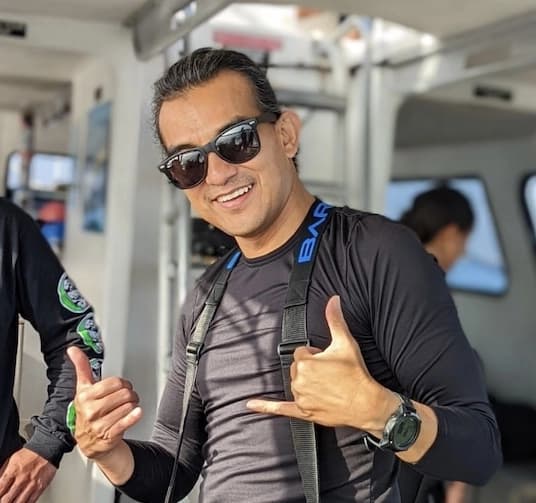
Tim grew up in tiny Singapore, where driving for more than an hour meant you would need a passport. Traveling was always his passion, but Tim became addicted to dive travel soon after he got scuba certified in Malaysia. As his diving addiction grew, Tim eventually became a Staff Instructor with PADI and an Instructor Trainer with SDI. After getting his instructor certification, Tim spent time teaching scuba in Malaysia and Vietnam.
Tim serves as General Manager and COO at Bluewater Travel and is the company's most seasoned trip leader. With a portfolio of leading over 30 group trips, his extensive expertise encompasses a variety of popular dive destinations such as the Galapagos, Raja Ampat, French Polynesia, Fiji, the Red Sea, Palau, Maldives, among others. His travels have taken him across all seven continents and allowed him to dive in all five oceans—the Atlantic, Pacific, Indian, Arctic, and Antarctic.