Book Now
Oman Marine Life
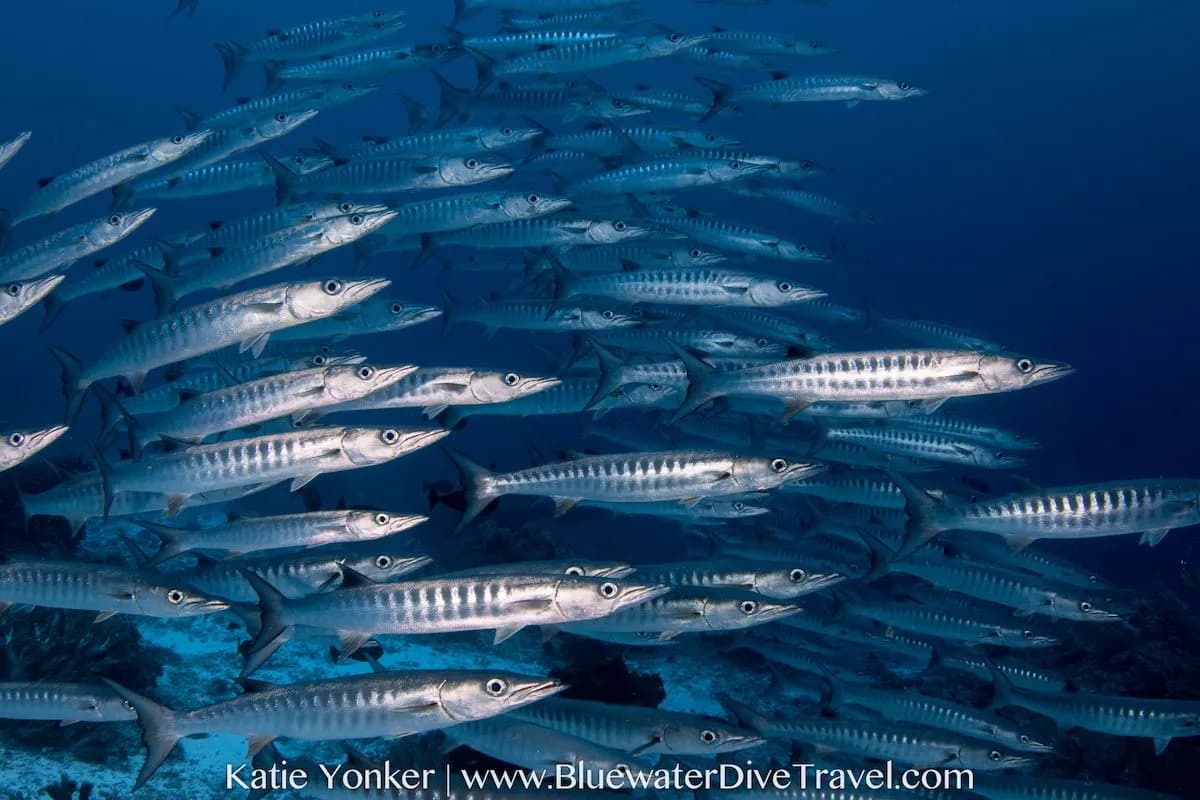
Every dive site in Oman is full of life, mainly medium and small reef fish and critters, but with the occasional larger ray or pelagic popping in from the blue. Expect large schools of yellow-tailed fusiliers, jack, sweetlips, and batfish, as well as smaller schools of barracuda and trevally. The reefs are mostly rock and boulder, but covered in a healthy patchwork of soft corals, large anemones, table corals, and urchins. This supports a surprisingly varied range of critters and macro subjects, with a selection of different nudibranchs and shrimps, gobies, crabs, and lobsters found on every dive. Most notably are the huge numbers of scorpionfish and moray eels, ranging from the stunning honeycomb and yellowmouth morays, to the striking dragon moray.
You'll also have the chance to see numerous whale and dolphin species from the surface as the boat transits between the islands, and there is a chance to spot turtles, rays and sharks, such as the guitarshark and leopard shark!
Diving Conditions
- Water Temperature: Water temperatures range from 19-28C/66-82F.
- Visibility: 5-30m / 12-100 feet
- Depth Range: Typical maximum depths range from 12-30m / 40-98 feet
Unfortunately, visibility in Oman can vary and is often quite poor. Ranging from 5m to 30m, there is no way to predict how visibility will be and it can vary drastically between sites in a single area, and even between different parts of a dive site.
Dive Sites
There are two seasonal liveaboard dive routes in Oman. From May through to November, liveaboards explore the Dimaniyat Islands in the north of the country, embarking from Muscat. For the opposite season, boats spend their time in the Hallaniyat Islands to the south of the country, embarking from Mirbat. While Dimaniyat is reputedly the best diving area in Oman, there is very little difference between the marine life and topography of the two areas.
It is also possible to dive from shore, and some resorts in the north of the country have an on-site dive centre. In addition, Musandam, a peninsular enclave in the far north, offers some good shore diving opportunities.
Here are some of the best diving spots in Oman:
1. Daymaniyat Islands, Muscat This area circled by coral reefs and is a nature reserve and an important turtle nesting site. Youll be surrounded by abundant fish and glide over lush coral reefs down to 30 meters/100 feet. Aside from turtles, you'll also see rays and reef sharks.
2. Fahal Island, Muscat This small island offers excellent diving with reefs down to 40 meters/130 feet. Due to frequent sightings of sharks on the adjacent sandbanks, people also call it Shark Island.
3. Bander Khayran, Muscat While the diving is mostly on shallow coral reefs, the area also features a few drop-offs and one of the best wreck dives in Oman - the Al Munnassir. This 276-foot vessel was sunk by the government as an artificial reef and now lies upright about 100 feet of water. The vessel is now home to giant morays, large schools of snapper and goatfish, turtles and rays.
4. Lima Rock, Musandam Youll find coral encrusted walls to depths of 20 meters/66 feet along with caves and crevices created by erosion of the limestone substrate. Schools of jack and tuna are common in this area and whale sharks may be seen in the cooler months.
5. The Caves, Musandam This site provides hiding spots for spiny lobster, cleaner shrimp and other creatures from the turtles cruising by. Rays and sharks find perfect daytime resting place at the sandy bottom of the caves.
6. City of Winchester Wreck, Hallaniyat This 120m long wreck was the first British merchant casualty of WWI. It sits upright in 30m of water and much of the superstructure has collapsed leaving the engines and turbines explosed. While there is no penetration, there are still some interesting features to discover, with plenty of identifiable bollards and winches, railings, and a binnacle still in position. The wreck itself is now a vibrant artifical reef, hosting numerous moray eels, schools of fusiliers and jacks, curious batfish and anemone fish. It also attracts larger species such as trevally and tuna.
7. Aquarium, Hallaniyat Only visited once each week by one liveaboard, this shallow site is close to untouched. The small bay is home to huge colourful table corals, spreading out over a large area and giving a home to abundant small fish and critters. Diving along the edge of the reef and watching the sand, there are hundreds of shrimp gobies dotted throughout the dive site. Every nook and cranny has something interesting to offer, from shrimps and crabs hiding in the coral to some of the largest moray eels in the region.
How to Get There
Virtually all international flights arrive at Muscat International Airport (MCT) in Muscat. A smaller number of regional international flights also land at Salalah Airport (SLL), the country’s only other international airport. If you fly into Muscat, you can connect on Oman Air to Salalah. Buses are another cheap and safe option, traveling regularly between Muscat, Salalah, Sohar, Sur, and Nizwa.
How To Dive Oman
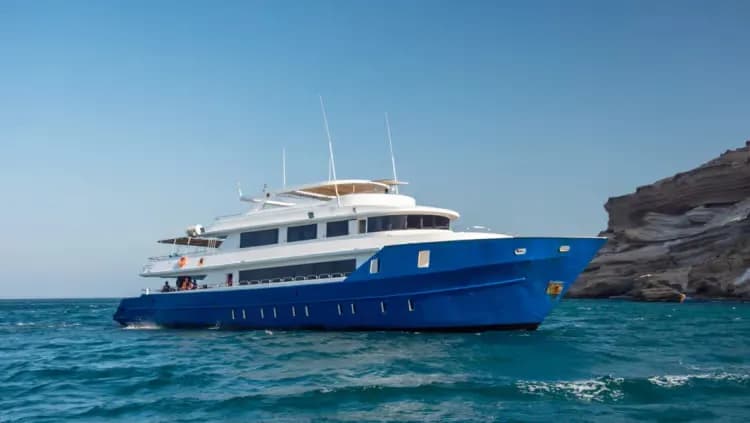
The Oman Explorer and The Vision Liveaboard operate in Oman, offering itineraries in Musandam, Dimaniyat or Hallaniyat Islands depending on the season.
There are a number of dive centres operating out of resorts in the Muscat at Musandam areas. Read more about diving Oman aboard The Vision.
Best Time To Dive
Although you can dive year round, the best time to go is from April to October with visibility well over 10 meters. September and October are considered as the 'whale shark season'. The winter months are not the best time to dive as the water temperature falls below 68 degrees F and the visibility can be quite bad.
Topside & Non-Diving Activities
- Historic forts
- Oman's rugged mountains, offering some stunning scenery and great opportunities for driving in dry wadis
- Huge desert dunes
- Nice beaches
- Shopping
- Currency: Omani Rial (OMR)
- Language: The official language is Arabic but English is widely spoken at resorts
- Main Airport Code: MCT
- Time Zone: UTC+4
- Electricity: 240 volts, 50Hz