Special
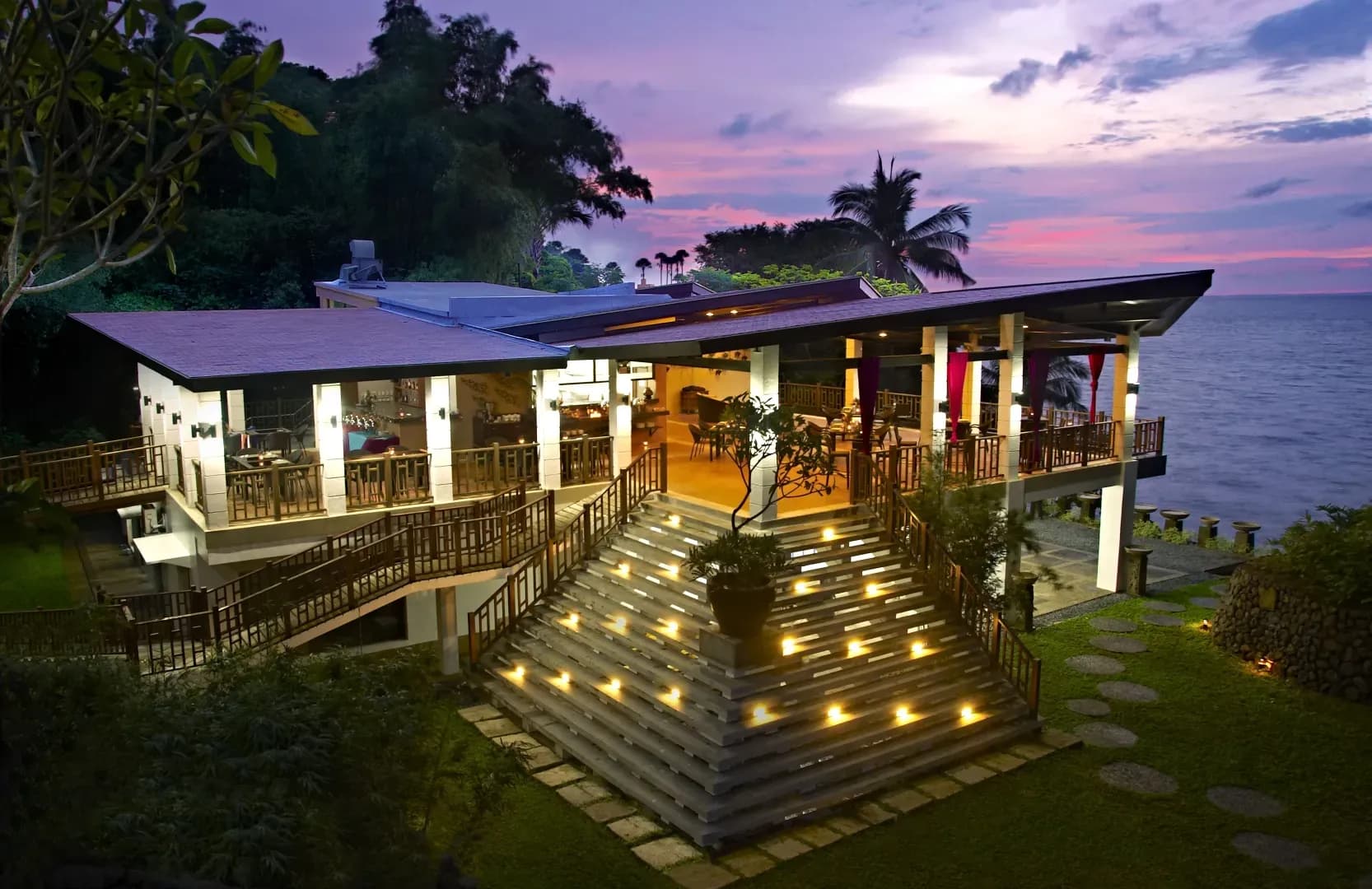
Aiyanar Beach & Dive Resort Special Packages
5|5
Expert advice on diving,
seasons, and logistics
Free planning help
when you’re ready to book
Exclusive dive packages
tailored for you
Special

Special

Special
Group trip
Special
Special
Group trip

Group trip
Special

Special
Group trip
Group trip
Scuba Dive Level
All Levels
Visibility
30 to 90 feet (9 to 27 meters)
Average Water Temperature
80
Macro Critters
Great Night Dives
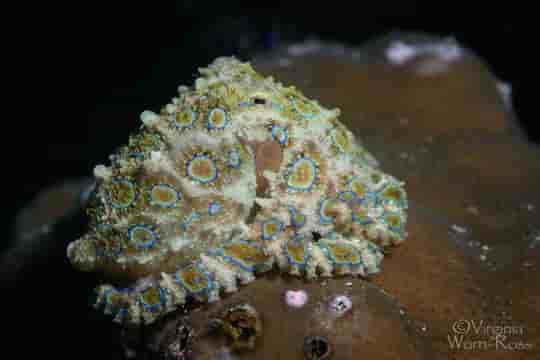
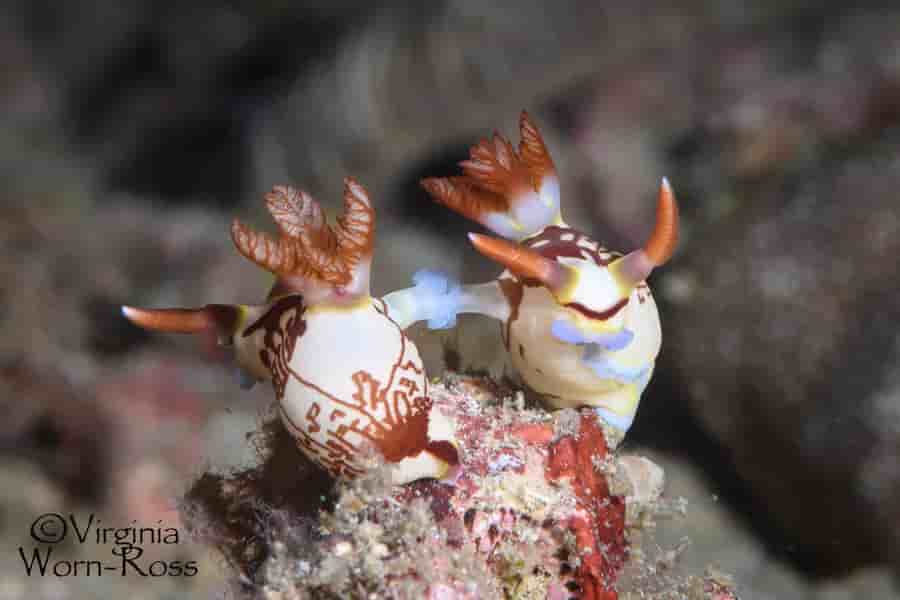
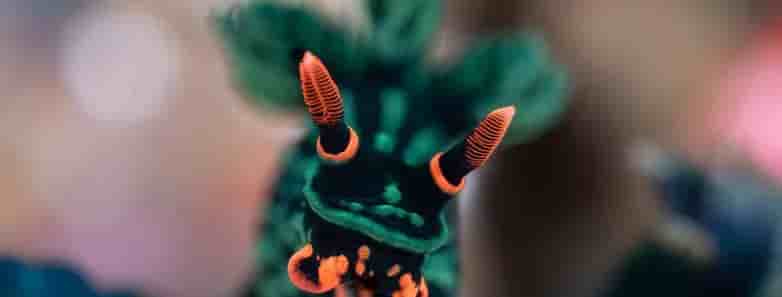
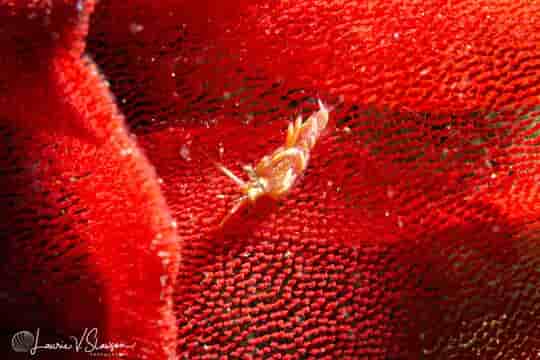
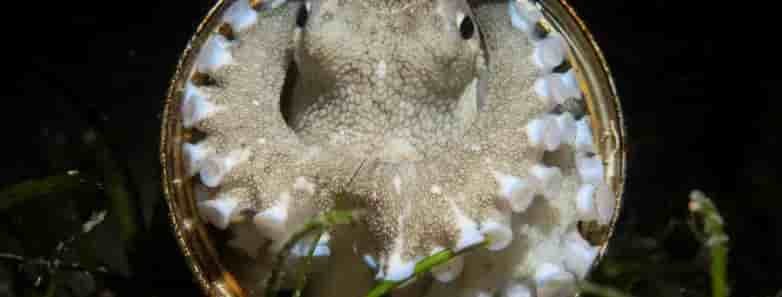
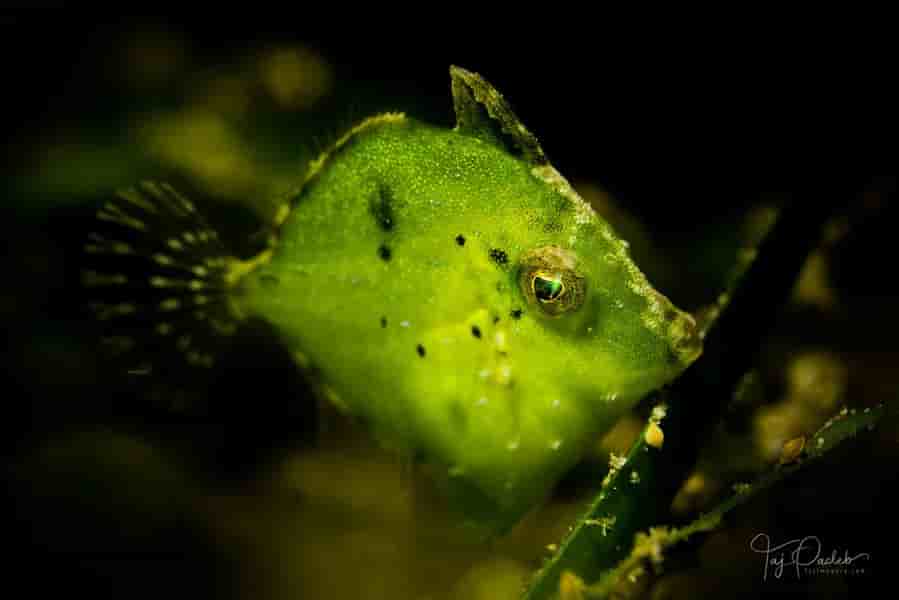
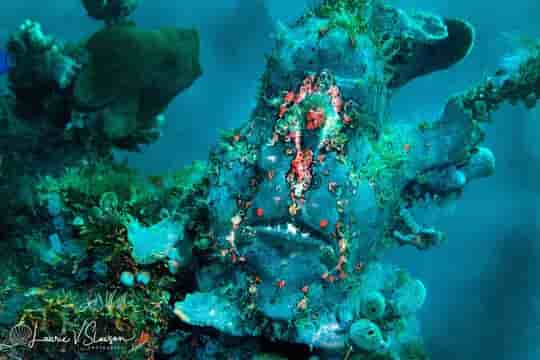
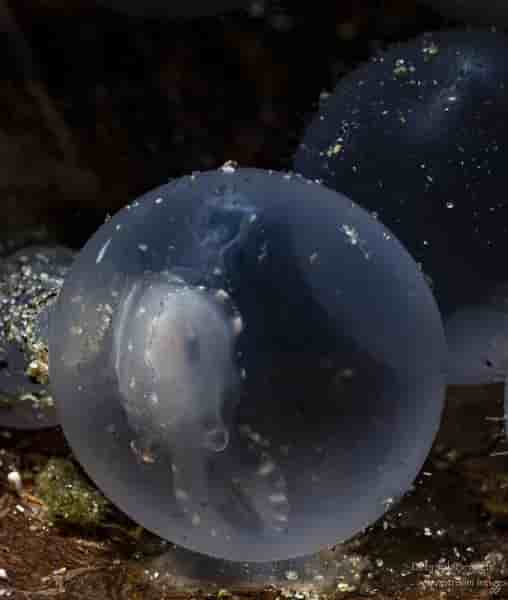
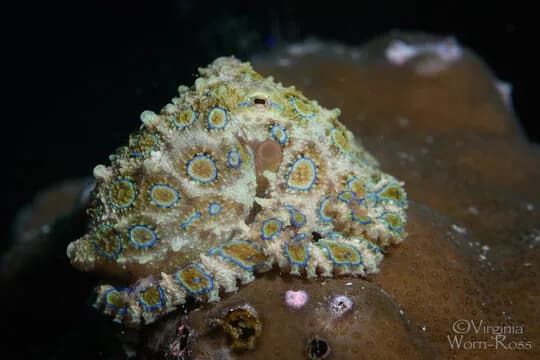
Virtually every variety of juvenile fish and critter imaginable can be found in Anilao. You'll definitely want to bring your best underwater camera. Shrimp, crabs, nudibranchs, small squid, and cuttlefish are arguably more plentiful than any other dive destination. Frogfish, pipefish, and seahorses are also fairly common, and we've even seen Rhinopias and Hairy Frogfish. Wonderpus, mimic, and blue-ringed octopus can also be seen.
Bobbit worms and many other critters await patient muck divers. Anilao has a large number of species of hard and soft corals - perhaps more than anywhere else in the world. Local guides take pride in locating even the smallest macro subjects living on the corals, oftentimes leaving photographers with a tough decision on which subject to shoot.
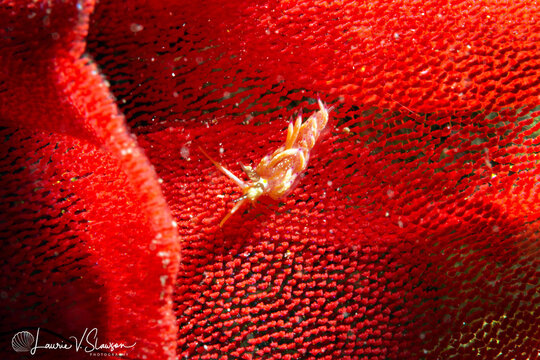
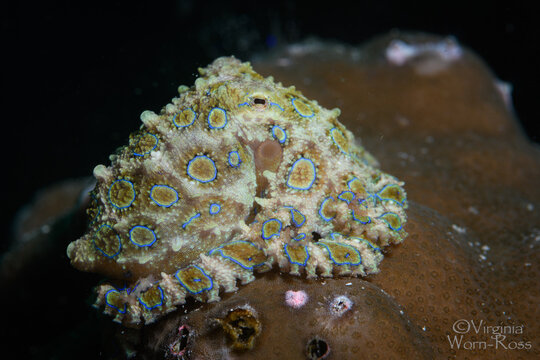
Images By: Laurie Slawson &Virginia Worn-Ross
Larger marine life is also found in Anilao, including large schools of jacks, the occasional turtle and giant seahorses. At Mainit point, which has strong currents, we've seen up to 4 great barracuda hunting, along with giant and bluefin trevally. Reef sharks are occasionally seen down deep at dive sites with stronger currents and on very rare occasions people have seen small whale sharks.
Anilao has some unique soft coral forests, generally found at 70 - 130ft deep, which are mostly unexplored and can turn up rare critters such as seahorses and rhinopias.
Anilao is also one of the best places to dive in Southeast Asia. Check out the full list here.
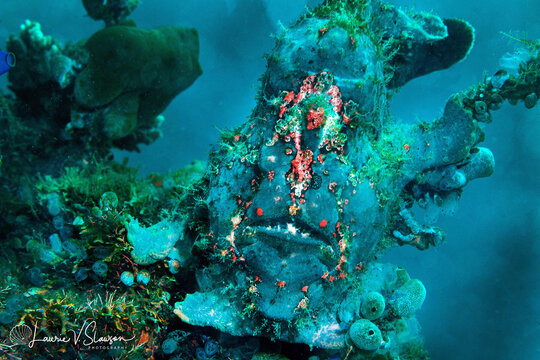
Image By: Laurie Slawson.
“Warm, calm water, great viz and very easy access. From the home reef right in front of Crystal Blue Resort to the surrounding sites, most dives were just a short bangka ride away, with only four divers per guide to keep things uncrowded. Even on popular sites it never felt busy – with macro, you spend real time on each subject.”
“The macro workshop with CBR’s Mike Bartick and Bluewater’s Mike Smith was a huge part of the experience. You could see everyone’s images improve over the week – from simple ID shots to creative black backgrounds, bokeh and even blackwater work. If you want to seriously up your macro game, this is the place.”
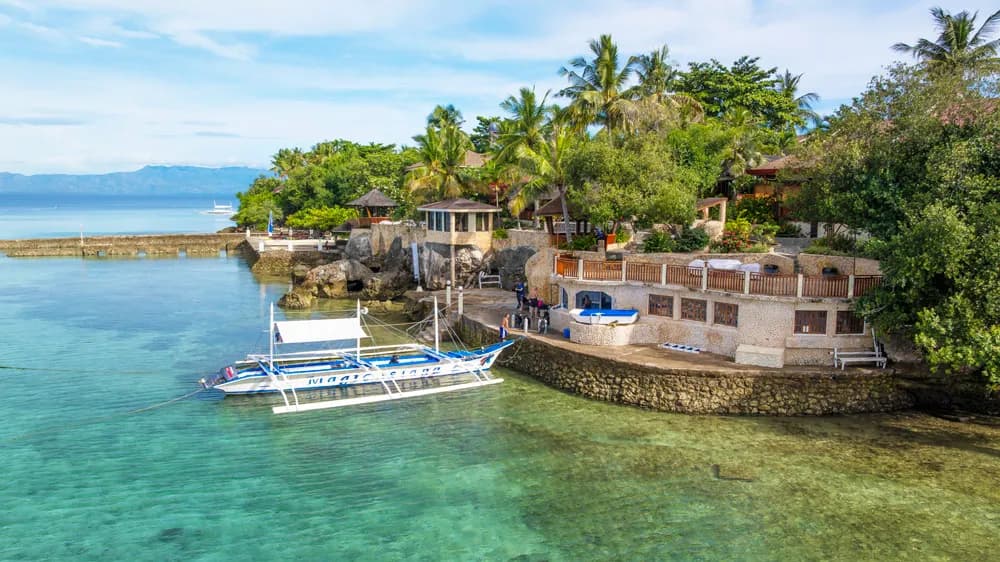
The resort itself is built into the hillside with the dive deck right on the water – stunning views but lots of stairs. If you’re in one of the higher rooms you’ll get a workout, but the panoramas and the service more than make up for it.
Diving is usually by a small open boat (bangka), which is comfortable for up to 4 divers plus a crew of 2-3. Dive sites are usually 10-25 minutes away from most resorts. The general schedule is 2 dives early in the morning, enjoying lunch and rest in the afternoon at the resort, and then 2 more dives in the late afternoon, with the last dive being a complete night dive.
Frequent night dives are a must in Anilao and no visit would be complete without a muck dive at the pier! Dive time limits are less stringent than at other locations, and significant time can be spent in the shallows. Occasionally divers will encounter currents but the guides at the resorts we recommend dive according to everyone's skill and comfort levels. The guides are excellent critter-finders, which keeps photographers shooting for the entire dive.
For more information, you may want to check out our report from our trip to Anilao in 2019 & 2022.
Here are some of the diving highlights around Anilao!
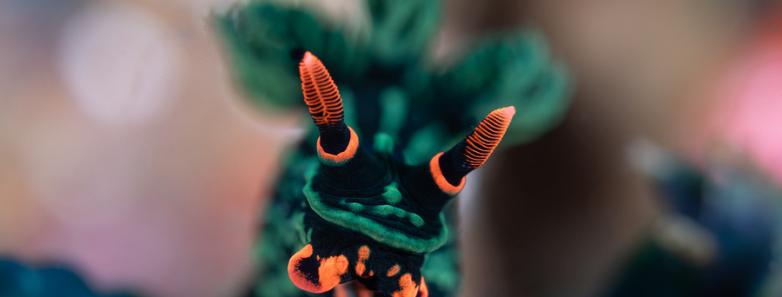
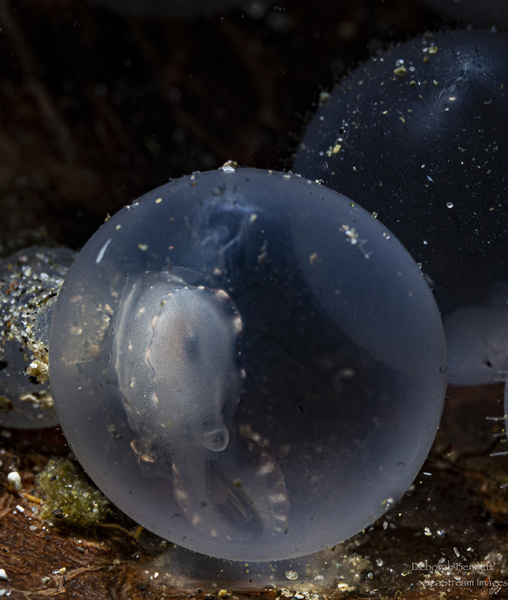
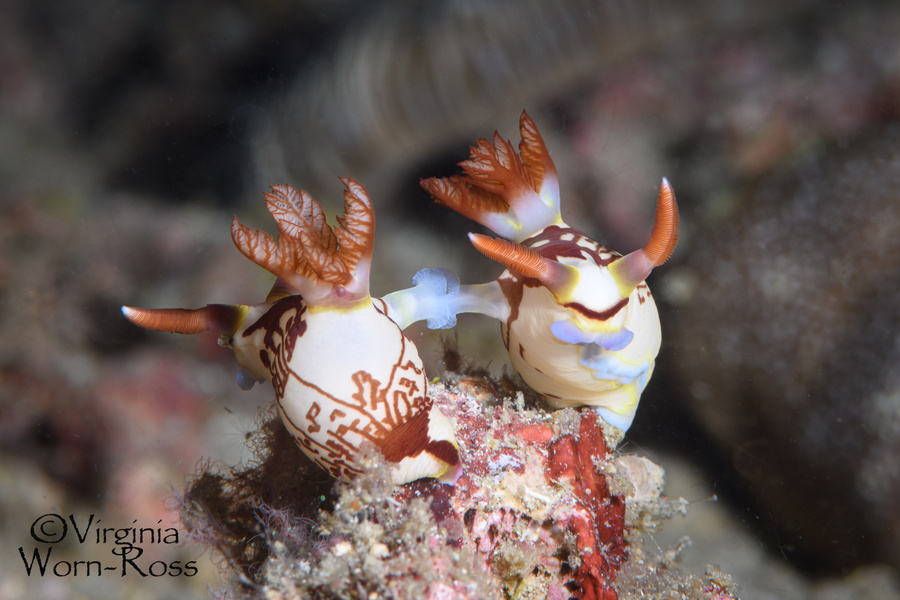
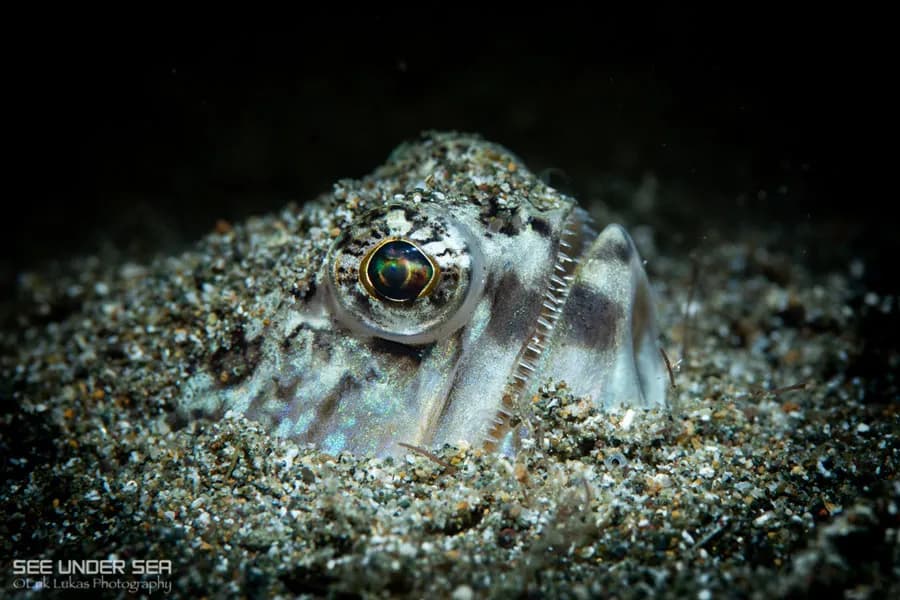
Images By (From Left to Right):Laurie Slawson, Deborah Bennett, Virginia Worn-Ross
Anilao is about a 3-hour drive from the Manila International Airport (MNL), also known as Ninoy Aquino International Airport. Several major Asian airports run flights to MNL and serve as layovers for visitors from the US and Europe. Once clearing customs with checked bags, divers walk outside and take a tunnel down to the left where resort shuttle drivers are waiting with signs. The drive out of the city is exciting and you can catch glimpses of the colorful Manila city life through the window.
Anilao is a two to three-hour van ride from the airport in Manila. Resorts, liveaboards and dive centers are available. Many divers combine Anilao with a trip to dive Puerto Galera, or Cebu / Dumaguete. Puerto Galera is just an easy hour speedboat ride away, while Cebu or Dumaguete is an hour's flight from Manila.
Most of the Anilao dive sites are close to the dive resorts, 10 to 20-minute boat rides in a small "outrigger" style boat is the norm.
October to early June is the main diving season in Anilao. The best months are November / December and April/May, with April and May being the most crowded months at the resorts.
Monsoon occurs in July through August, but the dive sites remain accessible.
The critters and rich marine life are found year-round. If you don't mind slightly cooler temps, then Jan - March is great too, and often has more critters underwater.
Anilao is relatively limited in terms of non-dive activities. Snorkeling, kayaking and various excursions can be arranged at the resort of your choice. If you're traveling with non-diving friends, partners, or family members, destinations like Puerto Galera or Dumaguete might be more suitable.
Wayne is the sales team leader at Bluewater Photo. As a project manager and PADI Assistant Instructor, he has worked and dived in various locations, including South Africa, the UAE, and the Red Sea coast of Saudi Arabia. His deep love for nature and the ocean fuels his passion for diving and underwater photography.
I attended a recent Anilao workshop where a typhoon decided to make an appearance. In addition to the usual challenges associated with variability of equipment, experience, and personalities, the Bluewater dive leaders were dealt another in the form of the weather situation. Given the remoteness of the resort and limited “other activity” options, they filled the time and handled it well with on-premises activities. Good thing they have such a cache of knowledge, experience, and materials of their own to pull from. Couple all that with 18+ hrs per day talking and I’d say their collective work was A+ in making a positive experience for all.I rated conditions as "average" but that has much more to do with results of the weather situation. I was pleased enough with the sites, crew, and critters that I will definitely visit Anilao in the future.I look forward to traveling with both of the Bluewater dive leaders in the future!
I'm an intermediate underwater photographer, so this review is written through that lens (pun intended).I had always read that Lembeh was more difficult to get to than Anilao, but an overall better destination for macro because it had a bit more diversity and that diversity was more dense. Having been to both once each now, I don't find that true. While maybe seasoned experts with 200+ dives in each destination might know the differences, I didn't. I saw almost all of my critter list I'd put together at both destinations, and Anilao was much easier to get to!We stayed at Crystal Blue Resort, which had average accommodations and food (can't really say anything negative about either), but an excellent camera facility and absolutely phenomenal dive guides. In the camera room, each person had their own cubby/workspace that was more than enough space to setup everything and organize your equipment without getting in anyone else's way. Our dive guide had us literally photographing subjects 90% of every dive. As soon as I would finish with one subject, our dive guide was already getting my attention to come to one of the other 3 critters he had been scouting.We had 2 of our dives with strong current. While certainly not the strongest current I've been in, it made shooting super macro impossible, and shooting regular macro with a 105mm lens difficult. I'm not sure whether the current was due to the time of year or something that happens semi regularly. Aside from those 2 dives, the other dives were almost like diving in a pool. There were tide changes throughout the week that required us to dock on the other side of the peninsula since it wasn't safe to dock at the resort. It took longer to get back to the resort and we were shuttled in stuffy vans, but that seemed like a necessary evil.
We had an EXCELLENT experience in Anilao, booking through Bluewater. Crystal Blue was a great resort for our foursome and we really enjoyed having our own boat and amazing dive guide. Macro and super-macro photo opportunities were around every corner and we were treated like family at the resort. We will definitely be coming back - can't wait!
It's hard to find anything to complain about with respect to diving in Anilao. It is very easy to get to from the West Coast of the US, and once in Manila the resort makes the last leg of the journey to Anilao very easy.If you are into macro, this is a must-see destination. Anilao is home to some of the worlds most dense populations and wide variety of nudibranchs, in addition to dozens of other critters that are a photographers dream. In general, the dive guides are among the best I have ever been with, and they will easily keep you on subjects for the entire trip. Ask for something to see and they will deliver. Obviously it depends on which dive operators you use, and some will be better than others, but in general the guides in Anilao know the locations, the critters and the habitats.Anilao is somewhat remote, so the topside activities are limited, but for me going to Anilao was about the diving and photography.Overall, this desitination should be on any list for macro photographers. Wide angle options are there, but could be considered limited.Cannot wait to get back to beautiful Anilao.
Anilao is one of my favorite places to dive in Asia. The marine life is incredibly diverse and abundant. Most of the life is small and best suited to macro photography, for example reef fish, sea slugs, crustaceans, cephalopods, and the like. What is so amazing about Anilao is that it is not uncommon to see very special and rare creatures, such as mimic octopi, wunderpus, coconut octopi, ghost pipefish, seahorses, stargazers, bobbit worms, and the list goes on. Some people call Anilao the "nudibranch capital of the world" and it kind of makes sense when you consider that it is possible to see 100 different species of sea slugs in a weeks' diving!Secret Bay and Anilao Pier (best done as a night dive) are my 2 favorite sites for macro life, and Twin Rocks and Beatrice are my favorite wide-angle sites, but there are many many other great sites too and it is hard to go wrong. All the dive sites are located within a 15 minute boat ride of one another, so travel time between dive sites is limited. Conditions are usually good so the diving is easy and relaxed. Water temperatures can get chilly from November to April, with a low water temperature of around 24 degrees C, so bring a 5mm suit if you are planning to visit during those times. Typhoon season is around the middle of the year, when winds can be strong and there is a small risk of typhoons. This is low season and a great time to visit if you don't mind the winds. The water is also warmest in the middle of the year.Topside activities are limited as each resort tends to be self-contained and self-sufficient. There are limited options for nightlife in the area it is really geared towards diving.
Never miss a night dive. Never. Ever. You never know what you'll find on a night dive in Anilao. The Pier, Arthur's Rock, Twin Rocks, Secret Bay - these and other sites have plenty of weird stuff out and about. Common and mimic and blue ring octopus, bobtail squid, magnificent and common cuttlefish. Spiny devilfish, stonefish, waspfish, a variety of scorpionfish including rhinopias. Stargazers and flatheads hiding under the sand. Anemones, some actively feeding, all enjoying the dark. Crabs and shrimps peeking at you from everyplace. An astonishing assortment of nudibranchs, including some mind-blowing mimics of various plants and corals. Flatworms and various mollusks out looking for love, or a meal, or both. Bobbit worms standing there with their jaws wide open, waiting for something to blunder into them.But don't miss the daytime dives either. Most of the time, you are muck diving. No matter how bleak things may look from a distance at a particular site, sand and silt as far as you can see with only an occasional island of "life", take your time and look around slowly. There is plenty of life waiting for you to discover. Other sites may have coral rubble and nothing taller than a few inches standing above the plain. But critters are all over. Ghost pipefish, ornate and robust and hairy. Frogfish, seemingly scattered all over, some quite well camouflaged against the sand or a small outbreak of life among all that sand. Seahorses and pygmy seahorses, tiny pipefish anchored to a blade of seagrass. All types of dragonettes. Nudibranchs, some just out for a stroll, others having a meal of a sponge or some bryozoans or some coral ... or making a meal of another nudibranch. Or maybe enjoying the company (wink wink) of another nudibranch of the same species. Just look around carefully, and be astonished by what you, your dive buddies, and your divemaster find.But then there are the lovely reefs of Anilao: Sombrero, Layag Layag, Mainit's Point, Beatrice, and many others. Corals of uncountable types as far as you can see. Clear blue water. All types of small fish flitting about. Anemonefish of nearly every type, inhabiting a stunning number of types of anemones. And still, there are small things to look for, if the beautiful reef hasn't distracted you.The water temps when we visited in April/May were typically 82 degrees F, but some sites had upwellings of colder water at 78 F, and there's always the chance that you'll go deep enough to find some specific critter that you'll encounter a significant thermocline. Usually, there is no major current to deal with at most mucky sites, but some of the more clear water, wide angle sites could have strong currents if they are dived at the wrong time. Your topside activities will consist of whatever your resort has to entertain you, and walks through some of the little villages and small towns during your surface intervals. That's it. The Filipino people are wonderful hosts, happy to see you and glad to help you. And the Philippines are a bargain destination, when you consider the quality of diving.If a diver is looking for lots of big fish, maybe even some pelagic life, and diving in clear blue water ... Anilao is not a suitable destination. If a diver wants to enjoy lots of shopping and nightclubs and casinos with major entertainers when not diving, Anilao will disappoint. If a diver really want to dive, and is looking for a place that has lots of critters, some really weird stuff, and is willing to look around in muck and sand and coral rubble carefully to find these strange animals .... Anilao is a destination that should be visited. And then visited again.
First of all I should say that this was dive #60-#67 for me. I was still pretty new to diving. I actually signed up for this trip not so much for the diving in Anilao, but the fact that we first went to Donsol and snorkeled with WHALE SHARKS! So, again I am a shark kinda girl. All I really cared about on this trip was seeing a whale shark. But, boy am I ever glad that this trip included diving in Anilao as part of the deal too!NOTE: You can shore diving from some of the Anilao resorts - with very easy access and lots of critters! We did day and night dives from the shore!I saw so many critters I had never seen before! I saw my first mantis shrimp, blue-spotted stingrays, nudibranches, ribbon eel, and PIGMY SEAHORSES, I also saw a ton of lion fish, pipefish, and stonefish that I dove with on Guam there were just so many more here. Some people on my boat saw leaf fish, regular sized seahorses, and frogfish…I did not. That's ok, it just inspired me to take many more trips to the PI (and yes, I have dove with all of those now). But, the point is all those critters are possible to find in Anilao. The only thing I didn't care for about the diving was the type of boat. It was small, cramped, and hard to get back into.Overall, I enjoyed the diving very much! Honestly, I didn't even know what a pigmy seahorse or a nudibranch was until this trip! That was when I learned from wiser divers that some of the critters I saw are critters some divers wait their whole lives to I've with! Not gonna lie, I felt pretty awesome being able to say I dove with whale sharks and pigmy seahorses all within the same dive trip:)
I dove Anilao in April, 2009.Conditions: all diving was done from traditional boats. The boats are comfortable, and most of the travel time was between 20-30 minutes, or less. Visibility ranged from good to great (20 ft to 43ft+), at least compared to the local conditions on the West Coast of Canada. Diving is easy, and applicable for all skill levels.Marine Life: the diving is largely focused on small critters, and Anilao delivered during my stay. Some of the highlights include: wonderpus, peacock mantis shrimps (2) with eggs, a plethora of different nudibranch species, and frogfish galore.Overall Value: flights are to Manila, and the transfer from Manila to Anilao is by car. Overall, the commute is relatively painless, and since the flight is to a major hub, and transportation is inexpensive, the value of Anilao is up there compared to other dive destinations in the region. Diving while I was there was some of the cheapest in the region.I did not partake in any topside activities in Anilao, and am not really aware of any.
We love Anilao! We were spoiled with only 4 divers per boat. The dive staff found every creature we wanted to see. The hundreds of colorful nudibranch were fantastic. The photo workshop was also good with tips and photo reviews each night. We made friends that will last a lifetime.