
$7,878 OFF

Special
Expert advice on diving,
seasons, and logistics
Free planning help
when you’re ready to book
Exclusive dive packages
tailored for you

Special
Group trip
Visibility
average of 40-80 feet
Average Water Temperature
34
Coldwater Diving
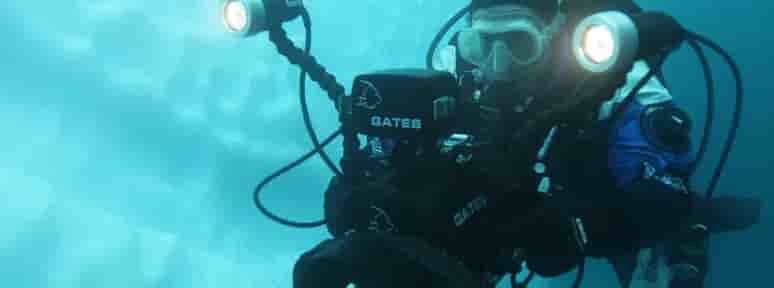
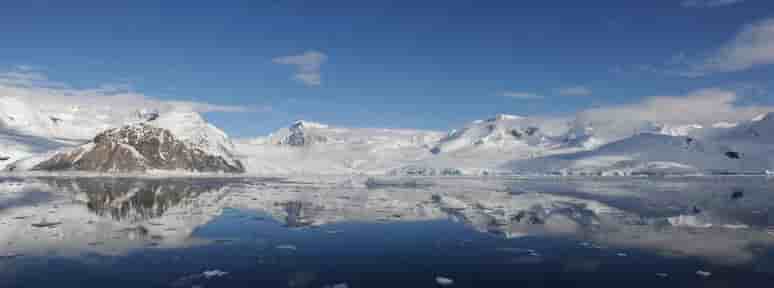
Water temperatures maintain a high level of salinity, keeping its temperatures between 23 and 46 degrees fahrenheit. In November to March, before the plankton blooms, visibility can be excellent, ranging even into hundreds of feet. The visibility is largely dependent on the level of pack ice (as less pack ice results in more sunlight and, therefore, plankton blooms), which varies from year to year. This makes it difficult to predict average visibility, but in the dive season of 2013, polar divers reported an average of 40-80 feet.
Extra precautions are taken in this region due to the frigid temperatures and isolation, and divers absolutely must be experienced and healthy to dive Antarctica's waters.
This dive destination is not an easy place to reach due to its remoteness. The best and easiest way to travel to Antarctica is by taking either a plane or a ship from the tip of South America. Common departure airports are Punta Arenas (PUQ), Chile, or Ushuaia (USH), Argentina.
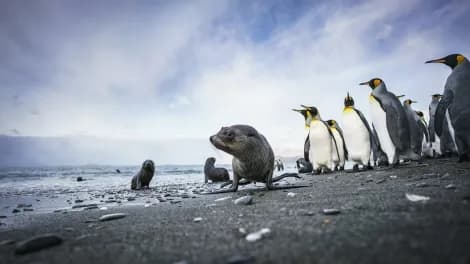
The polar diving isn't the only draw to Antarctica; there are plenty of exciting elements of a trip to one of the most challenging travel destinations. Excursions also feature awe-inspiring land adventures, wildlife encounters, and photographic opportunities. Travelers get the option to hike and snowshoe, camp on the stunning glaciers, mountaineer and trek (on or off skis), kayak, sail, seek out emperor penguins, whale watch, parrticipate in photo workshops, and go bird watching. There is history to be experienced here as well: no visit is complete without a tour of Cape Adare, where the first wintering of Antarctica took place. Carsten Borchgrevink'shut has been preserved since 1899 and demonstrates how truly daunting it must have been for this explorer to pioneer travel in Antarctica.
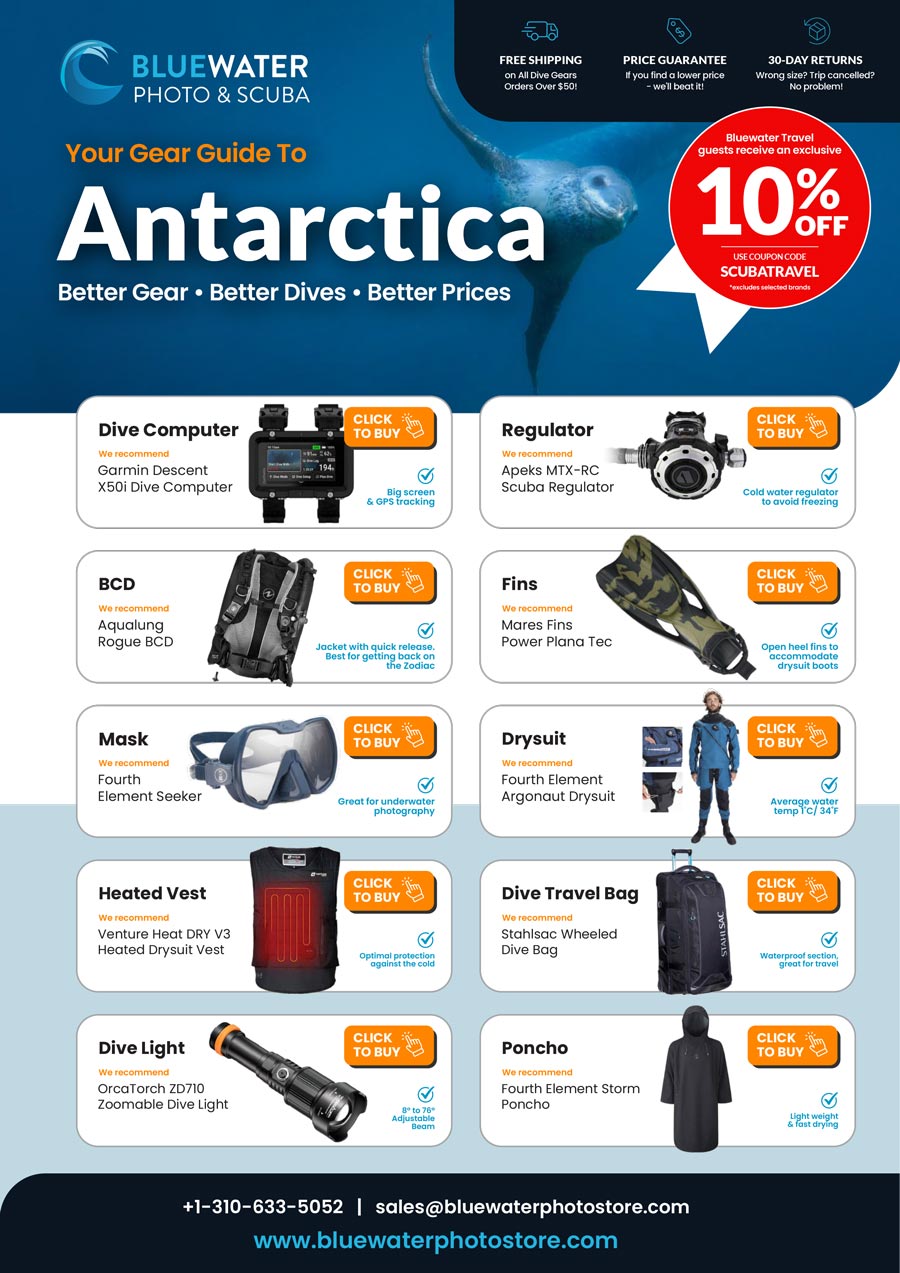
Download our full scuba gear guide to Antarctica, Bluewater Travel guests receive 10% OFF!
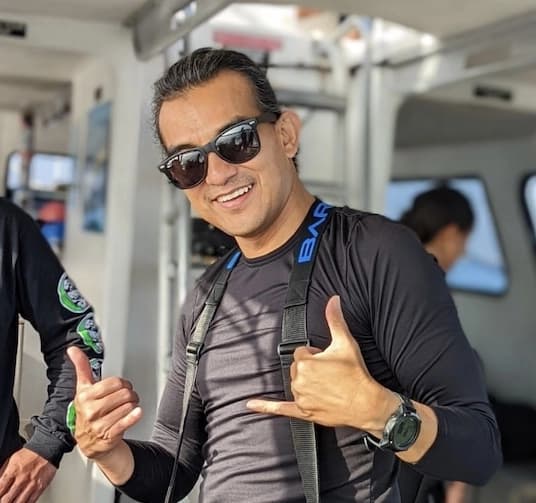
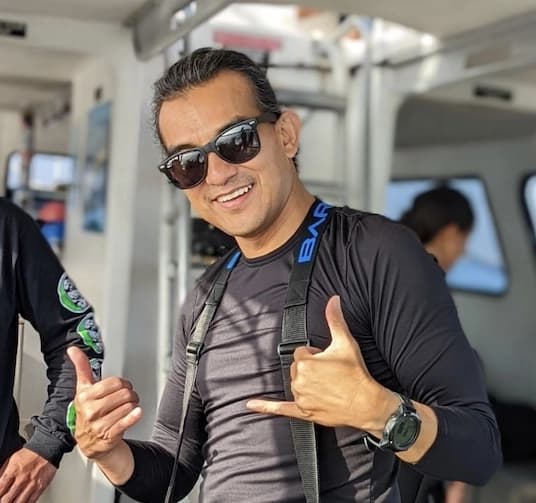
Tim grew up in tiny Singapore, where driving for more than an hour meant you would need a passport. Traveling was always his passion, but Tim became addicted to dive travel soon after he got scuba certified in Malaysia. As his diving addiction grew, Tim eventually became a Staff Instructor with PADI and an Instructor Trainer with SDI. After getting his instructor certification, Tim spent time teaching scuba in Malaysia and Vietnam.
Tim serves as General Manager and COO at Bluewater Travel and is the company's most seasoned trip leader. With a portfolio of leading over 30 group trips, his extensive expertise encompasses a variety of popular dive destinations such as the Galapagos, Raja Ampat, French Polynesia, Fiji, the Red Sea, Palau, Maldives, among others. His travels have taken him across all seven continents and allowed him to dive in all five oceans—the Atlantic, Pacific, Indian, Arctic, and Antarctic.